
Reviewed · SCHONBRUNN PALACE TOURS
Skip the Line:Imperial Carriage Museum by Schönbrunn Kaiserliche Wagenburg Wien
The most striking thing here is the sheer size and polish of the royal carriages. You move from Maria Theresia’s grand vehicles to Napoleon’s carriage, Franz Joseph’s coaches, and the black hearse used for Empress Elisabeth, known as Sisi. The baroque Imperial Coach is the main showpiece, but the smaller children’s carriages often give you the clearest sense of daily court life.
I like the Sisi Trail, which arranges carriages and personal objects around the empress’s life, from her wedding to her assassination in Geneva. I also like the quiet contrast with Schönbrunn Palace: the museum is only a short walk away, yet it can feel much calmer than the palace and gardens. The main caution is space. Some passageways are narrow, and a large group can make it hard to stand close to the displays.
Key points
- Royal vehicles from several eras: See carriages linked with Maria Theresia, Napoleon, Franz Joseph, and other Habsburg rulers.
- Sisi’s life told through objects: Follow her wedding, coronation, riding life, assassination, and funeral through carriages and personal belongings.
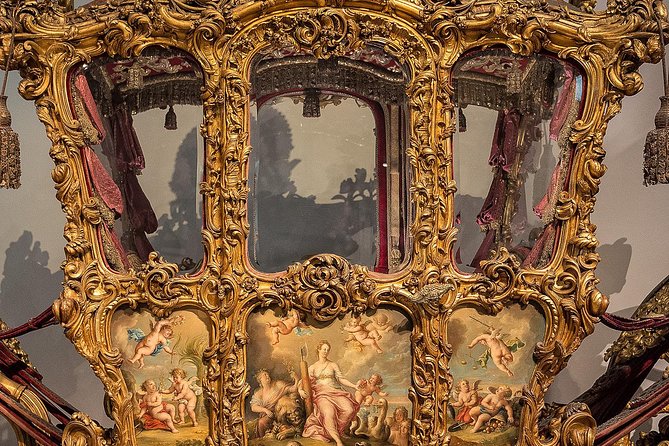
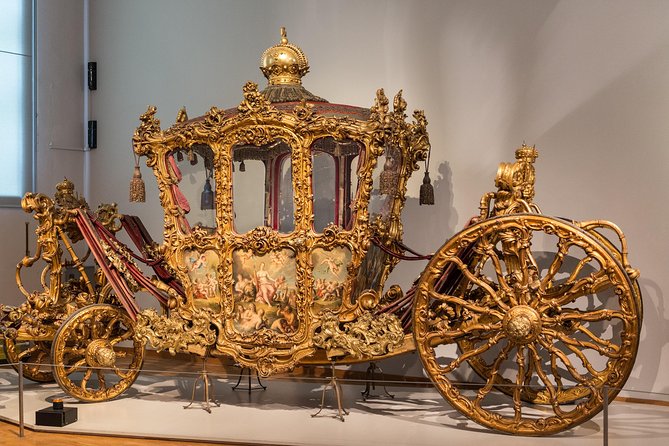
- The gold Imperial Coach: This grand vehicle was used for Sisi’s coronation as queen of Hungary.
- A rare personal collection: See her black court robe, only surviving saddle, and reconstructed riding chapel.
- A flexible visit: Plan on 45 minutes at a brisk pace, or one to 1.5 hours if you read the displays.
- Simple admission: The $14.48 ticket covers museum entry. Transport and a personal guide are not included.
Why the Carriages Tell Vienna’s Story Better Than You Expect
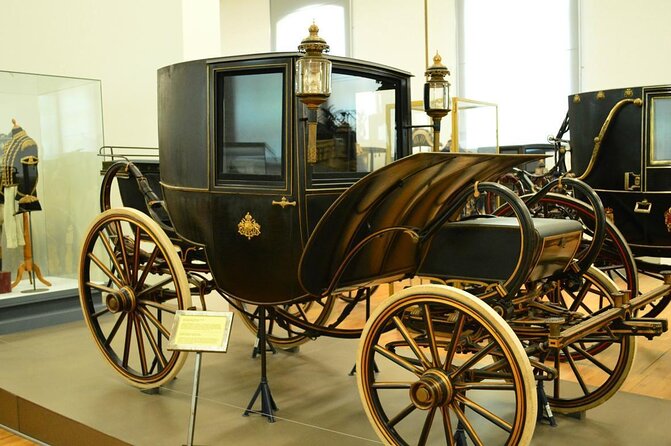
A carriage museum can sound like a niche stop. Here, it works because the vehicles are not presented as isolated antiques. Each one explains something about ceremony, travel, family life, power, or mourning at the Habsburg court.
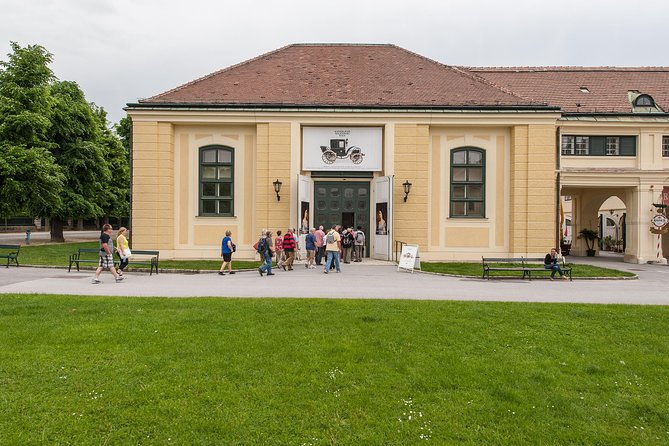
The Imperial Carriage Museum, called Kaiserliche Wagenburg Wien, sits near Schönbrunn Palace. Your ticket gives you admission to the museum, and you can use your mobile ticket at the entrance. The visit is not a guided walking tour, so you set your own pace and choose how much information to read or hear.
I would allow at least 45 minutes. That is enough to see the main vehicles and get a feel for the collection. If you enjoy royal history, costume, or design, give it closer to an hour or 1.5 hours. One visitor had limited time and moved quickly from carriage to carriage, yet still found the collection worthwhile. That is useful to know if you are fitting the museum between the palace, gardens, and other Vienna sights.
The museum is open daily from 10 a.m. to 4 p.m. The same hours apply from January 1 through February 28, 2026, and from March 1 through December 31, 2026. Since the museum closes in the afternoon, do not leave it as a late-evening option.
More palace visits in Vienna:
- Vienna: Schönbrunn Palace & Gardens Skip-the-Line Tour
★ 4.7 · 7,739 reviews - Vienna: Skip-the-Line Schönbrunn Palace & Gardens Tour
★ 4.8 · 5,411 reviews - Vienna: Bus & Schönbrunn Palace Skip-the-Line Guided Tour
★ 4.3 · 2,802 reviews
From Imperial Coach to Children’s Carriages
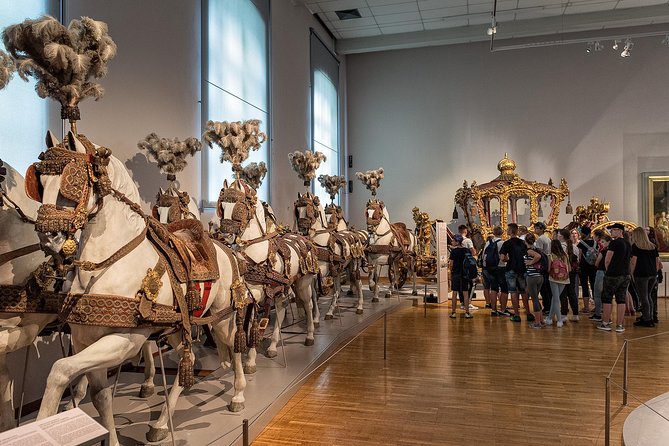
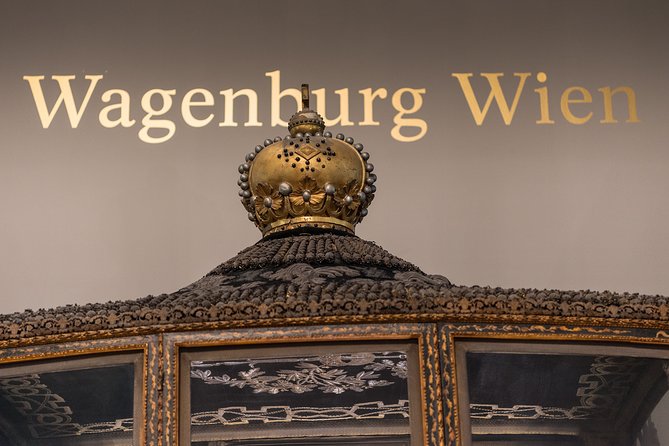
Start with the largest and most ceremonial vehicles. The baroque Imperial Coach is the obvious centerpiece, built to project rank rather than comfort. Its scale, decoration, and formal purpose show how public appearances worked before modern transport.
You will also see state carriages used for major occasions, along with travelling coaches designed for longer journeys. This change in purpose matters. A grand coach tells you how the monarchy wanted to be seen, while a travelling coach suggests the practical demands of moving a royal household from one residence to another.
The collection also includes children’s carriages belonging to Habsburg princes and princesses. These smaller vehicles soften the grand political story. They remind you that the court was also a family, with children surrounded by carefully made objects from an early age.
The displays include carriages associated with Maria Theresia, Napoleon, and Franz Joseph. You are not simply looking at attractive woodwork and metal fittings. You are seeing the equipment of rulers whose journeys could involve ceremony, military power, dynastic marriage, or court routine.
Lighting can be subdued in parts of the museum. That helps protect delicate objects, but it can make certain details harder to see. Take your time before moving on, especially when a carriage has small labels or fine interior work.
Following Sisi From Marriage to Tragedy
The Sisi Trail is the museum’s most focused section. It follows Empress Elisabeth from her marriage through her final days, using the vehicles and objects connected with different stages of her life.
The opening part of the story includes the coach she rode in as an imperial bride. This places the young Elisabeth inside the formal machinery of Habsburg marriage. Her arrival was not merely a private family event. It was part of the public life of an empire.
The trail then moves through her years at court and her connection with Hungary. One of the most impressive objects is the golden Imperial Coach used at her coronation as queen of Hungary. Its decoration is grand, but its real value is the setting it provides for understanding Sisi’s public image and political importance.
The displays also include charming carriages used by her children. These are smaller and more intimate than the coronation coach, making a useful counterpoint to the official side of her life. I found this shift in scale important: you see both the empress as a public symbol and the family around her.
The final section is somber. The museum displays the carriage from which Sisi alighted only minutes before her assassination in Geneva. Nearby is the impressive black hearse that carried her to her final resting place.
That sequence gives the trail a clear emotional arc without requiring a long guided explanation. You begin with a bride entering imperial life and end with the objects tied to her death and funeral. If you know little about Sisi, the route gives you a straightforward introduction. If you already know her story, the original objects make it more tangible.
The Robe, Saddle, and Riding Chapel
The carriages are the main reason to visit, but Sisi’s personal objects add depth. The most visually memorable may be the sumptuous black robe with its extremely long train, designed for the empress by Fanny Scheiner around 1885.
The robe is connected with the image of Sisi as a famously slender beauty. Its cut and length are more revealing than a portrait alone. You can see how clothing helped shape the public image of an empress, while also hinting at the demands of court presentation.
You will also see the only surviving saddle used by Sisi. She was regarded as an exceptional horsewoman, and this object gives a more personal view of her than a formal carriage does. It suggests the importance of riding in her life and the discipline behind her public appearance.
Another unusual display is the reconstructed riding chapel. It brings together portraits of her favorite horses. The word chapel may sound grand, but the point is personal rather than religious: this is a small memorial space built around the animals she cared about.
These objects are valuable because they prevent the Sisi Trail from becoming only a procession of vehicles. You see her as bride, queen, rider, fashion figure, mother, and tragic public character. That range is one of the museum’s strongest features.
Other imperial addresses in Vienna:
- Vienna: Skip-the-Line Sisi Museum, Hofburg and Gardens Tour
★ 4.8 · 5,918 reviews - Tickets for the Albertina Exhibitions
★ 4.7 · 2,126 reviews - Vienna: Imperial Treasury in the Hofburg Palace
★ 4.4 · 1,791 reviews - Vienna: Imperial Crypt Entrance Ticket
★ 4.6 · 1,507 reviews
A Self-Guided Visit With Room to Set Your Pace
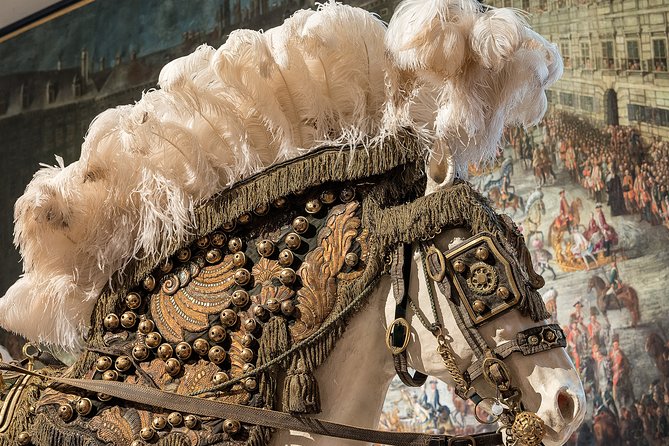
The museum is self-guided, with detailed explanations placed throughout the exhibition. An audio guide is also part of the experience as described for this visit, giving you another way to learn about the objects as you walk.
That format suits the collection. You can spend several minutes studying one carriage, then move quickly past a vehicle that interests you less. A private guide is allowed, but a guide is not included in the ticket.
I like self-guided museums when the objects are well labeled, and this one gives you enough structure to follow the main story. The signs explain the history and use of the vehicles, while the arrangement of the Sisi Trail keeps the visit from feeling random.
There is one practical limitation. Some halls and passageways are narrow, so a large group can block your view of a carriage or make it difficult to hear an explanation. The activity information gives a maximum group size of 10, which should be easier to manage than a large coach group. Still, if you arrive when the space is crowded, stand back and return to the most popular displays after the first wave moves on.
A visit around 4 p.m. can be less crowded according to one account, but the museum closes at 4 p.m., so do not treat that as a reliable sightseeing time. You need enough time to enter and see the collection before closing.
How the $14.48 Ticket Fits a Schönbrunn Day
At $14.48 per person, this is not the largest expense of a Vienna sightseeing day, but its value depends on your interests. If you only have a few hours at Schönbrunn and care mainly about the palace rooms or gardens, you may prefer to spend your time elsewhere.
If you enjoy royal history, costumes, historic transport, or Sisi, the price is reasonable for the amount of material on display. The museum is not a quick room with a few ceremonial vehicles. You get access to a substantial collection, the Sisi Trail, personal objects, and explanatory material.
The museum also works well when you want a calmer stop after walking through the palace grounds. It does not require the same physical effort as a long garden visit, and you can shorten the visit if your schedule changes.
Check whether any Schönbrunn combination pass you hold includes this museum before buying a separate ticket. One account specifically notes that admission required an extra payment even with a Classic Plus pass. The exact contents of passes can change, so this is worth checking before you pay twice.
Photos are allowed, which is a useful benefit for anyone interested in carriage design and decorative details. Staff were described as helpful, though one mobile ticket had to be explained and was not accepted immediately at the entrance. Keep your booking confirmation easy to open, and allow a few extra minutes for entry rather than arriving at the last moment.
Getting There and Planning the Visit
The museum is near public transportation and close to Schönbrunn Palace. Transfers are not included, so you arrange your own route. The practical advantage is that you can combine the museum with the palace and gardens without treating it as a separate day trip.
I would place it after the palace or during a break from the gardens. The collection gives you a different view of the same imperial world. Instead of rooms, paintings, and garden design, you see the vehicles that carried the court through ceremonies, journeys, births, and funerals.
Because opening hours are 10 a.m. to 4 p.m. every day, plan around the closing time. A morning visit gives you the most flexibility. A midday visit also works well, especially if you already know you want an hour or more for the displays.
The listed duration is about 45 minutes, but that is a minimum for anyone who reads only selected labels. If you want to follow the Sisi Trail carefully and examine the objects, plan closer to 60 to 90 minutes.
Free cancellation is available if you cancel at least 24 hours before the scheduled start time. Changes or cancellations made less than 24 hours ahead are not accepted for a refund, and the cut-off follows local Vienna time.
Who Will Get the Most From This Museum
I would recommend this stop most strongly to:
- People fascinated by Sisi and the Habsburg family
- History buffs who enjoy objects connected with famous rulers
- Anyone interested in historic vehicles, costume, or court ceremony
- Families who may appreciate the smaller children’s carriages
- Visitors who want an indoor addition to a Schönbrunn visit
- Anyone with 45 to 90 minutes for a focused museum stop
You do not need to be an expert. The displays give you enough background to understand what you are seeing, and the Sisi Trail offers a clear path through the collection.
I would be more cautious if you dislike museums built around objects rather than interactive activities. You will spend much of the visit reading labels and looking closely at carriages. The museum also may not suit you if your Schönbrunn schedule is already packed and you have no interest in imperial history.
Should You Book the Imperial Carriage Museum?
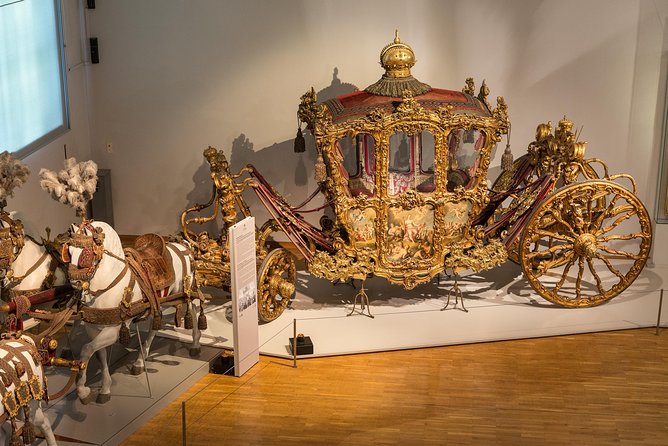
Yes, if you want more than the palace interiors and gardens. The museum adds human detail to the Habsburg story, from the ceremonial Imperial Coach to the children’s carriages and Sisi’s riding equipment. The Sisi Trail is especially effective because it gives the collection a clear beginning, middle, and end.
Book it if you can spare at least 45 minutes, and preferably an hour. Use the mobile ticket, check any combination-pass conditions, and avoid arriving right at closing time. If you are short on time, focus on the Imperial Coach, the Sisi Trail, the black robe, the saddle, and the funeral carriage.
Skip it only if your day at Schönbrunn is already full or royal carriages hold little appeal. For most history-minded visitors, the $14.48 admission buys a quiet, focused look at the machinery and personal objects behind Vienna’s imperial image.
FAQ
Where is the Imperial Carriage Museum located?
The museum is near Schönbrunn Palace in Vienna, Austria. It is close to public transportation.
How much does admission cost?
The listed price is $14.48 per person. The ticket includes entrance to the Imperial Carriage Museum.
How long does the visit take?
The estimated duration is about 45 minutes. If you read the displays and follow the Sisi Trail carefully, allow about one to 1.5 hours.
Is a guide included?
No. A personal guide is not included, though you can come with your own private guide. The museum provides detailed explanations and an audio guide option.
What are the opening hours?
The museum is open daily from 10 a.m. to 4 p.m. The listed hours apply from January 1 through February 28, 2026, and from March 1 through December 31, 2026.
What does the Sisi Trail include?
The trail follows Empress Elisabeth from her wedding to her tragic death. It includes her bridal coach, her children’s carriages, the golden coach used at her coronation as queen of Hungary, the carriage she left shortly before her assassination, and her black funeral carriage.
Can I cancel the booking for a refund?
Yes. You can cancel at least 24 hours before the experience start time for a full refund. Cancellations or changes made less than 24 hours before the start time are not accepted for a refund.
More Museums in Vienna
- Vienna Kunsthistorisches Museum Day Admission Ticket
★ 4.6 · 3,690 reviews - Vienna: Chocolate Workshop in Chocolate Museum w/ Tasting
★ 4.5 · 1,802 reviews - Sigmund Freud Museum Ticket
★ 4.6 · 1,668 reviews - Vienna: St. Stephen’s Cathedral & Dom Museum Wien Tickets
★ 4.5 · 1,652 reviews
More horse carriage rides in Vienna
- Vienna: 30-Minute Fiaker Ride in the Old Town
★ 4.5 · 1,092 reviews - Vienna: Secrets of the Fiaker & Horse-Drawn Carriage Ride
★ 4.8 · 743 reviews - Vienna: Imperial Carriage Museum in Schönbrunn Palace Ticket
★ 4.7 · 339 reviews - Vienna: Culinary Horse-Drawn Carriage Experience
★ 4.7 · 291 reviews
Just added in Vienna
- World War II History Vienna Old Town Private Walking Tour★ 4.8 · 9 reviews
- Vienna: Wiener Schnitzel and Strudel Cooking Class★ 4.9 · 126 reviews
- Vienna: Wine Tasting Tour★ 4.8 · 61 reviews
- Vienna: Winery and Wine Tasting Tour with a Wine Expert★ 5.0 · 5 reviews
- Vienna: Wine Tasting E-Bike Tour★ 4.9 · 46 reviews
- Vienna: Wine Tasting at Schönbrunn Palace★ 4.3 · 71 reviews
- Vienna: Unforgettable Private City Tour★ 5.0 · 7 reviews
- Vienna Urban Art Tour: Explore a different side of Vienna!★ 3.8 · 14 reviews
Schonbrunn Palace Tours, compared.
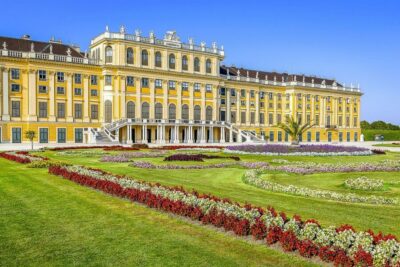
Schönbrunn Palace & Gardens Skip-the-Line Tour
Read our review →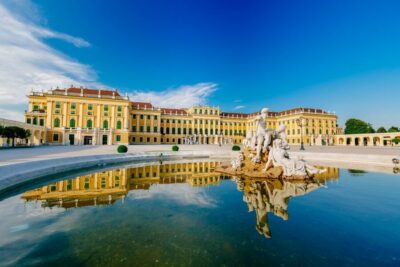
Bus & Schönbrunn Palace Skip-the-Line Guided Tour
Read our review →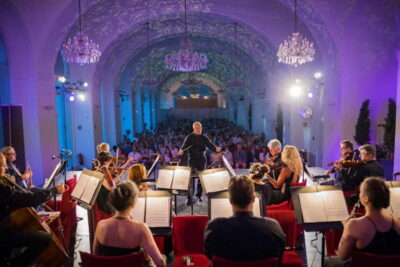
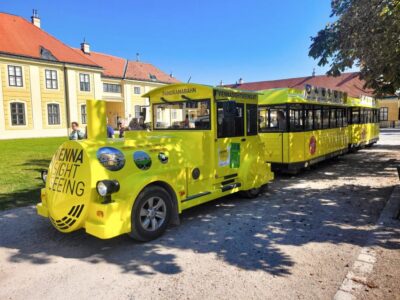
Panorama Train Tickets to explore Schönbrunn Palace
Read our review →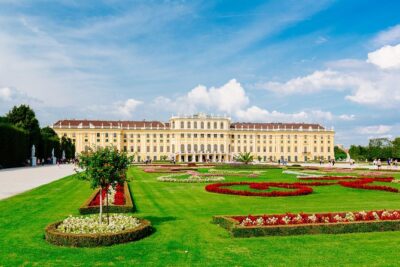
Skip-the-Line Schonbrunn Palace Guided Tour and Vienna Historical City Tour
Read our review →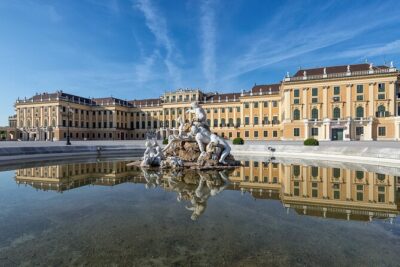
Exclusive Evening at Schönbrunn Palace: After-Hours Audiotour, Dinner, Concert
Read our review →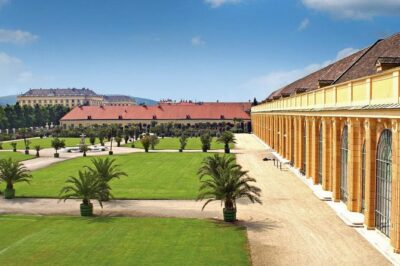
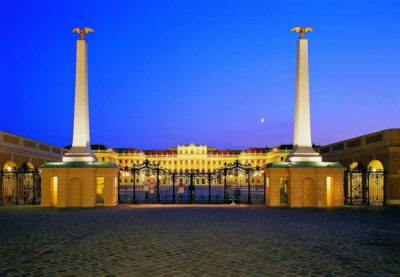
Schönbrunn Palace Evening Tour, Dinner and Concert
Read our review →Browse the lists this tour appears in