
Reviewed · WALKING TOURS
World War II History Vienna Old Town Private Walking Tour
Vienna’s grand center can look untouched by war, but this walk shows you the darker clues in plain sight. You begin at the former Gestapo headquarters and follow a route through Jewish remembrance sites, Hofburg, Heldenplatz, and the opera house area, where wartime damage still forms part of the city’s story. The route links WWI and WWII, rather than treating the Second World War as an isolated event.
I like the private format, since you can ask about a family connection, a monument, or a difficult point in Austrian politics without waiting for a large group. I also like the wide choice of languages and the way the tour includes both well-known sights and small memorial markers you could easily miss alone.
The main drawback is time. Two hours is enough for a strong introduction, but not enough for every wartime site in Vienna or long interior visits. This is an outdoor walking lesson, so comfortable shoes, weather-ready clothing, and a willingness to keep moving matter.
Key points
- Start at the former Gestapo headquarters: Morzinplatz gives the tour an immediate, serious focus.
- Follow Vienna’s wartime story in order: The guide connects Franz Ferdinand’s assassination, WWI, Austrofascism, Hitler’s annexation, Nazi rule, and the war’s end.
- See Jewish remembrance sites: The Holocaust Memorial and Remembrance Stones bring the fate of Vienna’s Jewish population into the city center.
- Visit imperial and political landmarks: Hofburg, Heldenplatz, Burggarten, and the monument to Emperor Franz Joseph I add context to Austria’s changing government.
- Finish beside a damaged opera house: The Monument Against War and Fascism sits near the Vienna State Opera, which suffered heavy damage in 1945.
- Choose your language and ask questions: Tours are private, with guides available in 12 languages and a group limit of up to 25 people per guide.
Beginning at Morzinplatz and the Gestapo site
The meeting point is in front of the Memorial to the Victims of Nazi Terror at Morzinplatz 4 in Vienna’s first district. This is not a neutral starting point. The memorial marks the location of the former Hotel Metropol, which the Gestapo used as its Vienna headquarters from 1939.
I appreciate this opening because it puts the human cost first. You are not beginning with a palace façade or a broad political lecture. You begin with people who suffered under Nazi terror, then work backward and forward through the events that made such a place possible.
Your guide is expected to explain the site as part of Austria’s wartime story, including the growth of Nazi power, repression, and the experience of people living under German occupation. The discussion includes Adolf Hitler, Ernst Kaltenbrunner, and other Austrian Nazis, as well as the political conditions that led Austria into the conflict.
The memorial itself is a compact stop, not a museum visit. If you prefer displays, documents, and long periods indoors, this tour may feel brief. If you want a clear starting point for understanding Vienna’s wartime past, the location does its job immediately.
More Walking Tours in Vienna
- Vienna: Guided Walking Tour of City Center Highlights
★ 4.7 · 4,989 reviews - Vienna: Vienna Central Cemetery Guided Walking Tour
★ 4.8 · 3,307 reviews - Vienna: Guided Walking Tour of City Highlights & Hidden Gems
★ 4.9 · 2,180 reviews
Connecting Franz Ferdinand, WWI, and WWII
A useful feature of this walk is its timeline. The guide does not simply point out places connected to 1939 through 1945. You also learn about the assassination of Franz Ferdinand, the events leading to WWI, and the political consequences that followed.
That wider frame matters in Vienna. The tour treats WWI and WWII as connected chapters, with the collapse and political upheaval after the first war helping explain the tensions that shaped the next decades. You can ask questions about causes and consequences instead of memorizing isolated dates.
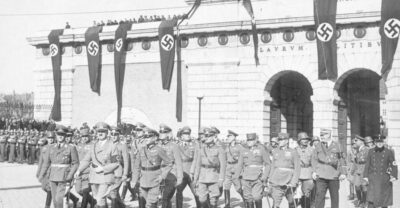
The tour also covers Austrofascism, a subject many short city walks skip. That makes the experience more useful for anyone trying to understand Austria’s political path before Hitler’s annexation of the country, rather than assuming the story began only when German troops arrived.
I would pay close attention during this portion if you know little about Austrian politics. The subject can become dense, especially in a two-hour format. A private guide helps because you can ask for a simpler explanation or request more detail when a name or political movement is unfamiliar.
Reading Vienna’s Jewish memorials
As you walk through the Inner Stadt, the tour turns toward the fate of Vienna’s Jewish citizens during the Holocaust. You pass the Holocaust Memorial and several Remembrance Stones, small markers placed in the pavement to keep individual lives connected to the streets where people once lived.
These stops change the scale of the tour. Political decisions and military events can feel distant when presented only as a timeline. A memorial in a sidewalk or a dedicated structure in the middle of the city brings the story back to individual people and neighborhoods.
The route does not promise a museum collection or a full Holocaust study session. It offers a guided introduction to the places of remembrance that are already part of central Vienna. That makes it a strong choice if you want historical context while seeing the Old Town, but less suitable if your main aim is a full day devoted to Jewish Vienna.
I would also expect a serious tone here. This is not a light sightseeing walk with a few wartime facts added for variety. The Holocaust is a central part of the route, and you should allow time afterward if you want to reflect or visit more memorial sites independently.
Hofburg, Heldenplatz, and Austria’s public face
The walk continues to the Hofburg complex, seen from the outside. This enormous imperial setting helps explain the power and symbolism of Vienna’s center. You also see Heldenplatz, where a memorial crypt dedicated to victims of WWI and WWII adds another layer to the city’s public memory.
Because the tour remains outdoors, you will not receive an interior tour of the Hofburg. That is an important limitation if you were hoping to explore the palace rooms. Here, the value comes from the guide’s explanation of how grand public spaces were used, remembered, and connected to Austria’s political life.
Heldenplatz is especially useful because it brings architecture and modern history into the same frame. The setting recalls imperial Austria, while the memorial work addresses the destruction and suffering of the twentieth century. You are looking at a place shaped by old authority and later political conflict.
The tour also includes the monument to Emperor Franz Joseph I in Burggarten. This stop adds a person to the larger story of the Habsburg era and helps your guide connect imperial rule with the events that followed. It is not presented as a separate palace sightseeing stop. Instead, it supports the walk’s main purpose: reading the city as a record of political change.
More walking routes in Vienna:
- Vienna: Viennese Underworld Guided Walking Tour
★ 4.7 · 1,865 reviews - Vienna: World War II Historical Walking Tour
★ 4.8 · 1,772 reviews - Vienna Historic Center Small Group Walking Tour
★ 5.0 · 1,746 reviews - Vienna: Private Walking Tour with a Local Guide
★ 4.6 · 1,420 reviews
Ending near the Vienna State Opera
The final stop is the Monument Against War and Fascism near the Vienna State Opera. The opera house was heavily damaged by the bombing of 1945, giving the ending a direct link to the last stage of the war in Vienna.
I like this finish because it brings the story back to physical damage. At Morzinplatz, the tour begins with Nazi terror and political repression. Near the opera, it closes with the destruction caused by war and the city’s effort to remember both fascism and its victims.
The monument is also a good place to think about the difference between a city’s beauty and its past. Vienna’s central streets can feel polished and grand, but this stop reminds you that the same center was affected by bombing, occupation, and liberation.
You should not expect the tour to end with an indoor exhibit or a long final presentation. The endpoint is a city monument in the open air. If you want more time with it, plan to remain after the guide finishes.
What the private format adds
The tour costs $214 per person, which is a serious price for two hours. The value depends heavily on how much you want personal guidance and how many people are in your group.
For a couple or small family, the private format can make sense. You can set the pace within the fixed route, ask direct questions, and steer some of the conversation toward Jewish history, military events, Austrian politics, or the role of particular figures. A standard group walk may offer a lower price, but it cannot provide the same level of personal attention.
The arrangement allows up to 25 people per guide. That is a wide range. A small private party should have an easier time hearing the guide and asking questions. A group close to the limit may feel more like a regular walking tour, especially on busy streets. Larger bookings receive additional guides, with a higher price.
The strongest reason to pay more is not simply exclusivity. It is the chance to shape the explanation around your interests. If you already know the broad story of WWII and only want to see the monuments, $214 may feel high. If you want an organized historical framework in a language you choose, the cost is easier to justify.
Guides, languages, and the human side of the walk
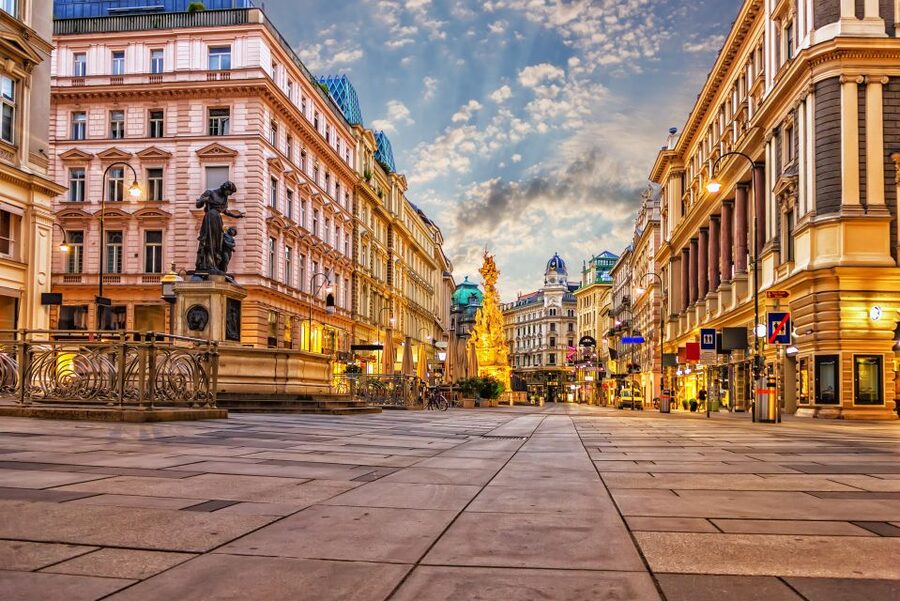
Guides named in the booking information include Peter, Sanda, Alexander, and Frau Heuberger. Their approach can vary, but the experience is designed around a licensed guide with commentary on WWI, WWII, and the Holocaust.
The language list is unusually broad: English, German, Italian, French, Spanish, Russian, Polish, Chinese, Japanese, Croatian, Portuguese, and Arabic. This is valuable for families or mixed-language groups who want complicated material explained clearly rather than pieced together from signs.
The personal attention also matters for families. Peter was able to answer detailed questions and remain patient with a group traveling with a two-year-old. That does not turn the walk into a children’s activity, but it suggests that a family can take needed pauses without feeling rushed.
Frau Heuberger also handled heat with a sensible balance of commentary, walking, and breaks in shaded places. I would still plan around the weather, since the tour is on foot and Vienna’s summer sun can make an exposed route tiring.
Pace, clothing, and practical planning
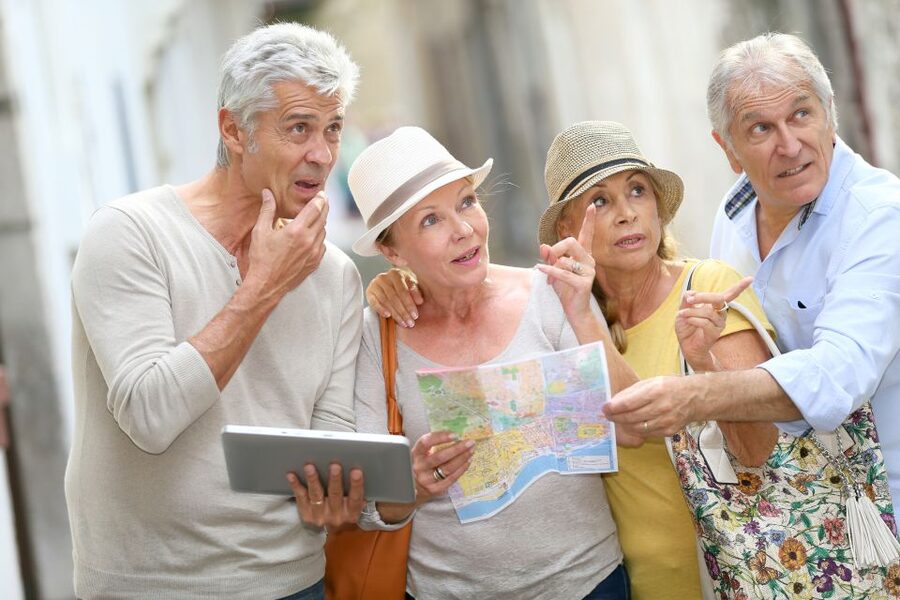
The walk lasts two hours, and the route includes several stops in central Vienna. Wear shoes you can comfortably use on city streets, and dress for the weather. The activity information specifically advises comfortable shoes and suitable clothing.
Check your email the day before for important information. That small step can prevent confusion about the meeting point or start time. Starting times vary, so you need to check availability when booking.
The tour is private, but it is not a vehicle tour. There is no transport between sites, and the supplied information does not include interior access to Hofburg or other buildings. Plan on an outdoor route from Morzinplatz through the Inner Stadt to the opera area.
Free cancellation is available up to 24 hours before the tour for a full refund. You can also reserve now and pay later, which helps if your Vienna schedule is still shifting.
Who will get the most from this tour?
I would choose this walk if you want a focused introduction to Vienna’s role in the two world wars and prefer a guide to organize the story for you. It suits first-time visitors who want to see major Old Town sights while learning what happened there.
It is also a good match for:
- Families with older children or teenagers who can engage with serious history
- Visitors with a personal or academic interest in WWII, the Holocaust, or Austrian politics
- Private groups that need a specific language
- People who prefer questions and discussion over a fixed audio guide
- Anyone who wants to connect famous Vienna landmarks with twentieth-century events
I would look elsewhere if you want a relaxed general city tour, extensive palace interiors, or a full-day study of the Holocaust. The tone is serious, the subject is demanding, and two hours sets a firm limit on how much detail the guide can provide.
Should you book the WWII Old Town walk?
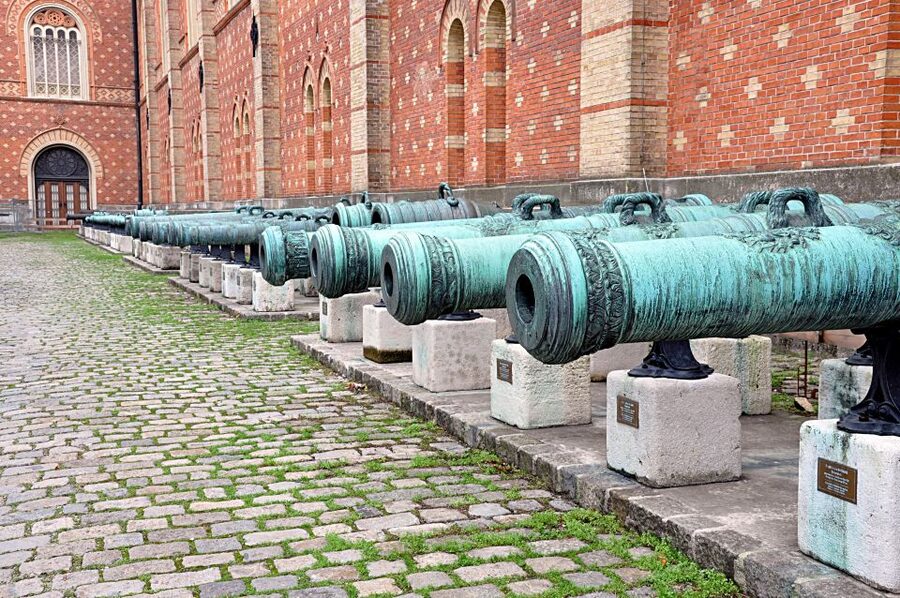
Book it if the idea of seeing Vienna’s familiar center through its wartime memorials appeals to you. The route has a clear shape, beginning at the former Gestapo headquarters and ending near a bomb-damaged opera house, with Jewish memorials, Hofburg, Heldenplatz, and Burggarten along the way.
The best value comes when you have a small group, want a particular language, and plan to ask questions. At $214 per person, I would not book it simply to collect a few WWII facts. I would book it for the guided connections between places, people, and political events that are easy to miss on your own.
FAQ
Where does the tour begin?
It begins in front of the Memorial to the Victims of Nazi Terror at Morzinplatz 4, 1010 Vienna, Austria.
Where does the tour end?
The tour ends at the Monument Against War and Fascism near the Vienna State Opera.
How long does the walking tour last?
The tour lasts two hours.
Is the Hofburg visited inside?
No. The Hofburg is viewed from the exterior as part of the walking route.
Which historical subjects are covered?
The guide discusses WWI, WWII, the assassination of Franz Ferdinand, Austrofascism, Hitler’s annexation of Austria, the Holocaust, Nazi terror, the bombing of Vienna, and the city’s liberation.
Which languages are available?
Guides are available in English, German, Italian, French, Spanish, Russian, Polish, Chinese, Japanese, Croatian, Portuguese, and Arabic.
Is this a private tour?
Yes. It is arranged for a private group, with one guide for groups of 1 to 25 people. Larger groups receive additional guides and have a higher price.
What should I wear?
Wear comfortable walking shoes and dress appropriately for the weather. The tour takes place outdoors on foot.
More Historical Tours in Vienna
- Vienna: Time Travel and Magic Vienna History Tour
★ 4.6 · 3,879 reviews - Time Travel-Magic Vienna History Tour Ticket
★ 4.5 · 1,099 reviews - Skip-the-Line Schonbrunn Palace Guided Tour and Vienna Historical City Tour
★ 3.5 · 940 reviews - Vienna Mozart Concert in Historical Costumes at the Musikverein
★ 4.5 · 888 reviews
Just added in Vienna
- Vienna: Wiener Schnitzel and Strudel Cooking Class★ 4.9 · 126 reviews
- Vienna: Wine Tasting Tour★ 4.8 · 61 reviews
- Vienna: Winery and Wine Tasting Tour with a Wine Expert★ 5.0 · 5 reviews
- Vienna: Wine Tasting E-Bike Tour★ 4.9 · 46 reviews
- Vienna: Wine Tasting at Schönbrunn Palace★ 4.3 · 71 reviews
- Vienna: Unforgettable Private City Tour★ 5.0 · 7 reviews
- Vienna Urban Art Tour: Explore a different side of Vienna!★ 3.8 · 14 reviews
- Vienna: Concert by the Vienna Baroque Orchestra★ 4.6 · 56 reviews
Walking Tours, compared.
Guided Walking Tour of City Center Highlights
Read our review →
Guided Walking Tour of City Highlights & Hidden Gems
Read our review →
Vienna Historic Center Small Group Walking Tour
Read our review →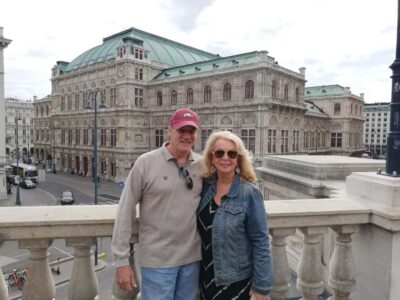
Browse the lists this tour appears in