
Reviewed · HOFBURG & IMPERIAL PALACES
Vienna: Imperial Crypt Entrance Ticket
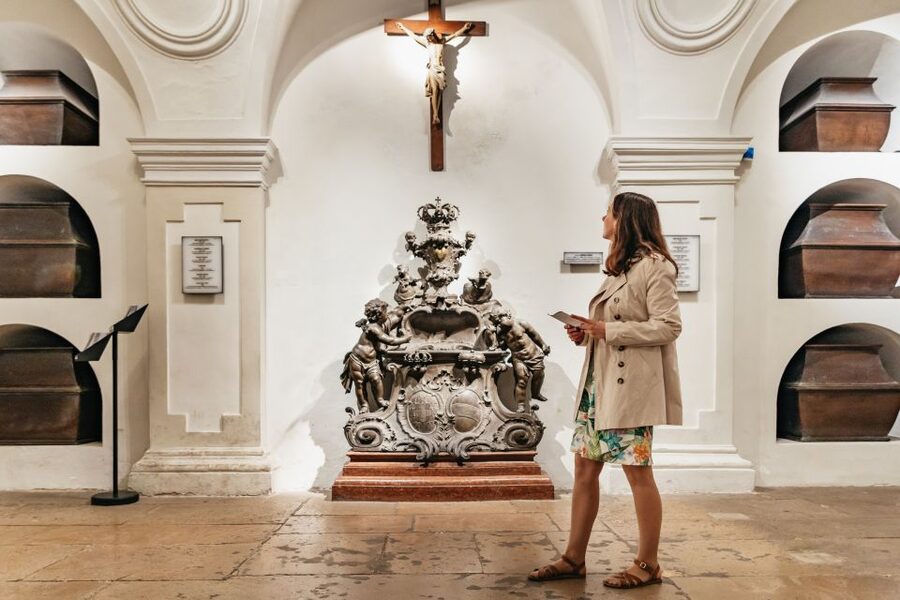
The Imperial Crypt puts you face to face with the Habsburg dynasty, not in a grand palace, but beneath a modest Capuchin church in central Vienna. Ten connected vaults hold the sarcophagi, urns, and funerary monuments of about 150 family members across four centuries.
I like the extraordinary metalwork on the tombs, and I like how easy this stop is to fit into a day of sightseeing. You can walk through quickly in about 30 minutes, or spend 90 minutes reading about each person. The calm setting also gives the visit a solemn feel rather than a theatrical one.
The main drawback is the limited historical explanation in some areas. If you do not already know the Habsburg story, the tombs can be more impressive than understandable, so an English guided tour or extra preparation may be worth considering.
Key points to know before you go
- 150 Habsburg burials: See the final resting places of Maria Theresia, Emperor Franz Joseph, Empress Elisabeth, their son Rudolph, and many other family members.
- Ten connected vaults: The crypt grew through repeated additions and changes over more than 400 years.
- Remarkable sarcophagi: Tin, copper, bronze, silver, and gold details make the tombs as much works of art as memorials.
- A quiet setting: The crypt lies beneath the Capuchin Church and remains under the care of the Capuchin Order.
- Flexible visit length: Most people need around 30 minutes to 1.5 hours, though careful readers may stay longer.
- Small-group access: Entry is limited to nine participants, and you can combine the visit with an A Little Night Music concert.
Entering Vienna’s Habsburg burial vault
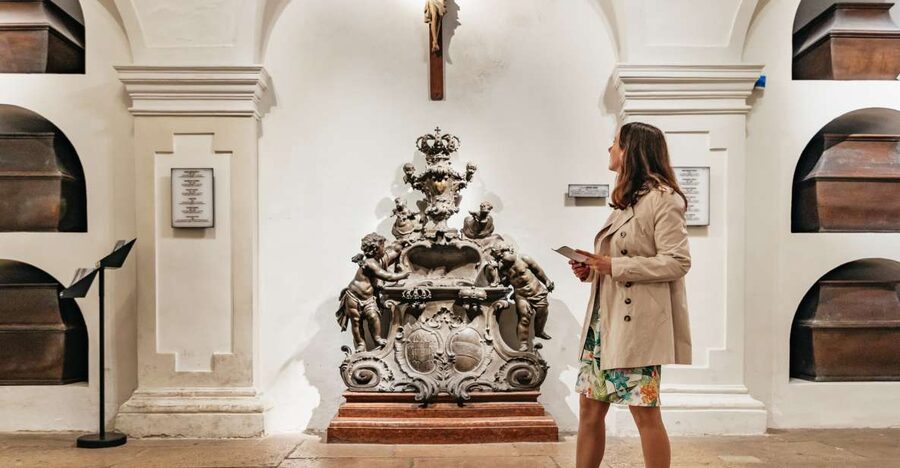
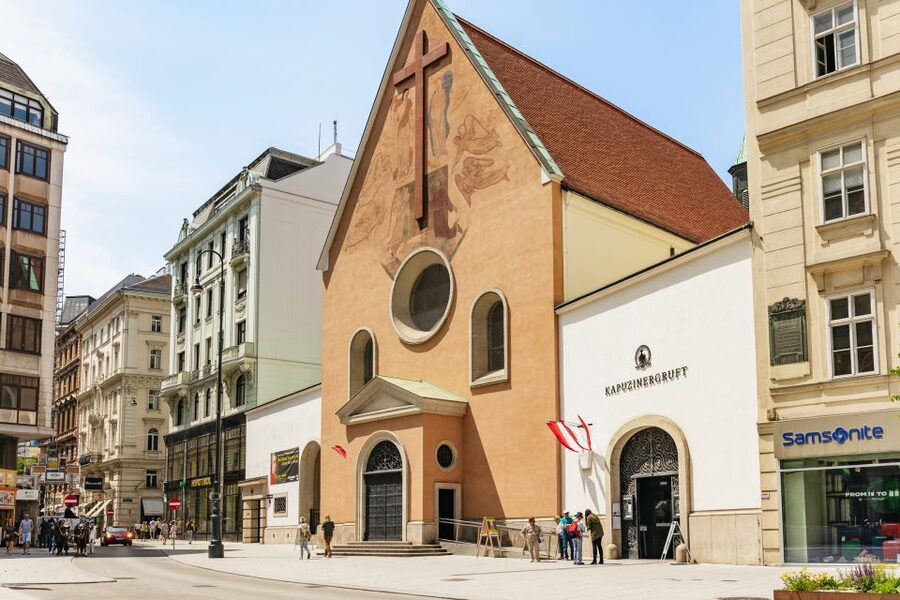
The Imperial Crypt, also called the Kaisergruft, sits below the Capuchin Church and monastery in Vienna’s city center. That location tells you something important about the experience. This is not a grand royal mausoleum built apart from ordinary life. It is a working religious place where an imperial family chose to place its dead.
The church above is humble compared with the palaces associated with the Habsburgs. Below it, however, the dynasty’s power appears in metal, stone, and careful design. The contrast makes the first impression stronger. You move from a plain religious setting into a series of rooms filled with elaborate funerary monuments.
The crypt is not one single chamber. It is a system of ten vaults, added and modified over more than four centuries. Each section reflects a different period of Habsburg rule and a different approach to memorial design. Some areas feel more architectural, while others focus attention on individual sarcophagi.
You do not need to reserve a full guided excursion to see the crypt. The standard admission provides entry, and the visit is self-paced. That works well if your Vienna schedule is tight or if you prefer to pause at only the people and objects that interest you.
Other imperial addresses in Vienna:
- Vienna: Skip-the-Line Sisi Museum, Hofburg and Gardens Tour
★ 4.8 · 5,918 reviews - Tickets for the Albertina Exhibitions
★ 4.7 · 2,126 reviews - Vienna: Imperial Treasury in the Hofburg Palace
★ 4.4 · 1,791 reviews
The tombs of Franz Joseph and Empress Elisabeth
The most familiar names here are Emperor Franz Joseph and his wife, Empress Elisabeth, better known as Sisi. Their tombs give the visit an immediate human focus. You are not simply looking at an old royal burial ground. You are standing before the memorials of figures who still shape Vienna’s image.
Franz Joseph ruled for decades, and his reign links many parts of the city’s imperial story. Elisabeth became famous for her beauty, independence, and troubled relationship with court life. Their final resting places are among the points most people seek out first.
Their son Rudolph is also buried in the crypt. His presence adds another layer to the family story, one that is less polished than the official image of imperial Vienna. If you have seen palaces, portraits, or exhibitions about the Habsburgs, the crypt gives those familiar names a physical setting.
Maria Theresia is another major figure here. Her monument is among the most impressive in the crypt, and it reflects the scale of her position within Austrian and European history. The tombs are not arranged as a simple list of rulers. Family members, spouses, children, and other relatives fill the rooms, showing how dynastic power depended on a large and complicated family network.
Why the sarcophagi deserve your attention
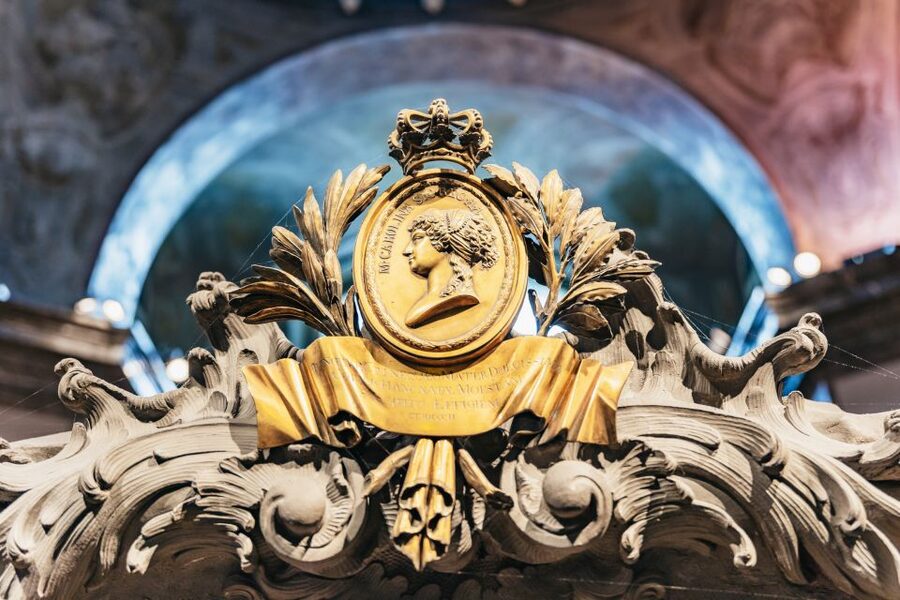
The best part of the visit is often not the name on a tomb but the object itself. The sarcophagi are made from materials including tin, copper, bronze, silver, and gold. Their surfaces carry intricate metalwork, sculpted forms, and decorative details that reward a slow look.
You will see a wide range of styles. Some coffins are restrained and heavy, while others are covered with ornament. A few appear almost architectural, with elaborate lids and sculptural decoration. The craftsmanship is easy to appreciate even if you know little about the Habsburg family tree.
I recommend looking first at the overall shape, then at the smaller details. Notice the borders, symbols, figures, and surface work. The crypt is dark and quiet, so give your eyes time to adjust before deciding that a tomb looks simple. Details become easier to see as you move closer.
The artistic quality is one reason the visit can appeal to people who are not especially interested in royal history. You can approach the crypt as a place of history, a religious site, or an exhibition of funerary art. It works on all three levels.
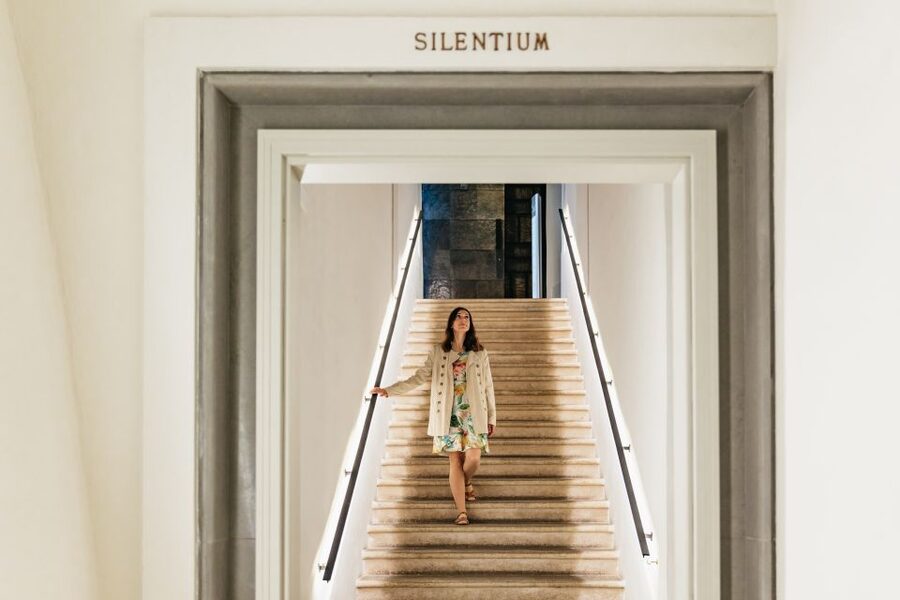
Photography and video recording are not allowed. That rule is meant to protect the character of the space and respect the dead. Follow it carefully, even if other people ignore it. The tombs are easy to find in photographs online, but the quiet atmosphere cannot be saved on a phone.
A walk through four centuries of Habsburg power
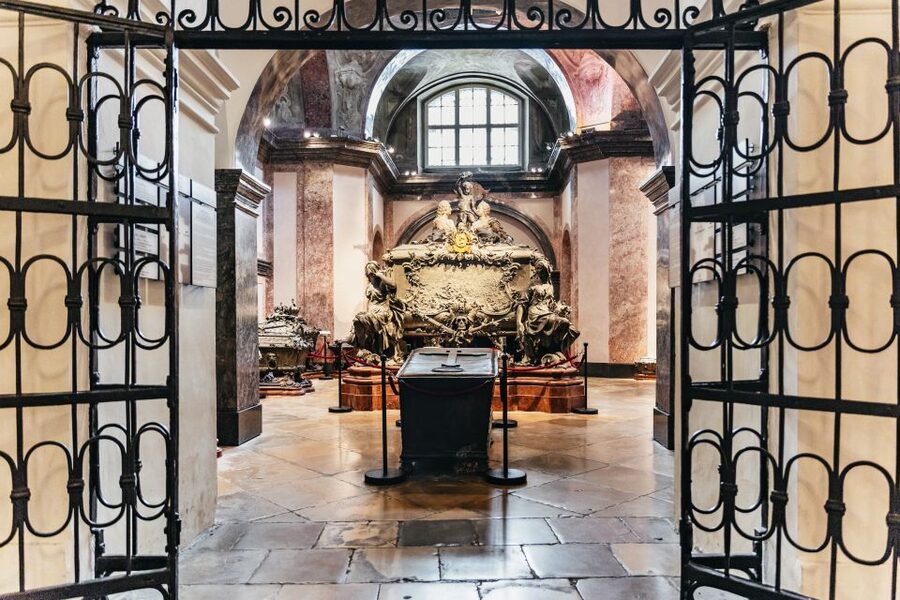
The crypt offers a physical way to understand how long the Habsburg dynasty shaped Austria and Europe. About 150 Habsburg personalities are buried here, covering generations of emperors, empresses, archdukes, children, and spouses.
That span can feel confusing if you arrive without preparation. The names repeat, family relationships are complicated, and several people held similar titles. A little background before your visit will help you understand why one burial matters more than another.
The available information panels identify people and provide historical details, but the amount of explanation in English may not satisfy everyone. Several visitors found the signs useful, while others wanted more context or an audio guide. If you are new to Austrian history, you may find yourself admiring the tombs without fully understanding the political story behind them.
A guided visit can solve much of that problem. An English guided tour may be available through the crypt for an additional €3 when booked directly at the ticket office. The guided visit lasts about an hour, according to the information available for this experience. That is a sensible upgrade if you want the back stories of the occupants instead of only their names and dates.
There is no named guide associated with the standard ticket. The included experience is entrance, not a full guided tour. Keep that distinction in mind when comparing it with a more expensive history tour.
More to book in Vienna
- Vienna: Classic Ensemble Vienna in St. Peter’s Church Ticket
★ 4.7 · 4,819 reviews - Vienna Kunsthistorisches Museum Day Admission Ticket
★ 4.6 · 3,690 reviews - Vienna: Tickets for Mozarthaus Vienna with Audio Guide
★ 4.2 · 2,344 reviews - Vienna: Skip-the-Line Entrance Ticket to the Danube Tower
★ 4.5 · 2,303 reviews
How long to allow for the Imperial Crypt
The ticket is valid for one day, but that does not mean you need an entire day at the crypt. A quick visit can take about 30 minutes. That is enough to see the major tombs and get a feel for the rooms.
Allow about 60 to 90 minutes if you want to read the information and examine the craftsmanship. One careful visit lasted around 1.5 hours, while others stayed for several hours to take in the ornate details. Your timing will depend on how much Habsburg history you already know and how closely you study the sarcophagi.
The crypt may feel busy at certain times, especially in the smaller rooms. A little patience helps. If several people are gathered around one tomb, move ahead and return later. The limited group size, listed as no more than nine participants, should help keep the experience manageable, but it does not guarantee an empty room.
I would avoid placing the crypt at the very end of a packed sightseeing day if you want to read everything. The setting is quiet, and the details deserve attention. If you mainly want to see Franz Joseph, Sisi, Maria Theresia, and the most ornate coffins, a shorter stop fits easily between other central Vienna sights.
What makes the setting feel different
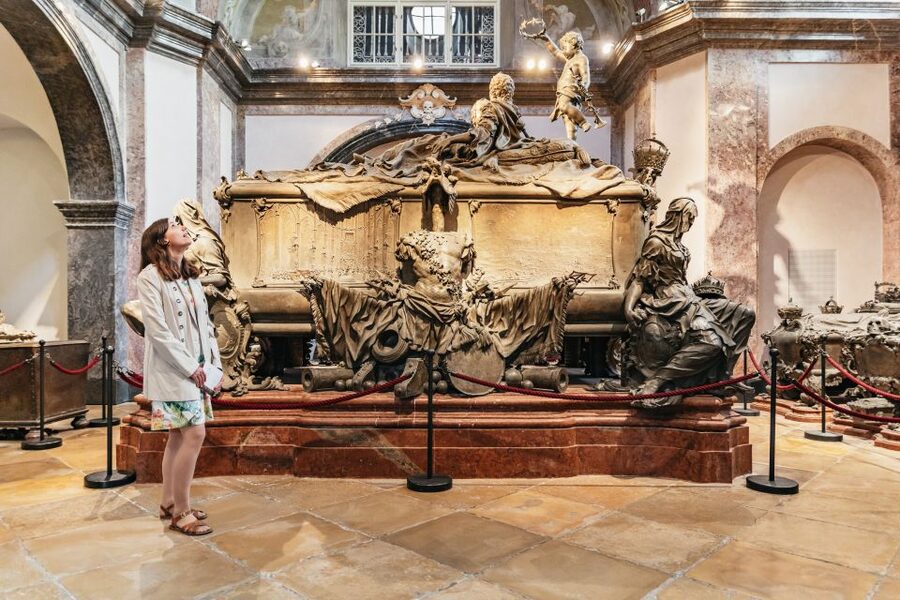
The Imperial Crypt is a solemn place, but it is not necessarily macabre. The quiet rooms, religious setting, and careful arrangement create a mood of peace mixed with sadness. Flowers and notes are still left for some members of the family, giving the space a personal quality.
That living connection matters. These are not only historic names in a museum. The Habsburgs remain part of Vienna’s public memory, and some people continue to feel a strong attachment to figures such as Sisi and Maria Theresia.
The crypt also remains under the custody of the Capuchin Order. The connection between the monastery and the burial place has continued over centuries. This helps explain why the site feels more intimate than a major palace museum.
One unusual detail is that the Habsburgs did not always keep every part of a body in the same place. Hearts associated with members of the monarchy are located inside the monastery rather than in the crypt. That tradition adds another layer to the dynasty’s burial customs and is worth knowing before you arrive.
Price, access, and practical restrictions
At about $17 per person, the ticket is reasonably priced for a central Vienna sight, particularly if you spend an hour or more examining the tombs. It offers a focused historical visit rather than a large museum with multiple galleries, so its value depends on your interest in the Habsburgs, religious history, or decorative arts.
The ticket includes entrance only. There is no standard guide, audio guide, concert, or transport included. If you want more explanation, check for the guided option at the crypt’s ticket office, which may cost an additional €3. If you want music afterward, a combo ticket can pair the crypt visit with an A Little Night Music concert.
The experience is wheelchair accessible. Pets, luggage, and large bags are not allowed. Sleeveless shirts are also listed as prohibited, so dress accordingly. Free toilets are available, and lockers can be used with a refundable €1 or €2 coin deposit.
The booking is flexible, with cancellation allowed up to 24 hours before the visit for a full refund. You can also reserve now and pay later. The listed time slot is valid for one day, but one practical note is worth remembering: staff have indicated that the booked time may not be a strict arrival time, allowing entry at another point during the day. Confirm this at the ticket office, especially if your booking is close to closing time.
Who will enjoy this visit most
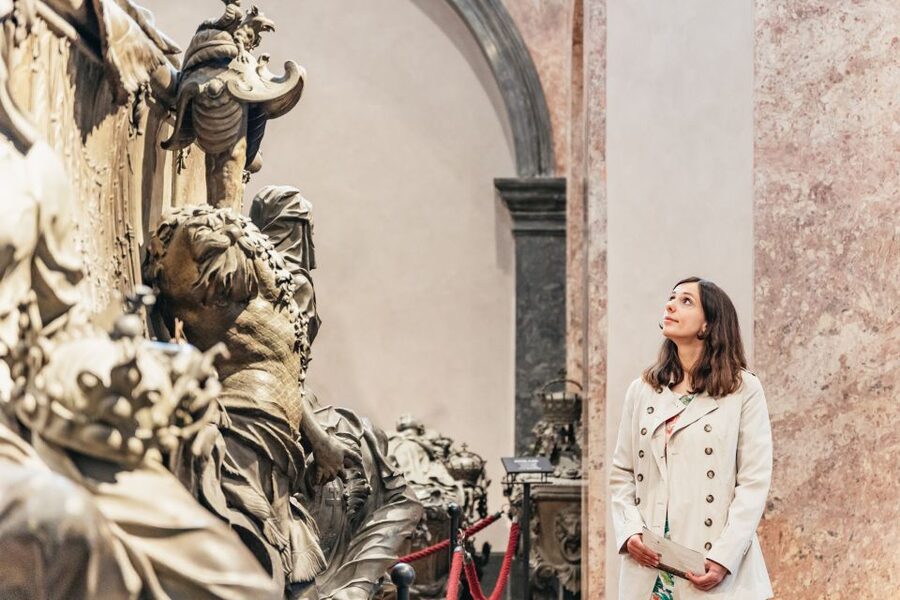
I would recommend the Imperial Crypt to anyone with an interest in the Habsburgs, Maria Theresia, Franz Joseph, Sisi, or European royal history. It is also a good choice if you appreciate metalwork, sculpture, architecture, and quiet historic interiors.
Families with older children may find it useful as a short, tangible introduction to the Habsburgs. The tombs give names and dates a physical presence, though younger children may not stay interested for long. The rules about silence, photography, and respectful behavior also matter here.
If you prefer lively storytelling, interactive displays, or a large museum, the crypt may feel too small and lightly explained. You can still enjoy the artistry, but plan to bring your own historical background or arrange a guide.
The visit suits independent planners particularly well. You choose your own pace, spend as long as you like within the opening period, and can combine it with nearby central Vienna sights. It is not a full-day attraction, and that is part of its usefulness.
Should you book the Imperial Crypt?
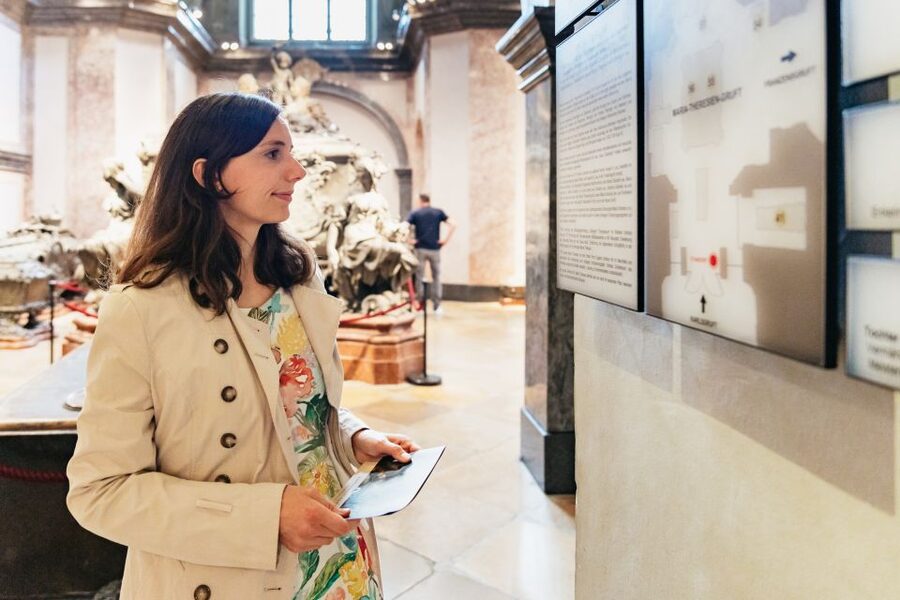
Book it if you want a close look at Habsburg burial traditions and some of the finest funerary metalwork in Vienna. The combination of imperial names, ornate sarcophagi, and a modest church setting makes this more memorable than a simple list of royal graves.
For the best experience, allow at least an hour, read a little about the Habsburg family beforehand, and look into the extra guided option if English explanations matter to you. If you have only 30 minutes, you can still see the main tombs, but you will miss much of the detail.
Skip it only if you have little interest in dynastic history, funerary art, or religious sites. For everyone else, the $17 ticket buys a quiet, unusual look at four centuries of Austrian history, with enough flexibility to fit neatly into a busy day in Vienna.
FAQ
How much does the Imperial Crypt ticket cost?
The listed price is $17 per person. The ticket includes entrance to the Imperial Crypt.
How long does a visit usually take?
You can see the crypt in about 30 minutes, but 1 to 1.5 hours is better if you want to read the information and study the sarcophagi. Some people spend several hours examining the details.
Who is buried in the Imperial Crypt?
About 150 Habsburg personalities are buried there, including Maria Theresia, Emperor Franz Joseph, Empress Elisabeth, also known as Sisi, and their son Rudolph.
Is the Imperial Crypt wheelchair accessible?
Yes. The activity information states that the crypt is wheelchair accessible.
Are photography and video recording allowed?
No. Video recording is not allowed, and visitors are asked not to take photographs in the crypt.
Can I take a guided tour?
The standard ticket is for entrance and does not include a guide. A guided tour may be available directly through the crypt’s ticket office for an additional €3, with an English option worth checking if you want more historical context.
Just added in Vienna
- 3 hour private tour in Vienna by private car★ 4.4 · 6 reviews
- Private Christmas Markets Walking Tour Vienna★ 5.0 · 31 reviews
- Christmas Markets & Shopping in Vienna★ 5.0 · 17 reviews
- Christmas Market Vienna Tour★ 4.0 · 53 reviews
- Vienna: Christmas Markets Tour★ 4.3 · 99 reviews
- Schmetterlinghaus – Imperial Butterfly House Vienna Admission Ticket★ 3.5 · 144 reviews
- Salzburg Small-Group Day Trip from Vienna★ 5.0 · 148 reviews
- Vienna Residence Orchestra: Mozart and Strauss Concert★ 4.0 · 137 reviews
Hofburg & Imperial Palaces, compared.

Skip-the-Line Sisi Museum, Hofburg and Gardens Tour
Read our review →
Entry Ticket Upper Belvedere, Klimt’s Kiss & Permanent Collection
Read our review →
Combo Ticket: Kunsthistorisches Museum & Imperial Treasury
Read our review →
“Sisi’s Amazing Journey” Virtual Reality Experience
Read our review →
Imperial Treasury & New Hofburg Palace Combo Ticket
Read our review →Browse the lists this tour appears in