
Reviewed · HOFBURG & IMPERIAL PALACES
Vienna: Imperial Treasury in the Hofburg Palace
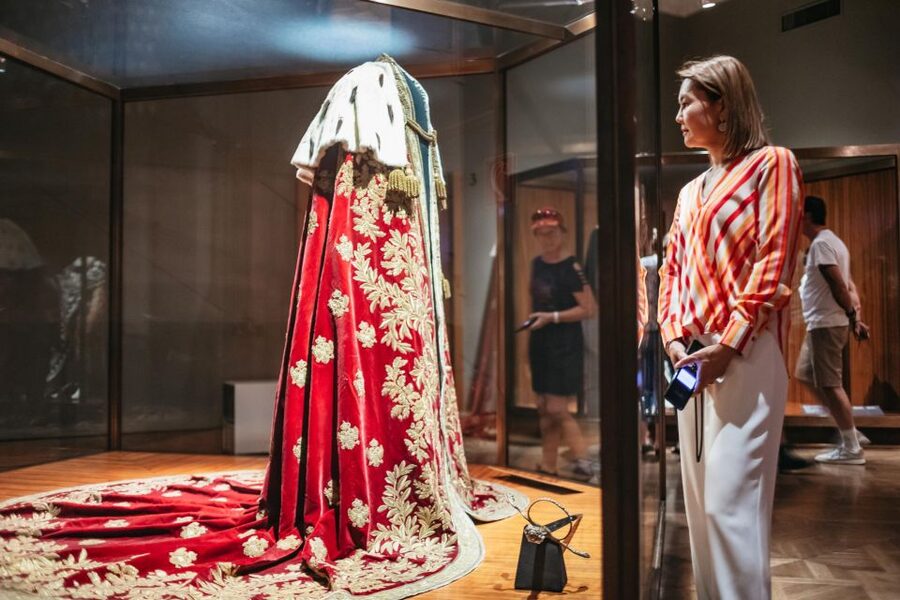
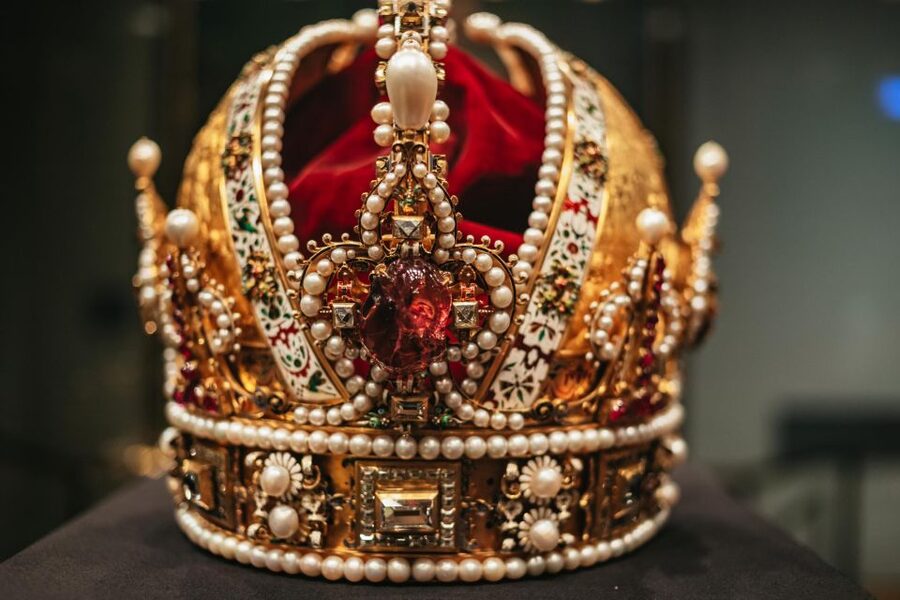
The most arresting sight here is the Austrian Imperial Crown, a heavy, jewel-covered symbol of Habsburg power. Nearby, you’ll see the crown jewels of the Holy Roman Empire, sacred relics, royal clothing, and objects so old and unusual that the collection sometimes feels like a museum and a medieval storybook at once.
I like two things especially: the treasury is compact enough to visit in about an hour, yet it packs in an astonishing range of objects; and the displays connect political power, religion, family life, and ceremony. The $18 admission is fair for a major Hofburg collection, but remember that the basic ticket does not include a guided tour or audio guide.
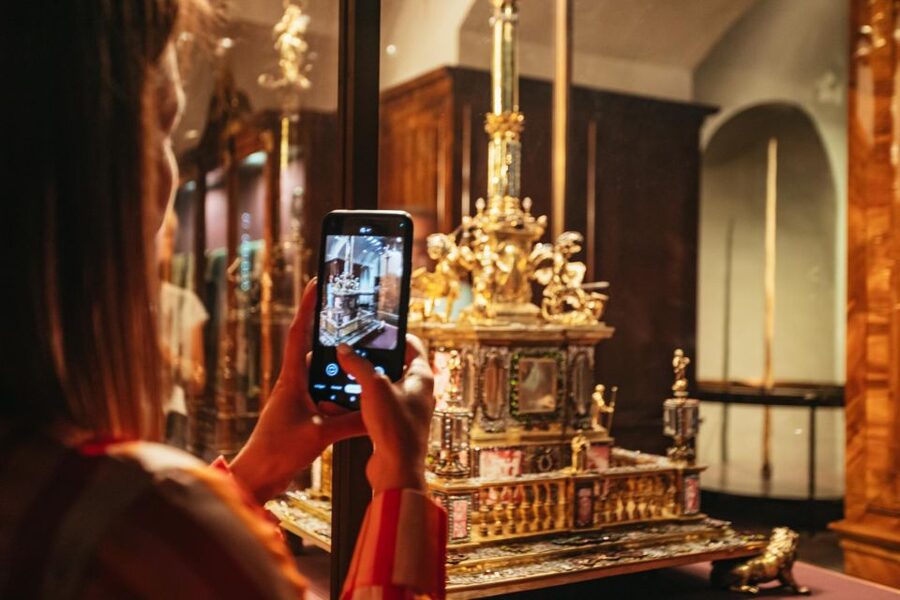
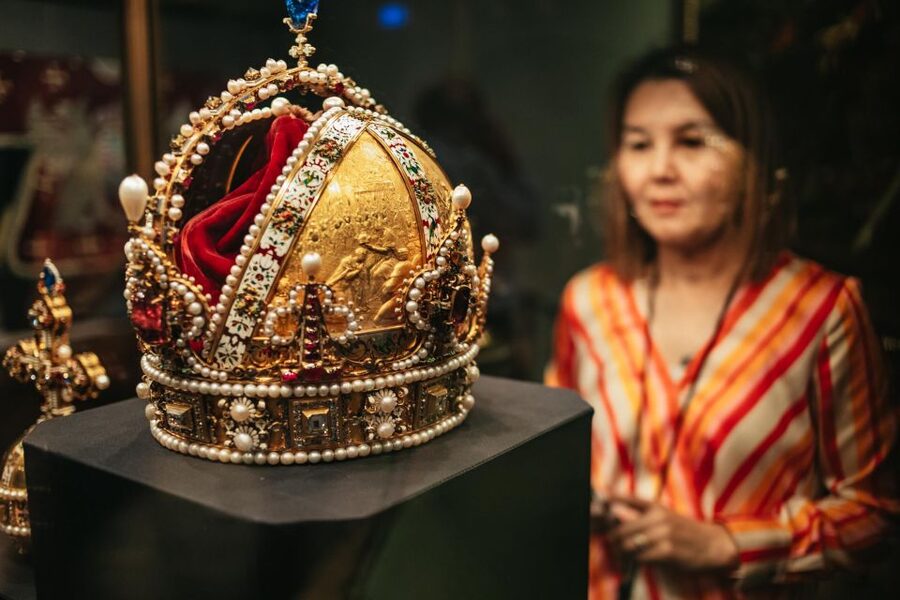
- The Austrian Imperial Crown: See one of Europe’s most famous royal crowns in the former Habsburg treasury.
- Holy Roman Empire regalia: Examine the imperial crown and related objects tied to centuries of European rule.
- Sisi’s personal jewelry: Find parts of the original jewelry belonging to Empress Elisabeth.
- Legendary relics: Look for the Holy Lance, the great agate bowl called the Holy Grail, and a supposed unicorn horn.
- A compact museum visit: Most people can see the main collection in roughly one to one and a half hours.
- A practical ticket warning: A printed voucher is required, and a QR code may need to be exchanged at the ticket counter.
Entering the Swiss Wing of the Hofburg
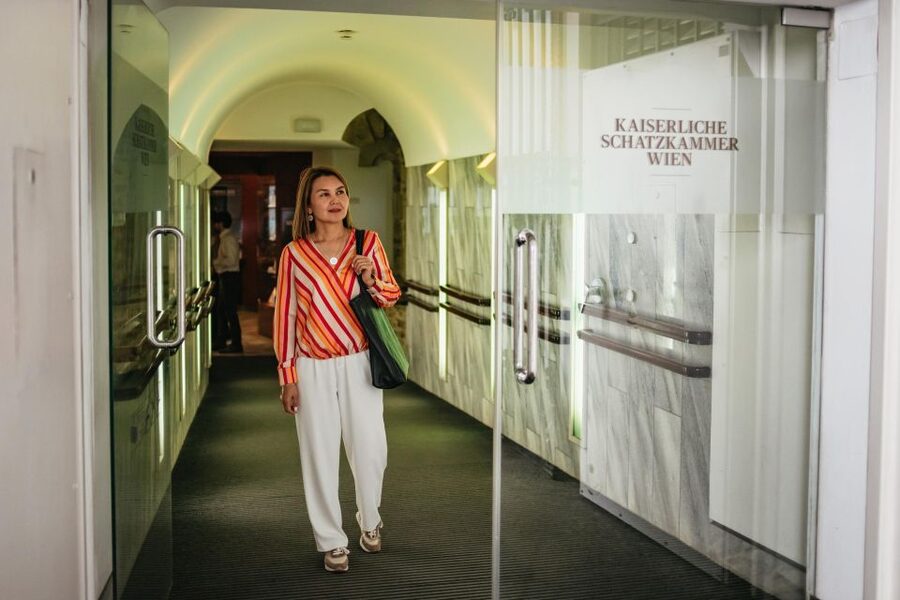
The Imperial Treasury occupies the Swiss Wing, the oldest part of Vienna’s Hofburg Palace. That setting matters. You are not walking into a modern exhibition hall separated from the city’s royal past. You are entering the palace complex that served the Habsburgs for centuries.
The approach can be less clear than you might expect. The Hofburg is large, and signs around the palace are not always easy to follow. Give yourself a little extra time to find the Swiss Wing rather than arriving at the last minute.
Bring the required printed voucher. Several visitors have found that a digital QR code alone does not always provide the quick entry they expected. If you booked online, you may need to exchange the voucher for an actual ticket at the counter, and that can mean standing in line.
This is the main practical weakness of the experience. The $18 ticket is reasonably priced, but the online booking process does not necessarily mean you can walk straight through. If you are already at the Hofburg, buying directly at the museum may be worth comparing, especially if you want to ask about an audio guide or another Hofburg combination.
The museum is wheelchair accessible. Admission is generally free for children and young people under 19, though school groups must register in advance through the museum’s booking department.
The Imperial Crown and Habsburg Power
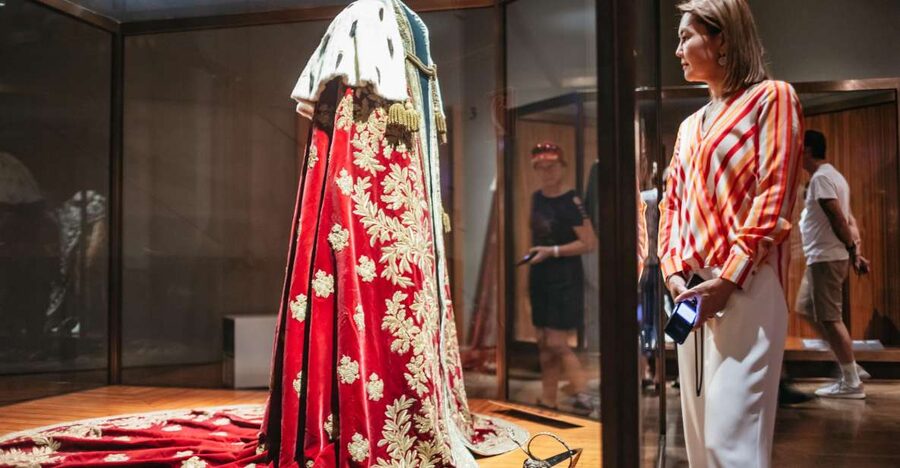
Start with the objects that explain why this collection mattered to rulers. The Habsburgs did not keep these crowns, robes, jewels, and ceremonial objects simply for decoration. They used them to make power visible.
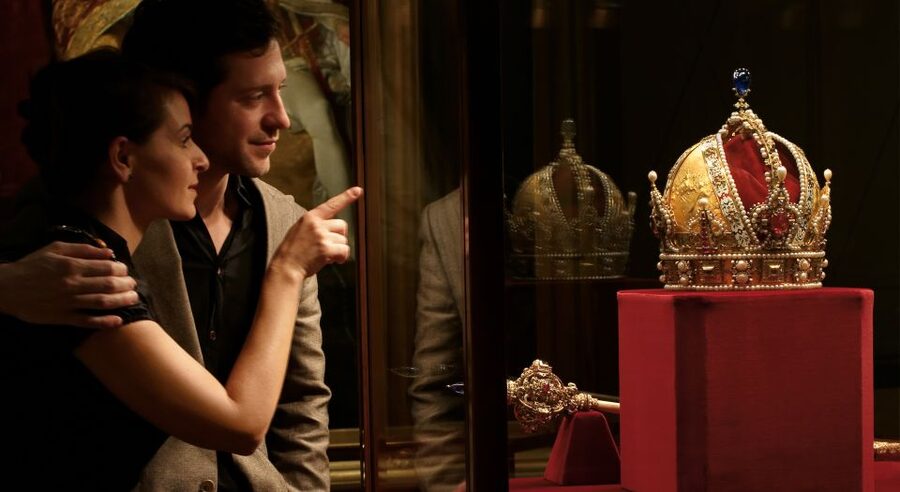
The Austrian Imperial Crown is the clear star. Its form is both elegant and imposing, with precious stones and detailed metalwork that reward a close look. It is not a light, delicate ornament. It was designed to communicate authority from across a ceremonial room.
You will also see the Imperial Crown of the Holy Roman Empire, one of the collection’s most important pieces. Its value is not only in the materials or craftsmanship. It represents the office of the Holy Roman Emperor and the political system that shaped central Europe for centuries.
This is where the treasury becomes more than a display of expensive objects. A crown can tell you who ruled. A robe can show how rulers presented themselves. A ceremonial key, badge, or staff can reveal the formal rituals that surrounded the court.
The collection includes the treasure of the Order of the Golden Fleece, one of the great chivalric orders connected with the Habsburg dynasty. Its objects help explain how rulers rewarded loyalty and built networks among Europe’s leading families.
If you like political history, this section will likely hold your attention longer than the jewels alone. If you mainly want the famous crowns, you can still see the high points without spending an entire day here.
Other imperial addresses in Vienna:
- Vienna: Skip-the-Line Sisi Museum, Hofburg and Gardens Tour
★ 4.8 · 5,918 reviews - Tickets for the Albertina Exhibitions
★ 4.7 · 2,126 reviews - Vienna: Imperial Crypt Entrance Ticket
★ 4.6 · 1,507 reviews
Emeralds, Diamonds, and Court Splendor
The treasury contains precious stones on a scale that can be hard to grasp from photographs. Among the highlights is a remarkably large emerald, described as one of the largest in the world. Its size is impressive, but the larger point is how the Habsburg court gathered rare materials from across its territories and beyond.
Jewelry here was not merely personal decoration. It marked rank, wealth, marriage alliances, and access to the imperial household. A necklace or brooch could communicate status before its wearer spoke a word.
You will also find jewelry associated with Habsburg empresses and princesses, including parts of the original jewelry of Empress Elisabeth, widely known as Sisi. These pieces provide a more personal angle on the dynasty. Instead of seeing only public symbols of rule, you get a glimpse of the women who wore the objects at court.
The displays are generally easy to read, with clear labels and a layout that most people can manage without trouble. Still, the route can feel a bit confusing in places. If you want to understand the objects rather than simply admire them, take your time with the descriptions.
Lighting has drawn criticism from some visitors, particularly around individual cases. A few objects may be harder to see clearly than you would like. Move slowly, change your viewing angle, and do not judge the collection from a quick walk past the first cases.
Sacred Relics and Legendary Objects
The religious section gives the treasury its strangest and most memorable character. Here, royal splendor meets medieval belief.
One highlight is the Holy Lance, identified as an eighth-century object. It has long been associated with the weapon used at the Crucifixion, though the museum presents it as a historic and legendary relic rather than asking you to accept the story without question.
Another famous object is a large agate bowl known as the Holy Grail. Its size and pattern make it striking even before you consider the legend attached to it. The collection also includes the horn of a unicorn, an object that reflects the beliefs and collecting habits of earlier centuries.
These pieces are valuable because they show how people once understood the world. A court treasury was not limited to gold and diamonds. It also gathered holy objects, signs, relics, natural curiosities, and items thought to possess special meaning.
I recommend slowing down here. The crowns may catch your eye first, but the religious objects explain the mental world in which medieval and early modern rulers lived. The museum is at its most memorable when you connect the objects to belief, ceremony, and power rather than treating them as isolated curiosities.
Burgundy, the Golden Fleece, and Court Ceremony
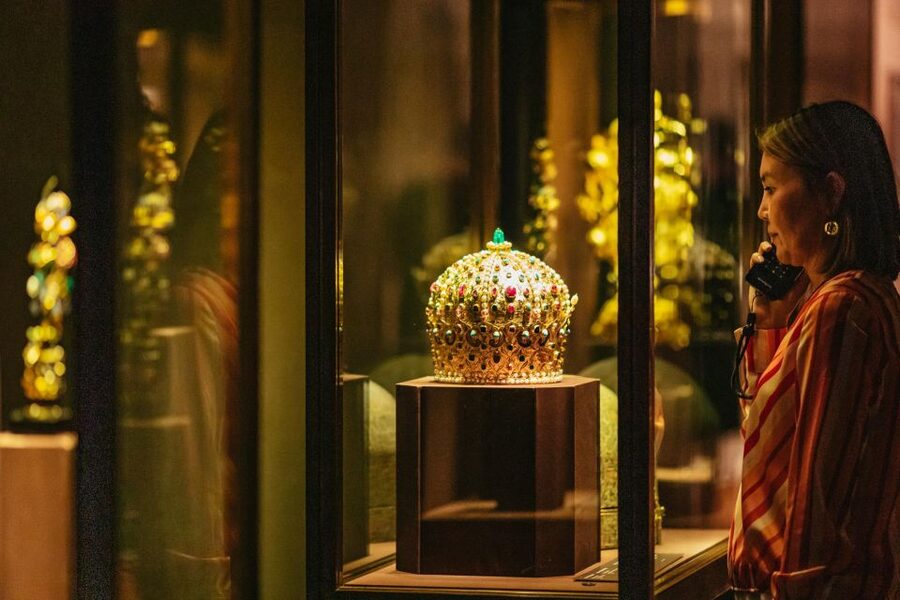
The treasury includes collections connected with 15th-century Burgundy. This material helps explain how the Habsburg family expanded its influence through inheritance and marriage as well as military power.
The Order of the Golden Fleece is another important stop. Its treasures show how courtly orders worked as political institutions. Members belonged to an elite circle, and the insignia made that membership visible.
You might also notice objects that seem less glamorous than crowns but are especially revealing. Chamberlains’ keys and ceremonial tabards help you picture the daily machinery of a royal court. A key could symbolize a trusted office. A tabard could identify a servant or official during formal events.
These are the details I would not rush past. They explain how the palace functioned. The famous jewels show wealth, but the keys, clothing, and regalia show an organized court with rules, ranks, and ceremony.
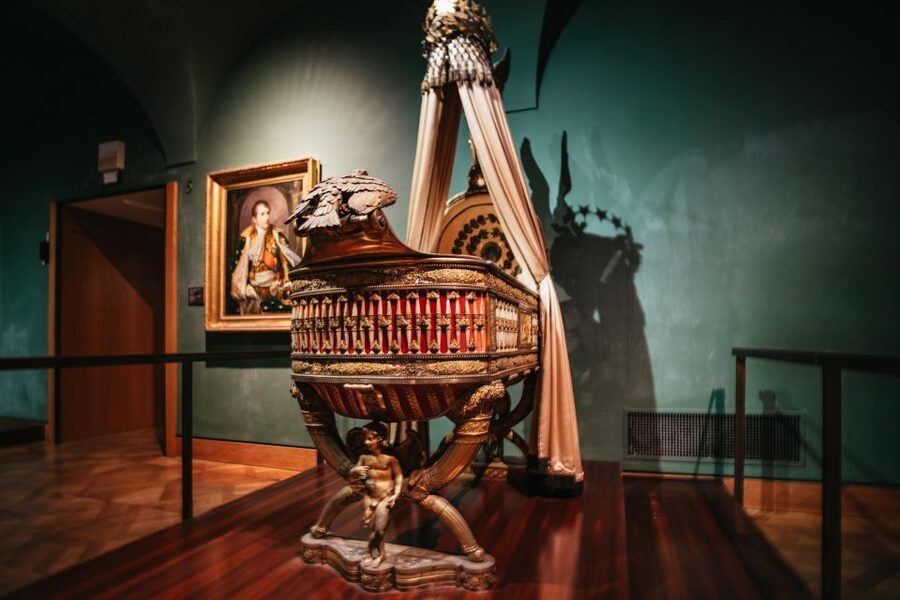
The exhibition also includes the cradle of the King of Rome, Napoleon II. It is a striking reminder that the treasury is not limited to medieval imperial objects. It also follows the dynastic world into the Napoleonic era, when royal families remained linked by marriage, inheritance, and political calculation.
A different kind of evening in Vienna:
- Vienna: Vivaldi’s Four Seasons Concert in Karlskirche
★ 4.7 · 14,951 reviews - Vienna: Spanish Riding School Training
★ 3.9 · 9,281 reviews - Vienna: Skip-the-cashier-desk-line Giant Ferris Wheel Ride
★ 4.5 · 7,859 reviews - Vienna: Schönbrunn Palace & Gardens Skip-the-Line Tour
★ 4.7 · 7,739 reviews
How Long You Need Inside
The official validity is one day, but most visits are much shorter. Plan on about an hour for a brisk look, or around 90 minutes if you read the labels and pause at the main objects.
One hour is enough to see the crowns, regalia, major jewelry, religious relics, and unusual objects. It is not enough for a slow study of every case, especially if you use an audio guide.
The collection is manageable in size, which is one of its strengths. You do not need to spend half a day pushing through room after room. That makes it easy to fit the treasury between other Hofburg sights, a coffee stop, or an afternoon walk through central Vienna.
At the same time, do not squeeze it into a ten-minute gap. One visitor found that an hour and a half was needed to finish the exhibition, while another needed a break halfway through. Staff allowed re-entry after the break, which can be helpful if you are visiting with children or combining the treasury with other palace sights.
The museum is not a guided day tour. It is an admission ticket for a self-directed visit. The activity is described as a small group limited to 10 participants, but the collection itself is best understood as a museum visit rather than a continuously led group experience.
Audio Guide or Personal Guide?
The audio guide is not included in the $18 admission. You can add one at the museum, and it may be worth the extra cost if you want more context.
Several visitors found that the audio commentary made a major difference. It can explain the Habsburg family, the function of the regalia, and the meaning behind objects that might otherwise seem like attractive but disconnected antiques.
Without additional explanation, the narrative may feel uneven. The objects are strong, but the sequence does not always build a clear story for first-time visitors. I recommend the audio guide if you are not already familiar with the Habsburgs, the Holy Roman Empire, or Sisi.
A personal guide can be even better for some visitors. Guides named Petee and Alex received especially warm feedback for giving clear explanations, placing the collection in the wider story of Franz Joseph and Sisi, and responding to questions. Those guides may not be available for every visit, and a guided tour is not included, so check the exact option before booking.
State-certified tourist guides generally receive free admission. For adult groups of more than 10, one guide per group can receive free entry when accompanying the group. Groups of fewer than 10 do not receive that guide allowance, and the guide is charged as a paying participant.
Is the $18 Admission Good Value?
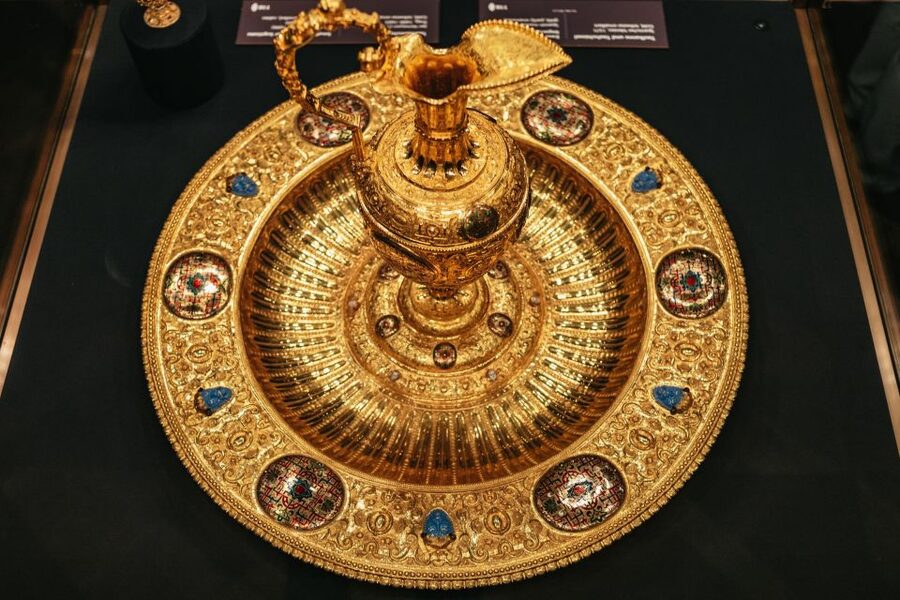
At $18 per person, I consider the treasury good value if you care about royal history, sacred art, jewelry, or unusual historic objects. You are paying for access to some of Europe’s most important imperial regalia in a central Hofburg location.
The value is strongest when you give yourself at least an hour and use the labels or audio guide. A fast visit focused only on the most famous crown may feel expensive compared with the time spent inside.
The ticket is also useful as a focused alternative to a larger palace program. You do not need to commit to a full day of royal rooms to see the Habsburgs’ most important objects. For many people, the treasury provides the most concentrated look at dynastic power in Vienna.
The main drawback is the added cost of interpretation. The audio guide is separate, and no guided tour is included. If you prefer a fully explained museum visit, plan for that expense or arrange your own guide.
Free admission for visitors under 19 improves the value for families. Adults should compare the price with other Hofburg admissions if they plan to visit several collections during the same day.
Who Will Enjoy the Treasury Most?
I would choose this experience for anyone interested in:
- Habsburg rulers and imperial politics
- Crown jewels and ceremonial clothing
- Religious relics and medieval beliefs
- Sisi and the women of the imperial court
- Small museums that can be explored in about an hour
- Unusual objects such as the Holy Lance, agate bowl, and unicorn horn
It suits adults and older children who enjoy looking closely and asking why an object mattered. Children may respond best to the crowns, giant stones, cradle, and legendary relics, especially if you turn the visit into a search for the strangest object in each room.
It may be less satisfying if you want a lively guided performance or a large, clearly chronological story. The displays are well presented overall, but the route and historical sequence can require some effort. An audio guide or personal guide will make the visit easier to follow.
Practical Tips Before You Go
Print your voucher before arriving. Do not assume that a phone QR code will be accepted as your final ticket, since some visitors have had to exchange the voucher at the counter.
Allow time to locate the Swiss Wing inside the Hofburg. The palace complex is large, and the signs can be less helpful than you might expect.
Plan for one hour at minimum. Give yourself 90 minutes if you want to read the labels, listen to audio commentary, and study the jewelry and religious objects.
If you need a pause, ask staff about leaving and returning. Re-entry was made easy for at least one visitor who needed a break.
Do not judge the collection only by the crowns. The chamberlains’ keys, tabards, Burgundy objects, Golden Fleece treasures, and Sisi’s jewelry add the human and institutional details that make the visit worthwhile.
Should You Book the Imperial Treasury?
Yes, if you want a compact, high-quality look at Habsburg power and court life. The crowns and imperial regalia alone justify the visit, while the relics, jewelry, Burgundy pieces, and unusual objects give you plenty of reasons to stay longer.
Book it early in your Vienna planning if possible. Seeing the treasury near the start of your stay can help you understand references to the Habsburgs in other palaces and museums around the city.
I would not book it expecting a fully guided tour. The standard experience is self-guided, and the audio guide costs extra. But at $18, with free admission for visitors under 19 and a visit that fits neatly into a busy day, it is an excellent choice for a focused Hofburg stop.
FAQ
Where is the Imperial Treasury located?
It is in the Swiss Wing of Vienna’s Hofburg Palace, the oldest part of the Hofburg complex.
How much does admission cost?
The listed price is $18 per person.
How long does a visit take?
You can see the collection in about one hour, though 90 minutes gives you more time to read the labels and study the objects carefully.
Is a guided tour included?
No. The entrance ticket includes admission only. You may visit with your own guide, and an audio guide is available separately.
Is an audio guide available?
Yes. The audio guide is not included in the basic entrance ticket and must be obtained separately.
Do I need a printed voucher?
Yes. A printed voucher is required. A digital QR code may need to be exchanged at the ticket counter for an actual ticket.
Are children admitted free?
Children and young people under 19 generally receive free admission. School groups under 19 must register through the museum’s booking department.
Is the treasury wheelchair accessible?
Yes, the experience is wheelchair accessible.
Can I cancel my booking?
You can cancel up to 24 hours in advance for a full refund. The reserve-now-and-pay-later option also allows you to keep your plans flexible.
Just added in Vienna
- Private Christmas Markets Walking Tour Vienna★ 5.0 · 31 reviews
- Christmas Markets & Shopping in Vienna★ 5.0 · 17 reviews
- Christmas Market Vienna Tour★ 4.0 · 53 reviews
- Vienna: Christmas Markets Tour★ 4.3 · 99 reviews
- Schmetterlinghaus – Imperial Butterfly House Vienna Admission Ticket★ 3.5 · 144 reviews
- Salzburg Small-Group Day Trip from Vienna★ 5.0 · 148 reviews
- Vienna Residence Orchestra: Mozart and Strauss Concert★ 4.0 · 137 reviews
- Vienna: Bus Tour with Virtual Reality Experience★ 4.7 · 148 reviews
Hofburg & Imperial Palaces, compared.

Skip-the-Line Sisi Museum, Hofburg and Gardens Tour
Read our review →
Entry Ticket Upper Belvedere, Klimt’s Kiss & Permanent Collection
Read our review →
Combo Ticket: Kunsthistorisches Museum & Imperial Treasury
Read our review →
“Sisi’s Amazing Journey” Virtual Reality Experience
Read our review →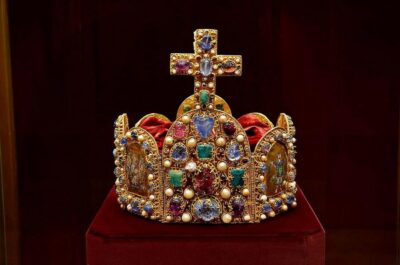
Imperial Treasury & New Hofburg Palace Combo Ticket
Read our review →Browse the lists this tour appears in