
Reviewed · SCHONBRUNN PALACE TOURS
Vienna: Imperial Carriage Museum in Schönbrunn Palace Ticket
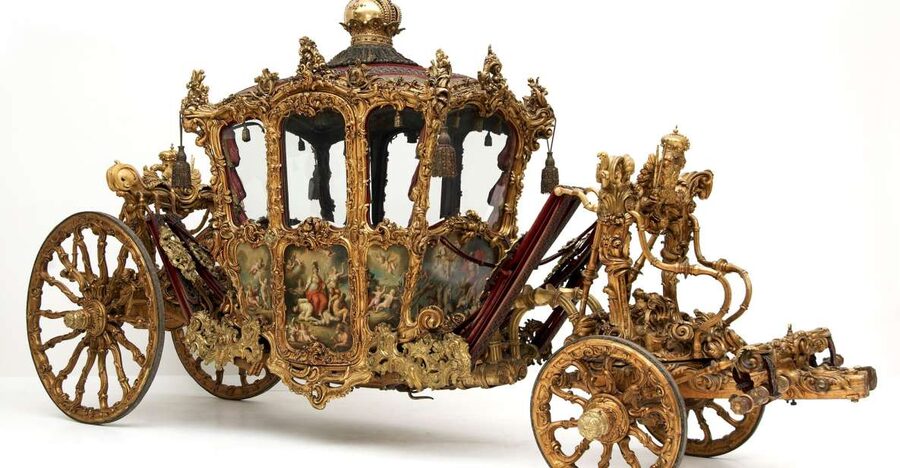
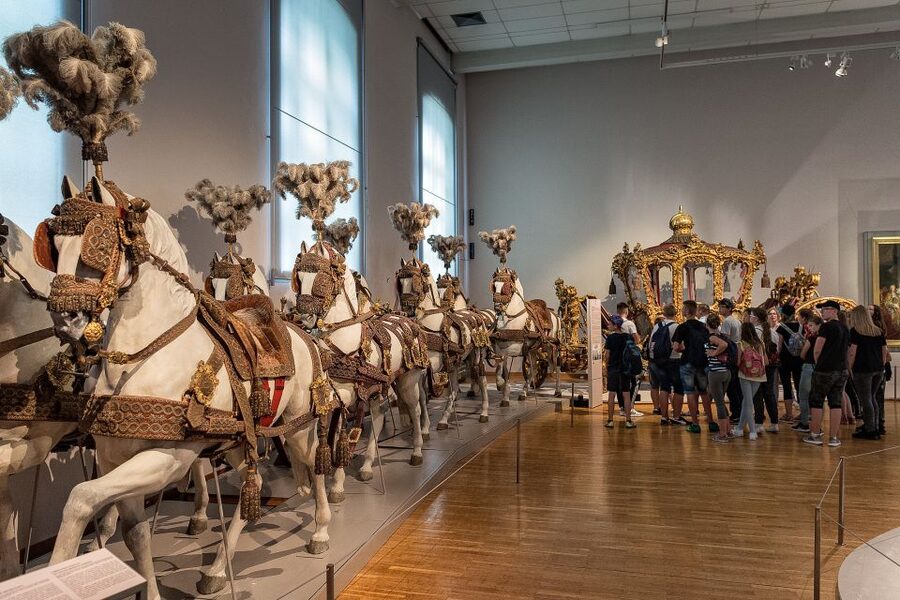
The Imperial Carriage Museum turns grand ceremony into something you can see up close: gilded coaches, practical travel vehicles, children’s carriages, and the personal riding equipment of famous Habsburgs. The star is the Baroque imperial coach, but I also like the way the museum follows real people, from Maria Theresia and Napoleon to Franz Joseph and Empress Elisabeth.
Two things make this a good short visit. The Sisi Trail adds personal detail beyond royal decoration, including Elisabeth’s only surviving saddle, her riding chapel, and original dresses. The audio guide is available when you book that option, and one recent Italian-language user found it concise and useful. The main catch is practical: you need a printed voucher, then must exchange it at the museum for an entrance ticket.
Key points to know before you go
- The Baroque imperial coach is the central showpiece, with elaborate decoration and a strong sense of royal ceremony.
- The Sisi Trail adds personal objects, including Empress Elisabeth’s only extant saddle, riding chapel, and original clothing.
- The collection covers several royal lives, including Maria Theresia, Napoleon, Franz Joseph, and Habsburg children.
- The museum is at Schönbrunn Palace, so it pairs naturally with a palace visit, though this ticket covers the carriage museum only.
- An audio guide is optional, and it is included only when that booking option is selected.
- Print your voucher before arriving, because a digital voucher alone may not be enough for entry.
What the Imperial Carriage Museum actually offers
I find this museum appealing because it is not simply a room full of old vehicles. The carriages are used to explain how rulers moved, celebrated, traveled, and presented themselves to the public.
A royal carriage had a job beyond transportation. It carried ceremony, rank, and political theater. The larger and more decorated the coach, the clearer the message: this person was important, wealthy, and surrounded by power. You can read that message in the carved details, polished surfaces, upholstery, and formal design of the vehicles.
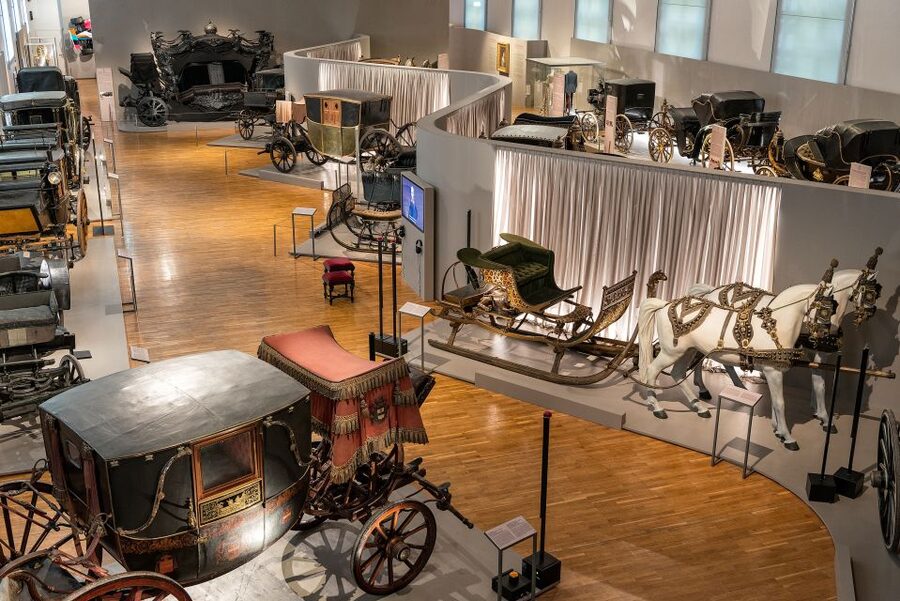
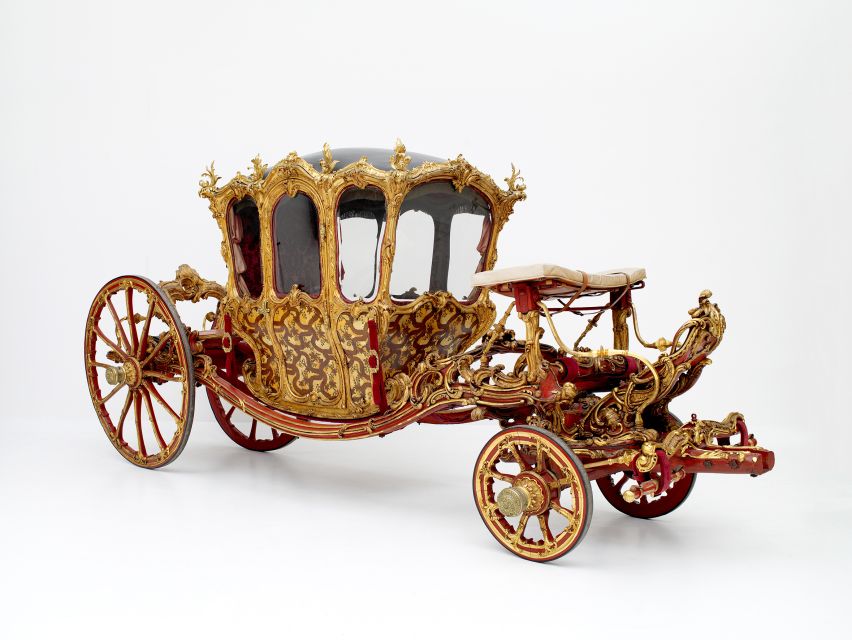
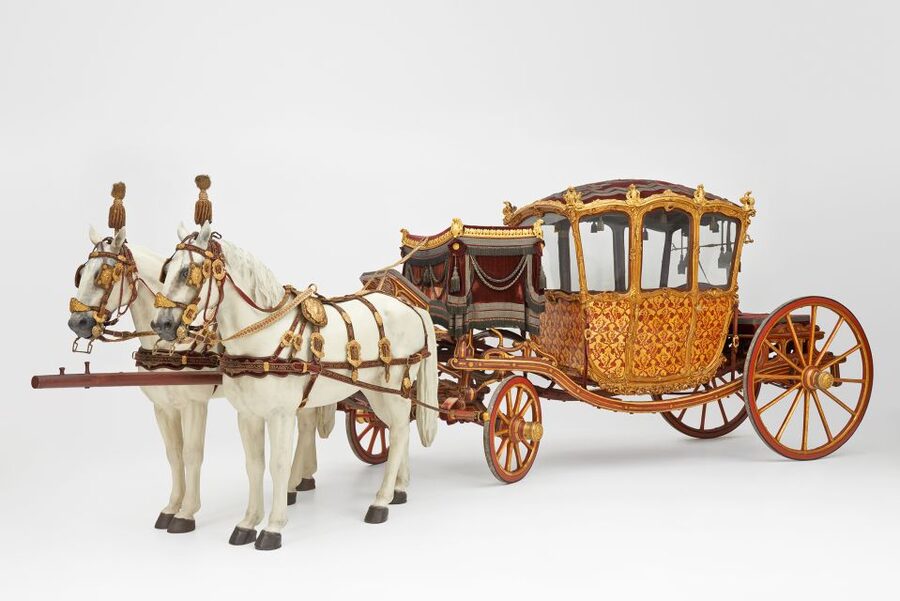
The collection also includes less showy carriages. State coaches served official duties, while traveling coaches were built for comfort and longer journeys. Children’s carriages bring the scale down again and offer a softer look at life inside the Habsburg court.
That range is important. If you only want glitter, the imperial coach will be your main target. If you want to understand how a royal household functioned, take time with the traveling vehicles and children’s pieces too.
More palace visits in Vienna:
- Vienna: Schönbrunn Palace & Gardens Skip-the-Line Tour
★ 4.7 · 7,739 reviews - Vienna: Skip-the-Line Schönbrunn Palace & Gardens Tour
★ 4.8 · 5,411 reviews - Vienna: Bus & Schönbrunn Palace Skip-the-Line Guided Tour
★ 4.3 · 2,802 reviews
The Baroque imperial coach is the main event
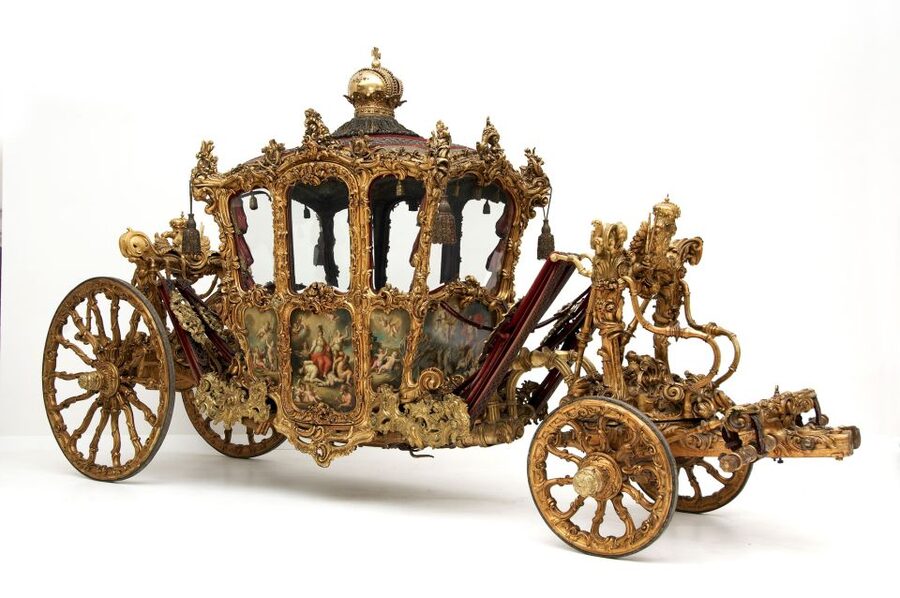
The Baroque imperial coach is the museum’s visual high point. It was built to be seen, and it does not hide its purpose. Grand decoration and formal design make clear that this was not an ordinary way to get from one place to another.
I would give this carriage your first close look, even if you plan to move quickly through the museum. Notice how its size and decoration shape your idea of a royal entrance. The coach represents ceremony at its most public, when a ruler’s arrival became a performance watched by others.
The carriage also gives the rest of the collection a useful reference point. After seeing this highly formal vehicle, the state carriages and traveling coaches are easier to understand. Some were meant for display. Others were meant to make a journey possible.
The museum does not require you to be a specialist in carriage design. The audio guide can help explain what you are seeing, but it is not automatically included with every ticket. If you want commentary in a particular language, check the available option before booking.
Following Maria Theresia, Napoleon, and Franz Joseph
The collection connects carriages with people rather than presenting anonymous objects. Maria Theresia, Napoleon, and Franz Joseph each bring a different historical association, and the museum uses their vehicles to place them inside the daily machinery of monarchy.
Maria Theresia’s carriages point to the ceremonial world of the Habsburg court. Napoleon’s coach adds a wider European connection, linking Vienna’s royal collection with one of the most recognizable political figures of the period. Franz Joseph’s vehicles bring the story closer to the late imperial era.
You should not expect a full biography of each ruler here. This is a focused museum, not a general history museum. Instead, you get a physical link to their public lives: the vehicles that carried them through official appearances and important events.
That physical link is the reason I would choose this museum over a quick look at palace rooms alone. A throne room can tell you that a ruler was powerful. A carriage shows how that power moved through the city and appeared before a crowd.
The Sisi Trail gives the visit a personal side
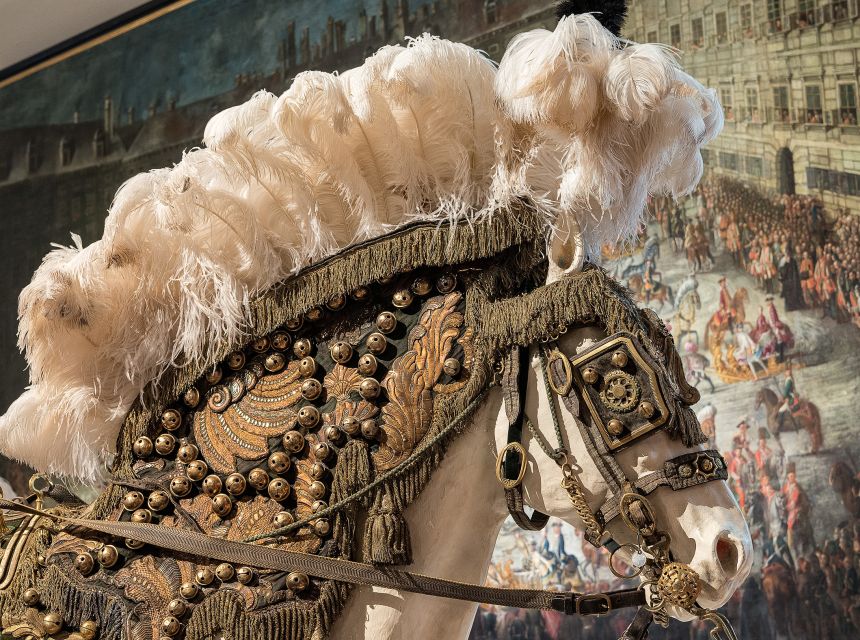
The Sisi Trail is likely to be the most memorable part for many people. Empress Elisabeth, widely known as Sisi, is presented through her carriages as well as personal objects connected with riding and dress.
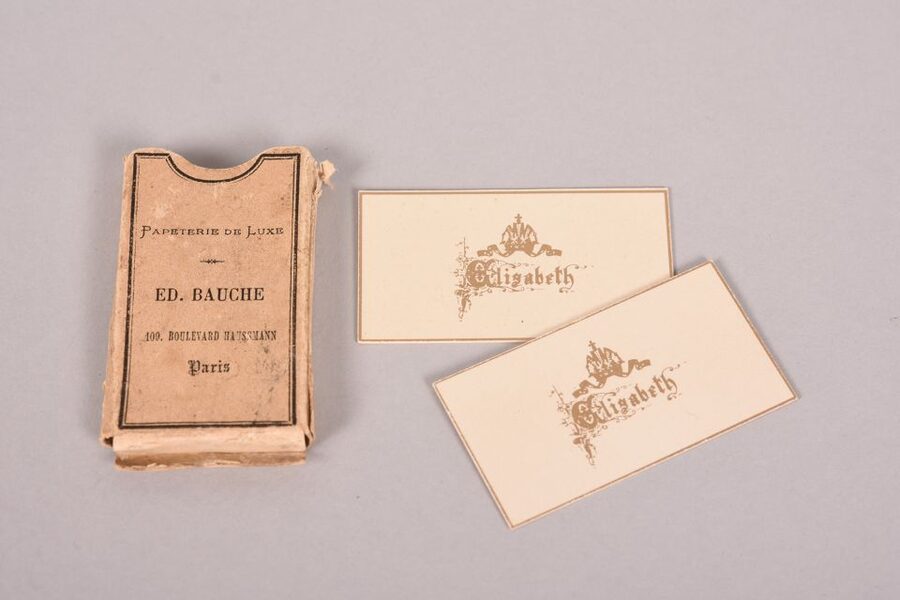
Her only surviving saddle is especially useful because it moves the story away from formal public appearances. A saddle suggests her personal relationship with horses and riding, not just her role as a royal figure. The riding chapel adds another unusual object to the collection, while the original dresses bring attention to the way Elisabeth’s public image was shaped through clothing.
I like this section because it gives you more than a polished imperial portrait. Carriages can feel distant and official. Personal possessions help you picture the individual behind the court ceremony.
Take your time with the Sisi material rather than treating it as a quick photo stop. The point is not only that Elisabeth owned beautiful things. The point is that the objects connect her public identity with her private interests and carefully managed appearance.
Other imperial addresses in Vienna:
- Vienna: Skip-the-Line Sisi Museum, Hofburg and Gardens Tour
★ 4.8 · 5,918 reviews - Tickets for the Albertina Exhibitions
★ 4.7 · 2,126 reviews - Vienna: Imperial Treasury in the Hofburg Palace
★ 4.4 · 1,791 reviews - Vienna: Imperial Crypt Entrance Ticket
★ 4.6 · 1,507 reviews
State carriages, travel coaches, and royal childhood
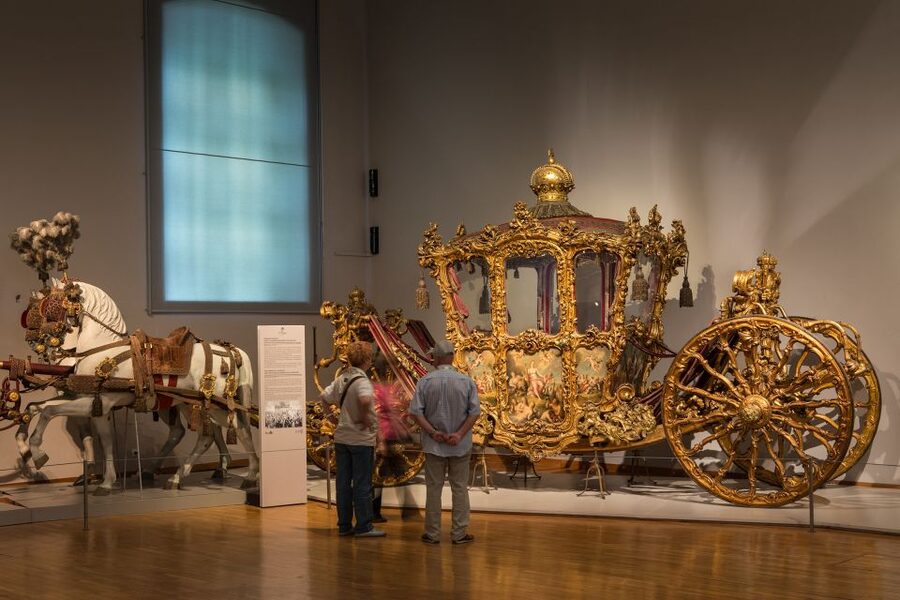
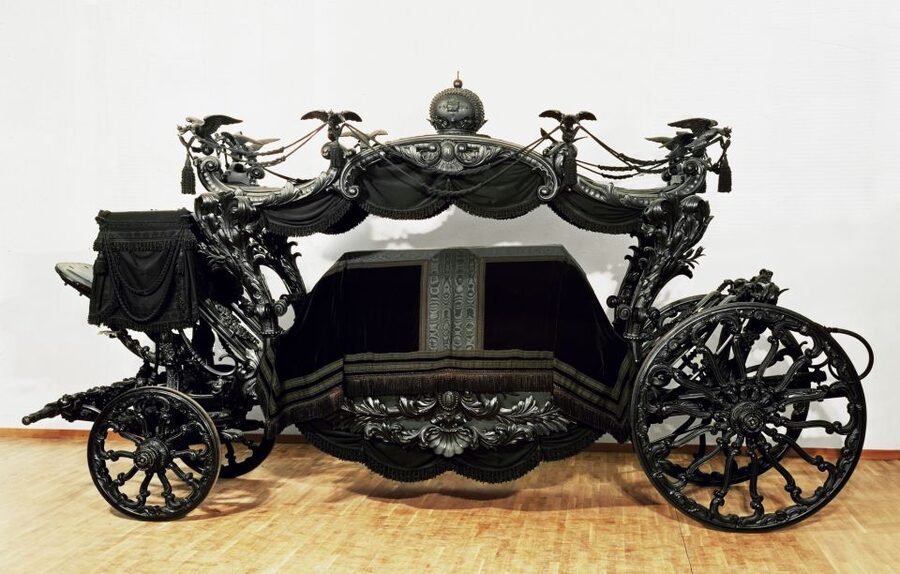
The collection works best when you compare different types of carriage. The state vehicles show how rulers traveled during official business. The comfortable traveling coaches suggest the practical demands of longer journeys. The children’s carriages reveal how the Habsburg princes and princesses were included in court life from a young age.
These smaller vehicles are easy to pass by after the imperial coach, but I would not skip them. They change the tone of the visit and make the royal household feel less abstract. A child’s carriage is still part of a system of rank and privilege, but it is also a reminder that royal families had ordinary stages of life: infancy, childhood, travel, and family ceremony.
The museum’s strength is this mix of grand and domestic material. You can admire the workmanship, then ask a more practical question: who used this vehicle, and for what kind of journey?
That approach keeps the visit from becoming a parade of ornate objects. Look for the difference between a coach designed to impress and one designed to carry people comfortably. The collection becomes more interesting once you make those comparisons.
How long the visit is worth
The ticket is valid for one day, but the information provided does not set a fixed visit length or a timed itinerary. You can therefore treat this as a flexible museum stop during your time at Schönbrunn Palace.
I would allow enough time to examine the imperial coach, follow the Sisi Trail, and compare the state, travel, and children’s carriages. If you are strongly interested in royal history, the audio guide may make a longer visit more rewarding. If you are fitting the museum between other Schönbrunn plans, you can focus on the major displays and still see the collection’s main themes.
The one-day validity gives you room to plan around the palace area rather than rushing to a narrow start time. Still, check availability when choosing your date, since the ticket information says starting times depend on availability.
This is not a guided tour. You may bring your own guide, but no guided tour is included in the basic experience. That suits independent visitors who prefer to set their own pace, but it means you should choose the audio guide if you want built-in explanation.
Is the $14 price good value?
At $14 per person, I consider this a fair price for anyone already planning to visit Schönbrunn Palace and interested in Habsburg life. The museum offers a focused collection rather than a huge all-day attraction, so its value depends on your interests.
You are paying for access to a specialist collection with several strong highlights: the Baroque imperial coach, vehicles linked with Maria Theresia, Napoleon, and Franz Joseph, and the Sisi Trail. The original dresses and personal riding objects add value because they broaden the visit beyond carriages alone.
The ticket is less compelling if you have little interest in royal ceremony, historic transport, or Empress Elisabeth. You may see the main coach quickly and feel finished. For families, history fans, and anyone building a Schönbrunn visit around the Habsburg court, the price is easier to justify.
An audio guide costs only if you select that option, so compare the choices before paying. I would choose it if you want context and do not have your own guide. If you plan to read the displays at your own pace, the basic entrance may be enough.
The practical issue with the printed voucher
This is the point I would not overlook. A printed voucher is required, and you exchange it at the museum for the entrance ticket.
That means you should print before heading to Schönbrunn. One person lost several hours in Vienna looking for a place or machine to print the booking, then had to walk and use the metro to find one in a shopping center. The museum itself was considered worth seeing, but the ticket process caused serious frustration.
Do not assume that showing a booking on your phone will solve the problem. The stated requirement is a printed voucher. If you are booking from a hotel, ask in advance if staff can print it, or arrange printing before you leave home.
This is a small preparation step with a large effect on your day. Schönbrunn is not the place to begin an unplanned citywide search for a printer.
Free entry rules for guides and groups
The guide rules are specific. A group must contain at least 10 people for the free guide arrangement to apply, and only one tour guide per group booking receives free entrance if that guide accompanies the group into the museum.
For groups under 10 people, the free-ticket rule does not apply. An additional guide or accompanying person counts as a paying member of the group.
A state-certified guide has free entrance. If you are arranging a group visit, check these details carefully before booking because the number of people and the guide’s status affect the cost.
For a normal couple, family, or small party, these rules are unlikely to matter. They become important when you are organizing a school group, private tour, or larger party with more than one accompanying person.
Who will enjoy this museum most?
I would recommend the Imperial Carriage Museum to you if you like:
- Habsburg and European royal history
- Empress Elisabeth and Sisi-related sites
- Decorative arts and historic transport
- Museums that connect objects with real people
- Focused visits that fit into a larger day at Schönbrunn
- Audio-guided sightseeing at your own pace
It is also a good choice if you want something different from palace rooms. The carriages provide a fresh way to understand ceremony, movement, status, and family life at court.
I would be more cautious if your time at Schönbrunn is extremely limited or if royal vehicles do not interest you. The museum is focused, and its appeal comes from looking closely rather than racing through. It is not a replacement for every other Schönbrunn attraction.
Final call: should you book it?
I would book this for $14 if you already plan to visit Schönbrunn and want a focused look at Habsburg ceremony and family life. The Baroque imperial coach gives you a memorable centerpiece, while the Sisi Trail adds the personal objects and original clothing that make the collection feel more human.
Choose the audio guide if you want extra explanation, and print the voucher before you leave for the museum. Skip it only if your schedule is too tight for a specialist collection or if ornate royal transport is not your interest.
The experience is simple, flexible, and fairly priced. Just handle the voucher requirement first, and the museum should be an easy addition to your Vienna plans.
FAQ
Where is the Imperial Carriage Museum?
The museum is at Schönbrunn Palace in Vienna, Austria.
How much does admission cost?
The listed price is $14 per person.
How long is the ticket valid?
The ticket is valid for one day.
Is a guided tour included?
No. A guided tour is not included, though you may bring your own guide.
Is an audio guide included?
An audio guide is included only when you book the option that includes it.
Do I need to print my voucher?
Yes. A printed voucher is required, and you exchange it at the museum for an entrance ticket.
What is the main carriage to see?
The main highlight is the Baroque imperial coach.
Which historical figures are connected with the collection?
The museum presents carriages associated with Maria Theresia, Napoleon, Franz Joseph, and Empress Elisabeth.
What is included in the Sisi Trail?
The Sisi Trail includes Empress Elisabeth’s carriages, her only surviving saddle, her riding chapel, and original dresses.
Can I cancel the ticket?
Yes. You can cancel up to 24 hours in advance for a full refund.
More Museums in Vienna
- Vienna Kunsthistorisches Museum Day Admission Ticket
★ 4.6 · 3,690 reviews - Vienna: Chocolate Workshop in Chocolate Museum w/ Tasting
★ 4.5 · 1,802 reviews - Sigmund Freud Museum Ticket
★ 4.6 · 1,668 reviews - Vienna: St. Stephen’s Cathedral & Dom Museum Wien Tickets
★ 4.5 · 1,652 reviews
More horse carriage rides in Vienna
- Vienna: 30-Minute Fiaker Ride in the Old Town
★ 4.5 · 1,092 reviews - Vienna: Secrets of the Fiaker & Horse-Drawn Carriage Ride
★ 4.8 · 743 reviews - Vienna: Culinary Horse-Drawn Carriage Experience
★ 4.7 · 291 reviews
Just added in Vienna
- 3 hour private tour in Vienna by private car★ 4.4 · 6 reviews
- Private Christmas Markets Walking Tour Vienna★ 5.0 · 31 reviews
- Christmas Markets & Shopping in Vienna★ 5.0 · 17 reviews
- Christmas Market Vienna Tour★ 4.0 · 53 reviews
- Vienna: Christmas Markets Tour★ 4.3 · 99 reviews
- Schmetterlinghaus – Imperial Butterfly House Vienna Admission Ticket★ 3.5 · 144 reviews
- Salzburg Small-Group Day Trip from Vienna★ 5.0 · 148 reviews
- Vienna Residence Orchestra: Mozart and Strauss Concert★ 4.0 · 137 reviews
Schonbrunn Palace Tours, compared.
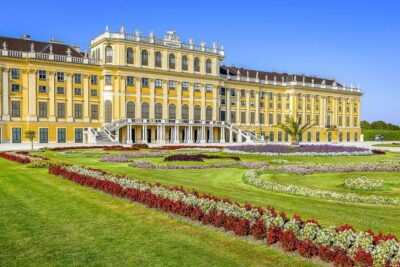
Schönbrunn Palace & Gardens Skip-the-Line Tour
Read our review →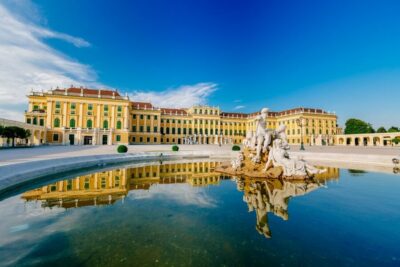
Bus & Schönbrunn Palace Skip-the-Line Guided Tour
Read our review →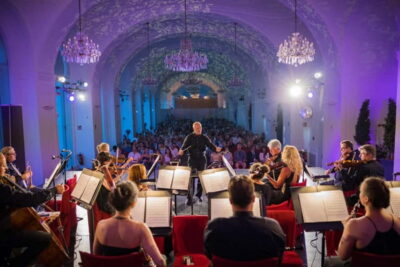
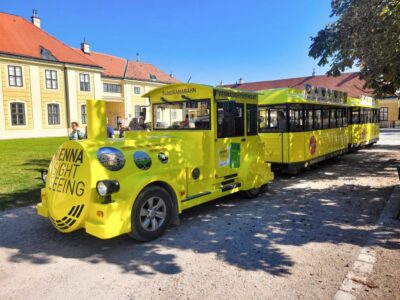
Panorama Train Tickets to explore Schönbrunn Palace
Read our review →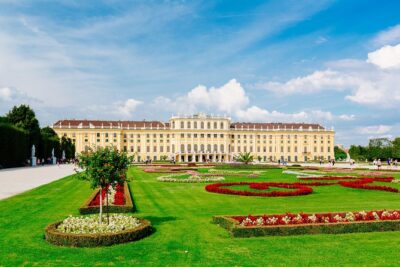
Skip-the-Line Schonbrunn Palace Guided Tour and Vienna Historical City Tour
Read our review →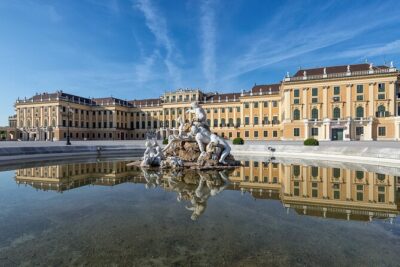
Exclusive Evening at Schönbrunn Palace: After-Hours Audiotour, Dinner, Concert
Read our review →
Schönbrunn Palace Evening Tour, Dinner and Concert
Read our review →Browse the lists this tour appears in