
Reviewed · HOFBURG & IMPERIAL PALACES
Kunsthistorisches Museum Vienna and Imperial Treasury of Vienna
The best part of this Vienna ticket is the contrast: one grand building holds masterpieces by Bruegel, Rubens, Rembrandt, Raphael, Velázquez, Titian, and Dürer, while the nearby Imperial Treasury displays crowns, coronation regalia, robes, and an enormous emerald. It gives you two major Habsburg sights in one purchase.
I like the ticket’s two-venue value, especially if you care about art and imperial history. I also like the freedom to set your own pace, stop for coffee at the museum, and spend serious time with the works that interest you. The catch is practical: this is not always direct entry. You may need to exchange the voucher at the correct queue, and unclear instructions have caused long delays.
Key points to know before you go
- Two major collections: Visit the Kunsthistorisches Museum and the Imperial Treasury of Vienna with one combined admission.
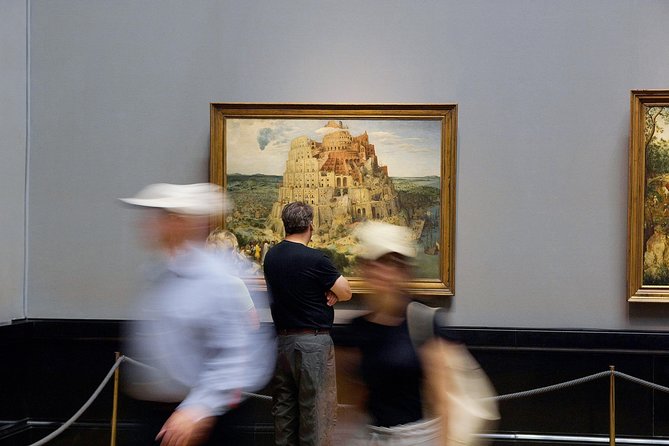
- Bruegel is a major draw: The museum holds the world’s most important collection of paintings by Pieter Bruegel the Elder.
- Allow a full day: The art museum alone can take four hours or more, while the Treasury needs roughly an hour for a useful visit.
- Use the voucher queue: Look for the desk marked Voucher or Group Priority, not the standard Ticket line.
- Self-guided freedom: No guide is included, so you can linger over favorite paintings and skip rooms that do not interest you.
- Children under 19 enter free: Adult pricing applies to other visitors.
Two Habsburg collections, one useful ticket
Vienna can feel like a museum with a city wrapped around it. The Kunsthistorisches Museum and Imperial Treasury fit that impression perfectly. Both are tied to the Habsburg dynasty, but they tell different stories.
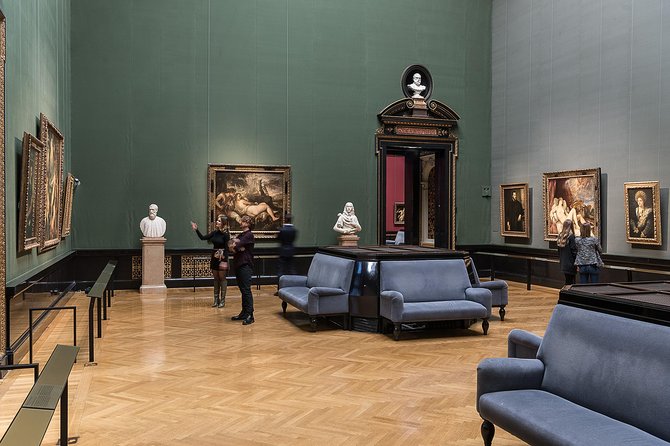
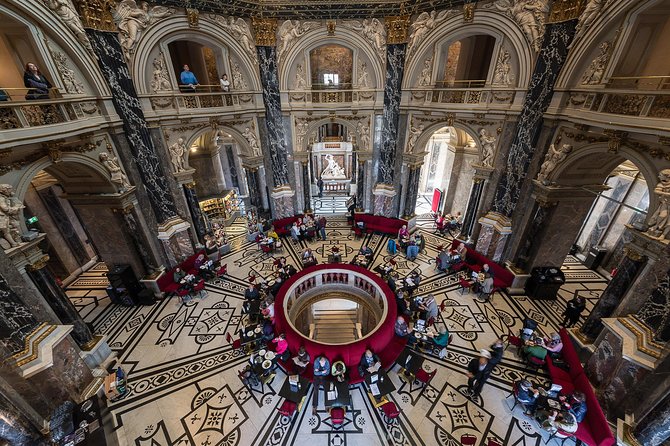
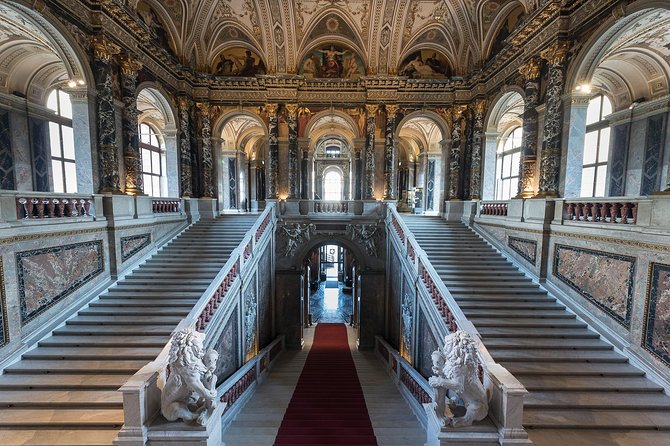
The Kunsthistorisches Museum presents the dynasty’s collecting habits on a grand scale. You get major European paintings, Egyptian and classical antiquities, sculpture, decorative arts, and the Kunstkammer Vienna. The building itself is part of the experience, with formal interiors that make even a short pause between galleries worthwhile.
The Imperial Treasury is more focused. Here, you see the objects used to express imperial power: crowns, ceremonial robes, jewels, and the insignia of the Holy Roman Empire. The collection includes the Austrian imperial crown, the German imperial crown, and the largest cut emerald in the world.
At $38.62 per person, the combined ticket is reasonable if you plan to spend several hours at both sites. It is less appealing if you only want a quick look at one museum, since the Kunsthistorisches Museum deserves much more time than the short activity duration shown in the booking information suggests.
This is admission only. Food, drinks, and hotel pickup are not included. You arrange your own route through central Vienna and visit without a guide.
Other imperial addresses in Vienna:
- Vienna: Skip-the-Line Sisi Museum, Hofburg and Gardens Tour
★ 4.8 · 5,918 reviews - Tickets for the Albertina Exhibitions
★ 4.7 · 2,126 reviews - Vienna: Imperial Treasury in the Hofburg Palace
★ 4.4 · 1,791 reviews
The Kunsthistorisches Museum: art on a grand scale
Start with the Kunsthistorisches Museum if you want the broadest experience. The museum’s central attraction is its painting collection, with works by Rubens, Rembrandt, Raphael, Velázquez, Titian, and Dürer. It also has the world’s most important group of paintings by Pieter Bruegel the Elder.
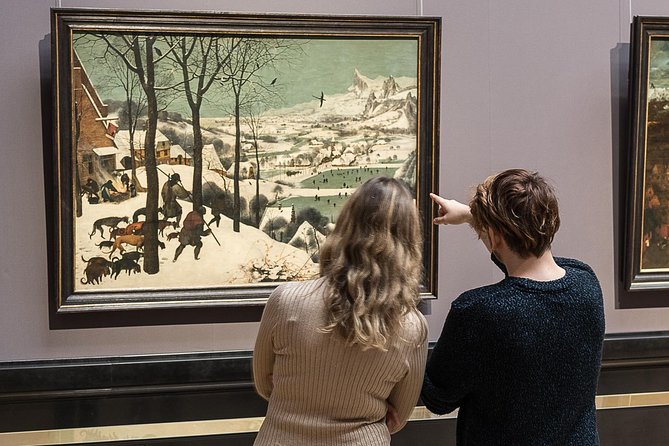
Bruegel is the special reason many art lovers make time for this museum. His scenes of village life, seasonal work, and crowded human activity reward a slow look. You do not need to be an art scholar to enjoy them. Stand back first, then move closer and let the small details reveal themselves.
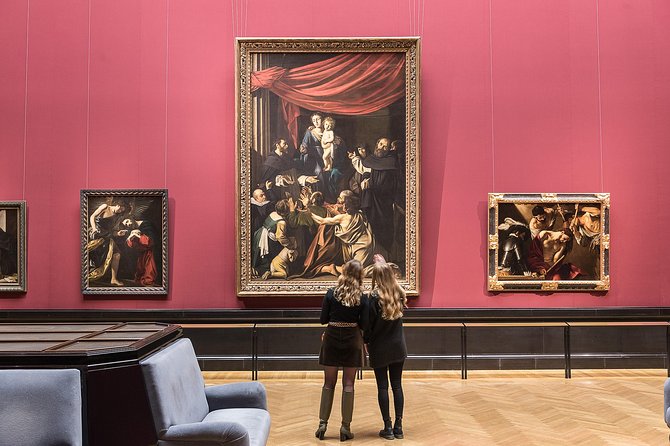
The other major painters give the visit a wide range. Rubens brings force and movement. Rembrandt offers a more intimate mood. Velázquez gives you the polished court world of Spain, while Raphael and Titian show different sides of Renaissance painting. The collection is strong enough that you can spend a long time here without feeling you are simply checking off names.
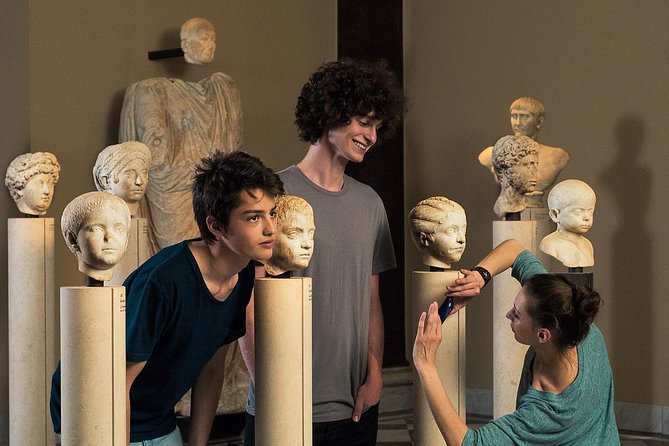
The museum also includes Egyptian, Greek, and Roman antiquities, along with decorative objects and sculpture. One practical point matters here: the building can feel overwhelming. There is a lot to see, and it is easy to keep walking long after your attention has started to fade.
I suggest choosing a few priorities before you enter. Make Bruegel your anchor, then select several painters or rooms you especially want to see. After that, let your curiosity guide you. Trying to cover every gallery in one rushed visit will turn an outstanding museum into a tiring march.
Kunstkammer Vienna and the Neue Burg displays
The ticket also includes access to the Kunstkammer Vienna and the Neue Burg areas within the Kunsthistorisches Museum complex. These collections move away from the famous painting galleries and into objects made for courts, ceremonies, study, and display.
You might find sculpture, precious materials, ornaments, and finely worked objects here. Gold and ivory receive particular praise from the supplied information, and the displays help explain how the Habsburgs used art to show status and taste.
This part of the museum matters because it broadens the idea of what an art collection can be. Paintings are only one piece of the story. A small ceremonial object may tell you as much about court life as a large portrait.
Give yourself time to sit down. Seating is available in many rooms, which helps when you want to look carefully rather than hurry from one display to the next. Comfortable shoes matter, and carrying water is sensible, especially if you plan to visit both venues on the same day.
The museum café is another useful pause. It is known for its coffee, drinks, and cakes, and the café setting is part of the building’s grand appeal. Seating can be hard to find at busy times, so do not build your entire schedule around a long café stop.
The Imperial Treasury: crowns, regalia, and Habsburg power
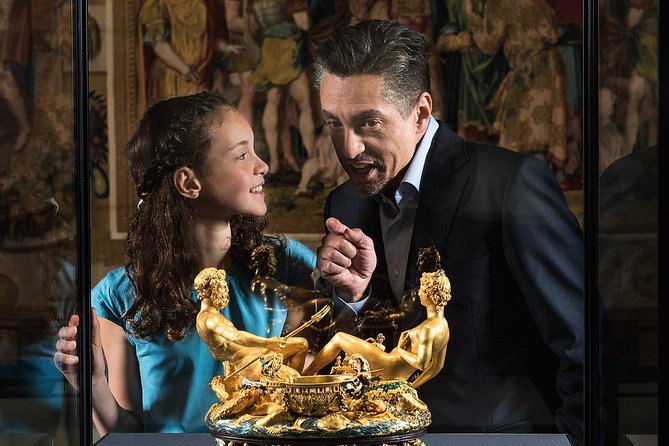
The Imperial Treasury Vienna offers a sharper, more concentrated visit. It is located in the Hofburg complex, near the Spanish Riding School. If you walk from the Kunsthistorisches Museum, look for the red and gold archway on the right before reaching the Spanish Riding School.
The Treasury’s main draw is the imperial regalia. You can see the Austrian imperial crown, the German imperial crown, and the insignia connected with the Holy Roman Empire. These are not simply attractive objects. They were made to represent authority, succession, religion, and the reach of a ruling house.
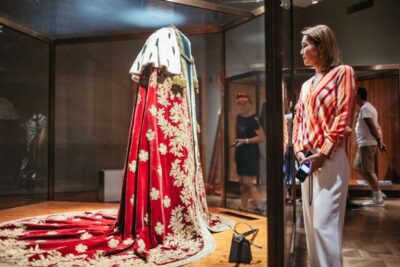
The ceremonial clothing adds another layer. Robes and costumes make the collection feel less abstract. A crown in a case can seem distant, but a full ceremonial garment helps you imagine the public rituals in which rulers presented themselves.
The jewels are another highlight, including the huge cut emerald. The Treasury is not as sprawling as the Kunsthistorisches Museum, which makes it easier to follow. Plan on about an hour if you want to see the important objects without rushing.
The location can be confusing, especially if you expect the two sights to be inside one building. They are separate venues, and you must walk between them. Your combined ticket should work at both sites, but the practical process of exchanging a voucher has caused confusion, so allow extra time.
More to book in Vienna
- Vienna Kunsthistorisches Museum Day Admission Ticket
★ 4.6 · 3,690 reviews - Vienna: Chocolate Workshop in Chocolate Museum w/ Tasting
★ 4.5 · 1,802 reviews - Sigmund Freud Museum Ticket
★ 4.6 · 1,668 reviews - Vienna: St. Stephen’s Cathedral & Dom Museum Wien Tickets
★ 4.5 · 1,652 reviews
The voucher problem: the most important practical tip
The biggest weakness of this experience is not the museums. It is the entry procedure.
A printed voucher or digital ticket may need to be exchanged for the museum’s actual admission ticket. At the Kunsthistorisches Museum, look for the line or hut marked Voucher or Group Priority. Do not automatically join the regular Ticket queue.
The regular ticket line can be much longer. Some visitors have spent an hour there before learning they were in the wrong queue. The voucher line is not necessarily a no-wait entrance, but it should be the correct place to exchange your booking confirmation.
Once exchanged, the ticket should be a combined ticket for both venues. If you begin at the Imperial Treasury, the same general rule applies: confirm where the voucher exchange takes place before joining a line.
There have also been reports of printed or downloaded tickets failing to scan at the museum entrance. That is not a reason to assume your ticket will fail, but it is a reason to arrive with your confirmation ready and extra time in your schedule. If your day includes a train or a fixed appointment, do not plan the museum visit too tightly.
The booking information says confirmation is received at the time of booking, but keep the confirmation accessible on your phone and bring the paper version if you selected a paper ticket. The product specifically lists a paper ticket, so do not rely on a wallet pass alone.
How long should you allow?
Ignore the one-to-three-minute duration shown in the basic activity summary. That figure does not reflect a meaningful museum visit.
For the Kunsthistorisches Museum, set aside at least three hours if you want the main painting galleries and some additional collections. Four hours is more realistic if you want to see the Bruegel works carefully, visit the antiquities, look at Kunstkammer objects, and take a break.
The Imperial Treasury needs less time, but an hour is a sensible minimum. You can move through it faster, yet the crowns and ceremonial objects deserve more than a quick glance.
Together, these sights can fill most of a day. That is why an early start is useful. You may also prefer to split the visits across separate days if the ticket rules allow it, but the supplied information does not clearly confirm a two-day validity period. Check the exact ticket conditions before planning that arrangement.
Older visitors and anyone who prefers a slower pace should think carefully before scheduling both museums back to back. The art museum is large, and the grand interiors can make the visit feel even longer. A café break, a meal, or a separate half-day plan may make the experience much more enjoyable.
Opening hours and the best time to visit
The Kunsthistorisches Museum is open daily from June through August, generally from 10 a.m. to 6 p.m., with later hours until 9 p.m. on Thursdays. From September through May, it is generally open Tuesday through Sunday from 10 a.m. to 6 p.m., again with Thursday hours until 9 p.m.
The Imperial Treasury is listed as open daily except Tuesdays, from 9 a.m. to 5:30 p.m.
The separate booking information also lists Wednesday through Sunday, 10 a.m. to 5 p.m., for dates in 2026. Because the hours do not match perfectly across the supplied details, check the official opening schedule for your date before setting out.
A Thursday visit may give you more breathing room at the Kunsthistorisches Museum because of the late closing time. If you start at the Treasury in the morning, you can then walk to the art museum and use the afternoon and early evening there.
The museums are near public transportation, and most visitors can participate. No hotel pickup is included, so you make your own way to the central sites.
Is $38.62 good value?
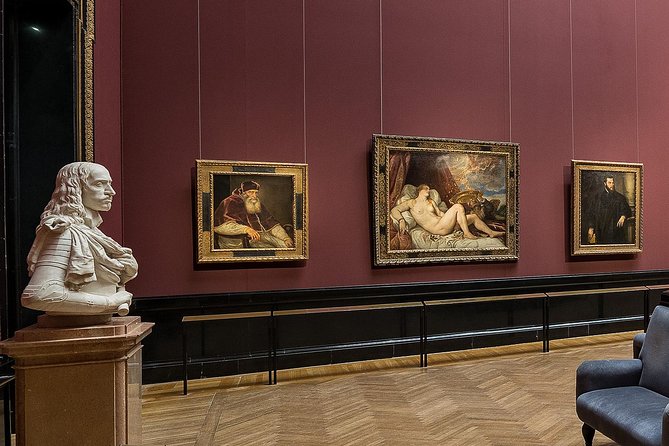
The price works best for a visitor who genuinely wants both experiences. The Kunsthistorisches Museum alone can occupy half a day, and the Imperial Treasury adds a compact but memorable look at Habsburg ceremony. Paying for the combined ticket saves you from arranging two separate admissions and gives your day a clear structure.
The value is weaker if you want only a fast visit. Some people feel there is no need to prebook because they must exchange a voucher on arrival anyway. That criticism is fair, especially during a quiet period when buying directly at the museum may be simple.
Prebooking still has a possible benefit: you have the combined visit arranged before arriving. But it does not guarantee a completely queue-free entry. Think of it as advance planning, not a magic line-skip.
Children under 19 are free, while adult pricing applies to all other visitors. For a family with older children, that can improve the value considerably.
Free cancellation is available if you cancel at least 24 hours before the local start time. Changes or cancellations inside that window are not accepted for a refund.
Who will enjoy this most?
I would choose this ticket if you like European painting, royal collections, architecture, or the practical freedom of exploring without a guide. It works especially well for a first Vienna visit when you want two major cultural stops in the historic center.
It also suits independent visitors who prefer to decide how long to spend with each object. The Treasury is easy to cover at your own pace, and the art museum lets you focus on Bruegel, the old masters, antiquities, or decorative arts.
Families can make it work, especially because the building has benches and a café. Younger children may need a shorter plan, since the museum is large and visually demanding. A family visit should not try to cover every room.
I would hesitate if you dislike large museums, have limited time, or need guaranteed fast admission. I would also avoid booking both sites immediately before a train. The voucher exchange and possible queues need a cushion.
Should you book the combined ticket?
Book it if you want a serious art museum visit plus a focused look at imperial regalia. The paintings, especially Bruegel, are the strongest reason to go, while the crowns and ceremonial objects give the day a second, very different focus.
Plan for several hours, bring water, wear comfortable shoes, and find the Voucher or Group Priority queue before joining any line. If you follow that advice, the $38.62 price is a fair deal for two of Vienna’s most important collections.
Skip it if you only have an hour or two, or if you want a fully guided experience. This is an admission ticket, not a tour with a named guide. For independent museum visitors with enough time, it is a strong choice. For everyone else, the scale and entry instructions require careful planning.
FAQ
What does this ticket include?
It includes entrance to the Kunsthistorisches Museum Vienna and the Imperial Treasury of Vienna, including the Kunstkammer Vienna and Neue Burg areas within the museum complex.
Is a guided tour included?
No. The ticket provides admission, but no guide is listed as included. You visit the collections at your own pace.
How long should I plan for both museums?
Allow several hours for the Kunsthistorisches Museum and about an hour for the Imperial Treasury. A full day is reasonable if you want to see both without rushing.
Where do I exchange the voucher?
At the Kunsthistorisches Museum, look for the queue or ticket desk marked Voucher or Group Priority. Do not join the regular Ticket line unless museum staff direct you there.
Can the same ticket be used at both venues?
The combined ticket is intended for both the Kunsthistorisches Museum and the Imperial Treasury. Confirm the exchange procedure when you arrive, since the venues are separate.
Are children charged the adult price?
Children under 19 enter free of charge. Adult pricing applies to other visitors.
Can I cancel for a refund?
Yes. You can cancel at least 24 hours before the experience start time for a full refund. Cancellations or changes made less than 24 hours before the start time are not accepted.
Just added in Vienna
- World War II History Vienna Old Town Private Walking Tour★ 4.8 · 9 reviews
- Vienna: Wiener Schnitzel and Strudel Cooking Class★ 4.9 · 126 reviews
- Vienna: Wine Tasting Tour★ 4.8 · 61 reviews
- Vienna: Winery and Wine Tasting Tour with a Wine Expert★ 5.0 · 5 reviews
- Vienna: Wine Tasting at Schönbrunn Palace★ 4.3 · 71 reviews
- Vienna: Wine Tasting E-Bike Tour★ 4.9 · 46 reviews
- Vienna: Unforgettable Private City Tour★ 5.0 · 7 reviews
- Vienna Urban Art Tour: Explore a different side of Vienna!★ 3.8 · 14 reviews
Hofburg & Imperial Palaces, compared.
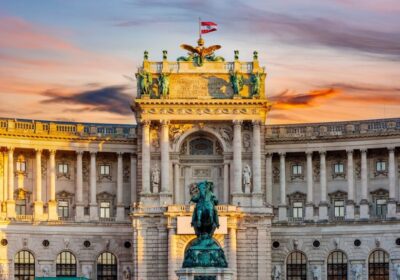
Skip-the-Line Sisi Museum, Hofburg and Gardens Tour
Read our review →
Entry Ticket Upper Belvedere, Klimt’s Kiss & Permanent Collection
Read our review →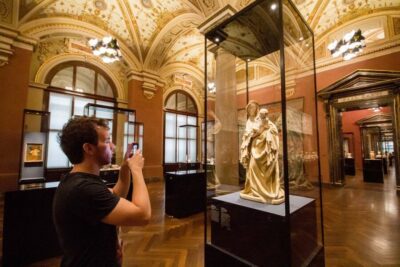
Combo Ticket: Kunsthistorisches Museum & Imperial Treasury
Read our review →
“Sisi’s Amazing Journey” Virtual Reality Experience
Read our review →Browse the lists this tour appears in