
Reviewed · HOFBURG & IMPERIAL PALACES
Skip-the-Line Empress Sisi Museum, Hofburg & Gardens Tour
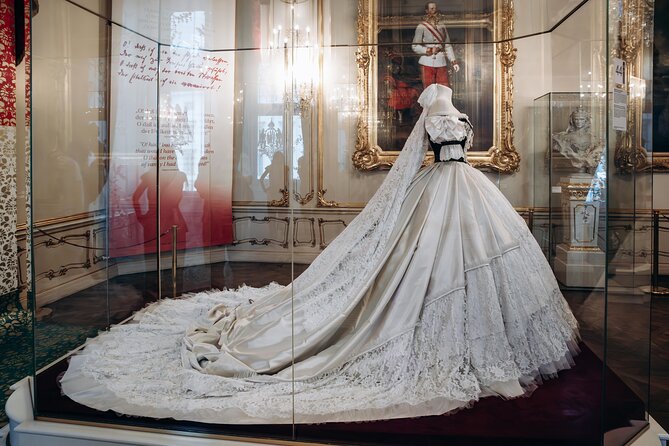
The most memorable part of this two-hour tour is the contrast between Sisi’s carefully shaped public image and the private life suggested by her rooms, clothes, and personal objects. Inside the Hofburg, you move from museum displays to Imperial Apartments, then step outside into the courtyards and grand squares where Habsburg power once played out.
I like two things especially: skip-the-line entry saves time at a crowded palace, and a good guide turns a narrow, busy museum into a story rather than a procession of cases. Guides such as Alex and Michael have brought humor and sharp anecdotes to the route. The main caution is space: groups can reach 25 people, and the museum’s tight layout may make it hard to hear or linger.
Key points to know before booking
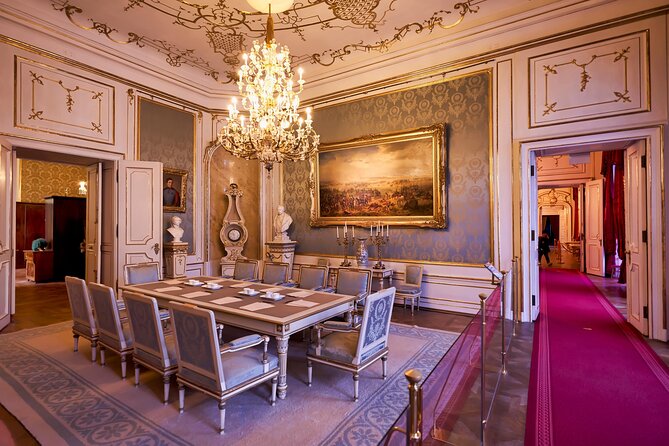
- The Sisi Museum and Imperial Apartments are the heart of the tour, with included skip-the-line entry.
- The walking route adds context outside the palace, including the Hofburg Courtyard, Heroes’ Square, Spanish Riding School, Augustinian Church, and Josefplatz.
- The guide matters here, since the displays are compact and the historical story can be easy to miss without explanation.
- The group may include up to 25 people, which can feel large in narrow museum rooms.
- The tour takes about two hours, begins at the Emperor Franz I Monument, and ends at Josefplatz.
- The price is $52.73 per person, with a mobile ticket and no transportation included.
Why Sisi’s story works best with a guide
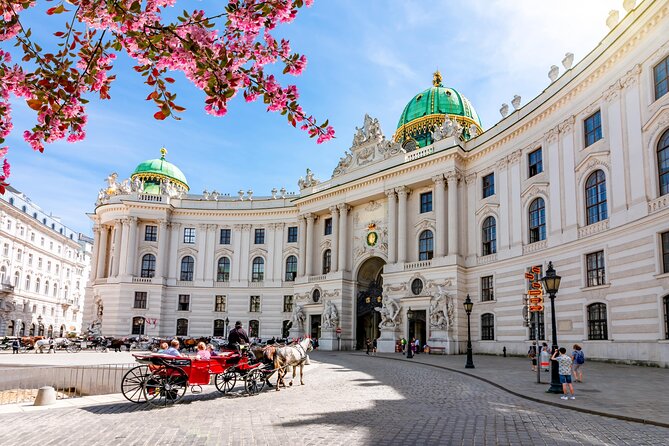
Vienna’s Hofburg is not one tidy palace building. It is a large imperial complex, shaped over centuries and filled with courtyards, state rooms, chapels, offices, museums, and ceremonial spaces. On your own, you can admire the architecture, but it is harder to connect the rooms to the people who used them.
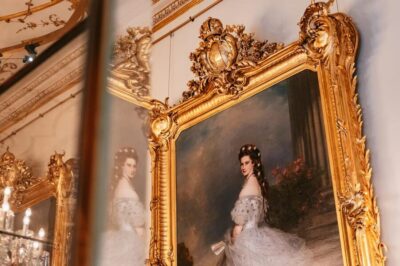
That is where this tour earns its keep. The guide gives you a narrative to follow, beginning with Emperor Franz I and moving into the life of Empress Elisabeth, better known as Sisi. Her image is famous, but the museum presents more than a pretty portrait. You get a closer look at her clothing, routines, public role, and the pressures surrounding her position.
The best guides add humor without turning the Habsburg story into a costume drama. Alex and Michael are among the guides associated with especially lively storytelling, with anecdotes and small historical details that help the palace feel less formal. Your guide may be someone else, but this is an experience where delivery matters as much as the building.
The skip-the-line feature also has real value. The Hofburg is one of Vienna’s major sights, and waiting outside can eat into a short city visit. Here, your ticket includes entry to the Sisi Museum and Imperial Apartments, so you can spend more of your two hours inside.
Other imperial addresses in Vienna:
- Vienna: Skip-the-Line Sisi Museum, Hofburg and Gardens Tour
★ 4.8 · 5,918 reviews - Tickets for the Albertina Exhibitions
★ 4.7 · 2,126 reviews - Vienna: Imperial Treasury in the Hofburg Palace
★ 4.4 · 1,791 reviews
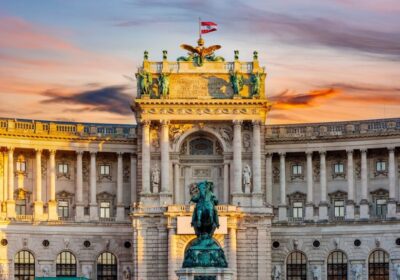
Meeting Franz I at the Hofburg entrance
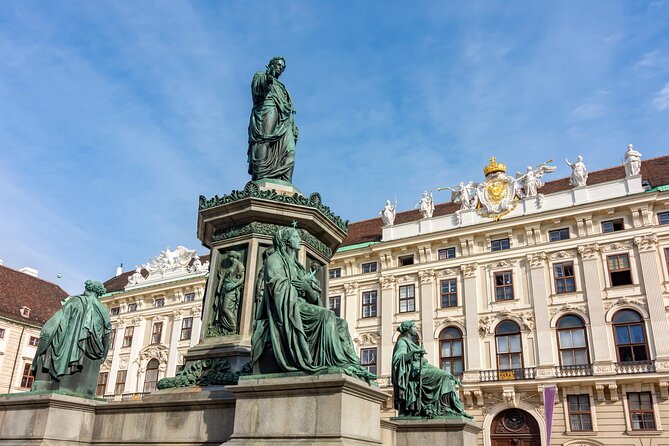
The tour begins at the Emperor Franz I Monument, at In der Burg in Vienna’s first district. This is a practical meeting point because you are already in the Hofburg complex, not standing several blocks away at a generic street corner.
Allow enough time to find the statue and identify your guide. The meeting point is in a grand public area, and the first stop lasts only about five minutes. This opening is brief, but it gives the guide a chance to place Franz I within the Habsburg story before you enter the museum.
You will need your mobile ticket, and the tour does not include transportation. That is not a major issue because the route is centered in Vienna’s historic core, but you should arrange your own way to the Hofburg before the start time. Confirmation is provided when you book.
Inside the Sisi Museum and Imperial Apartments
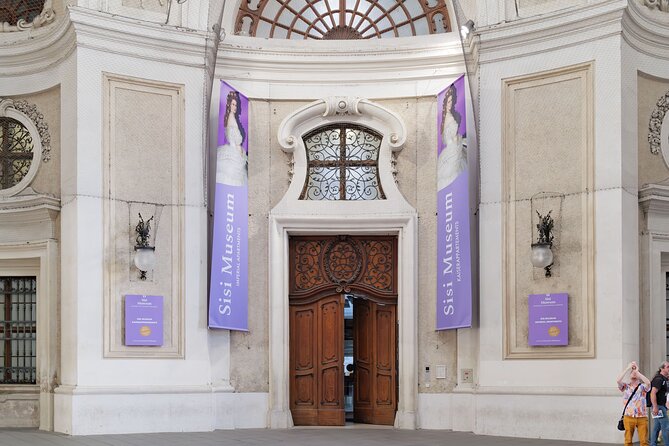
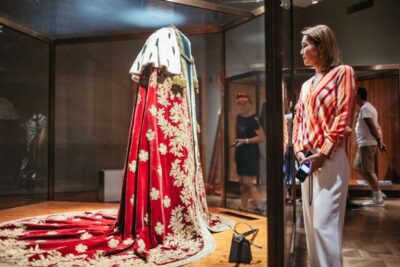
The Sisi Museum takes about an hour, making it the main portion of the experience. You will explore the Imperial Palace and see displays connected with Empress Elisabeth, followed by the Imperial Apartments that show the courtly world in which she lived.
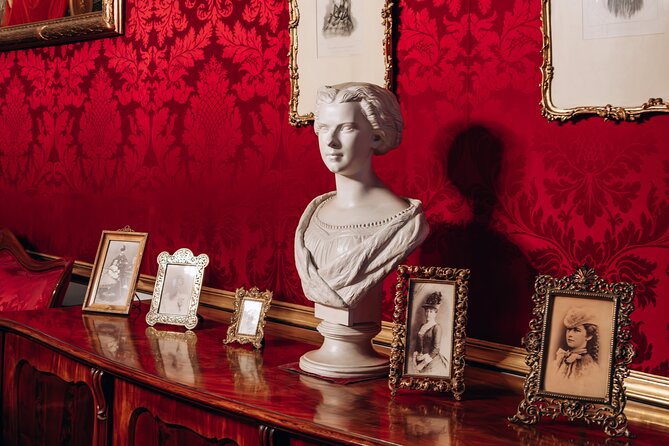
The subject is more complicated than the romantic Sisi legend. Elisabeth became an admired figure, but her life at court was not simply glamorous. The guide helps you read the objects as clues to her habits, public image, and position within the Habsburg family.
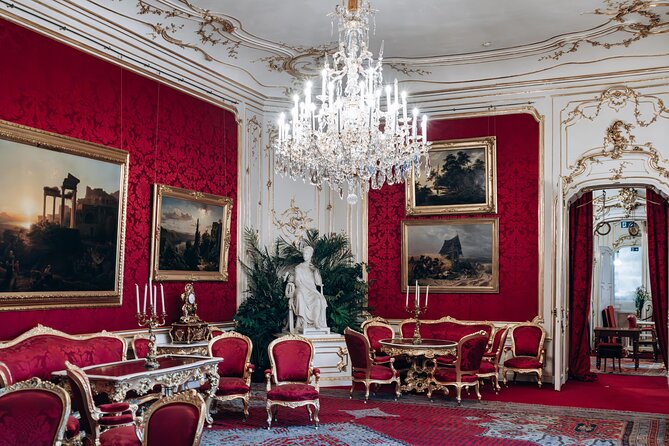
The Imperial Apartments add a second layer. Instead of looking only at a famous person, you see the controlled setting of imperial life. Rooms, furnishings, and ceremonial spaces show how much of court life was shaped by duty and display.
I would not treat this as a slow, independent museum visit. The route lasts about an hour, and the building can be crowded. Some rooms and passages are narrow, so a group of 20 or more may need to keep moving. If you want to read every label or study each object for several minutes, you may find the pace brisk.
That limitation is also why the guide can be useful. A clear explanation helps you focus on the main objects instead of trying to absorb every panel. The tradeoff is simple: you gain a story and skip the line, but you give up some freedom to set your own pace.
The guide should also be easy to hear. In a crowded museum, the difference between a strong tour and a frustrating one can come down to where the group stops and how well the guide manages the room. The supplied group limit is 25, which is not a small group for tight interiors.
The Hofburg Courtyard and imperial scale
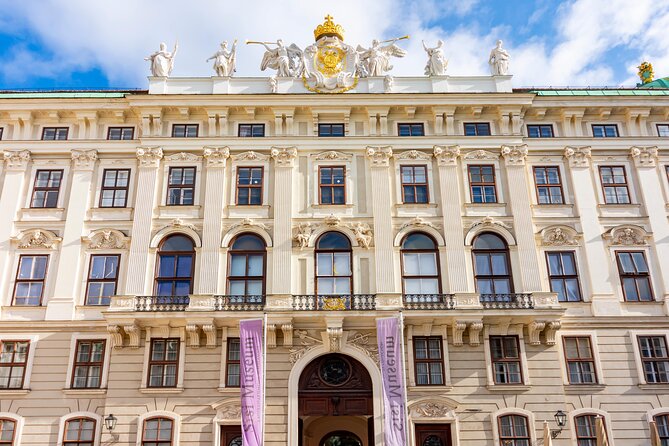
After the museum, the tour moves outdoors through the Hofburg Courtyard. This short section lasts about 15 minutes and gives you breathing room after the close quarters of the museum.
The courtyard is useful because it lets you see the palace as a working imperial complex rather than a set of disconnected interiors. Historic façades and statues frame the space, and the guide can connect what you have just seen inside with the larger Habsburg court.
This is also a good moment to look up. The courtyard’s architecture communicates authority through scale and decoration. Inside, the museum focuses on private lives and objects. Outside, the buildings remind you that the palace was built to project power.
More to book in Vienna
- Vienna Kunsthistorisches Museum Day Admission Ticket
★ 4.6 · 3,690 reviews - Vienna: Chocolate Workshop in Chocolate Museum w/ Tasting
★ 4.5 · 1,802 reviews - Sigmund Freud Museum Ticket
★ 4.6 · 1,668 reviews - Vienna: St. Stephen’s Cathedral & Dom Museum Wien Tickets
★ 4.5 · 1,652 reviews
Heroes’ Square and the Spanish Riding School
From the courtyard, you continue to Heroes’ Square, or Heldenplatz. The stop lasts about 10 minutes and centers on the square’s monumental architecture and statues.
Heldenplatz is one of Vienna’s most important public spaces, and its broad scale contrasts with the narrow museum route. The square gives you a clearer sense of how imperial Vienna presented itself to the public. The guide’s explanation is valuable here because the buildings and monuments are impressive, but their political meaning is not always obvious at first glance.
The tour also passes by the Spanish Riding School. This is not described as a full riding-school visit or performance, so you should not book this route expecting a show or stable tour. Instead, you pass the famous institution and may get a look at the setting associated with Vienna’s Lipizzaner stallions.
That brief stop works well as part of a larger walk. You get a taste of another major Hofburg attraction without paying for a separate activity or spending the tour inside another venue. If the riding school is a main priority, you will need a different ticket or visit.
Augustinian Church and the Habsburg wedding link
The route continues to Augustinian Church, or Augustinerkirche, for about 15 minutes. This Baroque church has a strong connection to the Habsburg family and is associated with royal weddings, including the marriage of Marie Antoinette.
That detail gives the church a direct human link to the dynastic story. The palace can feel focused on rulers, offices, and ceremonies. A wedding church shifts the focus to family alliances and the personal events that supported imperial politics.
The stop is included in the tour, and there is no separate admission charge listed. You will have a short visit rather than an extended church tour, so think of it as a focused historical stop. The guide can explain why this church mattered to the Habsburgs, while you take in the interior and its Baroque character.
I like this part of the route because it adds variety. You are no longer looking only at palace rooms and imperial objects. You are seeing a place tied to the family’s religious and dynastic life.
Finishing at Josefplatz
The tour ends at Josefplatz, another elegant square in Vienna’s first district. The final stop lasts about five minutes, enough for the guide to wrap up the imperial story and point out the surrounding historic buildings.
Ending here is convenient if you want to continue exploring central Vienna on foot. You are not returned to the starting point, so plan your next stop from Josefplatz rather than assuming you will finish at the Emperor Franz I Monument.
The end point also gives the tour a clear shape. You begin with an emperor’s monument, move through the palace and its public spaces, visit a royal church, and finish in another historic square. It is a compact introduction to the Habsburg center of Vienna.
What $52.73 buys you
At $52.73 per person, this is not the cheapest way to see the Hofburg. The value depends on how much you want from the visit.
You are paying for a professional guide, skip-the-line access to the Sisi Museum and Imperial Apartments, and a two-hour route that includes several outdoor landmarks and Augustinian Church. The price makes more sense if you want the history explained and prefer not to spend time organizing separate palace stops.
It is also useful for a first visit to Vienna. The route gathers several major imperial sights in one booking, and the mobile ticket keeps the process simple. You do not need to arrange transportation during the tour, since the experience stays within the central Hofburg area.
The value is weaker if you prefer museums at your own speed. You may feel rushed in the Sisi Museum, especially when the building is crowded. You also will not receive a full visit to the Spanish Riding School, since the tour only passes by it.
My practical view: the skip-the-line access and guide justify the cost for a short Vienna stay, particularly if palace history is high on your list. For a repeat visit, or for someone who reads every display and photographs each room, a self-guided option may offer more control.
Crowd size, timing, and the museum’s narrow rooms
The tour can include up to 25 people. That limit is clearly manageable in an outdoor square, but it matters inside the Sisi Museum and Imperial Apartments.
The museum’s layout is tight, and other people may be moving through the same spaces at the same time. A large group can bunch up around the guide, making it difficult to hear every explanation or read museum text. This is the most important practical drawback to understand before booking.
Try to choose a quieter time if your schedule allows, though the supplied information does not promise a particular crowd level or departure time. You should also expect the guide to keep the group moving. That helps the tour stay close to two hours, but it leaves less time for lingering.
A group of 25 is also different from a private tour. If you want frequent questions, long photo stops, or personal attention, this may feel too busy. If you mainly want the main story, efficient entry, and a clear route, the format should work better.
Who will get the most from this tour
I would recommend this tour to you if you have about two hours, want a guided introduction to Vienna’s imperial center, and value saved time at the Hofburg. It suits first-time visitors who want the Sisi Museum explained rather than simply passed through.
It is also a good fit if you enjoy historical storytelling. The tour is strongest when the guide connects Elisabeth, the Habsburg court, Franz I, the palace, and the wedding church into one sequence. Guides such as Alex and Michael have been praised for humor and personal anecdotes, which is useful in a museum that could otherwise feel formal.
You may want another option if you dislike group tours, need a quiet museum visit, or want to explore every display in detail. The group can be large for the setting, and the route is designed for coverage rather than long pauses.
The activity is generally open to most people, but no special accessibility details are provided. If you have specific mobility needs, contact the provider before booking rather than guessing about the palace route.
Booking, cancellation, and final decision
The tour is often booked about 32 days ahead, so advance planning is sensible, especially if you have fixed dates in Vienna. You receive confirmation at booking, and the ticket is mobile.
Free cancellation is available until 24 hours before the start time for a full refund. Within 24 hours, cancellations and changes are not accepted for a refund, so check your plans before that cut-off.
Should you book it? Yes, if you want the Hofburg’s main story in a compact, guided visit, and the skip-the-line entry matters to you. The combination of Sisi Museum, Imperial Apartments, palace courtyards, Heroes’ Square, the Spanish Riding School exterior, Augustinian Church, and Josefplatz gives you a useful slice of imperial Vienna.
Book with realistic expectations. This is not a private tour, not a full Spanish Riding School experience, and not a leisurely museum study session. You will get the most from it by listening closely, accepting the two-hour pace, and treating the guide’s storytelling as the main reason to go.
FAQ
How long does the tour last?
The tour lasts approximately two hours.
Where does the tour begin?
It begins at the Emperor Franz I Monument at In der Burg, 1010 Vienna, Austria.
Where does the tour end?
The tour ends at Josefplatz in Vienna’s first district.
Is skip-the-line entry included?
Yes. Skip-the-line access to the Sisi Museum and Imperial Apartments is included.
Does the tour include transportation?
No. Transportation is not included.
What places are visited outside the museum?
The route includes the Hofburg Courtyard, Heroes’ Square, Augustinian Church, and Josefplatz. It also passes by the Spanish Riding School.
Will I visit the Spanish Riding School?
You pass by the Spanish Riding School during the walking portion. The experience does not list entry to a performance or a separate riding-school tour.
How large can the group be?
The tour can have a maximum of 25 participants.
Can I cancel for a full refund?
Yes. You can cancel at least 24 hours before the experience start time for a full refund. Cancellations or changes made within 24 hours are not accepted for a refund.
Just added in Vienna
- World War II History Vienna Old Town Private Walking Tour★ 4.8 · 9 reviews
- Vienna: Winery and Wine Tasting Tour with a Wine Expert★ 5.0 · 5 reviews
- Vienna: Wiener Schnitzel and Strudel Cooking Class★ 4.9 · 126 reviews
- Vienna: Wine Tasting Tour★ 4.8 · 61 reviews
- Vienna: Wine Tasting E-Bike Tour★ 4.9 · 46 reviews
- Vienna: Wine Tasting at Schönbrunn Palace★ 4.3 · 71 reviews
- Vienna: Unforgettable Private City Tour★ 5.0 · 7 reviews
- Vienna Urban Art Tour: Explore a different side of Vienna!★ 3.8 · 14 reviews
Hofburg & Imperial Palaces, compared.
Skip-the-Line Sisi Museum, Hofburg and Gardens Tour
Read our review →
Entry Ticket Upper Belvedere, Klimt’s Kiss & Permanent Collection
Read our review →
Combo Ticket: Kunsthistorisches Museum & Imperial Treasury
Read our review →
“Sisi’s Amazing Journey” Virtual Reality Experience
Read our review →Browse the lists this tour appears in