
Reviewed · MUSEUMS
Vienna: Tickets for Kunst Haus Wien: Museum Hundertwasser
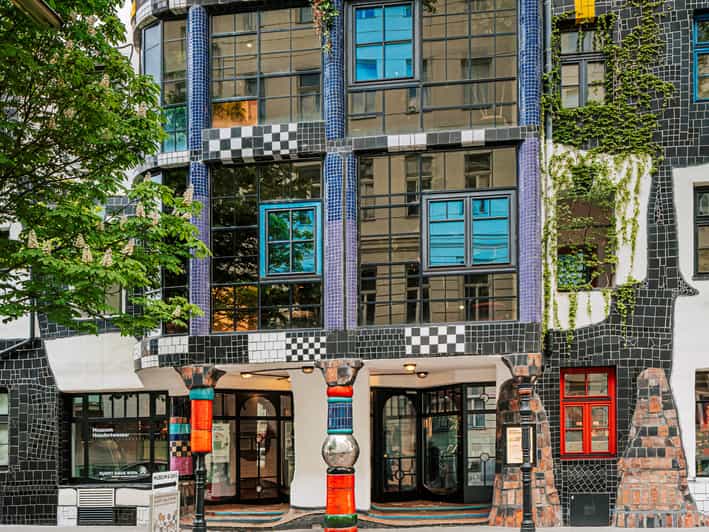
KunstHausWien is not a quiet box of paintings. It is a total Hundertwasser experience, with curving floors, uneven surfaces, bright colors, and plants woven into the building. Inside, you follow the Austrian artist from early dreamlike pictures to his practical ideas for greener homes and cities.
I like the clear link between the art and the architecture, and I like that the visit includes contemporary art plus a changing exhibition on ecology, sustainability, and urban life. The main caution is that some paintings have little nearby explanation, so the optional 4 EUR audio guide can make the visit much easier to follow.
Key points
- Hundertwasser’s ideas fill the building: See paintings, architectural models, and examples of his belief that people should live more closely with nature.
- The first two floors focus on the artist: The permanent display moves from early artistic visions to built projects and practical design.
- The top floors change with the program: Your ticket includes access to contemporary art and the current garage exhibition on ecology, sustainability, and urbanity.
- The building is part of the collection: Organic forms, colorful surfaces, and a rejection of straight lines shape the visit itself.
- Café Friedlich extends the experience: The green courtyard and café offer a pleasant place for food and a pause after the galleries.
- Allow roughly one day for ticket validity, not one full day inside: The ticket is valid for one day, and you can fit the museum into a larger Vienna itinerary.
Why KunstHausWien feels different from a standard museum
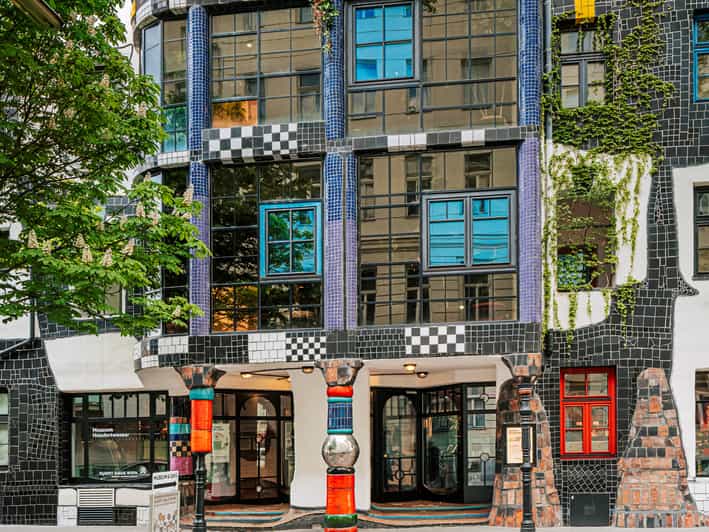
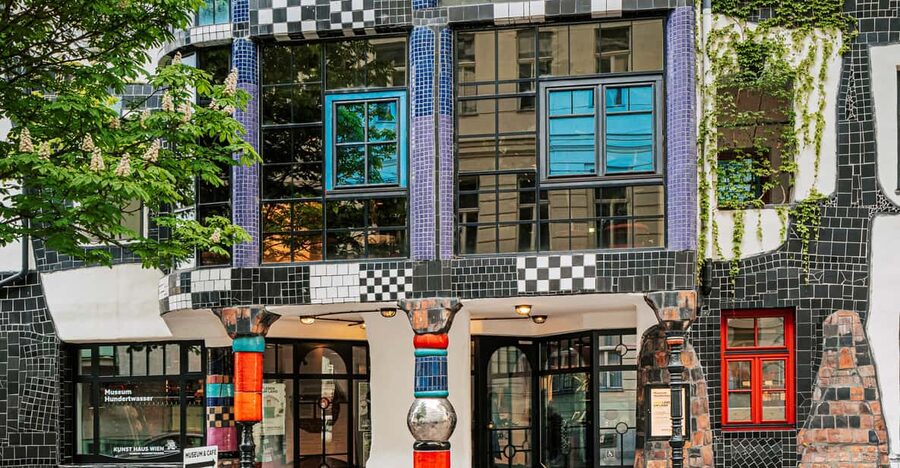
Friedensreich Hundertwasser wanted art to affect daily life, not sit apart from it. At KunstHausWien, that idea begins before you study a single painting. The building itself rejects the tidy grid common to museums, using curved forms, irregular surfaces, strong colors, and greenery to make the architecture part of the experience.
I find this useful because it gives you a key before you enter the galleries. Hundertwasser was not simply making unusual pictures. He was questioning the way cities are built, the way homes feel, and the amount of control people should give to straight lines, uniform walls, and hard paving.
That approach makes the museum easy to enjoy even if you know little about Austrian art. You can respond first to the shapes and colors, then think about the ideas behind them. The museum has a playful surface, but its message is serious: buildings should work with nature rather than push it aside.
More to book in Vienna
- Vienna: Skip-the-Line Sisi Museum, Hofburg and Gardens Tour
★ 4.8 · 5,918 reviews - Vienna Kunsthistorisches Museum Day Admission Ticket
★ 4.6 · 3,690 reviews - Tickets for the Albertina Exhibitions
★ 4.7 · 2,126 reviews
The first two floors, Hundertwasser’s artistic and ecological vision
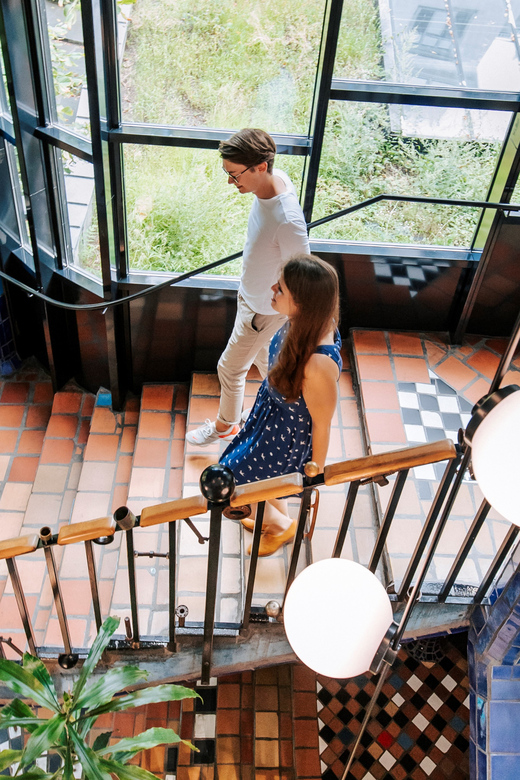
The permanent exhibition occupies the first two floors. It presents Hundertwasser as an artist, architect, and environmental thinker rather than separating those roles into neat categories.
You begin with his early picturesque visions, then move toward more practical projects. Paintings sit alongside building models and material showing how his ideas could take physical form. This progression matters. It helps you see that the odd shapes and intense colors were not random decoration. They connected to his larger wish for homes and cities that felt more human and more natural.
Look for the recurring rejection of straight lines. Hundertwasser treated the perfectly straight wall as something imposed on people and the natural world. His preference was for curves, uneven surfaces, hills, planted spaces, and buildings that gave nature room to return.
The exhibition also explains his ecological commitment. He argued for a closer relationship between architecture and the earth, and he imagined buildings where greenery was not an afterthought. The museum presents these ideas through both artwork and models, which makes the display more practical than a simple sequence of framed canvases.
Some of the pictures may puzzle you at first. They are full of symbols, unusual forms, and strong color choices, and not every work has extensive text beside it. That is the point at which I would pay the extra 4 EUR for the audio guide, especially if you want help understanding the artist’s life and the thinking behind the pictures.
The available guide languages are English, French, and German. The ticket information also presents the audio guide as a possible extra, so confirm the current arrangement when you book or arrive. The access ticket itself covers the museum and exhibition entry, not necessarily the guide.
The architecture is not just a backdrop
Many art museums ask you to ignore the building and concentrate on the collection. KunstHausWien asks you to do the opposite. Notice the floors, walls, colors, and planted areas as you move through the museum.
The unusual design gives the visit a physical rhythm. You are not passing through identical white rooms. The surfaces and forms help reinforce Hundertwasser’s argument that a building can shape your mood and your relationship with the natural world.
That makes the museum especially worthwhile for anyone interested in architecture, design, or sustainable cities. You do not need to agree with every Hundertwasser idea to see why the building remains memorable. It is an example of an artist using architecture to challenge ordinary habits.
The same design can be a consideration for people who prefer a very calm, conventional gallery layout. The museum’s character is its strength, but it is not neutral. The colors, uneven forms, and theatrical settings are always part of your attention.
Wheelchair access is available. If you need precise information about individual surfaces or routes inside, check with the museum before visiting, since the supplied information confirms accessibility but does not describe every interior detail.
The top floors, contemporary art and ecology
The top two floors hold temporary exhibitions. Your ticket includes the contemporary art exhibition and the current garage exhibition, listed as focusing on ecology, sustainability, and urbanity.
These displays broaden the visit beyond Hundertwasser himself. His work provides the foundation, but the temporary galleries connect his concerns with newer artistic approaches and current questions about cities and the environment.
The temporary program will change, so the exact artists and subjects depend on your date. That is useful for repeat visits, but it also means you should check the current exhibition details before booking if a particular show matters to you.
Do not skip the upper floors simply because you came for Hundertwasser’s paintings. The changing exhibitions help you understand why the museum remains relevant. They place artistic work beside questions about how people build, live, and use shared urban space.
One practical point is worth noting: the permanent display and special exhibitions may be handled as separate choices, with a combined ticket available for both. Make sure the option you select includes everything you want to see. The activity described here includes the permanent Museum Hundertwasser entry along with the contemporary and ecology-focused exhibitions.
A different kind of evening in Vienna:
- Vienna: Vivaldi’s Four Seasons Concert in Karlskirche
★ 4.7 · 14,951 reviews - Vienna: Spanish Riding School Training
★ 3.9 · 9,281 reviews - Vienna: Skip-the-cashier-desk-line Giant Ferris Wheel Ride
★ 4.5 · 7,859 reviews - Vienna: Schönbrunn Palace & Gardens Skip-the-Line Tour
★ 4.7 · 7,739 reviews
Café Friedlich and the green courtyard
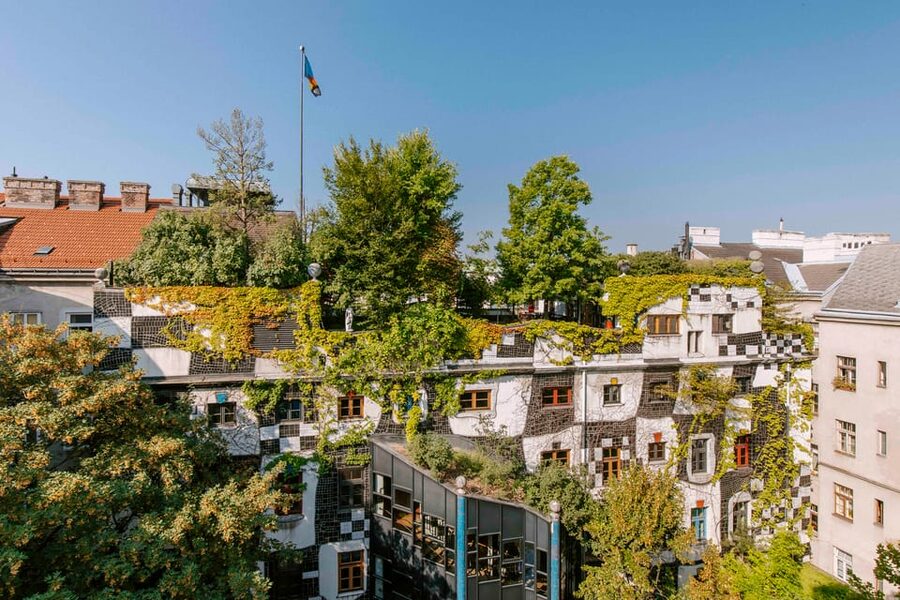
Café Friedlich gives you a natural pause after the galleries. Its setting in the green courtyard fits the building’s concern with plants and more relaxed urban spaces.
The café serves both savory and sweet choices, so it works for a light meal, a snack, or coffee after the museum. I would not treat it as a reason to buy the ticket by itself, but it adds value to the visit. You can sit with the visual ideas you have just seen instead of rushing straight back onto Vienna’s streets.
The café also makes the museum easier to fit into a slower afternoon. If your sightseeing day already includes a lot of grand palaces and formal rooms, this is a welcome change of mood. The café and courtyard offer a softer finish to an exhibition that can be visually intense.
The shop is another small bonus. It carries creative souvenirs, and the available feedback specifically notes that the prices can be more reasonable than expected. That is useful if you want a Hundertwasser-themed item without committing to an expensive art purchase.
Getting to Radetzkyplatz
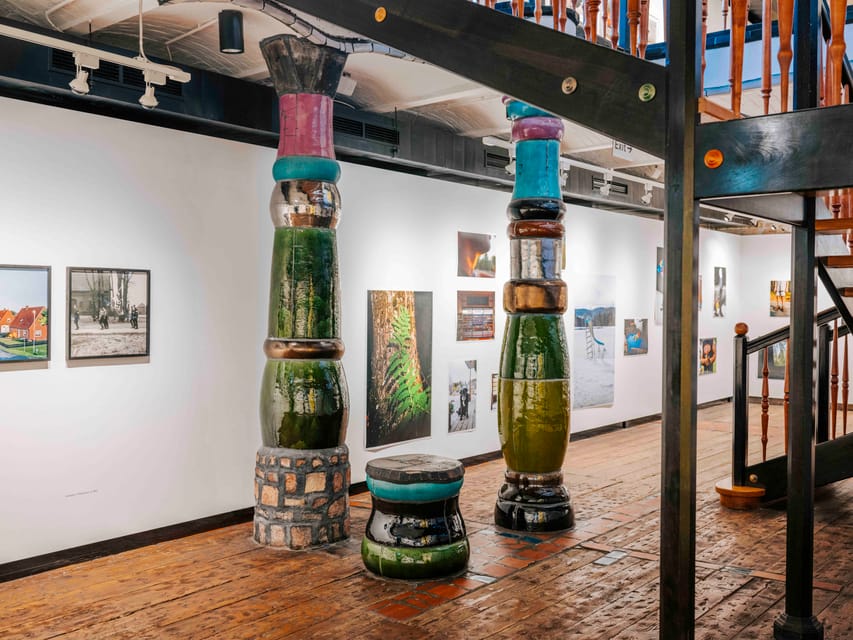
KunstHausWien is reached by public transport through Radetzkyplatz. From Schwedenplatz, take the U1 or U4, then continue on tram line 1 toward Prater Hauptallee to Radetzkyplatz.
From Landstraße/Wien Mitte, use the U3 or U4, then take tram line O toward Praterstern to Radetzkyplatz. These instructions are simple, but allow a little time to make the connection, especially if you are carrying luggage or moving between major Vienna sights.
The transport route makes the museum practical as part of a larger day. It is not presented as a guided tour with a named guide or fixed walking group. You arrive independently, use your ticket, and set your own pace inside.
That flexibility is important. You might spend a quick hour with the permanent displays, or stay longer for both the temporary galleries, the café, and the shop. The ticket is valid for one day, with availability and starting times shown when you check the date.
How much time should you allow?
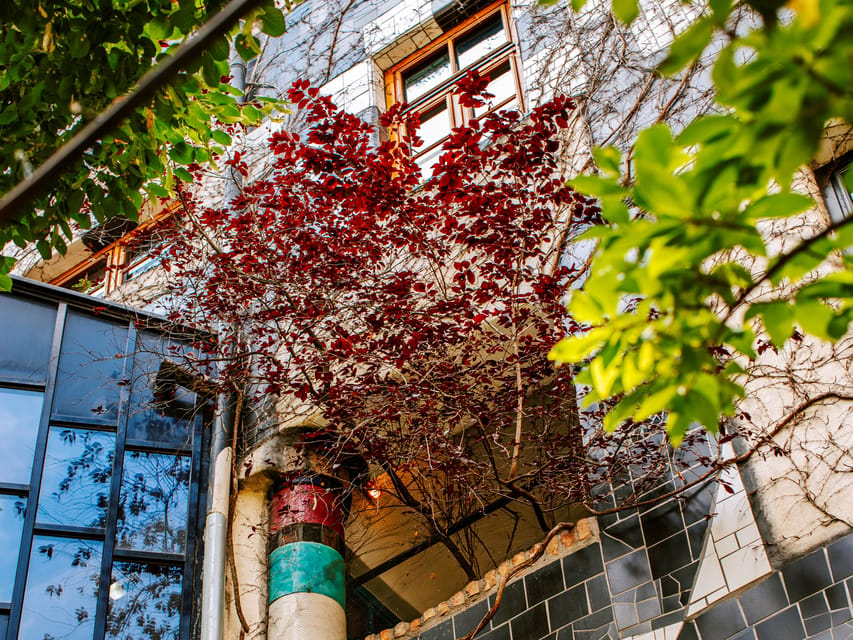
The ticket duration is listed as one day, but that does not mean you need to devote an entire day to the museum. I would plan a few hours if you want to see the permanent collection, both temporary displays, and Café Friedlich without hurrying.
A shorter visit can still work. If you mainly want Hundertwasser’s art and architecture, concentrate on the first two floors. Add the upper floors if contemporary art and ecological themes appeal to you.
The museum also suits different energy levels. One person can study the paintings and listen to the guide, while another can focus on the architecture and move at a quicker pace. The café gives you a meeting point if your group does not share the same museum speed.
Several experiences highlight the museum as suitable for different ages. The bold colors, unusual building, and clear ecological themes give younger visitors something immediate to notice, while adults can spend more time on the artistic and urban ideas.
Is the 18 USD price good value?
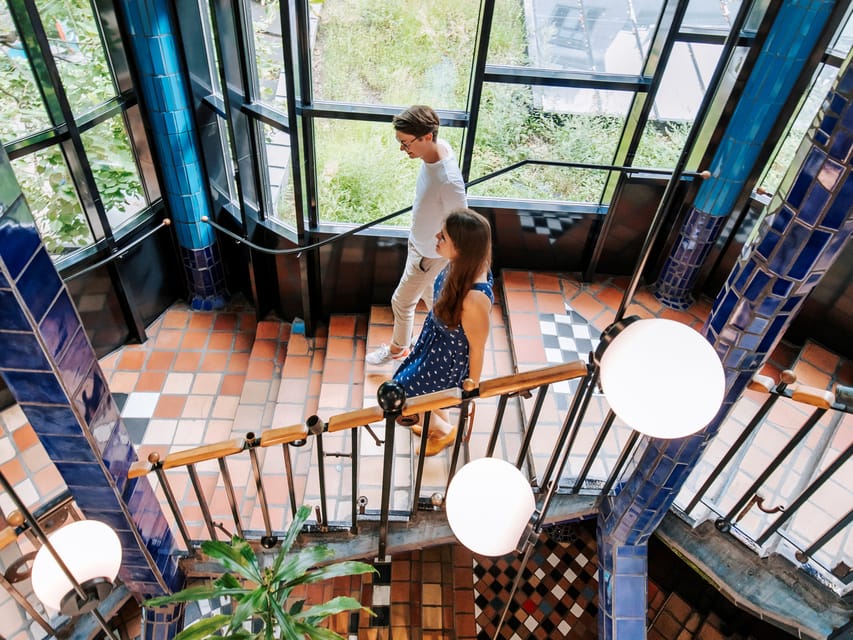
At about 18 USD per person, the ticket is reasonably priced if you use it for the permanent display and the temporary exhibitions. You are not paying only to look at paintings. The cost also covers access to an unusual building, Hundertwasser’s architectural models, the contemporary art display, and the current ecology exhibition.
The value is weaker if you only want a quick look at the building from outside or if you have little interest in art and design. The museum’s unusual architecture can be appreciated quickly, but the ticket makes more sense when you give the galleries enough time.
Senior pricing may require extra care. One person reported paying 3 EUR more per ticket than expected and still waiting in the queue. I cannot generalize that into a standard rule, but if you are booking a reduced-price ticket, check the final amount and conditions before payment.
The audio guide is listed at 4 EUR. For me, that is a sensible add-on if you want a better grasp of Hundertwasser’s symbols, life, and environmental ideas. Some works may be hard to interpret from the wall information alone.
Free cancellation up to 24 hours before the visit and the option to reserve now and pay later make the ticket easier to fit into a changing Vienna plan. Those terms are useful, but always check the final booking conditions for your chosen date.
Who will enjoy KunstHausWien most?
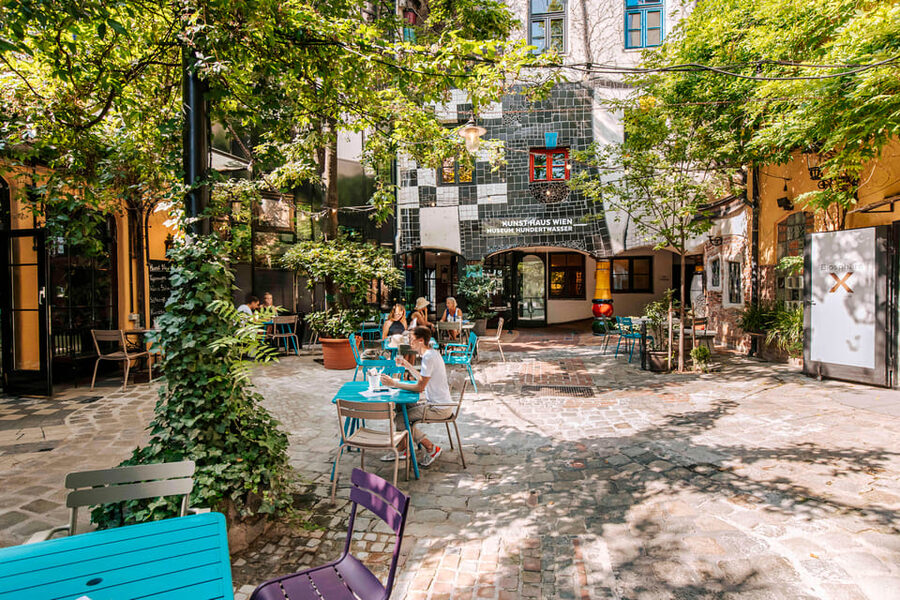
I would put this museum high on the list for:
- People curious about unusual architecture and interior design
- Visitors who like art with a social or ecological message
- Fans of colorful, symbolic, and unconventional painting
- Families looking for a museum that does not feel stiff or formal
- Anyone wanting a quieter cultural stop with a café afterward
- Repeat visitors to Vienna who want something beyond imperial museums
It is less suitable if you want a large classical collection, famous Old Masters, or a museum organized around one clear art movement. Hundertwasser’s work is personal and eccentric, and the museum asks you to accept that from the beginning.
I also recommend the audio guide for first-time visitors who want context. The building is easy to enjoy without it, but the artworks become easier to read when you understand the artist’s ideas about nature, architecture, and individual freedom.
Booking advice and final verdict
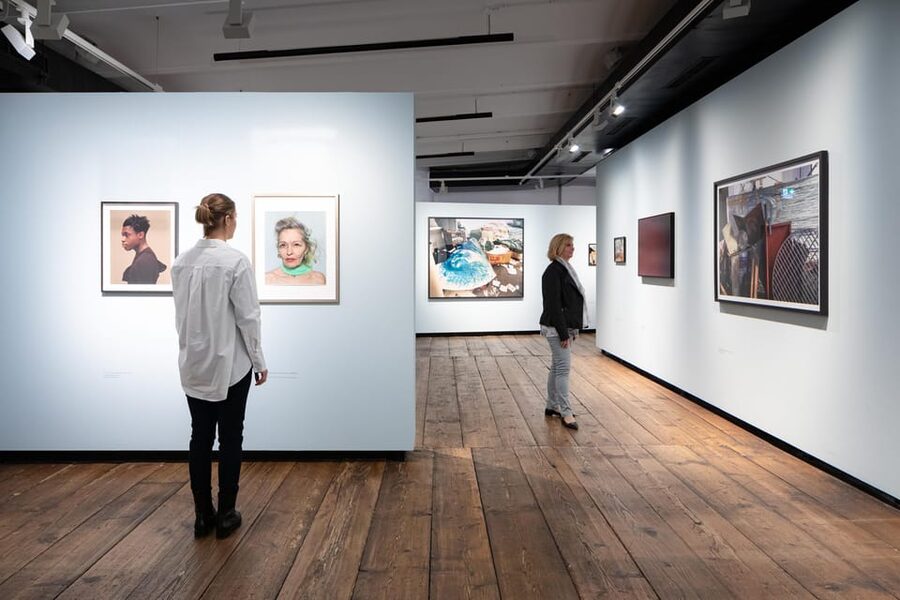
Book KunstHausWien if you want an art visit with a strong sense of place. The permanent exhibition gives you Hundertwasser’s paintings, models, and ecological thinking, while the building turns those ideas into something you can see around you.
I especially like the combination of art, architecture, and environmental ideas, followed by time in the courtyard or Café Friedlich. The main limitation is the possible need to pay extra for the audio guide, along with the need to check the exact ticket type if you want both permanent and temporary exhibitions.
For a first visit, choose the combined access, allow several hours, and consider the guide. If your Vienna schedule is already full of formal museums, this colorful and unconventional stop gives the day a welcome change of pace.
FAQ
Where is KunstHausWien located?
KunstHausWien is in Vienna, Austria. Public transport directions lead you to Radetzkyplatz.
How do I reach the museum from Schwedenplatz?
Take the U1 or U4 to Schwedenplatz, then use tram line 1 toward Prater Hauptallee and get off at Radetzkyplatz.
How do I reach the museum from Landstraße/Wien Mitte?
Take the U3 or U4 to Landstraße/Wien Mitte, then use tram line O toward Praterstern and get off at Radetzkyplatz.
What does the permanent exhibition cover?
The first two floors focus on Friedensreich Hundertwasser, including his early artistic visions, paintings, architectural ideas, building models, and ecological commitment.
Where are the temporary exhibitions?
The temporary exhibitions are on the top two floors.
Are temporary exhibitions included?
The activity includes access to the contemporary art exhibition and the current garage exhibition on ecology, sustainability, and urbanity. Check your selected ticket type to confirm that it covers the areas you want to visit.
Is an audio guide available?
An audio guide is available in English, French, and German. The supplied ticket information lists it as a possible extra costing 4 EUR, so confirm the current arrangement when booking or arriving.
Is the museum wheelchair accessible?
Yes, the activity information states that the museum is wheelchair accessible.
Is there a café at KunstHausWien?
Yes. Café Friedlich is located by the green courtyard and offers savory and sweet food options.
Can I cancel the ticket?
You can cancel up to 24 hours in advance for a full refund, according to the activity conditions. The booking also offers a reserve-now-and-pay-later option.
Just added in Vienna
- 3 hour private tour in Vienna by private car★ 4.4 · 6 reviews
- Christmas Market Vienna Tour★ 4.0 · 53 reviews
- Private Christmas Markets Walking Tour Vienna★ 5.0 · 31 reviews
- Christmas Markets & Shopping in Vienna★ 5.0 · 17 reviews
- Vienna: Christmas Markets Tour★ 4.3 · 99 reviews
- Vienna Danube Tower★ 4.0 · 136 reviews
- Guided Walking Tour of Vienna City Center Highlights★ 5.0 · 150 reviews
- Private Hidden Vienna Walk — Stories Behind Quiet Corners★ 5.0 · 137 reviews
Museums, compared.
Skip-the-Line Sisi Museum, Hofburg and Gardens Tour
Read our review →
Vienna Kunsthistorisches Museum Day Admission Ticket
Read our review →

Chocolate Workshop in Chocolate Museum w/ Tasting
Read our review →
St. Stephen’s Cathedral & Dom Museum Wien Tickets
Read our review →
Browse the lists this tour appears in