
Reviewed · TOURS IN VIENNA
Vienna: Spanish Riding School Training
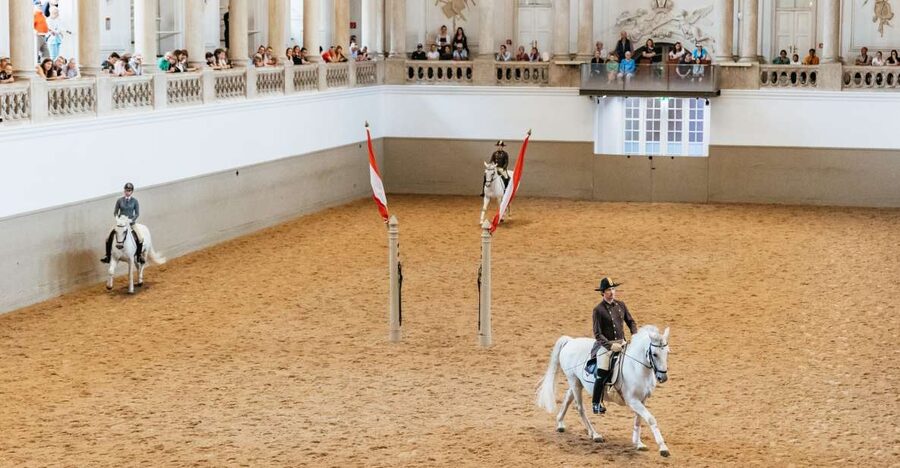
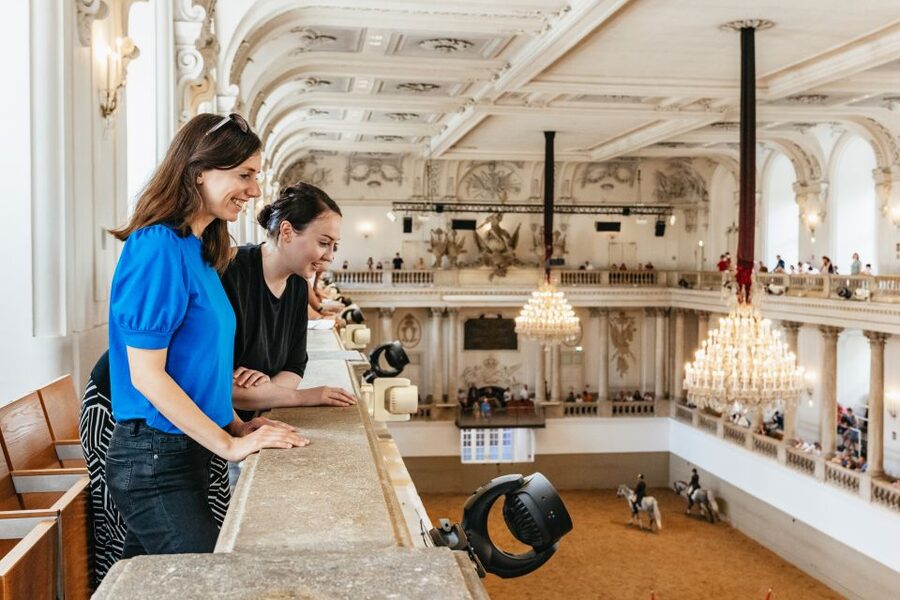
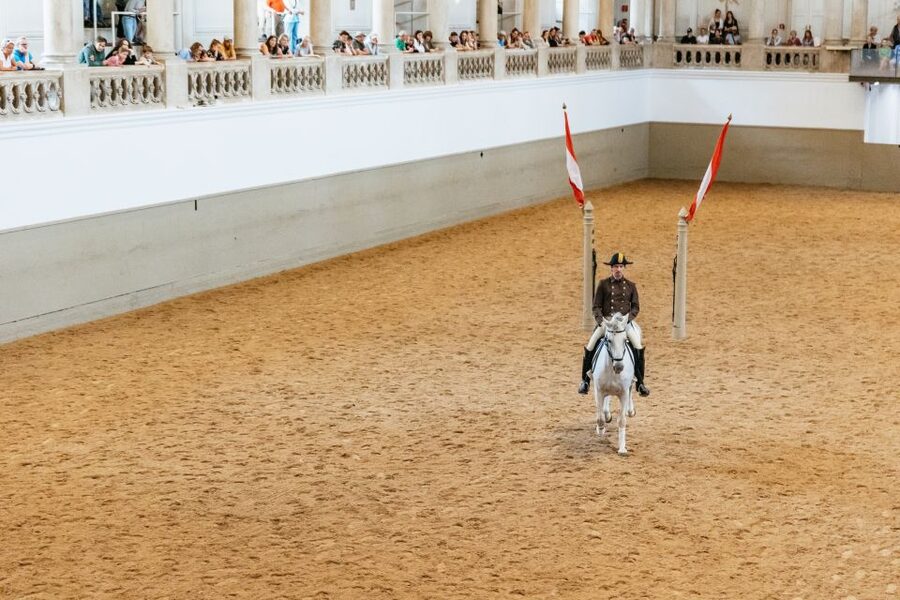
The most memorable part of this one-hour visit is the setting: white Lipizzaner stallions working beneath chandeliers in Vienna’s baroque Winter Riding Academy. You watch the real morning exercise, not a polished stage show, as riders guide horses through repeated movements, transitions, and muscle-building work.
I like the honest look at how long it takes to prepare both horse and rider, and I like the price. At about $20 per person, this is a sensible alternative when performance tickets are too costly or sold out. The main drawback is that the famous levade, courbette, and capriole are not daily exercises, so you may see refined training rather than dramatic leaps.
Key points to know
- One hour in the Winter Riding Academy: The baroque hall, chandeliers, and sand arena are part of the experience.
- Training, not a full performance: Expect dressage basics, relaxation exercises, and repeated practice rather than a guaranteed display of high school jumps.
- Two groups may appear: A session can include different horses and riders, sometimes including a younger rider in training.
- Music and commentary accompany the work: Classical Viennese music plays throughout, though the commentary can be difficult to hear from upper seating.
- Standing tickets can be good value: They cost less, but standing for an hour may be tiring, especially for anyone with mobility concerns.
- No photos or video inside: Staff make repeated announcements, so plan to watch without using your phone.
Entering the Winter Riding Academy
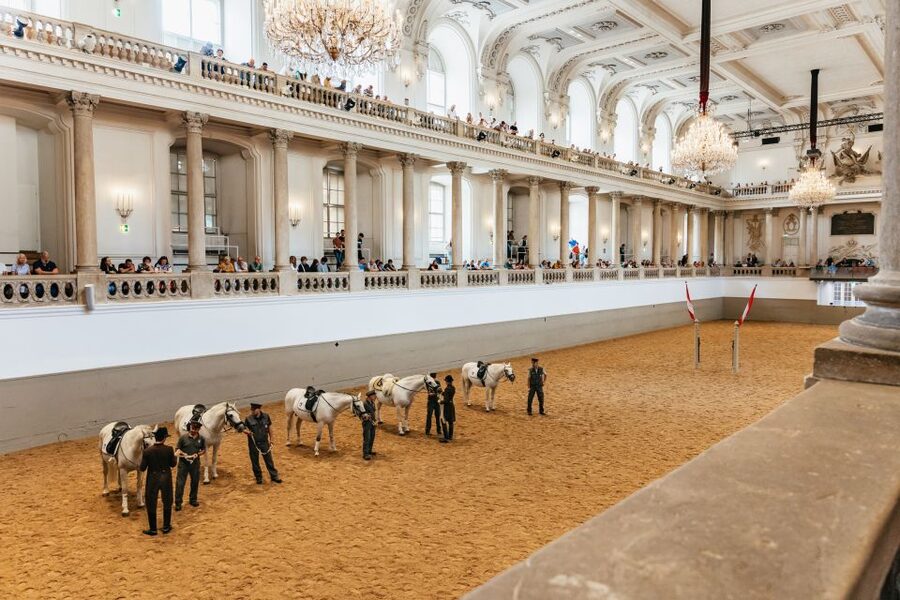
The Spanish Riding School is in central Vienna, and the training takes place inside the Winter Riding Academy. You do not simply walk into an ordinary stable or practice yard. You enter a grand ceremonial room with a sand-covered riding floor, high walls, and chandeliers hanging above the riders.
That contrast is part of the appeal. The work in the arena can look calm and repetitive, but the room gives every turn and change of pace a sense of occasion. You can easily understand why this school has become one of Vienna’s best-known cultural attractions.
Your phone voucher must be exchanged for a paper ticket at the entrance. Ticket collection begins no earlier than one hour before the activity, so do not leave this step until the last moment. A few minutes of planning here can save you a rushed entrance.
The building has many stairs and no elevator because of monument protection. If you use a wheelchair or have difficulty walking, contact the venue in advance with a request. Do not assume that a standard seat will solve the problem. Some upper seats require leaning forward over a high wall, and access arrangements need to be checked before you arrive.
More days out of Vienna:
- Vienna: Vivaldi’s Four Seasons Concert in Karlskirche
★ 4.7 · 14,951 reviews - Vienna: Skip-the-cashier-desk-line Giant Ferris Wheel Ride
★ 4.5 · 7,859 reviews - Vienna: Schönbrunn Palace & Gardens Skip-the-Line Tour
★ 4.7 · 7,739 reviews
What the morning exercise really shows
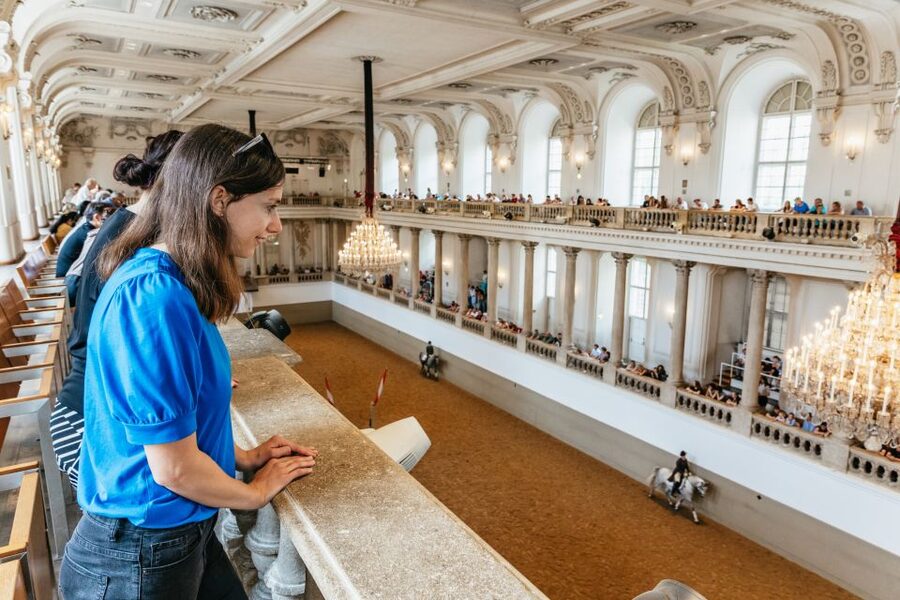
The morning exercise is designed to keep the stallions fit and healthy. Riders work on strength, balance, flexibility, and control. Some exercises relax the horse, while others refine a particular movement or build the muscles needed for the more demanding work of haute école dressage.
This is important context. You are not watching a show with a fixed sequence and a guaranteed climax. Each horse and rider may be working at a different stage. One pair might trot steadily around the arena, while another practices changes of lead, lateral movements, or more precise steps.
You may see several horses in the arena at once. One session can include about five horses and riders, with more than one group appearing during the hour. That gives you a useful sense of the school as a working institution, but it can also make it hard to follow one horse closely.
A younger rider may be easy to identify by a different uniform and riding hat. Watching an instructor guide a rider through each task can be one of the most revealing parts of the session. You see that the polished performance depends on years of small corrections, repetition, and trust between rider and horse.
From simple movements to haute école work
The training can include walking, trotting, sidestepping, lunging, changes of lead, and other dressage exercises. Some work looks modest at first. A horse may circle the arena or repeat a transition several times. That repetition is the point: the school is maintaining athletic ability and refining movement, not trying to entertain with a new trick every minute.
I find this most rewarding when you watch for details. Notice how quietly the rider gives instructions. Watch the horse’s posture, rhythm, and response. You may also see exercises aimed at strengthening particular muscle groups, which helps explain how the stallions prepare for the demanding movements used in formal performances.
The famous school jumps are a different matter. The levade, courbette, and capriole are associated with the Spanish Riding School’s performances, but they are not practiced every day. You might see an advanced movement during the morning exercise, but you should not book this session expecting a full series of rearing and jumping techniques.
That distinction will help you set the right expectations. If you want the complete theatrical program, book a performance when available. If you want to see how horses and riders develop their skills, the training session gives you a more modest and sometimes more revealing hour.
Classical music, commentary, and the sound of the room
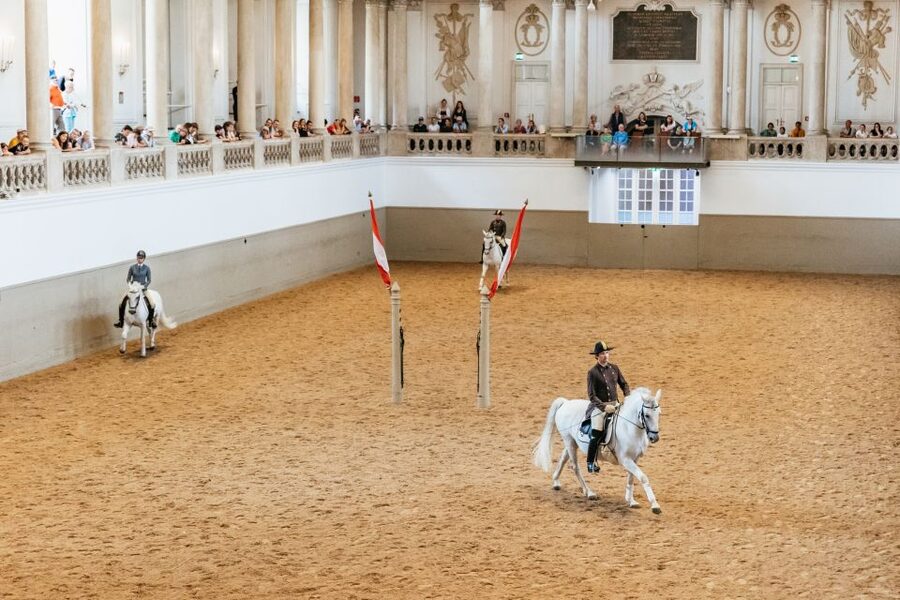
The horses work to classical Viennese music, which adds a gentle rhythm to the session. It also keeps the hour from feeling like a silent practice yard. The music suits the formal room and helps connect the training to the school’s public performances.
Commentary is included, with information about the horses, riders, and training methods. The sound quality and your position matter. From some upper or side areas, the narration can be muffled or too fast to follow. If the explanations are important to you, choose a middle section when possible.
You should also remember that the music and commentary do not turn the session into a guided tour of every detail. The main event is still the live work in the arena. If you know little about dressage, you can enjoy the horses and the room without expert knowledge, but you may get more from the hour if you pay attention to the differences between simple exercise and more precise schooling.
A different kind of evening in Vienna:
- Vienna: Light of Creation Votive Church Immersive Light Show
★ 4.8 · 6,779 reviews - Vienna Spanish Riding School Guided Tour
★ 4.7 · 6,765 reviews - Vienna: Classical Concert in the World-Famous Musikverein
★ 4.6 · 6,673 reviews - Vienna: Skip-the-Line Sisi Museum, Hofburg and Gardens Tour
★ 4.8 · 5,918 reviews
Choosing between standing and seated tickets
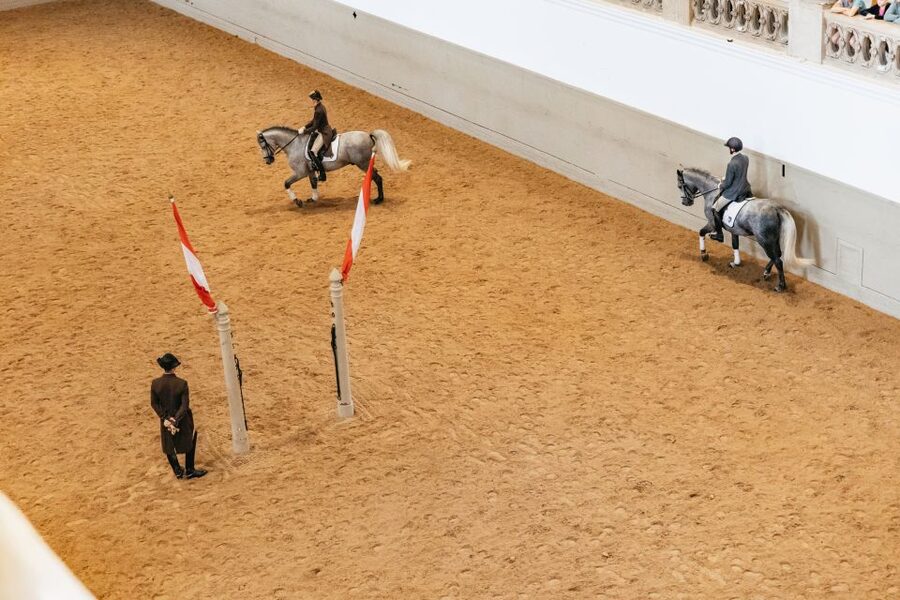
Standing admission is often the best bargain. It gives you a chance to see the arena without paying for a more formal seat, and some standing positions offer a clear view of one side of the floor. At about $20, it is a practical choice for a short Vienna visit.
Still, standing for a full hour is not right for everyone. Several areas have limited seating, and an hour on your feet can be demanding for older adults, children, or anyone with back, leg, or balance problems. If seated tickets are offered, compare the options before booking rather than assuming you can upgrade easily at the entrance.
Upper seating can provide a broad view of the riding floor, but it has tradeoffs. A high wall may force you to lean forward, and some side positions do not show the full arena. A place at the back or near the middle can give you a better overall view than a front position behind a tall barrier.
Arrive early enough to understand your position before the exercise begins. If you are assigned a less useful spot, staff may be able to help when space allows, but you should not count on moving. Good sight lines matter more here than they do at a conventional theater because the horses travel across a wide floor.
A strict no-photo rule
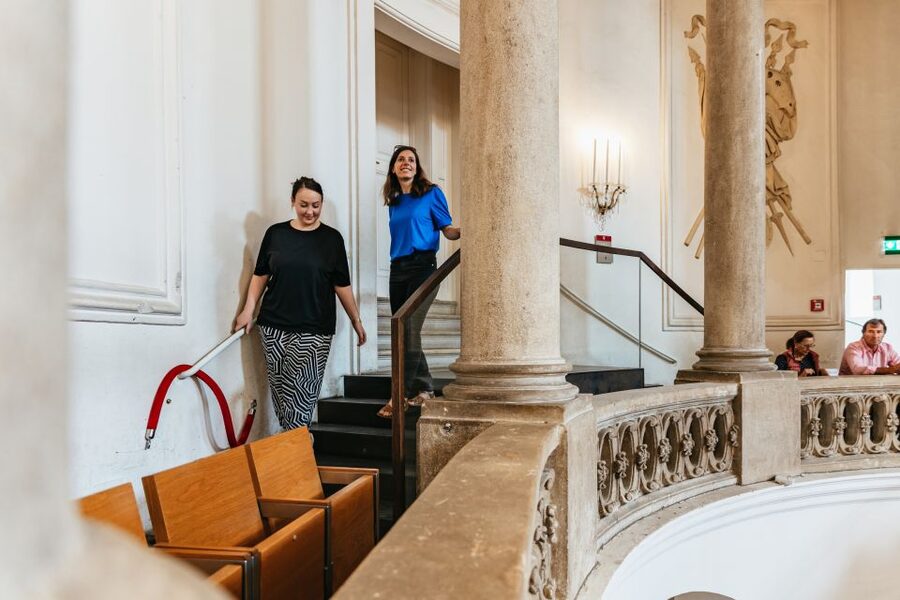
Photography and video recording are not allowed inside. This rule is announced repeatedly, yet some people still use their phones. Do not be one of them. Aside from being distracting, phone use can spoil the quiet focus of the session for people around you.
The restriction is frustrating if you hoped to take a picture of the horses beneath the chandeliers. You will need to rely on memory and the venue’s permitted images instead. On the other hand, the rule encourages you to watch the training without spending the hour looking at a screen.
Pets are not allowed. Children from age 6 to 18 receive discounted admission, while children ages 3 to 5 enter free but must sit on an adult’s lap. Children younger than 3 cannot be admitted. The calm music and moving horses can work well for older children, but a full hour of quiet observation may not suit every young child.
How much value do you get for $20?
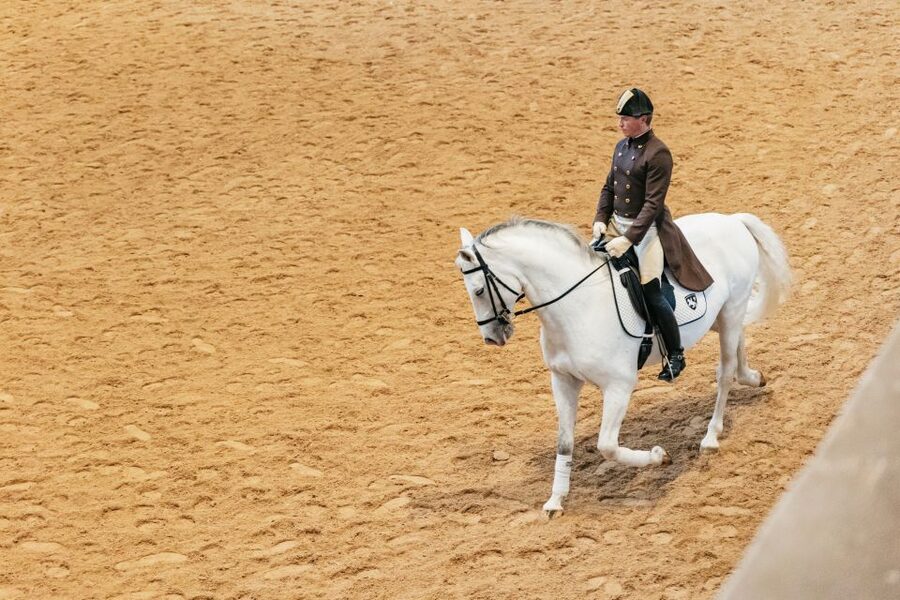
The price is the strongest reason to choose the training session. A full performance costs more, sells out, and presents the finished product. This visit offers a lower-cost way to see the horses, riders, building, and training culture in one hour.
The value is especially good if you already have other Vienna plans or cannot find performance tickets. You get the visual drama of the Academy and the chance to see several levels of training without committing to a longer tour.
The price is less compelling if you expect a continuous display of spectacular movements. Much of the hour may involve trotting, basic schooling, and repeated practice. That is not a flaw in the training itself, but it can feel anticlimactic if you came only for the famous leaps.
I would also resist comparing this directly with a stable tour. The training session focuses on the arena. It does not include hotel pickup, a stable visit, or a wider behind-the-scenes program. A stable tour may be a useful addition if you want more information about the horses outside their work in the riding hall.
Practical planning for families and visitors with limited mobility
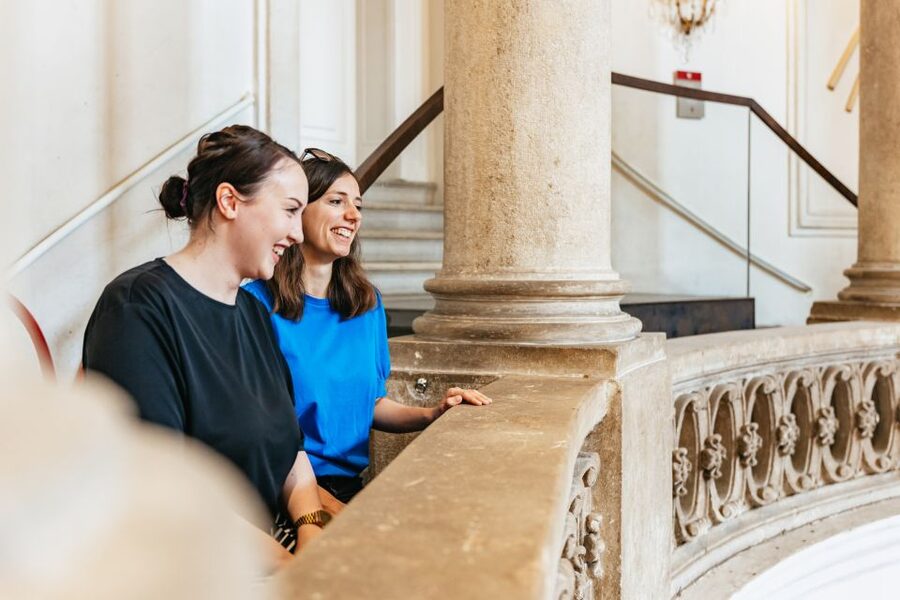
The Spanish Riding School’s historic setting comes with physical limits. There is no elevator, and access involves stairs. Wheelchair users and people with walking difficulties should send a request in advance rather than waiting until arrival.
Seating can be tight, particularly in upper areas. Some people choose standing admission because it provides more freedom to shift position, but that does not make it easier for someone who cannot stand for an hour. Ask about accessible arrangements before buying.
For families, the discounted youth admission helps keep the cost manageable. Children ages 3 to 5 can attend free on an adult’s lap, but children under 3 are not admitted. The session’s one-hour length is manageable for many families, though the quiet format and no-phone rule require a little patience.
The program can change. Treat the schedule and exact exercises as flexible. You may see two groups, a mix of experienced and newer riders, or a small amount of ground work. The school’s aim is horse fitness and training, not delivering the same routine each morning.
Who will enjoy this most?
I would choose this for anyone who rides, follows dressage, or enjoys watching the connection between horse and rider. You will notice the fine details more easily if you already understand leads, transitions, lateral work, and balance.
It also works for first-time visitors who simply want to see the Lipizzaners and one of Vienna’s grandest interiors. You do not need to know dressage to appreciate the horses or the setting. The commentary helps, even if it is not equally clear from every seat.
I would be more cautious if your main goal is the dramatic rearing and jumping associated with the school’s signature performances. Those movements may not appear. You may instead spend most of the hour watching controlled, repeated work that looks simple but serves a serious purpose.
The session is also a good backup when formal performances are unavailable. It gives you a taste of the school at a much lower price, though it should not be sold to yourself as a substitute for the full show in every respect.
Should you book the Spanish Riding School training?
Book it if you want an affordable, one-hour look at Lipizzaner training in an extraordinary baroque room. I especially recommend it to horse lovers, dressage students, families with older children, and anyone who cannot secure performance tickets.
Choose your ticket type carefully. Standing admission saves money but can be tiring. If commentary matters, aim for a middle position rather than the highest seats. Arrive with time to exchange your voucher for a paper ticket, and plan to leave your phone in your pocket.
Skip it if you need guaranteed jumping, a detailed stable visit, or fully accessible seating without advance arrangements. For most visitors, though, the price makes this a smart Vienna activity, as long as you understand that you are watching real training rather than a staged spectacle.
FAQ
How long does the Spanish Riding School training last?
The training session lasts one hour.
How much does the training cost?
The listed price is $20 per person.
What will I see during the training?
You can see Lipizzaner stallions and their riders practicing relaxation exercises, dressage movements, transitions, and exercises that strengthen specific muscle groups. The exact program can change.
Will I see the famous levade, courbette, and capriole?
You might, but these school jumps are not practiced every day. They are usually associated with the Spanish Riding School’s formal performances.
Is the training accompanied by music?
Yes. The morning exercise is accompanied by classical Viennese music, and commentary is also provided.
Can I take photos or record video inside?
No. Photography and video recording are not allowed inside the riding school.
Are children and visitors with mobility difficulties admitted?
Children ages 3 to 5 enter free but must sit on an adult’s lap. Children ages 6 to 18 receive discounted admission, and children under 3 are not admitted. The building has no elevator, so wheelchair users and people with walking difficulties should send a request in advance.
Just added in Vienna
- 3 hour private tour in Vienna by private car★ 4.4 · 6 reviews
- Private Christmas Markets Walking Tour Vienna★ 5.0 · 31 reviews
- Christmas Markets & Shopping in Vienna★ 5.0 · 17 reviews
- Christmas Market Vienna Tour★ 4.0 · 53 reviews
- Vienna: Christmas Markets Tour★ 4.3 · 99 reviews
- Private Hidden Vienna Walk — Stories Behind Quiet Corners★ 5.0 · 137 reviews
- Konzerte der Wiener Royal Orchester★ 4.5 · 143 reviews
- Mozarthaus Vienna Admission Ticket★ 3.0 · 139 reviews
Tours in Vienna, compared.
Vivaldi’s Four Seasons Concert in Karlskirche
Read our review →
Skip-the-cashier-desk-line Giant Ferris Wheel Ride
Read our review →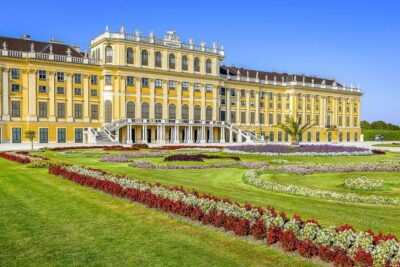
Schönbrunn Palace & Gardens Skip-the-Line Tour
Read our review →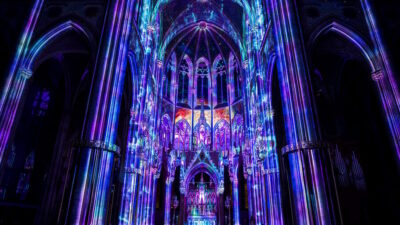
Light of Creation Votive Church Immersive Light Show
Read our review →
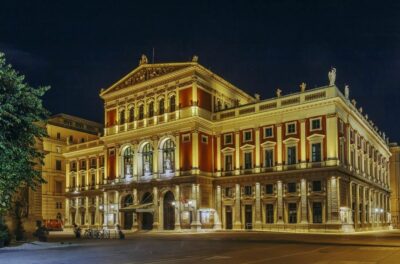
Classical Concert in the World-Famous Musikverein
Read our review →
Skip-the-Line Sisi Museum, Hofburg and Gardens Tour
Read our review →
Hallstatt & Alpine Peaks Day Trip with Skywalk Lift
Read our review →Browse the lists this tour appears in