
Reviewed · CITY TOURS
Vienna Private City Tour: Palaces, Churches & Sacher Cake Option
Vienna’s grand center makes the most sense on foot, and this private tour gives you a fast, story-filled introduction to it. In roughly three hours, you move from the Opera and Hofburg to Gothic churches, Roman remains, Mozart’s former home, and a classic coffeehouse finish. The route packs in major sights without making you commit to a full-day tour.
I like two things right away: the small private format, capped at eight people, and the way the tour links buildings to people and customs. A good guide can explain the Habsburg court at the Hofburg, the silver urns holding imperial hearts, the Lipizzaner horses, and the local meaning of Sacher cake in one continuous walk. The main drawback is pace. Several stops last only five or ten minutes, and the full cake option uses about 20 minutes of your tour.
Key points to know before booking
- Private group of up to eight: You can ask questions, adjust the pace, and request practical tips for the rest of your stay.
- A strong first-day route: The tour covers Vienna’s central sights, including the Opera, Hofburg, St. Stephen’s Cathedral, and Mozart’s former residence.
- Short visits, not full museum tours: Many landmarks are viewed from outside or visited briefly, so this is an orientation walk rather than an in-depth palace tour.
- Church interiors add variety: St. Peter’s, St. Rupert’s, the Augustinian Church, and St. Stephen’s give the route welcome indoor stops.
- Optional coffeehouse ending: The full option includes coffee and Sacher cake, while the standard option does not.
- Guide quality matters: Aida, Elisabetta, Anna, and Jacob have all been praised for clear explanations, humor, flexibility, and strong local recommendations, though a specific guide cannot be promised.
A smart first walk through central Vienna
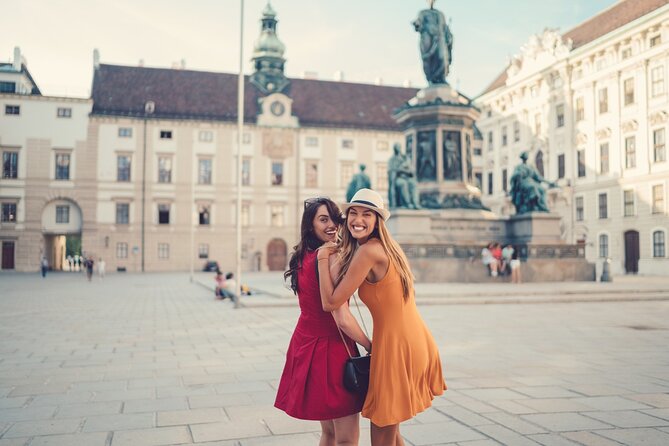
The tour begins at Albertinaplatz, beside the Albertina Museum and close to the Vienna State Opera. This is a useful starting point because you are already in the heart of the city, surrounded by imperial buildings, cultural institutions, and broad ceremonial streets.
The opening look at Albertinaplatz is brief, about five minutes. That is enough to orient you, hear why the square matters, and take in the architecture, but not enough for an Albertina Museum visit. If you want to see its art collection, plan a separate visit.
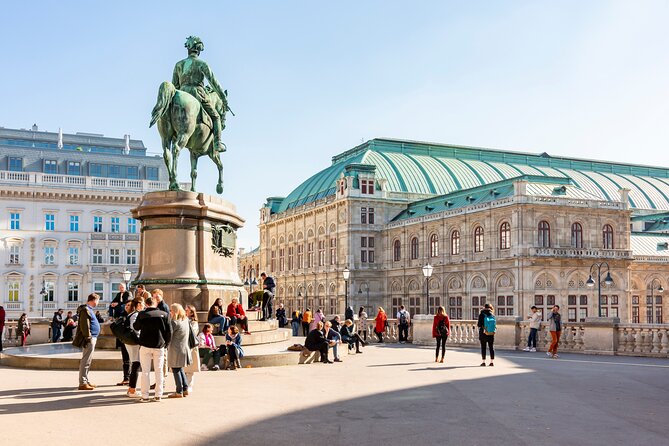
The Vienna State Opera follows as part of the walking route. The stop is about the building and Vienna’s musical identity rather than a performance or backstage visit. Your guide can help connect the opera house to the city’s wider culture of classical music, but you should not expect an admission tour here.
More to book in Vienna
- Vienna: Chocolate Workshop in Chocolate Museum w/ Tasting
★ 4.5 · 1,802 reviews - Vienna Coffee, Cake & Pastries Tour with Local Stories
★ 5.0 · 470 reviews - Chocolate workshop in Chocolate Museum Vienna “BO-YO”
★ 4.5 · 352 reviews
Imperial stories inside the Augustinian Church
The Augustinian Church offers one of the route’s more unusual details. This 14th-century Gothic church once served as the Habsburg court church, and its quiet interior carries direct links to the imperial family.
The most memorable detail is the collection of silver urns holding the hearts of Austrian emperors. It is an intimate and slightly eerie reminder that the Habsburgs treated royal remains according to elaborate traditions. The stop lasts about ten minutes and admission is free.
This is also a good example of the tour’s approach. Instead of simply pointing at a façade, the guide can give you a human story tied to the building. The church’s imperial weddings and royal connections make it more than another Gothic stop on a photo route.
Lipizzaners, the Hofburg, and the Roman past
The Spanish Riding School appears next in the story of Vienna’s court life. The tour explains the Spanish horses and the origin of the Lipizzaner name, but it does not include a riding performance or a full visit to the school. Think of this as a useful introduction if you are considering a later ticket for a performance or training session.
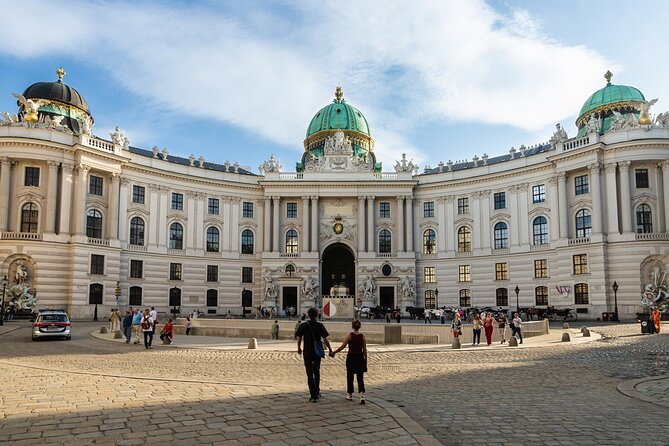
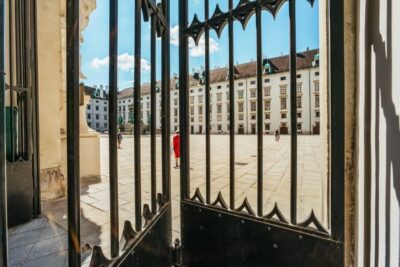
The Hofburg then brings the imperial setting into full view. This huge palace complex was the center of Habsburg power, and the guide focuses on the royal family and Empress Sissi. The palace is one of Vienna’s major sights, but the tour does not list admission to its museums or apartments. You will see and discuss the complex rather than receive a full museum visit.
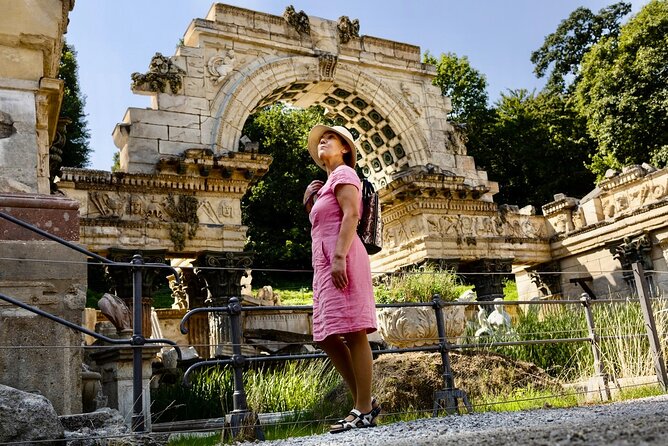
A Roman ruin adds an older layer to the walk. The ten-minute stop lets you look at archaeological remains and picture Vienna before its imperial age. The contrast works well: one moment you are hearing about Habsburg ceremony, and the next you are looking at traces of an ancient settlement.
I appreciate this mix because Vienna can easily become a parade of palaces. The Roman remains keep the city’s timeline from beginning with the Habsburgs.
Demel, Sacher cake, and the practical side of Vienna’s cafés
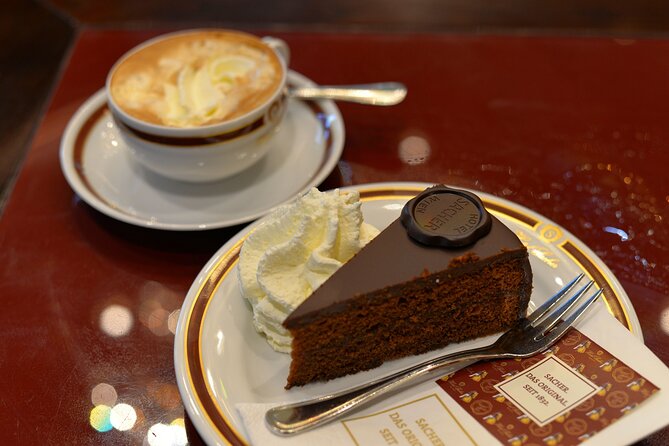
At Demel Vienna café, the guide explains the background of Sacher cake and the work of the artisans who preserve traditional methods. This is a short ten-minute stop, and it is primarily a lesson about Viennese pastry culture rather than the included coffee break.
The actual coffee and cake ending takes place at Conditorei SLUKA, and it is included only with the full option. You receive coffee and a typical Sacher cake in a traditional Viennese coffeehouse setting. The final stop lasts about 20 minutes.
That distinction matters when you compare the two choices. The standard option includes the walking tour but not coffee or cake. The full option costs more, though the exact difference is not provided here. If you already plan to visit a Viennese café, the standard choice may suit you. If you want the experience bundled into the tour and like ending with a local specialty, the full option is the more satisfying finish.
The coffee stop is also the one part of the experience that calls for a little expectation-setting. One piece of feedback described the guide leaving after ordering, while the operator said the guide had left only for the final 15 minutes and believed the group wanted privacy. I would treat this as a point to clarify at the café. If you want the guide to stay and chat, say so.
A different kind of evening in Vienna:
- Vienna: Vivaldi’s Four Seasons Concert in Karlskirche
★ 4.7 · 14,951 reviews - Vienna: Spanish Riding School Training
★ 3.9 · 9,281 reviews - Vienna: Skip-the-cashier-desk-line Giant Ferris Wheel Ride
★ 4.5 · 7,859 reviews - Vienna: Schönbrunn Palace & Gardens Skip-the-Line Tour
★ 4.7 · 7,739 reviews
Baroque churches and the Plague Column
The Plague Column, or Pestsäule, gives the walking tour a solemn pause. This ornate monument recalls the city’s experience of plague and its determination to recover. The stop lasts about five minutes, so the guide will provide the main context rather than a long lecture.
St. Peter’s Church offers a stronger interior visit. You have about ten minutes to see its Baroque decoration, frescoes, and elaborate altars. Admission is included. It is a compact stop, but the change from open squares to a richly decorated church gives the route a welcome rhythm.
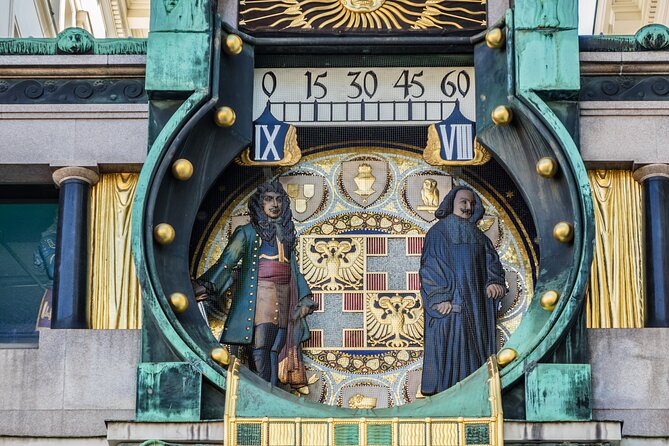
The tour then reaches the Ankeruhr Clock. This historic timepiece is known for its moving figures and decorative design. The listed stop is ten minutes, which should give you time to examine the clock and hear why it matters to Vienna’s public spaces.
At Hoher Markt, the guide brings in both market life and the history of Jewish communities in the city. The stop is also about ten minutes. Do not expect a full market meal or shopping session, since the focus is the square, its past, and the surrounding streets.
St. Rupert’s Church and Vienna’s older center
St. Rupert’s Church, or Ruprechtskirche, receives the longest church visit before the cathedral, at about 20 minutes. You can look at the Baroque interior, organ, and stained glass windows, with admission included.
This stop helps show that central Vienna is not only imperial and monumental. Smaller churches can offer a quieter sense of the city, and St. Rupert’s gives the route a more intimate pause before its grand finale.
The church stop also demonstrates why a private guide can be useful here. On your own, you may pass a modest-looking church without knowing why it deserves attention. With a guide, architectural details and religious customs become part of the larger story of the city.
Mozart’s former home and the final cathedral visit
The route includes Mozart’s former residence, where you learn about his life, work, and place in Vienna’s musical culture. The supplied details do not specify the admission arrangement or the amount of time inside, so you should regard this as a guided introduction rather than assume a full museum tour.
That is still valuable on a first visit. Vienna can present Mozart as a name on every souvenir stand, while a guide can connect the composer to the city’s musical identity and suggest further places to explore.
St. Stephen’s Cathedral is the largest and longest listed stop, at about 25 minutes. You can see the Gothic interior, medieval relics, and works of art, with admission included. This is the tour’s grand architectural close, and it gives you a clear sense of Vienna’s central landmark before the optional café ending.
Twenty-five minutes is enough to admire the main interior and learn the key points, but not enough for every corner, tower, or treasury. If the cathedral matters greatly to you, return later with more time. The tour gives you the framework, then lets you choose how far to go.
What the private format adds
The price is listed at $94.92 per person. That is not a bargain-priced group walk, but the comparison changes when you divide the cost among a small private party of up to eight. You are paying for a private English-speaking guide, a flexible conversation, and practical suggestions for museums, restaurants, coffee shops, and other places.
The strongest value comes when you use the guide actively. Ask where to return for a longer church visit, which palace rooms deserve an admission ticket, or how to arrange the rest of your day. The tour is more useful when it becomes a planning session, not just a sequence of facts.
Several guide names appear in the feedback: Aida, Elisabetta, Anna, and Jacob. Aida is repeatedly praised for clear explanations, humor, warmth, and adapting the walk for hot or cold weather. Elisabetta is described as especially strong at connecting Vienna to wider European politics, architecture, war, and culture. Anna is praised for organizing a comfortable winter walk, while Jacob is noted for an easygoing manner and strong command of the subject.
You cannot book a particular guide based on the information given, so consider those names examples of the guide style you may receive, not a guarantee. The common thread is an emphasis on history, questions, and recommendations for further exploring Vienna.
Timing, walking, and weather
The tour lasts approximately two and a half to three hours. The route is built around walking, with brief stops outdoors and several indoor church visits. In winter, you will want warm clothing. In summer, the sun and heat can affect the open sections, though the private format allows the guide to adjust the pace and seek shade when possible.
The walk includes many short stops: five minutes at Albertinaplatz, ten minutes at the Augustinian Church, the Roman ruins, Demel, St. Peter’s, the Anker Clock, and Hoher Markt, then 20 minutes at St. Rupert’s and 25 minutes at St. Stephen’s Cathedral. The exact time at some passing points, such as the Opera, Spanish Riding School, Hofburg, and Mozart’s residence, is not specified.
That schedule tells you what this tour is designed to do. It gives you a broad map of central Vienna and enough context to decide what deserves a longer return visit. It is not designed for slow photography, extended museum time, or sitting in every church.
The tour begins at Albertinaplatz 2, 1010 Vienna, and ends at a different location. Hotel pickup is not included, so plan to reach the starting point on your own. A mobile ticket is provided, and confirmation is received at booking.
Who will get the most from this tour
I would choose this tour for a first morning in Vienna, especially if you want to understand the center before exploring alone. The route covers enough major sights to help you get your bearings, while the guide’s suggestions can shape the rest of your visit.
It also suits couples, families, and small groups who want to ask questions without keeping up with a large crowd. The private format can be helpful if someone in your group needs a slower pace or fewer long periods of standing. One account describes the guide adjusting the route to reduce standing for a person with back problems.
History-minded visitors will find plenty to enjoy, from Roman remains and medieval churches to Habsburg ceremony and Mozart. Food lovers should choose the full option if the coffeehouse tradition is part of the appeal.
I would hesitate if your main goal is a deep museum visit. The Hofburg, Albertina, Spanish Riding School, and Mozart residence are introduced, but the tour does not include a full exploration of each. You may also find the price high if you are alone or traveling as a very small party and do not plan to use the guide for follow-up advice.
Should you book it?
Book this Vienna private city tour if you want a well-paced introduction to the central sights, a guide who can connect architecture with politics and daily life, and the freedom to ask questions. The combination of churches, palaces, Roman remains, music, Jewish history, and coffeehouse culture gives you a better sense of Vienna than a simple palace checklist.
Choose the full option if coffee and Sacher cake are part of your ideal Vienna day. Choose the standard option if you prefer to select your own café later. Either way, arrive ready to walk, wear sensible shoes, and treat the tour as your orientation to the city rather than its final word.
Free cancellation is available up to 24 hours before the start time. If you need to cancel later, the amount paid is not refunded.
FAQ
How long does the Vienna private city tour last?
The tour lasts approximately two and a half to three hours.
How many people can join the private tour?
The private group can include up to eight people.
Is the tour offered in English?
Yes. The tour is offered in English.
Is coffee and Sacher cake included?
Coffee and a typical Sacher cake are included with the full option. They are not included with the standard option.
Where does the tour begin?
The meeting point is Albertinaplatz 2, 1010 Vienna, Austria.
Is hotel pickup included?
No. Hotel pickup is not included.
What is the cancellation policy?
You can cancel up to 24 hours before the experience start time for a full refund. Cancellations or changes made less than 24 hours before the start time are not refunded or accepted.
Just added in Vienna
- World War II History Vienna Old Town Private Walking Tour★ 4.8 · 9 reviews
- Vienna: Winery and Wine Tasting Tour with a Wine Expert★ 5.0 · 5 reviews
- Vienna: Wiener Schnitzel and Strudel Cooking Class★ 4.9 · 126 reviews
- Vienna: Wine Tasting Tour★ 4.8 · 61 reviews
- Vienna: Wine Tasting E-Bike Tour★ 4.9 · 46 reviews
- Vienna: Wine Tasting at Schönbrunn Palace★ 4.3 · 71 reviews
- Vienna: Unforgettable Private City Tour★ 5.0 · 7 reviews
- Vienna Urban Art Tour: Explore a different side of Vienna!★ 3.8 · 14 reviews
City Tours, compared.
Guided Walking Tour of City Center Highlights
Read our review →
Guided Walking Tour of City Highlights & Hidden Gems
Read our review →
Skip-the-Line Schonbrunn Palace Guided Tour and Vienna Historical City Tour
Read our review →
Browse the lists this tour appears in