
Reviewed · MUSEUMS
Kunsthistorisches Museum Wien Guided Tour including admission
The best reason to book this tour is simple: the Kunsthistorisches Museum is enormous, and a good guide helps you find its greatest works before your eyes glaze over. In about two to two-and-a-half hours, you’ll see Bruegel’s Tower of Babel, Vermeer’s The Art of Painting, and unusual treasures in the Kunstkammer.
I especially like the small group limit of 15 and the chance to stay inside afterward. Guides such as Dieter, Cornelia, and Brenda have been praised for lively explanations, clear historical context, and patience with both children and older visitors. The main drawback is that this is an overview, not a complete museum visit, and the tour is not suitable for wheelchair users or people with walking disabilities.
Key points to know before booking
- Bruegel and Vermeer are the stars: You’ll see The Tower of Babel and The Art of Painting in the Picture Gallery.
- The Kunstkammer adds the unusual: Look for Cellini’s golden Saliera and the Madonna of Krumau.
- Small groups help: A maximum of 15 people makes it easier to hear the guide and ask questions.
- Priority entry saves time: Entrance is included, so you can focus on the collection rather than buying a separate ticket.
- Stay after the tour: Your ticket lets you continue through the Greek, Roman, Egyptian, and other galleries.
- Plan for the cloakroom: Umbrellas, backpacks, and rain coats must be left behind, and temporary exhibitions are not included.
Why a guided visit helps at the Kunsthistorisches Museum
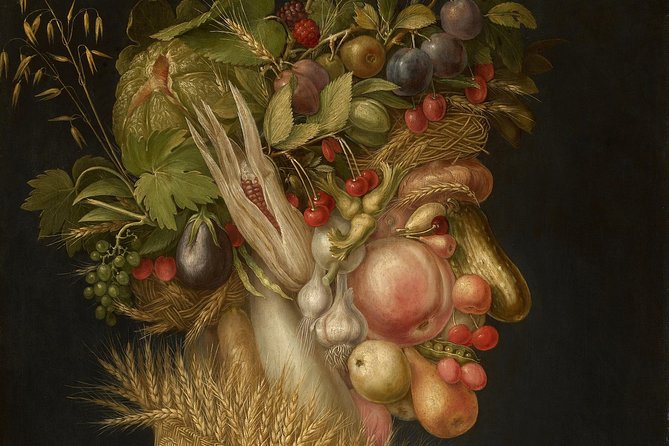
Vienna’s Kunsthistorisches Museum can feel like several museums under one roof. It grew from the collections of the Habsburg family and now covers major European painting, ancient art, and decorative objects. The building itself is grand enough to distract you from the art, with high ceilings, formal rooms, and the feeling of a palace built to display power as much as painting.
That scale creates a problem. If you walk in without a plan, you may spend too long searching for famous works, or rush past paintings that need a few minutes of explanation. This tour gives you a route through two key areas, then leaves you free to continue at your own pace.
The guide’s role is not just to point at famous names. The strongest guiding style here connects the painting to its maker, its period, and its technique. Dieter has been praised for answering questions and keeping his commentary lively. Cornelia has been noted for her enthusiasm for both Vienna and the collection. Brenda’s approach has been described as thorough, warm, and closely tied to European history.
Your guide may be different, of course. Still, the repeated pattern is clear: the quality of this experience depends heavily on the person leading it. That is common with art tours, but it matters especially here because the museum offers far more than any short visit can cover.
More to book in Vienna
- Vienna: Skip-the-Line Sisi Museum, Hofburg and Gardens Tour
★ 4.8 · 5,918 reviews - Vienna Kunsthistorisches Museum Day Admission Ticket
★ 4.6 · 3,690 reviews - Tickets for the Albertina Exhibitions
★ 4.7 · 2,126 reviews
Meeting at Maria-Theresien-Platz at 10:15 a.m.
The tour begins at Maria-Theresien-Platz, at Maria-Theresien-Platz 1, 1010 Vienna. The starting point is near public transportation, and the scheduled start is 10:15 a.m. Allow enough time to reach the square without rushing. You do not want to begin a museum visit by searching for the meeting point at the last moment.
The activity returns to the same meeting point when the guided portion ends. Hotel pickup and drop-off are not included, so you handle your own way to and from the museum.
At the entrance, you receive the benefit of included admission and priority entry. This is useful when your Vienna day is tightly planned. It does not mean every moment will be instant, since museum entrances can still have practical checks, but you avoid the separate task of arranging a standard admission ticket.
The maximum group size is 15. That is not a private tour, but it is small enough for a guide to keep the group together and respond to questions. One guide has also provided earpieces so the group could hear clearly. That can be especially helpful in large galleries, although equipment may vary by guide and day.
The Picture Gallery: Bruegel, Vermeer, and the Old Masters
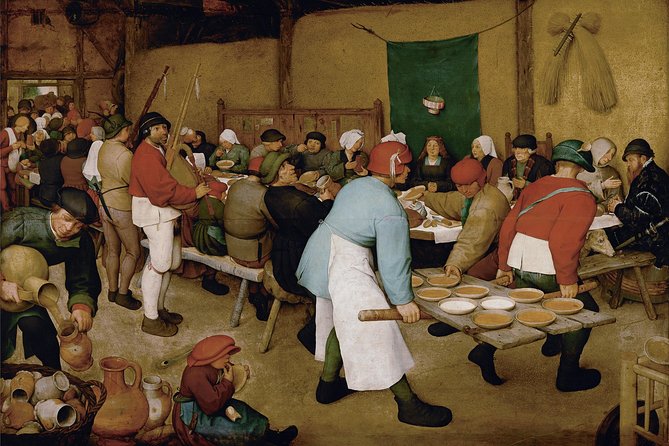
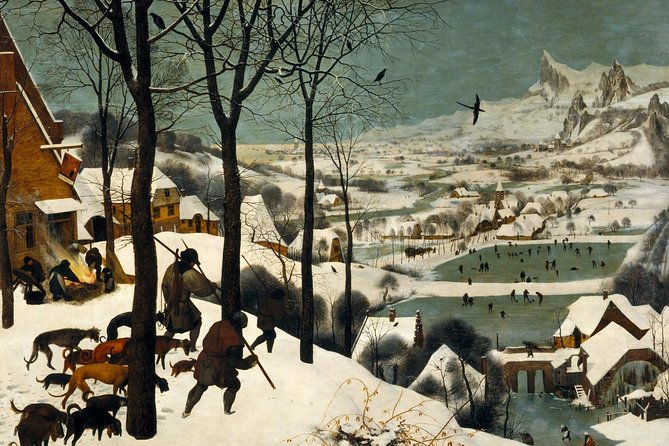
The first major section focuses on the Picture Gallery, where you’ll see works by artists such as Raphael, Rembrandt, Vermeer, Rubens, Titian, Caravaggio, and Peter Bruegel the Elder. You will not receive a full lecture on every artist. Instead, the guide selects key works that give you a useful sense of the collection.
Bruegel’s The Tower of Babel is one of the main reasons people choose this tour. The painting rewards time and close looking. A guide can help you notice how the tower, workers, machinery, and tiny human figures build the story. Without some direction, it is easy to register only the huge structure and miss the small details that give the scene its force.
The Bruegel paintings are a particular strength of the museum. If you already know the artist, the tour gives you a chance to see important works in person. If you do not, the guide’s explanation can help you understand why Bruegel’s crowded scenes still feel carefully ordered rather than chaotic.
Vermeer’s The Art of Painting offers a very different experience. Where Bruegel gives you a busy world filled with activity, Vermeer draws your attention to a quiet interior and the act of making art. A good guide can help you compare the two painters, including their use of space, light, detail, and everyday life.
That comparison is one of the tour’s real strengths. You are not simply collecting famous paintings. You are learning how artists from different periods and places solved similar problems. Several guides have been praised for explaining changes in artistic technique and for comparing artists working in the same era.
The route may also include works by Caravaggio, Rubens, Raphael, Rembrandt, and Titian. The exact selection can vary, since the guide chooses what best fits the group and the museum’s conditions. Ask questions when a particular artist interests you. The guides have been praised for adapting their explanations to personal interests rather than delivering a rigid speech.
The Kunstkammer and its strange, beautiful objects
The second major section is the Kunstkammer, a collection of rare, decorative, and sometimes downright odd objects. This is a useful change of pace after the Picture Gallery. Instead of standing before large canvases, you look at objects made for display, devotion, prestige, and curiosity.
One highlight is Cellini’s golden Saliera, a finely worked salt cellar associated with the Italian sculptor and goldsmith Benvenuto Cellini. Its small scale makes it easy to underestimate, especially after the large paintings. The craftsmanship and precious material are the point, and the guide can explain why an object like this mattered to a royal collection.
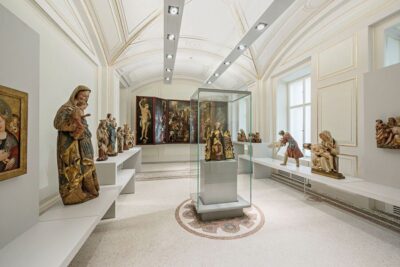
The Madonna of Krumau is another notable object. Its presence shows the breadth of the Kunsthistorisches Museum. This is not only a place for famous oil paintings. Sculpture, metalwork, religious objects, and courtly treasures help explain how the Habsburg collections were formed.
The Kunstkammer also gives the guide room to tell shorter, more surprising stories. The collection’s unusual objects can be easier for children to connect with than a long series of formal portraits. One family group found that the guide included children aged five to nine through questions and small activities, without reducing the level of the tour for adults.
That balance is worth considering if you are visiting with children. This is still an art-history tour, not a children’s entertainment program. But the guides have shown an ability to include younger minds, and one guide even suggested creative art projects to continue at home.
A different kind of evening in Vienna:
- Vienna: Vivaldi’s Four Seasons Concert in Karlskirche
★ 4.7 · 14,951 reviews - Vienna: Spanish Riding School Training
★ 3.9 · 9,281 reviews - Vienna: Skip-the-cashier-desk-line Giant Ferris Wheel Ride
★ 4.5 · 7,859 reviews - Vienna: Schönbrunn Palace & Gardens Skip-the-Line Tour
★ 4.7 · 7,739 reviews
A tour that works for mixed ages and interests
The reviews of this experience are unusually consistent about the guides’ presentation. The most praised qualities are enthusiasm, historical context, clear storytelling, and patience. Those traits matter because an art museum can become tiring long before the collection runs out.
If you are an art enthusiast, you’ll appreciate the chance to ask about technique, artists, and objects in the collection. If your companion is more interested in history than painting, the Habsburg connection and social background give the visit another entry point.
The tour also appears to work well for families. Children can be drawn into the details of Bruegel, the unusual form of the Kunstkammer objects, and the idea that art can be made from gold, wood, stone, or paint. The guide’s ability to involve them matters more than a formal family label.
Older visitors should note that this involves walking and standing in galleries. Seats are available in several rooms, and one guide made a point of letting older participants sit during explanations. Still, you should expect to move through a large museum over two hours or more.
The activity is not available to people with walking disabilities or those using a wheelchair. That is an important limitation, especially since the museum is large and the tour route is not presented as accessible.
What you can do after the guided portion
The tour ends back at the meeting point, but your museum visit does not have to end there. You are free to remain and explore other galleries after the guided portion.
The museum’s ancient Greek, Roman, and Egyptian collections are specifically included as areas you can visit afterward. That makes the included admission more useful than a ticket tied only to the guided route. You can follow your own interests once you have a basic map of the building.
You may also want to return to a painting the guide discussed. A first pass often gives you the story and context. A second look, without trying to keep up with a group, lets you spend more time with the details that caught your eye.
Do not assume temporary exhibitions are covered. They are excluded from this experience, so check separately if a temporary show is a priority for your visit.
Photography without flash is allowed. That is useful for recording a favorite detail or remembering the layout, but keep your attention on the art rather than turning the galleries into a photo checklist.
Is the $119.09 price good value?
At $119.09 per person, this is not the cheapest way to enter the Kunsthistorisches Museum. The value comes from combining admission, priority entry, and two-plus hours of focused guiding in a small group.
I would consider it good value if you have limited time in Vienna, do not know much about Old Master painting, or want someone to explain why particular works matter. A guide can save you from spending half your visit walking past rooms without a clear plan.
The price is harder to justify if you already know the museum well, prefer wandering alone, or plan to spend most of the day reading labels at your own pace. You are paying for interpretation and direction, not just entry.
A private guide upgrade is available for those who want the visit shaped entirely around their own group. That will cost more, but it may suit families, couples, or small groups with very specific interests. The standard tour is already limited to 15 people, so it offers a reasonable middle ground between a private visit and a large coach group.
Gratuities are not included. They are optional, so budget for them only if you feel the guide provided a particularly useful visit.
Practical details that affect your day
Bring as little as possible. Umbrellas, backpacks, and rain coats must be left in the cloakroom and cannot be taken into the museum. A small, hands-free approach will make the entrance process easier.
The tour is offered in English. Confirmation arrives when you book, and free cancellation is available if you cancel at least 24 hours before the local start time. Cancellations or changes made less than 24 hours before the start are not accepted for a refund.
The experience requires a minimum number of participants. If that minimum is not reached and the activity is canceled, you will be offered another date or experience, or a full refund.
The published duration is two to two-and-a-half hours. One guide may move a little faster or slower depending on questions, the group, and the museum. Plan additional time if you want to see the ancient collections afterward.
Who should book this Kunsthistorisches Museum tour?
I would recommend it to a first-time visitor who wants a clear introduction to Vienna’s premier art museum without spending an entire day figuring out the route. It also suits couples or families with mixed interests, since the guide can connect art with history, biography, technique, and unusual objects.
It is a good choice if Bruegel, Vermeer, and the Old Masters are high on your list. It is also useful if you want to see the museum’s best-known works and then continue alone.
I would skip it if you strongly prefer independent museum visits, need wheelchair access, or want a tour devoted to temporary exhibitions. You should also avoid booking it as your only museum plan if you hope to see every room. The guided route gives you an informed beginning, not a complete survey.
For most visitors, that is the right way to approach the Kunsthistorisches Museum. Let the guide give you a framework, then use the remaining time to follow your own interests.
FAQ
Where does the tour begin?
The tour begins at Maria-Theresien-Platz 1, 1010 Vienna, Austria.
What time does the tour start?
The scheduled start time is 10:15 a.m.
How long does the tour last?
The guided experience lasts approximately two to two-and-a-half hours.
Is admission included?
Yes. Entrance fees are included in the tour price, and the experience provides priority entry.
How large is the group?
The group has a maximum of 15 participants.
Is the tour offered in English?
Yes. The tour is offered in English.
Can I stay at the museum after the tour?
Yes. After the guided portion, you are free to continue exploring the museum, including its ancient Greek, Roman, and Egyptian collections.
Are temporary exhibitions included?
No. Temporary exhibitions are not included.
Is the tour wheelchair accessible?
No. The experience is not available for people with walking disabilities or those using a wheelchair.
Can I cancel for a refund?
Yes, if you cancel at least 24 hours before the experience start time. Cancellations made less than 24 hours before the start are not refunded.
Just added in Vienna
- World War II History Vienna Old Town Private Walking Tour★ 4.8 · 9 reviews
- Vienna: Wiener Schnitzel and Strudel Cooking Class★ 4.9 · 126 reviews
- Vienna: Wine Tasting Tour★ 4.8 · 61 reviews
- Vienna: Winery and Wine Tasting Tour with a Wine Expert★ 5.0 · 5 reviews
- Vienna: Wine Tasting E-Bike Tour★ 4.9 · 46 reviews
- Vienna: Wine Tasting at Schönbrunn Palace★ 4.3 · 71 reviews
- Vienna: Unforgettable Private City Tour★ 5.0 · 7 reviews
- Vienna Urban Art Tour: Explore a different side of Vienna!★ 3.8 · 14 reviews
Museums, compared.

Skip-the-Line Sisi Museum, Hofburg and Gardens Tour
Read our review →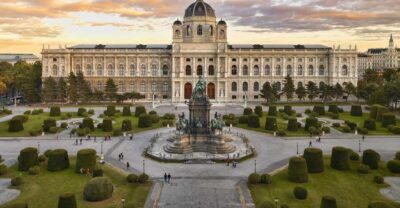
Vienna Kunsthistorisches Museum Day Admission Ticket
Read our review →

Chocolate Workshop in Chocolate Museum w/ Tasting
Read our review →
St. Stephen’s Cathedral & Dom Museum Wien Tickets
Read our review →

Browse the lists this tour appears in