
Reviewed · HOFBURG & IMPERIAL PALACES
Vienna: Imperial Treasury & New Hofburg Palace Combo Ticket
Vienna’s Habsburg treasures are not modest museum pieces. The Austrian Imperial Crown, the Holy Roman Crown, the Holy Lance, and a world-famous emerald put royal power right in front of you. Then the New Hofburg adds armor, musical instruments, and a fortepiano once played by Mozart.
I especially like the 10-day validity, which lets you split the visit instead of racing through two large collections. I also like the New Hofburg audio guide, available in 10 languages and useful in a museum where the displays can otherwise feel dense. The catch is practical: your voucher may still need to be exchanged for a paper ticket, and finding the Treasury entrance can take some patience.
Key points to know before you book
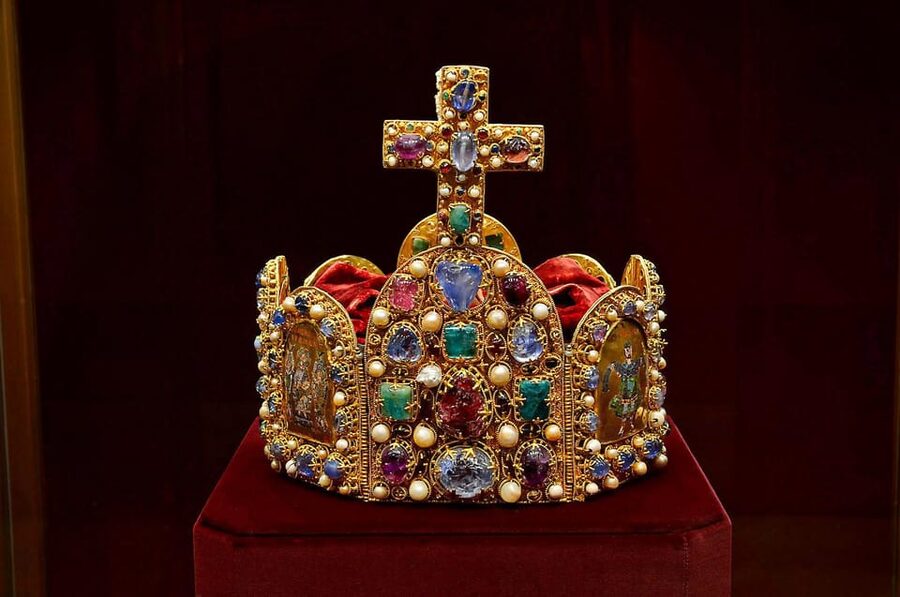
- See the Austrian Imperial Crown and Holy Roman Crown: These are the headline objects in one of Europe’s major royal collections.
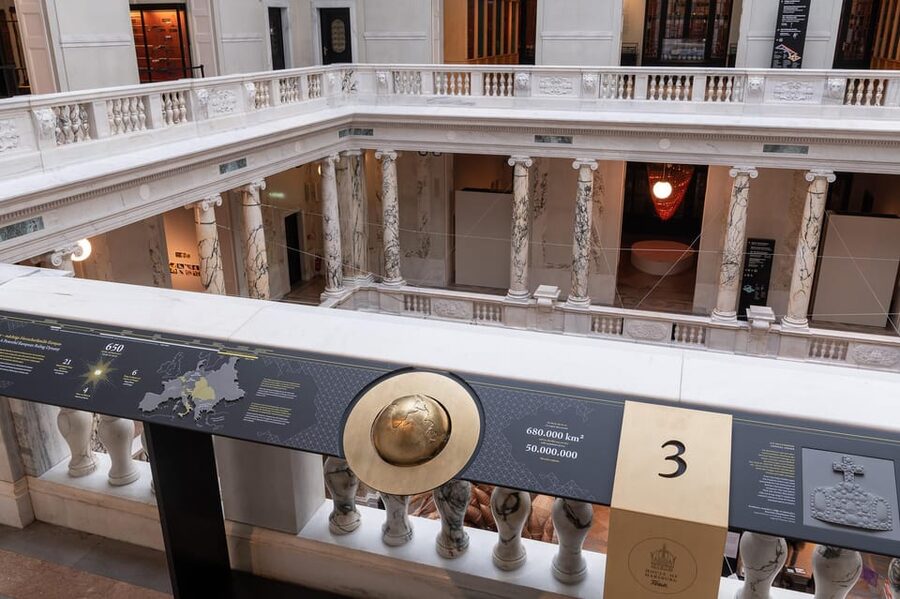
- Use the ticket over 10 days: You can visit the Imperial Treasury and New Hofburg at different times after first activation.
- Hear the Habsburg story in 10 languages: The New Hofburg audio guide covers the dynasty from its early rulers to Empress Sisi.
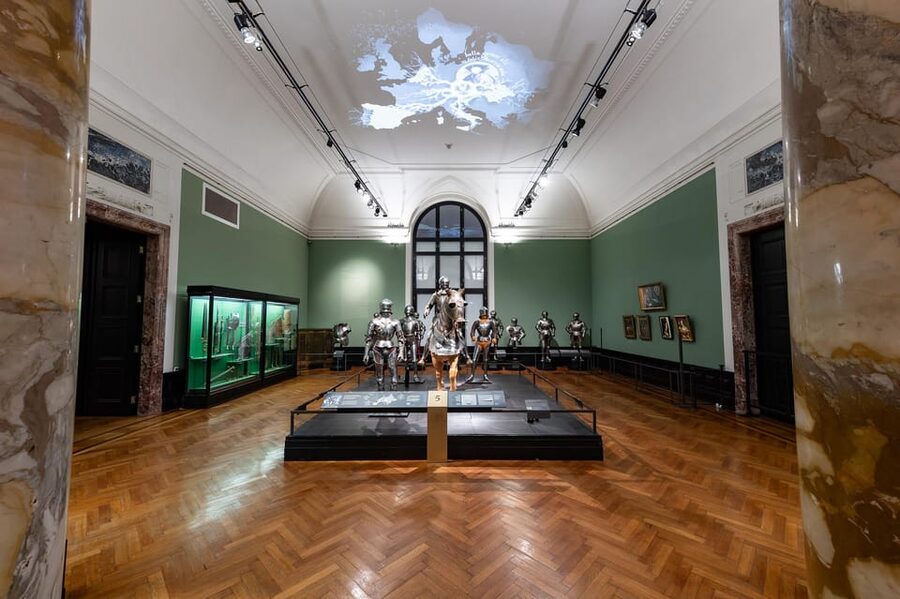
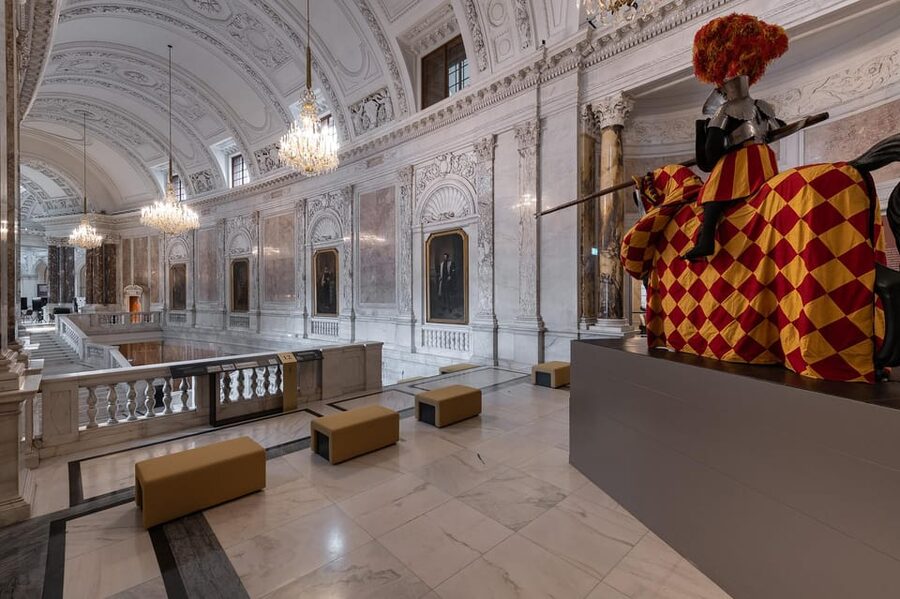
- Expect a strong armor collection: The Imperial Armoury includes impressive suits of armor displayed on horseback.
- Look for Mozart’s fortepiano: The historic musical instrument collection adds a human touch to all the court ceremony.
- Allow extra time for directions: The New Hofburg begins at Weltmuseum Wien on Heldenplatz, while the Treasury is in the Swiss Wing at Schweizerhof.
Two Habsburg museums, one useful ticket
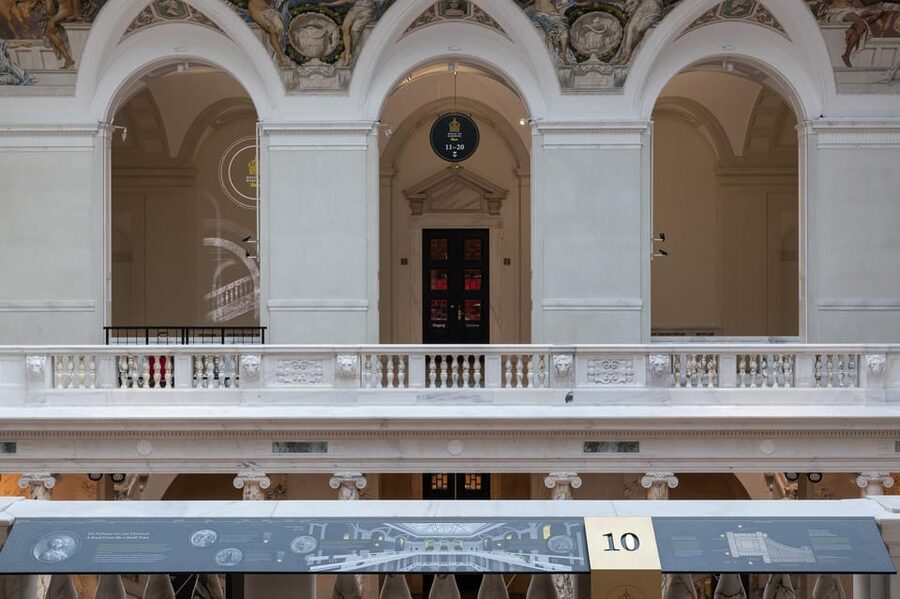
This combination joins two parts of the Hofburg complex that feel quite different. The Imperial Treasury is compact, intense, and centered on objects of power. The New Hofburg is broader and more varied, with armor, instruments, royal apartments and Habsburg interpretation spread through a grand former residence.
The ticket costs $40 per person. That is not a small museum admission, but the value improves if you give both venues proper time. The New Hofburg alone can occupy three hours for a careful visit, while the Treasury gives you a concentrated look at some of the dynasty’s most important possessions.
I would not treat this as a quick one-hour stop between other sights. The 10-day validity is one of the best features because you can visit the Treasury when you are near Schweizerhof and return to the New Hofburg on another day. That makes the price easier to justify and keeps the displays from blending into one long march through royal objects.
There is no live guide. Instead, the New Hofburg includes an audio guide in German, English, Czech, Hungarian, Spanish, French, Korean, Chinese, and Japanese. The Imperial Treasury does not include the same audio device, so the two parts offer different levels of explanation.
Other imperial addresses in Vienna:
- Vienna: Skip-the-Line Sisi Museum, Hofburg and Gardens Tour
★ 4.8 · 5,918 reviews - Tickets for the Albertina Exhibitions
★ 4.7 · 2,126 reviews - Vienna: Imperial Treasury in the Hofburg Palace
★ 4.4 · 1,791 reviews
Starting at the Imperial Treasury in Schweizerhof
The Imperial Treasury occupies the oldest part of the Hofburg, the Swiss Wing. The setting matters. You are not entering a modern glass box on the edge of town. You are seeing the Habsburg regalia in the palace complex that housed the dynasty’s court and administration.
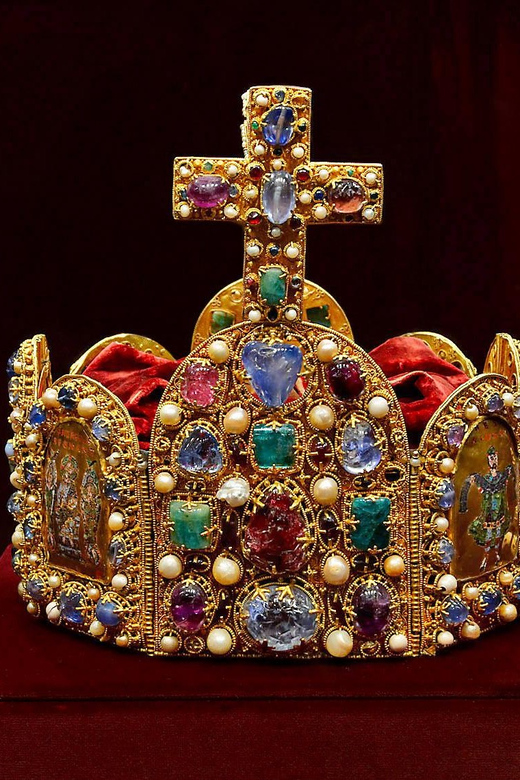
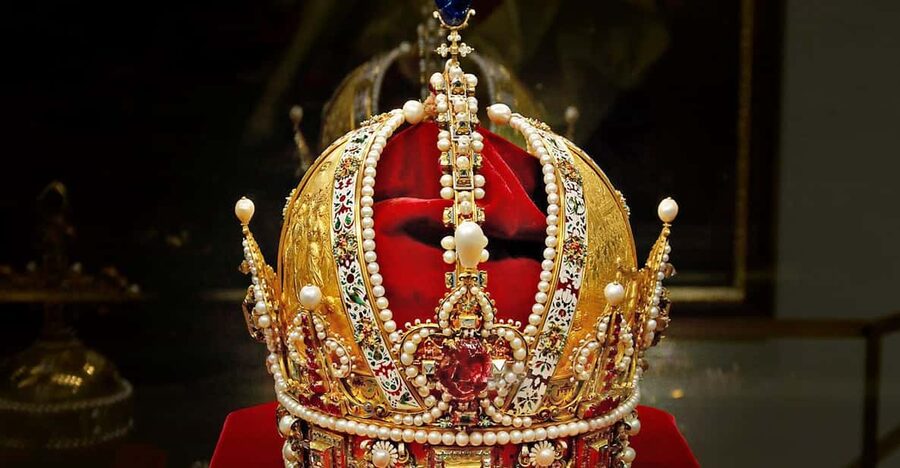
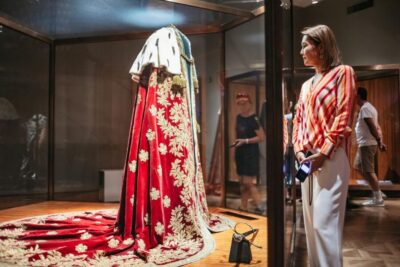
The display begins with the political and religious objects that helped rulers present themselves as legitimate. The Austrian Imperial Crown is the major draw, and you can get a close look at the craftsmanship and symbols built into it. The collection also includes the imperial treasures of the Holy Roman Empire, most notably the Reichskrone, or Holy Roman Crown, and the Holy Lance.
These pieces are valuable not only because they are old or decorated with jewels. They represent the long connection between monarchy, empire, ceremony and religion. If you simply look for sparkle, the room may feel uneven. If you take a moment to consider what a crown or lance meant in a coronation setting, the Treasury becomes much more interesting.
The collection also includes precious jewelry and one of the largest emeralds in the world. These are the objects that tend to make the strongest immediate impression. You can see how much royal power was expressed through rare stones, gold and elaborate workmanship.
The Treasury is not universally thrilling. Some displays include old textiles, tapestries and ceremonial fabrics, and you may find these less exciting than the crowns. The collection rewards visitors who enjoy objects and symbolism more than those expecting rooms full of furniture or a dramatic palace tour.
Plan your route carefully when you arrive. The Treasury entrance is at Schweizerhof, and clear signs may not always make it obvious. One practical approach is to identify the two starting points before you go: New Hofburg is entered through Weltmuseum Wien on Heldenplatz, while the Treasury is reached at Schweizerhof.
The Austrian Crown and the imperial regalia
The crown collection deserves your best attention. The Austrian Imperial Crown is the most recognizable piece, but the Holy Roman Crown gives the visit a wider European context.
The Habsburgs did not rule only one small Austrian court. Their family held power across a large part of Europe for centuries, and the regalia helped communicate that status. The objects here are physical reminders of coronations, imperial claims and the formal language of rule.
I would spend time with the illustrated historical material as well as the objects themselves. It helps explain why the crowns mattered and how the Habsburg dynasty developed from the late Middle Ages into the modern era.
The Treasury has no included audio guide, so you may need to read the labels closely. If you prefer a narrated experience at every stop, this is a weakness compared with the New Hofburg. If you like to set your own pace, the quieter, self-guided format can work well.
Entering the New Hofburg through Heldenplatz
The New Hofburg is the newer wing of the palace complex, with the entrance at Weltmuseum Wien on Heldenplatz. This is the more expansive half of the combination ticket, and it offers a different experience from the Treasury.
The House of Habsburg tour uses an audio guide to explain the dynasty’s rise and fall. The story reaches from the founding figures of the family to Empress Sisi and the end of imperial power. That broad time span is useful because the Habsburg story can otherwise feel like a long list of names, marriages and wars.
The audio guide gives the objects a clearer place in the story. I found this particularly important in a palace complex with several collections under one roof. You are not only looking at weapons or instruments. You are hearing how the court worked, what it valued and how its power changed over time.
The New Hofburg can feel enormous. Give yourself at least several hours if you want to examine the collections rather than simply pass through. One visitor found three or more hours easy to spend here, and that sounds realistic given the number of displays.
Do not expect every part of the New Hofburg to feel like a palace room. Much of the appeal comes from the collections housed inside the building. The grand setting is part of the experience, but the armor and instruments are the main reasons to visit.
More to book in Vienna
- Vienna: Classic Ensemble Vienna in St. Peter’s Church Ticket
★ 4.7 · 4,819 reviews - Vienna Kunsthistorisches Museum Day Admission Ticket
★ 4.6 · 3,690 reviews - Vienna: Tickets for Mozarthaus Vienna with Audio Guide
★ 4.2 · 2,344 reviews - Vienna: Skip-the-Line Entrance Ticket to the Danube Tower
★ 4.5 · 2,303 reviews
The Imperial Armoury, with armor on horseback
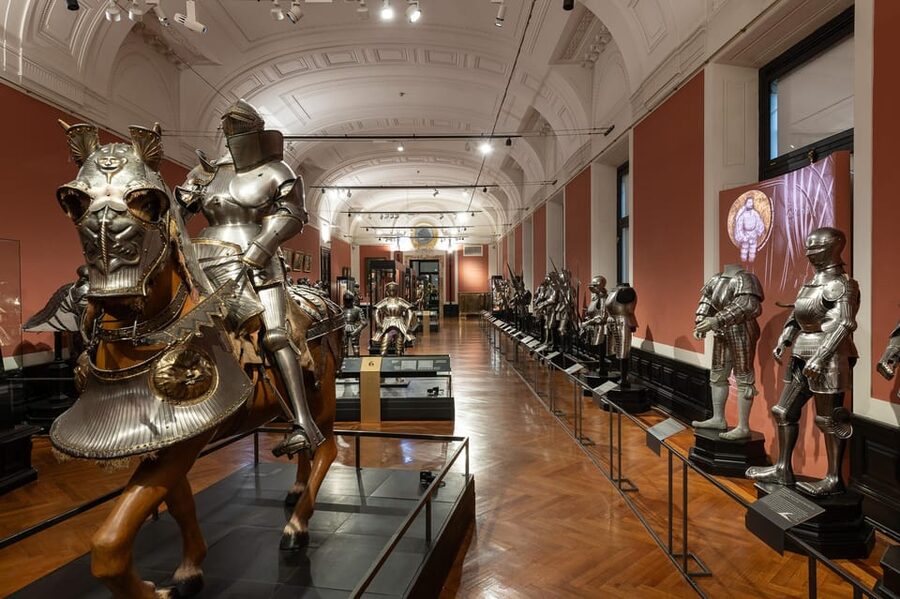
The Imperial Armoury is likely to be the strongest section for anyone who enjoys military history, historical costume or film-worthy objects. You will see suits of armor, weapons and armor arranged on horseback.
That presentation gives the collection more force than a row of helmets in glass cases. The mounted armor helps you picture how heavily equipped nobles and soldiers appeared in ceremonial or military settings. Even if you are not an armor specialist, the scale and workmanship are easy to appreciate.
The displays also help explain how the Habsburg court presented power. Armor was not simply protective equipment. It could be a public statement of wealth, rank and military identity.
This section may not suit every member of a family group. A 17-year-old could find it much more engaging than the Treasury, especially if they enjoy historical films or weapons. The New Hofburg setting has also appeared in film, including the 1993 Three Musketeers, which adds a small piece of screen history for movie fans.
Still, the collection is not just a quick display of a few swords. The number of armored figures can make this a substantial part of your visit. If armor is your priority, put the New Hofburg first and allow the time it deserves.
Historic instruments and Mozart’s fortepiano
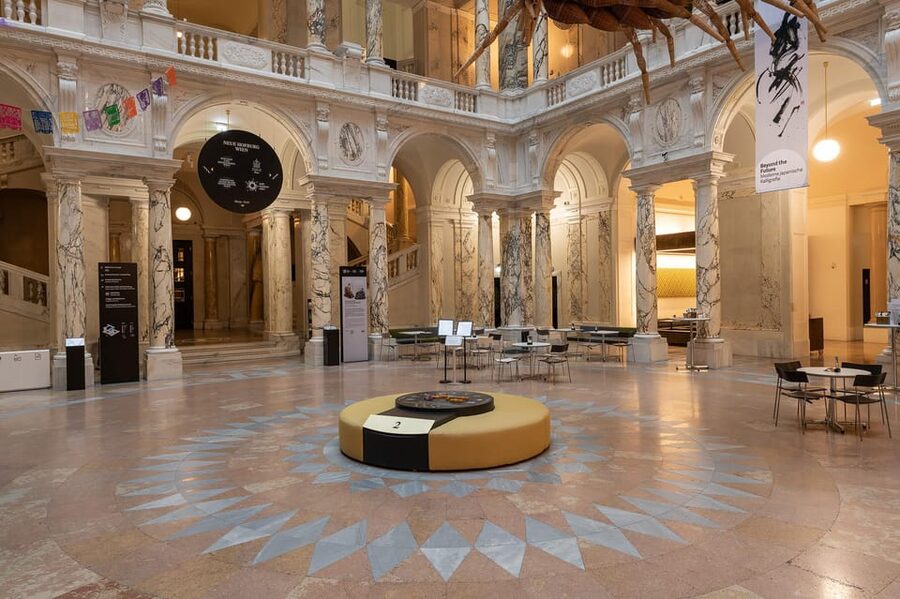
The Collection of Historic Musical Instruments brings a welcome change of mood after the armor. Here, the objects connect the court to music, performance and daily cultural life.
The most memorable item for many visitors is a fortepiano once played by Mozart. That detail gives the collection an immediate personal link. A crown can seem remote, but an instrument associated with a composer makes the past feel closer.
You can also see the only wax bust showing Joseph Haydn as he appeared during his lifetime. It is an unusual object, and it helps shift the focus from anonymous royal ceremony to recognizable people who worked within the musical world of the period.
The musical collection is especially valuable if you enjoy the arts or want a break from military displays. The objects show that the Habsburg court was not only about armies and dynastic marriages. Music was central to its public image and private life.
The audio guide is helpful here because an instrument’s shape does not always reveal how it was used. The narrated material gives you a reason to look more closely instead of moving past cases of unfamiliar instruments.
What the audio guide adds
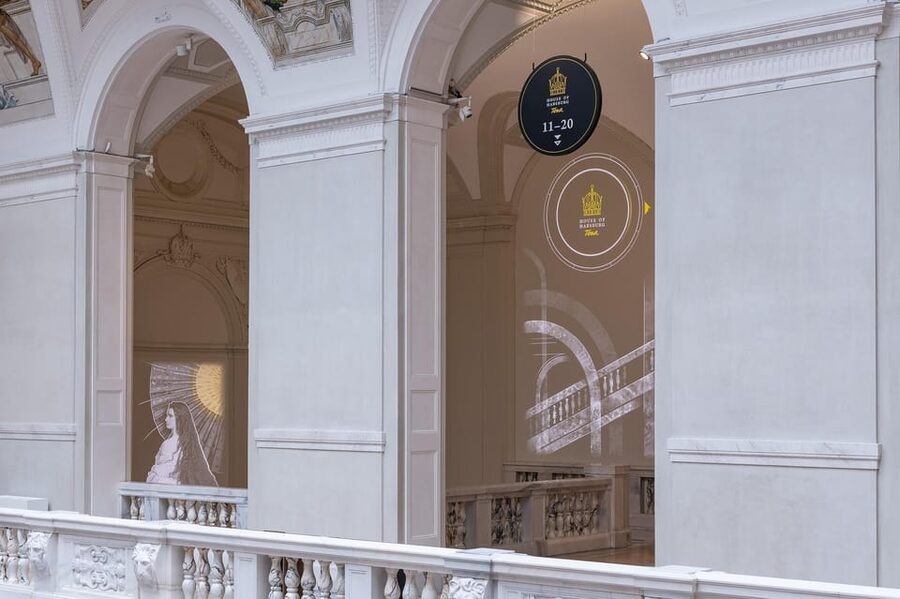
The audio guide is one of the clearest advantages of this ticket. You can choose among 10 languages: German, English, Czech, Hungarian, Spanish, French, Korean, Chinese and Japanese.
The Habsburg story covers a lot of ground, so the guide helps keep the visit organized. It begins with the dynasty’s early figures and follows its growth into one of Europe’s most powerful ruling families before reaching the later imperial period and Empress Sisi.
I would use it selectively rather than listen to every word. Focus on the introduction, the major rulers and the objects that interest you most. That approach lets you stay engaged without turning the visit into an audio marathon.
The Treasury does not come with the same audio player. This difference is worth knowing before you book. The New Hofburg feels more guided and explanatory, while the Treasury relies more on labels and your own interest.
The audio guide is also why the New Hofburg tends to be the stronger half for visitors who want a clear narrative. The Treasury delivers the famous objects, but the New Hofburg explains the people and institutions around them.
Ticket value, timing and practical snags
At $40, this is best value for a visitor who plans to see both venues and can use the 10-day validity. If you visit only the Treasury and spend little time there, the cost may feel high. If you take in the Treasury, the House of Habsburg tour, the armoury, the musical instruments and Weltmuseum Wien, the ticket makes more sense.
The ticket includes entry to:
- The Imperial Treasury
- The New Hofburg Palace
- Weltmuseum Wien
- The Collection of Historic Musical Instruments
- The Imperial Armoury
- The House of Habsburg audio tour
You can start at either the New Hofburg entrance on Heldenplatz or the Treasury entrance at Schweizerhof. The first place you visit activates the ticket, and it remains valid for 10 days.
Allow time for ticket collection. A mobile voucher does not always mean you walk straight into the galleries. You may still need to exchange it for a paper ticket, and staff may not immediately explain which parts of the complex are covered.
This is the main logistical weakness. Confusion over the included exhibitions and the location of the Treasury can cost you time. I would keep the ticket details available and ask specifically for directions to Schweizerhof or the New Hofburg entrance at Weltmuseum Wien.
The experience is wheelchair accessible. Children under 14 are not suitable for this activity according to the booking conditions, so check your group before choosing it.
Free cancellation is available up to 24 hours before the visit, and you can reserve now and pay later. Those options are useful if your Vienna schedule is still changing, but they do not remove the need to plan your first entrance carefully.
Who will enjoy this combination most
I would recommend this ticket to you if you like royal history, ceremonial objects, military displays, music history or grand palace collections. It is especially good for anyone who wants more than the usual Sisi highlights.
The New Hofburg is the better choice for a mixed-interest group. One person can focus on armor, another on musical instruments and another on the Habsburg story. The Treasury then supplies the famous crowns and jewels that give the visit its most dramatic moments.
You should think twice if you dislike museums without a live guide or if your main interest is simply seeing palace rooms. This ticket is not a guided walking tour through every part of the Hofburg. It is an admission pass to several collections, with the audio guide concentrated on the New Hofburg’s Habsburg exhibition.
I would also avoid trying to squeeze everything into a tight afternoon. The ticket’s 10-day period removes that pressure. Use it in two visits if you can.
Should you book the Imperial Treasury and New Hofburg ticket?
Book it if you want the full Habsburg picture. The Treasury gives you crowns, jewels and imperial regalia. The New Hofburg supplies the story, armor, instruments, Mozart’s fortepiano and the palace setting that connects them.
The strongest reason to book is the combination of famous objects and a useful audio tour. The strongest reason to hesitate is the price and the uneven experience between the two venues. The Treasury may feel less engaging if you are not interested in textiles or ceremonial objects, and the ticket collection process can be unclear.
My practical choice would be to book it if you have enough time for both visits and care about the Habsburg period. Start with the New Hofburg if you want the clearest narrative, then visit the Treasury when you are ready for the visual impact of the crowns and jewels. If you only have time for one section, choose the New Hofburg for variety and the audio guide, or choose the Treasury if the Imperial Crown and royal regalia are your main purpose.
FAQ
How long is the ticket valid?
The ticket is valid for 10 days from its first activation.
What is included in the combination ticket?
It includes entry to the Imperial Treasury, New Hofburg Palace, Weltmuseum Wien, the Collection of Historic Musical Instruments, and the Imperial Armoury. It also includes the House of Habsburg audio guide.
Is a live tour guide included?
No. There is no live tour guide. The New Hofburg includes an audio guide.
Which languages are available for the audio guide?
The audio guide is available in German, English, Czech, Hungarian, Spanish, French, Korean, Chinese and Japanese.
Where can I start the visit?
You can start at the New Hofburg entrance at Weltmuseum Wien on Heldenplatz, or at the Imperial Treasury in Schweizerhof.
Does the Imperial Treasury include an audio guide?
The included audio guide is for the House of Habsburg tour at the New Hofburg. The Imperial Treasury is self-guided.
What major objects can I see at the Imperial Treasury?
You can see the Austrian Imperial Crown, the Holy Roman Crown, the Holy Lance, Habsburg jewels and a very large emerald.
What collections are housed in the New Hofburg?
The New Hofburg includes the Imperial Armoury, the Collection of Historic Musical Instruments and the House of Habsburg exhibition. Entry to Weltmuseum Wien is also included.
Can I see anything connected with Mozart and Joseph Haydn?
Yes. The Collection of Historic Musical Instruments includes a fortepiano once played by Mozart and the only wax bust showing Joseph Haydn as he appeared during his lifetime.
Is the experience wheelchair accessible?
Yes, the activity is wheelchair accessible.
Are children under 14 allowed?
The activity is not suitable for children under 14.
Can I cancel the booking?
Yes. You can cancel up to 24 hours in advance for a full refund.
Just added in Vienna
- 3 hour private tour in Vienna by private car★ 4.4 · 6 reviews
- Christmas Market Vienna Tour★ 4.0 · 53 reviews
- Private Christmas Markets Walking Tour Vienna★ 5.0 · 31 reviews
- Christmas Markets & Shopping in Vienna★ 5.0 · 17 reviews
- Vienna: Christmas Markets Tour★ 4.3 · 99 reviews
- Vienna Danube Tower★ 4.0 · 136 reviews
- Guided Walking Tour of Vienna City Center Highlights★ 5.0 · 150 reviews
- Private Hidden Vienna Walk — Stories Behind Quiet Corners★ 5.0 · 137 reviews
Hofburg & Imperial Palaces, compared.
Skip-the-Line Sisi Museum, Hofburg and Gardens Tour
Read our review →
Entry Ticket Upper Belvedere, Klimt’s Kiss & Permanent Collection
Read our review →
Combo Ticket: Kunsthistorisches Museum & Imperial Treasury
Read our review →
“Sisi’s Amazing Journey” Virtual Reality Experience
Read our review →Browse the lists this tour appears in