
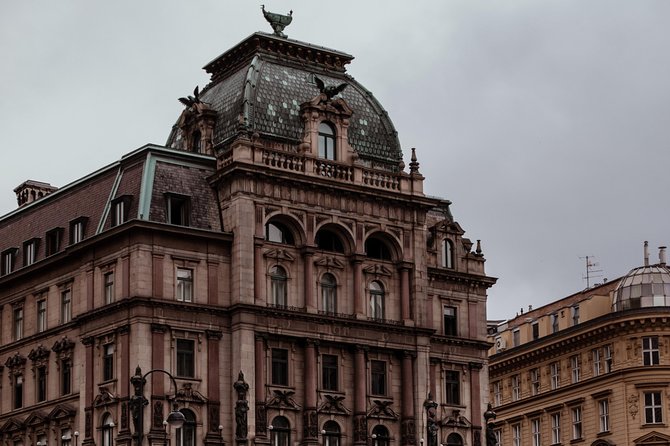
Reviewed · CITY TOURS
Mystery rally Vienna: The scary city
Vienna’s old center takes on a darker mood in this two-hour mystery rally, where you follow clues through churches, squares, clocks, and former sites of punishment. It is less a guided ghost tour than a self-led city puzzle with a spooky historical frame.
I like the freedom to move at your own pace, and I like the mix of real historic locations and hands-on puzzles. You are not simply listening to a story. You are studying places, combining clues, and trying to beat the other teams. The main drawback is that the experience depends on good weather and has a strict non-refundable policy.
Key points to know before you book
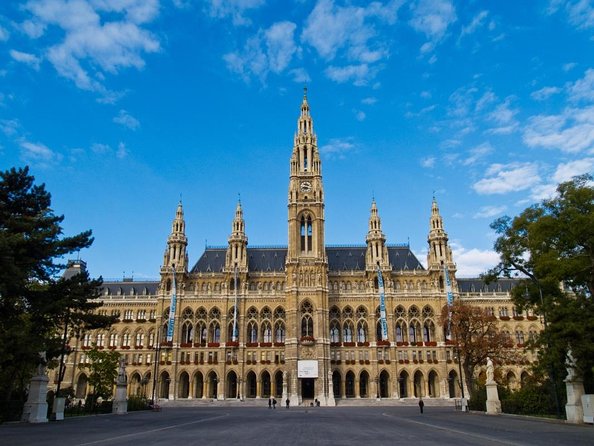
- Eight central Vienna stops: The route includes St. Stephen’s Cathedral, St. Michael’s Church, Am Hof, the Altes Rathaus, Augustinerkirche, the Ankeruhr Clock, the Hofburg, and Neuer Markt.
- A game, not a standard walking tour: You receive a card, puzzle book, and bag of clues, then move between stations without a guide leading every step.
- Built for small teams: One team is formed per booking referral, with the exact team size not specified.
- A spooky historical theme: The route refers to haunted houses, former execution squares, old tombs, and documented stories from morbid Vienna.
- Help remains available: Rally staff explain the rules at the start and can assist during the game if you get stuck.
- The finish has a small reward: Your team cracks a hidden code, checks the solutions, and opens a treasure chest containing a sweet surprise.
Why this Vienna mystery rally works
I like this experience because it gives you a reason to look closely at places you might otherwise pass on a normal walk through the first district. A church façade, a square, or a public clock becomes part of a puzzle. You are not only moving from one famous address to the next. You are searching for clues and trying to connect them.
The mood is spooky without requiring a theatrical haunted-house setup. The subject is Vienna’s darker past, including old tombs, former execution squares, haunted houses, and other documented locations. That makes the experience a good fit if you enjoy history with a touch of the macabre, but do not want a conventional museum visit.
The competitive side matters, too. One German-language review describes the rally as a fun, brisk way to get through the first district while trying to solve the puzzles before the other teams. That points to the experience’s strongest quality: it has a light sporting element. You will probably walk with more purpose than you would on a regular sightseeing stroll.
Still, keep your expectations clear. You are not given a named guide who narrates every stop. The staff explain the process, provide the materials, and stay reachable for questions, but your team does the work independently. If you prefer a relaxed tour with a steady flow of facts, this may feel like too much problem-solving and not enough explanation.
More to book in Vienna
- Vienna: Guided Walking Tour of City Center Highlights
★ 4.7 · 4,989 reviews - Vienna: City Cruise with Optional Lunch
★ 3.4 · 3,982 reviews - Vienna: City Cruise
★ 3.3 · 2,978 reviews
Starting at Stephansplatz with the puzzle kit
The rally begins at Stephansplatz 5, beside one of Vienna’s best-known central landmarks, St. Stephen’s Cathedral. At the start, the rally management explains how the game works and hands over the materials: a game sheet or card, a puzzle book, and a bag of mysterious letters and other items.
That briefing is important. You need to understand how the clues fit together before setting off. Since each team travels independently, your group must organize itself. One person may read the puzzle book, another may search the surroundings, and someone else may keep track of the letters and answers.
The materials are compact, but they shape the entire outing. You are not expected to use a phone-based game alone. The physical card, book, and clue bag give the rally a simple treasure-hunt feel.
The route is offered in English, and the activity lasts about two hours. The starting point is near public transportation, which makes it practical to fit into a day of central Vienna sightseeing.
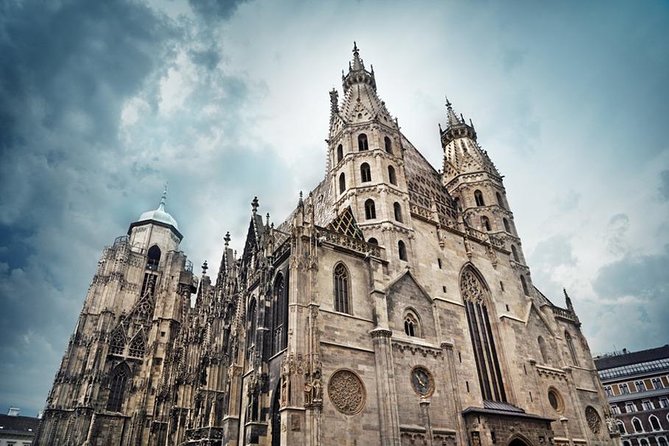
Stop 1: St. Stephen’s Cathedral
St. Stephen’s Cathedral is the natural opening point for a mystery route through Vienna. It gives your team a clear landmark and a busy central setting in which to begin searching.
The important thing here is not just seeing the cathedral. You are expected to look for information on site and work out how it connects to your puzzle materials. This changes your attention. Instead of taking a quick photo and moving on, you may find yourself checking details and comparing observations with the rest of your team.
Because this is the first station, allow a little time to get used to the format. The early puzzle may feel slower while you work out what counts as a clue and how answers are recorded.
Stop 2: St. Michael’s Church
From St. Stephen’s, the game continues to St. Michael’s Church. The route keeps you within Vienna’s historic center, so the movement between stops is part of the experience rather than a transfer by vehicle.
At this stage, your team should have a better sense of how to divide the work. One person can concentrate on the puzzle instructions while others inspect the location. If you rush, you may miss a useful detail. If you spend too long on one answer, staff are available to help when questions arise.
The church stop also reinforces the rally’s focus on old and solemn places. The setting suits the darker theme, even though the activity remains a puzzle game rather than a horror performance.
A different kind of evening in Vienna:
- Vienna: Vivaldi’s Four Seasons Concert in Karlskirche
★ 4.7 · 14,951 reviews - Vienna: Spanish Riding School Training
★ 3.9 · 9,281 reviews - Vienna: Skip-the-cashier-desk-line Giant Ferris Wheel Ride
★ 4.5 · 7,859 reviews - Vienna: Schönbrunn Palace & Gardens Skip-the-Line Tour
★ 4.7 · 7,739 reviews
Stop 3: Am Hof
Am Hof brings the game into one of Vienna’s historic squares. This is where the rally’s idea of place-based problem-solving becomes especially clear. Your team is asked to use the setting itself, not simply carry a puzzle from one address to another.
Squares can be easier places to search because you have room to look around, but they can also contain many visual distractions. Keep the group together and check the wording of each clue carefully. The aim is not only to find something interesting. You need to work out what the game wants you to do with it.
This is also a good point to notice the pace. The activity is described as having a sporting side, and the competition to solve the riddles before other teams can add a little pressure.
Stop 4: Altes Rathaus
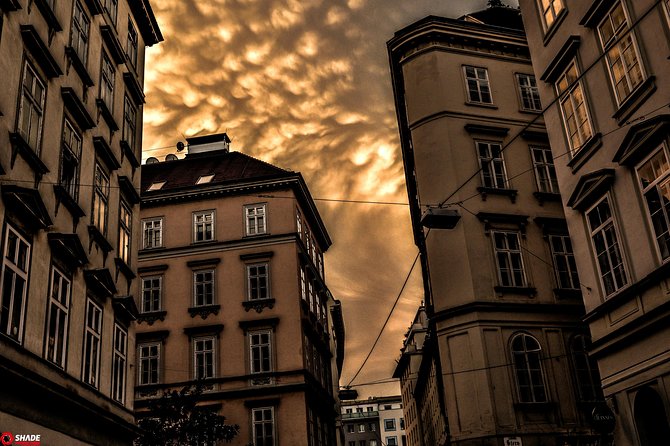
The Altes Rathaus is another stop tied to the historic center’s older civic fabric. The route’s appeal comes from placing puzzle work in real city spaces rather than in a purpose-built game room.
You may find that some stations suit careful readers while others reward quick observation. That variety helps keep a two-hour game from feeling like the same task repeated eight times. The materials in your clue bag are meant to be combined, so do not treat each item as a separate riddle with an obvious answer.
If you are playing with children or a mixed-age group, this can be a useful shared activity. Most people can participate, and the format gives different team members something to do. The listing does not set a minimum age, so families should confirm that point before booking if it matters to them.
Stop 5: Augustinerkirche
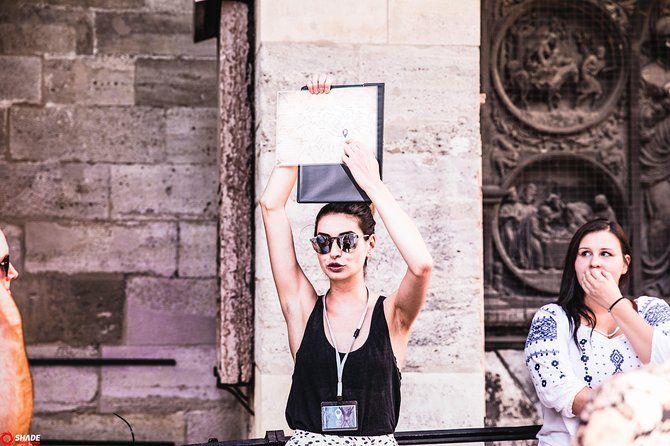
Augustinerkirche continues the church-and-history side of the route. By now, the atmosphere of the old center should feel connected to the spooky theme, with the game directing you toward mysteries and darker stories rather than only famous sights.
One strength of a self-led rally is that you can pause briefly at a stop if you want to take in the setting. The trade-off is that no guide is there to tell you exactly what deserves your attention. Your experience depends on how well your group balances sightseeing with solving.
The activity is best for people who enjoy that balance. If your priority is a detailed explanation of the church itself, a dedicated guided visit would serve you better. If you like using a historic site as part of a challenge, this stop fits the format well.
Stop 6: Ankeruhr Clock
The Ankeruhr Clock adds a different kind of landmark to the route. After several religious and civic locations, a clock gives the puzzle sequence another visual focus.
This stop may appeal to teams that enjoy spotting patterns and reading details. The broader point is that Vienna’s center supplies many types of public landmarks, and the rally uses that variety to keep the route moving.
Do not assume the game is only about frightening stories. The scary theme provides the mood, but the actual work is observation, deduction, and teamwork. You are hunting for answers more than you are hunting for ghosts.
Stop 7: The Hofburg
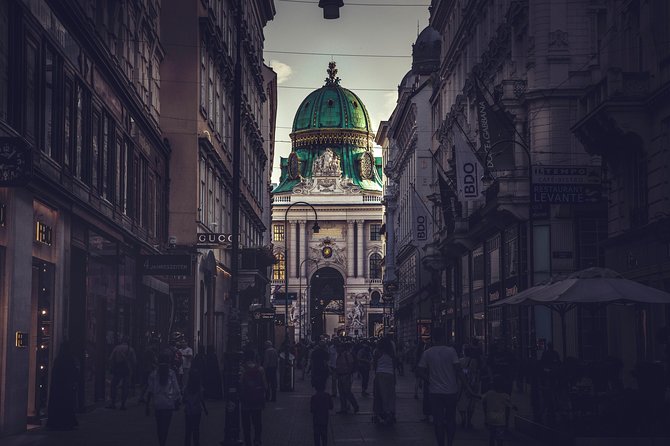
The Hofburg gives the rally one of its grandest settings. It is a major central complex, so this part of the route may feel less intimate than a small square or church. That contrast is useful: the activity does not confine you to one type of historic location.
Large sites can make navigation and clue-finding feel less immediate. Read the directions closely and avoid scattering the team too widely. Staff remain accessible during the game, which is helpful if you cannot tell where a clue should be found or how a puzzle should be interpreted.
The Hofburg stop also shows the value of the route as a sightseeing framework. You are covering several important parts of the first district in one outing, but with a task that keeps everyone involved.
Stop 8: Neuer Markt and the final code
The final listed stop is Neuer Markt. By this stage, your team has collected information, letters, and answers from the earlier stations. The last stretch is not just about reaching the end. You need to combine what you have gathered and crack the hidden code.
At the finish, the solutions are checked and the mysterious treasure chest is opened. The reward is a small sweet surprise, not a large prize, but it gives the game a clear ending and a pleasant payoff for the group.
I like this structure because it avoids the flat finish common to self-guided walks. You do not simply return to the starting point and stop. There is a final task and a shared result.
What the $42.01 price means
At $42.01 per person, this is not the cheapest way to walk around central Vienna. The value depends on how much you want an activity rather than a simple route between landmarks.
You are paying for the game design, the physical materials, the staff briefing, access to help during the rally, and the structure that links eight locations. If you enjoy puzzles and need something that keeps a group engaged, the price can make sense. A normal walk costs less, but it will not give you the same team challenge or final code.
The value is weaker if you mainly want historical explanation. The available information does not promise a full narration at every stop, and staff are there to support the game rather than lead a traditional sightseeing lecture.
The experience is offered in English, which makes it practical for an English-speaking group. It is usually booked about 18 days in advance, so you should not assume you can always arrange it at the last minute.
Who should book this experience
I would choose this rally for friends, couples, families, or small groups who like solving problems together. It suits people who enjoy a little competition and want to see central Vienna while doing something more active than following a guide.
It also fits a group with mixed interests. The history-minded person gets old churches, squares, tombs, and documented dark stories. The puzzle fan gets clues and codes. The person who likes to move at a brisk pace gets a goal at every station.
I would hesitate to book it for someone who dislikes walking, timed-feeling challenges, or uncertainty about the next step. The exact walking distance is not provided, but eight stops across the center mean you should be ready to move between locations for around two hours.
The activity has a maximum capacity of 70 people, though teams are organized separately by booking referral. The exact number of people on each team is not stated, so check before booking if team size is important to you.
Service animals are allowed, and most people can participate. Alcoholic drinks are not included, which is hardly a surprise for a puzzle walk, but worth knowing if you were expecting refreshments.
Weather, cancellations, and practical limits
Good weather is required. If poor weather causes the activity to be canceled, you are offered another date or a full refund. The same applies if the minimum number of participants is not reached, with the option of another date or experience.
Your own cancellation is different. The booking is non-refundable and cannot be changed for any reason. If your plans are uncertain, that policy should carry real weight in your decision.
The meeting point and ending point are both at Stephansplatz 5. Since the rally begins and ends at the same place, you do not need to arrange a separate pickup or work out where the route finishes.
Should you book the scary city rally?
Book it if you want a playful way to see central Vienna, enjoy solving clues, and like the idea of historic sites with a dark edge. The strongest features are the eight-location route, the independent team format, the physical clue materials, and the final treasure-chest finish.
Skip it if you want a slow, detailed lecture from a named guide or if rainy weather and fixed plans could cause trouble. At $42.01, the experience earns its price through interaction, not through the amount of formal historical commentary.
For the right group, this is a smart change of pace in Vienna: part city walk, part puzzle contest, and part ghost story without needing a ghost to appear.
FAQ
Where does the mystery rally start?
It starts at Stephansplatz 5, 1010 Vienna, Austria.
Where does the activity end?
The activity ends back at the meeting point.
How long does the rally last?
It lasts approximately two hours.
What language is offered?
The experience is offered in English.
What is included?
You receive a card, a puzzle book, and a bag of mysterious clues and materials.
Which locations are included?
The route includes St. Stephen’s Cathedral, St. Michael’s Church, Am Hof, the Altes Rathaus, Augustinerkirche, the Ankeruhr Clock, the Hofburg, and Neuer Markt.
Can service animals participate?
Yes, service animals are allowed.
What happens if bad weather cancels the experience?
You are offered a different date or a full refund if poor weather causes the activity to be canceled.
Just added in Vienna
- World War II History Vienna Old Town Private Walking Tour★ 4.8 · 9 reviews
- Vienna: Wine Tasting Tour★ 4.8 · 61 reviews
- Vienna: Winery and Wine Tasting Tour with a Wine Expert★ 5.0 · 5 reviews
- Vienna: Wiener Schnitzel and Strudel Cooking Class★ 4.9 · 126 reviews
- Vienna: Wine Tasting E-Bike Tour★ 4.9 · 46 reviews
- Vienna: Wine Tasting at Schönbrunn Palace★ 4.3 · 71 reviews
- Vienna: Unforgettable Private City Tour★ 5.0 · 7 reviews
- Vienna Urban Art Tour: Explore a different side of Vienna!★ 3.8 · 14 reviews
City Tours, compared.
Guided Walking Tour of City Center Highlights
Read our review →
Guided Walking Tour of City Highlights & Hidden Gems
Read our review →
Skip-the-Line Schonbrunn Palace Guided Tour and Vienna Historical City Tour
Read our review →
Browse the lists this tour appears in