
Reviewed · MUSEUMS
Admission Pass to The Roman Quarter and the Museum Carnuntinum
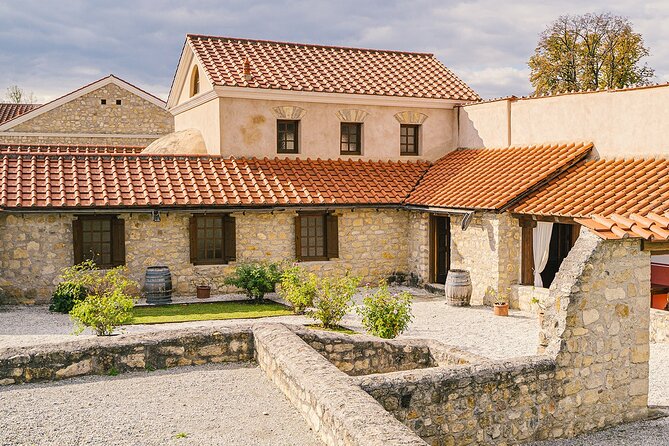
The most striking thing about Carnuntum is that you do not have to picture Roman life from scattered stones alone. Fully reconstructed houses show baths, murals, furniture, gardens, and household objects in a way that makes the ancient city feel unusually close.
I like the working Roman bathhouse, where water actually splashes, and the carefully furnished rooms that turn archaeology into something you can read with your eyes. I also like that the pass includes both the open-air Roman Quarter and the Carnuntinum Museum. The main drawback is distance between parts of the site, so you should allow the full three hours and expect some walking.
Key points
- Four functioning Roman buildings: See the Roman Therme, villa urbana, oil merchant’s house, and House of Lucius with reconstructed interiors and details.
- A museum that completes the visit: Carnuntinum presents finds from roughly 2,000 years of local Roman history.
- A strong visual experience: Murals, gardens, furniture, household objects, and working water features help explain daily life.
- More than domestic ruins: Amphitheaters and the wider outdoor area connect private life with gladiatorial spectacle.
- Good value at $16.21: One admission covers the Roman Quarter and museum, with taxes and fees included.
- Plan around the site’s size: The Roman area and museum are not a quick stop, and a weekend shuttle bus has been provided during the current season.
Why Carnuntum feels different from a typical Roman ruin
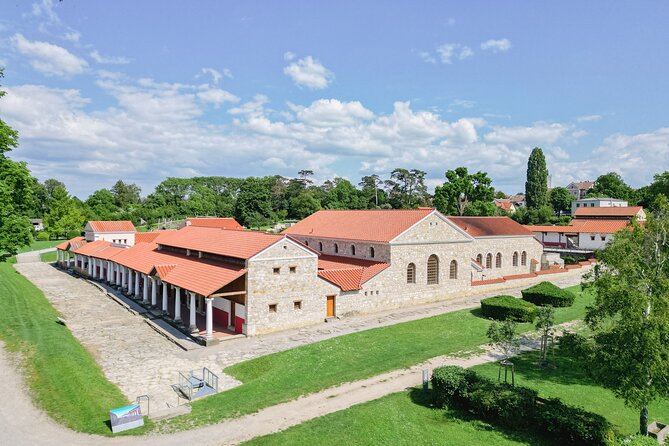
Carnuntum was once an important Roman city near the Danube, a place where imperial politics and military life met the wider Roman world. Marcus Aurelius is associated with the city, and the site presents that past through buildings you can enter rather than foundations you can only inspect.
That difference matters. At many ancient sites, you spend your time reading signs and guessing where a doorway or kitchen might have been. Here, the Roman Quarter gives you walls, rooms, decorations, and objects in a setting designed to show how people used the space.
The reconstruction is the main reason to come. It is not simply a collection of bare replicas. The houses are described as fully functional, with a bathhouse, water features, murals, furniture, and outdoor areas. You can look at the structure, then consider the ordinary work that took place there: bathing, cooking, trading, receiving visitors, and tending a garden.
I find this especially helpful if you are visiting with children or with someone who does not normally enjoy archaeological sites. The setting gives you something concrete to follow. You can move from room to room and ask what each space was for, rather than trying to make sense of a field of broken walls.
More to book in Austria
- Vienna: Skip-the-Line Sisi Museum, Hofburg and Gardens Tour
★ 4.8 · 5,918 reviews - Vienna Kunsthistorisches Museum Day Admission Ticket
★ 4.6 · 3,690 reviews - Tickets for the Albertina Exhibitions
★ 4.7 · 2,126 reviews
Start with the Roman Quarter’s four reconstructed houses
Give the Roman City Carnuntum about an hour and twenty minutes at a minimum. That is the suggested time for this part of the visit, though you may want longer if you read every display, pause for photographs, or use the playground and restaurant.
The quarter includes four main reconstructed buildings, each showing a different side of Roman urban life. The point is not only architectural accuracy. It is the chance to compare social settings and see how a city worked at the level of rooms, courtyards, trade, bathing, and decoration.
The Roman Therme
The Roman Therme, or bathhouse, is one of the clearest highlights. Water splashes in the thermal bath, giving you a rare sense of the engineering and daily routine behind Roman bathing.
Baths were not just places to wash. They were social spaces and important public buildings. At Carnuntum, the working water feature helps you understand the practical side of that world. Roman comfort depended on plumbing, heated rooms, maintenance, and a steady supply of water.
Do not rush through this building. Look at the layout and consider how different areas might have served different purposes. The visit does not depend on a guide, but the physical details give you useful clues even if you know little about Roman architecture.
The villa urbana
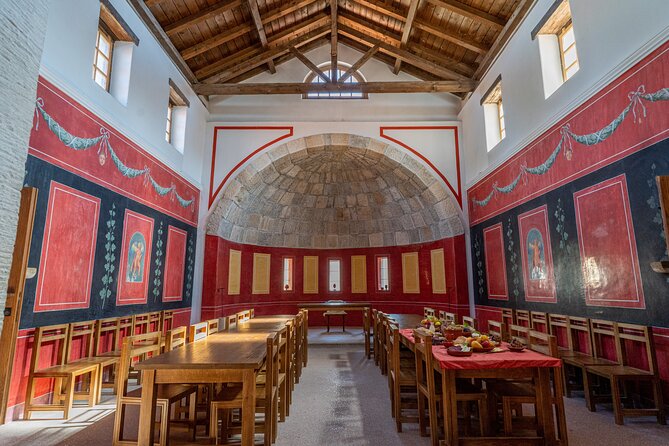
The villa urbana presents a more refined side of Roman city life. Its murals are a major draw, and the decorated rooms help you see how much effort went into private interiors.
Painted walls can look like minor details in a museum case. Here, they occupy the rooms where they would have shaped the mood of daily life. The villa gives you a better idea of status, taste, and the desire to make a home impressive as well as comfortable.
I would spend time looking up and around rather than moving straight from doorway to doorway. The decoration is part of the experience, and the reconstructed setting lets you connect the walls with the rooms they were meant to enliven.
A different kind of evening in Austria:
- Vienna: Vivaldi’s Four Seasons Concert in Karlskirche
★ 4.7 · 14,951 reviews - Vienna: Spanish Riding School Training
★ 3.9 · 9,281 reviews - Vienna: Skip-the-cashier-desk-line Giant Ferris Wheel Ride
★ 4.5 · 7,859 reviews - Vienna: Schönbrunn Palace & Gardens Skip-the-Line Tour
★ 4.7 · 7,739 reviews
The oil merchant’s house
The oil merchant’s house shifts attention from elegant decoration to business. It suggests the activity needed to supply an urban population and reminds you that Roman cities depended on trade, storage, and specialist occupations.
This is useful context because Roman history can easily become a story about emperors and armies. A merchant’s home brings the focus back to work and household life. You might find it easier to imagine the city through this building than through a grand public monument.
The House of Lucius
The House of Lucius offers a more modest domestic view. Its garden is a particularly pleasant detail, and the home helps balance the grander villa urbana.
The garden is worth treating as part of the building, not as spare outdoor space. Roman homes used courtyards and gardens as living areas, and the setting helps you see how much daily life happened outside enclosed rooms.
Together, these buildings make the Roman Quarter more useful than a single reconstructed showpiece. You move between bathing, private decoration, commerce, and ordinary domestic space. That range is one of Carnuntum’s strongest features.
Look beyond the houses to gladiators and open space
The Roman Quarter is part of a much larger archaeological area. Amphitheaters connect the residential buildings to the public world of gladiatorial contests and mass entertainment.
The available information does not set out a separate timed stop for the amphitheaters, so treat them as part of the wider Carnuntum visit rather than assuming a formal guided presentation. Still, they add important context. A Roman city was not only kitchens, bedrooms, baths, and gardens. It also had public spectacles, civic rituals, and spaces designed for large crowds.
The outdoor area includes trees and meadows, along with a large children’s playground. That makes the site easier to handle as a half-day outing. Children can have a break from rooms and signs, while adults get time to absorb the scale of the grounds.
A large visitor center and the Forum Culinarium restaurant are also part of the Roman City Carnuntum complex. Since the pass information does not specify menus or meal prices, I would treat the restaurant as a convenient option rather than building your plans around it.
One practical point matters here: the locations are spread out. A weekend shuttle bus has been provided during the current season to help with the distances. Check the current shuttle arrangements when you arrive, especially if walking between areas would be difficult for you.
Use the Carnuntinum Museum to fill in the story
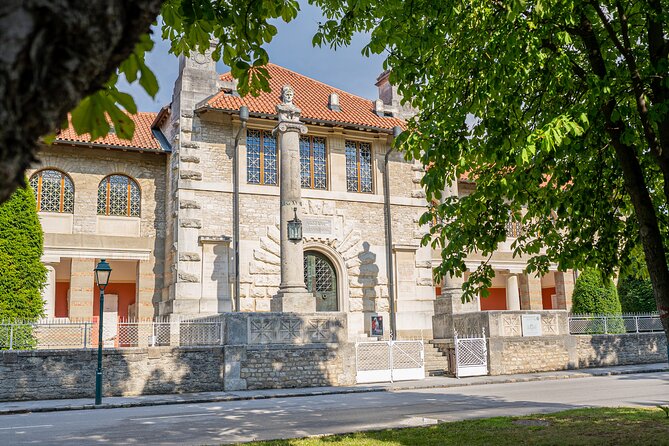
Allow about an hour for the Carnuntinum Museum. It is not just a backup for bad weather. The museum holds finds from around 2,000 years of Roman history at Carnuntum and gives you the objects that the reconstructed houses cannot provide.
The current exhibition is called Weltstadt am Donaulimes, or Metropolis at the Danube Limes. It focuses on Carnuntum’s history, the people who lived there, and the Danube Limes World Heritage Site near Vienna.
This is where the visit gains historical depth. The Roman Quarter shows how spaces may have looked and functioned. The museum lets you examine the surviving evidence connected with that world. Together, the two parts answer different questions: What did a Roman home feel like, and what objects help us understand the city and its people?
I recommend visiting both rather than choosing only the open-air buildings. The houses are the visual hook, but the museum gives the city a wider setting. It also helps you connect local remains with the Danube frontier and the Roman world beyond Carnuntum.
The description calls the museum theatrical, which may be fair. If you prefer a quiet display of objects with little interpretation, some sections may feel more staged than expected. If you like a clear story and visual presentation, that style can make the material easier to follow.
A three-hour plan that leaves room to look closely
The stated duration is about three hours. A practical plan would be:
- Spend roughly 80 minutes in the Roman Quarter.
- Allow about 60 minutes for the Carnuntinum Museum.
- Keep the remaining time for walking, the amphitheater area, the visitor center, photographs, or a pause at the restaurant and playground.
That schedule is workable, but it is not generous if you move slowly. The site covers multiple locations, and the distance between them can affect your pace. If you are keen on Roman architecture or visiting with children, plan for more than the bare minimum if your schedule allows.
The pass is valid during the listed opening period from April 23 through November 15, 2025, with opening hours from 9:00 a.m. to 5:00 p.m. Monday through Sunday. Arriving earlier gives you more freedom to set your own order and reduces the risk of trying to fit both main stops into a rushed final hour.
No guided tour is included. That is important for your expectations. You get admission to both sites, but you will explore independently unless you arrange a separate guided option. Guided visits are available in English according to the supplied information, but this pass itself does not include one.
What $16.21 gets you
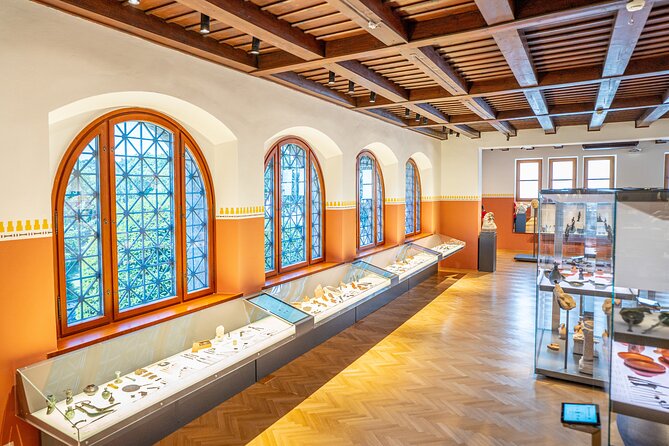
At $16.21 per person, the value is strong if you plan to see both the Roman Quarter and the museum. The pass includes all fees and taxes, so the price is straightforward, and you are paying for several hours rather than a short look at one monument.
The best value comes from the contrast between the two stops. The reconstructed buildings provide atmosphere and scale, while the museum supplies archaeological objects and historical explanation. If you visit only one, you lose half of what makes Carnuntum distinctive.
The pass is less useful if you want a tightly guided experience. Since no guide is included, you need to read the displays and build the story yourself. That is not a flaw for independent visitors, but it may matter if you want a specialist explaining each building as you walk.
The site’s booking pattern suggests that people often reserve about 17 days ahead. That is not a rule, but it is a useful planning hint if your dates are fixed. You can cancel for a full refund up to 24 hours before the start time. Changes or cancellations inside that 24-hour window are not accepted for a refund.
Who will get the most from Carnuntum
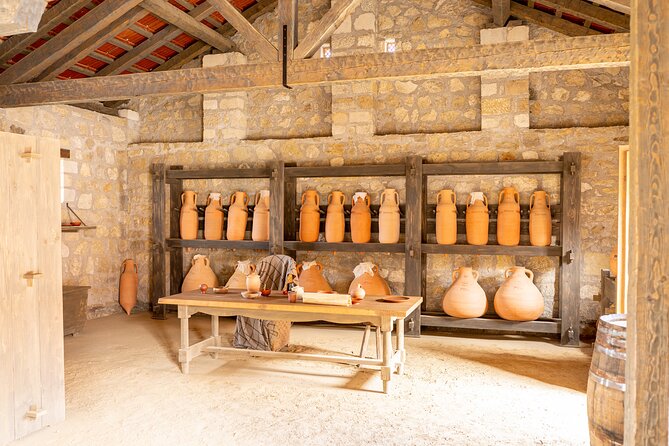
I would choose this experience for anyone who wants Roman history presented in a physical, easy-to-read way. It suits families, first-time visitors to Roman archaeology, and people who enjoy architecture more than long text panels.
It is also a good fit for a Vienna-area day outing if you want to step outside the capital and visit a major Roman site near the Danube. The experience is not described as a transport tour, so you will need to handle your own route to the site. It is near public transportation, which makes the location more practical than a remote archaeological field.
You should also consider it if you have already visited famous Roman ruins and want something different. Carnuntum does not rely only on monumental remains. Its strength is the attempt to show how a city worked at street level, inside homes and baths.
I would be more cautious if you dislike reconstructions or prefer untouched ruins. Some visitors may find the theatrical presentation too polished, and the open-air area requires time and walking. The site is best approached as an interpretation of Roman life supported by archaeology, not as a perfectly preserved ancient neighborhood.
Useful details before you go
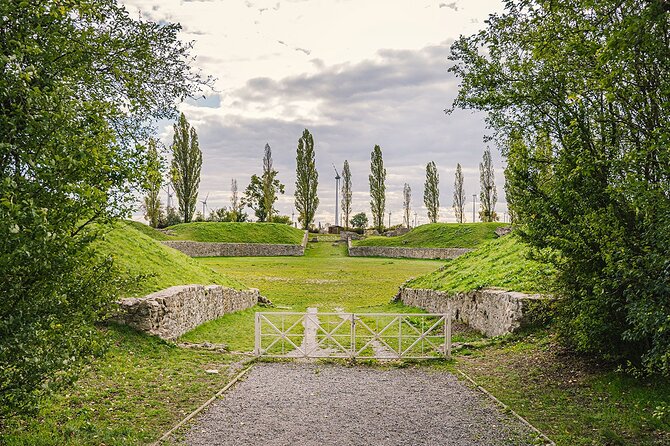
The admission covers the Roman City Carnuntum and Museum Carnuntinum, but not guided tours. Confirmation is provided when you book.
Service animals are allowed, and the site is near public transportation. The information says most people can participate, though the distances between areas are worth considering if you have limited mobility. The weekend shuttle arrangement may help during the current season.
The complex includes a visitor center, restaurant, playground, trees, and meadows. These features make it easier to spend several hours on site, especially with children, but they also mean you should not think of the pass as a quick indoor museum ticket.
Keep the opening hours in mind. The listed season runs from April 23 to November 15, 2025, and both locations are open daily from 9:00 a.m. to 5:00 p.m. The pass is therefore best used as a daytime visit, not a late-afternoon add-on.
Should you book the Roman Quarter and Museum Carnuntinum?
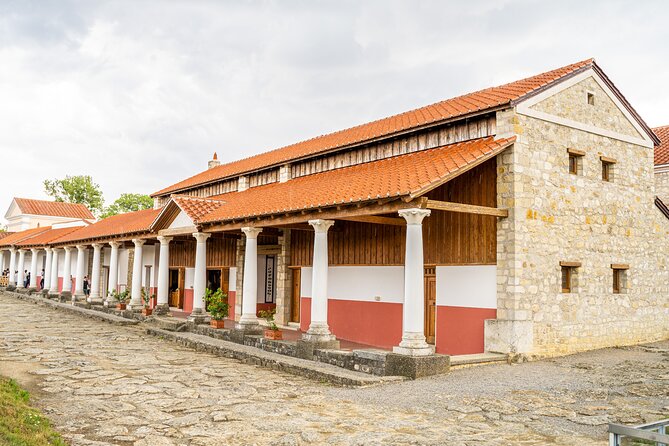
Book it if you want to see Roman daily life through reconstructed spaces, not only through ruins and display cases. The working bathhouse, decorated villa, oil merchant’s house, House of Lucius, amphitheaters, and museum create a full visit at a modest price.
I would make the booking if you can spare around three hours and are comfortable exploring without a guide. If you want a short, highly directed tour or dislike reconstructed historical settings, choose with more care.
For most independent visitors, the combination is the point. The Roman Quarter helps you picture the city, and Carnuntinum gives you the surviving evidence behind that picture. At $16.21, that is a sensible way to spend part of a day in Lower Austria.
FAQ
Where is the Roman Quarter and Museum Carnuntinum located?
The experience is in Lower Austria, Austria, at Roman City Carnuntum and the Carnuntinum Museum.
How long does the visit take?
The approximate duration is three hours. The Roman Quarter is allocated about one hour and 20 minutes, and the museum about one hour.
What does the admission pass include?
It includes admission to Roman City Carnuntum and Museum Carnuntinum, along with all fees and taxes.
Are guided tours included?
No. Guided tours are not included with this admission pass.
What can I see in the Roman Quarter?
You can see four reconstructed Roman houses and buildings, including the Roman Therme, villa urbana, oil merchant’s house, and House of Lucius. The wider area also includes amphitheaters, a visitor center, a restaurant, a playground, trees, and meadows.
What is currently shown at Museum Carnuntinum?
The current exhibition is Weltstadt am Donaulimes, or Metropolis at the Danube Limes. It presents the history of Carnuntum, its inhabitants, and the Danube Limes World Heritage Site.
When is the experience open?
The listed opening period is April 23 through November 15, 2025. Opening hours are 9:00 a.m. to 5:00 p.m. every day of the week.
Is the site accessible by public transportation?
Yes. The experience is near public transportation. A weekend shuttle bus has also been provided during the current season because the locations are spread out.
Can I cancel for a refund?
Yes. You can cancel at least 24 hours before the experience start time for a full refund. Cancellations or changes made less than 24 hours before the start time are not accepted for a refund.
Just added in Austria
- Zurich: Liechtenstein, Austria and Germany Private Day Tour★ 5.0 · 6 reviews
- Zell am See: Schmittenhöhe Tandem Paragliding Flight★ 4.9 · 82 reviews
- Zell am See: Paragliding Tandem Flight★ 5.0 · 31 reviews
- Zurich: Private Liechtenstein, Austria, and Germany Day Trip★ 5.0 · 16 reviews
- Vienna: UNESCO Schönbrunn Palace Guided Tour with Entry★ 4.5 · 94 reviews
- World War II History Vienna Old Town Private Walking Tour★ 4.8 · 9 reviews
- From Krems: Wachau Valley River Cruise on the Danube★ 4.6 · 95 reviews
- Villach/Ossiachersee: Paragliding “Action” Tandemflug★ 5.0 · 4 reviews
Museums, compared.

Skip-the-Line Sisi Museum, Hofburg and Gardens Tour
Read our review →
Vienna Kunsthistorisches Museum Day Admission Ticket
Read our review →

Chocolate Workshop in Chocolate Museum w/ Tasting
Read our review →
St. Stephen’s Cathedral & Dom Museum Wien Tickets
Read our review →

Browse the lists this tour appears in