
Reviewed · HISTORICAL TOURS
Vienna: Time Travel and Magic Vienna History Tour
Vienna Time Travel turns the city’s past into a fast-moving show beneath the old center. In one hour, you move from the Roman camp of Vindobona to the Habsburg court, World War II, postwar Austria, and present-day Vienna, with 5D effects and virtual reality doing much of the storytelling.
I like the clear sense of progress through time, and I like how the attraction gives children a reason to pay attention to Vienna’s history. The virtual music experience and Chancellor Figl’s postwar speech are especially memorable. The main drawback is practical: you must manage about 50 steps on two levels, and there is no elevator or wheelchair access.
Key points to know before you go
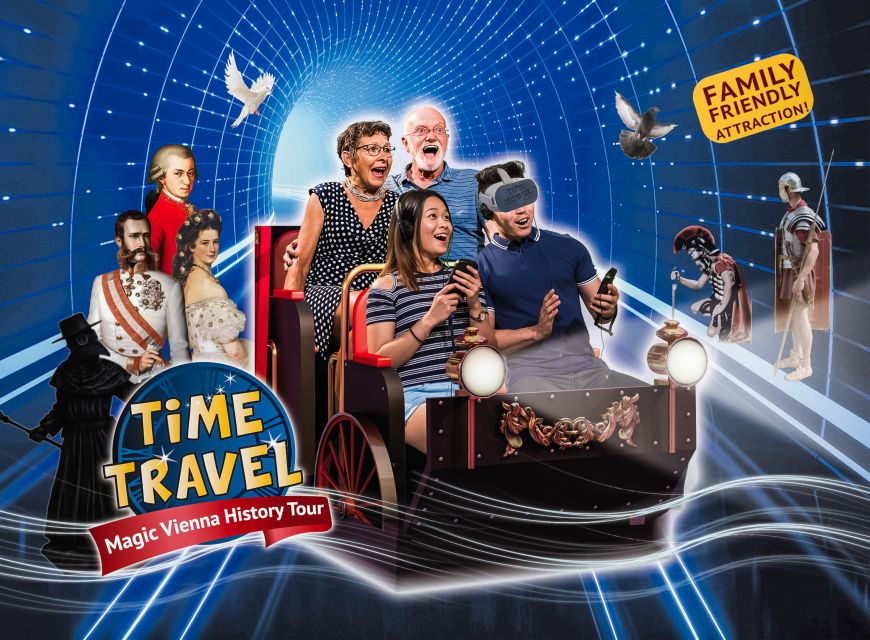
- The 60-minute route covers 2,000 years, from Roman Vindobona to modern Vienna.
- The 5D cinema and VR music sequence provide the biggest sensory moments.
- A portrait gallery introduces major Viennese figures in a quick, approachable way.
- The World War II bomb shelter scene can feel intense, especially for young children.
- The central location is hard to beat, just 200 meters from the Hofburg.
- The attraction is not accessible for wheelchair users and includes about 50 stairs.
Vienna’s past in one lively hour
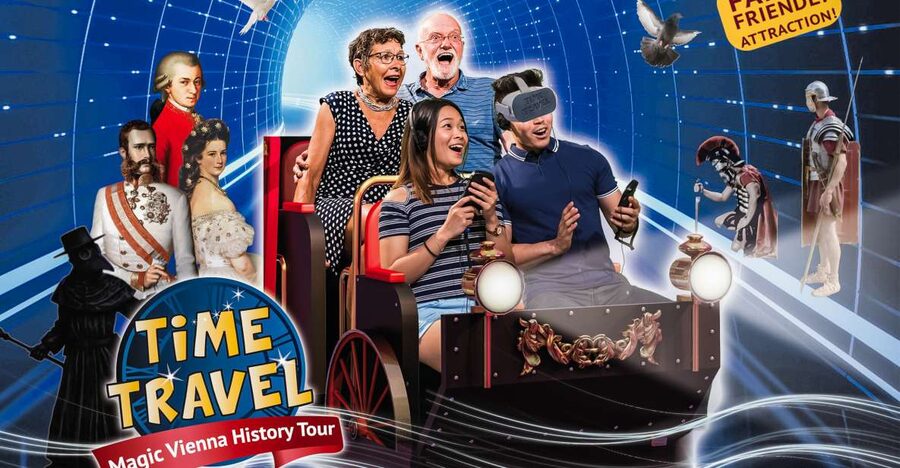
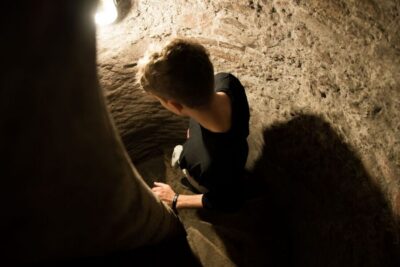
Many city history attractions ask you to read labels and study old objects. Time Travel Vienna takes a different path. You walk through a series of rooms in the cellar of the former St. Michael’s monastery while projections, sound, moving effects, animated figures, and virtual reality carry the story forward.
That approach makes this a useful first activity in Vienna. You do not come away with a full academic history of Austria, but you do get a quick framework for understanding the city. You hear about Roman Vienna, the Habsburgs, court life, music, war, and the rebuilding of Austria after 1945.
The pace helps. Each section lasts only a short time, so the presentation rarely settles into a long lecture. You keep moving from one setting to the next, which is helpful for families and for anyone who finds traditional museums tiring.
I would not treat this as a replacement for the Kunsthistorisches Museum, the Imperial Treasury, or a proper walking tour. Instead, think of it as an entertaining introduction. It gives you names, themes, and historical turning points that can make the rest of your time in Vienna easier to follow.
More to book in Vienna
- Vienna: World War II Historical Walking Tour
★ 4.8 · 1,772 reviews - Vienna Historic Center Small Group Walking Tour
★ 5.0 · 1,746 reviews - Time Travel-Magic Vienna History Tour Ticket
★ 4.5 · 1,099 reviews
Finding Time Travel Vienna near Stephansplatz
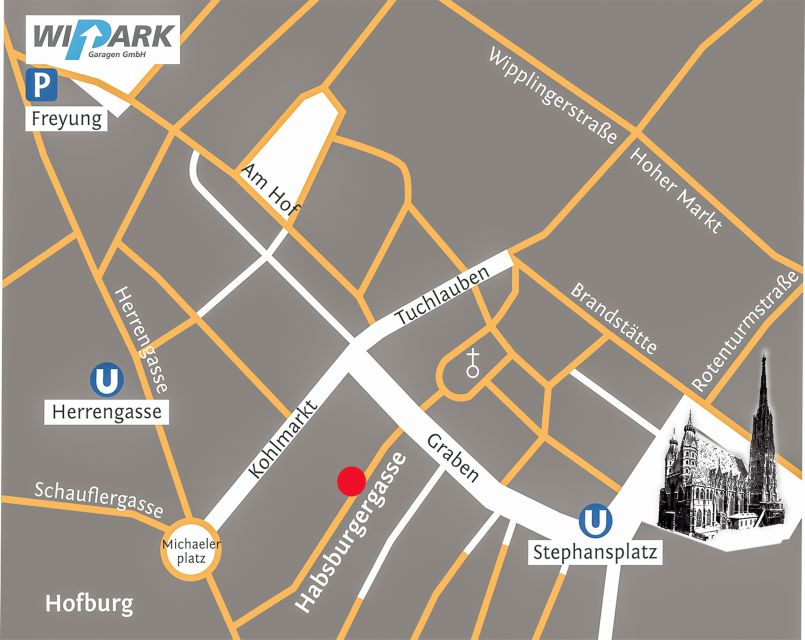
The entrance is at Habsburgergasse 10A in Vienna’s historic center. You are only about 100 meters from Graben, Kohlmarkt, and Stephansplatz, and roughly 200 meters from the Hofburg. That makes it easy to fit around sightseeing in the old town.
The closest underground stations are Stephansplatz on U1 and Herrengasse on U3. If you are driving, the Freyung parking garage offers reduced parking rates for the attraction, according to the supplied information.
The location is one of the strongest practical points. You can visit before seeing the Hofburg, after exploring St. Stephen’s Cathedral, or during a rainy afternoon when outdoor sightseeing loses its charm. Reservations are strongly recommended, and last admission is at 7 p.m., so do not leave it until the final minutes of the day.
The tour takes place in historic cellar rooms. There is no elevator, and the route includes about 50 steps across two levels. If stairs are difficult for you, this is not the right attraction. Wheelchair users cannot be admitted because of the building’s structural and monument-protection limits. The nearby Sisi’s Amazing Journey attraction is identified as an accessible alternative for wheelchair users.
First stop: Roman Vindobona and the city’s early years
The journey begins with Vienna’s Roman past. Vindobona was the Roman camp in the area, and this opening gives you a starting point for understanding why the city developed where it did.
The presentation is designed to make the setting feel immediate rather than distant. Instead of standing beside a display case, you move through a staged environment supported by sound and visual effects. It is a short introduction, but it helps place Vienna on the map before the story moves into its medieval and imperial periods.
One especially striking sequence recreates the Black Plague in Vienna. It is not a quiet history lesson. The atmosphere is built to make you feel the fear and disruption caused by disease in the city.
That scene may be too strong for very young children, though the overall attraction is intended for families. Parents know their own children best. If your child is sensitive to dark settings, loud effects, or scenes about illness, be ready to offer some context before entering.
Meeting Vienna’s famous faces
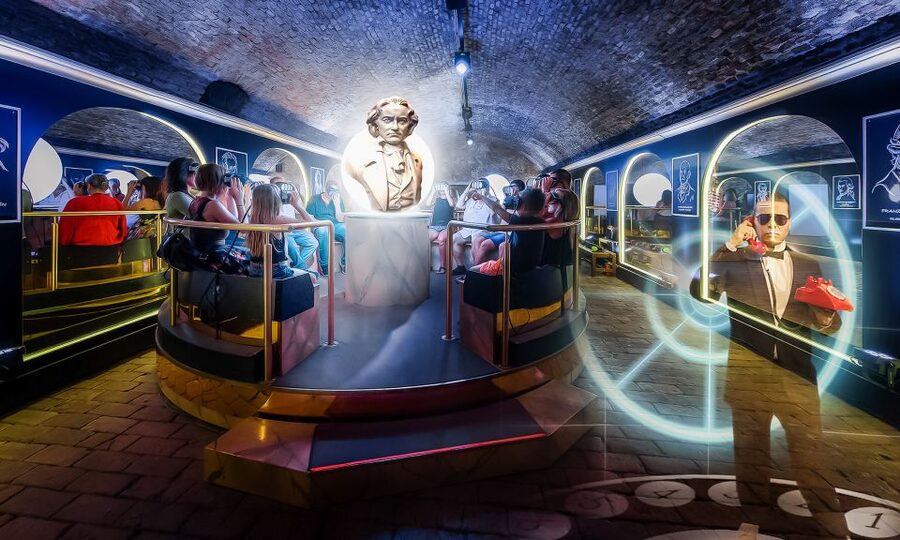
The portrait gallery introduces important people from Viennese history. Rather than asking you to memorize a long list of names, the attraction presents historical figures as personalities. That makes the imperial and cultural story easier to grasp in a short visit.
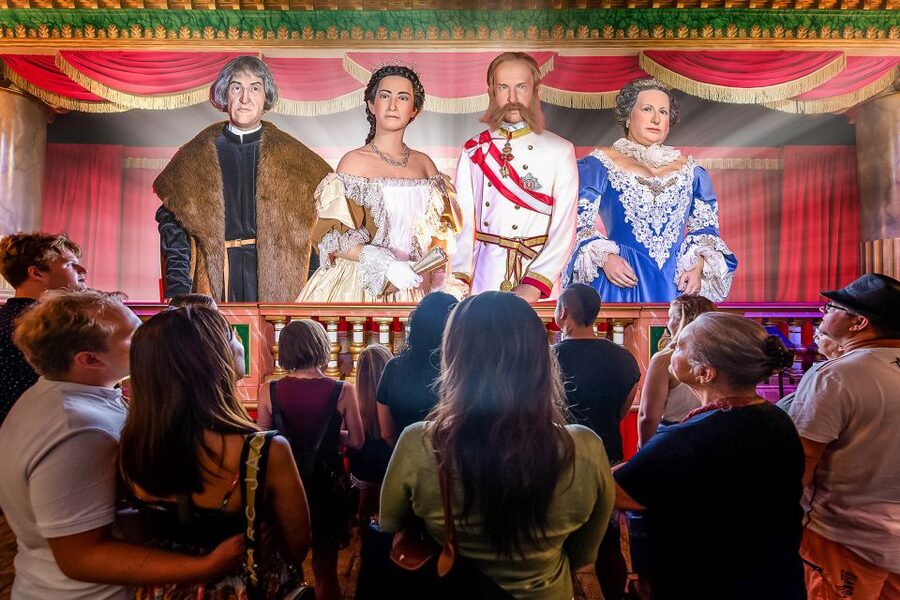
The Habsburg family receives particular attention. You meet the royal family through staged figures and multimedia presentation, gaining a quick sense of how the dynasty shaped Vienna and the surrounding region.
This section works well for first-time visitors who have heard names such as the Habsburgs, Maria Theresa, or Emperor Franz Joseph but do not yet know how they fit together. It does not offer the detail of a palace museum, but it gives you enough background to make the Hofburg and Schönbrunn Palace more meaningful.
The presentation also helps explain why Vienna looks the way it does. The imperial court influenced the city’s grand buildings, formal streets, and public image. You get a broad explanation of how power and architecture grew together.
Some visitors may prefer real guides or live actors. The attraction relies mainly on recorded narration, projections, and special effects. That keeps the experience consistent and allows a multilingual audio guide, but it does not provide the personal questions and conversation you would get on a walking tour.
A different kind of evening in Vienna:
- Vienna: Vivaldi’s Four Seasons Concert in Karlskirche
★ 4.7 · 14,951 reviews - Vienna: Spanish Riding School Training
★ 3.9 · 9,281 reviews - Vienna: Skip-the-cashier-desk-line Giant Ferris Wheel Ride
★ 4.5 · 7,859 reviews - Vienna: Schönbrunn Palace & Gardens Skip-the-Line Tour
★ 4.7 · 7,739 reviews
The 5D cinema: history with movement and effects
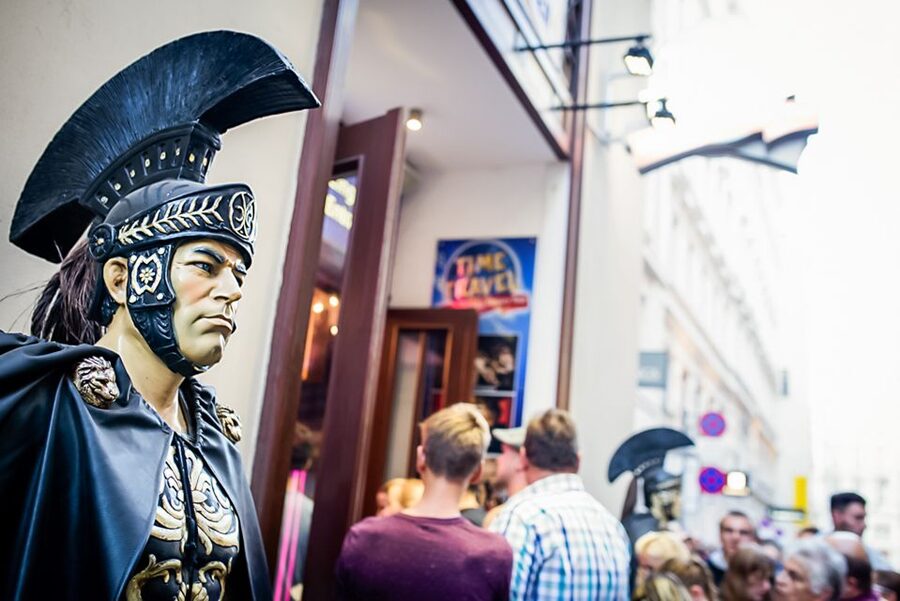
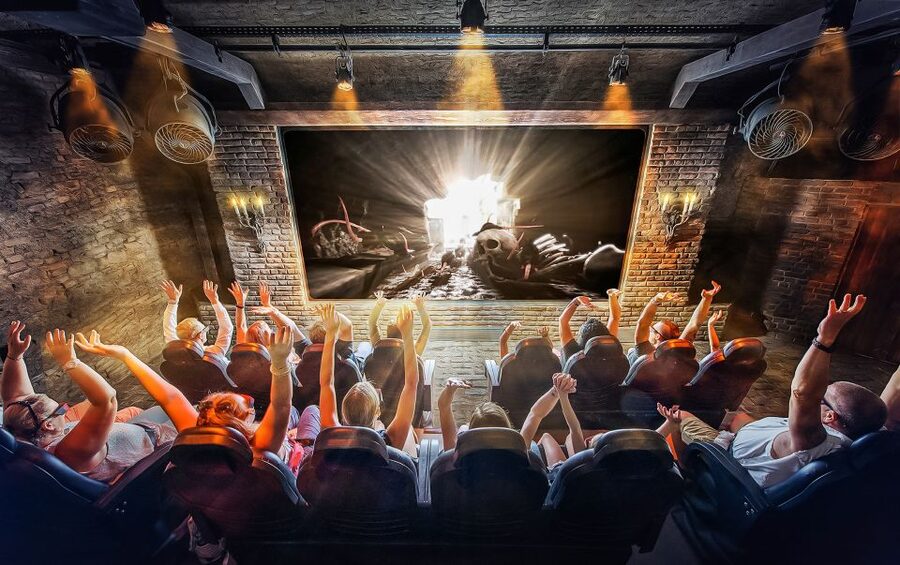
The 5D cinema is one of the main reasons to choose this attraction instead of a standard museum. The screening uses motion and sensory effects to make ancient Vienna feel closer. The goal is not simply to watch a film, but to feel as if the setting is moving around you.
The sequence is relatively short, which is both a strength and a weakness. Short scenes keep the hour moving and prevent the experience from becoming tiring. At the same time, the cinema section can leave you wishing it lasted longer because the effects are among the most enjoyable parts of the visit.
You should expect movement, sound, and other sensory effects. If you are prone to motion sickness or prefer quiet museum settings, this may not be your favorite section. The attraction does not present itself as a scholarly film screening. It is a compact theatrical experience aimed at making history easy to feel.
For children, this is often the point when the visit shifts from educational to genuinely exciting. Adults can enjoy it too, especially if they accept the playful tone rather than expect a serious historical documentary.
Vienna’s music story through virtual reality
Vienna’s music history receives its own virtual reality sequence. With VR glasses, you enter a simulated world that presents the city’s musical development in a more visual and sensory way.
This part adds welcome variety. You are not simply watching another projection or listening to another audio track. The glasses change your viewpoint and give the music section a separate identity within the tour.
The music story is important because Vienna’s cultural reputation is closely tied to composers, concert halls, opera, and court patronage. Time Travel Vienna presents that subject in a brief, accessible form rather than attempting a detailed music history course.
The VR section is a good fit for families with older children and teenagers. It also gives adults a break from the chronological storytelling. The technology is part of the attraction’s appeal, but it serves a clear purpose here: it turns an abstract cultural subject into an experience you can see around you.
The supplied information does not name specific composers or explain how long the VR sequence lasts. You should expect an overview rather than a complete account of Vienna’s musical tradition.
Imperial Vienna and the Habsburg court
The imperial section focuses on the nobility of the Viennese court and the Habsburg family. This is where the attraction connects palace life with the city’s larger political story.
You get a sense of court ceremony and royal privilege, but the treatment stays brisk. The attraction is designed to cover two millennia in an hour, so it cannot explore every emperor, marriage, war, or political decision in detail.
That brevity is useful if you are preparing for a palace visit. After this introduction, you will have a better idea of why the Hofburg matters and why the Habsburgs remain so central to Vienna’s identity.
If you already know Austrian imperial history well, this section may feel simplified. I would see it as a primer, not a specialist presentation. Its real value is helping a general audience recognize the main people and understand the scale of the dynasty’s influence.
World War II inside a Vienna bomb shelter
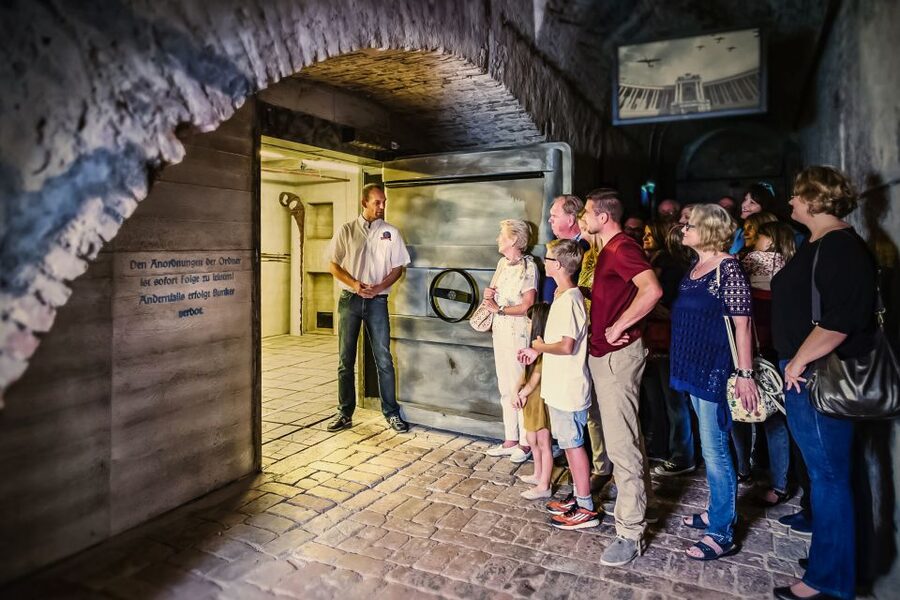
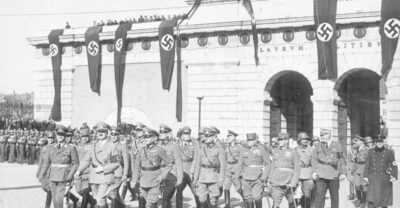
The section called Enemy Aircraft places you inside a bomb shelter while World War II is described around you. The attraction uses sound and visual effects to suggest the danger of an air raid and the experience of civilians sheltering underground.
This is a sharper change in mood than the earlier imperial and music sections. The playful tone gives way to fear, destruction, and uncertainty. That contrast matters because Vienna’s history was not only made up of palaces, art, and music.
You should prepare children for this scene. It is part of the attraction’s effort to show the difficult parts of the city’s past, but the atmosphere may be unsettling. The scene is brief within the one-hour route, yet it is more emotionally serious than the 5D cinema or VR sequence.
The cellar setting also makes this portion feel appropriate. You are already below street level, surrounded by old stone rooms, so the bomb shelter presentation connects the physical setting with the historical subject.
Chancellor Figl and Austria after the war
The postwar section focuses on Chancellor Figl’s speech in the battered remains of Vienna. You hear the moving address as the attraction shows the city after the destruction of war and the relief of Austria’s citizens.
This is one of the most human parts of the route. Earlier sections introduce rulers, composers, and major events. Here, the emphasis shifts to the emotional moment of a country trying to recover.
The presentation does not simply finish the war section and move on to modern sightseeing. It shows that Vienna’s present appearance came after serious damage and hardship. That context is valuable when you later admire the city’s restored streets and grand buildings.
The sequence is also a reminder that history is more than dates and famous names. The speech gives the final historical chapters a voice, and it provides a calmer, more reflective pause before the closing attraction.
Ending above the roofs of modern Vienna
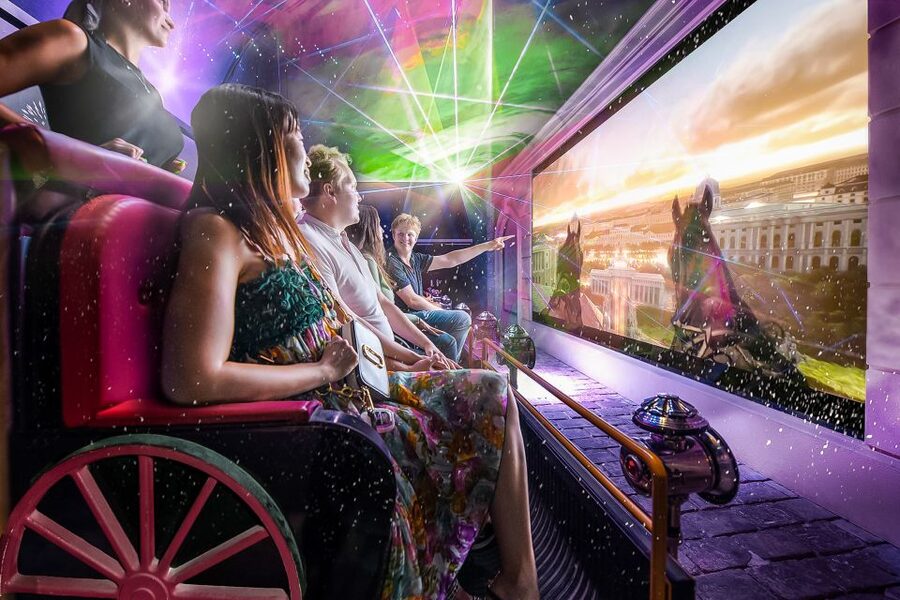
The tour finishes with a simulated flight over Vienna. The closing sequence presents a virtual horse-drawn carriage ride over the roofs of the modern city.
It is a cheerful way to return to the present after the darker wartime scenes. The effect gives you a broad visual look at Vienna without requiring a climb to a viewpoint or a separate sightseeing trip.
Do not expect a substitute for seeing the city in person. The virtual flight is a finale, not a detailed orientation map. Still, it gives the hour a proper ending and reinforces the link between Vienna’s past and the city you are about to explore outside.
If you are using this attraction as your first activity, the final flight can help you get a general sense of the city before heading into the streets. If you are visiting late in your trip, it works more like a playful farewell.
Is $27 a fair price for one hour?
At about $27 per person, the attraction is not the cheapest way to spend an hour in Vienna. You can walk through the old center for free, and many major museums offer more substantial historical collections.
The value comes from the variety. Your admission includes the route through the historic rooms, the multilingual audio guide, the 5D cinema, the portrait gallery, the VR music experience, the wartime shelter scene, the postwar presentation, and the virtual flight.
I consider the price reasonable for families and for visitors who want an activity that works across age groups. You are paying for production, effects, and convenience as much as for historical information.
It is less compelling for someone who wants original artifacts, long explanations, or a scholarly tour. In that case, put the money toward a major museum or a guided city walk. For a compact, weather-proof introduction with plenty of visual stimulation, the hour is used well.
The attraction also offers free cancellation up to 24 hours in advance and a reserve-now, pay-later option. Discounts require appropriate identification. Those policies give you some flexibility, but reservations are still advised because the experience has scheduled entry times.
Who will enjoy this most?
I would recommend Time Travel Vienna to families, first-time visitors, and anyone who wants a quick introduction before tackling the city’s palaces and museums. It is also a good rainy-day choice because the full route takes place indoors.
Children are likely to respond to the motion effects, virtual reality, changing rooms, and final flight. Teenagers may appreciate that the history is presented through technology rather than a long talk.
Adults who enjoy historical storytelling but do not want to spend several hours in a museum should also find it useful. The one-hour length is a major advantage. You get a clear outline of Vienna’s past without giving up most of your afternoon.
I would be cautious if you dislike theatrical effects, have difficulty with stairs, or need a fully accessible attraction. You should also avoid bringing pets, and video recording is not allowed.
How to fit it into a Vienna day
The central address makes this easy to pair with nearby sights. You could visit Time Travel Vienna before the Hofburg, then continue to the imperial rooms with the broad historical background already in place.
Another practical pairing is Sisi’s Amazing Journey across the street. Together, the two attractions create a fuller look at the Habsburg world and Vienna’s imperial image.
You can also schedule it near Stephansplatz and Graben. See the cathedral and central streets first, step indoors for the one-hour presentation, then continue toward the Hofburg or Kohlmarkt.
I would choose an early visit if you want historical context for the rest of your stay. If you are already tired from museums, the compact format gives you a change of pace without requiring a full evening.
Should you book Time Travel Vienna?
Book it if you want a lively one-hour introduction to Vienna, especially with children or a mixed-age group. The 5D cinema, VR music sequence, portrait gallery, bomb shelter setting, Chancellor Figl presentation, and virtual flight create enough variety to keep the hour moving.
Skip it if your priority is original objects, detailed scholarship, live guiding, or step-free access. The attraction simplifies complex subjects and depends heavily on recorded narration and technology.
For most first-time visitors who want to understand Vienna before exploring its streets, I think the experience earns its place in the schedule. Reserve ahead, allow for the stairs, and use it as a starting point rather than the final word on the city’s past.
FAQ
How long does the Vienna Time Travel experience take?
The experience lasts about one hour.
Where is Time Travel Vienna located?
It is located at Habsburgergasse 10A in Vienna’s 1010 district, in the historic city center.
How close is it to the main central sights?
The attraction is about 200 meters from the Hofburg and about 100 meters from Graben, Kohlmarkt, and Stephansplatz.
How can I reach Time Travel Vienna by underground?
You can use U1 to Stephansplatz or U3 to Herrengasse.
Is an audio guide included?
Yes. A multilingual audio guide is included with admission.
Does the experience include virtual reality?
Yes. The Viennese music history section uses virtual reality glasses.
Is the attraction accessible for wheelchair users?
No. The route has two levels and about 50 steps, with no elevator. Wheelchair users cannot be admitted because of the building’s structural restrictions.
Can I cancel my booking?
You can cancel up to 24 hours in advance for a full refund. A reserve-now, pay-later option is also available.
Just added in Vienna
- 3 hour private tour in Vienna by private car★ 4.4 · 6 reviews
- Private Christmas Markets Walking Tour Vienna★ 5.0 · 31 reviews
- Christmas Markets & Shopping in Vienna★ 5.0 · 17 reviews
- Christmas Market Vienna Tour★ 4.0 · 53 reviews
- Vienna: Christmas Markets Tour★ 4.3 · 99 reviews
- Vienna Residence Orchestra: Mozart and Strauss Concert★ 4.0 · 137 reviews
- Vienna: Bus Tour with Virtual Reality Experience★ 4.7 · 148 reviews
- Vienna: A Little Night Music – Concert at Capuchin Church★ 4.8 · 145 reviews
Historical Tours, compared.
Vienna Historic Center Small Group Walking Tour
Read our review →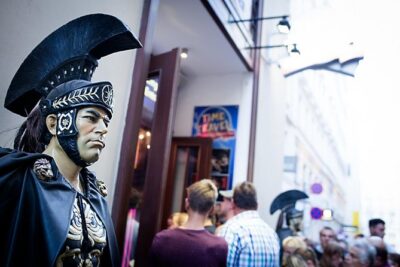
Skip-the-Line Schonbrunn Palace Guided Tour and Vienna Historical City Tour
Read our review →
Vienna Mozart Concert in Historical Costumes at the Musikverein
Read our review →
Browse the lists this tour appears in