
Reviewed · WALKING TOURS
Vienna: World War II Historical Walking Tour
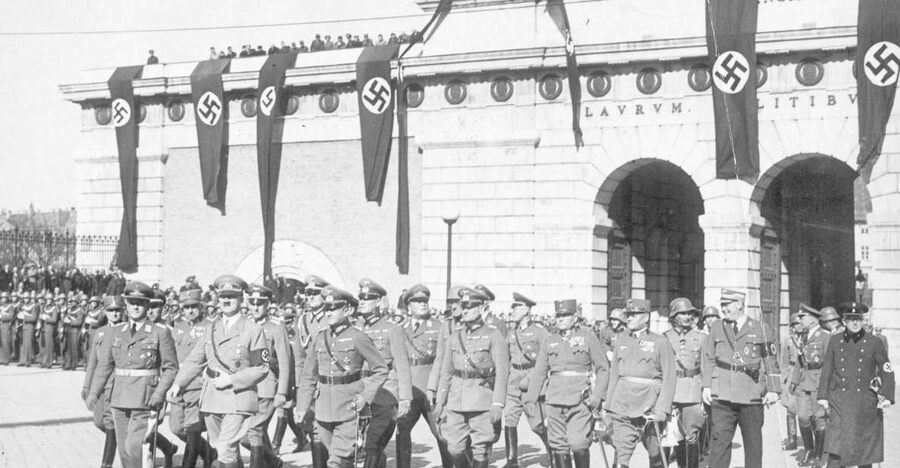
Vienna’s WWII story is not tucked away in a distant museum. It is written into the city center, from the elegant Albertina and Opera House to a synagogue that survived the Nazi period and a stark Holocaust memorial. This tour connects those places to the political climate that shaped Hitler’s early years and Vienna’s response to Nazism.
I like the Austrian perspective and the way guides such as Dieter, Stefan, Michael, Wolfgang, and Siggi explain events rather than simply recite dates. I also like the practical use of headsets, which lets you hear clearly while walking instead of crowding around a guide.
The main consideration is the subject matter. This is a serious, emotionally difficult tour, and 150 minutes on city streets requires comfortable shoes and clothing suited to the weather. It also ends away from the Albertina, though a metro stop is nearby.
Key points to know before booking
- Vienna’s only surviving synagogue: See the synagogue that survived the Nazi regime and learn why Vienna’s Jewish community was targeted.
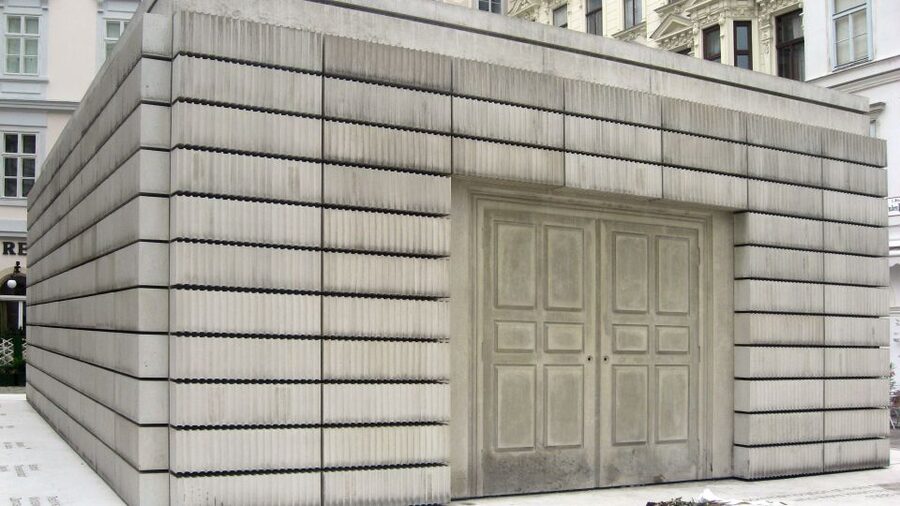
- A Holocaust memorial in the city center: Pause at Vienna’s somber memorial, where the scale of loss is given a physical presence.
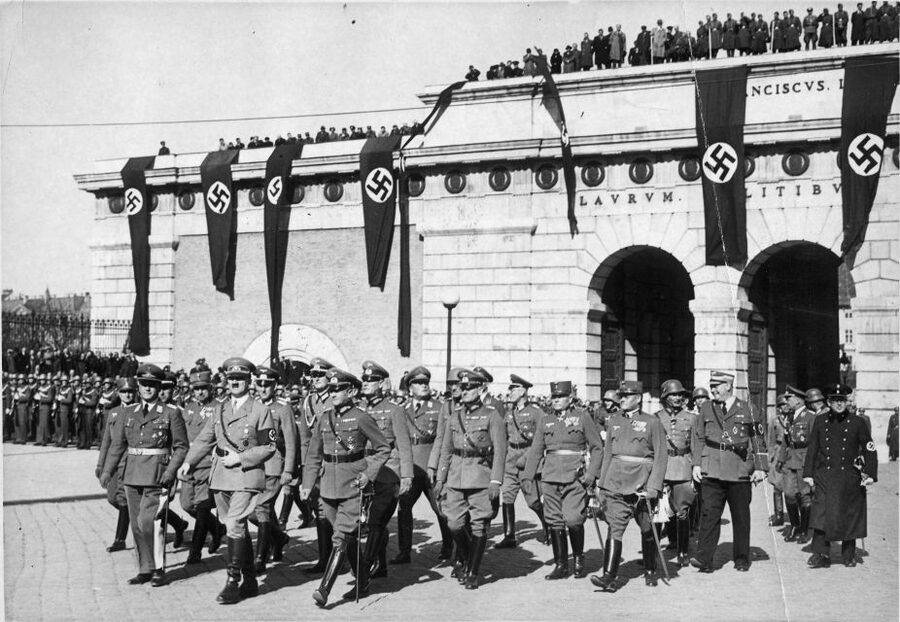
- Hitler’s Vienna years: Follow the social and political setting that influenced the young Adolf Hitler before his rise to power.
- Visible wartime scars: Learn how more than 100,000 bombs affected Vienna and how the city changed after liberation.
- An unusual postwar story: Hear how Vienna was divided among the Allied powers, with all four occupying forces sharing zones in one city.
- A well-supported walking format: Headsets, regular pauses, and occasional indoor shelter make the long route easier to follow.
Starting beside the Albertina and Opera House
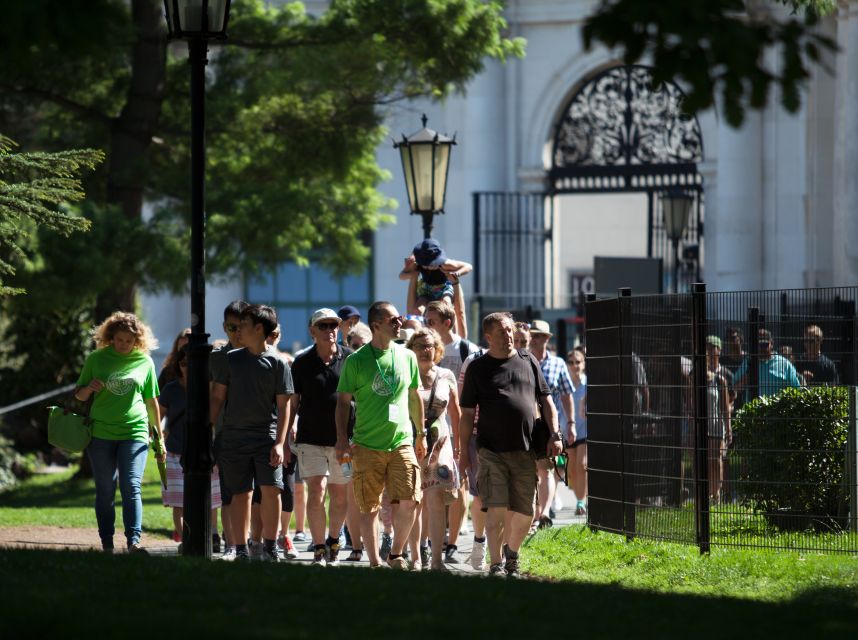
The tour begins in front of the Albertina Museum, at the Albrechtsbrunnen fountain downstairs from the museum and next to the Vienna State Opera. Look for the green umbrella. The closest transport stop is Karlsplatz/Oper, making this an easy starting point from many parts of central Vienna.
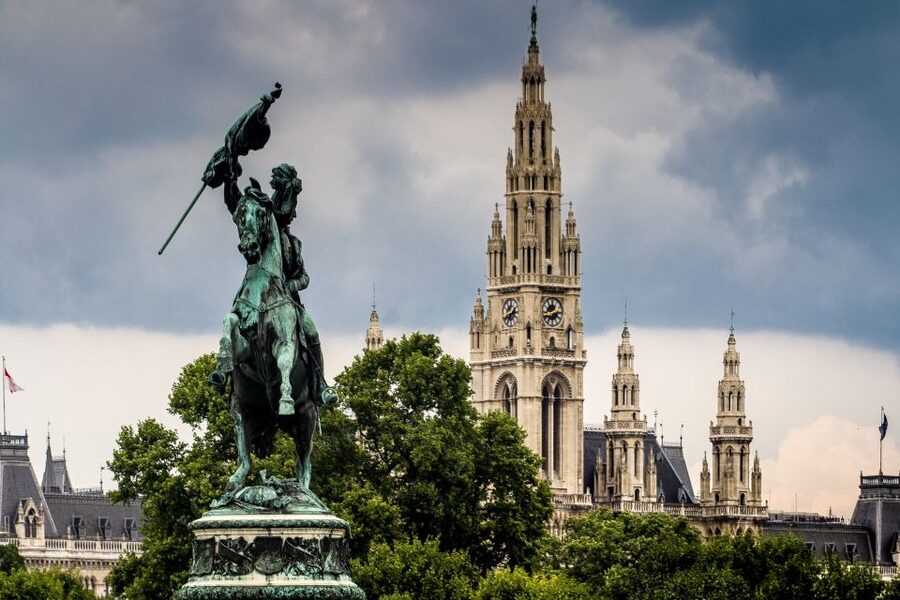
This location is more than a convenient meeting spot. You begin among Vienna’s grandest imperial buildings, then learn how the city’s polished public image existed alongside political anger, ethnic rivalry, and growing antisemitism. That contrast gives the tour its footing from the start.
You should arrive with the meeting point in mind, since the Albertina area has several entrances, stairs, and busy pedestrian flows. The green umbrella is the useful landmark. Once the group gathers, the guide sets out the broad story before moving through the streets.
The tour is conducted in English and lasts 150 minutes. It is a walking tour, not a sequence of paid museum visits, so the price covers the guide and the guided route rather than entrance tickets.
More Walking Tours in Vienna
- Vienna: Guided Walking Tour of City Center Highlights
★ 4.7 · 4,989 reviews - Vienna: Vienna Central Cemetery Guided Walking Tour
★ 4.8 · 3,307 reviews - Vienna: Guided Walking Tour of City Highlights & Hidden Gems
★ 4.9 · 2,180 reviews
Hitler’s early Vienna years and the making of an ideology
One of the tour’s central questions is how a young art student in Vienna became a dictator. The guide does not treat Hitler’s later crimes as if they appeared from nowhere, nor does the tour suggest that Vienna alone explains his actions.
Instead, you get a look at the social and political climate he encountered. The discussion links his early years with the ideas, fears, rivalries, and resentments circulating in the city. That context matters because it helps you understand how extremist beliefs can gain ground in an unstable society.
I appreciate this part most when it stays balanced. Several guides, including Dieter and Wolfgang, have been praised for explaining connections and offering interpretation rather than rattling off isolated facts. That approach is especially useful if you already know the basic outline of Hitler’s life but want to understand the Viennese setting more clearly.
The tour also asks you to think. Guides may pose questions about responsibility, public opinion, and the choices made by individuals and institutions. This keeps the experience from becoming a simple parade of dates and names.
Vienna’s Jewish community and the synagogue that survived
The stop at the surviving synagogue is one of the tour’s most important moments. You see the only synagogue in Vienna that survived the Nazi regime and hear about what happened to the city’s large Jewish community when fear and ethnic rivalry took hold.
The value of this stop is its direct connection between a living religious site and a destroyed community. You are not only hearing that persecution occurred. You are standing in a city where Jewish life had once been a major part of civic life, then was attacked and dismantled.
The tour focuses on the Viennese experience rather than treating Austria as a footnote to German history. That distinction is important. Vienna’s story includes the annexation, local reactions, persecution, deportation, and the ways ordinary people and institutions responded to the changing political order.
Because the tour does not include attraction entrances, do not expect an interior synagogue visit unless the guide specifically indicates otherwise. The advertised experience is a stop at the synagogue and an explanation of its survival and importance from the route.
This is also a point where sensitivity matters. The tone described by guides such as Charles and Florian is serious and considerate, with difficult events handled plainly rather than turned into spectacle. That is the right approach for this subject.
The Holocaust memorial and the weight of absence
Vienna’s Holocaust memorial provides the tour’s most direct place of remembrance. The memorial is somber by design, and the guide uses it to explain the destruction of Jewish life in Vienna and the scale of what was lost.
I find memorial stops most useful when they are given time and context. Here, the memorial is not treated as a quick photograph on the way to the next sight. The guide connects it to the earlier discussion of the Jewish community, helping you understand why the memorial belongs in the center of Vienna and what it asks the city to remember.
You should be prepared for a quieter section of the walk. The tour covers difficult material, including ethnic persecution and the human consequences of fear-driven politics. It is not a light sightseeing outing with a few wartime facts added for flavor.
That seriousness is also why I would place this tour early in a Vienna visit if WWII history is important to you. It gives you a sharper sense of the city before you explore its museums, monuments, and central streets on your own.
More walking routes in Vienna:
- Vienna: Viennese Underworld Guided Walking Tour
★ 4.7 · 1,865 reviews - Vienna Historic Center Small Group Walking Tour
★ 5.0 · 1,746 reviews - Vienna: Private Walking Tour with a Local Guide
★ 4.6 · 1,420 reviews - Vienna: 1.5-Hour Underground Walking Tour
★ 4.9 · 1,146 reviews
Bomb damage and the physical scars of war
The walking route also looks at the effect of more than 100,000 bombs on Vienna. The city center may appear graceful and intact today, but the tour shows how wartime destruction altered buildings, streets, and daily life.
This part is valuable because it moves the story away from famous political figures and back to the city itself. Bombing is not just a military statistic. It affected homes, public buildings, transport, and the people who had to live through the destruction.
You will see wartime scars and remains connected to the conflict, although the exact sequence of stops can vary with the guide and the route. The best guides tie each location to a specific event or consequence, so you understand why a seemingly ordinary building or fragment matters.
Guides have been praised for using old photographs and printed images to compare past and present. That is especially helpful in Vienna, where reconstruction and later development can make wartime damage difficult to spot at first glance.
The walking distance is manageable for many people. One detailed account put the route at about 4 kilometers, with pauses, sitting opportunities, and breaks along the way. Still, it is not a short stroll between two nearby sights. Wear supportive shoes.
Liberation, occupation, and Vienna’s divided postwar city
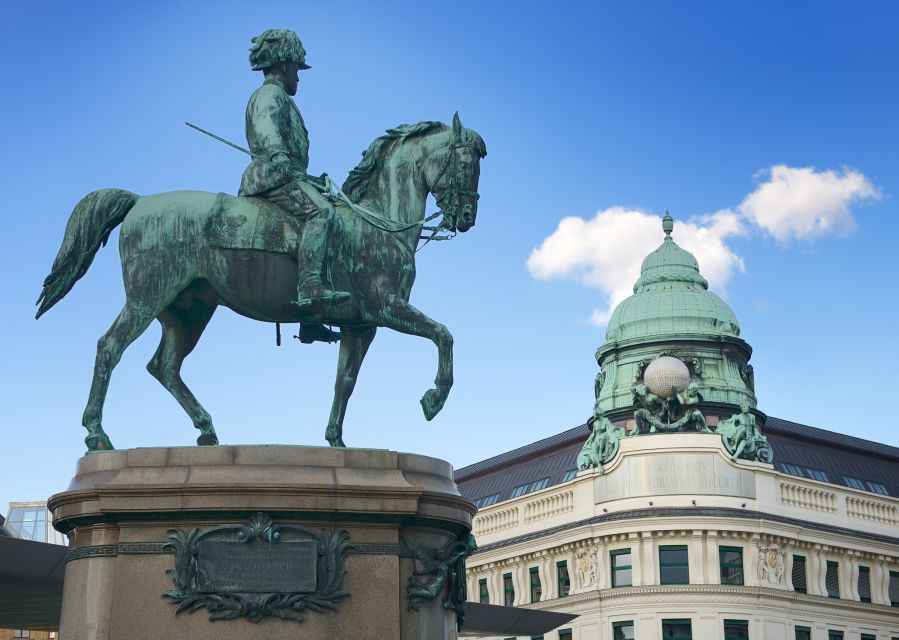
The final part of the tour moves beyond the war itself to Vienna after liberation. The city was divided among the Allied powers, and Vienna became the only city in the world where the Allied powers managed a zone together.
That arrangement gives Vienna a distinctive postwar story. You learn how the city was occupied and divided, then how that division affected public life and the shape of the city. It is a useful reminder that the end of fighting did not mean an instant return to normal life.
This section also helps tie the whole tour together. Hitler’s early years, the annexation, persecution, bombing, liberation, and Allied occupation are not separate chapters. They form a chain of political choices and human consequences that changed Vienna for decades.
The route does not return to the Albertina starting point. A metro stop is close to the end, which makes the finish practical, but you should avoid booking a tight appointment immediately afterward. The tour can run close to its full two and a half hours, especially when the group has questions.
Guides, headsets, and the pace of the walk
The guide is the key part of this experience. Names attached to recent departures include Dieter, Stefan, Michael, Wolfgang, Charles or Charlie, Florian, and Siggi or Sigi. The individual style may vary, but the strongest pattern is clear: expect a guide who explains context, welcomes questions, and treats the subject with care.
Dieter is noted for linking many parts of the story together and for answering questions in a calm, classroom-like way. Stefan is described as a strong storyteller who adds personal family accounts and thought-provoking questions. Wolfgang is praised for placing events in context, while Siggi often uses printed photographs to make historical changes easier to see.
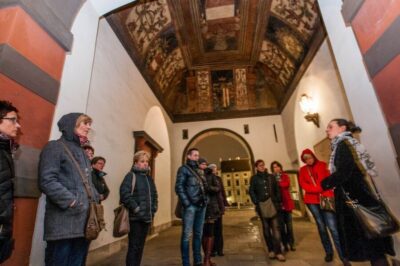
The use of microphones and earpieces is a real advantage. On a city walking tour, traffic, passing pedestrians, and street noise can quickly swallow a guide’s voice. With an earpiece, you can keep a little distance from the guide and still hear the explanation.
The equipment is especially useful for larger groups. It may also help in a small group, since you do not need to stand within a few feet of the guide at every stop.
The pace sounds well judged rather than hurried. Guides build in pauses, and some departures include chances to sit, use a restroom, or take shelter. In bad weather, guides have adjusted the route or paused indoors when possible. That flexibility matters in Vienna, where rain and cold can make a long outdoor tour tiring.
What the $31 price gets you
At $31 per person, this is a reasonable price for a 150-minute guided walk in central Vienna. You are paying for a live English guide, a carefully connected historical route, and access to explanations that would be difficult to assemble from plaques and guidebooks alone.
The value is strongest if you want interpretation. You can visit the Holocaust memorial and walk past wartime buildings without a guide, but you may miss the political links between them. The tour gives you a framework that can make later independent sightseeing more meaningful.
The price does not include attraction entrances or transportation. Since the main experience is outdoors and the listed stops are viewed from the route, this is not a tour for someone seeking a series of museum interiors.
I would also factor in the cost of your time. Two and a half hours is a substantial part of a sightseeing day, but the route covers several connected subjects rather than one narrow monument. If you have a strong interest in WWII, Hitler’s rise, Jewish history, or Vienna after 1945, the time is well used.
Free cancellation is available up to 24 hours before the tour, and you can reserve while paying later. Those policies are useful if your plans are still shifting, but the larger booking decision is whether you want a serious history walk rather than a general introduction to Vienna.
Who should book this Vienna WWII walk?
This tour suits you if you want to understand Vienna through the years from Hitler’s youth to postwar occupation. It is a good choice for history students, teachers, readers of WWII history, and anyone who wants more than grand palaces and classical music during a Vienna visit.
It also works well for first-time visitors. Several stops introduce major parts of the city, and the walk helps you understand how Vienna’s center fits into the events being discussed. I would consider booking it near the beginning of your stay if you plan to spend more time exploring central Vienna afterward.
You should think twice if you dislike long periods of standing or find Holocaust history too upsetting. The route includes pauses and may cover about 4 kilometers, but it remains a walking tour. Comfortable shoes and weather-appropriate clothing are essential.
The language choice is limited to English. That is fine for fluent English speakers, but the subject includes political nuance and difficult terminology, so you should be comfortable following a detailed spoken explanation.
Should you book it?
I would book this tour if Vienna’s WWII story is a real priority for you. The combination of the surviving synagogue, Holocaust memorial, wartime damage, Hitler’s Vienna years, and the unusual Allied occupation gives you a well-connected view of the city.
The strongest reason to choose it is the guide-led interpretation. Dieter, Stefan, Michael, Wolfgang, Charles, Florian, and Siggi have all brought different strengths to the route, from printed photographs to personal family stories and thoughtful questions.
Skip it if you want a relaxed general sightseeing walk or if you mainly want to enter museums. But if you can give 150 minutes to difficult history, $31 buys a useful, serious look at Vienna that you are unlikely to get from sightseeing alone.
FAQ
Where does the Vienna WWII walking tour begin?
It begins in front of the Albrechtsbrunnen fountain downstairs at the Albertina Museum, next to the Opera House. Look for the green umbrella. The nearest subway stop is Karlsplatz/Oper.
How long does the tour last?
The tour lasts 150 minutes, or two and a half hours.
What language is the tour in?
The live guided tour is conducted in English.
Does the tour include attraction entrance fees?
No. Entrance fees are not included. The booking covers the live guide and walking tour.
What major sites are included?
The route includes Vienna’s only synagogue that survived the Nazi regime, the city’s Holocaust memorial, and locations connected with wartime damage and the postwar division of Vienna.
Does the tour discuss Hitler’s time in Vienna?
Yes. The guide explains Hitler’s early years in Vienna and the social and political conditions that influenced his ideology.
Does the tour cover Vienna after WWII?
Yes. You learn about liberation, the Allied occupation, and the way Vienna was divided after the war.
How far do you walk?
The tour is a city walking route. One reported route covered about 4 kilometers over two and a half hours, with stops and pauses.
Can I cancel or pay later?
You can cancel up to 24 hours before the tour for a full refund. Reserve now and pay later is also available.
More Historical Tours in Vienna
- Vienna: Time Travel and Magic Vienna History Tour
★ 4.6 · 3,879 reviews - Time Travel-Magic Vienna History Tour Ticket
★ 4.5 · 1,099 reviews - Skip-the-Line Schonbrunn Palace Guided Tour and Vienna Historical City Tour
★ 3.5 · 940 reviews - Vienna Mozart Concert in Historical Costumes at the Musikverein
★ 4.5 · 888 reviews
Just added in Vienna
- Private Christmas Markets Walking Tour Vienna★ 5.0 · 31 reviews
- Christmas Markets & Shopping in Vienna★ 5.0 · 17 reviews
- Christmas Market Vienna Tour★ 4.0 · 53 reviews
- Vienna: Christmas Markets Tour★ 4.3 · 99 reviews
- Guided Walking Tour of Vienna City Center Highlights★ 5.0 · 150 reviews
- Private Hidden Vienna Walk — Stories Behind Quiet Corners★ 5.0 · 137 reviews
- Konzerte der Wiener Royal Orchester★ 4.5 · 143 reviews
- Mozarthaus Vienna Admission Ticket★ 3.0 · 139 reviews
Walking Tours, compared.
Guided Walking Tour of City Center Highlights
Read our review →
Guided Walking Tour of City Highlights & Hidden Gems
Read our review →
Vienna Historic Center Small Group Walking Tour
Read our review →
Ghosts and Legends Guided Nighttime Walking Tour
Read our review →Browse the lists this tour appears in