
Reviewed · TOURS IN VIENNA
Vienna House of Music Entrance Ticket
The most surprising thing about Vienna’s House of Music is how quickly it turns music from something you listen to into something you can test, shape, and play with. You can make sound creatures, explore how the ear works, study Mozart and Beethoven, and conduct a virtual Vienna Philharmonic performance.
I like the mix of serious musical history and hands-on technology, especially the historic Philharmonic archives and the feedback from the virtual conductor exhibit. I also like that children and adults can use the same displays together. The main consideration is time: an advertised 90 minutes to two hours can pass quickly, especially if you stop at every interactive station.
Key points to know before you go
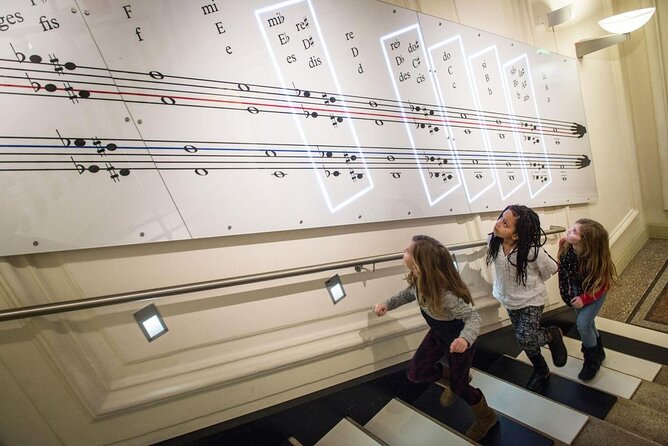
- Create your own sound creature: The new Virtual Reality Sound Lab is part of the Sonotopia Universe and gives the visit a playful, modern edge.
- Conduct a virtual orchestra: Wave a baton along with a Vienna Philharmonic video and receive feedback on your performance.
- Meet Vienna’s composers: Displays on Mozart, Beethoven, Schubert, Mahler, and the Strauss family add context to the city’s musical identity.
- Use the museum at your own pace: This is an admission ticket, not a guided tour, so you decide how long to spend in each room.
- Plan around crowds: Morning hours may be more comfortable, since the museum can become busier in the afternoon and evening.
- Good family value: The exhibits are designed for participation, while adults still get substantial information about music and composers.
Why Vienna’s House of Music feels different
Vienna has no shortage of grand concert halls, composer apartments, and formal music museums. The House of Music takes another route. It explains sound itself, then connects that science to the music created in Vienna.
That makes this a useful stop for more than classical music fans. You can come for Mozart or the Vienna Philharmonic, but you may spend just as much time experimenting with sound, rhythm, hearing, and movement.
I especially like the balance. The museum does not treat children as an afterthought, yet it does not reduce the subject to simple games. A child can enjoy an interactive sound station while an adult reads about orchestral music, composition, or the lives of famous composers nearby.
The ticket costs about $22.93 per person. For a short visit, that may seem a little high compared with a simple city museum. The value improves if you allow close to two hours and use the displays rather than walking through the rooms quickly. You are paying for a self-guided experience with many activities, not just glass cases and text panels.
More to book in Vienna
- Vienna: Classic Ensemble Vienna in St. Peter’s Church Ticket
★ 4.7 · 4,819 reviews - Vienna Kunsthistorisches Museum Day Admission Ticket
★ 4.6 · 3,690 reviews - Vienna: Tickets for Mozarthaus Vienna with Audio Guide
★ 4.2 · 2,344 reviews
Start with the Vienna Philharmonic archives
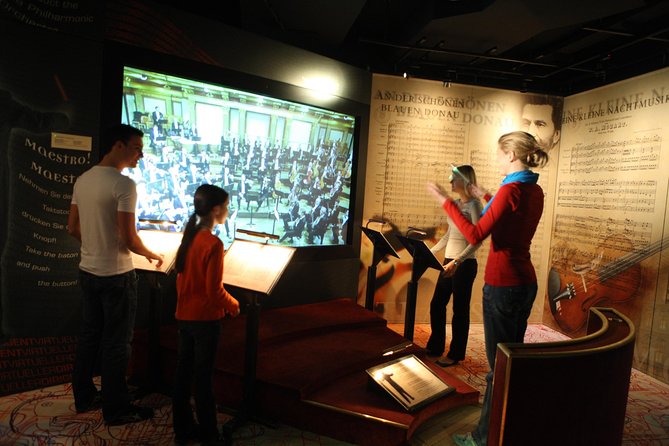
One of the strongest early stops is the section devoted to the Vienna Philharmonic. Here you can explore its historical archives and listen to the orchestra’s famous New Year’s Eve concert.
This gives the museum a firm connection to Vienna’s musical life. Instead of learning about the Philharmonic as a distant institution, you get a sense of its public role and its long association with the city’s concert tradition.
The archive material will appeal most to adults and classical music fans. It is less immediately playful than the sound laboratories, so families may want to let children move ahead and return to this section at their own pace.
The museum works best when you do not rush from floor to floor. If the Philharmonic interests you, take time to listen and read here before moving on. The visit is flexible, so you do not need to follow a guide or keep up with a group.
Test the science of sound on the second floor
The second floor introduces the Sonotopia Universe, including the new Virtual Reality Sound Lab. Here, you can create your own sound creature, a feature that gives the museum its most unusual modern touch.
The point is not simply to put on technology for its own sake. The floor also includes interactive stations about the physics of sound. You can use these activities to think about how sound is produced, carried, heard, and shaped.
This section is particularly useful for families because it gives children something to do with their hands and attention. Adults can use the displays as a quick lesson in acoustics, hearing, and the mechanics behind music.
You may find that this floor takes longer than expected. Interactive exhibits often invite repeat attempts, especially when several people are trying to create or modify sounds. If you are visiting with children, keep some time in reserve rather than treating this as a quick passage to the composer floors.
The free HdM Museums Guide can also help you make sense of the displays. It is available for download on your smartphone in eight languages. A family version is available in German and English, which is useful if you want simpler explanations for younger visitors.
Meet Mozart, Beethoven, Schubert, Mahler, and Strauss
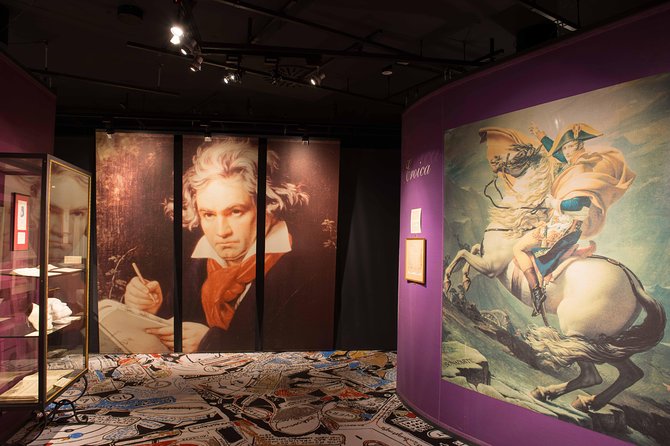
The third floor turns toward the composers most closely linked with Vienna. Exhibits cover Mozart, Beethoven, Schubert, Mahler, and the Strauss family, with information about their lives in the city and the music they created.
I like this part because it gives the interactive technology a human focus. After learning how sound works, you can connect those ideas to real composers, their careers, and the music associated with Vienna.
The composer displays are not limited to one famous figure. Mozart receives particular attention, but the broader selection helps you see that Vienna’s musical identity was built over many generations. The Strauss family also adds a different flavor, connecting the museum to the city’s dance and concert traditions.
If you already know the major composers, you may move through this floor quickly. If you are less familiar with them, it can provide helpful background before attending a concert in Vienna. You will not need specialist knowledge to follow the displays.
Families can split their time here. Children may prefer the nearby interactive stations, while adults read the composer material. That flexibility is one of the museum’s practical strengths.
A different kind of evening in Vienna:
- Vienna: Vivaldi’s Four Seasons Concert in Karlskirche
★ 4.7 · 14,951 reviews - Vienna: Spanish Riding School Training
★ 3.9 · 9,281 reviews - Vienna: Skip-the-cashier-desk-line Giant Ferris Wheel Ride
★ 4.5 · 7,859 reviews - Vienna: Schönbrunn Palace & Gardens Skip-the-Line Tour
★ 4.7 · 7,739 reviews
Conduct the Vienna Philharmonic on the fourth floor
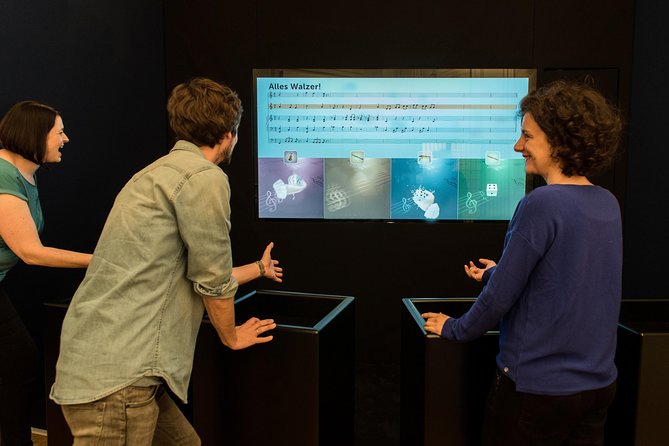
The virtual conductor exhibit is the grand finale of the visit. You wave a baton along with a video of the Vienna Philharmonic, then receive feedback after your attempt.
This is more than a photo opportunity. The display asks you to pay attention to timing, movement, and the demands of leading an orchestra. Even a short try gives you a small sense of how much control a conductor must maintain.
The activity works well for mixed-age groups because people can watch one another and compare results. Children can take it seriously for a few seconds, then laugh at their performance. Adults may find themselves trying again to improve their score or feedback.
If conducting does not interest you, the exhibit still works as a lively final stop. It gives the visit a clear ending after the more academic composer and science displays.
The only drawback is that interactive exhibits can become less enjoyable when several people are waiting. This is another reason to consider visiting in the morning, especially if you want time at the most popular stations.
How long should you allow?
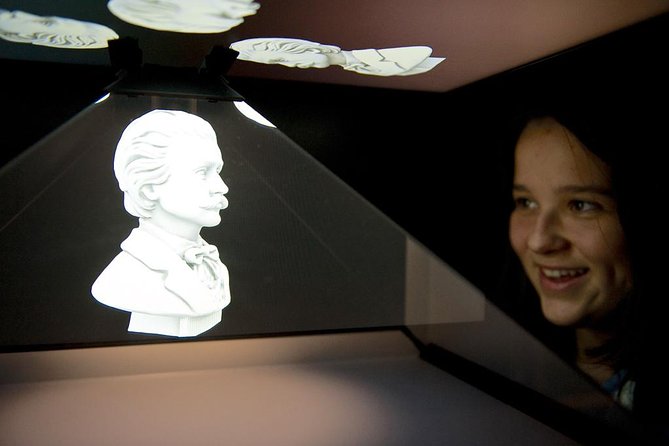
The stated visit time is about 90 minutes to two hours. I would treat 90 minutes as a brisk visit and two hours as a better target if you want to use the exhibits properly.
A fast visit might include:
- The Vienna Philharmonic archives
- A few sound science stations
- The main composer exhibits
- The virtual conducting display
A slower visit can include repeated attempts at the interactive activities, time in the Virtual Reality Sound Lab, listening to archive material, and a fuller look at the composer rooms.
The museum is open daily from 10 a.m. to 10 p.m. during the listed regular periods. On December 24, the hours are shorter, from 10 a.m. to 6 p.m. That long daily schedule makes it easy to fit around a concert, city walk, or other sightseeing.
Still, do not assume that late hours guarantee a quiet visit. The practical advice is simple: choose the morning if you want more room at the interactive displays. Afternoon and evening visits may suit your schedule, but you could spend more time waiting at popular stations.
Is the ticket good value for families?
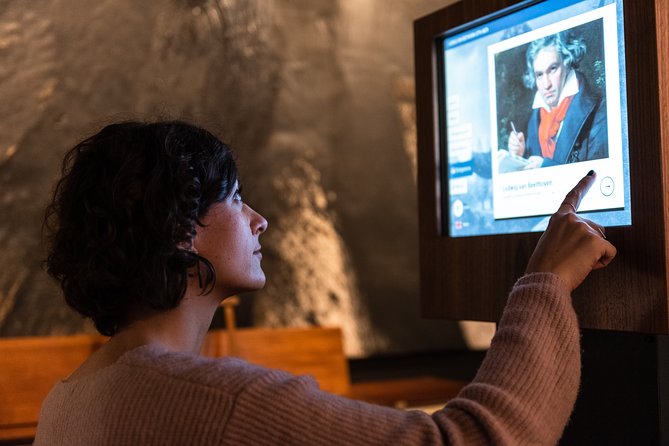
At $22.93 per person, this is not the cheapest short museum visit in Vienna. It can be good value for families because one ticket covers a large number of activities, and the exhibits are not aimed only at adults.
Children can experiment with sound, try the Virtual Reality Sound Lab, and conduct the orchestra. Adults can read about composers, listen to the Vienna Philharmonic, and examine the science behind hearing and music.
The value depends on your pace. If you spend only 30 minutes inside, the price will feel harder to justify. If you stay for the full two hours and take part in several displays, the cost makes more sense.
I would be cautious about booking this solely for a traditional classical music collection. The House of Music is interactive and technology-focused. If you want quiet galleries filled with original manuscripts, portraits, and historical objects, this may not match your expectations.
It is a stronger choice for families, curious first-time visitors, couples with different interests, and anyone attending a classical concert who wants a more active introduction to Vienna’s musical world.
Practical details that affect your visit
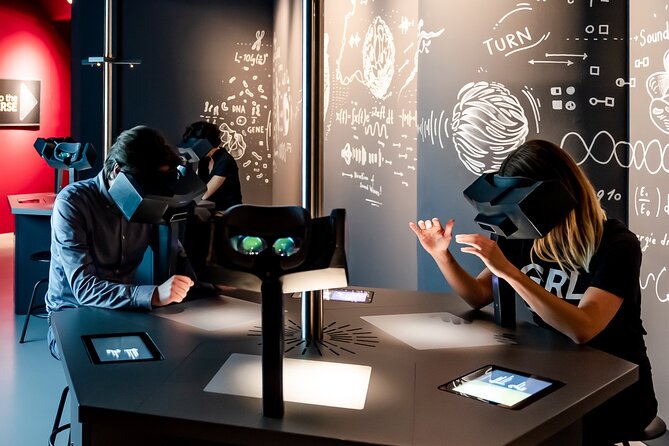
This is an entrance ticket with no guide included. You explore independently, using the free smartphone museum guide if you choose. Since English is offered, English-speaking visitors can use the experience without needing to join a guided group.
You will need your own smartphone if you want to download the museum guide. The guide is offered in eight languages, and the family version is available in German and English.
The House of Music is in central Vienna and is near public transportation. Hotel pickup and drop-off are not included, so you arrange your own way there. Food and drinks are also not included.
Most people can take part, and service animals are allowed. The museum is designed for independent participation, which gives you control over the pace and lets you spend more time on the displays that interest you.
The booking includes free cancellation if you cancel at least 24 hours before the experience start time. Cancellations made less than 24 hours in advance are not refunded, and changes inside that period are not accepted.
Who should book the House of Music?
I would book this if you want a break from formal sightseeing and enjoy exhibits that ask you to participate. It is especially suitable for families with children, since the science stations and conducting display give younger visitors a clear reason to stay engaged.
Classical music fans will appreciate the Vienna Philharmonic archives and the composer floors. The museum also works well before a Mozart, Vivaldi, or other classical concert, since it gives you useful context without requiring a full day.
You may want to skip it if your Vienna schedule is already packed with concert halls, composer residences, and traditional museums. The House of Music is not a substitute for hearing a live orchestra. It is a playful companion to that experience.
Should you book this Vienna music museum?
Book it if you want to do more than look at music from a distance. The strongest reasons are the science of sound, the Philharmonic archive, the Virtual Reality Sound Lab, and the chance to conduct a virtual orchestra.
I would allow two hours, arrive in the morning if possible, and download the smartphone guide before or at the start of your visit. At $22.93, it earns its price when you take part fully. For families and curious music lovers, it is one of Vienna’s more flexible and enjoyable museum choices.
FAQ
How much does the House of Music ticket cost?
The ticket costs $22.93 per person.
How long does a visit take?
The expected visit lasts about 1 hour 30 minutes to 2 hours. You can spend more or less time depending on how many interactive stations you try.
Is the House of Music guided?
No. The ticket provides admission for independent exploration. A free smartphone museum guide is available to download.
Is the museum guide available in English?
Yes. The smartphone guide is available in eight languages. A family version is available in German and English.
Can I conduct an orchestra?
Yes. The fourth-floor virtual conductor exhibit lets you wave a baton along with a video of the Vienna Philharmonic and receive feedback afterward.
What can I do in the Virtual Reality Sound Lab?
You can create your own sound creature in the new Virtual Reality Sound Lab, located within the Sonotopia Universe on the second floor.
Which composers are featured?
The composer exhibits include Mozart, Beethoven, Schubert, Mahler, and the Strauss family.
Is the House of Music suitable for children?
Yes. The museum includes many interactive activities for children, while also providing information for adults and classical music fans.
What are the opening hours?
During the listed regular periods, the House of Music is open Monday through Sunday from 10 a.m. to 10 p.m. On December 24, it is open from 10 a.m. to 6 p.m.
Just added in Vienna
- 3 hour private tour in Vienna by private car★ 4.4 · 6 reviews
- Private Christmas Markets Walking Tour Vienna★ 5.0 · 31 reviews
- Christmas Markets & Shopping in Vienna★ 5.0 · 17 reviews
- Christmas Market Vienna Tour★ 4.0 · 53 reviews
- Vienna: Christmas Markets Tour★ 4.3 · 99 reviews
- The unknown Vienna City- a guided walking tour in 3 hours★ 4.7 · 137 reviews
- Vienna Classical Concert – Strauss in Historic 1837 Hall★ 5.0 · 136 reviews
- Vienna Danube Tower★ 4.0 · 136 reviews
Tours in Vienna, compared.
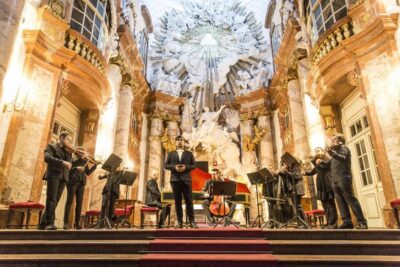
Vivaldi’s Four Seasons Concert in Karlskirche
Read our review →

Skip-the-cashier-desk-line Giant Ferris Wheel Ride
Read our review →
Schönbrunn Palace & Gardens Skip-the-Line Tour
Read our review →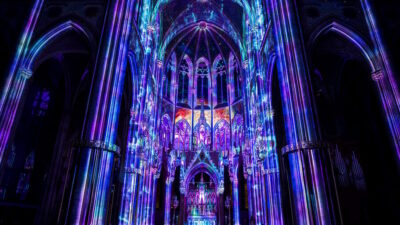
Light of Creation Votive Church Immersive Light Show
Read our review →

Classical Concert in the World-Famous Musikverein
Read our review →
Skip-the-Line Sisi Museum, Hofburg and Gardens Tour
Read our review →Browse the lists this tour appears in