Reviewed · TOURS IN VIENNA
Esterhazy Palace Entrance Ticket
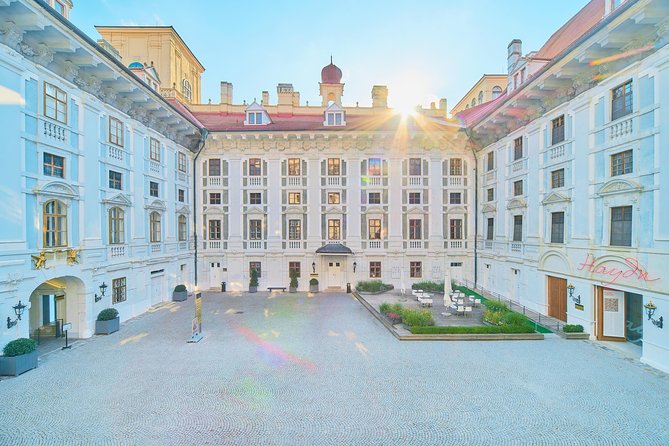
Esterházy Palace gives you two good reasons to leave central Vienna for a palace visit: ornate rooms tied to the Esterházy family, and a substantial look at Joseph Haydn, who worked for the family for more than 40 years. The audio tour lets you set your own pace instead of following a guide’s timetable.
I like the gilded Empiresaal and the hand-painted Chinese wallpaper in the small and large salons. I also like that the visit goes beyond pretty rooms, with interactive displays, Haydn’s personal artifacts, and a wine museum in the palace cellars. The main drawback is that the Haydnsaal may occasionally be closed during events, and the attraction’s listed opening hours are limited to weekends in the stated seasonal periods.
Key points to know before you go
- Haydn takes center stage: Learn how Joseph Haydn’s work developed while he served the Esterházy princes.
- The Empiresaal is the visual highlight: Chandeliers and gilded Empire-style decoration make this former banquet hall especially memorable.
- Chinese salons add variety: Hand-painted Chinese wallpaper gives the palace interiors a distinctive change of mood.
- The cellars tell a different story: More than 700 wine and viticulture objects show the Esterházy connection to winemaking.
- You visit independently: Present your mobile voucher and use recorded commentary as you move through the rooms.
- Plan around the schedule: The supplied hours list Saturday and Sunday visits from 10:00 a.m. to 4:00 p.m. during the stated February to March periods.
Why Esterházy Palace is worth your time
Many palace visits become a parade of grand rooms with little sense of the people who used them. Esterházy Palace avoids that problem to a degree. The rooms matter, but the visit also explains the family’s cultural life and the long relationship between the Esterházy princes and Haydn.
For me, that combination gives the ticket more value than a simple walk through decorated interiors. You see how an aristocratic household presented itself, then shift to the working life of a composer who spent decades in its service. The palace is not only a backdrop. It is part residence, part performance setting, part museum, and part record of local wine production.
The visit is self-guided, so you can pause when a room catches your attention. The audio narration supplies the basic story while you look around. That format suits people who prefer not to move in a tight group, though it also means you will not have a live guide available to answer follow-up questions.
At about one to two hours, this is a manageable addition to a day of sightseeing. You get enough time for the main rooms, Haydn displays, and cellar museum without committing to an all-day excursion. If you read every label and take your time with the exhibits, plan toward the longer end of that estimate.
More to book in Vienna
- Vienna: Classic Ensemble Vienna in St. Peter’s Church Ticket
★ 4.7 · 4,819 reviews - Vienna Kunsthistorisches Museum Day Admission Ticket
★ 4.6 · 3,690 reviews - Vienna: Tickets for Mozarthaus Vienna with Audio Guide
★ 4.2 · 2,344 reviews
Starting with the palace interiors
The main interior route takes you through the bel étage, the formal floor designed for display and important guests. Here, you can see art-historical objects from the Esterházy collection and rooms built to impress.
The Empiresaal is the natural focal point. This former banquet hall uses gilded decoration, elegant chandeliers, and 19th-century Empire style to create the kind of formal setting that makes you slow down. The room is not subtle, and that is part of its appeal. It shows how the palace’s owners used architecture, light, and decoration to signal status.
You will also enter the small and large Chinese salons. Their hand-painted Chinese wallpaper gives them a more intimate character than the banquet hall. These rooms are a useful reminder that palace design was not limited to one style. Fashion, collecting, and fascination with distant cultures all shaped the interiors.
The palace chapel brings yet another visual shift. Its design incorporates several styles, and it contains the reliquary of Saint Constantine. The chapel is likely to appeal most to visitors who enjoy seeing how religious spaces fit into aristocratic residences. It also breaks up the sequence of reception rooms with a quieter, more devotional setting.
The audio commentary is useful here because decorative details can blur together if you only walk from room to room. Listen for the purpose of each space and the people connected with it. The palace becomes easier to understand when you consider who entered a room, what happened there, and why it was decorated in that particular way.
Melinda Esterházy and the first-floor story
The first-floor tour focuses on Melinda Esterházy, described as a remarkable and strong personality. This gives the palace visit a more personal angle. Instead of treating the Esterházy family as a single noble name, the tour places one individual at the center of the story.
That focus can help you read the rooms differently. Formal interiors tell you about wealth, but personal stories show how people lived within that world. As you move through the first floor, the audio guide connects Melinda with the palace and its collection.
The information provided does not give a full account of every room or display, so you should expect the audio narration to carry much of the interpretation. If you prefer a museum where every object has a long written explanation, bring patience and give yourself time to listen.
Still, this part of the route is valuable because it prevents the visit from becoming only a collection of furniture and wall coverings. You get a human figure to keep in mind as you move through the formal spaces.
Joseph Haydn’s 40 years with the Esterházy princes
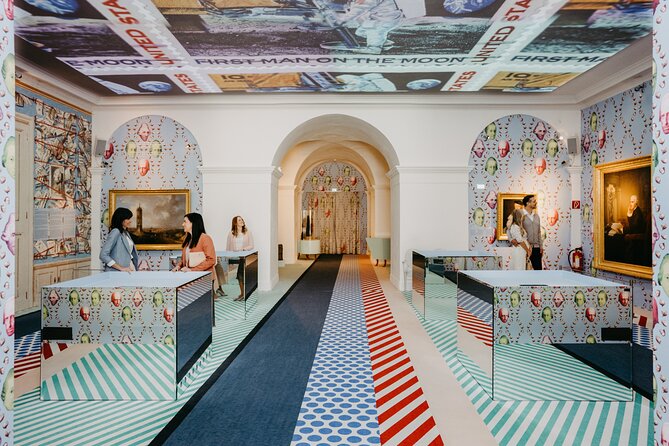
The ground-floor section shifts the focus from aristocratic rooms to music. Joseph Haydn served the Esterházy princes for more than 40 years, and the exhibits explain his early life, his development, and his work as a composer and music director.
This is the strongest part of the visit for anyone interested in classical music. You can see personal artifacts, documents, and instruments connected with Haydn. Interactive displays and installation-style exhibits make the subject more approachable than a standard line of framed portraits and printed dates.
The displays are especially useful if you know Haydn mainly by name. They help explain how he moved from an early life of musical training toward the career that made him a major composer. You do not need to arrive as a specialist. The audio commentary and interactive stations provide a basic path through the story.
The setting also matters. Haydn was not simply a visiting celebrity who passed through the palace. He worked within the Esterházy household for decades. That long service shaped the music he wrote, the audiences who heard it, and the practical duties expected of him.
This section gives the palace a working purpose. The rooms upstairs show ceremonial wealth. The Haydn displays show the labor behind the music, including the instruments, documents, and professional role of a composer employed by a powerful family.
A different kind of evening in Vienna:
- Vienna: Vivaldi’s Four Seasons Concert in Karlskirche
★ 4.7 · 14,951 reviews - Vienna: Spanish Riding School Training
★ 3.9 · 9,281 reviews - Vienna: Skip-the-cashier-desk-line Giant Ferris Wheel Ride
★ 4.5 · 7,859 reviews - Vienna: Schönbrunn Palace & Gardens Skip-the-Line Tour
★ 4.7 · 7,739 reviews
Entering the Haydnsaal
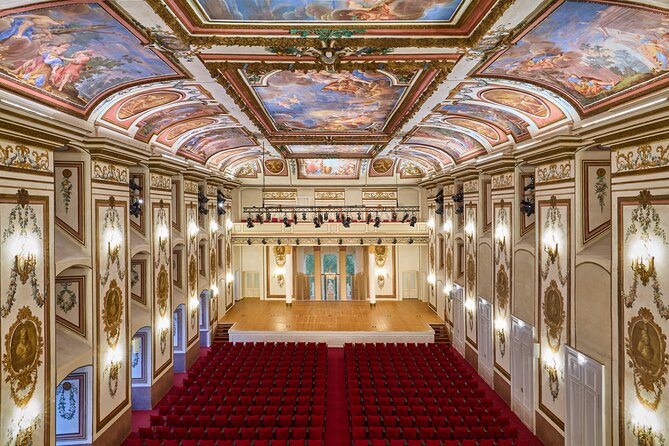
The Haydnsaal is one of the visit’s most important spaces. It is an elegant salon where many of Haydn’s pieces were first heard. Seeing the room after learning about Haydn’s service to the Esterházy princes gives the music a physical setting.
You can imagine the room as a place of performance rather than merely another decorated salon. The architecture and atmosphere help connect the composer’s career to the palace itself. For music lovers, this may be the emotional high point of the tour.
There is one practical warning: the Haydnsaal can occasionally have restricted access because of ongoing events. Do not build your entire decision around seeing this room. The rest of the palace and the Haydn collection remain important, but the possible restriction is worth knowing before you book.
If the hall is open during your visit, take a few quiet minutes there rather than rushing through for a photograph. The value is not only in the decoration. It is in understanding that this was a place where Haydn’s music was heard in the setting connected to his long career.
Going below ground to the Wine Museum
The palace cellars are more than a side attraction. They are over 300 years old and hold more than 700 objects linked to wine and viticulture. The collection includes historic barrels and Burgenland’s oldest Baumpresse, a traditional wine press.
This section changes the pace of the visit. After formal rooms and musical displays, you move into a practical world of agriculture, storage, tools, and production. The wine museum shows how the Esterházy story also involved land, harvests, and local trade.
I like this addition because it gives the palace a stronger connection to the surrounding region. Noble households depended on more than grand rooms. They also managed estates and products, including wine. The cellar displays bring that less polished side of palace life into view.
The wine museum may be less immediately dramatic than the Empiresaal, especially if your main interest is architecture. Give it time if you want a fuller picture of the estate. The objects can seem ordinary at first glance, but their age and purpose explain how winemaking operated under the Esterházy princes.
Food and drinks are not included with the admission ticket, so think of this as a museum about wine production, not a tasting experience.
The audio guide and pace of the visit
Your ticket includes admission and recorded commentary for the interior. You make your own way to the palace, present the mobile voucher, and follow the narration through the rooms and exhibits.
This arrangement works well for independent sightseeing. You can stop to study the Chinese wallpaper, linger in the chapel, or spend extra time with Haydn’s instruments without holding up a group. Families may also appreciate the freedom to move at a practical pace.
The tradeoff is that an audio guide depends on your attention. If you skip sections, you may miss the links between the palace rooms, Melinda Esterházy, Haydn, and the wine museum. I would avoid rushing through the palace simply because the route looks compact.
The experience is family-friendly, though children must be accompanied by an adult. The interactive Haydn stations may hold the attention of older children better than a purely decorative palace tour. Younger children may respond most to the chandeliers, unusual rooms, and cellar objects, but the amount they get from the historical explanation will depend on their interest.
Is the $22.83 ticket good value?
At $22.83 per person, the ticket is reasonably priced if you plan to use all parts of the visit. You are not paying only for access to one grand room. The admission covers the palace interiors, audio commentary, Haydn exhibits, and wine museum, with all fees and taxes included.
The value is strongest for visitors who enjoy several subjects at once: architecture, music, aristocratic history, and wine culture. A Haydn enthusiast may find the composer’s artifacts and Haydnsaal worth the price on their own. Someone interested only in quick palace photographs may find the ticket less compelling, especially if the visit is brief.
The length also helps the value calculation. One to two hours is long enough to create a substantial stop without taking over your day. Since transportation, food, and drinks are not included, factor those costs into your plans. You need to arrange your own route to the palace.
The overall rating supplied for the experience is 3.8 out of 5 from 17 reviews. That suggests a generally positive but not universal response. The most enthusiastic praise centers on the beautiful palace setting and gardens, including the rose garden and hedge maze. Those outdoor features may be important to your decision, but the supplied tour details focus mainly on the palace interiors and museum displays, so confirm what is open if the gardens are a priority.
Timing, transport, and booking advice
The attraction is near public transportation, but transportation to and from the site is not included. You are responsible for reaching the palace and allowing enough time for the return journey.
The listed opening hours are Saturday and Sunday from 10:00 a.m. to 4:00 p.m. for February 21 through March 31, 2026, and again for February 21 through March 31, 2027. These are narrow seasonal hours, so check the date carefully before making plans.
The experience is often booked well in advance, with an average booking time of 41 days. That does not guarantee that every date sells out, but it is a useful signal for planning. If you are visiting during a fixed weekend, booking early gives you more control over your schedule.
Free cancellation is available when you cancel at least 24 hours before the start time. Changes or cancellations made within 24 hours are not accepted for a refund. The cut-off uses local time.
Who should book this palace visit?
I would choose this experience if you want a self-guided cultural stop with more substance than a quick look at aristocratic decoration. It suits classical music fans, families with older children, and visitors who like to connect rooms with the people who used them.
It also works for anyone who wants variety. In one visit, you get Empire-style interiors, Chinese salons, a chapel, a composer’s story, a performance room, and old wine-making tools. That range keeps the experience from feeling repetitive.
You may want to skip it if you have only a short time in Vienna and do not want to travel beyond the city center, or if your schedule does not fit the limited weekend hours listed for the seasonal periods. You should also keep your expectations realistic about the Haydnsaal, since access can occasionally be restricted during events.
Should you book Esterházy Palace?
Book it if the idea of seeing Haydn’s working world appeals to you, or if you like palace visits that mix grand rooms with practical local history. The Empiresaal, Chinese salons, Haydn exhibits, and old wine cellars give you a varied visit for a moderate admission price.
I would treat the gardens as a useful bonus rather than the main reason to buy this particular ticket, since the core experience centers on the palace and museum route. Check the opening date, confirm the Haydnsaal situation if it matters to you, and allow the full two hours if you want to listen properly.
FAQ
What does the Esterházy Palace ticket include?
The ticket includes palace admission, an audio guide with recorded commentary, and all fees and taxes. The visit covers the palace interiors, Haydn exhibits, and the wine museum.
How long does the visit take?
The experience lasts approximately one to two hours, depending on how long you spend with the rooms, audio commentary, Haydn displays, and wine museum.
Is transportation included?
No. You make your own way to Esterházy Palace, and transportation to and from the attraction is not included.
Is the ticket available on a mobile device?
Yes. The experience provides a mobile ticket, and you present the voucher for admission and the audio guide.
What are the listed opening hours?
For February 21 through March 31, 2026, and February 21 through March 31, 2027, the listed hours are Saturday and Sunday from 10:00 a.m. to 4:00 p.m.
Can I visit the Haydnsaal?
The Haydnsaal is part of the palace experience, but access may occasionally be restricted because of ongoing events.
Can I cancel for a refund?
Yes. You can receive a full refund if you cancel at least 24 hours before the experience start time. Cancellations and changes made less than 24 hours before the start time are not accepted.
Just added in Vienna
- World War II History Vienna Old Town Private Walking Tour★ 4.8 · 9 reviews
- Vienna: Wiener Schnitzel and Strudel Cooking Class★ 4.9 · 126 reviews
- Vienna: Wine Tasting Tour★ 4.8 · 61 reviews
- Vienna: Winery and Wine Tasting Tour with a Wine Expert★ 5.0 · 5 reviews
- Vienna: Wine Tasting E-Bike Tour★ 4.9 · 46 reviews
- Vienna: Wine Tasting at Schönbrunn Palace★ 4.3 · 71 reviews
- Vienna Urban Art Tour: Explore a different side of Vienna!★ 3.8 · 14 reviews
- Vienna: Unforgettable Private City Tour★ 5.0 · 7 reviews
Tours in Vienna, compared.
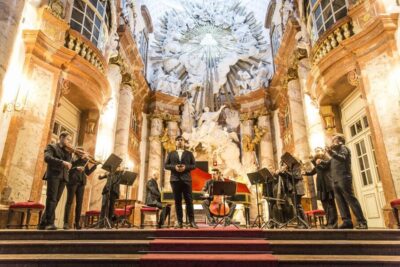
Vivaldi’s Four Seasons Concert in Karlskirche
Read our review →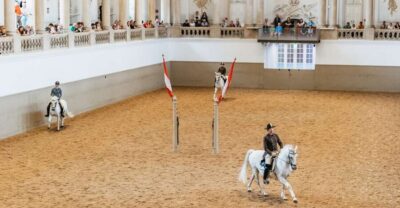

Skip-the-cashier-desk-line Giant Ferris Wheel Ride
Read our review →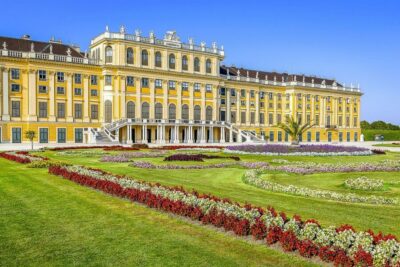
Schönbrunn Palace & Gardens Skip-the-Line Tour
Read our review →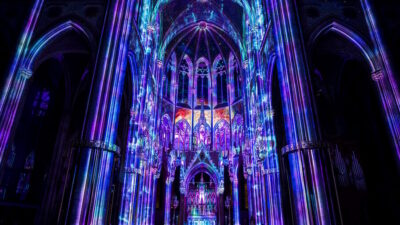
Light of Creation Votive Church Immersive Light Show
Read our review →
Classical Concert in the World-Famous Musikverein
Read our review →