Reviewed · TOURS IN VIENNA
Vienna: Sightseeing Tour in a 1920s Classic Style Car
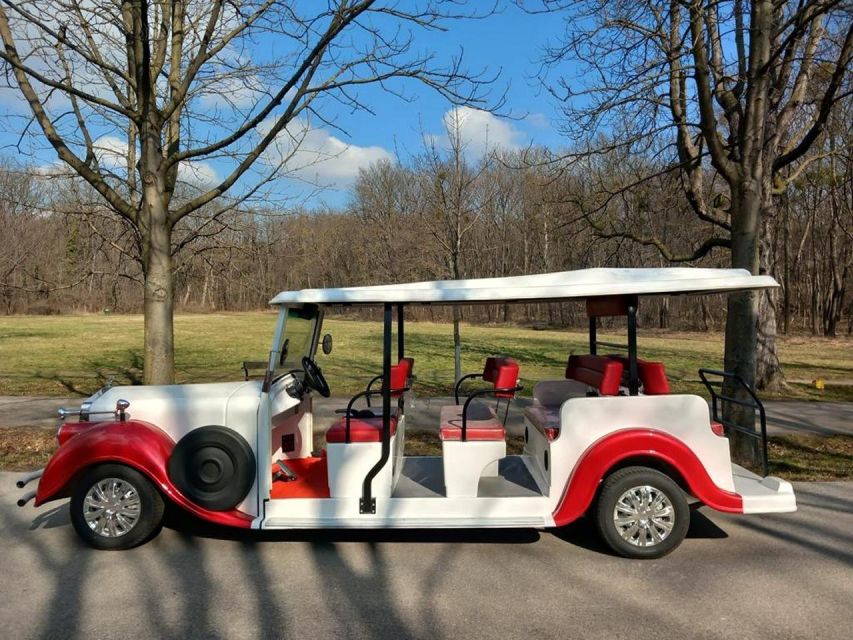
Vienna’s grand center is made for a slow, polished tour, and this one lets you see it from a 1920s-style electric old-timer without walking the full circuit. You roll past imperial buildings, music halls, grand cafés, and famous monuments while your driver explains what you are seeing.
I like two things here: the car keeps your whole group together, with space for up to 10 people, and the electric motor gives you the old-fashioned look without exhaust fumes. The one-hour route also packs in a remarkable number of sights, from the Hofburg to Stephansdom and the Ringstraße.
The main caution is that one hour goes quickly. This is a broad orientation tour, not a series of museum visits, and admission fees are not included. Also, the supplied meeting information gives two different starting points, so confirm the exact pickup address before you set out.
Key points about Vienna’s electric old-timer tour
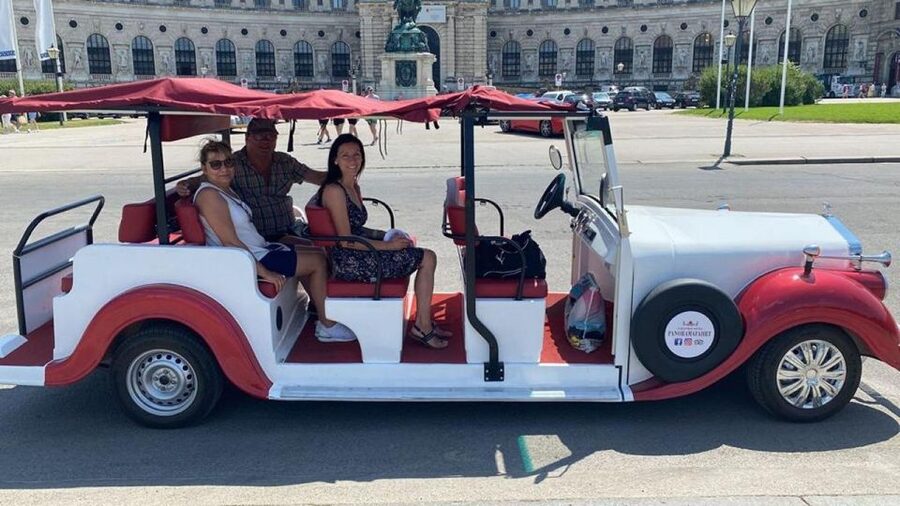
- A private car for up to 10 people: The flat group price can be good value when several family members or friends share the ride.
- A 60-minute central Vienna circuit: You pass the Hofburg, State Opera, Stephansdom, museums, palaces, monuments, and major cafés.
- Electric rather than petrol-powered: You get the nostalgic appearance of a classic car with an emission-free ride.
- English or German commentary: Your driver provides live explanations during the journey.
- Weather-friendly sightseeing: The covered car lets you continue sightseeing when walking conditions are poor.
- A guide who adds personality: Manuel is specifically praised for combining historical information with humor and a relaxed manner.
Why this classic car is a smart way to see Vienna
Vienna rewards close looking, but its central sights cover a large area. The Hofburg, Ringstraße, Stephansdom, Stadtpark, Musikverein, and State Opera are all walkable in theory, yet seeing them in one hour on foot would mean rushing. This car gives you a useful first look without asking you to spend the morning marching from one monument to the next.
The appeal is not speed. The car is a sightseeing platform, a compact one that places you close to the streets and façades. You can look up at the imperial buildings, take photographs, and listen as the driver links each place to Vienna’s culture and past.
I especially like the balance between nostalgia and practicality. The old-timer style gives the ride a sense of occasion, while the electric engine keeps it emission-free. You are not simply being driven around in a standard van with a retro name attached to it.
This works particularly well for a family group. The vehicle can carry up to 10 people, so nobody needs to split up into separate taxis or arrange several smaller rides. At $282 per group, the arithmetic is much more favorable for a full group than for one or two people. With 10 passengers, the cost works out to about $28.20 per person. For a couple, the same flat price is a much bigger commitment.
More days out of Vienna:
- Vienna: Vivaldi’s Four Seasons Concert in Karlskirche
★ 4.7 · 14,951 reviews - Vienna: Spanish Riding School Training
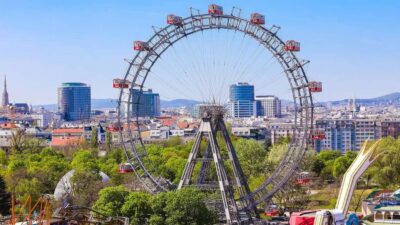
★ 3.9 · 9,281 reviews - Vienna: Skip-the-cashier-desk-line Giant Ferris Wheel Ride
★ 4.5 · 7,859 reviews
Beginning at Vienna’s grandest boulevard
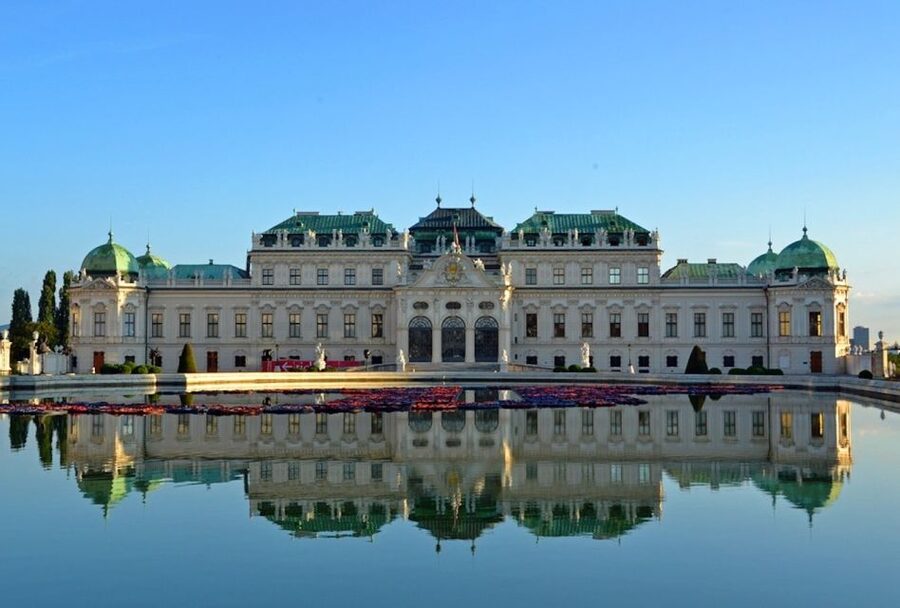
The route takes in the Ringstraße, the broad ceremonial road that circles much of central Vienna. It is one of the best places to understand the city’s imperial scale. Along this circuit you see public buildings, palaces, monuments, museums, and elegant hotels gathered within a fairly compact area.
The tour includes the State Opera, or Staatsoper, one of Vienna’s most famous music landmarks. You also pass the Albertina, the Academy of Fine Arts, the Goethe Monument, the Schiller Monument, and the Burggarten.
The Burggarten leads to several appealing stops. The Palmenhaus is a grand glasshouse, while the nearby Butterfly House adds a lighter, more unusual note to the imperial district. The Mozart Monument gives the route a strong musical connection, fitting for a city where composers are part of daily identity rather than just museum subjects.
You will also pass the Neue Burgtor and Heldenplatz before reaching the Hofburg. This sequence helps you see how the old imperial center is arranged. It is not a loose collection of buildings. The monuments, gates, courtyards, and official residences form one large civic setting.
The Hofburg, museums, and imperial Vienna
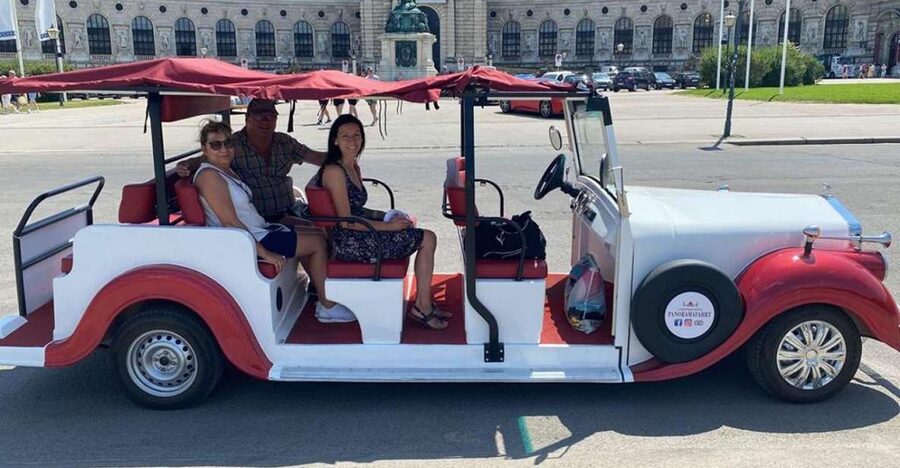
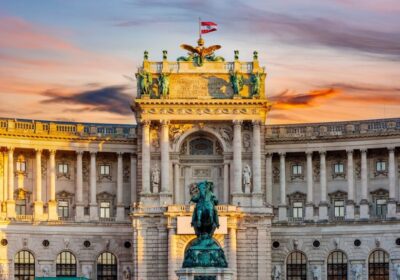
The Hofburg is the visual center of the route. The former imperial complex is spread across several buildings and courtyards, so a short car ride cannot explain every wing in detail. What it can do is show you the scale of the complex and point out the major parts as you pass.
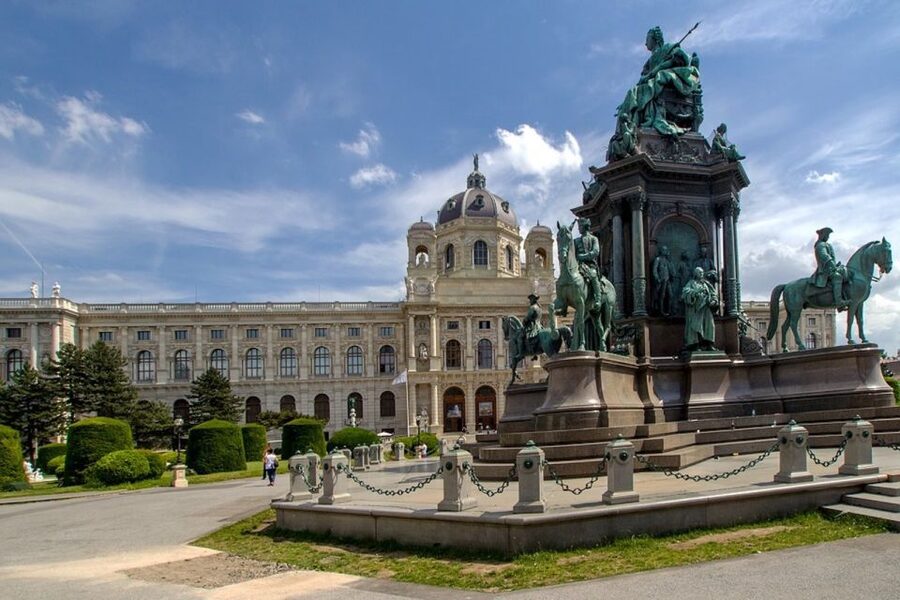
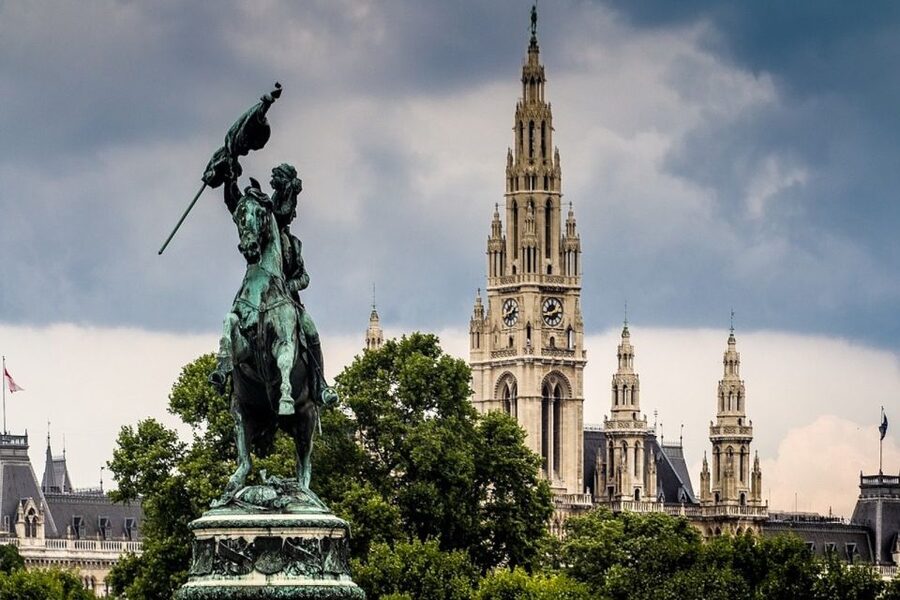
The route includes the Austrian National Library, the Welt Museum, the presidential palace, and statues of Prince Eugene, Archduke Charles, and Maria Theresa. You also see the Natural History Museum and the Kunsthistorisches Museum, facing each other across Maria-Theresien-Platz.
That pair of museums is one of Vienna’s most memorable urban spaces. Their matching façades and central monument make a strong impression from the road. If you plan to enter either museum, treat this tour as a preview. The admission cost is separate, and the one-hour ride is not designed for interior visits.
The car also passes Palais Epstein, the Parliament, the Burgtheater, the Rathaus, and the University. This section shifts from imperial power to the institutions of public life, education, government, and theater. The driver’s commentary matters here because the buildings can look similar at first glance. A few well-timed explanations help you distinguish their roles.
From Am Hof to the Anker Clock
The route then turns through older parts of the city, including Am Hof, Hohe Brücke, Salzgries, Marc-Aurel-Straße, Hoher Markt, and the Wedding Fountain. This is where the tour moves away from the broad ceremonial Ringstraße and into tighter historic streets.
The change in scale is useful. You get a sense of Vienna as more than imperial avenues and giant public buildings. Older streets and squares remain part of the center, and the route links them with landmarks that are easy to miss if you only follow the most famous postcard stops.
At Hoher Markt, look for the Anker Clock. It is one of the route’s more distinctive details, especially for anyone interested in Vienna’s decorative clocks and public art. The clock is easy to overlook when walking with a map and a long list of places, so having the driver point it out is practical.
The tour also includes the Three Girls House, one of Beethoven’s houses, Palais Daum Kinsky, Palais Harrach, Palais Ferstel, and Café Central. These stops bring together music, aristocratic residences, and Vienna’s café tradition.
Café Central is particularly useful as a reference point, even if you do not stop for coffee. Palais Ferstel gives the area an ornate architectural focus, while the surrounding streets show how Vienna’s social and intellectual life developed around cafés and palaces.
A different kind of evening in Vienna:
- Vienna: Schönbrunn Palace & Gardens Skip-the-Line Tour
★ 4.7 · 7,739 reviews - Vienna: Light of Creation Votive Church Immersive Light Show
★ 4.8 · 6,779 reviews - Vienna Spanish Riding School Guided Tour
★ 4.7 · 6,765 reviews - Vienna: Classical Concert in the World-Famous Musikverein
★ 4.6 · 6,673 reviews
Stephansdom and the heart of the city
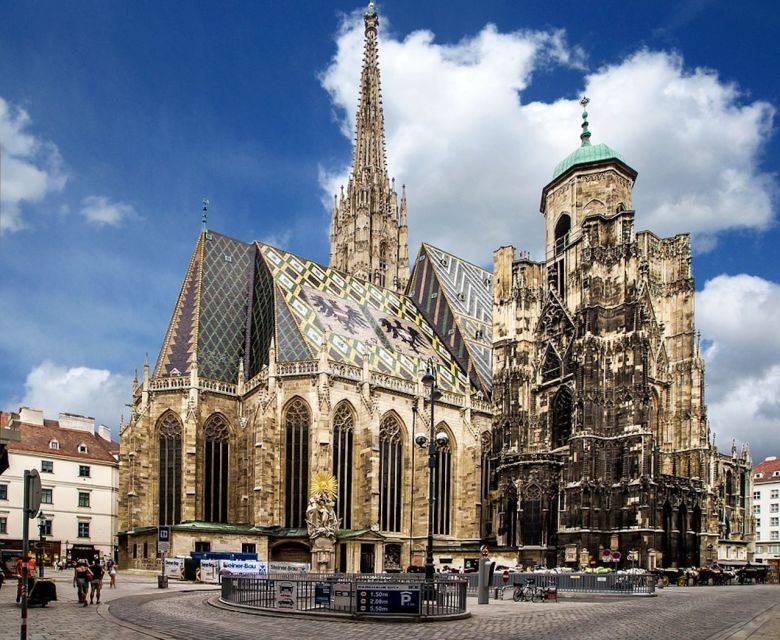
Stephansdom is the great landmark of Vienna’s central district, and the tour reaches it after passing through several older streets. Its roof and tower make it easy to recognize, but the surrounding area is worth seeing as a whole.
The route includes Wollzeile and the Stephansplatz area before continuing toward Stadtpark. This gives you a useful contrast between the religious center of the city and the more open park setting that follows.
Do not expect to examine Stephansdom in the way you would on a dedicated church visit. The car tour is about orientation and views from the street. If the cathedral is high on your list, plan a separate visit for the interior. The same principle applies to the museums and palaces along the way.
Still, the car has an advantage here. You can cover several central areas in a single hour, then return later to the buildings that caught your attention. I find this a better use of a short introductory tour than trying to force every major attraction into one exhausting day.
Music, cafés, and the final stretch
After Stephansdom, the route continues through Stadtpark, where you see the Johann Strauss Monument and the Kursalon Hübner. These stops underline Vienna’s musical identity in a different way from the State Opera and Musikverein.
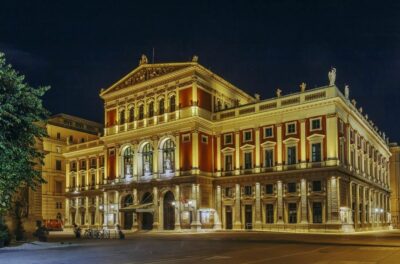
You also pass Schwarzenbergplatz, Café Schwarzenberg, the Musikverein, Hotel Imperial, the Grand Hotel, Hotel Bristol, the State Opera again, and Hotel Sacher. This is a concentrated run of famous names, but it is not just a parade of luxury addresses.
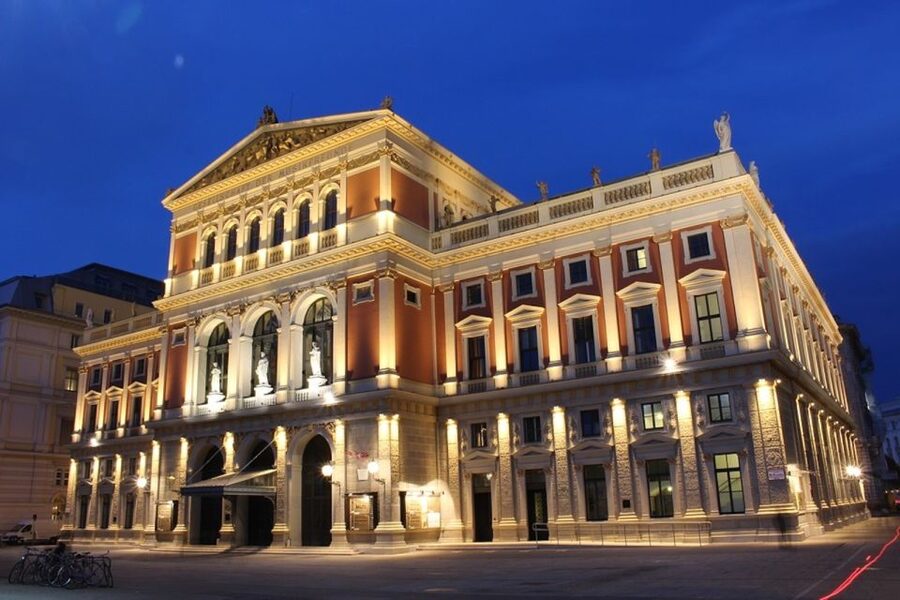
The cafés and hotels help show how Vienna’s public life has long mixed music, dining, travel, and ceremony. Café Schwarzenberg is one of the city’s classic coffeehouse names, while the Musikverein is a major concert landmark. The grand hotels and Hotel Sacher add another layer of polished 19th-century and early 20th-century Vienna.
Because the route returns toward the Albertina, you finish close to where you began. That makes it easier to continue sightseeing on foot, visit a museum, or stop for coffee after the ride.
What the commentary is really worth
The driver provides live commentary in English or German. This is important because the tour includes a long list of buildings, statues, streets, and monuments. Without some explanation, the ride could become a fast visual checklist.
The best feedback points to the human side of the guiding. Manuel is praised for showing the sights with warmth and humor, rather than delivering a stiff script. Another guide is described as fitting a lot of major sights and useful information into a short time.
That balance matters. You need enough context to understand what you are seeing, but not so much detail that you spend the whole ride trying to remember names. One local passenger found that the commentary still produced a few new discoveries, which suggests the tour can work even if you already know Vienna fairly well.
The driver may also add a personal touch. On one birthday outing, the driver played Happy Birthday near the end and encouraged the group to sing. That is not a guaranteed part of the tour, but it shows that the experience can be more personal than a fixed audio loop.
Weather, comfort, and the one-hour limit
The car is designed for sightseeing in different weather conditions, which makes this a useful backup on a rainy or cold day. You can keep the main city circuit on your schedule without committing to a long outdoor walk.
The weather point is not a small one in Vienna. A day that looks easy in the morning can become unpleasant once you have spent several hours crossing open squares and waiting outside attractions. A covered old-timer gives you a way to see the center while saving your walking energy for the places you choose to enter.
The tradeoff is time. Sixty minutes is enough for a strong overview, but not enough for long stops. You should think of this as a moving introduction, not a hop-on, hop-off service. The itinerary names many locations, but the car does not provide admission to them.
If you want detailed architectural study, a slow photo session, or museum time, you will need to continue independently afterward. I would schedule this early in your Vienna visit so the route can help you decide where to spend the rest of your time.
Meeting point and booking details to check
The information supplied for this experience gives two different meeting points. One description says the tour starts and ends at Café Mozart, Albertinaplatz 2, 1010 Vienna. Another gives Herrengasse 12, at the Radisson Blu, as the start and finish.
You should confirm the correct address before booking or before heading out. This is the most important practical detail to settle, since both locations are in central Vienna but are not the same place.
The tour costs $282 for a private group of up to 10 people. That price includes the tour and the driver’s commentary, but not admission fees. It can be sensible for a family or group of friends, especially if you value privacy and want everyone together. It is less attractive for one or two people unless the classic car format is a major part of the appeal.
You can reserve now and pay later, and cancellation is free up to 24 hours before departure for a full refund. Starting times depend on availability, so check the schedule for your date.
Who should book this Vienna tour?
I would recommend it most strongly to families, multigenerational groups, and friends who want a shared activity without a long walk. It also suits first-time visitors who need a clear picture of central Vienna before choosing which buildings to explore properly.
The weather protection makes it useful when conditions are uncertain. The private format also gives your group a more relaxed setting than a large coach, while the electric old-timer gives the ride character.
I would think twice if you are mainly interested in entering museums, hearing a long specialist lecture, or stopping at every landmark. The tour moves quickly, and the value depends heavily on how many people share the $282 price.
FAQ
How long does the Vienna old-timer tour last?
The tour lasts 60 minutes.
How many people can join the private tour?
The old-timer can accommodate a private group of up to 10 people.
What languages are available?
Live tour commentary is available in English and German.
What is included in the price?
The price includes the tour and audio commentary provided by the driver.
Are admission fees included?
No. Admission fees are not included in the tour price.
Is the car electric?
Yes. The experience uses an electric old-timer car, providing an emission-free ride.
Can the tour operate in poor weather?
Yes. The experience is designed for sightseeing regardless of the weather.
Where does the tour start and finish?
The supplied information lists both Café Mozart, Albertinaplatz 2, and Herrengasse 12 at the Radisson Blu. Confirm the exact meeting point before departure.
Can I cancel and receive a refund?
Yes. You can cancel up to 24 hours in advance for a full refund.
Should you book this electric Vienna sightseeing tour?
Book it if you want a comfortable, private overview of Vienna’s central sights, especially with a family or group large enough to share the flat price. The route covers an impressive range, from the Hofburg and Ringstraße to Stephansdom, Stadtpark, the Musikverein, classic cafés, and major monuments.
I would use it as a first-day orientation or a weather-proof way to see the city before exploring selected interiors on foot. Just confirm the meeting point, remember that this is a moving sightseeing tour rather than an admission-based excursion, and judge the price by your group size. For the right party, the electric classic car and personable commentary make a short Vienna introduction feel special without wasting a day.
Just added in Vienna
- World War II History Vienna Old Town Private Walking Tour★ 4.8 · 9 reviews
- Vienna: Wiener Schnitzel and Strudel Cooking Class★ 4.9 · 126 reviews
- Vienna: Wine Tasting Tour★ 4.8 · 61 reviews
- Vienna: Winery and Wine Tasting Tour with a Wine Expert★ 5.0 · 5 reviews
- Vienna: Wine Tasting E-Bike Tour★ 4.9 · 46 reviews
- Vienna: Wine Tasting at Schönbrunn Palace★ 4.3 · 71 reviews
- Vienna: Unforgettable Private City Tour★ 5.0 · 7 reviews
- Vienna Urban Art Tour: Explore a different side of Vienna!★ 3.8 · 14 reviews
Tours in Vienna, compared.
Vivaldi’s Four Seasons Concert in Karlskirche
Read our review →
Skip-the-cashier-desk-line Giant Ferris Wheel Ride
Read our review →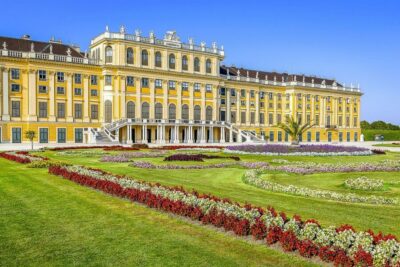
Schönbrunn Palace & Gardens Skip-the-Line Tour
Read our review →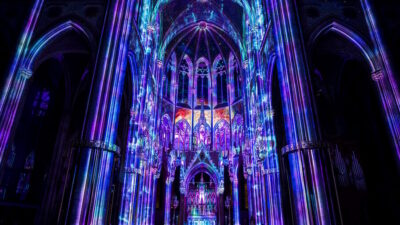
Light of Creation Votive Church Immersive Light Show
Read our review →
Classical Concert in the World-Famous Musikverein
Read our review →