

Reviewed · WALKING TOURS
Vienna: Private Walking Tour of the Central Cemetery
Vienna’s Central Cemetery turns death into a surprisingly revealing lesson in the city’s character. On this two-hour private walk, you’ll move from grand tombs and tragic memorials to a striking Art Nouveau church and a modern forest cemetery. It is part history lesson, part architectural tour, and part Viennese look at how people remember the dead.
I like the private format, which lets your group hear the guide clearly and ask questions without being folded into a large crowd. I also like the range of subjects, from famous graves and the 1881 Ringtheater fire to Soviet soldiers killed in the 1945 Battle of Vienna.
The main limitation is language: the live tour is offered in German. The $217 group price works well for up to 10 people, but a couple traveling alone will pay much more per person than a larger family or small company. You should also budget an extra €3 per person for the required solidarity contribution.
Key points to know before you book
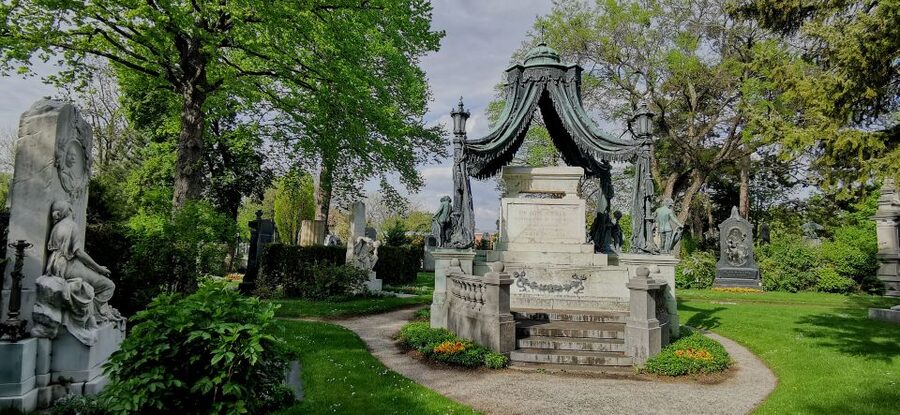
- Christian Pacic leads the private walk: His guiding style combines historical detail, humor, and what several German-speaking participants describe as authentic Viennese charm.
- The meeting point is Gate 2: After entering, look to the right near the water hydrant for your guide.
- You see more than famous graves: The route includes disaster victims, Soviet war dead, the cemetery church, and a modern forest burial area.
- The church is a major stop: Free admission is included, with an explanation of its Viennese Art Nouveau design and architectural past.
- The tour lasts two hours: That is enough for a focused introduction, but not enough to cover every corner of this enormous cemetery.
- German is the tour language: The activity is wheelchair accessible, and cancellation is free up to 24 hours before the start.
Why Vienna’s Central Cemetery makes a strong walking tour
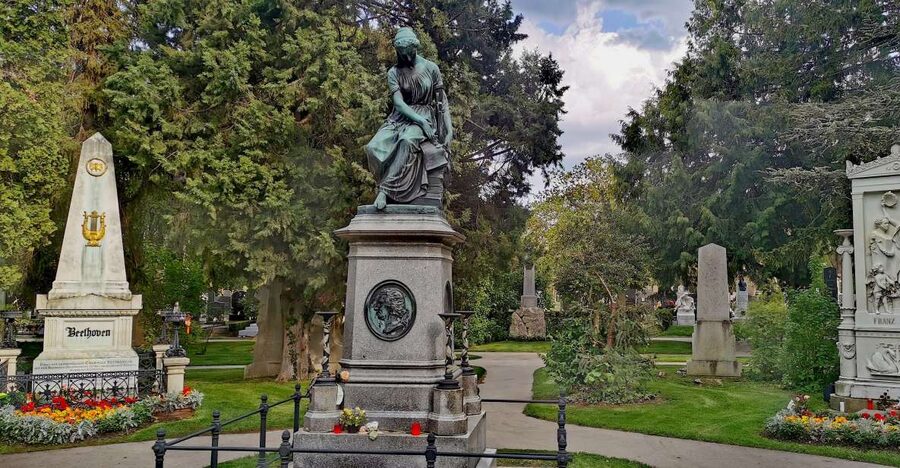
The Central Cemetery is not simply a quiet patch of graves outside the city. It is the most significant burial place in Vienna and one of Europe’s largest cemeteries, with enough space, monuments, and stories to make a guided visit worthwhile.
At first, the cemetery was heavily criticized. Its distance and scale did not appeal to everyone when it opened. Over time, though, it became one of Vienna’s most important places for public memory. The grand tombs reflect social rank, artistic taste, wealth, faith, and political power long after a person’s death.
I find that contrast particularly useful. The old saying that everyone is equal in death only goes so far here. Underground, people may share the same fate. Above ground, family names, elaborate stonework, and imposing memorials continue to show who had influence and money.
That is the kind of detail a guide can connect for you. Without context, a large cemetery can become a long walk past names you do not know. With a good guide, the monuments become evidence of how Vienna thinks about fame, grief, public tragedy, and social status.
This tour is private, so your group has room to set the pace within the fixed two-hour period. The listed maximum is 10 people, a useful size for a family, a group of friends, or a company outing. It also means the $217 fee can be reasonable when divided among several people. For one or two people, the cost is harder to justify unless the cemetery is a special interest.
More Walking Tours in Vienna
- Vienna: Guided Walking Tour of City Center Highlights
★ 4.7 · 4,989 reviews - Vienna: Vienna Central Cemetery Guided Walking Tour
★ 4.8 · 3,307 reviews - Vienna: Guided Walking Tour of City Highlights & Hidden Gems
★ 4.9 · 2,180 reviews
Meeting Christian Pacic at Gate 2
The exact meeting point matters here. You meet at the cemetery’s second gate, and after entering, you should look on the right by the water hydrant. This is more precise than simply being told to meet at the cemetery, which covers a very large area.
The activity identifies Christian Pacic as the provider, and recent German-language tours specifically name Christian as the guide. The strongest praise focuses on his delivery. He is described as friendly, humorous, and able to explain historical subjects in a lively way, with a distinct Viennese sense of humor.
That tone suits a cemetery tour better than a solemn lecture. Death, disaster, and war can make for heavy material, but Vienna has a long tradition of mixing seriousness with dry humor. A guide who understands that balance can keep the walk human without making light of suffering.
You should expect a German-language tour rather than a multilingual program. If you do not speak German well, the stories and jokes may be difficult to follow. The activity does not provide an English option, so language should be your first booking check.
Grand tombs and Vienna’s public memory
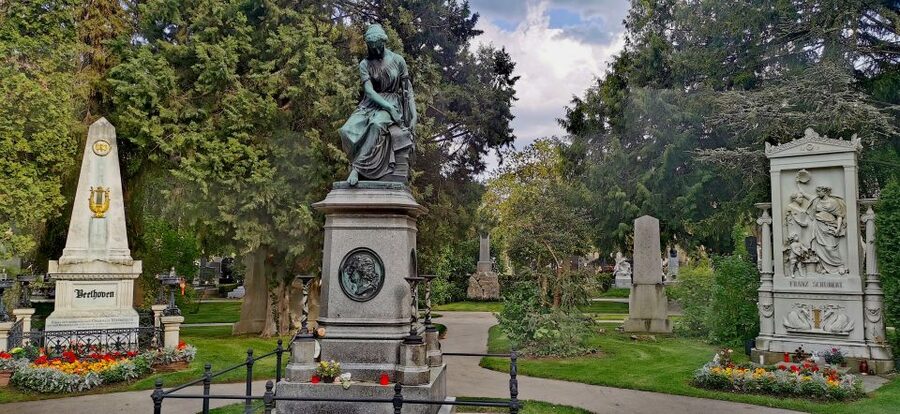
The first major subject is the cemetery’s collection of monumental tombs. Famous people are remembered through large, carefully designed graves that reflect their status beyond their lifetime.
The point is not just to tick off names. You get a look at how Vienna built a public memory around artists, leaders, and other notable figures. A monument can tell you as much about the family or society that commissioned it as it does about the person buried below.
I like this part of the walk because it places Vienna’s love of display in an unexpected setting. The city is famous for palaces, concert halls, and imperial buildings. Here, the same interest in style and reputation appears in stone, sculpture, and carefully planned memorials.
Do not expect a complete guide to every notable burial in the cemetery. Two hours requires selection. The value comes from the guide’s choices and explanations, not from seeing every famous name.
The cemetery’s scale is also part of the experience. You are not moving through a small churchyard where every grave is visible at once. The broad setting gives the tour a sense of distance and time, but it also means you should wear comfortable shoes and be ready for a substantial walk.
The Ringtheater fire memorial
One of the most important stops is the burial area for victims of the Ringtheater fire in 1881. This brings a specific Viennese disaster into the tour and shifts the focus from individual fame to collective mourning.
A memorial for a public tragedy is different from a private family tomb. It records the loss of many people at once and shows how the city chose to remember an event that affected the wider public. The guide’s role is especially valuable here, since the monument alone cannot explain the event’s place in Vienna’s past.
I appreciate this stop because it gives the cemetery emotional range. The tour is not only about grand names and impressive stonework. It also deals with ordinary people caught in a senseless disaster, and with the need to preserve their memory.
The wording of the experience presents these memorials both as remembrance and warning. That is an important distinction. The graves do not simply look back; they also remind you of the human cost of unsafe conditions and sudden loss.
More walking routes in Vienna:
- Vienna: Viennese Underworld Guided Walking Tour
★ 4.7 · 1,865 reviews - Vienna: World War II Historical Walking Tour
★ 4.8 · 1,772 reviews - Vienna Historic Center Small Group Walking Tour
★ 5.0 · 1,746 reviews - Vienna: Private Walking Tour with a Local Guide
★ 4.6 · 1,420 reviews
Soviet soldiers and the Battle of Vienna
The tour also includes graves for Soviet soldiers who died during the Battle of Vienna in 1945. This adds a wartime and political layer to the cemetery.
You may find this stop especially useful if you want to understand how Vienna’s burial places reflect the city’s complicated 20th century. The memorial does not sit apart from history. It connects the cemetery to the final stages of the Second World War and to the fighting that reached Vienna itself.
The subject can be more politically charged than a visit to a famous person’s grave. A guide helps place the memorial in context and explains why these soldiers are remembered at this site. The experience description does not promise a full military history, so think of this as one focused part of a broader tour rather than a specialist war walk.
This section also reinforces the cemetery’s role as a public record. It holds personal graves, disaster memorials, and war burials in the same large setting. That range is one of the main reasons I would choose a guided tour instead of wandering alone.
The cemetery church and its Viennese Art Nouveau design
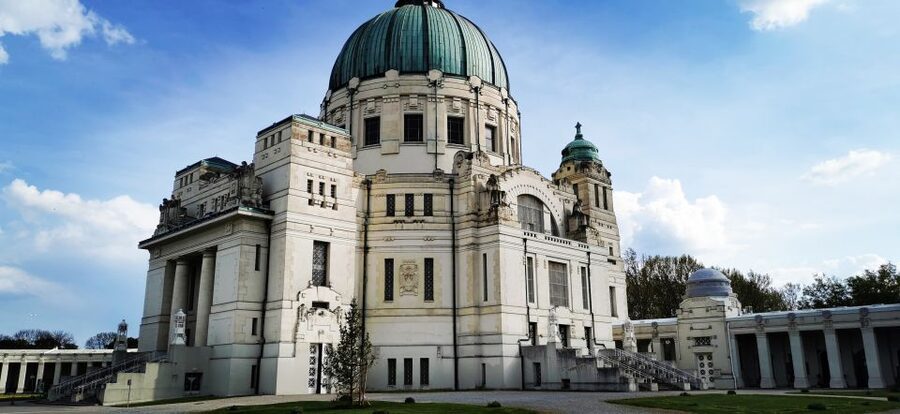
Near the center of the cemetery, in a dominant position, is the magnificent cemetery church. Its location matters. Rather than being a minor building at the edge, it forms a visual and symbolic center for the grounds.
The church is built in Viennese Art Nouveau, known locally as Jugendstil. The tour includes free admission, and the guide explains its architectural history. That makes this more than a quick look from outside.
I would give the church proper attention. Cemetery architecture can be easy to overlook when you are focused on famous graves, yet this building helps explain the ambition of the entire site. Its placement and design show that the cemetery was meant to be a major civic place, not just a practical burial ground.
The church stop also provides a change of pace. After walking among graves and memorials, you move into a structure where the focus shifts to form, decoration, and religious purpose. If you enjoy architecture, this may be one of the tour’s strongest sections.
Free admission is included, which keeps the church visit simple. The supplied information does not promise a long interior visit, so you should expect an architectural explanation within the two-hour route rather than a separate church tour.
The forest cemetery and modern burial
The final section visits the forest cemetery, where modern burial practices enter the story. This is a useful ending because it brings the tour back to the present.
The older parts of the Central Cemetery show how Vienna once expressed status and mourning through large family tombs and formal memorials. The forest cemetery points toward a different idea of remembrance, one that is less focused on monumental display and more connected to a natural setting.
You are not just looking at old stones. You are seeing how attitudes toward death can change. Families and communities make different choices over time, and burial places adapt to those choices.
I like this final stop because it prevents the tour from becoming a museum of the past. It asks you to compare the grand memorials near the center with a more modern approach to burial. The contrast gives the full walk a clear arc, from public reputation and historic tragedy to current customs.
The experience does not give extensive details about the forest cemetery’s exact design or burial rules, so do not book it expecting a specialist guide to modern funeral planning. It is best understood as a closing perspective on changing attitudes.
How the two-hour format affects the experience
Two hours is a sensible length for an introduction. It gives you enough time to understand the cemetery’s major themes without turning the visit into an all-day outing.
The tradeoff is coverage. A place this large cannot be explored fully in two hours, especially when the route includes the church, famous tombs, disaster memorials, war graves, and the forest cemetery. You will get a selected route and the guide’s interpretation, not an exhaustive survey.
That is why the private arrangement matters. You can ask about a monument that catches your eye and receive answers tailored to your group. A private tour also works well for a company outing or family group, where different people may have different interests in architecture, history, or local customs.
Headsets are listed for groups from 15 people, but this activity is described as a private group of up to 10. For your party, the smaller format should make communication easier without audio equipment. The key point is that the advertised maximum is already below the headset threshold.
The activity is wheelchair accessible. Since the tour takes place in a large cemetery and includes several areas, you should still confirm any particular route needs when booking. The provided information supports accessibility, but it does not describe surface conditions or the exact path used.
Price, group size, and what you receive
The price is $217 per group of up to 10 people. That is a group rate, not a per-person price, so the value changes sharply with group size.
For 8 to 10 people, the cost works out to roughly $22 to $27 per person before the additional on-site contribution. That is a fair price for a private, state-certified Austrian guide and two hours of focused attention.
For two people, the same fee comes to about $109 per person before the €3 contribution. That is expensive compared with a shared walking tour, though the private format may still appeal if you want to ask many questions or keep the pace tailored to your group.
Free admission to the cemetery church is included. From January 1, 2024, only accredited guides may offer commercial tours of Vienna’s cemeteries, and this experience specifies a state-certified Austrian guide. That accreditation matters in a sensitive setting where accurate historical and cultural explanation is important.
You must pay a €3 solidarity contribution per person on site before the tour. Include it in your budget rather than treating the advertised price as the complete cost.
You can cancel up to 24 hours before the start for a full refund, and the reserve-now-pay-later option lets you hold the booking without paying immediately. Those policies are useful if your Vienna schedule is still changing, but the main value question remains group size and language.
Who will enjoy this cemetery walk
I would recommend this tour most strongly to you if you enjoy:
- Viennese history told through real places
- Memorials, funerary art, and cemetery architecture
- Art Nouveau buildings
- Stories of public disaster and wartime memory
- Private tours with room for questions
- A guide who uses humor along with serious historical detail
It should also suit a company outing or family group. The private rate becomes more attractive as your party grows, and the two-hour duration is long enough to feel substantial without taking over your day.
You may want to skip it if your Vienna visit is very short and you prefer only the city center’s palaces, museums, and cafés. The cemetery requires a deliberate trip and the experience is in German. You should also think twice if monuments connected with death, disaster, and war are not your idea of a holiday outing.
The tone is not presented as purely solemn. Christian Pacic’s style is described as entertaining, humorous, and full of Viennese character. Still, the subject calls for respect, especially at the Ringtheater and Soviet memorials.
My booking advice
Book this tour if you want a side of Vienna that most first-time sightseeing routes leave out. The cemetery brings together social history, architecture, war memory, public tragedy, and modern burial customs in one place.
The best value comes with a group of several people who speak German. Before booking, confirm that everyone can follow a German-language guide and remember the extra €3 per person. If those points work for you, the private format and Christian Pacic’s mix of humor and historical detail make this a strong two-hour choice.
If you are traveling alone or as a couple, the price is harder to defend unless the Central Cemetery is high on your personal list. If it is, the private attention may justify the cost. If it is not, spend your Vienna budget elsewhere and visit only if you have time for a quieter, more unusual look at the city.
FAQ
Where does the Vienna Central Cemetery tour meet?
The meeting point is at the second gate. After you enter, look to the right by the water hydrant for the city guide.
How long does the tour last?
The walking tour lasts two hours.
What language is the tour conducted in?
The live tour guide speaks German. No other tour language is specified.
Who leads the tour?
The experience provider is Christian Pacic. Recent tour details identify Christian as the guide for private groups.
How many people can join the private group?
The price covers a private group of up to 10 people.
Is the tour wheelchair accessible?
Yes, the activity is listed as wheelchair accessible.
Is admission to the cemetery church included?
Yes. Free admission to the cemetery church is included in the tour.
Is there an extra charge on the day?
Yes. A solidarity contribution of €3 per person is charged on site before the tour.
Can I cancel the booking?
You can cancel up to 24 hours in advance for a full refund. A reserve-now-pay-later option is also available.
Just added in Vienna
- World War II History Vienna Old Town Private Walking Tour★ 4.8 · 9 reviews
- Vienna: Wiener Schnitzel and Strudel Cooking Class★ 4.9 · 126 reviews
- Vienna: Wine Tasting Tour★ 4.8 · 61 reviews
- Vienna: Winery and Wine Tasting Tour with a Wine Expert★ 5.0 · 5 reviews
- Vienna: Wine Tasting E-Bike Tour★ 4.9 · 46 reviews
- Vienna: Wine Tasting at Schönbrunn Palace★ 4.3 · 71 reviews
- Vienna: Unforgettable Private City Tour★ 5.0 · 7 reviews
- Vienna Urban Art Tour: Explore a different side of Vienna!★ 3.8 · 14 reviews
Walking Tours, compared.
Guided Walking Tour of City Center Highlights
Read our review →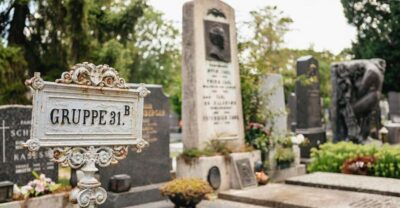
Guided Walking Tour of City Highlights & Hidden Gems
Read our review →
Vienna Historic Center Small Group Walking Tour
Read our review →
Browse the lists this tour appears in