
Reviewed · MOZART & CLASSICAL CONCERTS
Vienna: House of Strauss Museum Entry Ticket
Vienna’s House of Strauss gives you more than a room full of old instruments and portraits. Inside the Gartenpalais Zögernitz, you follow the Strauss family’s rise through interactive displays, music, and a final presentation devoted to Johann Strauss Jr., the Waltz King.
I like the way the museum explains the family tree and the musical world around it. I also like the guide app, which lets you move at your own pace instead of trailing behind a timed group. The main consideration is price: at $27.61, this is best for anyone with a real interest in Viennese music, not someone looking for a quick free stop.
Key points to know before you go
- A 2,000-square-meter museum: The exhibits cover the Strauss family, along with composers such as Lanner and Ziehrer.
- A grand historic setting: The museum occupies Gartenpalais Zögernitz, where the rooms are part of the experience.
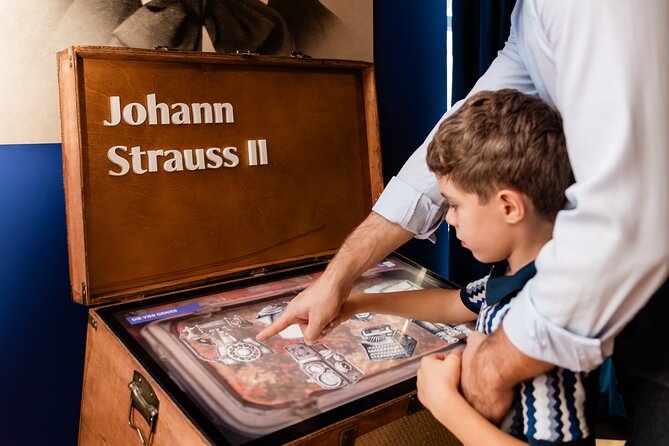
- An interactive format: Music, displays, and the English guide app give the visit more variety than a standard label-and-portrait museum.
- A strong finale: The Strauss Concert Hall presents a visual and musical revival of Johann Strauss Jr.
- A manageable visit: Plan on roughly 60 to 90 minutes, making this easy to fit into a day of sightseeing in Vienna.
- Flexible entry: You receive a mobile ticket, and the online ticket includes skip-the-line access.
Entering the Gartenpalais Zögernitz
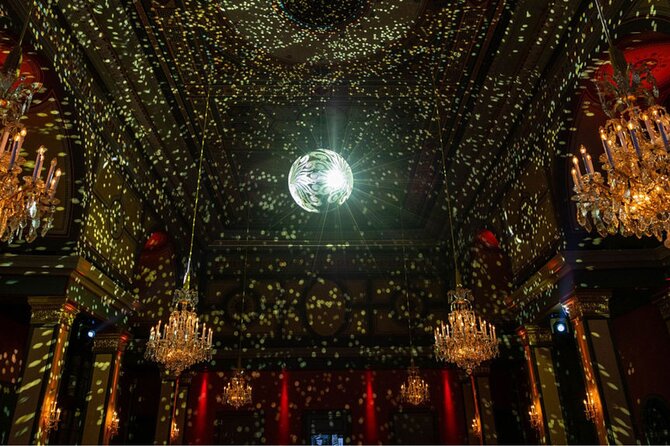
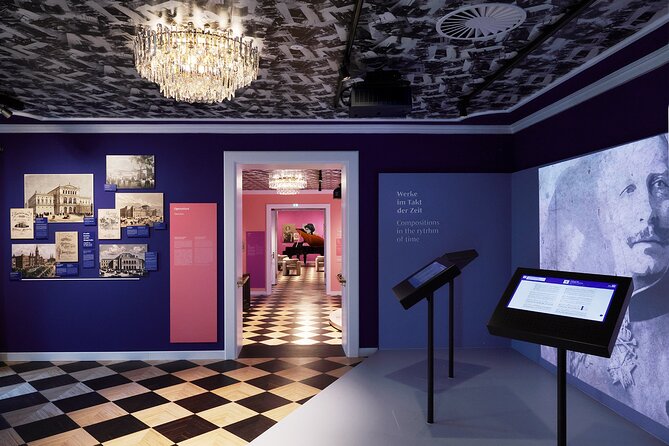
The setting matters here. House of Strauss is located in Gartenpalais Zögernitz, a grand palace building that helps place the music in its proper world of balls, orchestras, patrons, and formal Vienna. You are not simply looking at Strauss memorabilia in a modern gallery. The rooms themselves help explain the social world in which the waltz became a sensation.
Your mobile ticket is designed for quick entry, which is useful when you are building a busy Vienna day around museum visits and concert plans. The experience is offered in English, and the guide app gives you a way to follow the displays without depending on a live guide or a fixed group schedule.
The museum covers about 2,000 square meters. That is enough space for a substantial introduction, but not so much that you need half a day. I would set aside one hour at a brisk pace, or closer to 90 minutes if you stop to listen, read, and examine the interactive material.
More Classical Concerts in Vienna
- Vienna: Vivaldi’s Four Seasons Concert in Karlskirche
★ 4.7 · 14,951 reviews - Vienna: Classical Concert in the World-Famous Musikverein
★ 4.6 · 6,673 reviews - Vienna: Classical Concert at St. Stephen’s Cathedral
★ 4.1 · 4,177 reviews
Following the Strauss family story
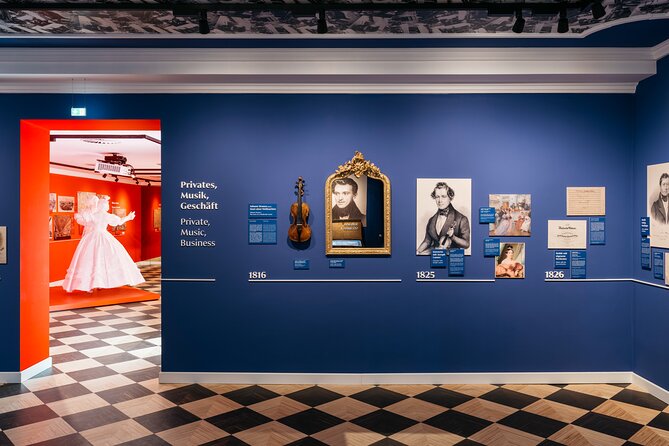
The heart of the museum is the story of the Strauss dynasty. The name Johann Strauss is often treated as if it belongs to one person, but the family story is more complicated. The museum helps you sort out the people, relationships, careers, and musical talents connected with the name.
This family-tree element is especially useful early in your visit. It gives you a framework for understanding Johann Strauss Jr. and the other members of the family, rather than leaving you with a collection of famous names and familiar melodies. If you know little about the Strauss family, this section works as a clear introduction. If you already know the basic story, it adds personal and family context.
The displays also look at life in the musical world and at how talent was recognized at an early age. That detail gives the museum a human angle. You get a sense of music as a family profession, with opportunity, pressure, and competition attached to it.
I would not rush through these introductory rooms. The museum’s strongest educational value is in connecting the music to the people who made it and to the society that wanted to hear it.
Hearing Vienna through Strauss, Lanner, and Ziehrer
The museum does not limit the story to Johann Strauss Jr. Music from Strauss, Carl Michael Ziehrer, and Joseph Lanner helps place the waltz within a broader Viennese tradition. These names are not just background decoration. They show that Vienna’s dance music came from a larger musical circle.
As you move through the exhibits, recorded music helps bring the subject to life. This is important because a museum about composers can become dry when it relies only on printed panels. Here, the sound gives the displays a practical purpose. You can connect the names and events with the style of music that made them famous.
The guide app is central to the visit. It helps you move from one part of the story to the next and gives you more control over the pace. I like this format for a museum of music because you can spend extra time with the people or pieces that interest you, then move along when a display feels less relevant.
The app also makes this a good choice for mixed-interest groups. Someone who wants the family history can read and listen carefully, while someone else can move more quickly toward the music and final hall presentation.
The interactive exhibits and grand interiors
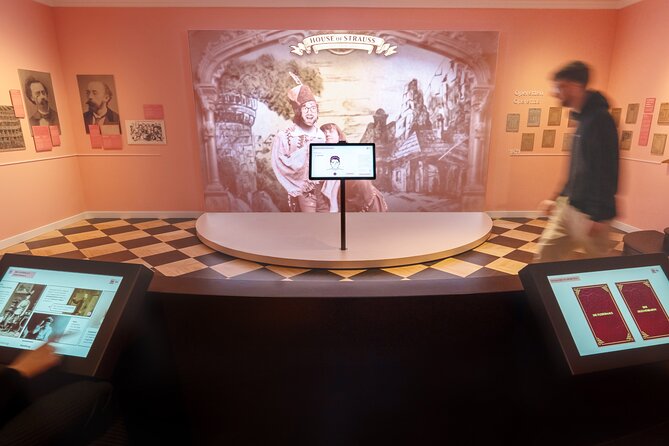
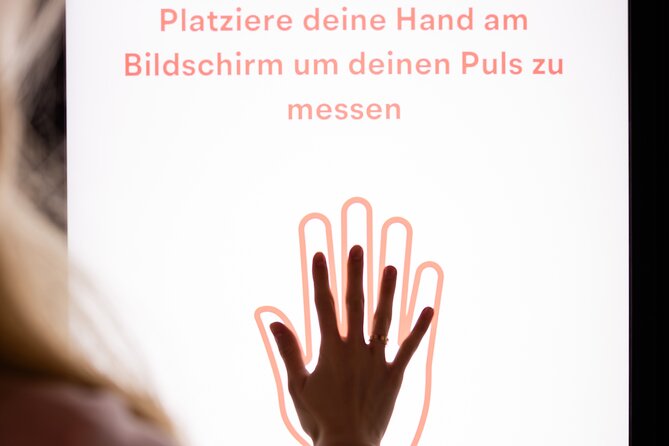
The museum’s interactive design keeps the experience from feeling like a static memorial. You can expect a combination of displays, music, and visual material across the large exhibition area. The exact balance of each element is not specified, so you should think of this as a guided museum experience rather than a hands-on attraction at every turn.
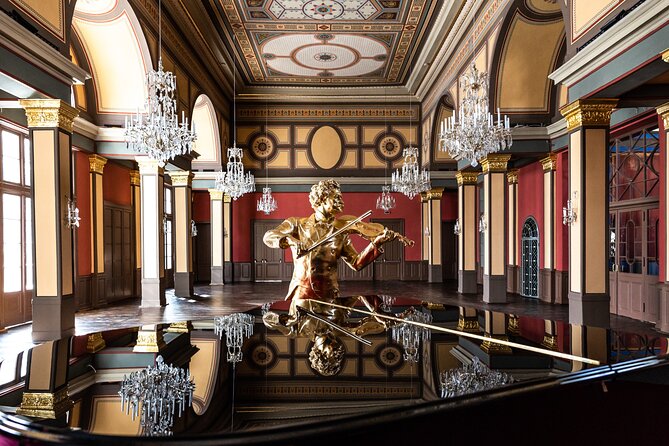
The interiors are part of the appeal. The grand rooms give the visit a sense of place, and the palace setting fits the formal world of ballroom music. You can better understand why the waltz carried such cultural weight when you see it presented in an environment built around ceremony and style.
I find this combination useful for first-time visitors to Vienna. A concert alone can give you beautiful music, but little context. A historical museum alone can explain the story, but leave the sound at a distance. House of Strauss tries to connect the two.
The tradeoff is that the experience may feel less focused if you want only a concert or only a traditional museum. It is a hybrid: part family history, part music education, part visual presentation. That mix is the reason to book it, but it also means you should not expect a full evening concert from the entry ticket.
Other concert evenings in Vienna:
- Vienna: Mozart Concert at the Golden Hall
★ 4.6 · 3,986 reviews - Vienna: Classical Concert in St. Anne’s Church (Annakirche)
★ 4.6 · 3,414 reviews - Vienna: Classical Concert at Mozart’s First House
2,423 reviews - Vienna: Mozart and Strauss Concert at Schönbrunn
★ 4.5 · 2,364 reviews
The Strauss Concert Hall finale
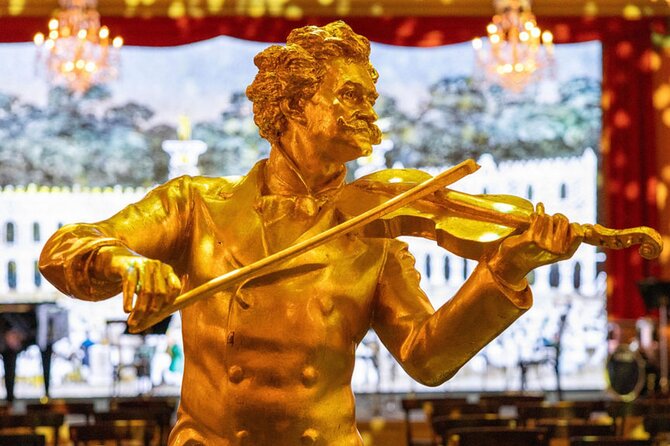
The final highlight is the Strauss Concert Hall. Here, the museum presents a visual and audio revival of Johann Strauss Jr., creating a closing moment that brings the earlier rooms together.
This finale matters because it turns the visit from a story about music into an encounter with the music itself. After learning about the family and hearing pieces by Strauss, Ziehrer, and Lanner, you reach a space devoted to the best-known figure in the family. The presentation gives Johann Strauss Jr. a clear place at the center of the museum’s story.
A special presentation at the end is one of the reasons I consider this more than a basic museum admission. You are not simply finished after the last display panel. The final hall gives the visit a sense of shape, with background first and performance-oriented material later.
Keep your expectations in proportion. The information provided describes a visual and auditory presentation, not a full live orchestra concert. If you want an evening performance, check the details of any separate concert offering. The museum entry itself is a shorter cultural visit with a musical finale.
Is $27.61 a fair price?
At $27.61 per person, the ticket sits in the paid attraction range rather than the casual drop-in range. The value depends on how much you care about Johann Strauss, Viennese waltz culture, and a museum that uses music as part of its storytelling.
The visit lasts about one to one and a half hours and includes the museum admission, skip-the-line online access, the guide app experience, interactive exhibits, and the Strauss Concert Hall presentation. For someone who wants a focused look at Vienna’s musical identity, that is a reasonable amount of content for the time spent.
I would be less quick to recommend it if you are already filling your schedule with several museums and concerts and have no particular interest in the Strauss family. The museum’s subject is specific. That is a strength when the topic appeals to you, but a limitation when you are trying to choose among many of Vienna’s cultural attractions.
The strongest value comes from using the museum as an introduction. If you are unfamiliar with the family, the exhibits can help you recognize the names, understand their relationships, and hear the music in context. The visit may also make a later Viennese concert more meaningful.
Who should make time for this museum?
I would recommend House of Strauss to several kinds of visitors:
- You enjoy classical music but want background before attending a concert.
- You are curious about the Strauss family and want the relationships explained clearly.
- You prefer self-guided visits to fixed group tours.
- You want a cultural stop that fits into 60 to 90 minutes.
- You like historic interiors as much as museum displays.
- You are visiting Vienna with someone who prefers music and another person who prefers history.
Families may also find the interactive format easier to handle than a quiet museum made up entirely of text panels. Still, the attraction is centered on musical history, so the experience will work best when at least one person in your group has genuine interest in the subject.
It is also a practical choice for a short Vienna itinerary. The skip-the-line online ticket reduces waiting at entry, and the mobile format means you do not need to manage a paper voucher. The museum is near public transportation, which makes it easier to add to a day of sightseeing.
Practical planning for a one-hour visit
Give yourself at least an hour, even if you normally move quickly through museums. The first part establishes the Strauss family and its setting. The middle sections broaden the story to other composers and the world of Viennese music. The final hall provides the main presentation.
If you have 90 minutes, use the extra time for the family displays and audio material. The museum’s value is not only in reaching the final hall. The finale works best when you understand the people and music introduced beforehand.
The experience is available with a mobile ticket, and confirmation is provided when you book. It is near public transportation, and most people can participate. Service animals are allowed.
The cancellation terms are friendly but time-sensitive. You can receive a full refund if you cancel at least 24 hours before the local start time. Cancellations or changes made less than 24 hours ahead are not accepted for a refund.
House of Strauss compared with a regular concert
A concert gives you the music in its finished form. House of Strauss gives you the names, family connections, and social setting that help explain why that music matters in Vienna.
I would choose this museum before a concert if you want orientation. It can be especially helpful if Johann Strauss Jr. is a familiar name but not yet a familiar person. The displays give you a starting point, and the final presentation lets you hear and see the subject after learning about it.
I would choose a separate concert instead if your priority is a long live performance with musicians on stage. The museum ticket includes a visual and auditory presentation in the Strauss Concert Hall, but the supplied information does not describe it as a full-length live concert.
You can also do both if music is a major reason for your Vienna visit. The museum takes only part of a day, leaving room for other sights or an evening performance.
My verdict on House of Strauss
I like House of Strauss because it makes a narrow subject approachable. The family-tree material, music from Strauss, Ziehrer, and Lanner, grand palace interiors, and final Johann Strauss Jr. presentation give you several ways into the story.
The key question is not whether the museum is worth visiting in the abstract. It is whether you want to spend $27.61 on a focused introduction to Viennese musical life. If you do, the one-hour to 90-minute format is efficient, the mobile ticket is convenient, and the interactive approach offers more than a simple display of portraits.
Book it if you want context for Vienna’s waltz tradition, enjoy self-guided museum visits, or plan to attend classical music while in the city. Skip it if you are looking only for a full live concert or if the Strauss family does not interest you. For the right audience, this is a useful and entertaining way to hear Vienna’s musical story before moving on to the next sight.
FAQ
Where is the House of Strauss Museum?
The museum is located at Gartenpalais Zögernitz in Vienna, Austria.
How long does the House of Strauss visit take?
Plan on approximately one hour to one hour and 30 minutes.
What does the ticket include?
The ticket includes admission to the House of Strauss Museum and the Strauss Concert Hall presentation.
Is the ticket available on a mobile phone?
Yes. The experience provides a mobile ticket.
Is skip-the-line entry included?
Yes. The online ticket provides skip-the-line access to the House of Strauss.
Is the experience offered in English?
Yes. The experience is offered in English, and you can use the museum’s guide app during the visit.
Is the museum near public transportation?
Yes. The House of Strauss is near public transportation.
Can I cancel for a full refund?
Yes. You can cancel at least 24 hours before the local start time for a full refund. Changes or cancellations made less than 24 hours before the start time are not accepted for a refund.
More Museums in Vienna
- Vienna: Skip-the-Line Sisi Museum, Hofburg and Gardens Tour
★ 4.8 · 5,918 reviews - Vienna Kunsthistorisches Museum Day Admission Ticket
★ 4.6 · 3,690 reviews - Tickets for the Albertina Exhibitions
★ 4.7 · 2,126 reviews - Vienna: Chocolate Workshop in Chocolate Museum w/ Tasting
★ 4.5 · 1,802 reviews
Just added in Vienna
- World War II History Vienna Old Town Private Walking Tour★ 4.8 · 9 reviews
- Vienna: Winery and Wine Tasting Tour with a Wine Expert★ 5.0 · 5 reviews
- Vienna: Wiener Schnitzel and Strudel Cooking Class★ 4.9 · 126 reviews
- Vienna: Wine Tasting Tour★ 4.8 · 61 reviews
- Vienna: Wine Tasting E-Bike Tour★ 4.9 · 46 reviews
- Vienna: Wine Tasting at Schönbrunn Palace★ 4.3 · 71 reviews
- Vienna: Unforgettable Private City Tour★ 5.0 · 7 reviews
- Vienna Urban Art Tour: Explore a different side of Vienna!★ 3.8 · 14 reviews
Mozart & Classical Concerts, compared.
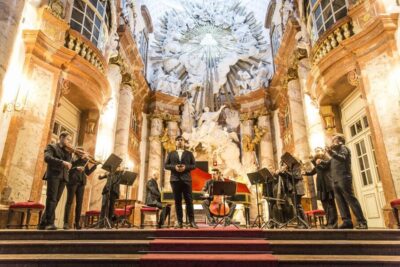
Vivaldi’s Four Seasons Concert in Karlskirche
Read our review →
Classical Concert in the World-Famous Musikverein
Read our review →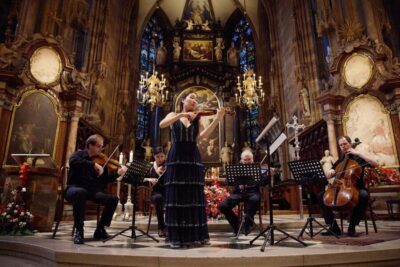
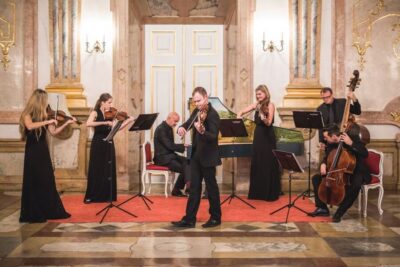

Classical Concert in St. Anne’s Church (Annakirche)
Read our review →
Browse the lists this tour appears in