
Reviewed · WALKING TOURS
Vienna: Courtyards & Hidden Places Walking Tour
Vienna’s grand center is easy to admire from the main streets, but its best stories often sit behind plain doorways. This two-hour small-group walk leads you into old courtyards, narrow lanes, and overlooked corners near St. Stephen’s Cathedral, with local legends and stories about Mozart, food, war, and daily city life.
I like the mix of major sights and quieter passages, especially the contrast between the cathedral and calm courtyards along Blutgasse. I also like the guide’s story-led approach, which recent ratings praise for being informative, sympathetic, and entertaining. The main drawback is pace: you cover a lot in two hours, so this is better for broad context than long visits inside each landmark.
Key points at a glance
- Courtyards with stories: Step away from Vienna’s busy central streets and hear legends tied to old residential passages.
- A useful first look at the center: See St. Stephen’s Cathedral, Stephansplatz, Mozart’s final residence, the Franciscan Church, and the Jesuit Church.
- More than architecture: Learn about traditional Viennese cuisine, famous personalities, wartime damage, and the old city wall.
- A compact walking format: Two hours gives you a strong orientation without taking up half a day.
- Small-group setting: The format suits visitors who want room for questions and a more personal guide.
- Good value at $34: For a certified guide and a focused tour of central Vienna, the price is reasonable, especially early in your stay.
Why Vienna’s courtyards are worth your time
Vienna’s historic center can feel like a grand architectural stage. Stephansplatz, ornate palaces, churches, and formal streets give you the headline version of the city. This tour adds the backstory by turning into narrow lanes and courtyards where the city feels more private.
That change in setting is the real point. A courtyard may not look as impressive as a palace facade at first glance, but it can show how old buildings functioned as homes, workplaces, and shared spaces. Your guide explains the legends attached to these places and connects them with the people who lived or worked nearby.
I like this format because it helps you read Vienna instead of simply photographing it. The walk is not limited to famous names. It also deals with everyday life, traditional food, and the changing face of the old city.
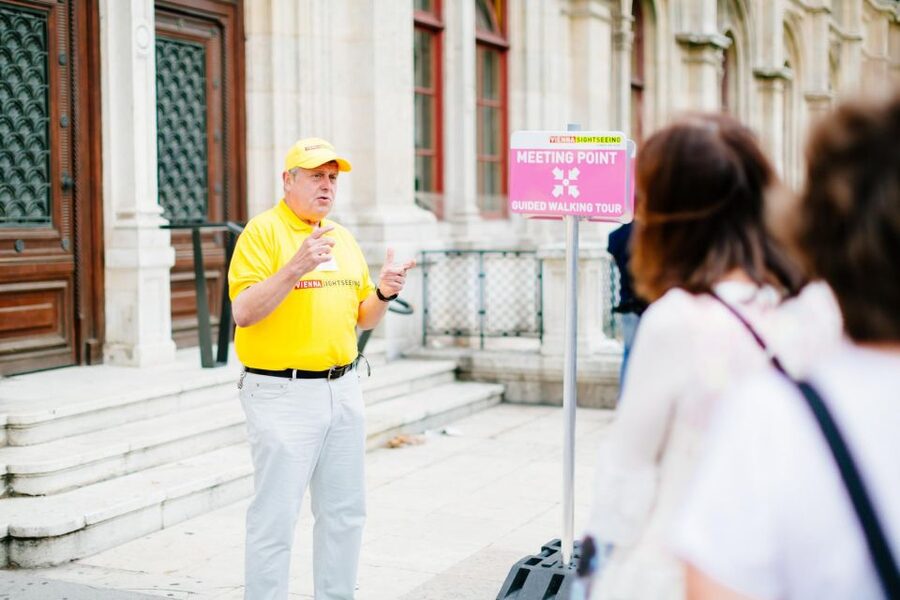
The tour is conducted in a small group, in English or German. That matters on streets where you may need to stop close to the guide to hear the explanation. Feedback gives special weight to the clear, friendly storytelling. Several recent ratings describe the explanations as both informative and easy to follow, rather than a long stream of dates.
More Walking Tours in Vienna
- Vienna: Guided Walking Tour of City Center Highlights
★ 4.7 · 4,989 reviews - Vienna: Vienna Central Cemetery Guided Walking Tour
★ 4.8 · 3,307 reviews - Vienna: Guided Walking Tour of City Highlights & Hidden Gems
★ 4.9 · 2,180 reviews
St. Stephen’s Cathedral and Stephansplatz
The walk includes St. Stephen’s Cathedral, Vienna’s most recognizable church and the anchor of the old center. You’ll learn about the cathedral and its place in Vienna’s urban story, then use the surrounding Stephansplatz as a starting point for the lanes beyond.
This part is useful if you are new to Vienna. The cathedral helps you get oriented, and the nearby streets lead naturally toward the less obvious stops. You should not expect a full cathedral visit or an extended examination of every architectural detail. One rating specifically wished for less emphasis on the cathedral and more time in the courtyards.
That is a fair point. The cathedral is important, but you can easily spend an hour or more inside and around it on your own. The value of the guided visit here is the context, not a long indoor tour. If you want detailed information about the roof, chapels, or interior art, plan separate time.
Mozart’s final residence and the facts behind the fame
One of the most useful stops is Mozart’s final residence. The tour uses the site to discuss the real circumstances of his life, rather than repeating only the familiar image of the child prodigy and celebrated composer.
That promise of correcting or sharpening the popular story is important. Mozart’s name appears throughout Vienna, and it is easy to collect legends without understanding the person behind them. A guide can place his final home within the larger story of the city and explain why the address matters.
This is a stop for context, not necessarily a museum visit. The supplied details do not promise admission to the residence, so you should treat it as an exterior or neighborhood explanation unless your booked option says otherwise. If Mozart is a main reason for your visit, you may want to return later for a longer look.
Ballgasse, Blutgasse, and Vienna’s quieter side
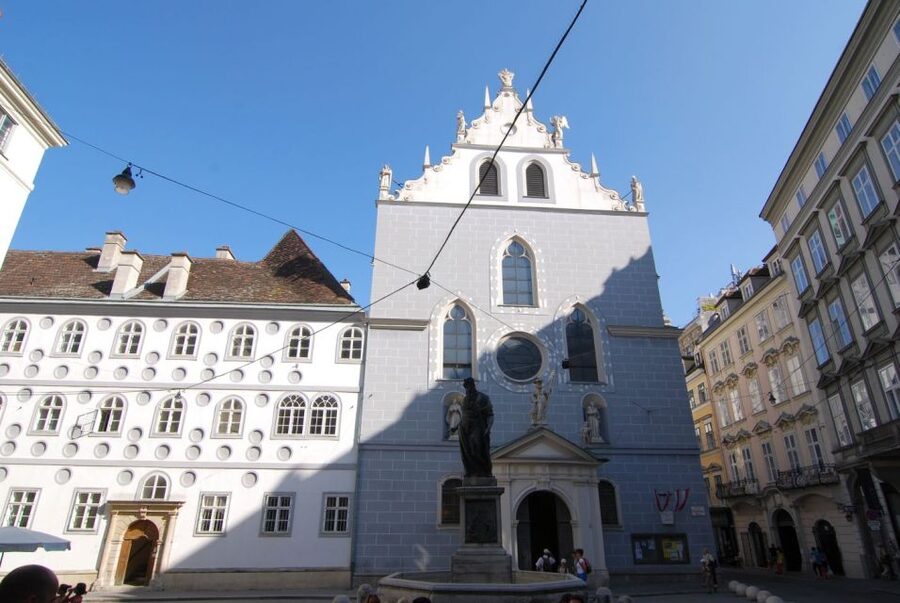
Ballgasse and Blutgasse offer the kind of streets that make a walking tour worthwhile. They are close to the center but feel more intimate than the broad spaces around Stephansplatz. Your guide uses the lanes and their courtyards to explain old Vienna, local legends, and the way the historic center developed.
Blutgasse is especially useful as a contrast to the grand sights. Here, you are not simply looking at a famous facade. You are watching how the old street plan survives in tight corners and passageways. The tour’s strongest feature is likely this movement between public monuments and private-feeling spaces.
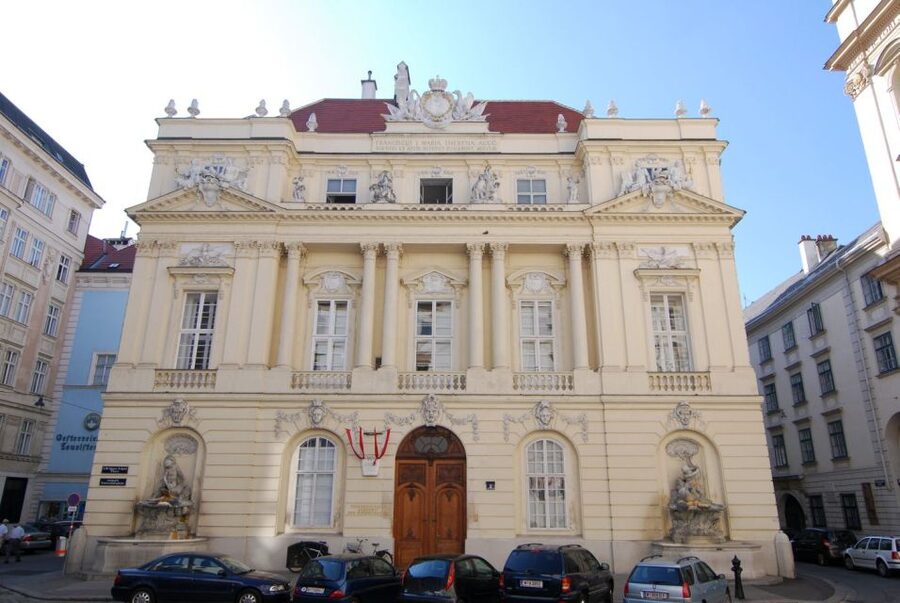
The walk also includes Palais Neupauer-Breuner and the Deutsches Haus. These stops add architectural variety and help show how Vienna’s old center is made up of palaces, religious buildings, residential courtyards, and commercial streets pressed closely together.
You may find some courtyards quiet and atmospheric, while others are more about the story than the view. That is normal. This is not a procession of postcard scenes. The guide’s explanation gives the ordinary-looking places their meaning.
More walking routes in Vienna:
- Vienna: Viennese Underworld Guided Walking Tour
★ 4.7 · 1,865 reviews - Vienna: World War II Historical Walking Tour
★ 4.8 · 1,772 reviews - Vienna Historic Center Small Group Walking Tour
★ 5.0 · 1,746 reviews - Vienna: Private Walking Tour with a Local Guide
★ 4.6 · 1,420 reviews
The Franciscan Church, monastery, and old religious Vienna
The Franciscan Church and Monastery provide another change of mood. The church is part of the tour’s broader look at Vienna’s religious buildings and the institutions that shaped the old center.
You will see the setting and hear its story as you walk. The information provided does not promise an extended interior visit, so keep your expectations practical. This is a guided overview within a larger route, not a dedicated church tour.
I like the inclusion of the monastery because it prevents the walk from becoming only a parade of palaces and celebrity addresses. Vienna’s center was built around religious life as much as imperial power, and the route gives you a glimpse of that balance.
Viennese cuisine explained on the street
Traditional Viennese cuisine is part of the conversation, which adds a useful practical layer. You are not only hearing about buildings. You are learning how food fits into the culture of the city.
The information does not specify a tasting or a meal, so do not book this expecting food samples. Instead, use the discussion to decide what you want to eat later. A short explanation from a local guide can make a menu less mysterious and help you notice the difference between a dish’s name, its history, and the way it is served.
This is a small feature, but it improves the tour. Food gives historical facts a daily-life connection. It also breaks up the sequence of dates and architectural names.
The old university district and Jesuit Church
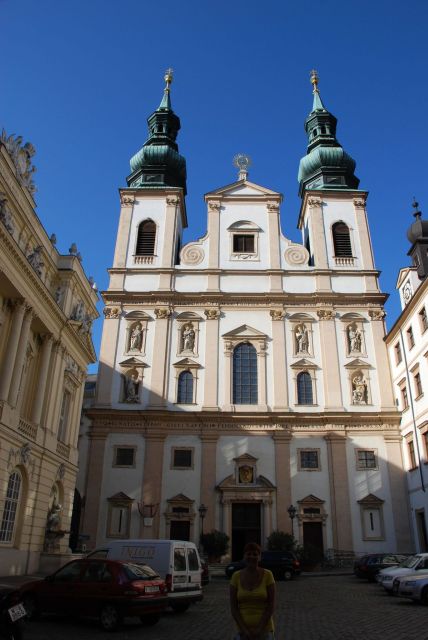
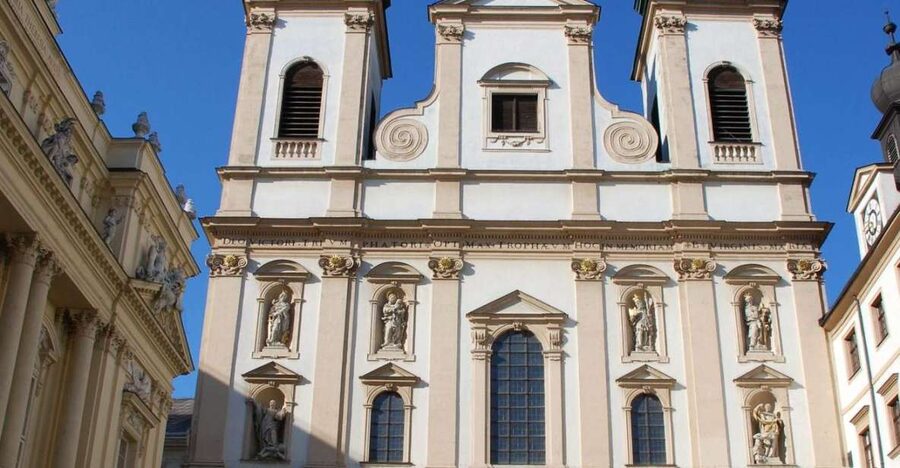
The route continues toward the old university district and the Jesuit Church. These stops shift the focus toward education, religion, and intellectual life in the historic center.
The Jesuit Church adds another major interior and exterior reference point, though the tour details do not promise a full visit inside. The old university district helps explain how central Vienna was not only a place of courts and churches. It was also a place of study, debate, and institutional life.
You will also hear about the old city wall. That piece of information helps explain why the central streets feel so compact and why the Ringstrasse area has a different character. Even without a long lecture, the wall gives you a useful mental map of how Vienna expanded beyond its medieval core.
Wartime photographs and the city’s changing face
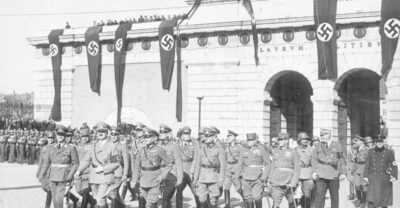
A particularly interesting detail from the guide’s approach is the use of photographs showing Vienna after World War II, including bomb damage. That gives the walk a stronger sense of time.
Many old-city tours focus on the centuries before modern life. Photographs of damaged Vienna remind you that the streets were not frozen in the imperial past. Buildings were affected, neighborhoods changed, and the city had to repair itself.
This also explains why a familiar facade may not tell the full story. The old center contains layers from different periods, and wartime destruction is part of that picture. If you enjoy social history and city change, this may be one of the tour’s most rewarding details.
What the two-hour format really gives you
Two hours is long enough to connect the main sights without exhausting your morning or afternoon. You cover the cathedral area, historic lanes, courtyards, religious sites, palaces, the university district, and the old city wall. That is a lot of ground for a compact tour.
The tradeoff is depth. You will not have time for lengthy indoor visits, extended photography stops, or a full explanation of every building. The walk works best as a framework. Afterward, you can return to the cathedral, Mozart’s residence, the Jesuit Church, or any courtyard that caught your attention.
The tour continues from a first walk offered by the same operator, but you do not need to have taken that earlier tour. This route can be booked on its own. That makes it useful for a short Vienna visit, though you should not expect a detailed recap of an earlier walk.
Price, group size, and practical planning
At $34 per person, the tour offers solid value if you want a certified guide and a focused introduction to central Vienna. You are paying for interpretation, local stories, and a route that connects famous sights with places you might otherwise pass without noticing.
It is less compelling if you prefer to move at your own speed or spend most of your time inside the cathedral and museums. Independent walkers can see many of the exterior sights for free. The extra value here comes from the stories, the courtyard access or views, and the way the guide links separate places into one narrative.
The meeting point can vary by the option booked, with Bankomat shown as a starting point in the supplied details. Check your confirmation carefully. The listed ending point is Dr.-Karl-Lueger-Platz 3, 1010 Vienna, though drop-off details can also depend on the selected option.
Wear comfortable shoes. The route includes narrow streets and historic surfaces, and the tour runs in all weather. Bring a light rain layer rather than assuming Vienna will provide a perfect morning. Large bags and luggage are not allowed, and audio recording is not permitted.
The walk is not suitable for children under 12, people with mobility impairments, or wheelchair users. Those limits matter because the route is built around old lanes and courtyards rather than smooth, fully accessible paths.
Free cancellation is available up to 24 hours before the tour, and you can reserve now and pay later. The guide speaks German or English. The overall rating is 4.8 from 189 ratings, with especially strong praise for clear explanations, pleasant storytelling, and the personal manner of the guide.
Who should book this Vienna walk?
I would choose this tour early in a Vienna visit if you want a quick sense of how the center fits together. It is especially useful for first-time visitors who see the cathedral, palace facades, and church towers but want someone to explain the smaller streets between them.
It also suits you if you enjoy local legends, urban history, famous personalities, and food culture in equal measure. The route has enough major sights to feel worthwhile, but its real character comes from the courtyards and narrow lanes.
You may want another plan if your priority is a long cathedral visit, museum admission, food tasting, or a fully accessible route. The tour is an outdoor overview with stories, not a substitute for dedicated time at Vienna’s major interiors.
Should you book it?
Book this walk if you want Vienna beyond the grand facades. At $34, it is a sensible introduction to the old center, especially with a small group and a guide who can connect Mozart, cuisine, churches, courtyards, wartime damage, and the city wall in one compact route.
Skip it if you dislike walking in all weather or prefer to explore without a set pace. For most first visits, though, the combination of famous landmarks and quiet old corners makes this a useful way to get your bearings and choose where to return later.
FAQ
How long does the Courtyards & Hidden Places Walking Tour last?
The tour lasts two hours.
What languages are available?
The live guide conducts the tour in English or German.
What landmarks are included?
The route includes St. Stephen’s Cathedral, Stephansplatz, Mozart’s final residence, Ballgasse, Blutgasse, Palais Neupauer-Breuner, the Deutsches Haus, the Franciscan Church and Monastery, the old university district, the Jesuit Church, and the old city wall.
Is this tour part of another tour?
It continues from a first tour by the same operator, but you do not need to have taken the first tour to join this one.
Where does the tour start and finish?
The meeting point may vary depending on the option booked. Bankomat is shown as a possible starting location, and Dr.-Karl-Lueger-Platz 3, 1010 Vienna, is listed as a drop-off location.
Can I bring luggage or record the guide?
Large bags and luggage are not allowed, and audio recording is not permitted.
Is the tour suitable for children or wheelchair users?
The tour is not suitable for children under 12, people with mobility impairments, or wheelchair users. It takes place in all weather conditions.
Just added in Vienna
- 3 hour private tour in Vienna by private car★ 4.4 · 6 reviews
- Private Christmas Markets Walking Tour Vienna★ 5.0 · 31 reviews
- Christmas Markets & Shopping in Vienna★ 5.0 · 17 reviews
- Christmas Market Vienna Tour★ 4.0 · 53 reviews
- Vienna: Christmas Markets Tour★ 4.3 · 99 reviews
- Schmetterlinghaus – Imperial Butterfly House Vienna Admission Ticket★ 3.5 · 144 reviews
- Salzburg Small-Group Day Trip from Vienna★ 5.0 · 148 reviews
- Vienna Residence Orchestra: Mozart and Strauss Concert★ 4.0 · 137 reviews
Walking Tours, compared.
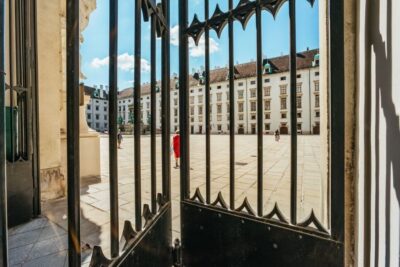
Guided Walking Tour of City Center Highlights
Read our review →
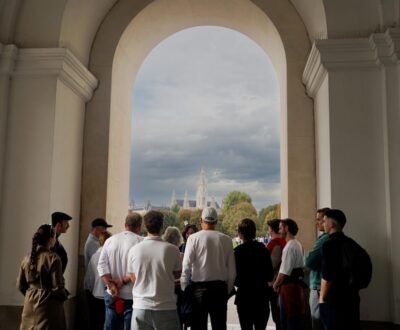
Guided Walking Tour of City Highlights & Hidden Gems
Read our review →
Vienna Historic Center Small Group Walking Tour
Read our review →
Browse the lists this tour appears in