
Reviewed · TOURS IN VIENNA
Vienna: Big Bus Hop-On, Hop-Off Tour by Open-Top Bus
Vienna’s grand sights are spread across a large city, and this open-top bus tour gives you a useful first look without wearing out your shoes. The red City Route takes in the historic center, Museum Quarter, and Danube area, while the blue Palace Route reaches Schönbrunn, Belvedere, and Hundertwasserhaus.
I like the clear audio commentary, offered in eight languages, and the live bus tracking in the Big Bus app. I also like the freedom to use the bus as sightseeing transport, not just a one-time circuit. The main drawback is timing: traffic can slow the ride, and service winds down fairly early, with the first bus at 9:30 AM and the last listed departure at 4:00 PM.
Key points to know before you book
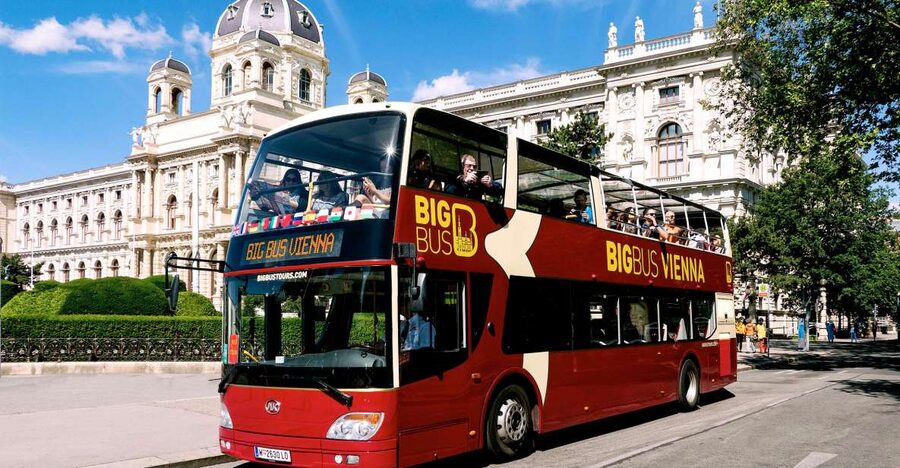
- Two routes show two very different Viennas: The City Route covers imperial central Vienna and modern Danube sights, while the Palace Route focuses on Schönbrunn, Belvedere, and Hundertwasserhaus.
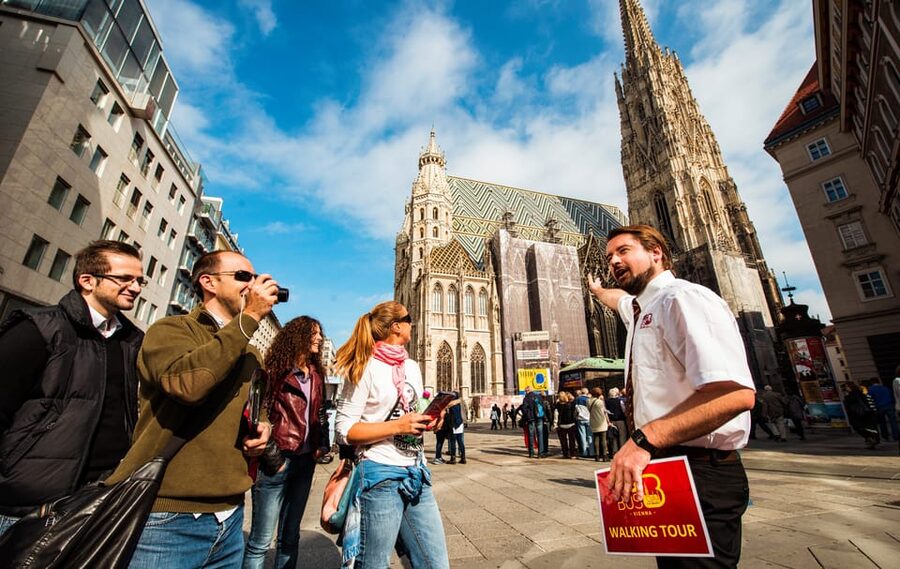
- The 48-hour pass gives you more than extra bus time: It includes an English guided walking tour, two VOX self-guided tours, and a code for the POPGuide app.
- The audio commentary is a real strength: You get headphones and a choice of Spanish, English, French, German, Italian, Portuguese, Russian, or Arabic.
- The bus is useful for short visits: You can complete a broad city overview in roughly 90 minutes, then return to the places that deserve a longer stop.
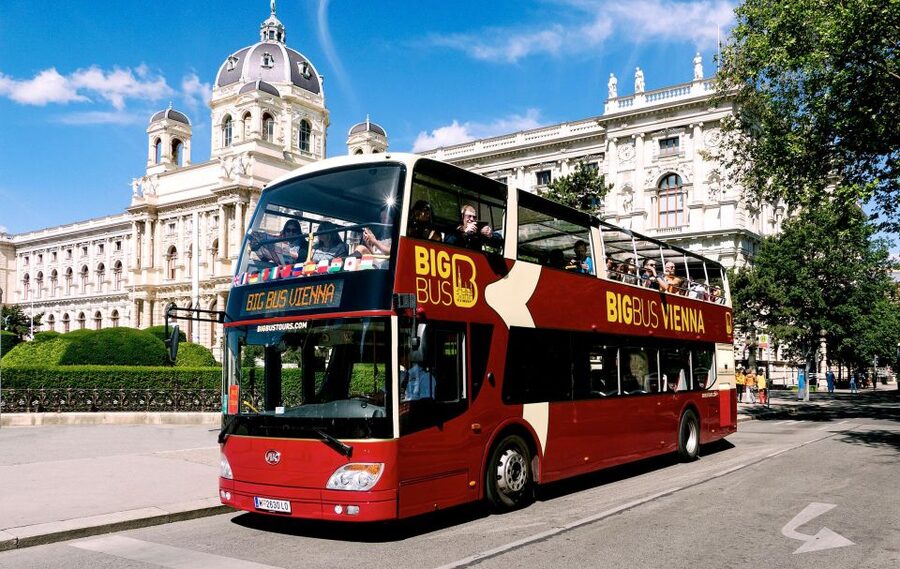
- The open top is best for views, not all weather: Upstairs gives you better photos, while the lower level is warmer in cold weather and may be more comfortable in rain.
- The app matters: Live tracking, stop locations, and service updates help you avoid standing at a stop without knowing when the next bus will arrive.
Why this bus works well in a spread-out city
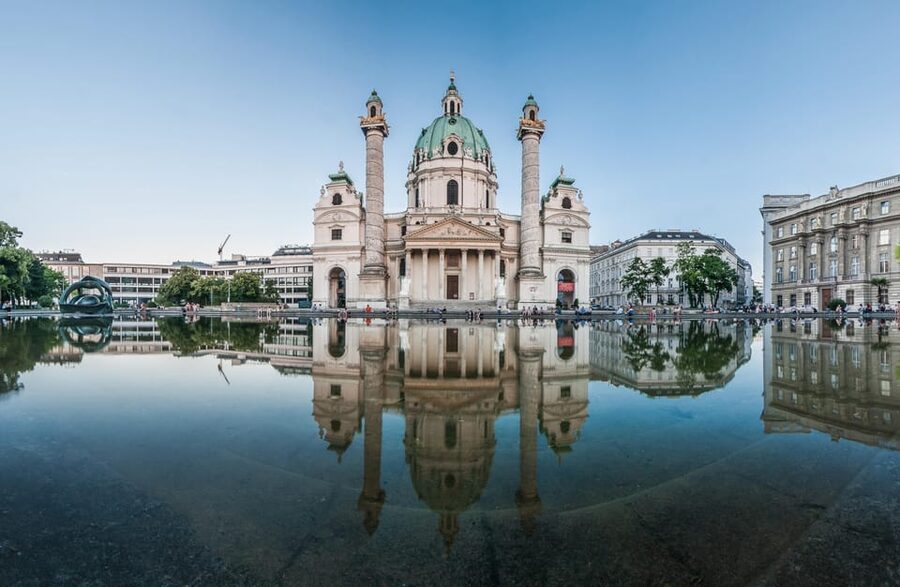
Vienna looks compact on a map, but its major sights sit in different parts of the city. St. Stephen’s Cathedral and the Vienna State Opera are in the old center. Hofburg Palace and the Museum Quarter are close by, while Schönbrunn and Belvedere require a longer ride.
That makes a hop-on, hop-off pass useful beyond the sightseeing commentary. You can ride between major areas, get off when something catches your eye, and avoid planning every connection on public transport. The bus also gives you a quick sense of how the old imperial center relates to modern Vienna and the Danube.
The basic tour lasts about 90 minutes if you stay aboard. That is a good first move on a short visit, especially if you arrive in Vienna with only one day. I would ride one full loop first, then choose one or two stops for a closer look.
The 24-hour ticket suits a tightly planned visit. The 48-hour ticket costs more, but gives you breathing room. You can use the first day for orientation and the second for palaces, museums, or a walking tour.
More days out of Vienna:
- Vienna: Vivaldi’s Four Seasons Concert in Karlskirche
★ 4.7 · 14,951 reviews - Vienna: Spanish Riding School Training
★ 3.9 · 9,281 reviews - Vienna: Skip-the-cashier-desk-line Giant Ferris Wheel Ride
★ 4.5 · 7,859 reviews
The City Route: opera, palaces, and the Danube
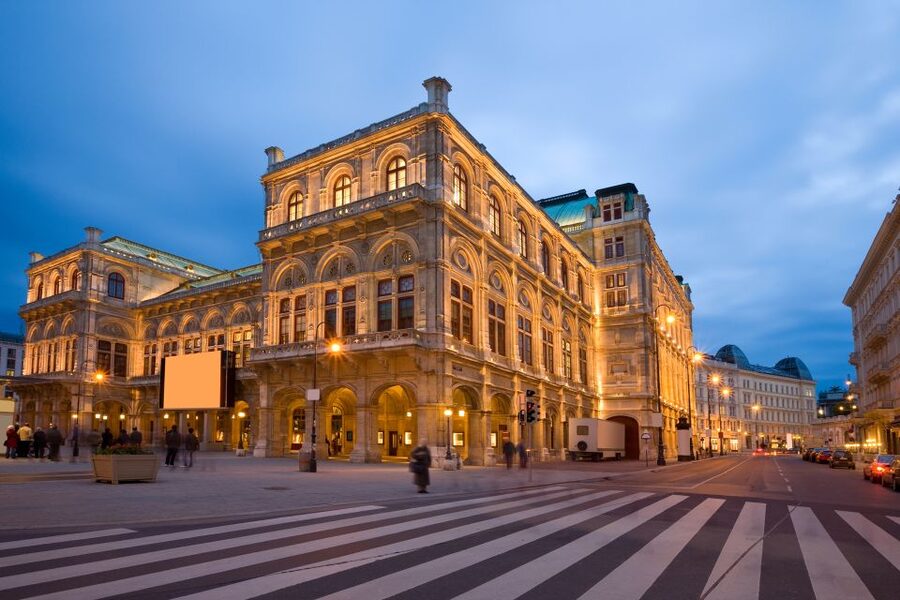
The City Route is the best place to begin because it brings together the classic Vienna image and the city’s newer side. The ride passes major central sights, including the Vienna State Opera, Hofburg Palace, St. Stephen’s Cathedral, and the Museum Quarter.
The Vienna State Opera is an especially useful first landmark. It sits close to Stop 1, Opera, at Walfischgasse 2, and serves as the main departure point. From here, the city opens into the grand ring of historic buildings and broad avenues.
Hofburg Palace gives the ride its imperial heart. The former palace complex is not one simple building, but a large group of courtyards and state rooms connected with centuries of Habsburg rule. The bus cannot replace a palace visit, but the commentary helps you understand the scale of the complex before you walk through it.
St. Stephen’s Cathedral brings you into the older center. Its patterned roof and tall tower are easy to spot, but you should get off if you want to see the interior. The bus is good for orientation here, not for the cathedral visit itself.
The Museum Quarter changes the mood. Vienna’s imperial architecture meets major art institutions, open spaces, and modern cultural buildings. You may find this one of the best places to pause because several sights sit within walking distance of one another.
The route then reaches modern Vienna, including UNO City and Danube Island. This section keeps the tour from becoming only a parade of palaces. You see a city of international offices, newer architecture, and open riverside space. The contrast is useful: Vienna is not frozen in its imperial past.
Traffic can stretch the time between stops, especially around the center. I would not use the bus to make a tight appointment. Use it for sightseeing and allow extra time when you need to arrive somewhere by a fixed hour.
The Palace Route: Schönbrunn, Belvedere, and Hundertwasserhaus
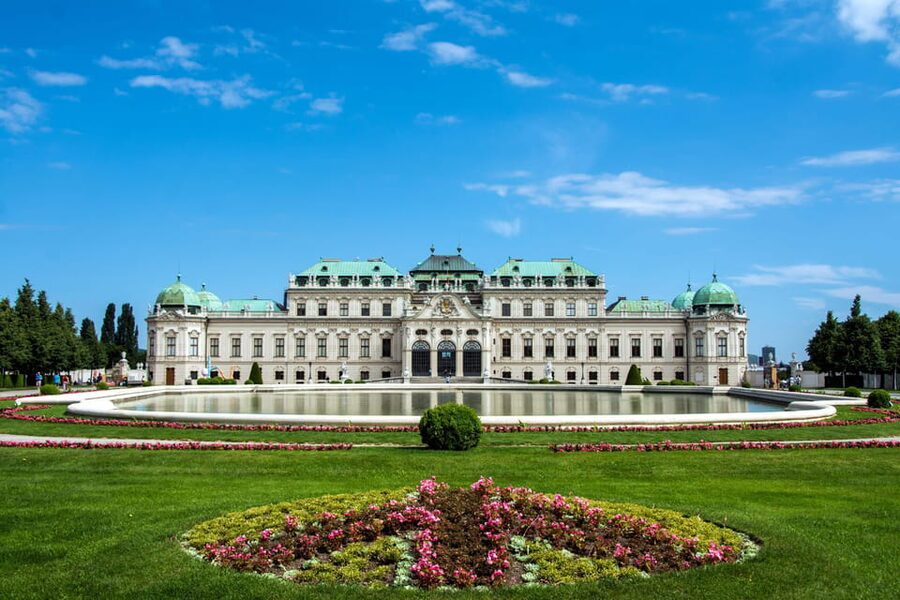
The Palace Route is the reason many people choose the 48-hour option. It reaches three very different attractions, each worth seeing for a different reason.
Schönbrunn Palace is the major stop. The former imperial summer residence sits outside the central ring, so reaching it by bus saves a long cross-city journey. The palace is tied closely to the story of Empress Elisabeth, better known as Sisi, and its grand rooms and gardens show how the Habsburg court lived beyond the city center.
Give Schönbrunn more time than a quick photo stop. The bus gets you there, but the palace itself requires a separate visit and ticket if you want to enter. The tour is most useful here as transport and context. You can learn the basic story on the ride, then decide how much time to spend inside.
Belvedere Palace offers a different setting. Its buildings and formal grounds are elegant, and the complex is strongly associated with art. The stop makes sense for anyone interested in Vienna’s museums, architecture, or grand formal gardens.
You will need to manage your time carefully if you hope to visit both Schönbrunn and Belvedere in one day, along with central Vienna. The Palace Route makes the connections easy, but the attractions themselves are not quick. A 48-hour pass lets you split them across two days instead of rushing from one palace to the next.
Hundertwasserhaus is the route’s most playful stop. The expressionist residential complex is known for irregular forms and colorful design, a sharp change from Vienna’s formal imperial buildings. It is a good reminder that the city’s architecture is not all straight lines, pale facades, and ceremonial grandeur.
The Palace Route helps you compare Vienna’s styles. Schönbrunn represents imperial power and court life. Belvedere brings art and formal design. Hundertwasserhaus breaks the rules. That variety makes the route more interesting than a simple list of famous buildings.
What the audio guide adds from the upper deck
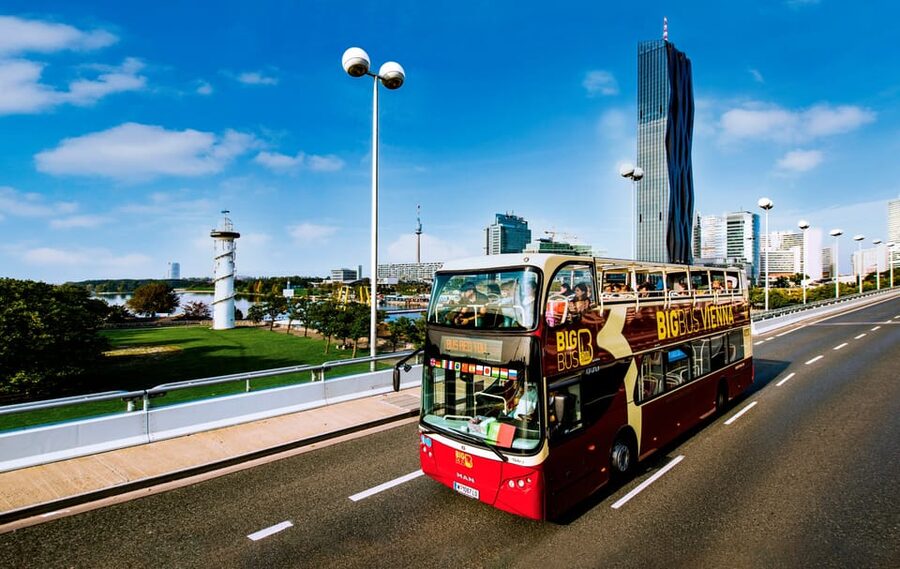
The bus provides audio commentary through supplied headphones, with eight language choices. You can listen in English, Spanish, French, German, Italian, Portuguese, Russian, or Arabic.
The commentary is strongest when you want context while looking at the buildings. It adds names, dates, and background as you pass, so the ride becomes more than a photo circuit. Different voices help keep the recording from feeling flat, and music is included in the presentation.
You can also ignore the commentary. Sometimes I prefer to watch the streets, especially from the open upper deck. The choice matters because the bus works for different kinds of visitors: you can treat it as a moving introduction to Vienna or simply enjoy the views.
Bring your own headphones if you prefer, though headphones are provided. The lower deck is more practical in cold weather. During warm periods, it can become hot downstairs, and an upper-deck seat offers much better views and photographs.
The open top has a tradeoff. You get a clear view of rooftops, monuments, and broad streets, but wind and rain can change the experience quickly. On wet days, the tour still works, but dress for the weather and use the lower level when needed.
A different kind of evening in Vienna:
- Vienna: Schönbrunn Palace & Gardens Skip-the-Line Tour
★ 4.7 · 7,739 reviews - Vienna: Light of Creation Votive Church Immersive Light Show
★ 4.8 · 6,779 reviews - Vienna Spanish Riding School Guided Tour
★ 4.7 · 6,765 reviews - Vienna: Classical Concert in the World-Famous Musikverein
★ 4.6 · 6,673 reviews
Why the 48-hour ticket can be the better buy
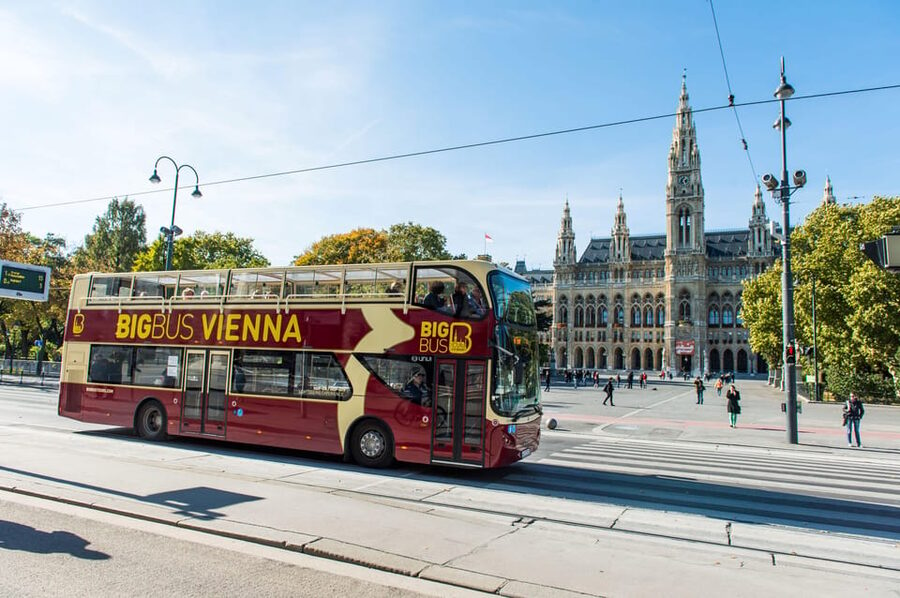
At about $36 per person, the 24-hour pass is easiest to judge as a transport and orientation tool. If you complete a full loop, get off at several major sights, and use the bus to move between distant areas, the price can make sense, especially on a first visit.
The 48-hour pass is more attractive if you want a slower pace. You can ride the City Route on one day and focus on the Palace Route on the next. You also receive a free VOX digital walking tour download, the guided walking tour if that option is selected, and access to two self-guided routes through the POPGuide app.
The guided city walk departs daily at 11:30 AM from Stop 1, Opera, and lasts about 90 minutes. It is conducted in English and focuses on Vienna’s imperial past. That timing is important: plan the walking tour first, then use the bus in the afternoon, or ride early and return to the opera stop before 11:30.
The two self-guided audio walks are called Secrets of Vienna and Vienna in the 19th Century. The redemption code appears on your ticket receipt after staff activate your QR code. Download the POPGuide app before you need it, since the value of these tours depends on having them ready.
The 48-hour option with the walking tour also includes a Viennese sausage plate at ZUM KAISER Sausage Stand, one minute from Stop 1. This is a small extra, but a useful one if you want a quick local-style bite near the main departure point.
Using the app and finding the stops
You can activate the mobile voucher or QR code at any Big Bus stop. Stop 1, Opera, is the most useful starting point because it is the departure point for the first bus and the guided walk.
Download the Big Bus app before setting out. It shows stop locations, live bus positions, and service updates. That live tracking is particularly helpful when you have just left a palace or museum and do not want to guess how long you will wait.
Buses are listed at roughly 30 to 45 minute intervals, with some periods reported as closer to 20 minutes. The exact wait can vary, so check the app rather than relying only on a printed schedule.
The first listed departure is 9:30 AM from Stop 1, and the last is 4:00 PM. This is the biggest practical limitation for evening sightseeing. A separate panoramic night tour is available only if you select that option, so do not assume the regular pass will carry you late into the evening.
There is no hotel pickup or drop-off. You need to reach a Big Bus stop yourself, but the central stops are easy to build into a day of sightseeing. Infants aged four and under ride free and do not need a ticket.
The buses are wheelchair accessible. If you need a particular boarding arrangement, check the stop and bus conditions when you activate your ticket.
Who gets the most from this Vienna tour
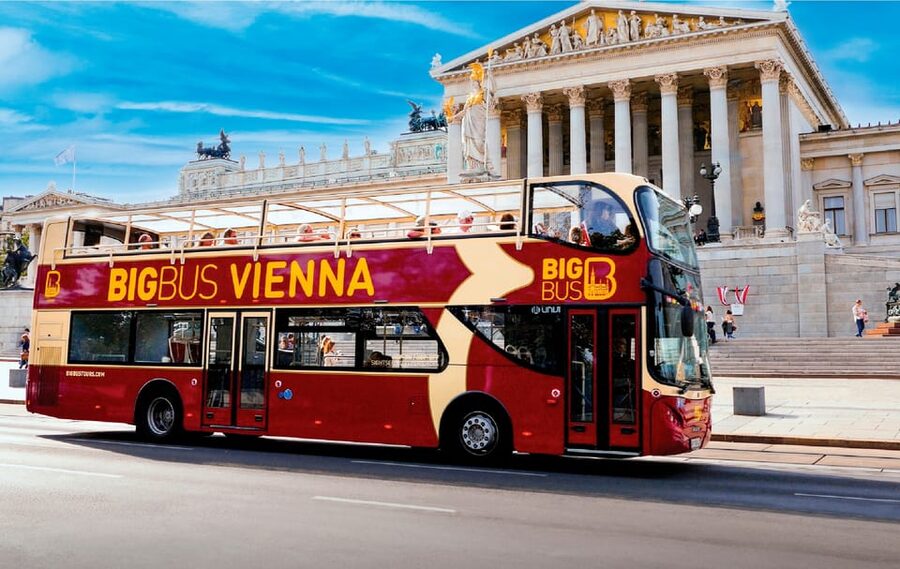
I would recommend this tour to first-time visitors who want a quick city overview before choosing which sights deserve admission time. It is also useful for families, older visitors, and anyone who prefers not to walk long distances between the center and the palaces.
It suits a short stay especially well. If you are in Vienna for one day from Budapest or another nearby city, the full loop gives you a clear sense of the city before you choose a few stops. You will not see every interior, but you will understand the layout and avoid wasting time crossing town.
The tour also works for repeat users of hop-on, hop-off buses because Vienna’s two routes cover more than the central monuments. You can use the bus as a practical link to the outer palaces, then return to the old center when you want cafés, museums, or cathedral streets.
I would be more cautious if you want deep visits to several museums or palaces in one day. Traffic, bus intervals, and the size of Schönbrunn and Belvedere make a packed schedule risky. The bus takes you near the sights, but it does not skip admission lines or replace time inside them.
Should you book the Big Bus Vienna tour?
Book it if you want a broad view with little planning, especially on a first visit or a short stay. The clear audio, two useful routes, open-top views, and app tracking give you a practical way to get your bearings and reach attractions spread across Vienna.
Choose the 48-hour pass if you want Schönbrunn and Belvedere without rushing, or if the English walking tour and sausage plate appeal to you. Choose 24 hours if your plan is simply to ride the main circuit, select a few central stops, and keep the rest of your day flexible.
Skip it only if you already know Vienna well and prefer to explore entirely on foot or by regular public transport. For most first-time visitors, the bus earns its place by showing you the city’s imperial center, palace districts, modern Danube area, and unusual architecture in one workable plan.
FAQ
How long does the Vienna Big Bus tour last?
The available options range from a roughly 90-minute sightseeing ride to a 24-hour or 48-hour pass. The longer passes let you hop off and reboard during the validity period.
What are the main routes?
The City Route covers central and modern Vienna, including sights near the Vienna State Opera, Hofburg Palace, St. Stephen’s Cathedral, the Museum Quarter, UNO City, and Danube Island. The Palace Route reaches Schönbrunn, Belvedere, and Hundertwasserhaus.
What languages are available for the audio commentary?
The onboard audio guide is available in Spanish, English, French, German, Italian, Portuguese, Russian, and Arabic. Headphones are provided.
Does the 48-hour ticket include a walking tour?
The guided walking tour is included if you select the appropriate 48-hour option. It departs daily at 11:30 AM from Stop 1, Opera, is conducted in English, and lasts about 90 minutes.
What extra digital tours come with the 48-hour ticket?
The 48-hour options include a code for the VOX POPGuide app. You can use it for two self-guided tours, Secrets of Vienna and Vienna in the 19th Century, available in six languages.
When does the first bus leave?
The first listed bus departs from Stop 1, Opera, at 9:30 AM. Buses run approximately every 30 to 45 minutes, and the last listed departure is at 4:00 PM.
Is the bus wheelchair accessible?
Yes. The tour is wheelchair accessible. You can activate your mobile voucher or QR code at any Big Bus stop, and infants aged four and under travel free without a ticket.
Just added in Vienna
- 3 hour private tour in Vienna by private car★ 4.4 · 6 reviews
- Private Christmas Markets Walking Tour Vienna★ 5.0 · 31 reviews
- Christmas Markets & Shopping in Vienna★ 5.0 · 17 reviews
- Christmas Market Vienna Tour★ 4.0 · 53 reviews
- Vienna: Christmas Markets Tour★ 4.3 · 99 reviews
- Vienna: Bus Tour with Virtual Reality Experience★ 4.7 · 148 reviews
- Vienna: A Little Night Music – Concert at Capuchin Church★ 4.8 · 145 reviews
- Vienna: Naschmarkt Guided Food Tour★ 4.4 · 140 reviews
Tours in Vienna, compared.
Vivaldi’s Four Seasons Concert in Karlskirche
Read our review →
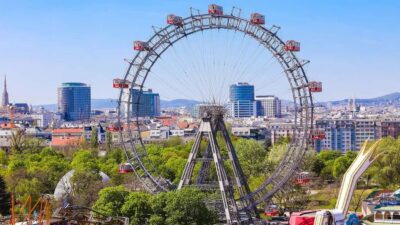
Skip-the-cashier-desk-line Giant Ferris Wheel Ride
Read our review →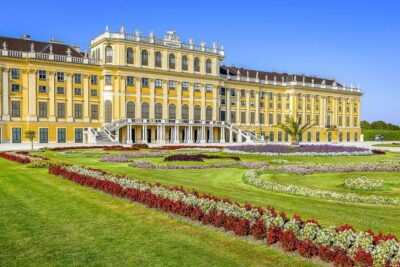
Schönbrunn Palace & Gardens Skip-the-Line Tour
Read our review →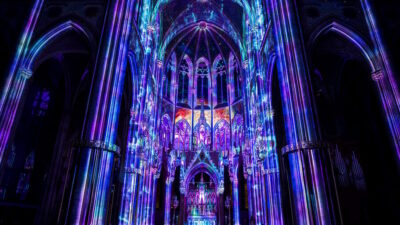
Light of Creation Votive Church Immersive Light Show
Read our review →
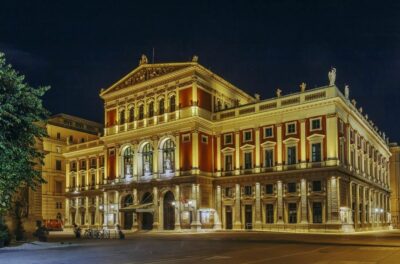
Classical Concert in the World-Famous Musikverein
Read our review →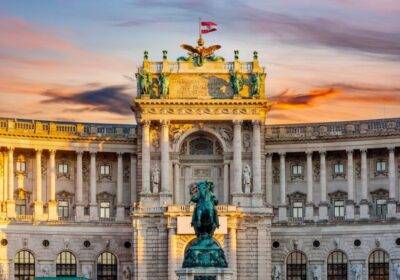
Skip-the-Line Sisi Museum, Hofburg and Gardens Tour
Read our review →Browse the lists this tour appears in