
Reviewed · WALKING TOURS
Vienna Art Nouveau Walking Tour
Vienna’s Art Nouveau is best understood not as a collection of pretty façades, but as a bold plan to reshape a modern city. This walking tour follows Otto Wagner’s metro stations and landmark buildings, showing you how iron, marble, ceramic tile, floral motifs, and imperial symbols worked together. The route ends at the small station built solely for the Emperor near Schönbrunn.
I especially like the small group limit of eight, which gives an art-focused guide room to answer questions and adjust the pace. I also like the practical route: you see major Jugendstil sights while learning how Vienna’s public transport system helped create the modern city. The main drawback is price. At $180.04 per person, this is a serious outlay for about 2.5 hours, and the Otto Wagner Pavilion and Secession entrance fees cost extra.
Key points to know before you book
- Otto Wagner’s metro stations: See two of the most memorable survivors from Vienna’s original city railway.
- Klimt’s Beethoven Frieze: From Tuesday through Sunday, you can add the Secession’s famous artwork for €9.50, or €6 for students and seniors.
- A guide-led art lesson: The tour explains Jugendstil symbols, materials, and ideas instead of simply pointing out façades.
- A maximum of eight people: This is a personal format, useful if you want to ask questions or request adjustments.
- A useful Vienna orientation: You’ll learn how the U4 line and historic stations fit into the city.
- Extra costs to plan for: The pavilion costs €5 when its museum is open, and the Secession entrance is separate.
Why Vienna’s metro is the star of this art tour
Many city walks treat transport as a way to get from one sight to the next. Here, the railway is part of the subject. Otto Wagner designed Vienna’s Stadtbahn system at a moment when the city was expanding, traffic was changing, and public transport needed to look worthy of a modern capital.
That gives the tour a useful focus. You are not simply examining an ornate apartment block, then another ornate building. You are learning how architecture entered daily life through stations, bridges, river channels, apartment houses, and civic spaces.
The terms can be confusing at first. In Vienna, you’ll hear Jugendstil, the German-speaking form of Art Nouveau. The style favored flowing lines, natural forms, new materials, and a break from old academic decoration. Your guide connects those ideas to the buildings in front of you, making the style easier to recognize later in Vienna, Budapest, or other Central European cities.
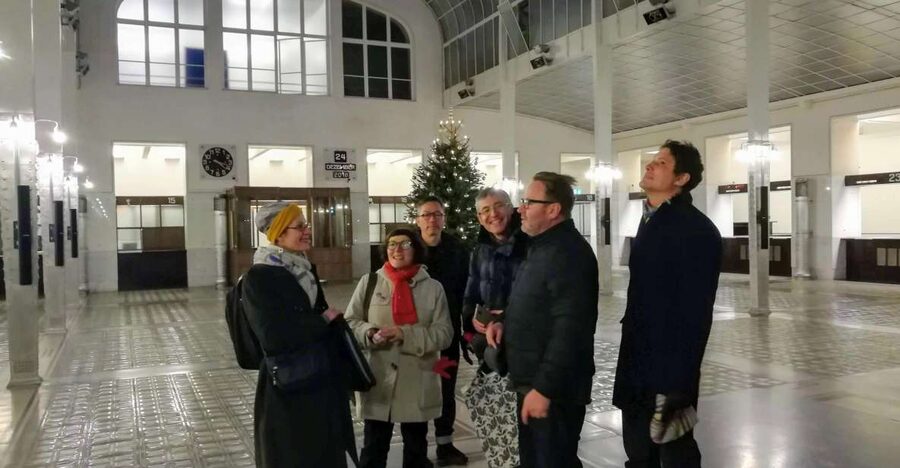
The small group format matters here. Art Nouveau details can be easy to miss, especially when a building seems simple from a distance. A guide can point out a repeated motif, explain why a material was chosen, or connect a station to a larger city project. Past guides have included Jan, Stefan, Suzanne, Ilse, Angelina, and Wolfgang Augsten, with strong praise for their command of architecture, culture, and Viennese history.
More Walking Tours in Vienna
- Vienna: Guided Walking Tour of City Center Highlights
★ 4.7 · 4,989 reviews - Vienna: Vienna Central Cemetery Guided Walking Tour
★ 4.8 · 3,307 reviews - Vienna: Guided Walking Tour of City Highlights & Hidden Gems
★ 4.9 · 2,180 reviews
Meeting Otto Wagner at Karlsplatz
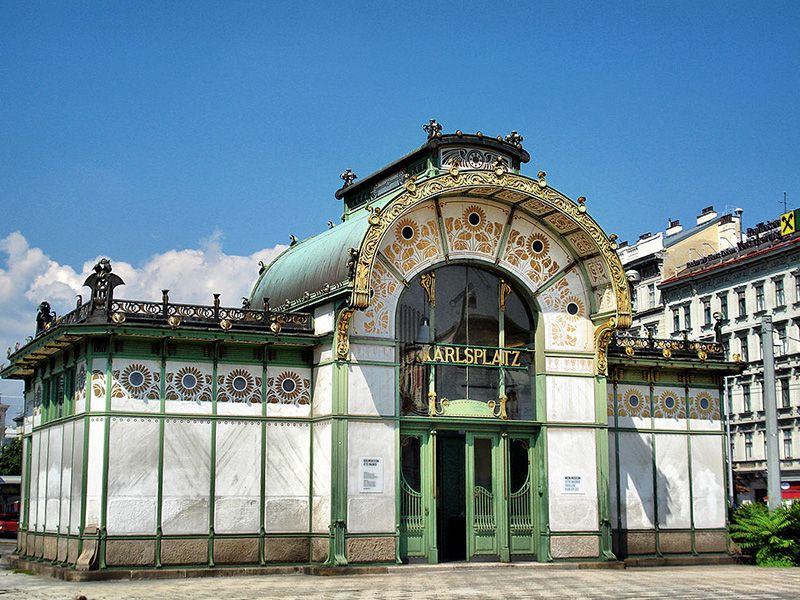
The tour begins at Operngasse 7 in central Vienna, then sets out toward the Otto Wagner Pavilion at Karlsplatz. This elegant green and white structure is a fine opening lesson because it compresses Wagner’s approach into one small building.
The pavilion once served Vienna’s city railway. Today, when the museum is open from April through October, it also houses the Otto Wagner Museum. The building is free to view from outside, but museum admission costs €5 for general admission, or €4 for seniors, students, Vienna Card holders, and people with disabilities.
I like starting here because the guide can establish the main themes before you are faced with a long series of buildings. Look for the balance between practical engineering and decorative finish. Wagner was designing transport infrastructure, yet the pavilion received the care normally associated with a grand public building.
The museum visit is not guaranteed in every season, so check the timing if seeing the interior matters to you. The tour can still begin with the pavilion itself and use it as a visual introduction to the movement.
Stadtpark and the station beside the Vienna River
From Karlsplatz, you walk toward Stadtpark station. This is one of the best-preserved original metro stations still in use, and it offers a different lesson from the pavilion.
The station is tied to a difficult urban problem. When Vienna’s city railway was built, the Vienna River had to be redirected. The adjoining artificial river channel shows how the railway project affected more than tracks and platforms. Engineers and architects had to fit the new transport line into an existing city, waterway, and public park.
That detail gives the walk a practical edge. Art Nouveau was not only about surface decoration. It was also about adapting new technology to urban life. The station’s design elements make more sense when you understand the engineering problem behind them.
Your guide will begin identifying the shapes, colors, and materials used across Wagner’s work. This is where the tour’s structure pays off. You first see the pavilion, then a working station, and then begin comparing how the same design language changes according to purpose.
There is no admission charge for this stop. You should still expect ordinary city conditions: this is a functioning transport setting, not a quiet museum room. The route is also a walking tour, so comfortable shoes and a weather-ready layer are sensible choices.
The Secession building and Vienna’s artistic break
The walk continues toward the Secession building, the landmark most closely tied to Viennese Jugendstil. Its unusual dome of gilded laurel leaves makes it hard to confuse with any other building in the city.
The Secession was created as a statement by artists who wanted freedom from established artistic institutions. The building itself carries that message. Its clean geometry, white walls, decorative entrance, and striking dome reject the heavy historic styles that had dominated public architecture.
This is the point where the tour moves beyond Otto Wagner alone. You will consider the ideas shared by the Viennese artists of the period, including their interest in symbolism, modern materials, and art that belonged in everyday life.
If you visit Tuesday through Sunday, you can enter the Secession to see Gustav Klimt’s Beethoven Frieze. Admission is €9.50 for adults and €6 for students and seniors. Your guide helps you pay, but the fee is not part of the tour price.
I consider this extra worthwhile if Klimt is a major reason you are in Vienna. The Beethoven Frieze adds a strong artistic center to the walk and helps explain why the Secession is more than an unusual exterior. If you are watching your budget, you can still study the outside and continue with the tour.
The Secession visit also makes the experience more rewarding for art lovers who already know Vienna’s grand palaces and churches. Instead of repeating the imperial story, it shows you the moment when artists pushed for a new visual language.
More walking routes in Vienna:
- Vienna: Viennese Underworld Guided Walking Tour
★ 4.7 · 1,865 reviews - Vienna: World War II Historical Walking Tour
★ 4.8 · 1,772 reviews - Vienna Historic Center Small Group Walking Tour
★ 5.0 · 1,746 reviews - Vienna: Private Walking Tour with a Local Guide
★ 4.6 · 1,420 reviews
Otto Wagner’s apartment buildings and the meaning of materials
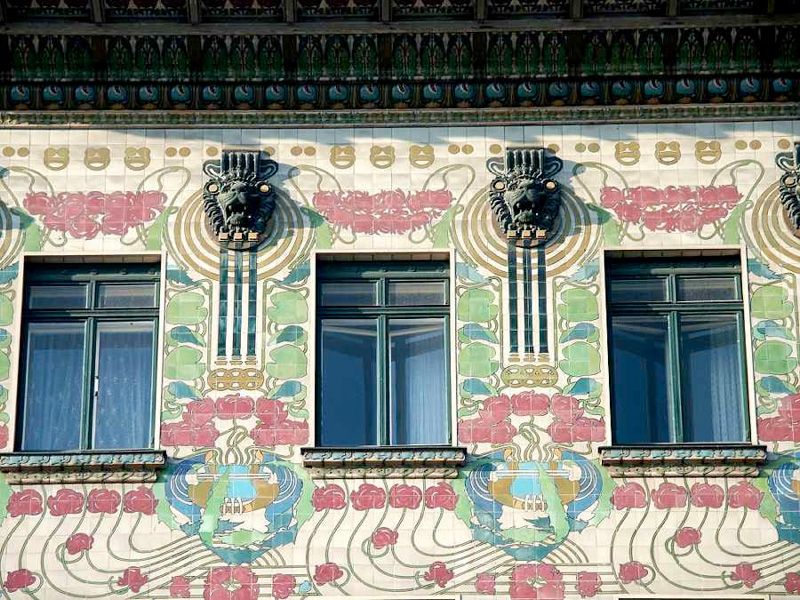
Near the Secession, the route includes two attractive apartment houses by Otto Wagner. These buildings help you see how an architect associated with public infrastructure handled private urban life.
Apartment buildings are especially useful examples because they show how Jugendstil reached ordinary streets. The designs are not isolated palace rooms. They are façades intended for residents, businesses, and daily routines, with ornament used to give modern housing a distinct identity.
Your guide will discuss the symbols and materials favored by the movement. Pay attention to how decoration is placed rather than assuming every detail is merely ornamental. The tour is designed to show why a certain pattern appears where it does, and how Wagner could adapt a generally bourgeois style for different social settings.
This part also gives you a chance to ask about Vienna around 1900. Several people who have taken the tour after previous visits to the city found that the guide introduced buildings they had passed without noticing. That is a good reason to choose this walk even if you already know the Ringstrasse and central Vienna.
Kettenbrücke station and a short ride on the U4
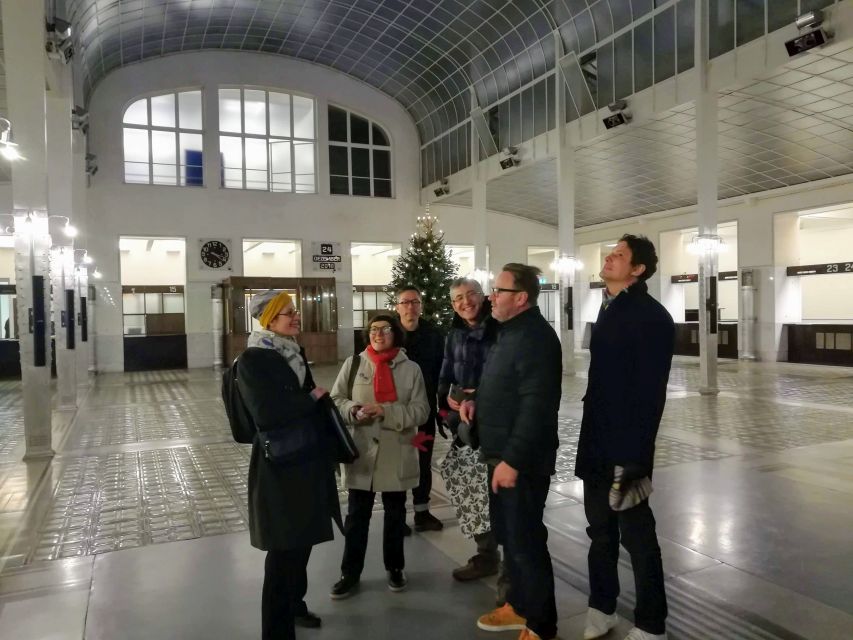
The next metro stop is Kettenbrücke station. From here, the group boards the metro for the final station, the imperial stop near Schönbrunn.
That short ride is not filler. It lets you experience the transport system that made Wagner’s work so important. One useful benefit of this route is that you get a practical lesson in Vienna’s public transport at the same time as an architecture lesson. A guide can explain how the stations fit together and help you feel more comfortable using the city’s trains during the rest of your stay.
The exact transport arrangements can depend on the tour day and group. A past guide used the U4 to reduce walking and provide a warm break on a cold day. That flexibility is valuable, but you should confirm what transport ticket you need, since public transport fares are not listed among the tour inclusions.
Kettenbrücke also helps you compare station designs. Rather than seeing one famous structure in isolation, you can consider how the same designer handled different settings and audiences.
The Emperor’s station near Schönbrunn
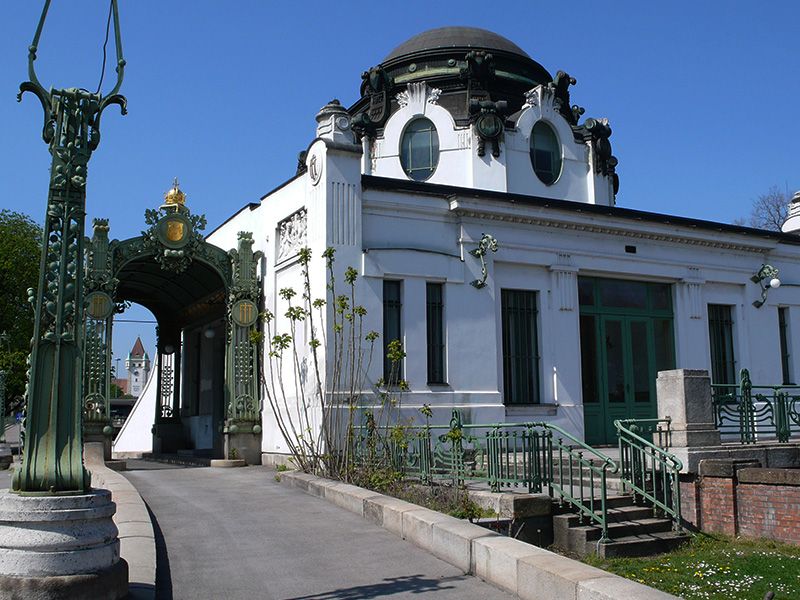
The final stop is the crown jewel of the route: the imperial station built outside Schönbrunn Palace for the Emperor’s use. It was not just a convenient private platform. Its very existence carried a political message, showing that the Emperor supported Vienna’s new metro line.
That symbolism makes the small building especially interesting. Wagner had developed a style associated with modern urban life and the middle class. Here, he adapted it for imperial use, adding a greater sense of ceremony and grandeur without losing the clean, modern character of the design.
This is where the guide ties the route together. The station brings back the elements you have seen at Karlsplatz, Stadtpark, and Kettenbrücke, then changes their tone. You can look for familiar materials and decorative ideas while noting how they are adjusted for a royal setting.
The stop is free to view. It is also a strong ending because it connects architecture to power. Vienna’s metro was not merely a technical project. It was part of a citywide argument about modernity, public life, and the role of the monarchy.
What the price includes, and what it does not
The listed price is $180.04 per person. That is high for a walk of about 2.5 hours, especially since the price does not include food, drinks, hotel pickup, or the optional entrance fees.
What you are paying for is a professional guide in a group capped at eight people. The value depends on how much you want interpretation rather than a quick route between landmarks. If you are passionate about architecture, Klimt, or Vienna around 1900, the guided explanation can make the price easier to justify.
The extra fees are modest compared with the tour price, but they should still be planned:
- The Otto Wagner Pavilion museum costs €5, or €4 for eligible reduced-rate visitors, when open from April through October.
- The Secession costs €9.50 for adults and €6 for students and seniors from Tuesday through Sunday.
- Food and drinks are not included.
- Hotel pickup and drop-off are not included.
Group discounts are available, but the supplied details do not specify the discount amount. The tour is offered in English and confirmation is provided at booking.
Weather, pace, and the small-group advantage
This is an outdoor walking experience with metro travel included in the route, so weather can shape your day. Cold rain has affected the experience for past groups, and one guide offered a car ride so the group would not get soaked. That is a thoughtful example of the flexibility you may get with a small party, but you should not assume private vehicle transport is a standard inclusion.
The walking pace can also be adapted. Guides have adjusted the route for the people in their group, answered detailed questions, and offered suggestions for places to eat and visit during a Vienna stay. The maximum of eight people gives you a better chance to speak up than you would on a large city tour.
Most people can participate, and the route is near public transport. Still, it is wise to be realistic about the format. You will walk between several central stops, spend time outdoors, and use a metro line. If you need a fully private vehicle tour or a route with no walking, this is not the right product.
Who will get the most from this walk
I would choose this tour if you want a clear introduction to Vienna’s Art Nouveau and prefer buildings explained in context. It suits art, architecture, design, and history fans, especially those who want more than a list of dates and names.
It is also a good first or second-day activity. The route gives you a useful sense of central Vienna, introduces the U4, and can help you recognize Jugendstil details elsewhere. Several guides also offer practical suggestions for the rest of your stay, which adds value beyond the scheduled route.
You may not need it if you only want exterior photographs or already have a strong command of Wagner and the Secession movement. At this price, casual sightseers should think carefully. The tour earns its cost through explanation, access to a specialist guide, and a small group, not through a long list of included attractions.
The tour has a 4.9 rating from 21 reviews, with 95 percent recommending it. More important than the numbers is the consistent pattern in the feedback: guides such as Suzanne, Jan, Stefan, Ilse, Angelina, and Wolfgang Augsten are praised for enthusiasm, strong subject knowledge, friendly manner, and flexibility.
Should you book the Vienna Art Nouveau Walking Tour?
Book it if Vienna’s early modern architecture is high on your list, you want to understand what you are seeing, and you value a guide who can tailor a small group walk. The Secession and Klimt’s Beethoven Frieze make the tour especially appealing to art fans, while the stations and U4 ride give it a practical city-planning angle.
Think twice if $180.04 feels steep for a short walking tour, or if you are not interested in architectural detail. Add the museum and Secession fees, dress for the weather, and confirm your transport needs.
For the right audience, this is a focused, intelligent way to see Vienna’s modern side. You leave with more than a set of photographs. You understand how a railway, a river, apartment houses, artists, and an emperor became part of the same story.
FAQ
How long is the Vienna Art Nouveau Walking Tour?
The experience lasts approximately 2.5 hours. The tour description also refers to it as a three-hour walking tour, so allow roughly three hours in your schedule.
Where does the tour start?
The meeting point is Operngasse 7, 1010 Vienna, Austria.
Where does the tour finish?
The end point is listed as Vienna, Austria. A more specific final street address is not provided.
What language is the tour offered in?
The tour is offered in English.
How many people can join the tour?
A booking can include a maximum of eight people, and the activity also has a maximum group size of eight travelers.
Are admission fees included?
No. The main stops are free to visit, but the Otto Wagner Pavilion museum costs €5, or €4 at the reduced rate, when open from April through October. The Secession costs €9.50 for adults and €6 for students and seniors from Tuesday through Sunday.
Is hotel pickup included?
No. Hotel pickup and drop-off are not included.
Can I cancel for a full refund?
Yes. You must cancel at least 24 hours before the experience start time for a full refund. Cancellations or changes made less than 24 hours before the start time are not accepted for a refund.
Just added in Vienna
- World War II History Vienna Old Town Private Walking Tour★ 4.8 · 9 reviews
- Vienna: Wiener Schnitzel and Strudel Cooking Class★ 4.9 · 126 reviews
- Vienna: Wine Tasting Tour★ 4.8 · 61 reviews
- Vienna: Winery and Wine Tasting Tour with a Wine Expert★ 5.0 · 5 reviews
- Vienna: Wine Tasting E-Bike Tour★ 4.9 · 46 reviews
- Vienna: Wine Tasting at Schönbrunn Palace★ 4.3 · 71 reviews
- Vienna: Unforgettable Private City Tour★ 5.0 · 7 reviews
- Vienna Urban Art Tour: Explore a different side of Vienna!★ 3.8 · 14 reviews
Walking Tours, compared.
Guided Walking Tour of City Center Highlights
Read our review →
Guided Walking Tour of City Highlights & Hidden Gems
Read our review →
Vienna Historic Center Small Group Walking Tour
Read our review →
Browse the lists this tour appears in