Reviewed · TOURS IN VIENNA
The best of Vienna on foot
Vienna’s grand center makes a fine first walk, and this tour gives you the imperial story in one compact route. You move from the Maria Theresa Memorial past the Hofburg, the Capuchin Crypt, the Albertina, the State Opera, Heldenplatz, the Plague Column, and finally St. Stephen’s Cathedral.
I like the clear start-to-finish route and the chance to ask questions along the way. I also like the practical advice on restaurants, public transport, and cultural life, which can save you time after the walk. The main drawback is that 150 minutes on foot can feel demanding, especially in bad weather or for anyone with limited mobility.
Key points to know before you book
- Imperial Vienna in one walk: See more than 10 major sights in the central district.
- Italian-speaking guidance: The tour is led in Italian by an official certified guide.
- Useful local advice: Ask about restaurants, public transport, and Vienna’s cultural calendar.
- A strong first-day choice: The route helps you get your bearings before exploring on your own.
- Photo time is built in: You can stop for pictures rather than racing past the monuments.
- Weather matters: The tour runs in rain or shine, except in an environmental disaster.
Why this walk works well on your first day in Vienna
Vienna can feel grand to the point of confusion. Huge squares, ornate palace fronts, museums, churches, and cafés fill the central district, but the meaning behind them is not always clear when you first arrive.
This walk gives you a useful framework. Instead of visiting one sight in isolation, you connect the city’s imperial court, religious life, public monuments, and modern city culture in a single outing. That makes it easier to return later to the places you want to see inside.
The route lasts 2.5 hours, or 150 minutes. That is long enough for a proper introduction, but short enough to fit around another museum, a meal, or an evening concert. I would place it near the start of a Vienna visit, especially if you want historical context before tackling the Hofburg or the city’s major museums.
The walk is offered in Italian. That matters more than the language line on a booking page might suggest. Historical tours depend on names, dates, political connections, and small stories, so you should choose this experience if Italian is the language in which you absorb information most easily.
More days out of Vienna:
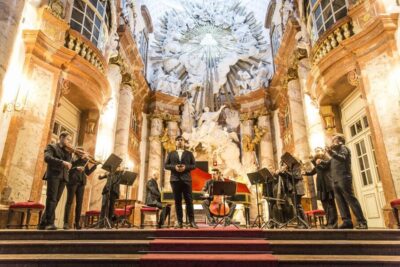
- Vienna: Vivaldi’s Four Seasons Concert in Karlskirche
★ 4.7 · 14,951 reviews - Vienna: Spanish Riding School Training
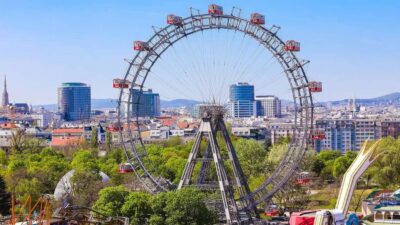
★ 3.9 · 9,281 reviews - Vienna: Skip-the-cashier-desk-line Giant Ferris Wheel Ride
★ 4.5 · 7,859 reviews
Starting at the Maria Theresa Memorial
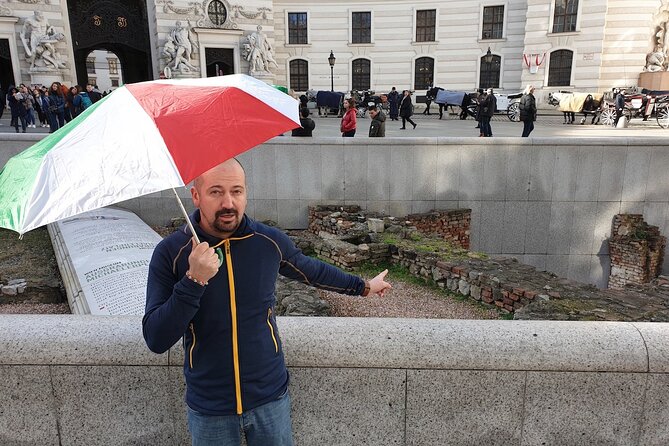
The meeting point is at the fountain by the Maria Theresa Memorial on Maria-Theresien-Platz. Look for the red, white, and green Italian-colored umbrella, which should make the guide easier to spot in a busy square.
The memorial honors Maria Theresa, one of the most important Habsburg rulers. Beginning here gives the walk an immediate sense of scale. The square is framed by major cultural buildings, so you are not simply meeting beside an ordinary street corner.
You should arrive with comfortable shoes and only what you need for the walk. Large bags and luggage are not allowed, and pets are not permitted. Audio recording is also not allowed, so plan to listen and take your own notes afterward if you want to remember dates or names.
Crossing Vienna’s monumental center
From the Maria Theresa Memorial, the tour moves through Vienna’s historic center toward the main imperial and religious sights. The appeal is not only the number of stops. It is the way the buildings explain one another.
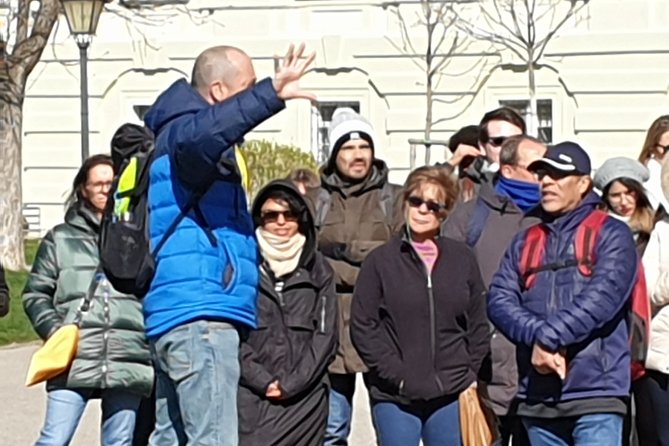
You will see grand Baroque architecture and hear about the role of Vienna’s residents in shaping the city. The guide also talks about popular culture, so the walk is not limited to palace politics and dynastic marriages.
You should expect a walking tour rather than a series of indoor visits. The route takes you in front of the major buildings, with time to admire their exteriors and take photographs. If you want to enter the Hofburg, the Capuchin Crypt, the Albertina, or the State Opera, you will need to do that separately.
That arrangement keeps the tour moving. It also makes the $40 price easier to judge. You are paying for a guided overview, not admission to several attractions. For a first orientation, the cost is reasonable if you use the information to plan the rest of your stay. It is less useful if you want long indoor visits or a detailed museum tour.
The Capuchin Crypt and the Habsburg story
One of the most distinctive stops is the Capuchin Crypt, the burial place of the Habsburg monarchs. The crypt gives the imperial story a human ending. Palaces show power in public, while a dynastic burial place reminds you that even Vienna’s rulers faced the same final limit.
The tour takes you in front of the crypt rather than promising an included visit inside. That distinction is important. You will hear why the site matters and can decide if you want to return for an interior visit.
This is also a good point to ask questions. The tour includes an opportunity to speak directly with the guide, and a subject such as the Habsburg succession can raise plenty of them. If you are curious about emperors, royal families, or the connection between Vienna and the wider empire, this stop should hold your attention.
A different kind of evening in Vienna:
- Vienna: Schönbrunn Palace & Gardens Skip-the-Line Tour
★ 4.7 · 7,739 reviews - Vienna: Light of Creation Votive Church Immersive Light Show
★ 4.8 · 6,779 reviews - Vienna Spanish Riding School Guided Tour
★ 4.7 · 6,765 reviews - Vienna: Classical Concert in the World-Famous Musikverein
★ 4.6 · 6,673 reviews
Albertina and the Vienna State Opera
The walk continues toward the Albertina and the Vienna State Opera. These are two very different parts of Vienna’s cultural life.
The Albertina is tied to art and museum culture, while the State Opera points to the city’s continuing love of performance. The tour places both within the wider story of the center, helping you see that Vienna is more than former imperial power.
You will have time to take photographs. That sounds like a small feature, but it improves the pace of a walking tour. A guide who stops for pictures lets you look carefully at the façades instead of choosing between listening and framing a shot.
The tour does not include food or drinks. You may want to eat before setting out, especially if you prefer not to interrupt the walk. One guide also accepted a group request for a stop at a punch kiosk, but that was an extra arranged for that group, not a promised part of the tour. Treat it as a possible personal request, not an included feature.
The Hofburg and Heldenplatz
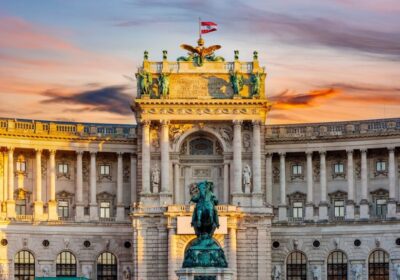
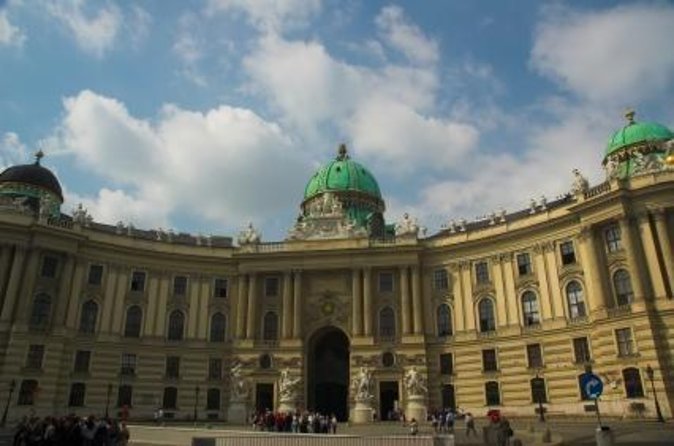
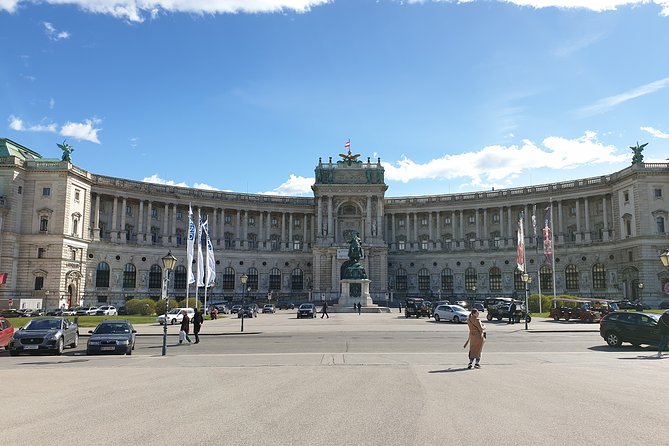
The Hofburg is the core of the imperial section of the route. It was the palace of Franz Josef and Empress Sissi, two names closely linked with Vienna’s public image.
A good guide can help you move past the polished Sissi story and place the palace within the broader Habsburg world. You can expect specific dates, historical explanations, and anecdotes rather than a simple list of buildings. The information provided for this walk highlights stories and facts, so the experience is designed to give context as you go.
Heldenplatz adds another open public space to the route. Here, the grand architecture feels less private than the Hofburg. The setting helps explain how the imperial center also functioned as a stage for public ceremony and civic identity.
I would pay attention to the transitions between these sights. Vienna’s center is compact enough that a short walk can take you from palace life to public squares, from courtly grandeur to everyday city movement. That is the real strength of this route.
The Plague Column and Vienna’s public memory
The Plague Column is another major landmark on the walk. Its purpose is different from the palace and museum stops, and that variety keeps the tour from becoming one long imperial genealogy.
The monument brings illness, faith, and public memory into the story of central Vienna. It also shows how the city marked crisis in stone and sculpture. You will hear facts and stories about the monument as part of the wider route, rather than stopping for a separate specialist lecture.
For me, this kind of variety is useful. If every stop were another palace, the city would begin to blur. Religious monuments, memorials, cultural buildings, and public squares give you several ways to understand Vienna.
Ending at St. Stephen’s Cathedral
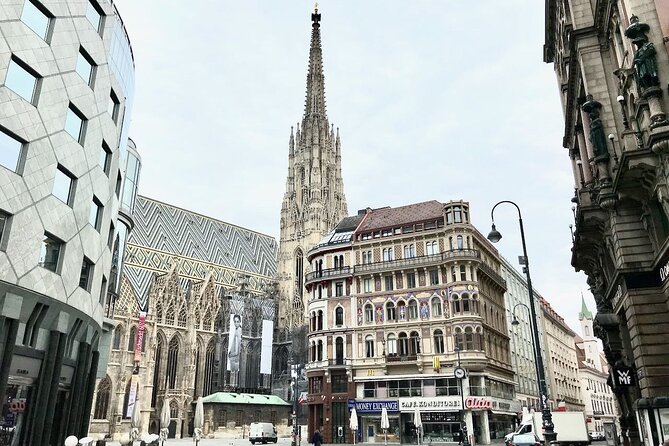
The tour finishes at St. Stephen’s Cathedral, Vienna’s best-known landmark. Ending here gives the route a strong visual finish and leaves you in a useful part of the center for further sightseeing.
The cathedral is not just a final photo stop. It helps shift the focus from the imperial court to Vienna’s older religious and civic identity. The tour’s route connects it to the monuments you saw earlier, so you can better understand how the city center grew around several kinds of power.
The stated route begins at the Maria Theresa Memorial and finishes at St. Stephen’s Cathedral. One description also refers to starting the tour at the cathedral, so I would follow the meeting instructions attached to your booking and look for the Italian umbrella at the Maria-Theresa-Platz fountain.
Once the walk ends, you can continue exploring on your own. You will also be able to ask the guide for suggestions about restaurants, public transport, and cultural activities. Those final questions may be among the most useful parts of the experience because they apply to the rest of your trip.
The guides and the style of explanation
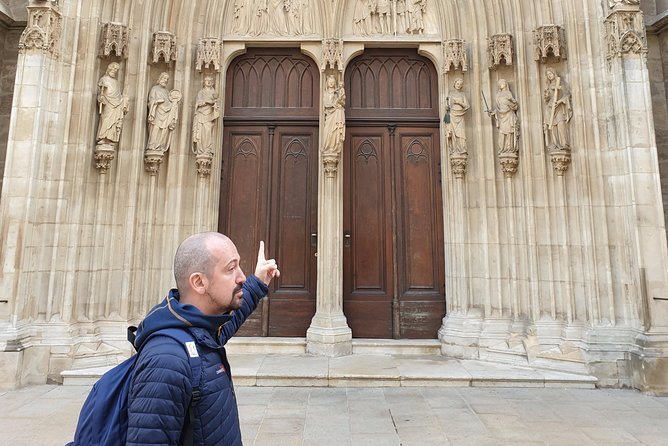
The provider is Mario Vienna Guide, and the activity is led in Italian by an official certified guide. Two guide names appear in the feedback for this experience: Raffaele and Mara.
Raffaele is described as prepared, friendly, and never boring. Mara is praised for making nearly three hours of walking pleasant and interesting through complete explanations, precise historical framing, and amusing anecdotes. Those details suggest the tour aims for a conversational approach, not a dry recital of dates.
You should still keep your expectations practical. Guide quality can vary from one departure to another, and no tour can guarantee the same person each time. What is consistent in the description is the format: historical facts, stories, time for questions, and advice for the rest of your stay.
The language is Italian only. If you need English, German, or another language, this is not the right choice based on the information available.
Walking comfort, weather, and accessibility
This is an outdoor walking tour that runs rain or shine. It is canceled only in the event of an environmental disaster, so you should check the forecast and dress for the conditions.
Cold weather deserves special attention. One winter group continued through severe cold and icy wind, yet still found the explanations worthwhile. That tells you the tour can work in winter, but it does not make warm clothing optional. Bring a coat, weatherproof shoes, and whatever protection you need for rain or wind.
The activity is marked wheelchair accessible, but the same information also says it is not suitable for people with mobility impairments. Those statements do not fully match. If you use a wheelchair or have difficulty walking, contact the provider before booking and ask about the exact route, paving, stops, and pace.
The 150-minute length may be tiring even for an otherwise fit visitor. You should be ready to remain outdoors and walk between several central sights without a guaranteed indoor rest stop.
Is $40 a fair price?
At $40 per person, this is not a bargain-priced orientation, but the value depends on how you use it.
You receive a 2.5-hour guided walk, an official certified guide, time for questions, and a route covering more than 10 important sights. Food, drinks, and attraction entry are not included. The price makes the most sense for you if you want a clear introduction and intend to use the advice to plan independent visits afterward.
It is especially useful for a short stay. If you have only two or three days in Vienna, a single walk can help you decide which places deserve more time. You may also avoid wasting your first afternoon wandering between sights without understanding how they fit together.
I would skip it if you already know Vienna well, speak Italian only with difficulty, or want to spend most of your time inside museums and palaces. In that case, the $40 might be better put toward admission to a specific attraction.
Who should book this Vienna walk?
I recommend it most for first-time visitors who want history delivered in plain, manageable pieces. It also suits anyone arriving in Vienna and looking for a useful first activity, since the route covers the main center and ends near one of the city’s key landmarks.
Italian-speaking couples, families with older children, and small groups who enjoy asking questions should get the most from it. The mix of facts, anecdotes, architecture, and practical advice gives the walk more purpose than a quick photo circuit.
I would think twice if you dislike outdoor tours, need frequent sitting breaks, carry large luggage, or cannot manage a long walk. The tour does not include food or drinks, and the weather will not normally stop it.
Free cancellation is available up to 24 hours before the start, and you can reserve now while paying later. Those policies give you some flexibility, but they do not change the central choice: you are booking a walking introduction, not a series of indoor visits.
Should you book it?
Book this tour if you want to understand Vienna’s center before exploring it on your own, and if Italian is the right language for you. The route covers the Hofburg, Capuchin Crypt, Albertina, State Opera, Heldenplatz, Plague Column, and St. Stephen’s Cathedral, while leaving room for photographs and questions.
I would choose it early in your stay and wear serious walking shoes. For a first look at imperial Vienna, $40 buys a useful two-and-a-half-hour orientation. Just confirm the accessibility details before booking, and do not expect attraction admission or a guaranteed refreshment stop.
FAQ
Where does the tour meet?
The meeting point is at the fountain by the Maria Theresa Memorial on the square. Look for an Italian-colored umbrella in red, white, and green.
Where does the tour finish?
The tour finishes at St. Stephen’s Cathedral in central Vienna.
How long does the tour last?
The tour lasts 150 minutes, or 2.5 hours.
What language is the tour in?
The live tour guide speaks Italian.
Are food and drinks included?
No. Food and drinks are not included.
Can I cancel the booking?
Yes. You can cancel up to 24 hours in advance for a full refund. You can also reserve now and pay later.
Just added in Vienna
- World War II History Vienna Old Town Private Walking Tour★ 4.8 · 9 reviews
- Vienna: Wiener Schnitzel and Strudel Cooking Class★ 4.9 · 126 reviews
- Vienna: Wine Tasting Tour★ 4.8 · 61 reviews
- Vienna: Winery and Wine Tasting Tour with a Wine Expert★ 5.0 · 5 reviews
- Vienna: Wine Tasting E-Bike Tour★ 4.9 · 46 reviews
- Vienna: Wine Tasting at Schönbrunn Palace★ 4.3 · 71 reviews
- Vienna: Unforgettable Private City Tour★ 5.0 · 7 reviews
- Vienna Urban Art Tour: Explore a different side of Vienna!★ 3.8 · 14 reviews
Tours in Vienna, compared.
Vivaldi’s Four Seasons Concert in Karlskirche
Read our review →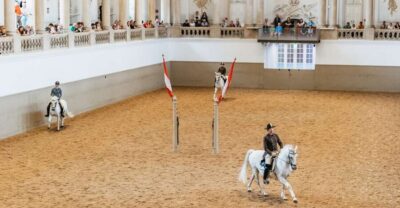
Skip-the-cashier-desk-line Giant Ferris Wheel Ride
Read our review →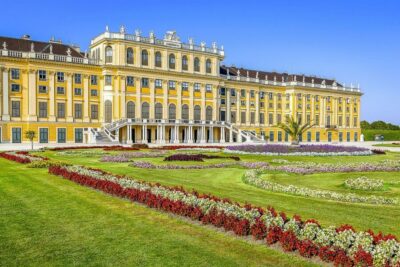
Schönbrunn Palace & Gardens Skip-the-Line Tour
Read our review →
Light of Creation Votive Church Immersive Light Show
Read our review →
Classical Concert in the World-Famous Musikverein
Read our review →