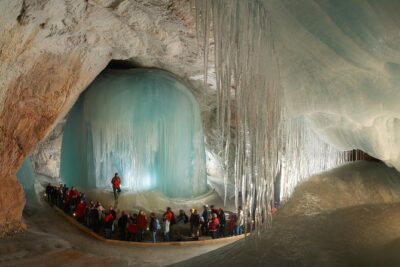
Reviewed · SALT MINE & ICE CAVE TOURS
Salzwelten Altaussee: Salt Mine Entrance Ticket
Altaussee’s salt mine brings together two very different stories: the hard, practical work of producing salt today and the dramatic wartime rescue of priceless art from Nazi destruction. Inside the mountain, orange-and-red rock salt glimmers in the tunnel walls, while a chapel and underground water create an atmospheric finish.
I like the mix of real working mine and major history lesson, and I like that the tour does not stop at displays. You walk through the tunnels, ride miners’ slides, and finish with a light-and-music show in a cave. The main drawback is access: the mine sits about 3 kilometers above Altaussee and can only be reached by car or on foot.
Key points to know before you go
- Austria’s largest active salt mine: You see salt production as a current trade, not just a museum recreation.
- A powerful wartime story: Altaussee’s miners helped save major European artworks from Nazi destruction.
- Two miners’ slides: The descent adds a playful burst of speed to an otherwise historical tour.
- A striking underground setting: Orange and red salt shimmer on the tunnel walls, with a mystical chapel tucked inside the mine.
- A five-minute cave show: Light and music reflect across underground water for a quiet, memorable finale.
- Plan for cool conditions: Bring warm clothing and comfortable clothes, even if the weather above ground is mild.
Why Altaussee’s salt mine is more than a mine visit
Salzwelten Altaussee is located in the Styrian part of Austria’s Salzkammergut region, an area long tied to salt production. Salt once carried huge economic weight here, which explains the old phrase white gold. At Altaussee, that story continues into the present because this is still an active mine.
That working status gives the visit a useful edge. You are not simply looking at old tools behind glass. You are entering a place where mining remains part of daily industry, then connecting that practical story with medieval salt extraction and the events of the Second World War.
The mine also has a strong sense of place. Cool tunnels, raw rock salt, underground water, and dim lighting make the experience feel very different from an ordinary museum visit. I would choose it for the atmosphere as much as for the facts.
The tour lasts about 90 minutes. That is long enough to cover the mine’s main stories without turning into an all-day commitment. You should still allow extra time for reaching the entrance, parking, and getting ready for the cool underground temperature.
Other trips underground from Austria:
- Salzburg: Salt Mine Entrance Ticket
★ 4.8 · 258 reviews - Alpine Majesty: Eagle’s Nest, Salt Mine Salzburg & Berchtesgaden
★ 5.0 · 15 reviews - Private Werfen Ice Cave and Golling Waterfall from Salzburg
★ 5.0 · 15 reviews
Reaching the entrance above Altaussee
The mine entrance is about 3 kilometers above Altaussee. You can reach it by car or on foot, but the attraction cannot be reached directly by ordinary public transport according to the provided arrival information.
Free parking is available at the mine entrance. That makes driving the simplest choice, especially if you are carrying warm layers or visiting with children old enough to join the tour.
This location matters when you plan your day. Do not treat the mine as a stop you can casually reach from the center of Altaussee without checking your route. Build in time for the uphill journey, and check the exact directions before setting out.
The access point is also part of the experience’s tradeoff. The mountain setting feels authentic, but it is less convenient than a town-center museum. If you are already exploring the Salzkammergut by car, the location should be manageable. If you are relying on walking alone, plan carefully.
Entering the medieval mine and the world of white gold
The tour begins with the older side of salt mining. The medieval mine helps explain why salt mattered so much and how people worked beneath the mountain before modern equipment changed the process.
I find this context useful because salt can seem ordinary today. Underground, you get a clearer sense of why it was once treated as a valuable resource. The mine’s name, Salzwelten, points to a world shaped by salt, trade, labor, and the difficult task of reaching deposits inside the rock.
Your guide leads the group through the mine and explains the stages in English or German. The format is live rather than a self-guided walk, so you can ask questions as the tour progresses. A recent booking also used an audio guide in other languages, but the listed live-tour languages are English and German, so you should confirm language arrangements if you need something else.
The exact group size is not provided. That means the personal feel can vary. One recent English-language visit happened to have only one party, allowing plenty of questions, but you should not assume every departure will be that small.
The orange-red salt walls and underground chapel
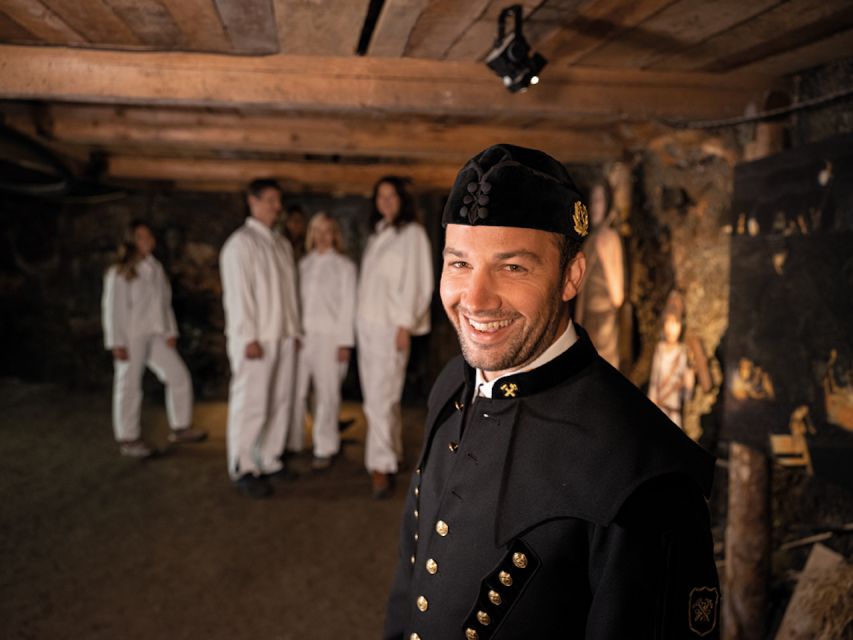
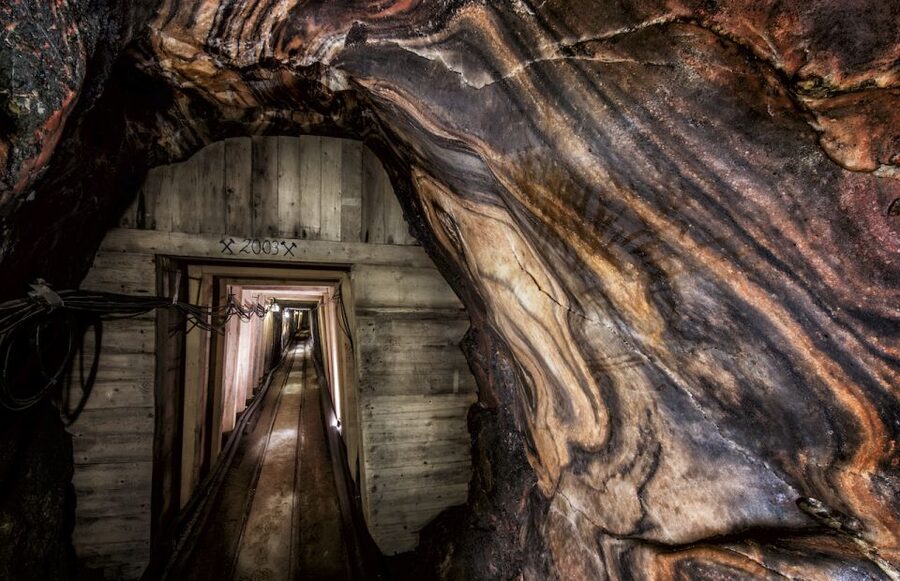
One of Altaussee’s strongest visual details is the salt itself. In the dark tunnels, the rock salt can shimmer in orange and red tones. You may be able to brush your fingers across the cool walls, making the geology feel immediate rather than distant.
This is one reason comfortable clothes matter. The mine is not a warm indoor attraction, and the supplied advice is simple: bring warm clothing and wear clothes you can move in comfortably. The temperature underground can feel cool even when summer is bright above the mountain.
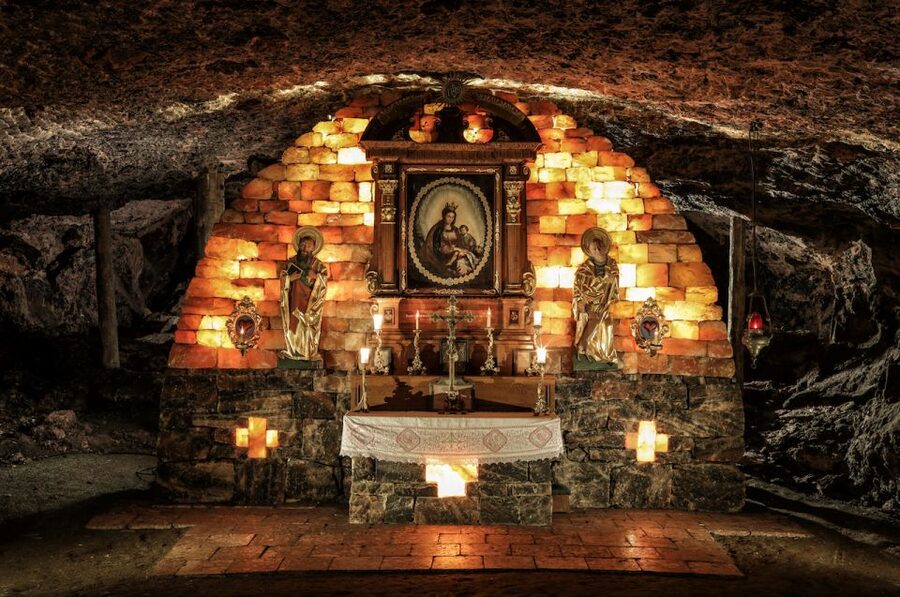
The chapel adds a more reflective pause. Its presence inside the mine gives the route a mystical quality without needing elaborate decoration. It is a reminder that underground work was not only technical and physical. Miners also built places connected to faith, hope, and protection.
I would not book this tour expecting a quiet gallery-style visit from start to finish. The setting is dark and active, and the route includes moving through tunnels and using slides. That is part of its appeal, but it may not suit someone seeking a fully gentle or highly accessible attraction.
More to book in Austria
- Vienna: Classic Ensemble Vienna in St. Peter’s Church Ticket
★ 4.7 · 4,819 reviews - Vienna Kunsthistorisches Museum Day Admission Ticket
★ 4.6 · 3,690 reviews - Vienna: Tickets for Mozarthaus Vienna with Audio Guide
★ 4.2 · 2,344 reviews - Vienna: Skip-the-Line Entrance Ticket to the Danube Tower
★ 4.5 · 2,303 reviews
The Altaussee connection to Nazi-looted art
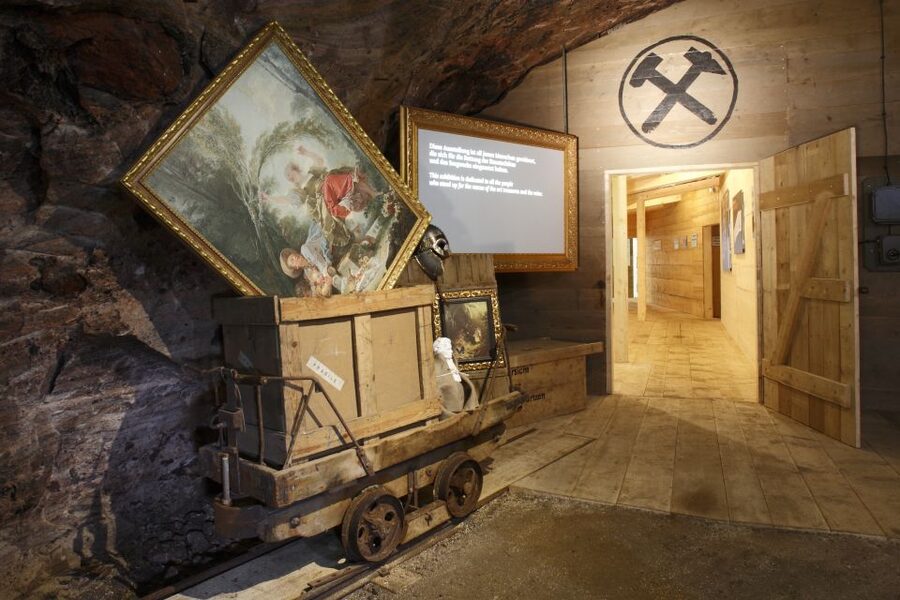
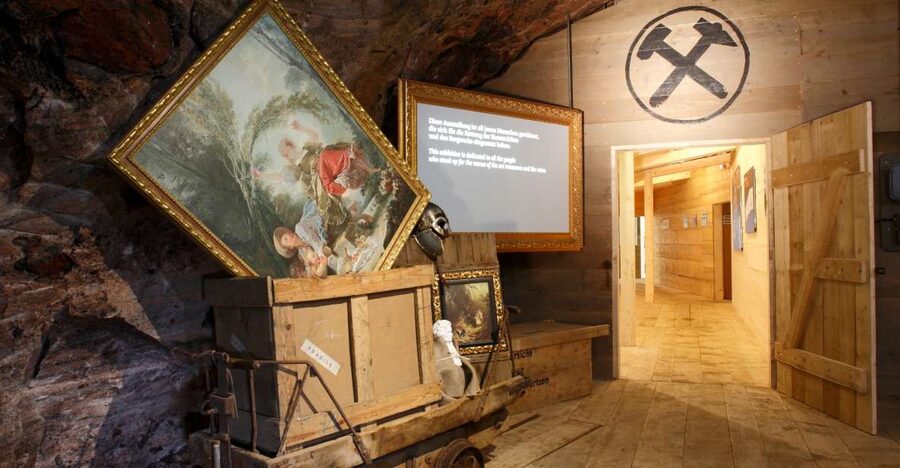
The most serious part of the experience is the story of the artworks hidden in the mine during the Nazi period. The tunnels were used to store major European art treasures, and the miners of Altaussee played a courageous role in saving them from destruction.
This history gives the mine more weight than a standard industrial tour. You are not only learning how salt was extracted. You are standing in a place tied to the protection of works that represented centuries of European culture.
The subject is presented as part of the tour’s route, alongside the medieval mine and modern salt production. That combination works well because each period changes your understanding of the next. The mountain was first a source of salt, then a wartime storage site, and now remains an active industrial workplace.
The information provided does not name individual artworks or promise a detailed art collection display, so you should not expect to see the original treasures underground today. The value is in the site and the story of the rescue. If you want a dedicated museum treatment of Nazi-looted art, you may need a separate visit elsewhere.
Seeing salt mining as it is done today
Altaussee is described as Austria’s biggest currently active salt mine. That is an important distinction. The tour connects historic methods with the way the mine operates in the modern period, showing you that salt production here is not only a chapter from the past.
I like this part because it keeps the visit grounded. The mine is not dressed up as a theme park attraction. Its identity comes from a real resource and a continuing trade. You learn why salt is called white gold, then see the setting where that idea still has practical meaning.
The guide’s explanation is especially useful here. Raw tunnels can be hard to interpret on your own, and the live commentary gives shape to what you are seeing. Ask questions if the guide invites them. One recent visitor had a very personal, question-friendly experience, though the level of interaction will depend on the group and guide that day.
The attraction also makes room for humor. The mine duck, Sally, travels down the miners’ slides with children. That lighter touch helps families handle the more serious wartime material and keeps the visit from feeling like a long lecture.
Miners’ slides bring a jolt of fun
The slides are one of the tour’s clearest adventure moments. You use miners’ slides to move down through the mine, adding speed and a little adrenaline to the underground route.
This is not just a decorative feature. The slides help you imagine how miners once moved through steep underground spaces, while also giving the tour a memorable physical element. One recent visitor singled out the descent as the part they would remember most.
You should know this in advance if you dislike heights, speed, or amusement-style movement. The supplied information does not give a minimum height, weight limit, or detailed safety rules, so contact the attraction if you need those specifics before booking.
For families, Sally the mine duck and the slides can make the history easier for children to enjoy. Children under 4 are not allowed, so this is not an activity for toddlers. Older children may find the mix of stories, dark tunnels, and sliding far more engaging than a conventional museum tour.
A calm finish with light, music, and water
The final part of the experience includes a light-and-music show in a cave, with the effect reflected in underground water. It lasts about five minutes, so it is a short finale rather than a full performance.
That brevity works. After the factual material, wartime story, and slide ride, the show gives you a few quiet minutes to look and listen. The reflections across the water create a sense of stillness that contrasts with the rough salt walls and industrial character of the mine.
I would keep expectations in proportion. This is not a large concert or elaborate stage production. It is a compact underground presentation, and its effect comes from the cave setting, water, light, and music working together.
The show was described as a particularly memorable part of the visit by one recent booking, along with the slides. If you enjoy atmospheric spaces and short visual presentations, this ending may be the feature that stays with you after the historical details have faded.
Is the $31 price fair?
At about $31 per person, the ticket is reasonably priced if you want several kinds of experience in one visit. Your admission includes entry to the salt mine and a guided tour lasting roughly 90 minutes. You also get the historic interpretation, current mining context, slide rides, and the cave presentation.
The value is strongest for visitors who would otherwise pay separately for a history attraction and an unusual family activity. Altaussee gives you both, though neither part is presented as a long standalone program.
The price is less appealing if you dislike underground spaces, cannot use the slides, or mainly want to see original works of art. The art story is important, but the artworks themselves are not presented as a current collection inside the mine.
Flexible booking terms improve the practical value. You can reserve now and pay later, and cancellation is available up to 24 hours before the activity for a full refund. That is useful when your Salzkammergut plans depend on weather, driving conditions, or a changing schedule.
Who should book this experience?
I would recommend Salzwelten Altaussee to families with children over 4, history-minded visitors, and anyone who enjoys unusual places with a physical element. It works especially well for people who want more than scenic views from the Salzkammergut and are curious about how local industry shaped the region.
It is also a good choice for visitors who know little about mining. A recent booking from Malta described the experience as especially useful for someone from an island without mines. That makes sense: the guide, underground setting, and visible salt walls make an unfamiliar industry easier to understand.
You should think twice if you use a wheelchair, since the activity is not suitable for wheelchair users. Pets are not allowed. Warm clothing is essential, and comfortable clothes will make the walking and slide sections easier.
The 90-minute duration suits a busy touring day. You can combine it with other Altaussee or Salzkammergut stops, provided you account for the drive or walk up to the entrance and your booked starting time.
Should you book Salzwelten Altaussee?
Book it if you want a compact tour with real mining, wartime history, and a playful finish. The orange-red salt walls, the miners’ slides, and the cave show give the visit more variety than a simple guided walk.
Skip it if you want a fully accessible attraction, dislike cool enclosed spaces, or expect an art museum with original masterpieces on display. For everyone else, the $31 ticket offers a strong mix of local industry, serious history, family fun, and underground atmosphere.
FAQ
Where is Salzwelten Altaussee located?
The mine is in the Styrian part of Austria’s Salzkammergut region, about 3 kilometers above Altaussee.
How can I reach the mine?
The mine can be reached by car or on foot. It cannot be reached by public transport according to the provided arrival information.
Is parking available?
Yes. Free parking is available at the entrance to the mine.
How long does the tour last?
The guided mine visit lasts about 90 minutes.
What languages are available?
Live guided tours are available in English and German. An audio guide in other languages was also used on one recent visit, but availability should be confirmed before booking.
What does the ticket include?
The ticket includes entrance to the salt mine and a guided tour of the mine.
How much does admission cost?
The listed price is about $31 per person.
Can children join the tour?
Children under 4 are not permitted. The mine also includes miners’ slides and the mine duck Sally, which can make the experience appealing to older children.
What should I wear?
Bring warm clothing and wear comfortable clothes. The underground mine is cool, and the tour includes movement through the tunnels and miners’ slides.
Are pets or wheelchairs allowed?
Pets are not allowed, and the activity is not suitable for wheelchair users.
Just added in Austria
- 3 hour private tour in Vienna by private car★ 4.4 · 6 reviews
- From Vienna: Melk, Salzburg, and Hallstatt Private Tour★ 4.9 · 63 reviews
- Private Christmas Markets Walking Tour Vienna★ 5.0 · 31 reviews
- Graz: Old Town Highlights Private Walking Tour★ 4.6 · 16 reviews
- Christmas Markets & Shopping in Vienna★ 5.0 · 17 reviews
- Imst: Rafting the Imster Gorge★ 4.8 · 28 reviews
- Christmas Market Vienna Tour★ 4.0 · 53 reviews
- Ötztal: Beginners Canyoning Experience★ 4.8 · 48 reviews
Salt Mine & Ice Cave Tours, compared.
Alpine Majesty: Eagle’s Nest, Salt Mine Salzburg & Berchtesgaden
Read our review →