Reviewed · SALT MINE & ICE CAVE TOURS
Salzburg: Salt Mine Entrance Ticket
What makes this experience special is the way it turns 2,600 years of salt mining into a short, active adventure. You do not simply walk through old tunnels. You ride a mine train, slide down miners’ chutes, cross an underground border between Austria and Germany, and glide across a salt lake lit with colorful effects.
I like the mix of history and play. The subterranean salt lake gives the tour its visual centerpiece, while the Celtic Village and Salt Manufactory add useful context before or after your time underground. The main drawback is transport: buses to the mine may run only once an hour, so a missed connection can put your reserved entry time at risk.
Key points to know before you go
- Two wooden miners’ slides turn the descent into part history lesson and part amusement ride, with one slide measuring your speed.
- The underground border crossing between Austria and Germany is an unusual detail you will remember long after the tour.
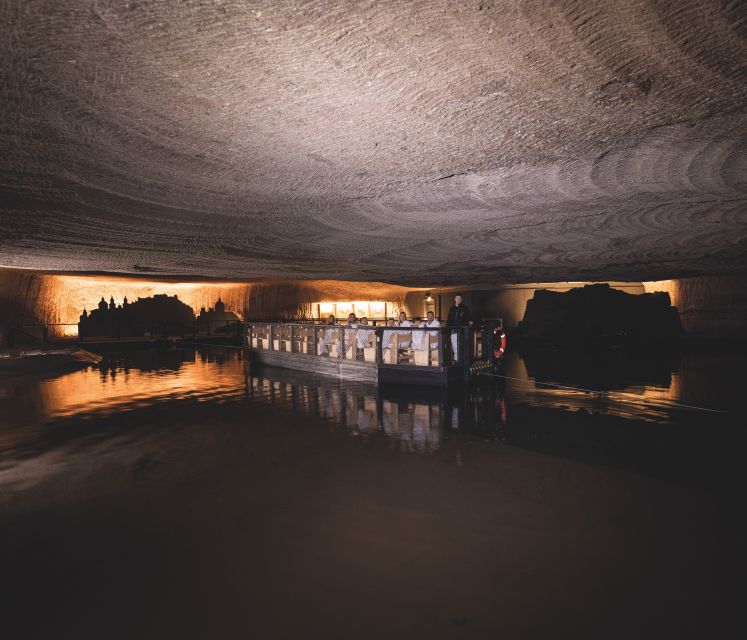
- The 80-meter salt-lake raft ride comes with a colorful light show and a striking look at the mine’s underground world.
- Salina Celtic Village and the Salt Manufactory are included, giving you more than a mine visit.
- English and German guides lead the tour, with guides such as Kristina and Nicolaus praised for clear explanations and friendly energy.
- Plan your transport carefully, especially from Salzburg or Anif, since the bus service may be infrequent.
Entering the Dürrnberg salt mine

Your visit begins at the Hallein Salt Mine ticket window. Arrive about 15 minutes before your booked time because all tours leave from here, and you do not want a late bus or a slow walk across the site to cause trouble.
The experience lasts about 90 minutes. Before entering, you put on the traditional white miners’ overalls. They are practical clothing for the mine, but they also make the group feel like a working crew rather than a crowd in ordinary sightseeing clothes.
The mine takes you through four periods of salt production. The route begins with modern mining, then moves through the Middle Ages, and finishes with the Celtic miners of the Iron Age. That backward journey gives the tour a clear shape. You start with methods closest to the present and finish with the people who first made the Dürrnberg important.
Salt was once far more valuable than its low price in a modern supermarket suggests. It preserved food, helped support trade, and shaped the fortunes of entire regions. The tour uses that basic idea well: salt is not just a mineral in the ground, but the reason people spent centuries cutting into this mountain.
Other trips underground from Austria:
- Salzwelten Altaussee: Salt Mine Entrance Ticket
★ 4.6 · 60 reviews - Alpine Majesty: Eagle’s Nest, Salt Mine Salzburg & Berchtesgaden
★ 5.0 · 15 reviews - Private Werfen Ice Cave and Golling Waterfall from Salzburg
★ 5.0 · 15 reviews
A mine train ride into the mountain
One of the first memorable moments is the mine train. The ride lasts about two minutes, according to the experience details, and carries you into the working world of the tunnels.
Do not expect a long railway trip. The train is a brief but useful transition from the outside world into the mine. It also gives the tour a physical sense of movement. You are not only hearing about miners going underground, you are following a route into the mountain yourself.
The enclosed setting may feel tight for some people. The tour is not suitable for wheelchair users, and you should be comfortable with underground passages, train travel in a confined space, and the general movement required by the route.
The live guide keeps the visit from becoming a string of silent displays. Tours are offered in English and German. If your group includes both languages, the guide may repeat information, so the pace can vary. That can make the tour a little less brisk, but it helps everyone follow the story.
Guides have earned particularly strong praise for being clear, friendly, and enthusiastic. Kristina is noted for her warm manner, while Nicolaus is remembered for making the experience engaging for both adults and children. The quality of the guide matters here because mining history can become dry if it is delivered as a list of dates and tools.
Four eras of salt production
The mine’s strongest feature is its timeline. You travel from modern salt production back to the Iron Age, seeing how the work changed across four historical periods.
The modern section helps explain what salt production looks like today. From there, the route moves into the Middle Ages, when mining was harder, darker, and more dependent on human labor. Finally, the Celtic period brings you to the earliest part of the story, when Iron Age miners worked the Dürrnberg long before modern machines or electric lights.
The presentation uses short films and staged elements along the route. These help break up the walking and give you a visual sense of the people who worked below ground. The attraction is designed for a broad audience, so it is not an academic mining seminar. Instead, you get a lively introduction that works well for families and first-time visitors.
The historical content is compact. You will not spend hours examining a single artifact or reading long panels. That is a benefit if you want a clear activity with plenty of movement, but a limitation if you are looking for a specialist museum experience.
The two miners’ slides
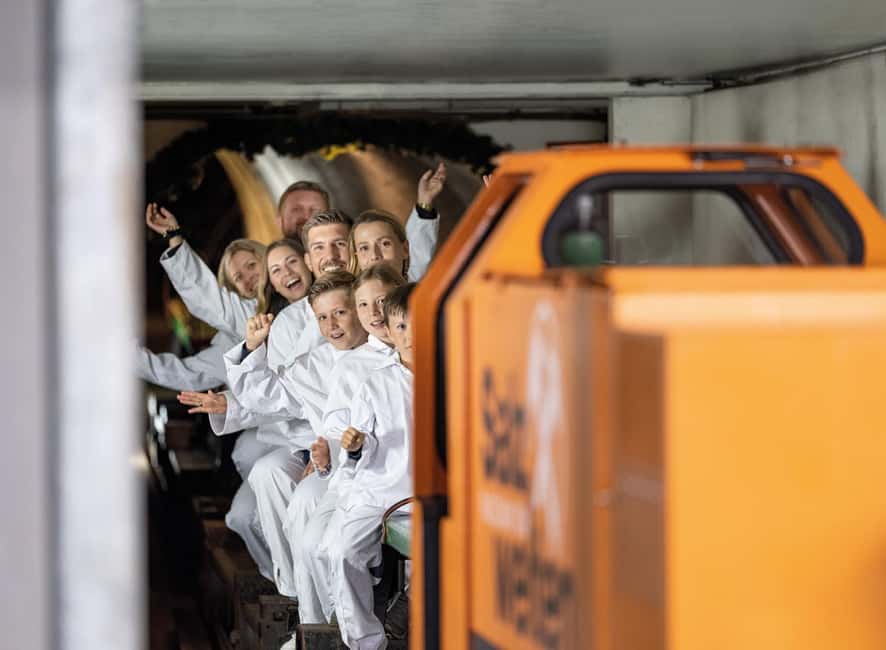
The slides are the tour’s most playful feature. You use two wooden miners’ slides to travel farther into the mine, just as miners once used slides to move through the workings.
One slide measures your speed as you go down. That small touch gives families and groups something to laugh about, while still connecting the ride to the practical work of the mine.
You do not need to treat the slides as a serious thrill ride. They are short, simple, and part of the guided route. Still, the physical action makes this experience different from a standard underground tour. Children and teenagers often respond especially well to this part, but adults can enjoy it too.
Wear comfortable clothing beneath the white overalls. The mine can feel cool, so bring warm clothing even if the day outside is mild. Comfortable clothes also make the train ride, walking, and slides easier.
If you dislike enclosed spaces or physical activities, the slides may be the least appealing part of the visit. The tour is not passive, and you should expect to move through the mine rather than simply stand and listen.
More to book in Austria
- Vienna: Classic Ensemble Vienna in St. Peter’s Church Ticket
★ 4.7 · 4,819 reviews - Vienna Kunsthistorisches Museum Day Admission Ticket
★ 4.6 · 3,690 reviews - Vienna: Tickets for Mozarthaus Vienna with Audio Guide
★ 4.2 · 2,344 reviews - Vienna: Skip-the-Line Entrance Ticket to the Danube Tower
★ 4.5 · 2,303 reviews
The underground salt lake and its light show
The salt lake is the visual heart of the tour. You cross it on a raft, with an underwater setting enhanced by changing light. The route across the lake is about 80 meters, making it long enough to feel like a real part of the journey rather than a quick photo stop.
The colored lighting gives the lake a mysterious, almost theatrical quality. You may hear references to the Baroque world of Salzburg during this section, which connects the mine’s underground setting with the region’s better-known artistic traditions.
This is not a natural alpine lake experience. It is a carefully presented attraction inside a salt mine, and the lighting is part of the show. That works well for families and anyone who enjoys a strong visual moment. If you prefer raw industrial sites with little staging, you may find it polished.
A few visitors have wished for a moment of complete darkness to show how little light miners would have had underground. That would have added a useful contrast. Still, the light show makes the lake easy to appreciate, especially in a group where some people may otherwise find the mine’s darker sections difficult to read.
Crossing the Austria-Germany border underground
The route crosses a subterranean border between Austria and Germany. It is a small detail, but it gives the tour a memorable sense of place.
Above ground, borders are marked by roads, signs, and official buildings. Here, the boundary passes through the mountain. You move through an old mining area that predates the modern border, then cross from one country to another without leaving the tunnel.
This moment works best as a geographical curiosity rather than a major historical presentation. It is not the main reason to book the tour, but it adds a story you are unlikely to get at another Salzburg-area attraction.
Salina Celtic Village and the salt manufactory
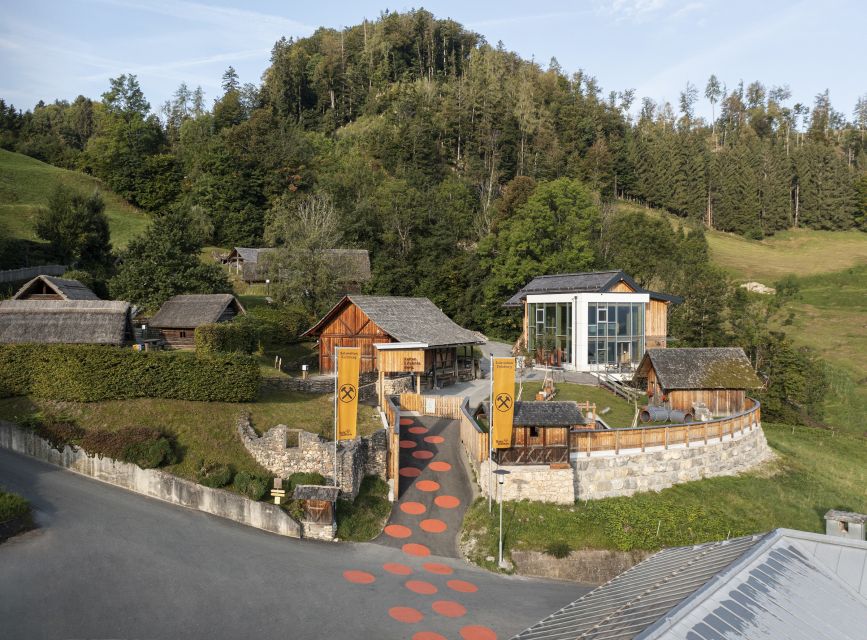
Your ticket includes entry to the Salina Celtic Village and the Salt Manufactory. These additions help make the $36 price more reasonable, especially if you allow time to see them rather than treating the mine as a stand-alone ride.
The Celtic Village connects the mountain to its earliest miners. It gives you a picture of the Iron Age setting behind the final part of the underground tour. The material is useful because it makes the Celtic period feel like part of a real community story, not just an old date in a timeline.
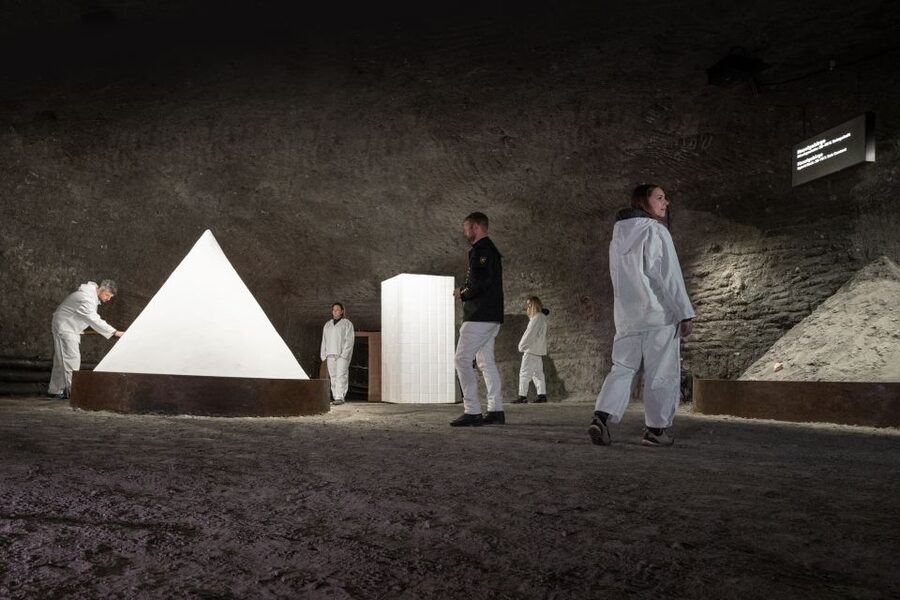
The Salt Manufactory shows how brine from the Dürrnberg can be turned into Bad Ischler Salzzart salt. A master salt-maker forms pyramid-shaped crystals from the natural brine. Watching this process gives you a closer look at the finished product and shows how salt production continues in a more specialized form today.
The manufactory is small compared with the mine experience, but it adds an important connection between the raw material underground and the salt you can buy or use above ground. You may also find brine to try, along with a souvenir and salt shop.
If you are rushing to the mine entrance, you may not give these areas enough attention. Treat them as part of the visit rather than optional filler. They are especially useful for anyone who wants more than the slides and light show.
Is the $36 admission good value?
At $36 per person, this is not the cheapest short activity near Salzburg. The visit lasts about 1.5 hours, so the price works out higher than a basic museum admission.
The value improves because the ticket includes several connected parts: the guided salt mine, Celtic Village, and Salt Manufactory. You are also paying for a structured experience with a live guide, a mine train, two slides, the raft ride, films, and the lighting effects around the salt lake.
I would call it good value for families, couples, and active sightseers who want an attraction with several different elements. You get history without a long lecture, and entertainment without losing the central story about salt.
The value is weaker if you only want a quiet historical site or if you are mainly interested in industrial archaeology. The tour is designed to be accessible and fun, so some of the history is presented in a compact, theatrical way.
The strong 4.8 rating from 258 reviews fits the experience’s main strengths: organization, friendly guides, clear explanations, and a good balance between learning and activity. The most repeated praise centers on the slides, trains, boat ride, and the way the guide keeps the tour moving.
Getting to Hallein without missing your slot
Transportation is not included, so you must arrange your own way to the mine.
The main practical warning is the bus schedule. From some nearby towns, including Anif, buses may run only once an hour. A connection that looks possible on a timetable can become risky if the first bus is late or if you need to change in Hallein.
One visitor allowed more than 90 minutes from Anif and still needed a taxi from Hallein to avoid missing the booked time. A taxi can cost around €20 from Hallein, so a group may find it worthwhile to share the fare. The same issue can affect the return journey, since the bus stop is directly outside the mine car park but service may be infrequent.
Check the route before booking a time slot. The first morning tour at 9 a.m. can be appealing because it may be quieter, and an early start can leave you back in Salzburg by around noon. That timing depends on your transport and the day’s schedule, so build in a generous buffer.
The meeting point is the Hallein Salt Mine ticket window, and the tour ends back there. You do not need to arrange a separate pickup at the end.
Who should book this salt mine tour?
I would recommend it to families with children aged four and older, teenagers, couples who want an unusual half-day activity, and anyone who likes a little movement with their history.
Children under four are not allowed. The tour is also not suitable for wheelchair users. Comfortable clothing and warm layers matter, since the mine can feel cool and the route includes walking, train travel, and slides.
You should also book it if you want something different from Salzburg’s churches, palaces, and concert halls. The salt mine gives you a look at the working history beneath the region, with enough activity to keep the visit from feeling like another indoor museum.
It is less suitable if you dislike enclosed spaces, cannot use the slides, or want a fully accessible attraction. It also may not suit you if you are short on time and cannot afford to arrive early for a fixed entry slot.
Should you book the Hallein salt mine?
Book this experience if you want a well-paced combination of history, underground scenery, and hands-on fun. The salt lake raft ride, mine train, slides, and underground border make it far more memorable than a simple tunnel walk.
I would give yourself extra travel time, wear warm clothes, and plan to see the Celtic Village and Salt Manufactory as well as the mine. With those precautions, the $36 admission offers a distinctive side trip from Salzburg and a good choice for families or anyone ready for a little adventure below the mountain.
FAQ
How long does the salt mine tour last?
The guided experience lasts about 1.5 hours. The Celtic Village and Salt Manufactory are also included, so allow additional time if you want to see both areas properly.
Where do I meet the tour?
Meet at the Hallein Salt Mine ticket window 15 minutes before your booked time slot. All tours leave from this location, and the activity ends back at the meeting point.
What languages are available?
The live tour guide is available in English and German.
What does the ticket include?
The ticket includes entry to the Salt Mine, Salina Celtic Village, and Salt Manufactory, along with a guided tour of the mine.
What should I wear?
Bring warm clothing and wear comfortable clothes. The mine can feel cool, and the tour includes walking, a mine train, two slides, and a raft ride.
Is the tour suitable for young children?
Children under four are not permitted. Children aged four and older can take part, provided they are comfortable with the mine route and its activities.
Can wheelchair users take the tour?
The experience is not suitable for wheelchair users.
Just added in Austria
- 3 hour private tour in Vienna by private car★ 4.4 · 6 reviews
- From Vienna: Hallstatt Guided Day Tour★ 4.9 · 92 reviews
- Private Werfen Ice Cave and Golling Waterfall from Salzburg★ 5.0 · 15 reviews
- From Vienna: Melk, Salzburg, and Hallstatt Private Tour★ 4.9 · 63 reviews
- Private Christmas Markets Walking Tour Vienna★ 5.0 · 31 reviews
- Graz: Old Town Highlights Private Walking Tour★ 4.6 · 16 reviews
- Christmas Markets & Shopping in Vienna★ 5.0 · 17 reviews
- Imst: Rafting the Imster Gorge★ 4.8 · 28 reviews
Salt Mine & Ice Cave Tours, compared.
Alpine Majesty: Eagle’s Nest, Salt Mine Salzburg & Berchtesgaden
Read our review →