
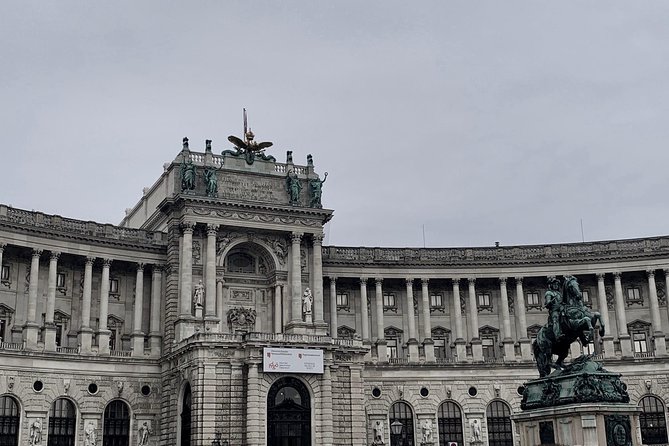
Reviewed · WALKING TOURS
Private World War II Walking Tour in Vienna
Vienna’s grand center can look polished and imperial at first glance. This private walking tour shows you the harder story beneath it, including the city’s role in the Nazi era, Hitler’s connection to Vienna, Jewish life and persecution, and the difficult years before and after WWII. Heldenplatz and Jewish Square give the history a clear physical setting rather than leaving it in a textbook.
I like the private format because you can ask direct questions and spend more time on the subjects that matter to you. I also like the guide choice: Lisa, Nando, Marco, Reinhard, Christopher, and Hernando have all led tours, with particularly strong praise for their clear explanations, humor, and ability to handle detailed questions. The main consideration is the price, $451.79 per group of up to 15, which is a strong value for a full group but costly for one or two people.
Key points at a glance
- Heldenplatz gives the Nazi story a powerful setting: The tour connects one of Vienna’s most important public spaces with Hitler and the rise of the Nazi party.
- Jewish Square adds a personal and civic dimension: You look beyond military events to the experience of Vienna’s Jewish community.
- The private guide changes the pace: Your guide can focus on WWII, broader Viennese history, or your own questions.
- Several guides have received especially warm praise: Lisa is noted for her lively manner, while Hernando and Nando are praised for handling detailed historical questions.
- The route ends at St. Stephen’s Cathedral: You finish in the heart of Vienna, near public transport and other old-town sights.
- Central hotel pickup may be available: If your hotel is in the inner city, the guide can meet you there.
What this Vienna WWII walk sets out to explain
This is not a museum visit with display cases and a fixed audio track. It is a guided walk through Vienna’s inner city, using major squares, monuments, and buildings to explain the period before, during, and after WWII.
That broader time frame matters. The tour is not limited to battlefield dates or a list of military operations. You can expect discussion of Vienna before the war, Adolf Hitler’s life and connection to the city, the rise of the Nazi party, the city during the war, and the years that followed. This gives you a better chance to understand how politics, public memory, antisemitism, and ordinary city life fit together.
The state-certified guide is the main attraction. The quality of the experience will depend heavily on who leads your walk and on the questions you bring. Several guides have been singled out for being clear, personable, and able to answer difficult questions. Lisa is known for a lively style and excellent English. Hernando has handled groups of history enthusiasts with ease, while Nando is praised for focusing on the group’s particular interests.
You should not expect every stop to look like a preserved WWII site. Vienna’s old town is a living city, and much of the history is explained in relation to places that have changed, been rebuilt, or carry several layers of meaning. That can be a strength, but it also means you need to listen closely.
More Walking Tours in Vienna
- Vienna: Guided Walking Tour of City Center Highlights
★ 4.7 · 4,989 reviews - Vienna: Vienna Central Cemetery Guided Walking Tour
★ 4.8 · 3,307 reviews - Vienna: Guided Walking Tour of City Highlights & Hidden Gems
★ 4.9 · 2,180 reviews
Heldenplatz puts Hitler’s Vienna in view
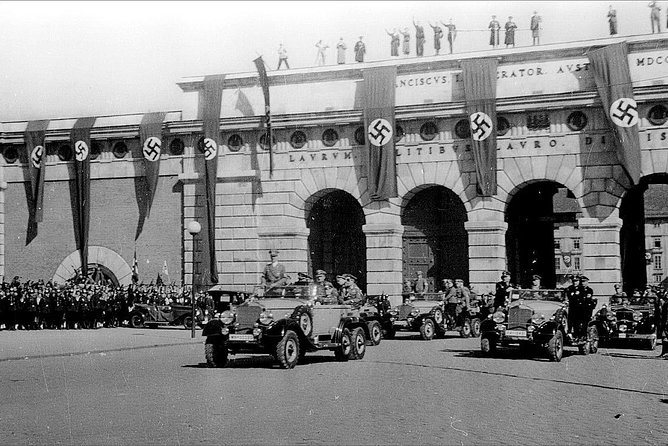
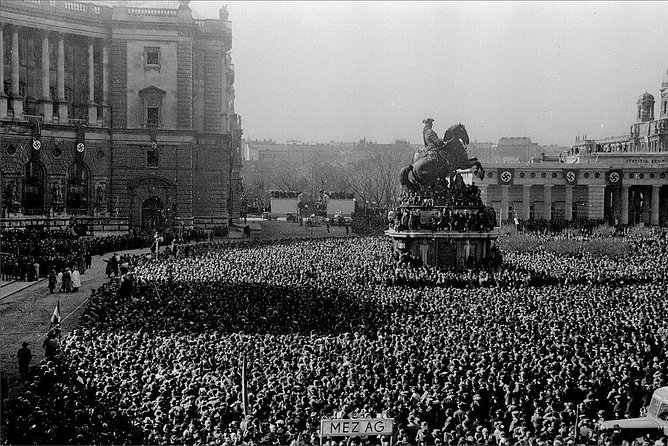
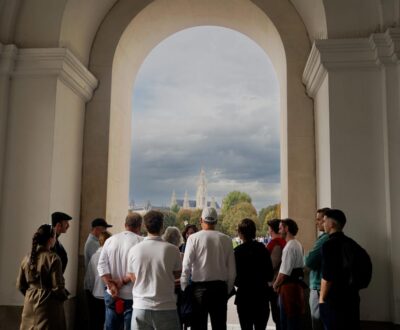
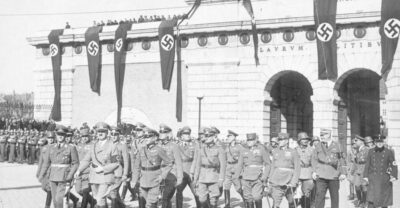
Heldenplatz is likely to be the most powerful stop on the route. This large ceremonial square in front of the Hofburg is tied to the public story of Hitler’s rise and Austria’s annexation into Nazi Germany. Here, the setting itself helps explain how political power was staged before enormous crowds.
Your guide can place Hitler’s life and the Nazi movement in a Viennese context, rather than treating the city as a distant backdrop. The point is not simply that Hitler lived in Vienna or that major speeches took place here. You get a chance to consider how public spaces, political theater, and mass support shaped the period.
This stop can be especially useful if you already know the broad outline of WWII but want to understand Austria’s position more clearly. Vienna was not merely a passive city caught between larger powers. The tour examines the city’s own role and the way its residents responded to the period.
Allow yourself time to look around before moving on. Heldenplatz is part of the Hofburg complex, so the imperial setting can initially draw your attention away from the 20th century. That contrast is useful. Vienna’s old royal center was later used for a very different kind of political spectacle.
Jewish Square adds the human cost of the era
Jewish Square, or Judenplatz, brings the tour to one of Vienna’s most important sites connected with Jewish life and memory. This stop shifts the focus from leaders and political movements to the people and communities affected by persecution.
The square is valuable because it helps you see that the story of WWII in Vienna was not only about armies, borders, and governments. It was also about neighbors, businesses, families, religious life, forced removal, and the destruction of a community. Your guide can explain the site’s place in Vienna’s Jewish history and connect it to the Nazi period.
This is also a good place to ask questions. The private format lets you slow down if you want more context or move forward if your group has already studied the subject. A guide who can explain the meaning of a memorial with care is particularly important here. One guide was praised for presenting history with grace and humility, which is the right tone for a place like this.
The stop may feel quieter than Heldenplatz, but do not mistake quiet for less important. For many people, Jewish Square is where the tour becomes most personal. You are not just hearing how power changed hands. You are considering what that change meant for a specific community in the city.
The Gothic cathedral links war history to everyday Vienna
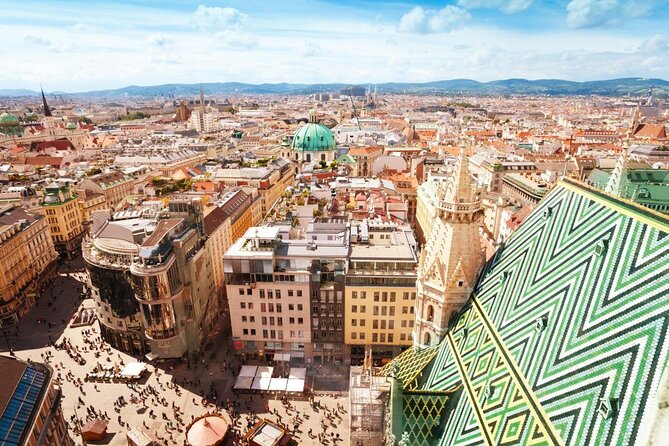
The route includes Vienna’s Gothic cathedral in the heart of the inner city, St. Stephen’s Cathedral. The cathedral is both a major sightseeing stop and a useful reference point for understanding Vienna as a city that continued to function through political upheaval and war.
The cathedral is not presented only as a religious building. It is a central landmark for orientation, public life, and the city’s long historical identity. Your guide can connect the broader story of Vienna before, during, and after WWII to the streets and civic spaces around it.
Because the walk ends at St. Stephen’s Cathedral, this stop also makes practical sense. You finish in one of the easiest parts of the city for continuing your day. You can remain in the old town, find a café, reach nearby public transport, or continue sightseeing on your own.
Do not expect a lengthy interior visit unless your guide specifically arranges or includes one. The supplied details describe a walking route and a stop at the cathedral, not a dedicated cathedral tour. The value here is the building’s place in the city center and in the route’s overall story.
More walking routes in Vienna:
- Vienna: Viennese Underworld Guided Walking Tour
★ 4.7 · 1,865 reviews - Vienna: World War II Historical Walking Tour
★ 4.8 · 1,772 reviews - Vienna Historic Center Small Group Walking Tour
★ 5.0 · 1,746 reviews - Vienna: Private Walking Tour with a Local Guide
★ 4.6 · 1,420 reviews
The Karl Lueger Monument opens a difficult discussion
The Karl Lueger Monument introduces another uncomfortable part of Vienna’s past. Karl Lueger, a former mayor of Vienna, is associated with antisemitic politics. His monument gives the guide a chance to discuss how prejudice could be used in public life long before the Nazi period.
This is one of the more useful stops for understanding that WWII did not begin from nowhere. Political language, public attitudes, and earlier forms of antisemitism formed part of the setting in which later events took place. A good explanation here helps you avoid the easy mistake of treating Nazism as an isolated event with no local background.
The monument may also prompt questions about how a city should handle controversial figures and public memorials. That subject is not listed as a separate feature, so you should not assume there will be a full modern debate about the monument. Still, the stop provides a natural opening to ask your guide how Vienna remembers its past.
A private walk lets you set the emphasis
The private arrangement is the clearest practical advantage. Only your group participates, and the tour is designed to be adjusted to your interests and pace. You can ask for more WWII detail, spend extra time on Jewish history, or let the guide add broader information about Vienna.
That flexibility matters for mixed groups. One person may want military history, another may care more about architecture and urban life, and someone else may want to understand Austria’s political history. A fixed group tour has to keep moving. Here, your guide can respond to your questions.
The guides named in the feedback bring different personalities. Lisa is described as warm, energetic, and fun, with excellent English. Reinhard is praised for unusual facts and strong historical command. Hernando is noted for answering a large number of questions and adding useful information about Vienna beyond WWII. Christopher and Marco have also led well-received walks.
You cannot choose a specific guide from the information provided, so keep expectations realistic. If a particular guide is important to you, you can ask the operator, Austria Tours and Travel, at the time of booking, but an individual guide is not guaranteed.
Two and a half hours is enough for a serious introduction
The listed duration is about 2 hours and 30 minutes. That is a good length for a focused introduction to Vienna’s WWII story without turning the entire day into a history lecture.
The walk includes several central stops, and the old town route keeps the experience grounded in the city itself. Still, the actual pace can vary because the tour is private. A group that asks many questions may run close to three hours. That happened for one group in rainy weather, but the longer walk was still considered manageable because the guide kept the discussion lively.
You should wear comfortable shoes and prepare for outdoor conditions. The experience is a walking tour, and the route includes public squares and city streets. A jacket or umbrella is sensible if the forecast looks poor. The activity does not list a weather exception, so check the cancellation terms before you go.
Most people can participate, and service animals are allowed. The tour is near public transportation. If your hotel is in Vienna’s inner city, pickup may be offered directly at the hotel. If not, the operator will contact you with the exact meeting point.
The price makes sense for a group
At $451.79 per group of up to 15 people, this is expensive for a solo visitor or a couple. It becomes much better value when divided among a family or a larger private group.
For example, five people would pay about $90 each. Ten people would pay about $45 each, before any currency conversion or booking fees. A full group of 15 brings the cost to roughly $30 per person. The important point is that you are paying for a private guide, not a seat on a large shared tour.
That price also buys flexibility. You are not simply following a fixed script at a fixed speed. You can ask your own questions and shape the conversation. For serious history students, families with older children, or groups with different interests, that can justify the higher total.
For two people, I would compare the price with a smaller shared walking tour or a museum visit. For a group already planning a private guide, the cost is easier to defend, especially since the route covers several central landmarks and the guide can discuss both WWII and wider Viennese history.
Who will get the most from this tour
I would choose this walk if you want historical context tied to real places. It suits people who prefer asking questions instead of listening to a recorded narration, and it works well for groups that want to move at their own speed.
It is particularly suitable for:
- History enthusiasts who want more than a basic city introduction
- Families or friends sharing the private cost
- Visitors interested in Jewish history and public memory
- People who want WWII explained as part of Vienna’s wider political story
- First-time visitors who also want a central old-town orientation
The tour may be less suitable if you want to enter several museums or see preserved military sites. The supplied route is an outdoor city walk, and the emphasis is on explanation at public landmarks. You should also think twice if you prefer a light sightseeing tour. The subjects include Nazi politics, antisemitism, persecution, and wartime Vienna, so the mood is serious even when the guide uses humor and a friendly manner.
The English-language format is another point to consider. The tour is offered in English. One piece of feedback asked for questionnaires in French or German, but the tour information lists English as the language offered, so you should not assume a German- or French-language guide is available.
Meeting points, timing, and cancellation
The standard starting point is Helmut-Zilk-Platz near Albertinaplatz in Vienna’s 1st district. The listed end point is St. Stephen’s Cathedral at Stephansplatz 3. If your hotel is in the inner city, the guide can meet you there instead.
The start and end points are central, which makes the tour easy to pair with other old-town plans. You should allow a little time to locate the exact meeting place, especially if you are using the hotel pickup option. The operator will provide the precise location if your hotel is outside the inner city.
Confirmation is provided at booking. Free cancellation is available if you cancel at least 24 hours before the local start time. Cancellations or changes made less than 24 hours ahead are not accepted for a refund.
Should you book the Vienna WWII Walking Tour?
Book it if you want a serious, place-based look at Vienna’s role in WWII and the Nazi era, especially if you are traveling with enough people to share the private cost. Heldenplatz and Jewish Square give the walk real weight, while the private format lets you ask the questions a standard group tour may not have time for.
I would be more cautious if you are traveling alone or as a couple on a tight budget. The total price is high for a small party, and the experience does not include museum admission or a long indoor visit. For a larger group, though, the cost becomes reasonable, and the combination of central landmarks, a flexible route, and guides such as Lisa, Reinhard, Nando, or Hernando makes this a strong choice for visitors who want Vienna’s WWII story explained with care.
FAQ
How long does the private WWII walking tour last?
The tour lasts approximately 2 hours and 30 minutes.
How many people can join the private tour?
The price covers one private group of up to 15 people.
What language is the tour offered in?
The tour is offered in English.
Where does the tour start?
The listed meeting point is Helmut-Zilk-Platz, Albertinaplatz 2-3, in Vienna’s 1st district.
Where does the tour finish?
The listed end point is St. Stephen’s Cathedral at Stephansplatz 3.
Is hotel pickup available?
Pickup is available if your hotel is located in Vienna’s inner city. If it is not, the operator will contact you with the exact meeting location.
What is the cancellation policy?
You can cancel for a full refund up to 24 hours before the experience’s local start time. Changes or cancellations made less than 24 hours ahead are not accepted for a refund.
Just added in Vienna
- World War II History Vienna Old Town Private Walking Tour★ 4.8 · 9 reviews
- Vienna: Wiener Schnitzel and Strudel Cooking Class★ 4.9 · 126 reviews
- Vienna: Wine Tasting Tour★ 4.8 · 61 reviews
- Vienna: Winery and Wine Tasting Tour with a Wine Expert★ 5.0 · 5 reviews
- Vienna: Wine Tasting E-Bike Tour★ 4.9 · 46 reviews
- Vienna: Wine Tasting at Schönbrunn Palace★ 4.3 · 71 reviews
- Vienna: Unforgettable Private City Tour★ 5.0 · 7 reviews
- Vienna Urban Art Tour: Explore a different side of Vienna!★ 3.8 · 14 reviews
Walking Tours, compared.
Guided Walking Tour of City Center Highlights
Read our review →
Guided Walking Tour of City Highlights & Hidden Gems
Read our review →
Vienna Historic Center Small Group Walking Tour
Read our review →
Browse the lists this tour appears in