
Reviewed · WALKING TOURS
Private Vienna Art Nouveau Walking Tour
Vienna’s Art Nouveau is not confined to one museum. It appears in metro entrances, apartment buildings, a savings bank, and a grand exhibition hall. This private walking tour connects those places and explains how Vienna’s artists broke with old rules around 1900.
I like the personal format, especially if you want to ask why Otto Wagner used certain materials or how Vienna Secession differed from French and Belgian Art Nouveau. I also like the mix of major sights and easy-to-miss details, from the Karlsplatz pavilions to the tiny station built for Emperor Franz Joseph.
The main drawback is price. At $490 per group of up to 10, it can be good value for a larger party, but it is a costly choice for one or two people. Admission to the Secession Building and Otto Wagner Pavillon is extra.
Key points to know before booking
- Klimt’s Beethoven Frieze: The Secession Building gives you a chance to see Gustav Klimt’s famous work, with admission paid separately.
- Otto Wagner’s Vienna: The tour links his Karlsplatz stations, Postsparkasse, and other examples of his practical yet highly decorative style.
- A genuinely private experience: Only your group takes part, so the pace and questions can be adjusted.
- Three hours on foot: You cover several central Vienna sights, with short stops in Stadtpark and at Naschmarkt.
- Strong guide element: Barbara, Wolfgang, and Annelie have led this experience, with particular praise for clear explanations of Secession art and Vienna itself.
- Seasonal museum access: From April through October, the route includes the Otto Wagner Pavillon when it is open.
Why Vienna’s Art Nouveau is worth three hours
Vienna’s version of Art Nouveau is often called Jugendstil or Vienna Secession. It emerged when a group of artists broke away from the established art world and formed a new movement around 1897. Their aim was not simply to make prettier buildings. They wanted art to shape modern life, from public transport to banking and housing.
That idea makes this route useful. You are not just looking at decorative façades. You are following a change in how Vienna presented itself at the end of the 19th century.
A private guide can point out the difference between the restrained geometry of Otto Wagner and the more symbolic work of Gustav Klimt and Joseph Maria Olbrich. You can also ask practical questions that often get skipped on a large group tour: why a metro station needed ornament, what made a building modern in 1898, and how Vienna’s old imperial image met the new artistic mood.
The tour lasts about three hours. That is enough time to make connections without turning the outing into a full-day architecture course. You will walk between central sights, so comfortable shoes matter. The meeting point is at Operngasse 7, near public transportation, and the route finishes in Vienna rather than returning to the start.
More Walking Tours in Vienna
- Vienna: Guided Walking Tour of City Center Highlights
★ 4.7 · 4,989 reviews - Vienna: Vienna Central Cemetery Guided Walking Tour
★ 4.8 · 3,307 reviews - Vienna: Guided Walking Tour of City Highlights & Hidden Gems
★ 4.9 · 2,180 reviews
The Secession Building and Klimt’s Beethoven Frieze
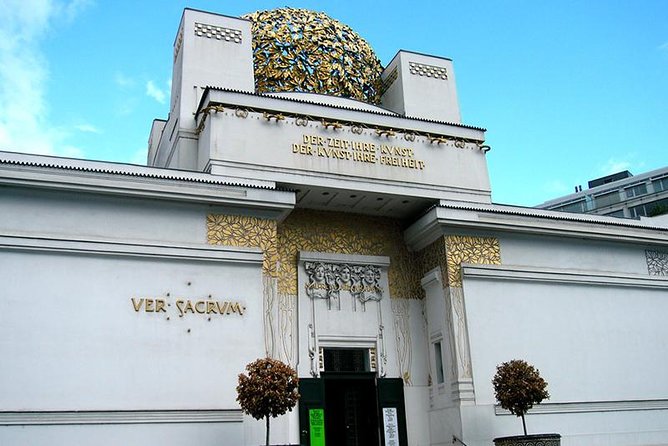
The Secession Building is the natural opening for a tour of Vienna’s modern art movement. Joseph Maria Olbrich completed it in 1898 as an exhibition hall and architectural statement for the Vienna Secession.
Its most famous exterior detail is the dome of gilded leaves, often called the cabbage-head dome. That unusual crown makes the building easy to recognize, but the interior matters even more. The building displays Klimt’s Beethoven Frieze, created for one of the movement’s early exhibitions.
Allow about 30 minutes here. The admission ticket is not included. From Tuesday through Sunday, the listed price is €9.50 for adults and €6 for students and seniors. Your guide helps with the payment, which is handy if you are trying to keep the visit moving.
The Beethoven Frieze is not a small decorative panel. It is a large, symbolic work inspired by Beethoven’s Ninth Symphony and filled with themes of longing, danger, and human happiness. You do not need a background in art to appreciate it, but a guide adds useful structure to what can otherwise feel like a wall of strange figures and dramatic faces.
One practical point: confirm the museum portion when booking, especially if your visit falls outside the stated opening period. The tour information specifically notes the Otto Wagner Pavillon from April through October when open, while Secession admission is handled separately.
Stadtpark and the shift from art to public space
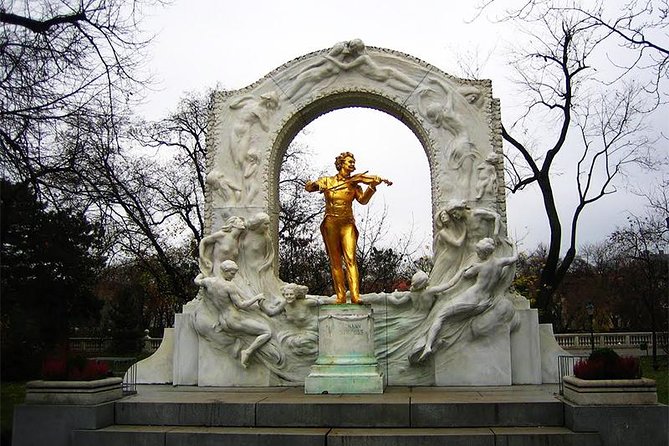
The short stop at Stadtpark gives your feet a break and places the artistic movement in a broader setting. The park extends from the Ringstraße in Vienna’s first district toward Heumarkt, making it a useful link between central Vienna and the areas reached later in the tour.
You spend about 15 minutes here, and admission is free. This is not a long garden visit. Think of it as a pause to discuss how Vienna’s public spaces, monuments, and new transport system helped reshape the city.
The park also keeps the tour from becoming a nonstop series of interiors and façades. If you like architecture but tire of standing in front of buildings, this brief outdoor section helps. If you want every minute devoted to Art Nouveau details, you may find the stop less essential than the Secession Building or Postsparkasse.
Karlsplatz: where public transport became design
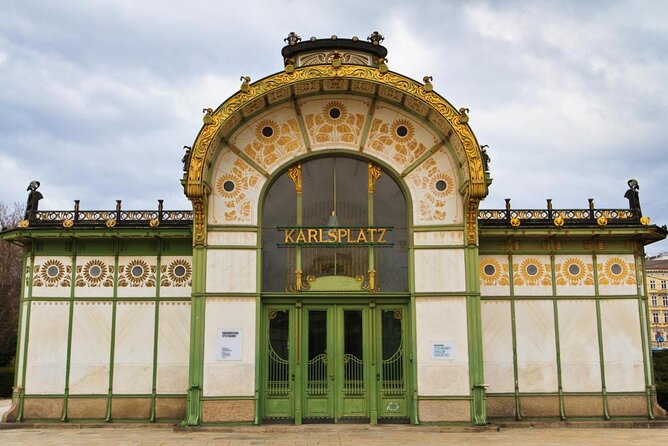
At Karlsplatz, Otto Wagner’s former Stadtbahn stations show how modern transit could receive the same care as a palace entrance. Wagner served as an adviser to Vienna’s Transport Commission and designed the station buildings with Joseph Maria Olbrich.
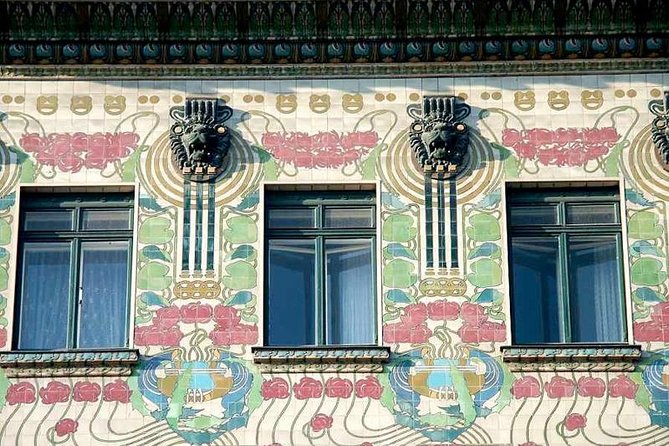
The pair of pavilions above ground is one of the clearest examples of Vienna’s Jugendstil. Their pale surfaces, ornamental metalwork, and carefully ordered shapes turn an everyday transport facility into a piece of city design.
You have about 20 minutes at Karlsplatz, followed by another 15 minutes inside the Otto Wagner Pavillon. The second stop is an exhibition about Wagner’s life and work in an 1898 station building that he designed.
That pairing is valuable. Outside, you see the station as architecture. Inside, you get context about the architect and the ideas behind his work. The Pavillon admission is not included. From April through October, the listed rates are €5 for general admission and €4 for seniors, students, Vienna Card holders, and people with disabilities, when the museum is open.
The Karlsplatz portion also shows why a guide helps. On your own, you can admire the ornament. With an expert beside you, you can connect the station to Vienna’s public works, the rise of modern transport, and Wagner’s belief that new buildings should suit modern needs.
More walking routes in Vienna:
- Vienna: Viennese Underworld Guided Walking Tour
★ 4.7 · 1,865 reviews - Vienna: World War II Historical Walking Tour
★ 4.8 · 1,772 reviews - Vienna Historic Center Small Group Walking Tour
★ 5.0 · 1,746 reviews - Vienna: Private Walking Tour with a Local Guide
★ 4.6 · 1,420 reviews
Postsparkasse, Otto Wagner’s practical modernism
The Austrian Postal Savings Bank, or Postsparkasse, is one of the tour’s strongest architectural stops. Otto Wagner designed and built it as a working financial institution, not as a museum or private mansion.
The building is associated with Vienna Secession and shows Wagner’s preference for clarity, function, and new materials. Its façade has a disciplined rhythm, with decorative features used in a controlled way rather than pasted on for show.
You spend about 25 minutes here, and the listed visit is free. That makes it a particularly good stop for anyone trying to understand how Vienna’s modern movement affected everyday institutions.
Your guide can help you look beyond the famous outline. Notice how the building presents order and efficiency while still allowing room for ornament. This tension is central to Wagner’s work. He was not rejecting decoration altogether. He was deciding where decoration belonged in a modern city.
Because this is a working building rather than a standard museum stop, the experience may focus more on the exterior and architectural explanation than on a long interior visit. If access inside is important to you, ask your guide what the day’s visit will include.
Naschmarkt and the city around the monuments
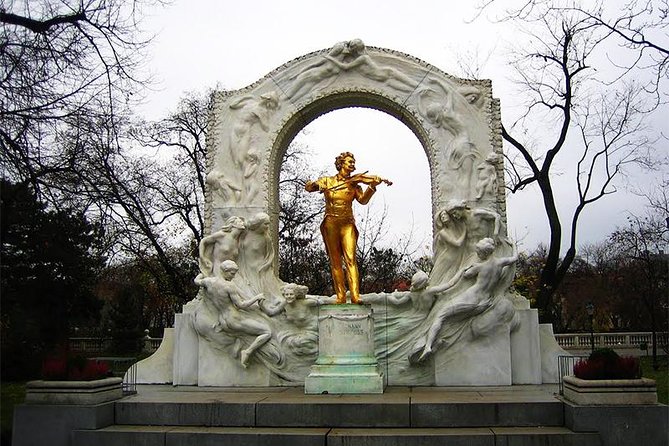
The route pauses at Naschmarkt for about 10 minutes. Vienna’s best-known culinary market has roughly 120 food stands and restaurants, giving you a quick look at the city’s daily social life after so much architecture.
Food and drinks are not included, and this is not a scheduled meal. Still, the market is a sensible place to finish or continue your own exploring. You may want to return later for lunch rather than trying to eat during the short tour stop.
Naschmarkt also helps explain the urban setting around Vienna’s Secession buildings. This is not an isolated art district. The Secession Building, apartment houses, cafés, shops, transport lines, and markets sit within the same central city fabric.
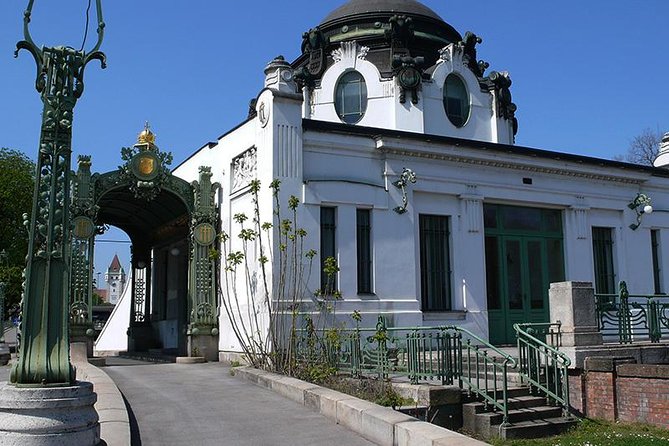
The planned highlights also refer to a pair of beautiful metro stations, including a tiny stop built for the Emperor. Depending on the guide and route, you may see additional nearby Secession-era buildings. The experience has included discussion of the Majolikahaus near Naschmarkt and the Zacherl House in central Vienna, so it is worth asking at the start whether those façades can be included in your timing.
What the private format changes
A private tour is most useful here because Art Nouveau rewards questions. If you are traveling with family or friends who have different levels of interest, your guide can spend more time on the parts that catch your attention instead of following a fixed group pace.
The experience is for your group alone, with a maximum of 10 people. That makes the $490 cost easier to justify for a full group. At 10 people, the price works out to $49 per person before admissions. For two people, it is $245 each before entrance fees, which is a serious expense for three hours.
The guide quality matters more than usual. Barbara has led the route with detailed explanations of art, architecture, Vienna’s past, and its present. Wolfgang has guided couples through the movement in a way that works well for someone new to Art Nouveau. Annelie has been especially strong on Vienna Secession and the city’s architecture.
You are not guaranteed one of those specific guides, but their work gives you a useful idea of the standard to expect: historical context, answers to varied questions, and a focus on more than just taking photographs.
Timing, walking, and extra costs
The tour is listed at roughly three hours. The stops themselves range from 10 to 30 minutes, with walking between them. The route stays near public transportation, but the activity is fundamentally a walking tour.
Plan for outdoor weather at Karlsplatz, Stadtpark, and Naschmarkt, plus time standing while the guide explains façades. Comfortable shoes are a better choice than stylish but painful footwear. Most people can participate, though the supplied information does not give a detailed mobility assessment.
The main extra costs are clear:
- Secession Building: €9.50 for adults, €6 for students and seniors, when visiting Tuesday through Sunday
- Otto Wagner Pavillon: €5 general admission, €4 for seniors, students, Vienna Card holders, and people with disabilities, from April through October when open
- Food and drinks: not included
Pickup is offered in the tour features, but hotel pickup and drop-off are listed as not included. Confirm the exact arrangement before you go, since the stated meeting point is Operngasse 7.
Booking tends to happen about 11 days ahead on average. You can cancel for a full refund up to 24 hours before the start time. Changes or cancellations inside that window are not accepted.
Who should book this Vienna architecture tour?
I would choose this tour if you like buildings, design, museums, or the story of how cities change. It also works well if one person in your party knows Art Nouveau and another does not. The guide can explain the movement without reducing everything to a list of dates and architects.
It is less suitable if you want a broad introduction to Vienna’s imperial sights, a food tour, or a relaxed stroll with little commentary. The route has a clear subject, and three hours go quickly once you add the Secession Building, Karlsplatz, Postsparkasse, and walking time.
The tour is also a good fit for repeat visitors who have already seen Schönbrunn Palace, St. Stephen’s Cathedral, and the Ringstraße. It shows a different Vienna, one concerned with new art, public transport, modern institutions, and the design of ordinary city life.
Should you book it?
Book this private Vienna Art Nouveau Walking Tour if you want expert interpretation and the freedom to ask questions about Klimt, Olbrich, and Otto Wagner. The combination of the Secession Building, Beethoven Frieze, Karlsplatz stations, Otto Wagner Pavillon, Postsparkasse, and Naschmarkt gives you a strong three-hour look at Vienna’s modern side.
The value depends on your group size. For six to ten people, the fixed group price is reasonable for a private specialist tour. For a couple, it is expensive, especially after museum fees. If that cost works for you, the personal guide and focused route make this a useful choice for understanding Vienna beyond its imperial landmarks.
FAQ
How long is the Private Vienna Art Nouveau Walking Tour?
The tour lasts approximately three hours.
Is this a private tour?
Yes. Only your group participates, with up to 10 people.
How much does the tour cost?
The listed price is $490 per group of up to 10 people.
Where does the tour start?
The listed meeting point is Operngasse 7, 1010 Vienna, Austria.
Where does the tour finish?
The tour ends in Vienna. A specific return point is not provided.
Is hotel pickup included?
Hotel pickup and drop-off are not included. Pickup is offered as a tour feature, so confirm the exact arrangement when booking.
Is the Secession Building admission included?
No. Admission is separate. The listed price is €9.50 for adults and €6 for students and seniors from Tuesday through Sunday.
Is the Otto Wagner Pavillon admission included?
No. From April through October, when the museum is open, admission is listed as €5 for general admission and €4 for seniors, students, Vienna Card holders, and people with disabilities.
Does the tour include food or drinks?
No. Food and drinks are not included unless specifically stated.
Can I cancel the tour for a full refund?
Yes. You must cancel at least 24 hours before the experience start time for a full refund. Cancellations or changes made less than 24 hours before the start time are not accepted.
Just added in Vienna
- World War II History Vienna Old Town Private Walking Tour★ 4.8 · 9 reviews
- Vienna: Wiener Schnitzel and Strudel Cooking Class★ 4.9 · 126 reviews
- Vienna: Wine Tasting Tour★ 4.8 · 61 reviews
- Vienna: Winery and Wine Tasting Tour with a Wine Expert★ 5.0 · 5 reviews
- Vienna: Wine Tasting E-Bike Tour★ 4.9 · 46 reviews
- Vienna: Wine Tasting at Schönbrunn Palace★ 4.3 · 71 reviews
- Vienna: Unforgettable Private City Tour★ 5.0 · 7 reviews
- Vienna Urban Art Tour: Explore a different side of Vienna!★ 3.8 · 14 reviews
Walking Tours, compared.
Guided Walking Tour of City Center Highlights
Read our review →
Guided Walking Tour of City Highlights & Hidden Gems
Read our review →
Vienna Historic Center Small Group Walking Tour
Read our review →
Browse the lists this tour appears in