Reviewed · TOURS IN VIENNA
Private Klimt & Vienna Art Walk — From Baroque to Secession
Vienna’s art story comes into focus on this private walk, which links Klimt’s Kiss at the Belvedere with his Beethoven Frieze at the Secession. Between the two, you move through Baroque gardens, imperial-era streets, grand concert halls, and the Art Nouveau city of around 1900.
I like the hotel pickup and the private format, which let the guide adjust the pace and explain the city beyond the paintings. I also like the route’s clear theme: Prince Eugene’s Baroque Vienna gives way to Otto Wagner, Klimt, and the artists who broke with old rules.
The main caution is that this is a serious four-hour walk, with museum visits and city streets mixed together. Museum admission, public transport, and personal costs are extra, and one guide’s strong personal views and old-fashioned humor may not suit every group.
Key points to know before booking
- Klimt’s Kiss anchors the visit: You get help navigating the Belvedere and a skip-the-line arrangement, but admission is not included.
- The route connects two Klimt works: The Belvedere’s famous painting is paired with the Beethoven Frieze at the Secession.
- Pickup is flexible: The guide can meet you at a Vienna hotel, vacation rental, train station, or the Reichsbrücke pier.
- The private format matters: Your group alone takes part, with room to ask questions or adjust the pace.
- The tour covers a lot of ground: Expect walking between the Belvedere, Schwarzenbergplatz, Karlsplatz, Musikverein, Naschmarkt, and the Secession.
- The price works best for a full group: At $372.47 for up to eight people, the cost is easier to justify when shared by several members of your party.
Why the two Klimt stops make sense together
This tour is not simply a museum visit followed by a city walk. Its best idea is to show you Vienna through two Klimt works that belong to different settings.
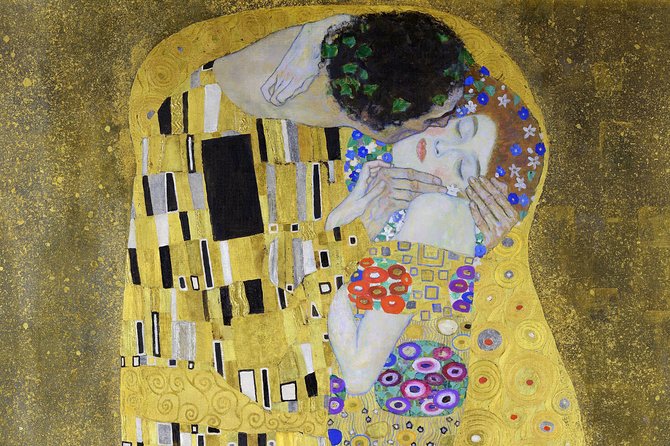
At the Upper Belvedere, you see The Kiss, Klimt’s famous image of a couple wrapped in gold. The painting draws crowds, so the guide’s skip-the-line service can save useful time. That does not mean the museum ticket is free. You still pay the admission cost separately.
At the Secession Building, Klimt’s Beethoven Frieze gives you a different view of the artist. It was made for an exhibition celebrating Beethoven and painted directly onto the walls with light materials. The work ends with what the tour describes as a kiss to the world, creating a useful visual link with The Kiss at the Belvedere.
I like this pairing because it avoids treating Klimt as only a maker of decorative gold paintings. You see one work in a palace collection and another in a building created by artists who wanted to break away from Vienna’s established art institutions.
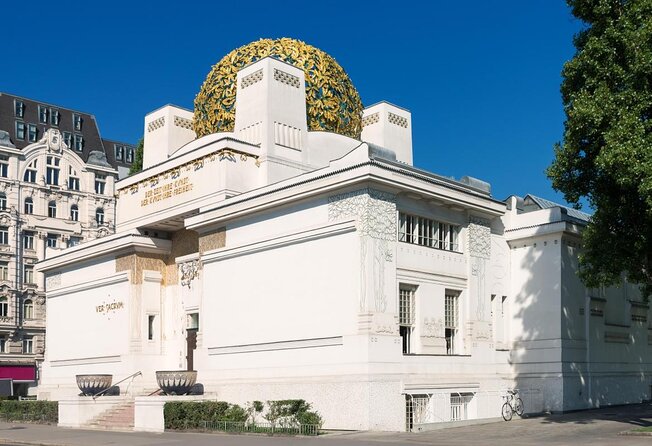
The Secession visit also changes the mood. The Belvedere is a grand princely residence, while the Secession Building was an architectural statement by rebellious artists. Together, the two stops show the change from court culture to modern art.
More to book in Vienna
- Vienna: Private Walking Tour with a Local Guide
★ 4.6 · 1,420 reviews - Vienna: Private Walking Tour with a Guide
★ 4.7 · 962 reviews - Vienna: Wine Tasting Experience in a Private Wine Cellar
★ 4.8 · 413 reviews
Starting at the Belvedere Palace
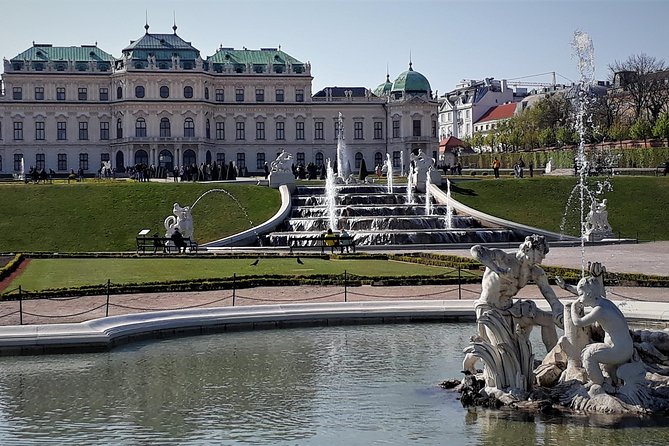
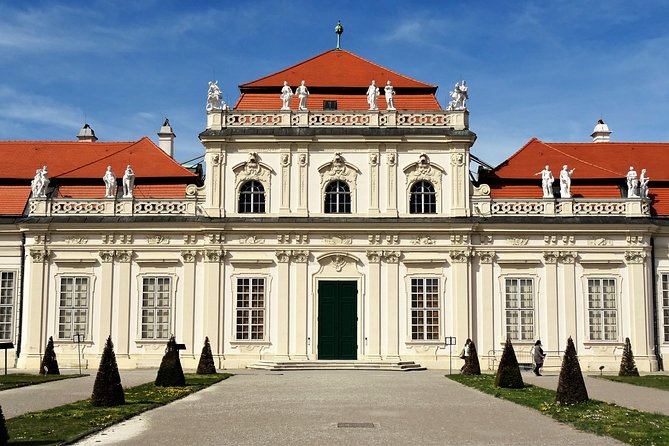
The tour begins at the Belvedere, where wrought-iron gates open toward one of Vienna’s finest Baroque palace gardens. The Upper Belvedere contains the Austrian Gallery and Klimt’s The Kiss, making it the most important stop for anyone booking this experience.
You have about 40 minutes here. That is enough for a focused visit, but not enough for a slow look at every room and painting. The guide’s role is to help you reach the major works and explain what you are seeing without losing the rest of the day.
The palace was built for Prince Eugene of Savoy, a military commander and collector who wanted a residence that could match his rank. The garden was designed to impress from a distance. Its three levels use stairs, terraces, and visual tricks to connect the upper palace with the lower grounds.
As you walk down, the guide explains how the garden works and what Prince Eugene brought to Vienna from Versailles. The comparison is on a smaller scale, but the message is clear: this was a palace designed to display power.
The lower grounds include the garden room and honor court. These details are useful because they keep the visit from becoming only a Klimt stop. You begin with a painting that most people know, then gain a sense of the political world that came before Vienna’s Art Nouveau period.
One practical point matters here: the Belvedere can become crowded. The skip-the-line feature is valuable, especially if you have limited time in Vienna, but you should budget separately for admission. The tour price covers the guide and access arrangement, not the museum entry.
Walking through Vienna’s changing styles
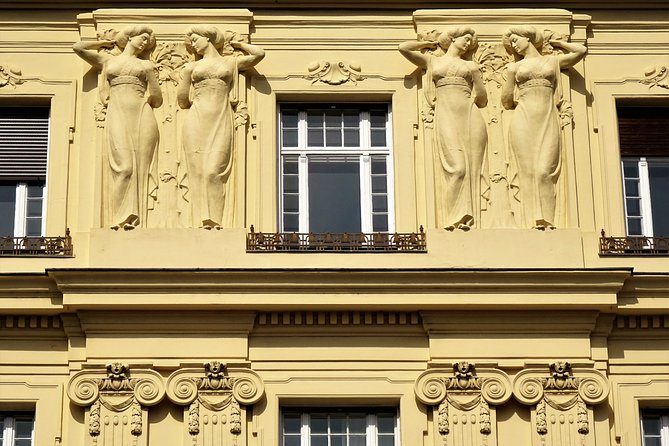
After the Belvedere, the route moves through several places that help explain Vienna’s shift from Baroque grandeur to modern design.
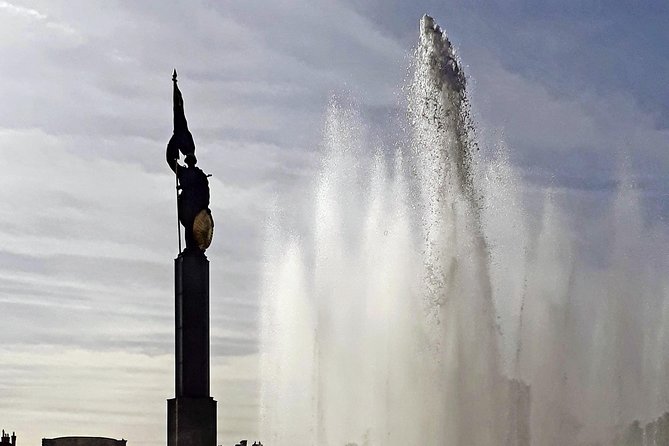
At Schwarzenbergplatz, the Soviet Memorial recalls the city’s postwar division and the presence of Soviet forces in Vienna. The square is also surrounded by buildings from the city’s late nineteenth-century boom. That mix gives the guide room to connect architecture, war, empire, and modern politics in one place.
The tour then reaches a Baroque church that sets the tone for Austria’s eighteenth-century glory. The itinerary does not name the church, so you should not book expecting a detailed interior visit there. Its value is mainly visual and historical, a powerful example of the period’s taste for movement, decoration, and grand effect.
At Karlsplatz, Otto Wagner’s metro station brings you forward to the era around 1900. It is a good contrast with the palace gardens. The station was built for a practical purpose, yet its design is elegant enough to be treated as architecture rather than mere transport infrastructure.
You may use public transport during the tour, depending on the route and the guide’s plan. The fare is not included, so keep that in mind. A previous tour arrangement included explanations while riding the metro, which can make the city feel more connected than a series of isolated sights.
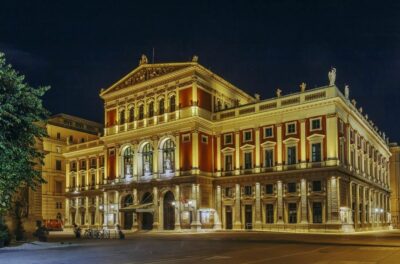
The route also passes the Musikverein, home of the Vienna Philharmonic. Its Great Hall, often called the Golden Hall, is famous for its acoustics. The tour gives you an exterior view and context rather than a concert or full hall visit. If you want to attend a performance, that would require a separate plan and ticket.
The Secession Building and Beethoven Frieze
The Secession Building is one of the clearest architectural statements on the route. Its purpose was not just to house art, but to announce a break from Vienna’s older art establishment.
That makes it a fitting home for the Beethoven Frieze. Klimt created the work for an exhibition honoring Beethoven, and its unusual construction adds to its interest. It was painted directly on the walls with light materials because it was meant for an exhibition rather than permanent display.
You have about 30 minutes here. Again, this is a concentrated museum visit. The guide can explain the figures, symbols, and relationship to Beethoven, but you will not have unlimited time for every detail.
The work culminates in a kiss to the world, an ending that connects neatly with The Kiss at the Belvedere. I find that visual thread one of the tour’s strongest features. You are not just collecting two Klimt sights. You are seeing how the same artist could work within very different artistic settings.
Admission to the Secession is also extra. The tour price should therefore be judged as the cost of a private guide and organized route, not as an all-inclusive museum package.
A different kind of evening in Vienna:
- Vienna: Vivaldi’s Four Seasons Concert in Karlskirche
★ 4.7 · 14,951 reviews - Vienna: Spanish Riding School Training
★ 3.9 · 9,281 reviews - Vienna: Skip-the-cashier-desk-line Giant Ferris Wheel Ride
★ 4.5 · 7,859 reviews - Vienna: Schönbrunn Palace & Gardens Skip-the-Line Tour
★ 4.7 · 7,739 reviews
Finishing at Naschmarkt
The route ends near Naschmarkt, Vienna’s well-known food market. In its current form, the market dates to 1915 and combines food stalls with an international range of eating options.
This is a useful finish because it gives you a natural place to pause after several hours on foot. You might stop for a late snack or use the area for an informal lunch. Food is not included, so you can choose what suits your appetite and budget.
Naschmarkt is also a practical place to continue your own sightseeing. The official tour ends here, but you are not stranded in a distant suburb. You can make the market part of the rest of your day or use public transport to continue elsewhere.
A private guide makes the pace more personal
The tour is limited to your own group, with a maximum of eight people. That changes the experience from a fixed lecture to something more adaptable, at least in principle.
Walter is the guide most often identified with the experience, and Wolfgang has also led it. Walter is especially associated with long explanations of Klimt, Vienna, art history, and the city’s political past. His approach is more like a moving seminar than a light sightseeing chat.
That can be a real advantage if you want context. You can ask why the Belvedere was built, how Klimt’s friendships affected his work, or how Vienna changed around 1900. The guide has also adjusted the walking pace for a slower member of a group, which is useful on a private booking.
There are tradeoffs. Walter sometimes shares strong personal opinions about Austria, NATO, Russia, and twentieth-century politics. The provider openly treats personal views as part of a private tour, but you may prefer a guide who keeps political commentary strictly neutral.
His humor has also been described as dated. That is not a deal breaker for everyone, but it is worth knowing if your group prefers a polished, carefully neutral presentation. The guide’s age and slower pace may suit a group that wants time for explanation, but not one looking to rush between sights.
How demanding is the four-hour route?
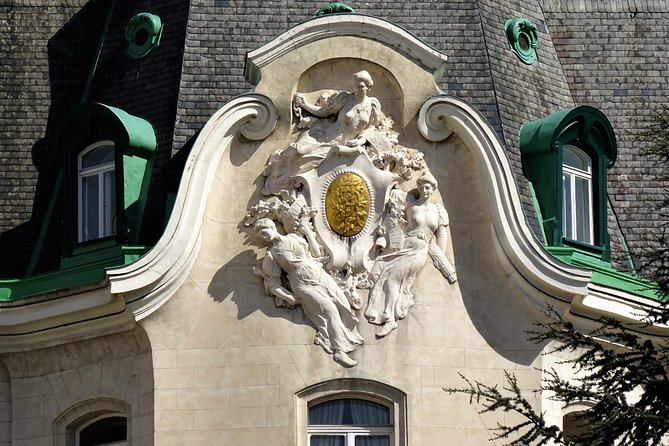
The tour is listed at about four hours, though some past arrangements have run closer to three hours. It combines museum time, outdoor sightseeing, and walking between central locations.
You should have a moderate level of physical fitness. One member of a group may be able to walk at a slower pace, but this is not a seated museum tour. Comfortable shoes are a sensible choice, especially if you plan to continue exploring Vienna afterward.
The morning tour begins at 9:30, and the afternoon option begins at 14:00. The morning start gives you more time afterward for your own sightseeing. The afternoon start may fit better with a late arrival or a relaxed morning, but it ends closer to the evening and leaves less daylight for extra plans.
Pickup is offered at hotels and vacation rentals in Vienna, Vienna Hauptbahnhof, Vienna West station, and the Reichsbrücke pier. Other meeting points can be arranged. This is especially useful if you are arriving by train or staying outside the central hotel area.
The tour is near public transportation, and service animals are allowed. Pets are not permitted in some of the places visited. If you need a fully accessible route, ask before booking, since the itinerary includes gardens, museum interiors, and city walking.
Is $372.47 good value?
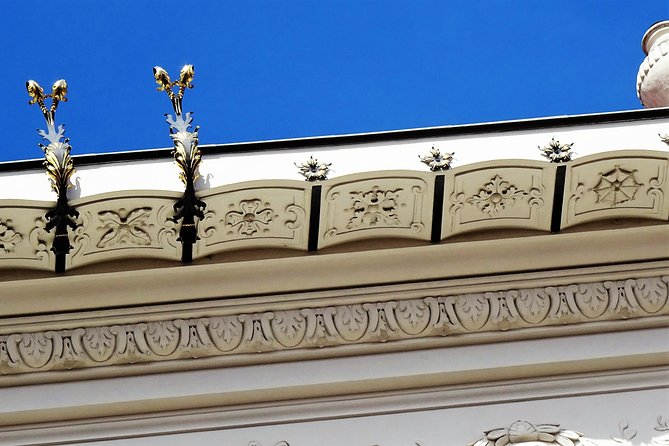
The price is $372.47 per group of up to eight people. That figure looks high for one person, but the calculation changes when shared by a family or group of friends. With eight people, the guide cost works out to about $47 per person before museum admission and transport. With only two people, the per-person cost is much higher.
The value comes from the private format, hotel pickup, licensed Austria Guide, and a route that would take more planning to arrange alone. You are paying for interpretation and coordination, not just entry to the Belvedere.
The exclusions matter. You pay separately for the Upper Belvedere, the Secession, public transport, and food at Naschmarkt. Add those costs before deciding if this fits your budget.
I would find the price easiest to justify for a group that wants serious art and city context without spending time researching connections and museum timing. If you only want to see The Kiss, booking the museum directly will cost less. If you want the two Klimt works tied to Vienna’s Baroque and Art Nouveau story, the private guide adds more value.
Who should book this art walk?
This is a strong match for you if Klimt is a main reason for visiting Vienna, but you also want to understand the city around his work. It suits adults, families with older children, and small groups who prefer questions and conversation over a large scheduled tour.
It is also useful early in a Vienna stay. The route gives you several reference points, including the Belvedere, Karlsplatz, Musikverein, Naschmarkt, and the Secession. Afterward, you can return to the places that caught your interest.
You may want another option if you dislike long explanations, political opinions, dated jokes, or a slower walking pace. You should also avoid booking it as a quick photo stop. The route is built around interpretation, and the best parts take time.
Free cancellation is available up to 24 hours before the start time. Changes or cancellations inside that window are not accepted for a refund.
Should you book it?
Book this tour if you want Klimt with context, not just a quick look at The Kiss. The Belvedere, Secession, Baroque gardens, Otto Wagner station, and Musikverein create a useful story about Vienna’s changing ideals.
I would choose it for a private group of four to eight people, especially if you value hotel pickup and can handle the extra museum and transport costs. I would skip it if your priority is a short, purely visual outing or a strictly neutral guide.
For the right group, this is a thoughtful way to connect Vienna’s palace culture with the artistic break that produced Klimt and the Secession.
FAQ
How long does the tour last?
The tour is scheduled for approximately four hours.
What time does the tour start?
You can choose a 9:30 morning start or a 14:00 afternoon start.
Is the tour private?
Yes. Only your group participates, with up to eight people.
Where can the guide meet me?
Pickup is offered at Vienna hotels, vacation rentals, the Reichsbrücke pier, Vienna Hauptbahnhof, and Vienna West station. Other meeting points can be arranged.
Is hotel pickup included?
Yes. Live guiding and pickup from a hotel, vacation rental, pier, or listed train station are included.
Are museum tickets included?
No. Admission to the Upper Belvedere and the Secession is not included.
Does the tour include public transport?
No. Public transportation is not included. The guide may use or explain the metro during the route, but transport costs are separate.
Will I see Klimt’s The Kiss?
Yes. The route visits the Upper Belvedere, where Klimt’s The Kiss is displayed in the Austrian Gallery.
Will I see the Beethoven Frieze?
Yes. The tour visits the Secession Building, where Klimt’s Beethoven Frieze is presented.
Can I cancel for a full refund?
Yes, if you cancel at least 24 hours before the experience begins. Cancellations made less than 24 hours before the start time are not refunded.
Just added in Vienna
- World War II History Vienna Old Town Private Walking Tour★ 4.8 · 9 reviews
- Vienna: Wiener Schnitzel and Strudel Cooking Class★ 4.9 · 126 reviews
- Vienna: Wine Tasting Tour★ 4.8 · 61 reviews
- Vienna: Winery and Wine Tasting Tour with a Wine Expert★ 5.0 · 5 reviews
- Vienna: Wine Tasting E-Bike Tour★ 4.9 · 46 reviews
- Vienna: Wine Tasting at Schönbrunn Palace★ 4.3 · 71 reviews
- Vienna: Unforgettable Private City Tour★ 5.0 · 7 reviews
- Vienna Urban Art Tour: Explore a different side of Vienna!★ 3.8 · 14 reviews
Tours in Vienna, compared.
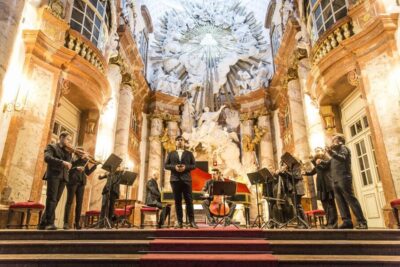
Vivaldi’s Four Seasons Concert in Karlskirche
Read our review →
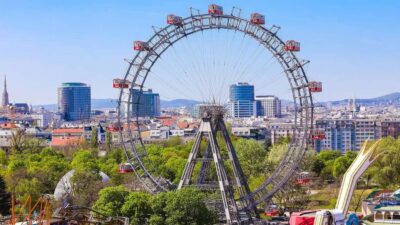
Skip-the-cashier-desk-line Giant Ferris Wheel Ride
Read our review →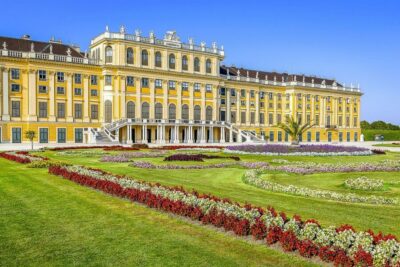
Schönbrunn Palace & Gardens Skip-the-Line Tour
Read our review →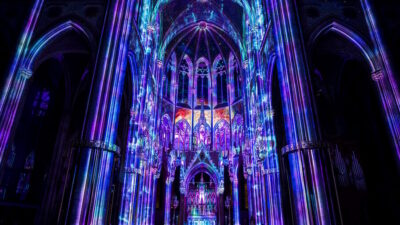
Light of Creation Votive Church Immersive Light Show
Read our review →
Classical Concert in the World-Famous Musikverein
Read our review →