
Reviewed · WALKING TOURS
Private Introduction to Vienna Walking Tour
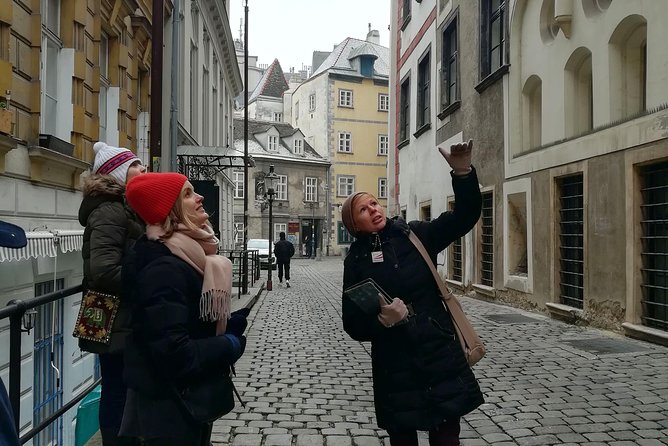
Vienna’s many pasts come together on this private walk, from the Habsburg palace at Michaelerplatz to the grand Ringstrasse and the museums around Maria Theresien Platz. I like the clear historical thread, which links imperial power, Ottoman sieges, religion, architecture, and modern Austria. I also like the private format: guides such as Katarina, Selin, Biljana, and Else can adjust the pace and explain what matters to your family or group.
The main consideration is cost. At $566.25 for up to 10 people, this is a serious outlay for three hours, especially since food, drinks, and admissions are not included. Still, the price can make sense for a larger group that wants a personal orientation on its first day, rather than a standard group walk.
Key points at a glance
- Habsburg power in one opening square: Michaelerplatz gives you the Hofburg, the Loos House, and a fast lesson in Vienna’s competing architectural eras.
- Three unusual royal burial traditions: See where Habsburg hearts, entrails, and bodies were placed in separate churches.
- A city built over its defenses: Follow remnants of the old walls and learn how the Ottoman sieges shaped Vienna.
- A wide route in only three hours: The walk reaches Stephansdom, Schwarzenbergplatz, Belvedere, Naschmarkt, and the MuseumsQuartier.
- A private pace: Families and mixed-age groups can ask questions, pause for context, and avoid being tied to a large crowd.
- A useful first-day introduction: The route helps you understand central Vienna before you return to its museums, churches, and cafés on your own.
Why this walk works as a first morning in Vienna
The route is designed as an orientation rather than a single-site tour. You begin in the historic center, pass through the city’s most important imperial and religious landmarks, then move outward toward the Ringstrasse, Belvedere, Karlsplatz, Naschmarkt, and the MuseumsQuartier.
That range is useful because Vienna can feel polished and orderly at first glance, yet its streets carry several layers of power. Medieval defenses, Habsburg ceremony, Catholic devotion, modern architecture, Nazi and Soviet-era memorials, and present-day cultural life all appear during the walk.
I especially like the way the route uses buildings to tell the story. You are not simply handed a list of famous sights. At Michaelerplatz, for example, the Hofburg explains centuries of imperial rule, while the nearby Loos House shows how sharply Vienna’s architecture changed in the early twentieth century.
The private setup matters here. You can ask why a church is important, how the Habsburg family handled death, or what the Soviet memorial means to Austria today. A large group tour may cover the same streets, but it rarely allows the guide to shape the explanation around your interests.
More Walking Tours in Vienna
- Vienna: Guided Walking Tour of City Center Highlights
★ 4.7 · 4,989 reviews - Vienna: Vienna Central Cemetery Guided Walking Tour
★ 4.8 · 3,307 reviews - Vienna: Guided Walking Tour of City Highlights & Hidden Gems
★ 4.9 · 2,180 reviews
Michaelerplatz and the Hofburg: Vienna’s imperial front door
Meet at Cafe Hawelka on Dorotheergasse 6 unless hotel pickup has been arranged. The meeting point is in the center of Vienna, and you should arrive 15 minutes before the scheduled start.
The first major stop is Michaelerplatz, where the Hofburg dominates the square. The palace was the Habsburg seat of power from the thirteenth century onward, so this is a good place to understand the scale of the dynasty’s reach. The palace is not one tidy building from one period. It grew over many centuries, and its changing forms reflect the changing needs of the rulers who lived and worked there.
Your guide can help you read the square instead of simply photographing it. The Hofburg represents dynastic power and ceremony. The surrounding buildings show later architectural tastes. The result is a compact lesson in how Vienna kept adding new ideas around an old center.
Look clockwise toward the green and gray Loos House, designed by Adolf Loos. Its plain exterior caused a stir beside the ornate imperial buildings. That contrast is one of the best early moments on the walk. You see, in a few steps, the difference between imperial decoration and modern restraint.
This stop is especially helpful if you are new to Vienna’s architecture. You do not need specialist knowledge to appreciate the contrast, and a private guide can point out details you might otherwise walk past.
Kohlmarkt, the Graben, and Stephansdom
From Michaelerplatz, the route continues along Kohlmarkt and the Graben. Today, these are among Vienna’s smartest shopping streets, but their real value for a first-time visitor lies in the variety of sights packed along the way.
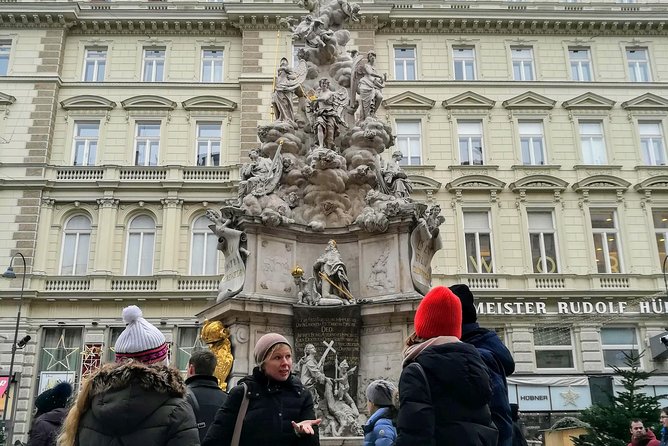
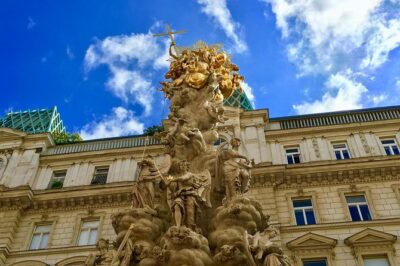
The Graben carries the polished feel of central Vienna, with grand facades and busy pedestrian movement. Yet its most important marker is the plague column, a large Baroque monument created after a deadly outbreak. Your guide can place the column within Vienna’s religious and civic story, rather than treating it as just another decorative feature.
The route also passes a Baroque church and buildings from different periods before reaching Stephansdom, Austria’s national architectural icon. The cathedral’s position is important. It is not tucked away from city life. It anchors the center and helps you see how Vienna’s streets, commerce, religion, and government have long met in the same small area.
The itinerary does not specify an interior visit or a climb, so think of this as a guided look at the cathedral and its place in the city. That distinction matters if you expect admission-based sightseeing. You may want to return later for a longer visit inside.
The Habsburgs and their three-part burial tradition
One of the most memorable ideas on this walk is the Habsburg practice of separating the burial of the body, heart, and entrails. Vienna gives you three places to understand this unusual tradition.
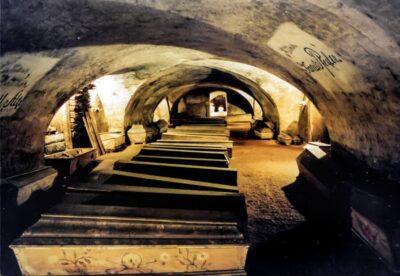
St. Stephen’s Cathedral is associated with the imperial entrails. The nearby Capuchin Church holds centuries of sarcophagi belonging to Vienna’s rulers. St. Augustine’s Church contains silver urns holding the hearts of Habsburg family members.
You do not need to be fascinated by royal genealogy to appreciate this stop. It offers a striking glimpse into the dynasty’s religious world and its sense of ceremony. The story also makes the city feel less like a collection of palaces and more like a place shaped by people who lived, ruled, worshiped, and died here.
Because this is a walking tour, the guide’s explanation is the main value. The itinerary does not promise entry into every church, and food and drinks are not included. If one of these burial sites becomes a priority for you, ask your guide how much time is available or plan a separate return visit.
More walking routes in Vienna:
- Vienna: Viennese Underworld Guided Walking Tour
★ 4.7 · 1,865 reviews - Vienna: World War II Historical Walking Tour
★ 4.8 · 1,772 reviews - Vienna Historic Center Small Group Walking Tour
★ 5.0 · 1,746 reviews - Vienna: Private Walking Tour with a Local Guide
★ 4.6 · 1,420 reviews
Old walls, Ottoman sieges, and the Ringstrasse
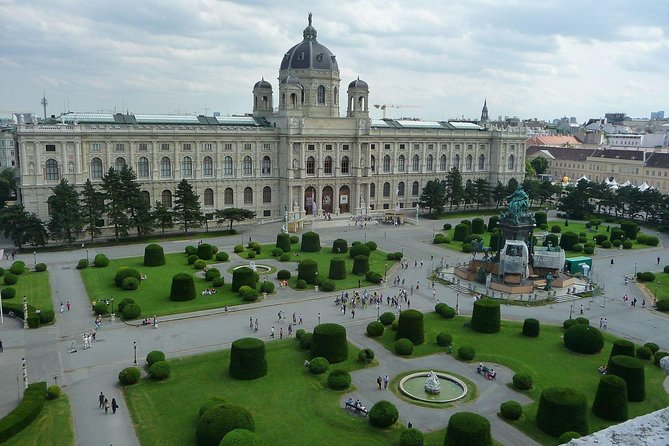
At the edge of the inner city, you examine remnants of the old city walls. These defenses protected Vienna during Ottoman sieges in 1529 and 1683. The walls were eventually removed, but their story remains central to the city’s development.
This section helps explain why Vienna’s center feels both compact and grand. Once the old defenses came down, the space allowed the city to create the Ringstrasse, the broad circular boulevard often compared with the grand avenues of Paris.
The Ringstrasse was not just a traffic project. It became a showcase for public buildings, monuments, and imperial ambition. As you walk, you can see how Vienna used architecture to present itself as a major European capital.
I like this part because it connects military history with urban planning. The city’s defensive past did not disappear when the walls came down. It helped create the setting for Vienna’s later public image.
Schwarzenbergplatz and the difficult twentieth century
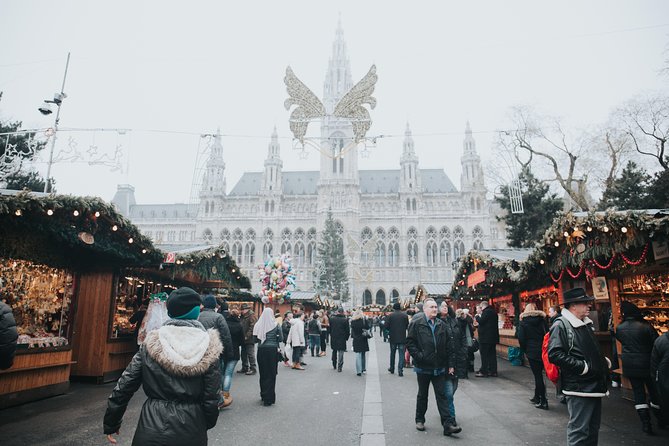
The route continues to Schwarzenbergplatz, where a large fountain and memorial honor Soviet soldiers who died liberating Vienna from the Nazis. The memorial remains a major reminder of the final months of the Second World War and the Soviet role in the city’s liberation.
This is a useful counterweight to the imperial material earlier in the walk. Vienna is not only palaces, music, and elegant streets. Its recent past includes dictatorship, war, occupation, and political tension.
The square is also close to many embassies, giving the area a diplomatic character. Your guide discusses the meaning of the memorial and the role of the surrounding district, bringing the conversation closer to modern Austria.
This stop may feel heavier than the earlier palace and cathedral sections. That is a strength if you want a serious introduction to Vienna, though families with young children may prefer to tell the guide how much political history they want included.
Belvedere, Karlsplatz, and the Naschmarkt view

After Schwarzenbergplatz, the walk makes a quick detour to the Belvedere Palace before turning back toward Karlsplatz. The route does not promise a full palace visit or museum entry, so the focus is on orientation and views rather than an extended indoor tour.
Belvedere adds another architectural and historical note to the day. It gives you a sense of Vienna beyond the tight medieval center and helps connect the city’s imperial past with its later cultural identity.
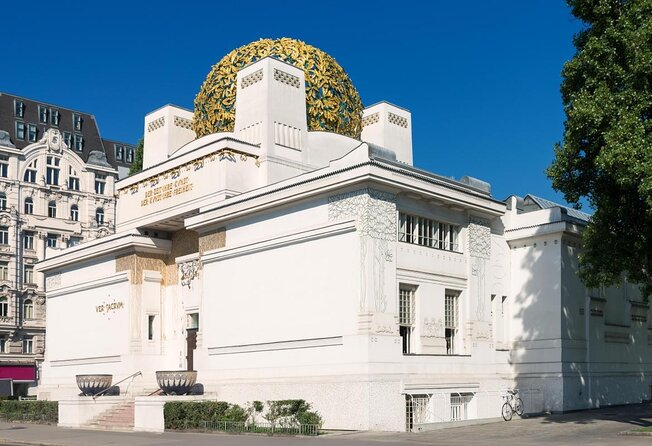
The walk then reaches Karlsplatz, where you can enjoy a view of one of the gold-domed buildings of the Secession movement and look toward the Naschmarkt. These sights show a different Vienna, one linked to artistic experimentation, public life, shopping, and food.
The Naschmarkt is not presented as a food stop, and meals are not included. Still, it is a useful place to note for later. If your guide points out an area you want to explore, write it down. A personal city walk works best when you use it to build a list for the rest of your stay.
MuseumsQuartier and Maria Theresien Platz
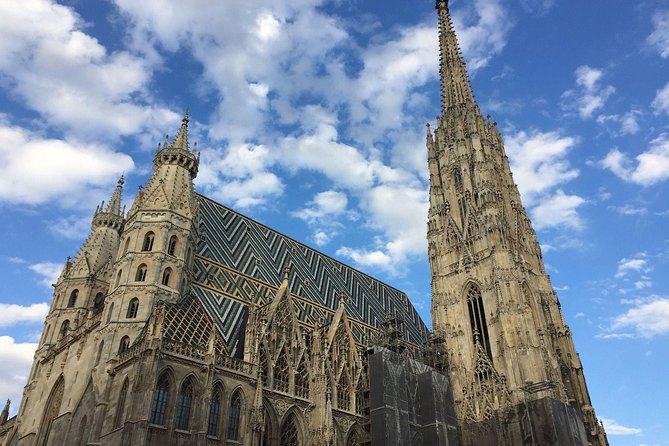
The final section moves through the MuseumsQuartier and Maria Theresien Platz. This is one of the city’s largest concentrations of museums, so the walk ends by shifting from royal history to Vienna’s cultural life.
The large public spaces here help you understand the city’s present-day identity. Your guide discusses Austria’s current cultural, political, and economic direction, connecting the buildings around you with the country’s life today.
That closing conversation gives the tour a better finish than simply stopping at one more monument. You begin with Habsburg power and finish by considering how Vienna presents itself now.
The MuseumsQuartier also makes a practical handoff to independent sightseeing. If you want to visit museums later, you will already have a sense of where they are and how the district relates to the old center. The walk ends in Vienna rather than at a single named attraction, so confirm the exact finishing point with your guide if you have a timed booking afterward.
Pace, private guiding, and family appeal
Three hours is enough time for a strong overview, but not enough for long visits inside every church, palace, and museum along the route. You should expect a moving outdoor tour with stops for explanation, not a sequence of full admission visits.
That tradeoff works well for a first morning. It keeps you moving and gives you a map in your head. It also means you should wear comfortable shoes and be ready to walk for most of the session, although the supplied information does not specify a total distance.
The private format is the biggest practical advantage. Only your group participates, and the guide can respond to questions without a fixed public-tour script. Families are a particularly good match. Biljana was praised for keeping a comfortable pace and holding the attention of young adults, while Selin was described as tailoring the route and stories for a family.
Else was noted for meeting a couple at their hotel, moving efficiently, and covering a great deal without making the walk feel rushed. That is exactly the balance you want in a three-hour city introduction. Katarina was also singled out for making a family’s first morning personal and welcoming.
Guide assignments can vary, so you should not book solely on the expectation of one particular person. Still, the named guides give you a useful sense of the experience: personal storytelling, a flexible pace, and attention to the needs of the group.
Is $566.25 good value for your group?
The listed price is $566.25 per group of up to 10 people. That makes the calculation different from a per-person tour. For a group of two, it is expensive. For a family or group of eight to 10, the per-person cost becomes much more reasonable.
You are paying for a private historian guide and a broad route through central Vienna. The cost includes the guide’s time and a customized group experience, but not food, drinks, or stated admissions. If your goal is to enter several major sights, you will need to budget separately.
I see the best value for groups that want help getting oriented quickly. It is also a good fit if different people in your party have different interests. One person can ask about architecture, another about the Habsburgs, and someone else about modern Austrian politics.
For a solo visitor or couple on a tight budget, a public walking tour may be a better financial choice. This private tour earns its price through flexibility and convenience, not through included tickets or a meal.
Booking details worth knowing
Pickup is offered, and hotel pickup can be arranged. Without that arrangement, meet at Cafe Hawelka, Dorotheergasse 6, 1010 Vienna, 15 minutes before the start.
The tour is offered in English and uses a mobile ticket. Confirmation arrives at booking, and most people can participate. Free cancellation is available if you cancel at least 24 hours before the start time. Cancellations or changes made less than 24 hours before the tour do not qualify for a refund.
This experience is commonly booked well ahead, with an average lead time of about 70 days. If your dates are fixed, especially during a busy Vienna visit, it is sensible to reserve early.
Who should book this Vienna walk?
Book it if you want a private introduction that ties together imperial Vienna, religious traditions, military history, modern architecture, and current civic life. It is especially suited to families, groups of friends, and first-time visitors who want a guide to adjust the pace.
It is less suitable if you want extensive time inside museums or palaces, a meal, or a low-cost group activity. The route covers a lot, so you should plan return visits to the places that catch your interest.
For a larger group, I think the value is strong. You get a focused first look at Vienna, useful local context, and a guide who can turn a long list of monuments into a connected story. For two people, the price requires more thought, but the private attention may be worthwhile if this is your main orientation to the city.
FAQ
How long is the Private Introduction to Vienna Walking Tour?
The tour lasts approximately three hours.
How much does the tour cost?
The price is $566.25 per group, with up to 10 people included.
Is the tour private?
Yes. Only your group participates in the activity.
What language is the tour offered in?
The tour is offered in English.
Where does the tour begin?
Unless hotel pickup has been arranged, meet at Cafe Hawelka, Dorotheergasse 6, 1010 Vienna, Austria.
What time should I arrive?
You should meet your guide 15 minutes before the scheduled start time.
Is hotel pickup available?
Yes. Pickup is offered, and hotel pickup can be arranged.
Are food and drinks included?
No. Food and drinks are not included unless specifically stated.
What is the cancellation policy?
You can receive a full refund if you cancel at least 24 hours before the experience starts. Cancellations or changes made less than 24 hours before the start time are not accepted for a refund.
Just added in Vienna
- World War II History Vienna Old Town Private Walking Tour★ 4.8 · 9 reviews
- Vienna: Wiener Schnitzel and Strudel Cooking Class★ 4.9 · 126 reviews
- Vienna: Wine Tasting Tour★ 4.8 · 61 reviews
- Vienna: Winery and Wine Tasting Tour with a Wine Expert★ 5.0 · 5 reviews
- Vienna: Wine Tasting E-Bike Tour★ 4.9 · 46 reviews
- Vienna: Wine Tasting at Schönbrunn Palace★ 4.3 · 71 reviews
- Vienna: Unforgettable Private City Tour★ 5.0 · 7 reviews
- Vienna Urban Art Tour: Explore a different side of Vienna!★ 3.8 · 14 reviews
Walking Tours, compared.
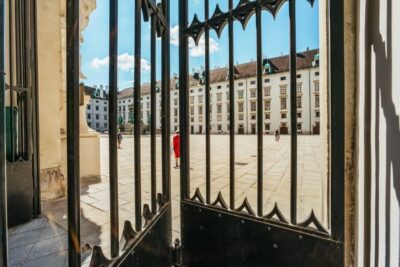
Guided Walking Tour of City Center Highlights
Read our review →
Guided Walking Tour of City Highlights & Hidden Gems
Read our review →
Vienna Historic Center Small Group Walking Tour
Read our review →
Browse the lists this tour appears in