
Reviewed · WALKING TOURS
Guided Walking Tour of Vienna City Center Highlights
Vienna’s grand center is best understood on foot, and this tour gives you a tidy two-hour introduction, from the unusual Last Supper mosaic in Minoriten Church to the Gothic towers of St. Stephen’s Cathedral. Guides such as Nora, Alex, Michael, and Stefan have been praised for clear storytelling, humor, and useful local suggestions.
I like the route because it connects major sights without wasting time on long transfers. I also like the relaxed pace. Families, first-time visitors, and anyone with only a short stay can see the city’s main landmarks and get a useful sense of what deserves a longer visit later.
The catch is simple: this is an exterior sightseeing tour. You will not enter the Hofburg, Albertina, Vienna State Opera, or St. Stephen’s Cathedral, and the two hours can feel brief if you want detailed museum visits.
Key points at a glance
- The Last Supper mosaic begins the tour with something unusual: Minoriten Church offers more than a standard meeting point.
- Heldenplatz links Vienna’s imperial and political past: You see the Hofburg, Austrian National Library, and Prince Eugene’s equestrian statue.
- The route is a first-day orientation: It helps you decide which interiors to visit afterward.
- Guides are a major part of the experience: Nora, Alex, Michael, Lisa, Trim, Achim, and Stefan have all been praised for warmth, humor, and clear explanations.
- The walk is generally easy and relaxed: Several comments describe it as manageable for families and not overly strenuous.
- The $30.19 price pays for context, not admission: It is good value if you want an efficient introduction, less so if you expect museum entry.
Why this Vienna walking tour works as a first look
Vienna can feel like a grand collection of palaces, statues, churches, and formal squares until someone explains how the pieces fit together. This route does that in a compact stretch of the center.
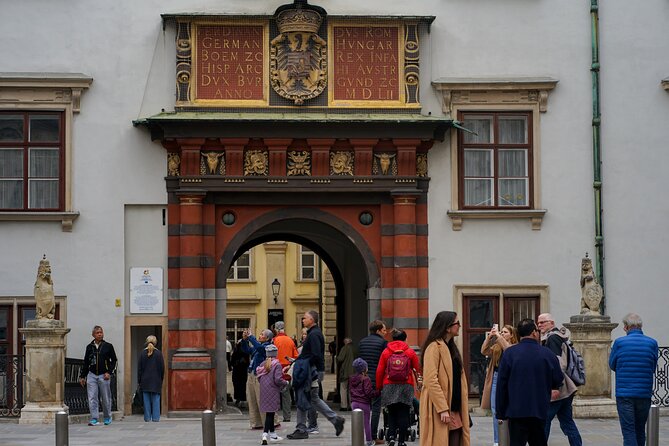
You begin at Leopold-Figl-Denkmal on Minoritenplatz, outside Minoriten Church. From there, the walk moves toward Heldenplatz and the Hofburg before continuing past the Spanish Riding School, Albertina, and Vienna State Opera. It finishes at Stephansplatz, in front of St. Stephen’s Cathedral.
That sequence matters. Instead of seeing isolated sights, you move through the old imperial core in a logical order. The guide can explain how religious, royal, artistic, and political power shaped the same few streets.
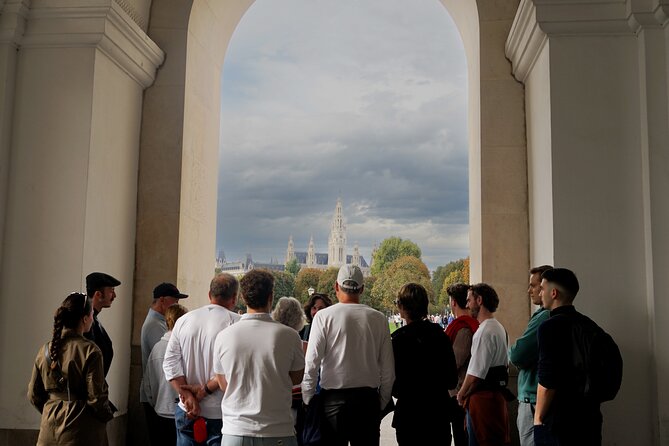
The tour is capped at 28 people. That is not a tiny private walk, but it is more manageable than a large city group. Some groups have been as small as 12, and one comment notes that headphones helped everyone hear the guide clearly. Headsets are not specifically promised for every departure, so I would not book on that assumption, but the point is useful: sound quality can matter when you are standing beside a busy square.
More Walking Tours in Vienna
- Vienna: Guided Walking Tour of City Center Highlights
★ 4.7 · 4,989 reviews - Vienna: Vienna Central Cemetery Guided Walking Tour
★ 4.8 · 3,307 reviews - Vienna: Guided Walking Tour of City Highlights & Hidden Gems
★ 4.9 · 2,180 reviews
Minoriten Church and the Last Supper mosaic
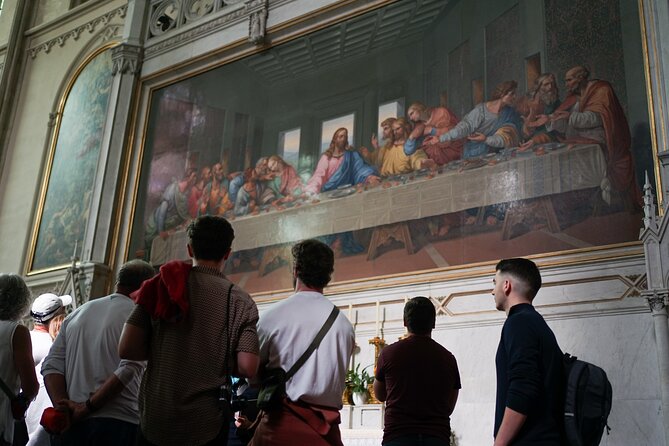
The opening stop at Minoritenkirche lasts about 20 minutes, and it gives the tour an appealingly different start. Rather than beginning with Vienna’s most obvious palace, you begin with a church and its famous Last Supper mosaic.
The guide explains the church’s background and points out the mosaic, which is included in the tour. That small detail gives the opening some character. You are not simply gathering outside a landmark and waiting for the main event. You get an artwork and a story before the imperial buildings arrive.
Minoriten Church also sets up an important theme: Vienna’s center is layered. Religious buildings, royal institutions, grand museums, and public squares all sit close together. A good guide can make those connections easier to see.
The church visit is not presented as a full interior tour, and the wider experience does not include entry to museums or other major attractions. Still, the mosaic is specifically included, so this first stop offers one of the few promised visual details beyond exterior architecture.
Allow a little time to find the meeting point at Minoritenplatz 8. Your confirmation gives the precise location, and the tour ends at St. Stephen’s Cathedral rather than returning to the start. That one-way format is handy if you want to continue sightseeing in the center afterward.
Heldenplatz, the Hofburg, and Vienna’s public stage
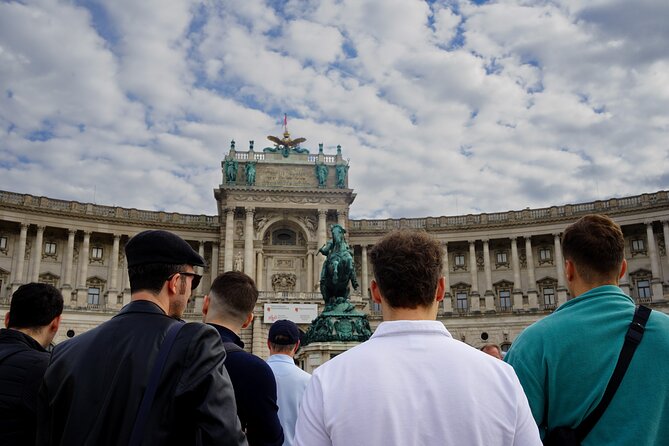
The next major stop is Heldenplatz, where the guide spends about 20 minutes discussing the square and its setting. This is one of Vienna’s best places to understand the scale of Habsburg power.
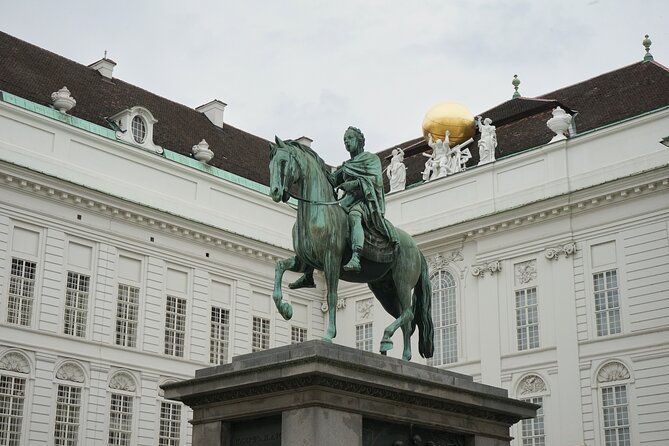
From the square, you can look toward the Hofburg Palace, the Austrian National Library, and the equestrian statue of Prince Eugene of Savoy. The buildings and monuments create a grand setting, but the value here comes from knowing what you are looking at and why it was built.
Heldenplatz also carries political weight. The tour includes history connected with the square, so you are not limited to architectural descriptions. One of the strongest comments about the experience describes a mix of history, art, Austrian politics, humor, and practical advice. That combination is useful because Vienna’s past is not only about emperors and polished façades.
You should expect to remain outside. The stated admission for this stop is not included, and the tour does not take you through the palace or the library. If you want palace rooms, imperial apartments, or museum displays, you will need to arrange a separate visit.
That limitation is not necessarily a flaw. On a first morning in Vienna, I often prefer to see the exterior layout before choosing where to spend precious indoor time. This tour helps you locate the Hofburg complex and understand its place in the city before you return independently.
The Hofburg façade and the Spanish Riding School
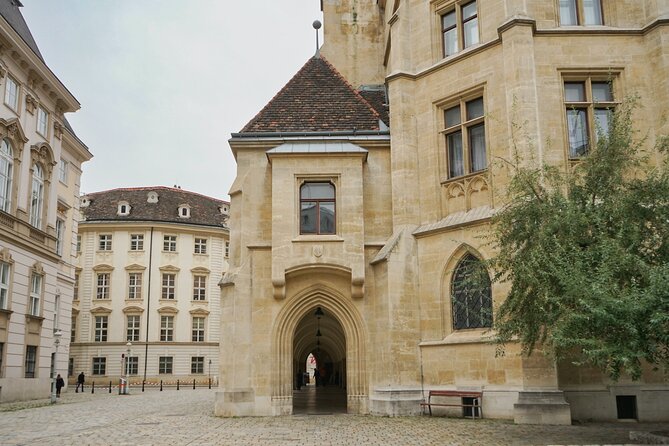
After Heldenplatz, the route continues with a closer look at the Hofburg’s exterior. The guide explains the palace and its role while you take in the scale of the façade.
The Hofburg is less like one single palace and more like a large complex shaped over many periods. A short outdoor explanation cannot cover every wing, ruler, and collection, but it can give you a working map. That is exactly what this tour is designed to do.
As you walk toward the Albertina, you also pass the Spanish Riding School. This is a brief pass-by rather than a separate scheduled stop, so you should not expect a performance or stable visit. Still, it is a useful part of the route. The school is closely tied to Vienna’s imperial identity, and its presence adds another piece to the city’s old courtly world.
The walk here is described as easy and not too fast. That makes the tour suitable for people who want to listen rather than race from one landmark to another. One family found it easy to follow with children, and another comment specifically praised the comfortable pace.
If you have mobility concerns, the supplied information says most people can participate and that service animals are allowed. It remains a walking tour, so you should be comfortable moving between outdoor stops for roughly two hours.
More walking routes in Vienna:
- Vienna: Viennese Underworld Guided Walking Tour
★ 4.7 · 1,865 reviews - Vienna: World War II Historical Walking Tour
★ 4.8 · 1,772 reviews - Vienna Historic Center Small Group Walking Tour
★ 5.0 · 1,746 reviews - Vienna: Private Walking Tour with a Local Guide
★ 4.6 · 1,420 reviews
Albertina Museum from the outside
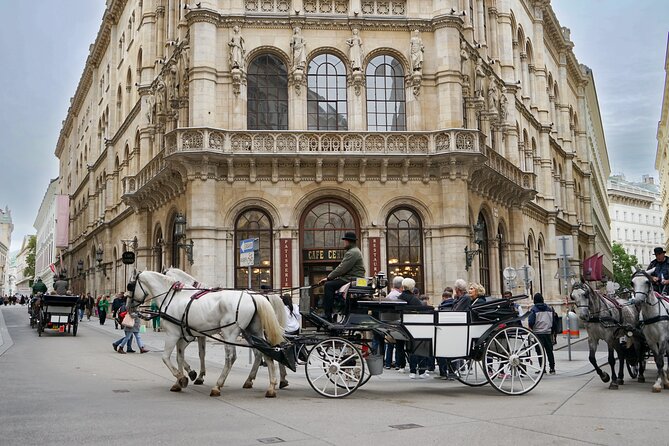
The Albertina stop focuses on the building’s exterior and lasts about 20 minutes. The museum is known for its art collections, but on this experience you will be learning about the architecture and historical role from outdoors.
That distinction is important. If your main reason for visiting the Albertina is its art, this tour will not replace an admission ticket. Instead, it gives you a visual introduction and helps you recognize the building when you return for a longer visit.
I like this approach for a short first-day tour. You can note the Albertina’s location, hear why it matters, and then decide if the interior belongs on your schedule. The guide’s explanation can also keep the building from becoming just another grand façade in a city full of them.
Do not expect time to browse exhibitions or buy food during the walk. Food and drinks are not included, and the route is built around commentary rather than stops for refreshments. On a warm day, one person specifically wished they had booked a morning departure. That is sensible advice: Vienna’s stone squares can feel hot in direct sun, and a morning walk may be more comfortable.
Vienna State Opera and the final stretch
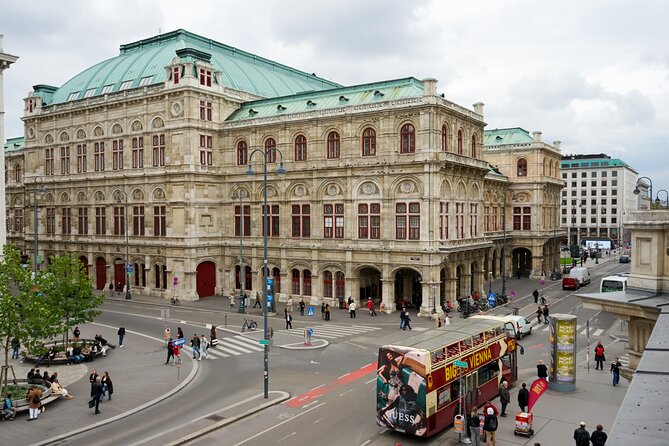
The Vienna State Opera receives another exterior-focused explanation. You pause to appreciate the building, hear about its history and cultural role, and then continue through the center.
For music lovers, this is a valuable orientation point. For everyone else, it is a chance to see one of Vienna’s most recognizable façades without committing to a performance or interior tour. The guide’s job here is to explain why the opera house matters, not to provide entry or backstage access.
The tour’s strength is its range. In two hours, you encounter a church, imperial squares, a palace, a riding school, a museum, an opera house, and a cathedral. You do not study each one in detail, but you get a clear first pass across several sides of Vienna.
The weakness is the same. Architecture and spoken context replace long visits inside. If you prefer a slow look at one building, a specialist palace tour or museum ticket will serve you better.
Ending at St. Stephen’s Cathedral
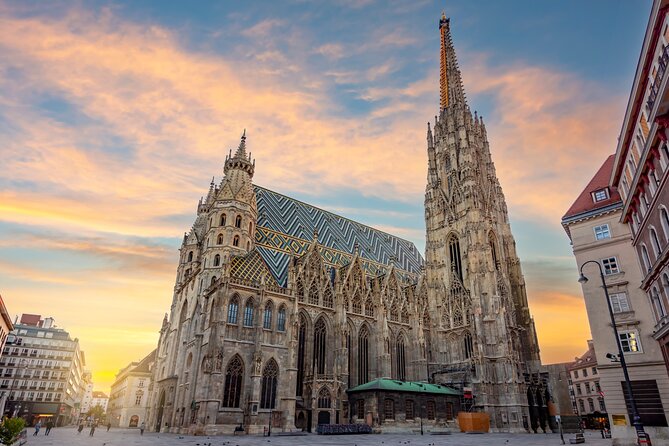
The final stop is St. Stephen’s Cathedral, where the tour ends after another roughly 20-minute exterior visit. This is a fitting finish because Stephansplatz is one of the city center’s most recognizable gathering places.
The guide explains the cathedral’s history from outside, but entry is not included. You can continue on your own after the tour if you want to see the interior, towers, or other parts of the cathedral that require admission.
Ending here is practical. You are in the heart of Vienna, with the rest of the central district close by. The tour does not provide a return transfer because none is needed. You finish at Stephansplatz, rather than having to retrace the route to Minoritenplatz.
For me, this ending also gives the tour a clear shape. You start with the intimate detail of a church mosaic and finish with one of Vienna’s most imposing landmarks. Along the way, the guide fills in the political and cultural links between them.
The guides make or break the two hours
The strongest praise goes to the people leading the walk. Nora is described as polished, engaging, and able to hold attention for the full session. Alex is praised for historical explanations, a friendly manner, local food suggestions, and a voice that was easy to follow.
Michael receives especially warm approval for bringing Vienna’s past to life with stories, humor, and animated descriptions, even in wet weather. Stefan also made a rain-soaked walk enjoyable, while Lisa was praised for detailed explanations and an entertaining style.
Other named guides include Trim, Achim, and Martina. Achim used humor and personal warmth, and Trim offered a dinner suggestion, including Reinthaler’s Beisl. These details show the sort of practical value you can get beyond the route itself, although the guide and restaurant advice will vary by departure.
A guide-led walk is only as good as the person speaking, so individual styles will differ. The overall pattern here is encouraging: the experience works best when you want stories, context, and recommendations rather than a silent photo stop at each landmark.
What $30.19 buys you
At $30.19 per person, this is a reasonable price for a certified local guide and two hours of orientation in central Vienna. You are paying for a planned route and live explanation, not for entrance tickets.
That distinction helps you judge the value. If you tried to see these sights alone, you could walk the same streets for free. But you would need to research the background, keep track of the route, and decide what deserves more of your time. The tour saves that preparation and gives you a useful framework.
The price feels strongest for a first day, a short visit, or anyone who likes to learn the city before tackling museums. It feels weaker if you expected access to the Hofburg, Albertina, opera house, or cathedral.
The tour is often booked about 32 days ahead, which suggests you should reserve early if your schedule is fixed. Free cancellation is available up to 24 hours before the start time. Cancellations or changes made inside that window are not accepted for a refund.
Who should book this walk
I would recommend it to first-time visitors who want a clear introduction without spending half a day inside one attraction. It also suits families, people on a short Vienna stay, and anyone who prefers a relaxed pace with plenty of explanation.
It is a good choice if you want local suggestions for later meals and sightseeing. The route gives you a quick map of the center, and several guides have offered practical tips along the way.
I would not choose it as my only Vienna activity if I had a strong interest in imperial apartments, art collections, music history, or cathedral interiors. You will see the outside of those places, but you will need separate tickets and extra time to experience the inside.
Dress for the weather and bring water on warm days. The walk continues in rain, and the route is outdoors for most of its duration. Morning may be the better choice during hot weather.
Should you book the Vienna city-center walk?
Book it if you want a friendly, efficient introduction to Vienna’s central sights and understand that the tour is about orientation, stories, and exteriors. At $30.19, it offers fair value for a two-hour guided route with a certified local guide and a special stop at the Last Supper mosaic.
Skip it if you want museum entry, palace rooms, a concert, or an in-depth look at one landmark. For everyone else, especially on a first visit, this is a sensible way to get your bearings fast and decide what deserves a second look.
FAQ
How long is the Vienna walking tour?
The tour lasts approximately two hours.
Where does the tour begin?
It begins at Leopold-Figl-Denkmal, Minoritenplatz 8, 1010 Vienna, Austria.
Where does the tour end?
The tour concludes in front of St. Stephen’s Cathedral at Stephansplatz 3, 1010 Vienna.
Is entry to the Hofburg included?
No. The tour covers the Hofburg’s exterior, and admission is not included.
Does the tour enter the Albertina Museum?
No. The Albertina is viewed from outside, and museum entry is not included.
Can I go inside St. Stephen’s Cathedral during the tour?
No. The cathedral visit is exterior only, and entry is not included.
Is the Last Supper mosaic included?
Yes. A visit to the Last Supper mosaic at Minoriten Church is included.
What is the cancellation policy?
You can cancel up to 24 hours before the experience for a full refund. Cancellations or changes made less than 24 hours before the start time are not accepted.
Just added in Vienna
- 3 hour private tour in Vienna by private car★ 4.4 · 6 reviews
- Private Christmas Markets Walking Tour Vienna★ 5.0 · 31 reviews
- Christmas Markets & Shopping in Vienna★ 5.0 · 17 reviews
- Christmas Market Vienna Tour★ 4.0 · 53 reviews
- Vienna: Christmas Markets Tour★ 4.3 · 99 reviews
- Private Hidden Vienna Walk — Stories Behind Quiet Corners★ 5.0 · 137 reviews
- Konzerte der Wiener Royal Orchester★ 4.5 · 143 reviews
- Mozarthaus Vienna Admission Ticket★ 3.0 · 139 reviews
Walking Tours, compared.
Guided Walking Tour of City Center Highlights
Read our review →
Guided Walking Tour of City Highlights & Hidden Gems
Read our review →
Vienna Historic Center Small Group Walking Tour
Read our review →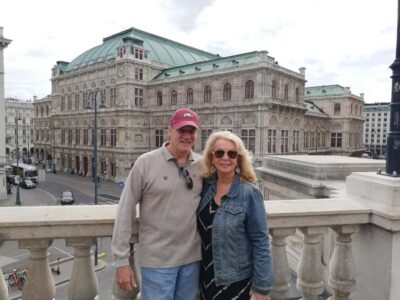
Browse the lists this tour appears in