
Reviewed · AUSTRIA
Forchtenstein Castle Admission Ticket & Optional Guided Tour
Forchtenstein Castle keeps its best surprises behind thick walls. Start in the inner courtyard, where vast secco wall paintings cover the surfaces in what is described as the largest display of its kind north of the Alps. Then move into rooms packed with weapons, ceremonial objects, family portraits, and one of Europe’s great collections of silver furniture.
I like the way this visit joins the castle itself with the Esterházy family collection. I also like the odd, memorable objects: a 400-year-old Ottoman tent, the oldest known coronation flags from Hungary, Croatia, and Serbia, and the only known full-length portrait of Vlad the Impaler. The main caution is practical: the visit lasts only about an hour, and access can be limited, with one recent account noting that the first level was not open.
Key points to know before you go
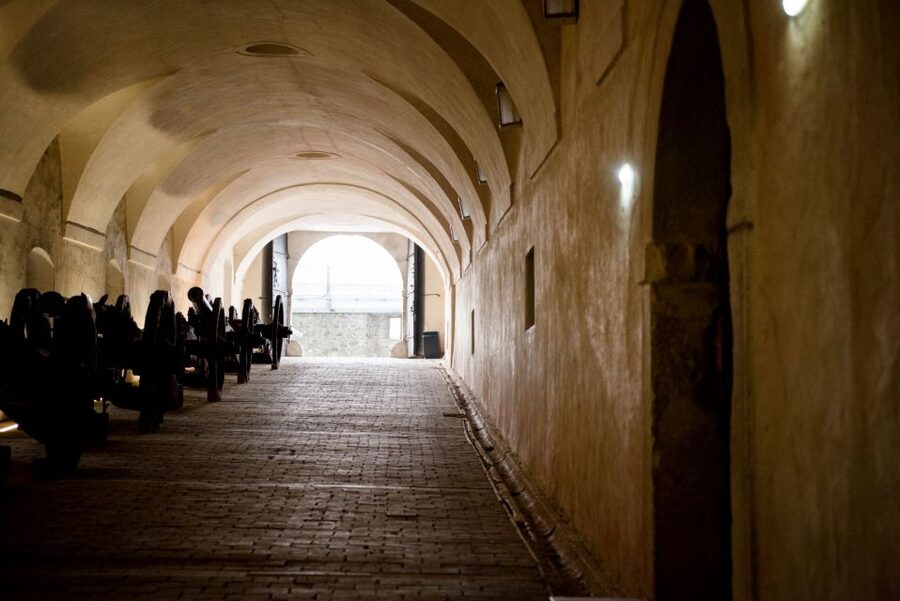
- The courtyard murals are the visual opener: The secco paintings give you an immediate sense of the castle’s former display and ceremony.
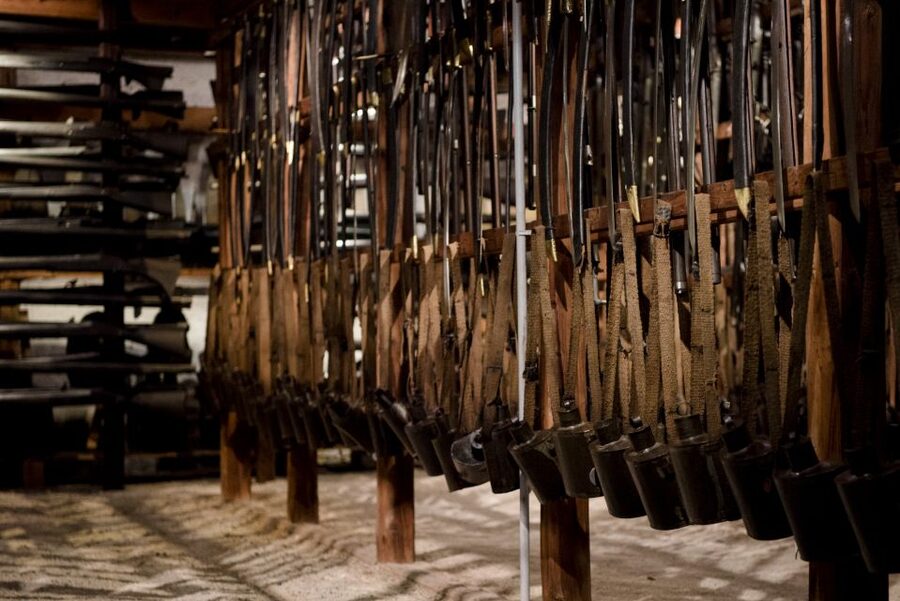
- The armory is a major stop: Expect a substantial collection of weapons in one of Europe’s largest private armories.
- The Esterházy portraits mix fact and family legend: Attila the Hun and Vlad the Impaler appear among the family’s fictional ancestors.
- The coronation flags are unusually old: Three flags from 17th-century Hungary, Croatia, and Serbia are displayed here.
- The Kunstkammer rewards curious visitors: This cabinet of curiosities reflects Prince Paul Esterházy’s collecting habits from the late 16th to early 18th century.
- The visit is short and stair-heavy: The one-hour format suits a focused stop, but it is not a good choice for people with mobility impairments.
Why Forchtenstein Castle is more than a pretty fortress
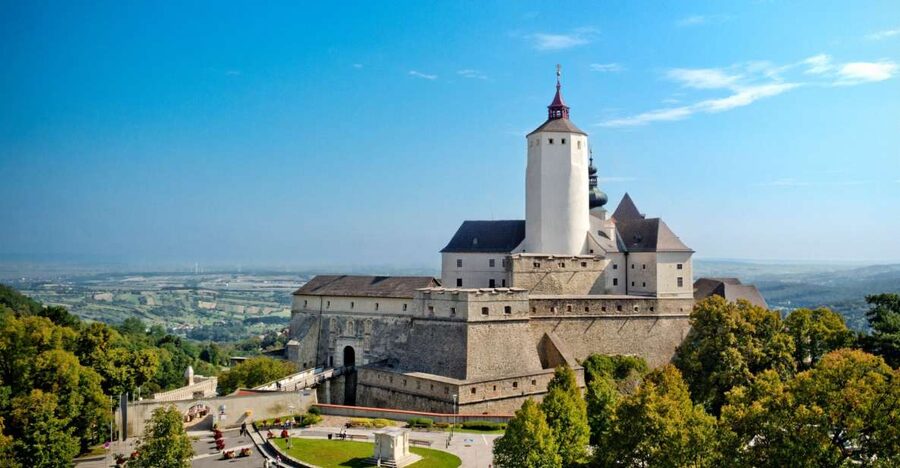
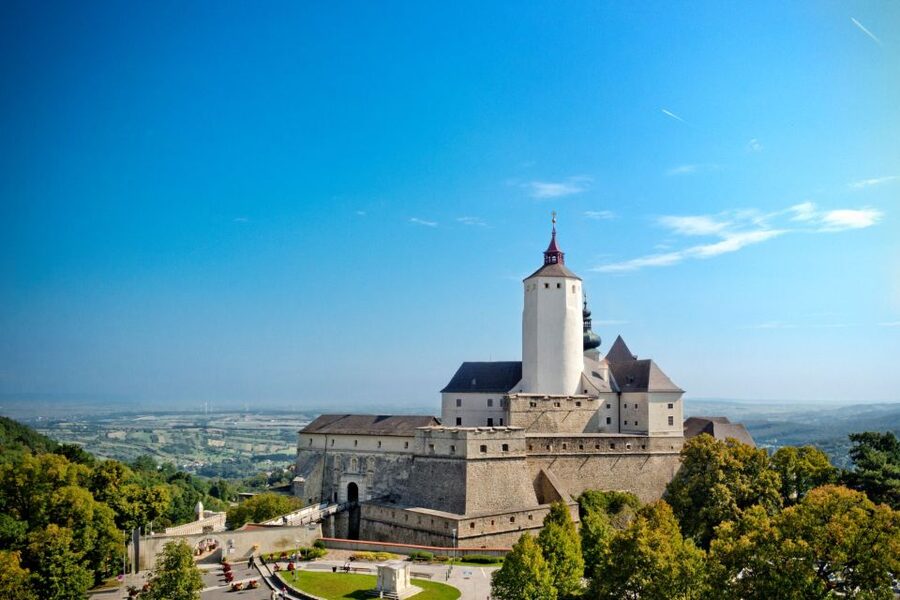
Forchtenstein is in Burgenland, Austria, and the experience is built around the castle’s preserved interiors and the Esterházy family collections. You are not simply walking through empty rooms and looking out at a view. You are moving from one carefully assembled display to the next, with the family’s military power, social ambitions, religious life, and taste for unusual objects all visible in the exhibits.
That combination gives the visit its character. The building provides the setting, but the collection supplies the stories. A weapon, flag, portrait, or tent is not just decoration here. Each object points to the influence the Esterházy family wanted to project.
At $22 per person, the admission is not a throwaway stop. Still, the price makes sense if you care about historic interiors, arms, portraits, and rare ceremonial objects. You get a concentrated visit rather than a full-day attraction, so I would judge the value by the quality of the collection, not by the length of the visit.
More to book in Austria
- Vienna: Classic Ensemble Vienna in St. Peter’s Church Ticket
★ 4.7 · 4,819 reviews - Vienna Kunsthistorisches Museum Day Admission Ticket
★ 4.6 · 3,690 reviews - Vienna: Tickets for Mozarthaus Vienna with Audio Guide
★ 4.2 · 2,344 reviews
The courtyard murals set the tone
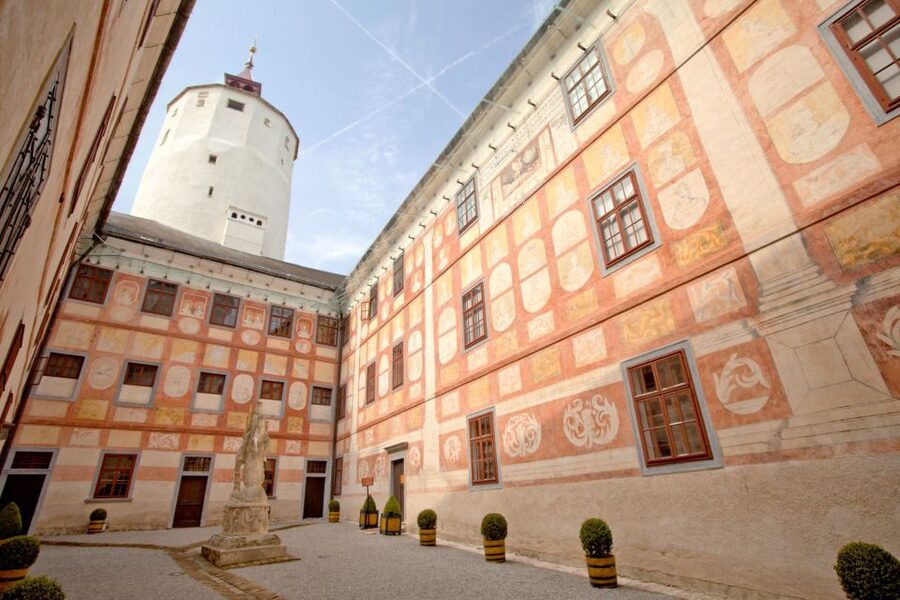
Begin in the inner courtyard. This is the first place where the castle feels different from a standard fortified residence. The walls carry extensive secco paintings, made by applying paint to dry plaster. They are described as the largest display of secco wall paintings north of the Alps.
Take a moment here before rushing indoors. The courtyard gives you a sense of how much visual effort went into the castle. It is also a useful place to get your bearings, since the later rooms are more crowded with objects and details.
The murals are especially valuable for visitors who want to see the building itself rather than only display cases. They are part of the castle’s fabric. You can look at them as decoration, but also as evidence of the image the owners wanted to create around themselves.
The supplied details do not identify the artist or provide a full explanation of the scenes, so do not expect a specialist art lecture unless you choose the guided option. Even so, the scale alone makes the courtyard a strong opening stop.
The chapel and oratory add a quieter pause
On the first floor, the route includes the oratory and chapel. These rooms shift the mood from public display to private devotion. They also show that the castle was not only a defensive structure or family residence. It had spaces for worship and daily religious life.
I would pay attention to how these rooms fit into the wider visit. After the broad courtyard and the armory, the chapel gives you a smaller setting in which to consider the family’s Catholic identity and ceremonial habits. The supplied information does not list every object in these rooms, so the interest comes mainly from the preserved setting and its place in the castle sequence.
Access may vary. One recent account noted that the first level was not open during a visit, even though the standard description includes the chapel and oratory. If these rooms matter to you most, confirm what is accessible on your chosen date.
The armory is the castle’s strongest crowd-pleaser
The weapons collection is one of the clearest reasons to visit Forchtenstein. It is described as one of Europe’s largest private armories, and it provides the most direct connection to the castle’s military role.
You can expect a substantial display rather than a few swords placed in a corridor. The collection helps explain how a powerful noble family presented itself: armed, prepared, and capable of defending its position. Even if you are not a specialist in armor, the sheer range of weapons can make this section easy to appreciate.
This is also where a guided tour can add real value. A guide can explain what you are looking at, why particular pieces mattered, and how the collection fits the Esterházy story. One recent visit specifically praised the guide’s lively explanation of the castle, armory, and original interiors. No guide’s name is provided, and the available language information is German.
If you prefer to move at your own pace, the audio guide may be the better choice. The activity details list a German audio guide and also state a €2 charge for it, so confirm the current arrangement when booking. The admission ticket itself is included, but the audio guide is not presented consistently in the supplied details.
A different kind of evening in Austria:
- Vienna: Vivaldi’s Four Seasons Concert in Karlskirche
★ 4.7 · 14,951 reviews - Vienna: Spanish Riding School Training
★ 3.9 · 9,281 reviews - Vienna: Skip-the-cashier-desk-line Giant Ferris Wheel Ride
★ 4.5 · 7,859 reviews - Vienna: Schönbrunn Palace & Gardens Skip-the-Line Tour
★ 4.7 · 7,739 reviews
Silver furniture shows off Esterházy wealth
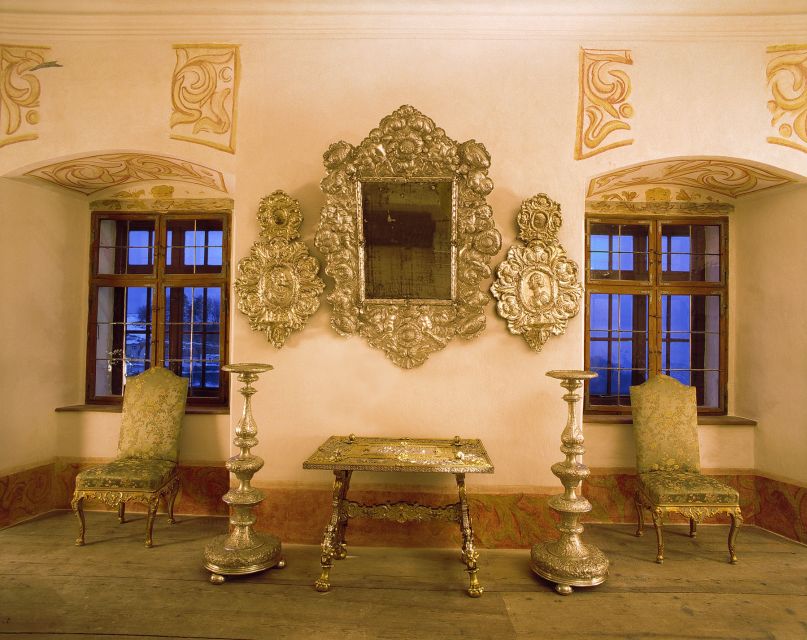
The second floor moves from military strength to display and status. One of the major collections here is Europe’s largest and earliest collection of silver furniture.
Silver furniture is more than a novelty. It tells you how wealth was meant to be seen. A silver-covered table or furnishing was costly, heavy, and impractical compared with ordinary household furniture. Its point was display. It announced that the family could afford objects made to impress rather than simply serve a purpose.
This section should appeal to you if you enjoy decorative arts and court culture. It also helps balance the armory. Forchtenstein is not only about battles and fortifications. It is about the way an aristocratic family collected, arranged, and displayed power.
Give yourself time to look at the craftsmanship instead of treating the silver pieces as one large glittering group. The details of surface, shape, and ornament are where the collection earns its place in the visit.
The Ottoman tent is a striking object in an indoor collection
Among the second-floor displays is an ornate Ottoman tent that is about 400 years old. It is one of the objects most likely to stay with you after the visit because it is large, unusual, and instantly legible. You do not need specialist knowledge to understand that a tent of this sort carried military, political, and ceremonial meaning.
Its presence also widens the story beyond the castle walls. The collection reflects contact and conflict across Central Europe, not just the private life of one family. The tent gives the displays a wider regional frame, even though the supplied information does not explain its exact origin or route to Forchtenstein.
I would place this near the top of your mental checklist. It is the kind of object that makes a collection feel personal and unexpected rather than predictable.
The coronation flags connect the castle to royal ceremony
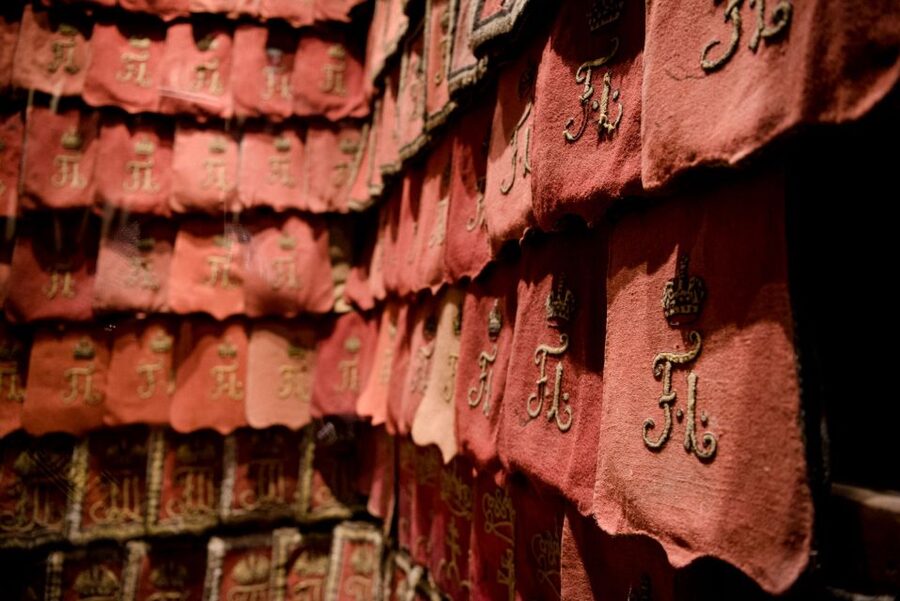
Forchtenstein displays three coronation flags dating from the 17th century, associated with Hungary, Croatia, and Serbia. They are described as the oldest known coronation flags from those countries.
Flags can seem simple compared with armor or silver furniture, but these have a clear public role. They belonged to ceremony, legitimacy, and the performance of power. Their presence shows how the Esterházy collection reached beyond household possessions into the symbols of states and rulers.
This is a good place to slow down and read any available explanation. The flags are important because of their age and ceremonial use, not just their color or design. If you are interested in Central European history, this may be one of the most meaningful displays in the castle.
Portraits turn family history into family mythology
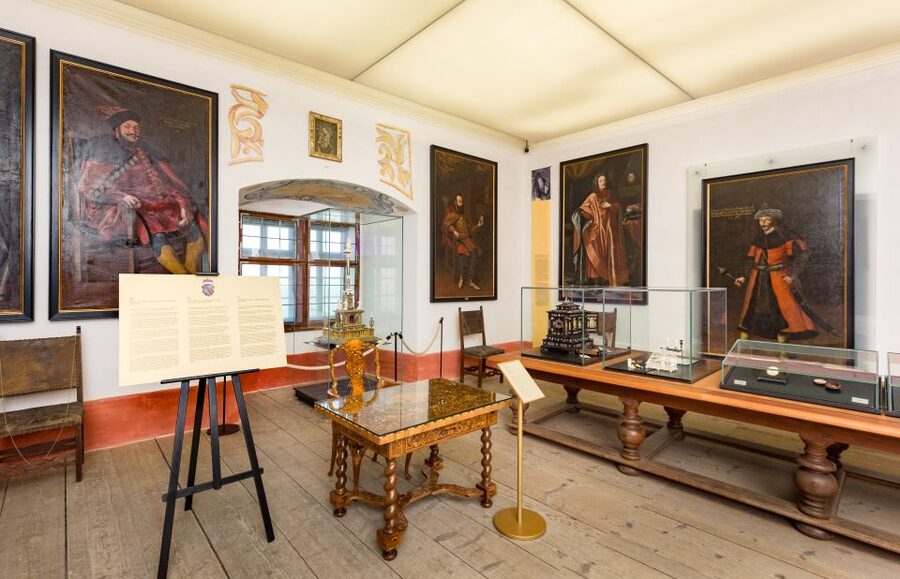
The Gallery of Ancestors presents a long line of Esterházy portraits, but not every ancestor shown is a real member of the family. The collection includes fictional ancestors such as Attila the Hun and Vlad the Impaler.
That is one of Forchtenstein’s most revealing features. Portrait galleries often claim to record family continuity, but they can also show how a family wanted its past understood. Linking the Esterházy name to powerful or feared figures gave the family a grander and more dramatic story.
The Vlad the Impaler portrait is the headline object. It is described as the only known full-length portrait of him. The image is valuable not only because of its rarity, but because it demonstrates how historical figures could be brought into a noble family’s imagined ancestry.
I like this section because it asks you to look at portraits with a little skepticism. A painted face does not automatically prove a family connection. Here, the mixture of actual and fictional ancestors is part of the point.
The Kunstkammer reveals a collector’s personal taste
The Kunstkammer, or cabinet of curiosities, dates from the late 16th to the early 18th century. It offers a different kind of history from the armory and coronation flags. Instead of focusing on one political purpose, it shows the collecting habits and curiosity of Prince Paul Esterházy.
Cabinets of curiosities were early collections of objects chosen for rarity, beauty, strangeness, or intellectual interest. The exact contents are not listed in the supplied information, so you should expect a varied display rather than a single theme. That variety is the appeal.
This part of the castle may reward you most if you enjoy unusual objects and the personal stories behind collections. It also helps explain why Forchtenstein feels like both a castle museum and a record of one family’s taste. Military items tell you what the family needed to project. The Kunstkammer shows what caught its attention.
Guided tour or audio guide?
The optional guided tour is worth considering if you want the displays explained as you go. A recent account singled out the guide’s vivid storytelling and said the explanations made the original interiors, armory, and weapons more rewarding. That is useful here because many objects carry historical meaning that is not obvious at a glance.
The available language is German. The activity information also lists a German audio guide, with a separate €2 charge in the inclusions section. Since the supplied booking details describe the audio guide both as included and as costing €2, check the final terms before you pay.
If you do not understand German, the visual strength of the castle still helps. The courtyard murals, silver furniture, Ottoman tent, portraits, and flags can all be appreciated without a full spoken explanation. Still, you may miss some of the links between the objects and the Esterházy family story.
The visit is listed as one hour. That is enough for a focused route through the principal rooms, especially if you keep moving. It is not enough for a slow, detailed study of every portrait and object. Arrive 15 minutes before the activity begins so you are ready to start on time.
Who will get the most from this visit?
Forchtenstein suits you if you enjoy:
- Historic castles with original interiors
- Weapons and private armory collections
- Portrait galleries and aristocratic family stories
- Rare ceremonial objects
- Decorative arts, especially silver furniture
- Small museums where unusual pieces matter as much as famous ones
Families with older children may find the armor, Ottoman tent, and Vlad the Impaler portrait especially memorable. The one-hour length can also work well when you want a substantial cultural stop without giving up an entire day.
You should think twice if stairs and uneven access are difficult for you. The activity is specifically not suitable for people with mobility impairments, and access to individual levels may vary. You should also allow extra time if you want to read every label or study the art collection closely.
Practical value at $22 per person
The admission price is reasonable for a specialized castle collection, provided you care about the subjects on display. You are paying for access to several major collections in one setting: the armory, silver furniture, portraits, flags, Ottoman tent, and Kunstkammer.
The one-hour duration keeps the cost from feeling like a bargain for a full-day outing, but it also makes the visit easy to fit into a Burgenland sightseeing plan. I would book it for the collection rather than for a long castle tour.
Free cancellation up to 24 hours before the activity and reserve-now, pay-later terms add flexibility. They matter if your schedule in Burgenland is still changing. The meeting instruction is simple: arrive 15 minutes early.
Should you book Forchtenstein Castle?
Book this experience if you want an authentic collection-focused castle visit with objects that are genuinely unusual. The secco courtyard murals, private armory, silver furniture, coronation flags, and Vlad the Impaler portrait give you several strong reasons to go, and the collection feels more distinctive than a standard room-by-room palace tour.
I would choose the optional guided format if you understand German and want the family story explained with more energy. Choose the audio guide if you prefer independence, but confirm its €2 cost before arrival. Skip the visit if mobility limitations make stairs and changing access difficult, or if you are looking only for a grand panoramic castle walk.
For most history-minded visitors in Burgenland, Forchtenstein earns its hour. It is compact, object-heavy, and a little strange in the best way.
FAQ
Where is Forchtenstein Castle?
Forchtenstein Castle is in Burgenland, Austria.
How long does the castle visit take?
The activity duration is about one hour.
What does the $22 admission ticket include?
The ticket includes admission to Forchtenstein Castle and its collections.
Is a guided tour available?
An optional guided tour is available. The listed language information is German.
Is an audio guide available?
A German audio guide is listed in the activity details. The supplied information also lists a €2 charge, so confirm the current cost when booking.
Is the castle suitable for people with mobility impairments?
No. The activity is not suitable for people with mobility impairments. Access to some areas may also vary, with one recent account noting that the first level was not open.
Just added in Austria
- Zurich: Liechtenstein, Austria and Germany Private Day Tour★ 5.0 · 6 reviews
- Zell am See: Schmittenhöhe Tandem Paragliding Flight★ 4.9 · 82 reviews
- Zell am See: Paragliding Tandem Flight★ 5.0 · 31 reviews
- Zurich: Private Liechtenstein, Austria, and Germany Day Trip★ 5.0 · 16 reviews
- From Krems: Wachau Valley River Cruise on the Danube★ 4.6 · 95 reviews
- Vienna: UNESCO Schönbrunn Palace Guided Tour with Entry★ 4.5 · 94 reviews
- World War II History Vienna Old Town Private Walking Tour★ 4.8 · 9 reviews
- Villach/Ossiachersee: Paragliding “Action” Tandemflug★ 5.0 · 4 reviews