
Reviewed · TOURS IN VIENNA
Fall in Love with Vienna Tour- the best of Vienna on foot!
Vienna’s grand center is best understood on foot, and this tour gives you a fast, story-filled route through its palaces, churches, cafés, and music landmarks. In roughly three hours, you move from Mozart’s old neighborhood to the Opera House, with stops at places many first-time visitors would otherwise pass without context.
I like the wide sweep of sights and the way the guides connect emperors, composers, coffee, cake, and everyday city life. I also like the practical help after the tour, including restaurant and museum suggestions, a printed information pack, a city map, and, when needed, help with photos or public transport.
The main caution is pace. You cover about 5 kilometers and stop briefly at many places, usually for five to ten minutes. A group of up to 18 can also make it hard to hear in crowded streets, so this suits people who want orientation more than long indoor visits.
Key points to know before booking
- See more than 20 central landmarks: The route includes the Hofburg, St. Stephen’s Cathedral, Volksgarten, the Spanish Riding School, Café Central, and the State Opera.
- A strong first-day choice: You get a city overview and clear ideas for what to return to on your own.
- Expect real walking: The route is generally easy and flat, but cobblestones and roughly 5 kilometers call for good shoes.
- Guides add personality: Nicoletta, Nikoleta, Moritz, and Reka are named in the feedback, with special praise for warmth, stories, and flexibility.
- Coffee is part of the experience: From January through November, an extra 30-minute break in a traditional Viennese coffee house is included.
- No museum admissions are included: You see many sites from outside, while entry fees are yours to pay if you return later.
Why this walking route works for a first day in Vienna
The best thing here is the route design. Instead of spending half a day inside one palace, you get a quick but useful tour of Vienna’s central district. The city’s key sights sit close together, yet each one opens a different door into its past.
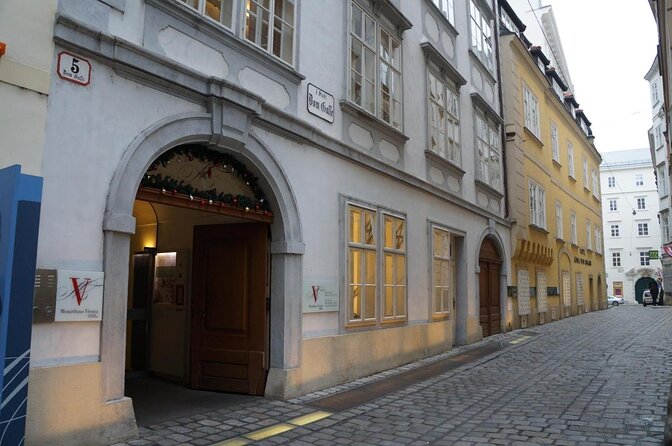
You begin at Mozarthaus Vienna on Domgasse, outside one of Mozart’s long-time residences. The short stop is less about touring the rooms and more about placing Mozart in the city where he worked, performed, and lived. If classical music is high on your list, the guide can also advise about concert tickets in Vienna’s major concert halls.
From there, the route moves through the heart of the old center. You pass a central outlet selling Manner-style wafers and other sweets, a useful little pause for anyone who wants an edible souvenir. St. Stephen’s Cathedral follows, one of Vienna’s defining sights, with origins reaching back to the 11th century.
Do not expect long talks at each location. Most stops last five or ten minutes. That keeps the group moving, but it also means you will want to note the places that deserve a return visit.
More days out of Vienna:
- Vienna: Vivaldi’s Four Seasons Concert in Karlskirche
★ 4.7 · 14,951 reviews - Vienna: Spanish Riding School Training
★ 3.9 · 9,281 reviews - Vienna: Skip-the-cashier-desk-line Giant Ferris Wheel Ride
★ 4.5 · 7,859 reviews
St. Stephen’s, baroque churches, and Vienna’s coffee story
The next section packs several compact sights into a short stretch. The Pestsäule, or Plague Column, is a high Baroque memorial commissioned by Emperor Leopold II in thanks for relief from the plague. The details are easy to miss when you walk past alone, so a guide’s explanation helps you read the monument rather than simply photograph it.
Peterskirche offers a different kind of stop. Its interior is filled with the decoration and theatrical forms of high Baroque design. The church was rebuilt after the original structure was destroyed in the 16th century, and the guide explains how it became the building you see today.
Vienna’s café culture gets its own place on the route at Julius Meinl on Kohlmarkt. This is a good chance to connect the city’s old coffee traditions with a present-day café. The tour also passes Café Landtmann, long associated with Sigmund Freud, and Café Central, Vienna’s most famous historic coffee house.
I like this part because it keeps the tour from becoming a parade of rulers and grand buildings. You get churches, sweets, coffee, and shopping streets alongside imperial history. The trade-off is that the coffee stops are usually viewing and storytelling points, not a guarantee of a seated coffee at every café.
The Hofburg and the many sides of Habsburg Vienna
The Hofburg is the historical center of the tour. The guide explains where Elisabeth, Franz, and Maria Theresa lived, how the palace grew, and what life was like for the people who served the Habsburg family. Stories about habits, passions, and odd personal details make the palace easier to picture than a list of dates would.
You also stop at the Sisi Museum, which is connected to the Imperial Apartments. Elisabeth, known as Sisi, has become one of Austria’s most recognizable historical figures. This part of the tour gives you a starting point for deciding if you want to pay for a full indoor visit later.
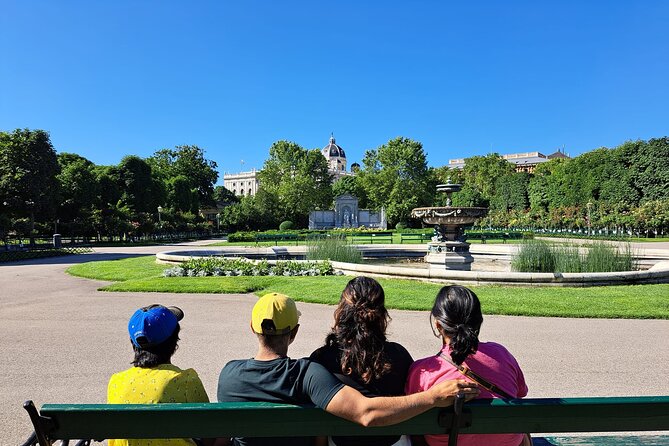
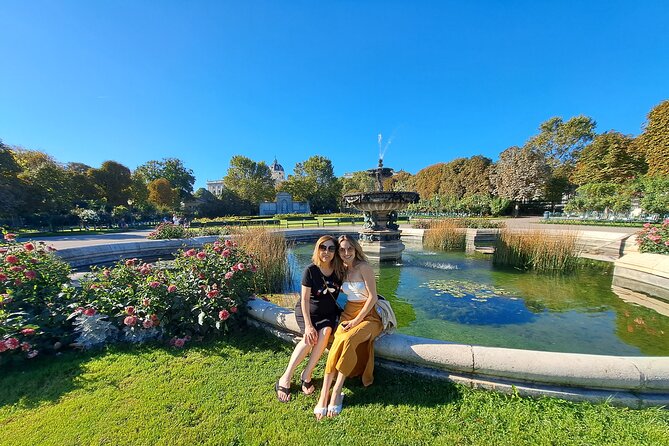
Heldenplatz marks the entrance to the Winter Palace. It is surrounded by museums and includes the palace’s largest ballroom. Nearby, the Volksgarten gives the route a welcome change of pace. Created in 1821, this public park is known for its roses, and the guide points out why it is often called the Garden of the 1000 Roses.
A small Greek-style temple in the park reflects the Habsburg interest in Greece. It is an easy detail to miss, but it shows how Vienna’s imperial spaces often mix political power, art, and personal taste.
Parliament, the City Hall, and Vienna’s public face
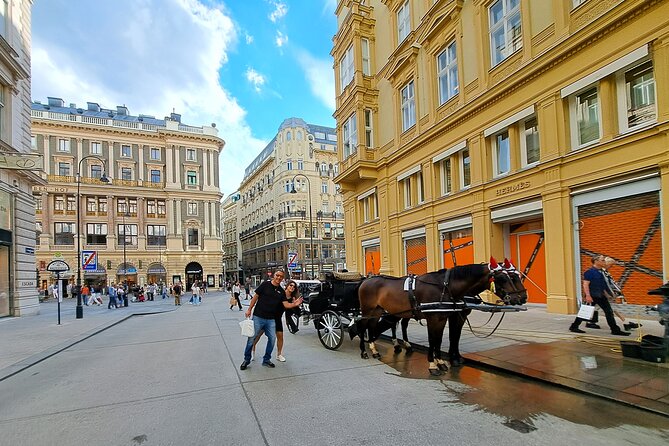
The route then heads toward the civic center. At the Pallas Athena Fountain in front of Parliament, you learn what the goddess holds and what those objects represent. The fountain is a fine place to pause for photographs, though the short stop means you should be ready with your camera.
The City Hall comes next, with its Neo-Gothic design and calendar of public events. The building is also the setting for Vienna’s largest Christmas market, so the guide’s comments can help you understand how the square changes through the year.
The Burgtheater, founded under Maria Theresa in the 18th century, adds the city’s theater tradition to the route. This sequence is useful because it shows Vienna as more than a former imperial capital. Its public buildings still serve as stages for festivals, markets, politics, and daily city life.
A different kind of evening in Vienna:
- Vienna: Schönbrunn Palace & Gardens Skip-the-Line Tour
★ 4.7 · 7,739 reviews - Vienna: Light of Creation Votive Church Immersive Light Show
★ 4.8 · 6,779 reviews - Vienna Spanish Riding School Guided Tour
★ 4.7 · 6,765 reviews - Vienna: Classical Concert in the World-Famous Musikverein
★ 4.6 · 6,673 reviews
Music, churches, and an unusual imperial detail
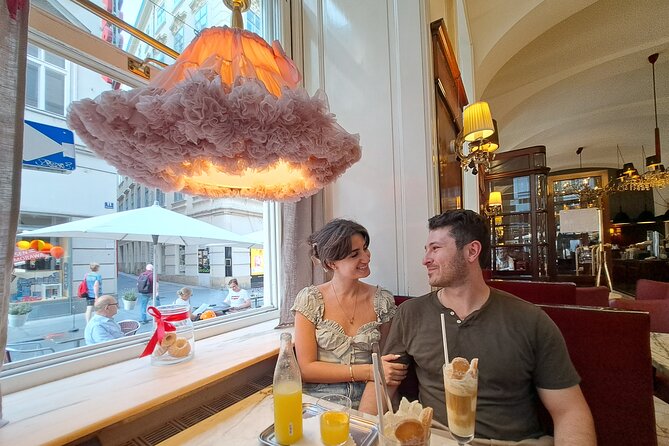
The tour passes Beethoven Pasqualatihaus, one of Beethoven’s former residences and now a museum. Beethoven lived in several places around Vienna, and this stop works best as a reminder that composers were part of the city’s physical fabric, not just names in a concert program.
Schottenkirche takes you back to the early religious foundations of Vienna. The church dates to the 13th century and includes a monastery and museum. As with the other churches, the tour gives you a short introduction rather than a full art lecture.
Augustinerkirche contains one of the route’s more unusual details. A chapel holds the hearts of 50 Austrian emperors and empresses, preserved since the 17th century. This is the sort of fact that gives a walking tour its value. You might never think to search for it on your own.
The Spanish Riding School brings the imperial story into the present. The guide explains its origins under Emperor Maximilian, its military purpose, and the training of its famous Lipizzaner horses. You will not be attending a performance as part of this walk, and tickets are not included, but you get enough background to decide if a separate visit interests you.
Café Central, Demel, Sacher, and the pleasure of stopping
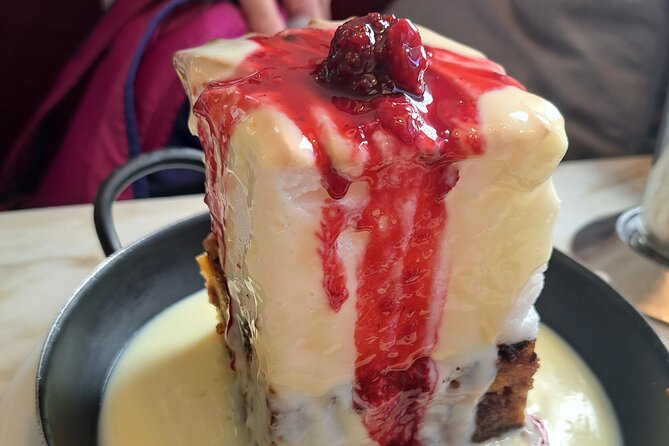
Vienna’s food culture is not an afterthought here. Palais Ferstel is an especially pleasant passage to walk through, with cafés, restaurants, shops, ornate architecture, and a fountain. It leads naturally toward Café Central and Demel.
Demel was a favorite cake shop of Empress Elisabeth and remains a tempting stop for chocolate, pancakes, and cakes. Hotel Sacher follows, the birthplace of the famous Sacher cake. The guide explains the story behind the dessert, while you decide if you want to return for the original.
From January through November, the tour includes an extra 30-minute break in a traditional Viennese coffee house. This is one of the strongest practical features. It gives you a place to sit, ask questions, and catch your breath, especially on a hot day or after several kilometers of walking.
Do note the seasonal limit. The extra coffee break is listed for January through November, so you should not assume it is included in December. The tour still passes several cafés, but the scheduled break matters if you are counting on rest.
Albertina, the Opera House, and a useful finish
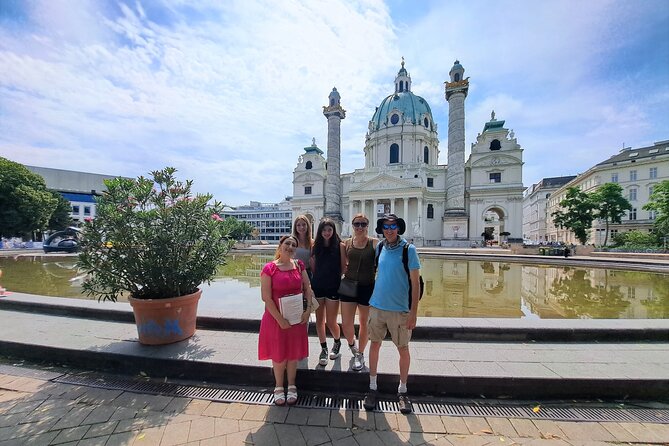
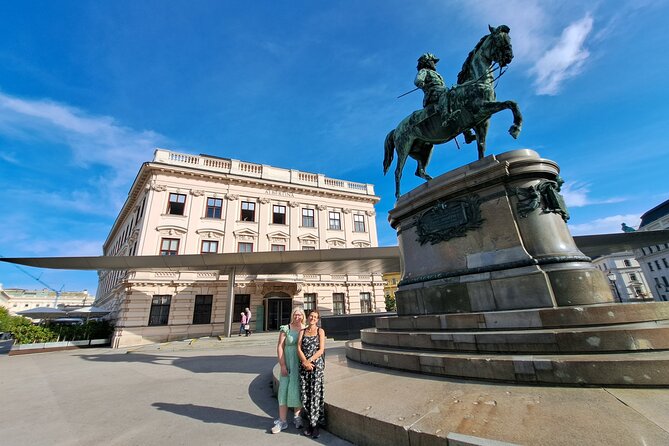
Albertinaplatz brings together the Albertina Museum, a memorial for Vienna’s Jewish community, and the city’s main tourist information office. This is a useful location for planning the next part of your stay. You can mark museums or neighborhoods to explore after the guide has given you a basic map of the center.
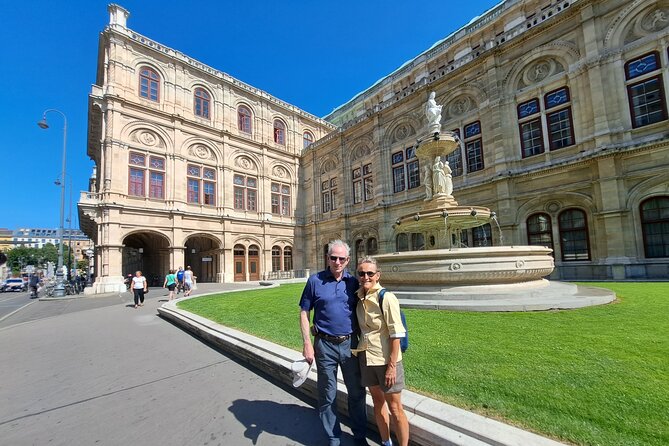
The tour ends at Herbert-von-Karajan-Platz in front of the Vienna State Opera on the Ringstrasse. The Opera House opened in 1869 and remains one of Vienna’s essential music landmarks. Ending here is practical because you finish near central transport and many onward sights.
I especially like the final location for first-time visitors. You can continue walking, find tourist information, or return later for an opera-related visit. The route does not include entry to the Opera House, the Hofburg museums, the Sisi Museum, or other paid attractions, so treat the tour as an introduction rather than an admission package.
What the $72.59 price buys you
At $72.59 per person, this is not the cheapest way to see Vienna’s center. The value depends on how much you want from a guide.
You are paying for a three-hour route, a small to medium group with a maximum of 18, English guiding, local recommendations, a map, and a printed information package. You also get help choosing museums, restaurants, coffee houses, and music venues. For a first visit, those suggestions can save you time during the rest of your stay.
The price makes more sense if you use the tour to shape the next two or three days. You can decide which palace deserves an indoor visit, which café is worth returning to, and how to fit music, art, and food into your plans.
The value is weaker if you want lengthy explanations at each landmark or included entry tickets. You will need to pay separately for museums and other attractions. The tour covers a lot of ground by spending only a few minutes at most stops.
Group size, walking pace, and guide style
The maximum group size is 18, though actual numbers can vary. One group had 17 people, and that made hearing the guide harder in crowded areas. A small group of four received a more tailored experience, and another booking ended up as a private-feeling walk because no one else joined.
The guides named in the feedback include Nicoletta, Nikoleta, Moritz, and Reka. Nicoletta and Nikoleta received repeated praise for clear English, warmth, local tips, photo help, and adapting the route to the group. Moritz was praised for extending the time when an 80-year-old participant needed a slower pace.
That flexibility is worth noting, but it cannot be guaranteed on every departure. You should expect a group walk, not a private tour. If you have trouble hearing, stay close to the guide and ask for a repeat when street noise gets in the way.
The route is described as easy walking with no hills, but you still cover about 5 kilometers. Cobblestones create uneven footing, so wear supportive shoes. Morning departures have an advantage in warmer months, and one early start finished before the city became as crowded.
Who should book this Vienna walking tour
I would choose this for a first visit, a short stay, or the first morning of a longer Vienna trip. It gives you a working map of the center and helps you decide where to spend your limited museum and concert time.
It also suits families who want a clear route, people who enjoy stories about music and royalty, and anyone who prefers to see many places without standing for 20 minutes at every stop. The coffee break can make the pace more comfortable.
I would think twice if you dislike walking, want extensive indoor sightseeing, or already know central Vienna well. The tour moves quickly, and many landmarks are viewed from outside. It also requires good weather, and poor conditions can lead to a new date or a full refund.
You can cancel for a full refund up to 24 hours before the start. Changes made within 24 hours are not accepted, and the tour may also be changed or refunded if minimum numbers are not met.
Should you book it?
Book it if you want a smart orientation with personality rather than a series of museum admissions. The route covers an impressive amount of central Vienna, and the best guides add the stories and small details that make the city easier to understand.
Go in knowing what it is: a brisk outdoor introduction with many short stops. Wear good shoes, choose an early departure if heat or crowds concern you, stay near the guide, and save the palaces and museums you like best for a return visit.
FAQ
How long does the Fall in Love with Vienna Tour last?
The guided walk lasts approximately three hours. From January through November, an extra 30-minute break in a traditional Viennese coffee house is included.
Where does the tour begin and end?
It begins at Mozarthaus Vienna, Domgasse 5, in central Vienna. It ends on Herbert-von-Karajan-Platz in front of the Vienna State Opera on the Ringstrasse.
Is the tour conducted in English?
Yes. The tour is offered in English.
Are museum entrance fees included?
No. The tour includes guiding and outdoor sightseeing, but entrance fees to museums are not included.
How large is the group?
The tour has a maximum of 18 participants. Actual group size can vary by departure.
Can I cancel for a refund?
Yes. You can cancel at least 24 hours before the start time for a full refund. Cancellations or changes made less than 24 hours before the start are not accepted for a refund.
Just added in Vienna
- 3 hour private tour in Vienna by private car★ 4.4 · 6 reviews
- Private Christmas Markets Walking Tour Vienna★ 5.0 · 31 reviews
- Christmas Markets & Shopping in Vienna★ 5.0 · 17 reviews
- Christmas Market Vienna Tour★ 4.0 · 53 reviews
- Vienna: Christmas Markets Tour★ 4.3 · 99 reviews
- Vienna: A Little Night Music – Concert at Capuchin Church★ 4.8 · 145 reviews
- Vienna: Naschmarkt Guided Food Tour★ 4.4 · 140 reviews
- From Vienna: Prague Small-Group Guided Day Tour★ 4.7 · 141 reviews
Tours in Vienna, compared.
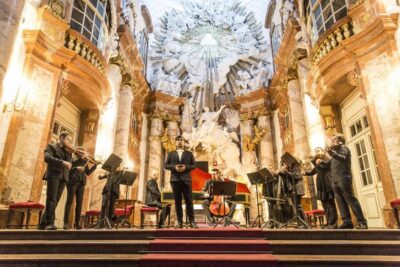
Vivaldi’s Four Seasons Concert in Karlskirche
Read our review →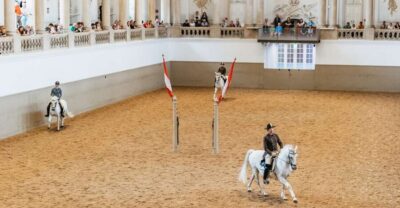
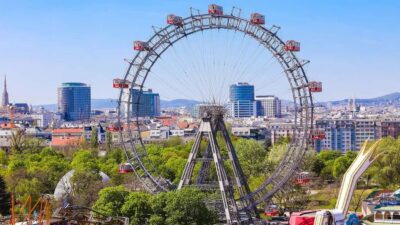
Skip-the-cashier-desk-line Giant Ferris Wheel Ride
Read our review →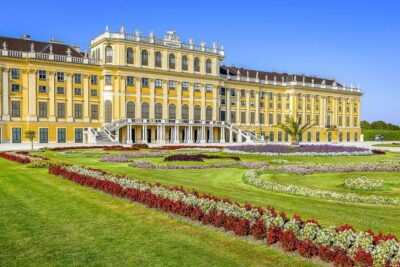
Schönbrunn Palace & Gardens Skip-the-Line Tour
Read our review →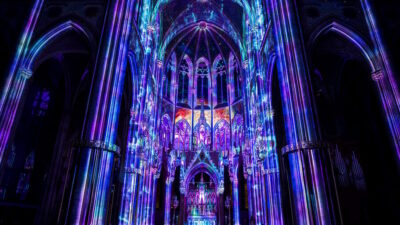
Light of Creation Votive Church Immersive Light Show
Read our review →
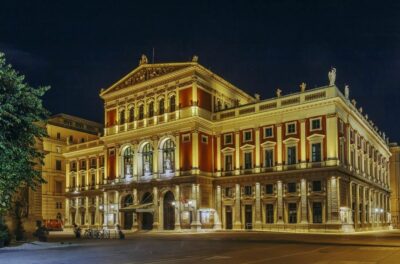
Classical Concert in the World-Famous Musikverein
Read our review →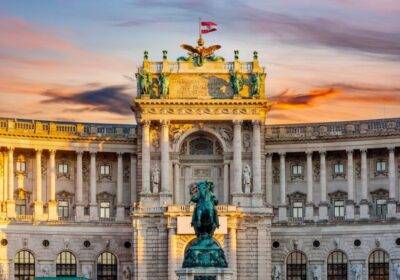
Skip-the-Line Sisi Museum, Hofburg and Gardens Tour
Read our review →Browse the lists this tour appears in