
Reviewed · WALKING TOURS
An Introduction to Vienna Walking Tour
Vienna’s story unfolds best on foot, and this tour connects the big pieces nicely: imperial power at the Hofburg, church grandeur at Stephansdom, modern art at the Secession, and everyday city life around Naschmarkt. You get a useful first look without spending half your day inside a museum. The small group, capped at eight, is a real plus.
I like the guide-led focus on history and architecture, especially when guides such as Katarina, Annelie, Ilse, and Wolfgang add personal details about living in Vienna. I also like the practical advice woven into the walk, from coffeehouses and schnitzel to alternatives for Sacher torte. The main drawback is the price, $181.02 per person, since admission fees, food, and drinks are not included.
- Imperial Vienna in one walk: See the Hofburg, Ringstraße, Stephansdom, and Maria-Theresien-Platz.
- Small groups matter: Bookings allow up to six people, with a maximum tour size of eight.
- History beyond the postcards: Expect stories about Habsburg rule, war, architecture, music, and daily life.
- A strong first-day choice: The route gives you a useful map of central Vienna and ideas for later exploring.
- Local food guidance included: Guides may point you toward coffeehouses, schnitzel, sausages, and less obvious Viennese snacks.
- A premium walking tour: The price pays for a private-feeling experience and a historian guide, not for entry tickets.
Why This Vienna Walk Works Best at the Start of Your Trip
This is an orientation tour with substance. In roughly two and a half hours, you move through the central districts that define Vienna, from the Habsburg court to the city’s turn-of-the-century art scene. The route does not try to cover every museum or palace interior. Instead, it gives you the framework to understand what you see afterward.
That makes the timing important. I would book it on your first full day, if possible. Guides can point out places to return to, suggest coffeehouses and restaurants, and explain which buildings deserve more of your time. Several guides also offer directions and ideas for independent sightseeing, which can save you from wandering through Vienna with only a list of names.
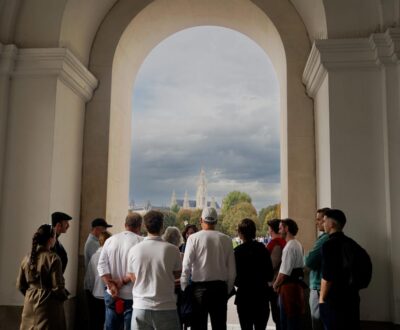
The tour is offered in English and led by an historian guide. You are not simply following a flag through a crowd while hearing a string of dates. The best part of this format is the chance to ask why a building looks the way it does, how the Habsburgs shaped the city, or what happened to Vienna during the war years.
Starting at Café Hawelka and Michaelerplatz
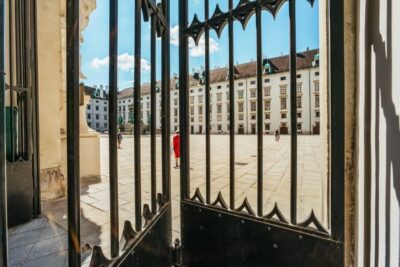
The meeting point is Café Hawelka on Dorotheergasse, in central Vienna. The walk itself begins at Michaelerplatz, where the Hofburg fills the square with a clear statement of imperial power. This is a smart place to begin because Vienna’s past is immediately visible in the architecture around you.
The Hofburg served as the Habsburg imperial palace and seat of power from the 13th century. Your guide can use its courtyards and façades to explain how a ruling family expanded its reach over centuries. You will see the palace mainly from outside on this walk, so do not book it expecting a palace interior visit or a tour of the Imperial Apartments.
That limitation is also part of the tour’s strength. You keep moving, and the guide can place the Hofburg within the wider city rather than spending the whole session on one complex. If you want the interiors, you will need to arrange those separately.
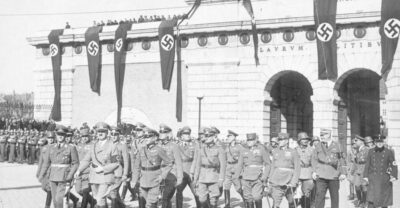
The walk through the Hofburg area also gives you a chance to hear about Austria’s harder chapters. One guide used memorials and wartime damage to explain the human cost of bombing and conflict, including the destruction around the Opera House and an underground shelter. The tone is not only celebratory, which is useful in a city often presented through palaces, music, and cake.
More Walking Tours in Vienna
- Vienna: Guided Walking Tour of City Center Highlights
★ 4.7 · 4,989 reviews - Vienna: Vienna Central Cemetery Guided Walking Tour
★ 4.8 · 3,307 reviews - Vienna: Guided Walking Tour of City Highlights & Hidden Gems
★ 4.9 · 2,180 reviews
Loos House and Vienna’s Architectural Arguments
From the Hofburg, the route takes in the green and gray Loos House, designed by Adolf Loos. Its plain exterior caused a stir in a city accustomed to ornate imperial decoration. That contrast is one of the most interesting visual lessons on the walk: Vienna was not frozen in its Habsburg past.
A good guide can use the Loos House to explain the competing styles that shaped the city around 1900. The tour is especially useful if you enjoy architecture but do not have the background to distinguish the city’s major movements on your own. You can ask questions, compare façades, and understand why a building was considered daring or out of place.
This is also where the small group earns its keep. With up to eight people, you can stop briefly without blocking a large pavement or losing the guide’s voice. The route includes many outdoor explanations, so hearing clearly matters.
Still, keep your expectations realistic. This is a walking overview, not a specialist architecture seminar. You will get context and memorable examples, but not a complete survey of every building or style in Vienna.
Secession, Klimt, Mahler, and the City Around 1900

The Secession building brings you into another Vienna: the city of artists, musicians, and cultural arguments at the turn of the 20th century. Here, the focus shifts from imperial authority to avant-garde ambition. The building is linked with figures such as Gustav Klimt and the composer Gustav Mahler, making it a useful stop for anyone interested in Vienna’s art and music.
The guide can explain how Vienna’s creative life challenged older institutions. That matters because the city’s cultural reputation is not only about Mozart concerts and grand interiors. It also includes experiments in art, design, music, and public life.
One guide, Annelie, added music by Mozart and Haydn, along with Sisi’s favorite candies and an unusual Viennese snack. Those extras are not guaranteed, so do not book on the assumption that every guide will repeat them. They do show the kind of personal touch the format allows.
If you have a strong interest in Klimt, the Secession is a useful introduction, but it is not a substitute for visiting Vienna’s art museums. Maria-Theresien-Platz later gives you a clear sense of where those collections are concentrated, and you can plan a separate museum visit from there.
Stephansdom and the Heart of the Old City
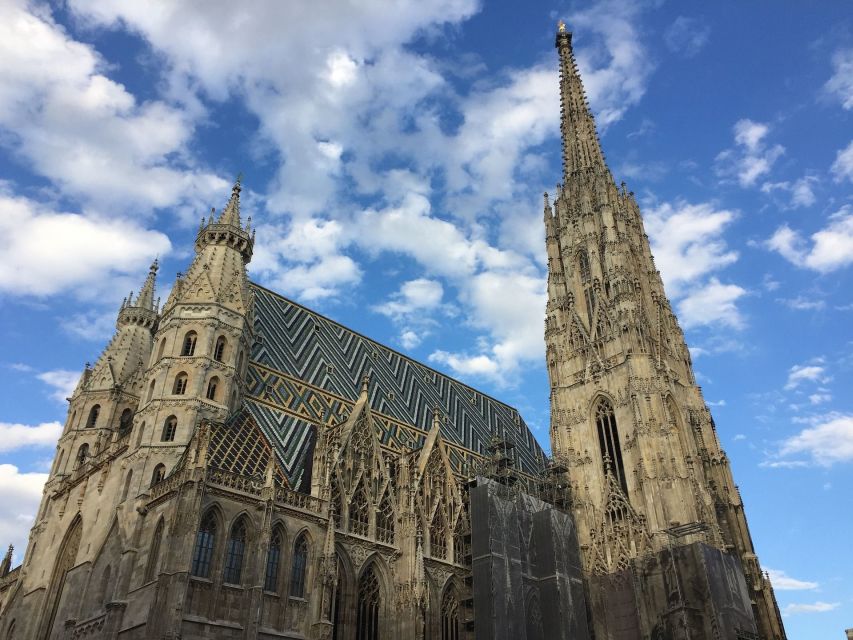
Stephansdom is Austria’s national architectural icon and one of the clearest markers of central Vienna. Its roof and Gothic mass make it hard to miss, but a guide helps turn a quick photograph into a lesson about the city’s religious and civic life.
The church is seen as part of the walk. The supplied details do not promise an interior visit, a tower climb, or a special entry arrangement, so plan on an exterior explanation unless your guide tells you otherwise. That distinction matters if entering Stephansdom is one of your main goals.
The stop works well alongside the Hofburg. One building represents dynastic power, the other religious authority. Together, they help you read Vienna as a city shaped by institutions that lasted for centuries.
You will also hear stories that make the city’s past less tidy. One guide discussed the kidnapping of Richard the Lion Hearted, while others brought in Habsburg rule and its effect on Austria over roughly 700 years. These side stories give the route a human scale and keep it from becoming a parade of dates.
More walking routes in Vienna:
- Vienna: Viennese Underworld Guided Walking Tour
★ 4.7 · 1,865 reviews - Vienna: World War II Historical Walking Tour
★ 4.8 · 1,772 reviews - Vienna Historic Center Small Group Walking Tour
★ 5.0 · 1,746 reviews - Vienna: Private Walking Tour with a Local Guide
★ 4.6 · 1,420 reviews
Kohlmarkt, Graben, and the Plague Column
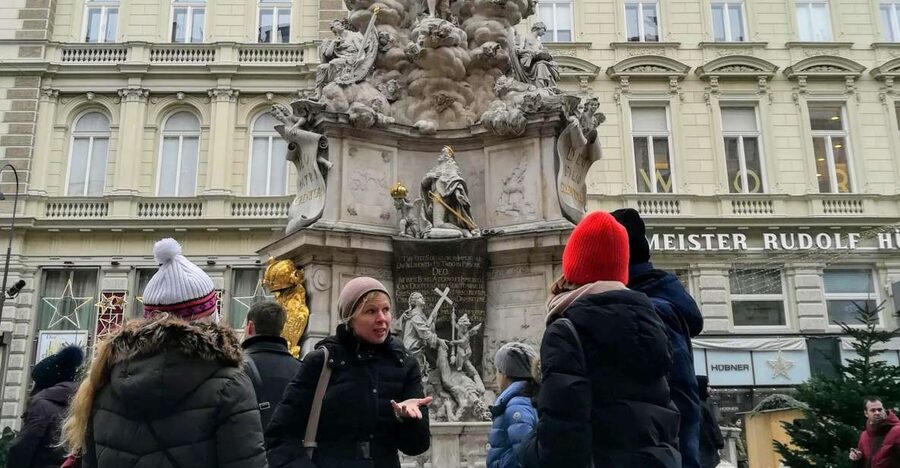
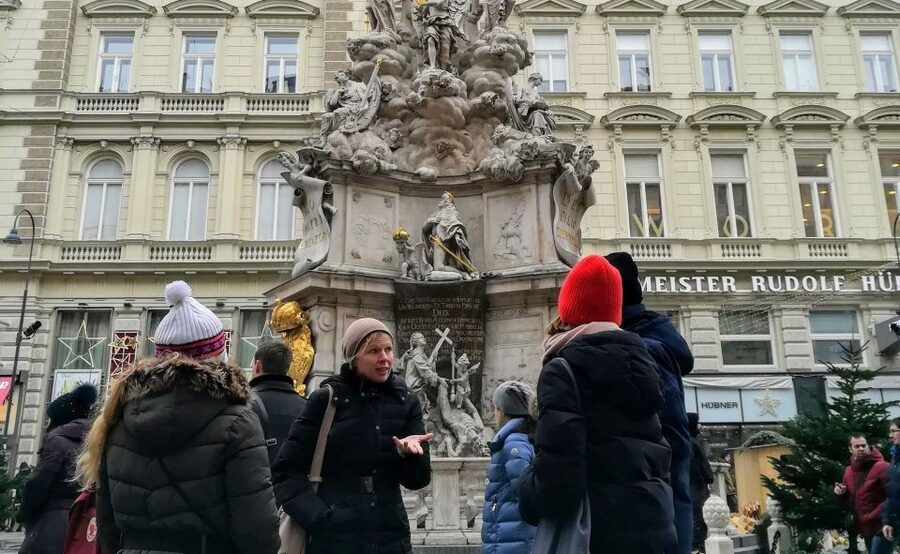
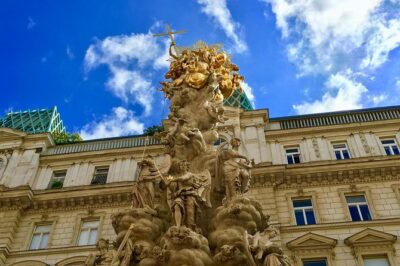
Kohlmarkt and the Graben are now among Vienna’s fashionable shopping streets, but the route does not treat them as mere retail corridors. The Graben’s plague column recalls the 17th-century outbreak of bubonic plague and shows how public monuments can preserve fear, faith, and political memory.
This is a good place to look up from the shop windows. Vienna often places its grandest stories in ordinary daily settings. You may be walking toward a department store while standing beside a monument built to mark a catastrophe.
The central location is convenient, but it can also be busy. A small group makes it easier to stay together, though you should still expect city traffic, pedestrians, and frequent stops rather than a quiet countryside stroll.
A criticism raised by one booking party was that City Hall, Parliament, the plague column, and the Holy Lance were not all included as hoped. The listed route does include the plague column area, but the point is useful: do not assume that every major central landmark will receive a full stop. If you have a must-see list, tell the guide early and ask what the available time allows.
Naschmarkt and Everyday Viennese Life
The Naschmarkt offers a welcome change from palaces and ceremonial avenues. It is Vienna’s traditional food market, where people meet, browse, and shop. You pass by rather than receive a dedicated food tour, and food and drinks are not included.
Even so, Naschmarkt helps balance the itinerary. After hearing about rulers and monuments, you get a glimpse of how the city eats and socializes. The guide may also offer suggestions for sausages, schnitzel, coffeehouses, or snacks that do not appear in every standard guidebook.
That advice can be one of the most useful parts of the experience. One guide directed a booking party toward alternatives to the Sacher Hotel for Sacher torte, avoiding the famous queue and offering other places to try the dessert. Recommendations vary by guide, so ask specific questions about the foods you want to sample.
Do not count on stopping for a full meal here. The walk lasts about two and a half hours, and the market is part of the route rather than a scheduled tasting stop.
The Ringstraße and Maria-Theresien-Platz
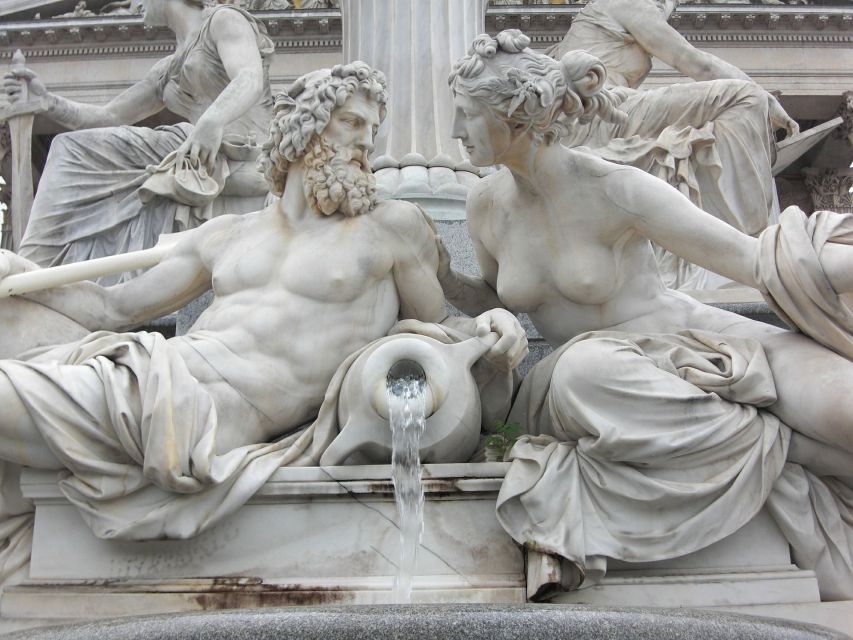
The Ringstraße gives the tour a grand change of scale. Built in the middle of the 19th century, this broad boulevard encircles the old center and is lined with major public buildings and former palace residences. Many luxury hotels occupy old palaces along the route, which helps you see how Vienna’s imperial image continues in modern use.
Walking here with a guide is more helpful than simply taking a tram around the Ring. From street level, you can compare façades and ask what each building was designed to do. The guide can also connect the boulevard to the Habsburg decision to reshape the city and display its power.
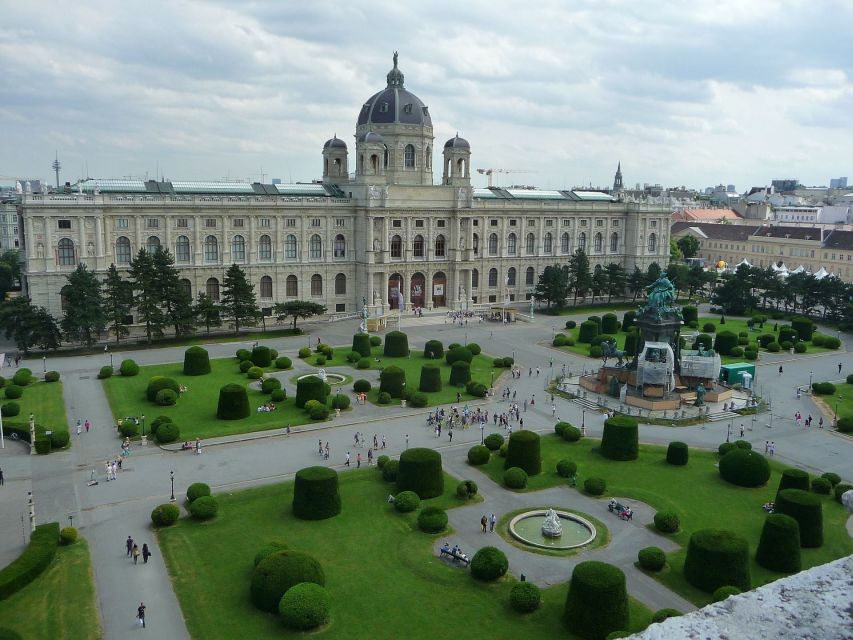
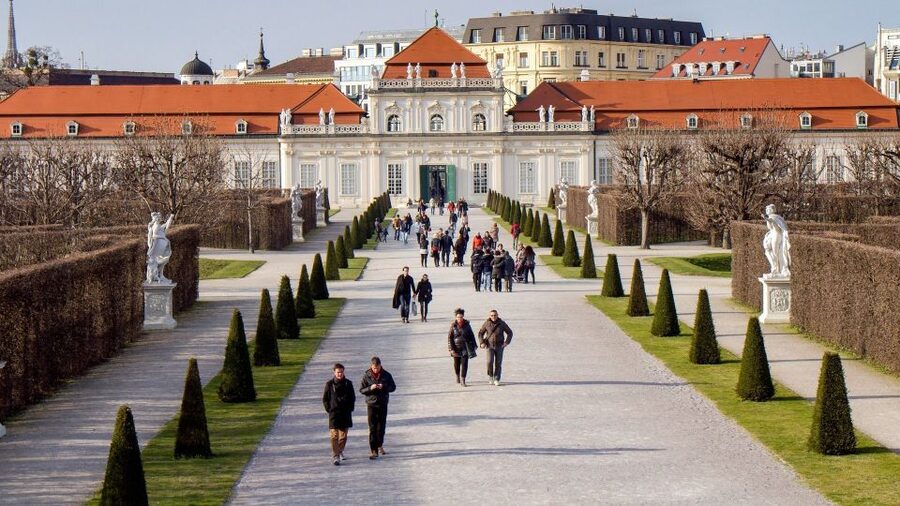
Maria-Theresien-Platz is home to Vienna’s largest concentration of museums. You may not enter them on this walk, but the square is an excellent planning stop. If you want art, natural history, or imperial collections, this is where you can decide what deserves a separate visit.
This part of the tour also reinforces the difference between seeing a landmark and understanding it. A photograph shows a grand façade. A guide explains why it is there, what political message it carried, and how the city uses it today.
What the Small Group Really Buys You
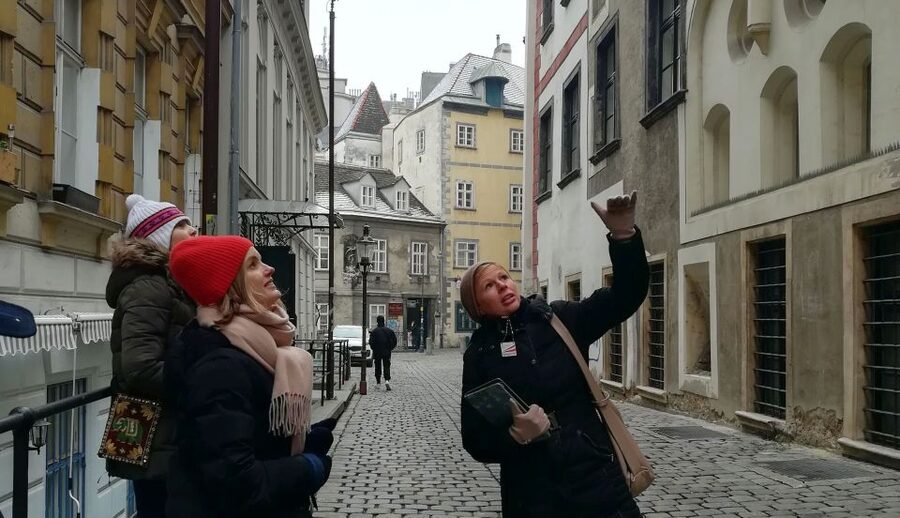
The tour permits a maximum of eight people, and each booking can include up to six people. In practice, some departures may be much smaller. Several bookings became walks for only one couple or even one person, creating something close to a private tour.
You should not assume that will happen on your date. Still, the cap is low enough to make questions and conversation practical. Guides such as Katarina, Annelie, Ilse, Wolfgang, Christina, Angelika, and Elisabeth were praised for clear explanations, warm personalities, and flexibility.
Guide assignment is not presented as guaranteed, so you cannot count on a particular person. If a named guide is especially important to you, ask the provider before booking rather than assuming a request will be fulfilled.
The small group also helps with pace. One guide adjusted the route when the group’s interests called for it, while another spoke slowly and clearly for a participant with limited English. Those adaptations are harder to manage in a large group.
Is $181.02 a Fair Price?
At $181.02 per person, this is an expensive walking tour. The price does not include food, drinks, museum admission, or hotel pickup and drop-off. You are paying mainly for the guide’s time, the small group, and the chance to shape the conversation.
For a visitor who wants the cheapest way to see Stephansdom and the Hofburg, this is not good value. A large group tour or self-guided walk will cost less. One booking party felt the price was too high for a walking-only experience and suggested choosing a cheaper big-group option.
I see the value differently for a specific kind of visitor. If you care about history, architecture, and questions rather than just collecting exterior photographs, a small group can justify the premium. The guides bring academic training, local experience, restaurant suggestions, and personal stories that a recorded app cannot easily match.
The value is strongest when you use the tour as a launchpad. Book early in your stay, take notes, ask for food and museum recommendations, and return to the places that catch your interest. If you only want a quick list of sights, save the money.
Who Should Book This Walk?
I would choose this tour for a first visit to Vienna, especially if you have two or three days and want a clear sense of the center before exploring on your own. It also suits history-minded visitors, architecture fans, couples, families with older children, and anyone who prefers conversation to a large crowd.
It is a good fit for visitors who want a guide willing to discuss difficult subjects, from wartime loss to political power. It also works for short stays because the route gathers several major sights in one session.
You may want another option if you need extensive time inside museums, a food-focused outing, or guaranteed access to a particular landmark. You should also compare prices carefully if the $181.02 cost would limit your museum visits or meals.
The cancellation policy is simple: cancel at least 24 hours before the start time for a full refund. Changes or cancellations made within 24 hours are not accepted for a refund. The meeting point is near public transportation, and most people can take part.
My Verdict: A Strong Orientation With a Premium Price
I would book this walk if I wanted Vienna’s main sights explained by a well-prepared local guide rather than viewed in isolation. The route covers the Hofburg, Stephansdom, Secession, Ringstraße, Naschmarkt, Graben, Loos House, and Maria-Theresien-Platz, while leaving room for stories about music, war, food, and ordinary city life.
The cost is the clear question. You should book if a small group and an interactive historian guide matter to you. Skip it if you only need a budget introduction or plan to spend the walk rushing toward interiors that are not included.
FAQ
How long does the Vienna walking tour last?
The guided walk lasts approximately two hours and 30 minutes.
What language is the tour offered in?
The tour is offered in English.
Where does the tour meet?
The meeting point is Café Hawelka, Dorotheergasse 6, 1010 Vienna, Austria.
Where does the tour end?
The end location is listed as Vienna, Austria. A more specific final meeting point is not provided.
What sights are included on the route?
The route includes the Secession building, Stephansdom, the Hofburg, Naschmarkt, Kohlmarkt, the Graben, Michaelerplatz, the Ringstraße, Loos House, and Maria-Theresien-Platz.
Does the tour include museum or monument admission?
No admission tickets are listed as included. The walk is described as a guided outdoor experience.
Are food and drinks included?
No. Food and drinks are not included unless specifically stated.
Is hotel pickup available?
No. Hotel pickup and drop-off are not included.
How many people can join the tour?
Each booking can include a maximum of six people, and the tour itself has a maximum of eight travelers.
Can I cancel for a full refund?
Yes. You can cancel at least 24 hours before the experience starts for a full refund. Cancellations or changes made less than 24 hours before the start time are not accepted for a refund.
Just added in Vienna
- World War II History Vienna Old Town Private Walking Tour★ 4.8 · 9 reviews
- Vienna: Wiener Schnitzel and Strudel Cooking Class★ 4.9 · 126 reviews
- Vienna: Wine Tasting Tour★ 4.8 · 61 reviews
- Vienna: Winery and Wine Tasting Tour with a Wine Expert★ 5.0 · 5 reviews
- Vienna: Wine Tasting E-Bike Tour★ 4.9 · 46 reviews
- Vienna: Wine Tasting at Schönbrunn Palace★ 4.3 · 71 reviews
- Vienna: Unforgettable Private City Tour★ 5.0 · 7 reviews
- Vienna Urban Art Tour: Explore a different side of Vienna!★ 3.8 · 14 reviews
Walking Tours, compared.
Guided Walking Tour of City Center Highlights
Read our review →
Guided Walking Tour of City Highlights & Hidden Gems
Read our review →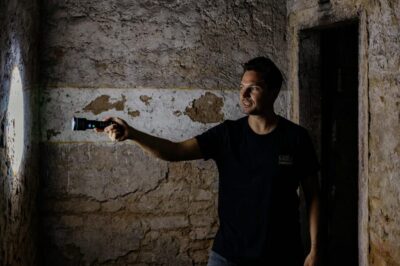
Vienna Historic Center Small Group Walking Tour
Read our review →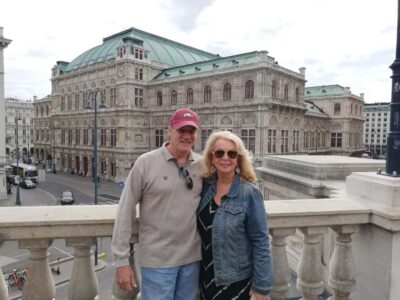
Browse the lists this tour appears in