Reviewed · TOURS IN VIENNA
Alternative Tour in Vienna Off the tourist track
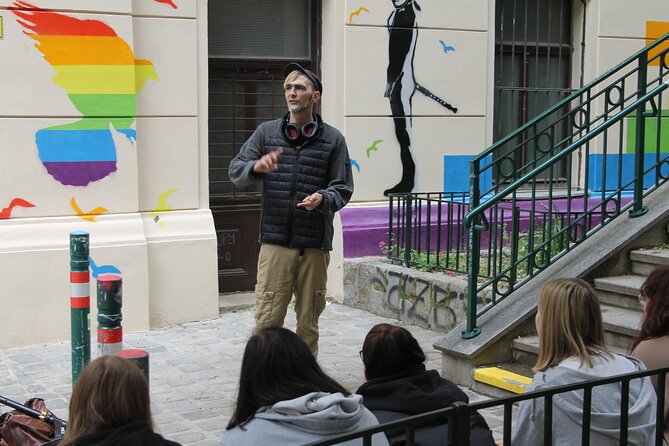
Vienna is usually presented through imperial palaces, grand cafés, and polished concert halls. This two-hour walking tour with Martin takes another route, one shaped by homelessness, addiction, squatting, and street life. Martin once lived on Vienna’s streets, and he tells his story at places connected to that time.
I like the tour’s personal focus and its willingness to discuss subjects most city walks avoid. I also like the mix of serious stories, local anarchist history, and Martin’s dry humor. The main consideration is tone: this is not a light sightseeing walk, and some stories may be difficult for children or sensitive listeners.
Key points at a glance
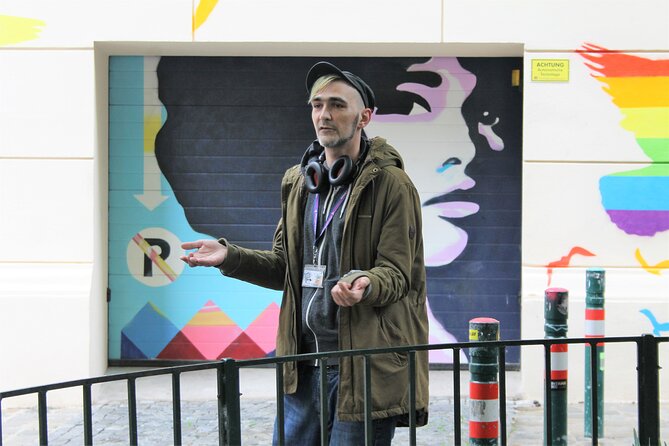
- Martin’s firsthand account: Hear directly from a guide who experienced homelessness and drug addiction in Vienna.
- A different central Vienna: Walk from Karlsplatz through the subway passage, past the Secession, and into places tied to street life.
- Two substantial stops: Alfred-Grünwald-Park and Ilse-Pisk-Stiege each allow time for stories and questions.
- Squat and punk history: Learn about the evacuation of Pizzeria Anarchia, where 19 occupants were removed by 1,700 police officers.
- Small-group feel: The group is limited to 20 people, with group discounts available.
- Straightforward value: At $46 for about two hours, you are paying for a guided personal account rather than a long list of landmarks.
Why this Vienna walk feels different
This experience is built around testimony, not sightseeing checklists. You will not spend two hours moving from one famous façade to another. Instead, Martin uses several ordinary-looking places to explain what they meant to him and to others living on the margins of Vienna.
That difference matters. A park can look pleasant to someone passing through, yet offer little shelter or privacy to someone sleeping outdoors. A subway passage can be simple infrastructure to one person and a place of warmth, movement, and survival to another. Martin’s stories give these everyday spaces another layer.
The subject is serious, but the tone is not relentlessly bleak. Martin is described as open, warm, and funny, and his humor helps the group handle difficult material. He also leaves room for questions, so the experience can become a conversation rather than a prepared speech.
I would not book this expecting a conventional introduction to Vienna. You will not get a broad survey of architecture, music, cafés, or imperial life. You will get a close look at one part of society that many visitors never encounter directly.
More days out of Vienna:
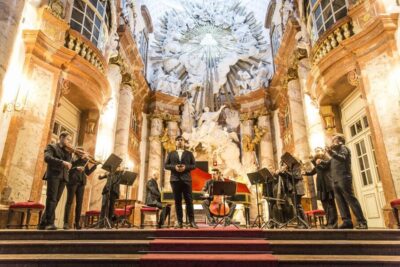
- Vienna: Vivaldi’s Four Seasons Concert in Karlskirche
★ 4.7 · 14,951 reviews - Vienna: Spanish Riding School Training
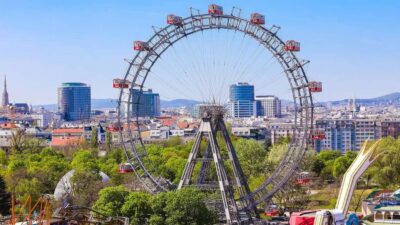
★ 3.9 · 9,281 reviews - Vienna: Skip-the-cashier-desk-line Giant Ferris Wheel Ride
★ 4.5 · 7,859 reviews
Starting at Karlsplatz and crossing central Vienna
The meeting point is the Vienna Police Inspectorate at Kärntnertorpassage, beside Karlsplatz. This is a practical starting place because Karlsplatz is well connected by public transport, and the walk begins in a central area familiar to most people visiting Vienna.
From there, the route passes through the subway passage at Karlsplatz. You then leave via the exit beside the Secession and continue past that distinctive white exhibition building on the way to the next station. The Secession is one of Vienna’s best-known art landmarks, but here it works mainly as a wayfinding point and a contrast to the story that follows.
That opening contrast is useful. Within a short distance, you move from one of the city’s celebrated cultural buildings toward places connected with rough sleeping and alternative communities. The route shows how different worlds can exist close together in the same city.
The walking is not described as strenuous, and the experience lasts about two hours. Still, you should wear comfortable shoes. The tour includes a subway passage, city streets, parks, and stairs at the final named stop. If you need frequent seating, note that the main planned seating is at Alfred-Grünwald-Park, while Ilse-Pisk-Stiege offers a place to pause on steps.
Alfred-Grünwald-Park and the reality of sleeping outdoors
At Alfred-Grünwald-Park, Martin explains why the park became his sleeping place. This is the first major stop, and it includes comfortable seating for the group. That simple detail makes a difference because Martin can speak at length while everyone gathers close enough to listen.
The subject is not homelessness in the abstract. Martin talks about how a specific park worked as a place to sleep and why lying down on the grass is not necessarily the best choice. You begin to understand that sleeping outdoors involves decisions about visibility, safety, weather, police attention, and other people using the space.
That kind of practical detail is one of the tour’s strongest features. Statistics can tell you how many people lack housing, but they do not always explain how a person chooses a place to spend the night. Martin’s account brings the issue down to the level of a bench, a meadow, a passage, or a park edge.
Plan on about 20 minutes here. The stop is long enough to give the subject weight without turning the tour into a lecture. You can ask questions, and the group format allows others to raise points you may not have considered.
This is also where you should judge your own comfort level. Martin discusses homelessness and addiction from personal experience. The content may be difficult, but the purpose is to explain rather than shock. The strongest responses to the experience describe it as thought-provoking, honest, and educational, with Martin avoiding quick judgments about people in difficult situations.
Ilse-Pisk-Stiege and Vienna’s squat scene
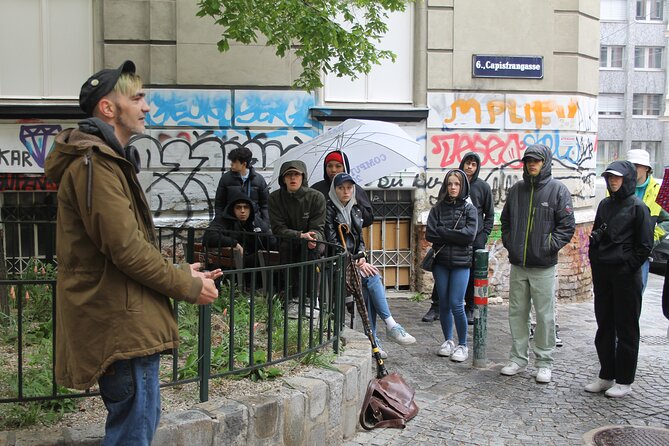
The final named stop is Ilse-Pisk-Stiege, also called the Capistr Ascent. The stairs provide a place to catch your breath while Martin turns to squats, punk communities, and the politics surrounding occupied buildings.
This section adds local social history to the personal story. You hear about the evacuation of Pizzeria Anarchia, a famous Vienna squat case in which a house occupied by 19 people was cleared by 1,700 police officers. The scale of that operation is striking, and Martin uses the event to explain more than a single confrontation between occupants and authorities.
You get a look at why squats formed, how punk communities organized, and why occupied buildings could become flashpoints. The topic should appeal to anyone interested in alternative culture, protest movements, housing, or the less polished side of urban life.
The stop lasts about 20 minutes, so it is not a detailed academic account of Vienna’s anarchist movements. Instead, Martin links the story to his own experience and gives you a personal entry point into a complicated subject. His humor is part of the appeal. Several accounts describe him as able to make the group laugh without making light of the serious issues.
The stairs are also a practical consideration. They are a resting point, but they may not suit everyone equally. If stairs are difficult for you, check the details with the provider before booking.
A different kind of evening in Vienna:
- Vienna: Schönbrunn Palace & Gardens Skip-the-Line Tour
★ 4.7 · 7,739 reviews - Vienna: Light of Creation Votive Church Immersive Light Show
★ 4.8 · 6,779 reviews - Vienna Spanish Riding School Guided Tour
★ 4.7 · 6,765 reviews - Vienna: Classical Concert in the World-Famous Musikverein
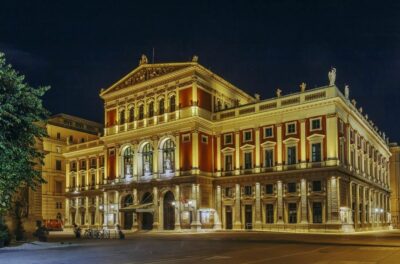
★ 4.6 · 6,673 reviews
Martin’s style and the value of a personal guide
The guide is the reason to choose this experience. Martin speaks from a past that includes homelessness and drug addiction, and he is willing to discuss how he reached that point and what everyday life involved.
That does not mean you should expect every question to receive a complete personal answer. He is sharing his own story on his own terms. Still, the available information makes clear that questions are welcome and that his open manner is central to the experience.
I like the balance between direct testimony and wider context. Martin does not simply point to a place and say that he slept there. He explains why it mattered, what risks were involved, and how the surrounding community functioned. He also connects personal experience with wider attitudes toward people who are homeless or struggling with addiction.
The tour can be valuable for teenagers and school groups, a point repeatedly reinforced by the strong response from educational groups. Students have used the experience to discuss tolerance, social judgment, addiction, and personal responsibility. Adults can gain just as much, particularly if they want to question assumptions they may carry about homelessness.
The subject should still be introduced carefully to younger participants. The information provided says most people can take part, but it does not give a formal age rating. For a school group, I would discuss the subject matter with the organizer first.
What you get for $46
The price is $46 for roughly two hours. That is not the cheapest way to spend an afternoon in Vienna, especially since the stops themselves have no admission fee. But the price is not paying for entry to a monument. It pays for Martin’s time, personal account, preparation, and conversation.
Compared with a standard city walk, you cover fewer famous sights. Compared with a lecture, you are out in the city, standing in places that connect directly to the subject. That combination gives the experience its value.
The group limit is 20 people. That is small enough for Martin to speak directly to the group and handle questions, though the experience will feel different with 20 participants than with only a few. One account describes the tour taking place even when only one person attended, but you should not assume that will always happen.
Group discounts are available, which may improve the price for schools, clubs, or larger private groups. The mobile ticket also makes booking simple. You receive confirmation at the time of booking, and free cancellation is available if you cancel at least 24 hours before the local start time.
If the minimum number of participants is not reached and the experience is canceled, you are offered another date or experience, or a full refund. Changes and cancellations made inside 24 hours are not refundable.
Who should book this experience
I would recommend this walk to you if you want a social story rather than another palace tour. It suits people interested in homelessness, addiction recovery, punk culture, anarchist movements, urban policy, and the lives of people often overlooked by standard sightseeing.
It also works well for adults and teenagers who can listen respectfully to difficult material. School groups may find the two-hour length manageable, and the mix of storytelling, local places, and questions gives students more to discuss than a purely visual tour.
The experience is also a good fit if you enjoy guides who speak plainly and personally. Martin’s humor, openness, and ability to answer questions are central to the appeal. You should be comfortable with a guide who discusses his past directly rather than presenting a carefully polished public image.
I would choose another tour if you have only a short time in Vienna and want to see the major landmarks. This walk passes the Secession, but it is not an art tour. It ends at Esterhazypark, beside Haus des Meeres, rather than returning to Karlsplatz, so you should allow for your own onward journey.
Dogs are allowed, and service animals are permitted. The tour is near public transportation, though the information does not specify a fully step-free route. Because the route includes the Capistr Ascent, ask about access needs before booking if stairs are a concern.
Ending near Haus des Meeres
The walk ends at Esterhazypark, next to Haus des Meeres. This gives you a clear place to continue your day, but it is not the same as the meeting point. You may want to note the location before setting out, especially if you have a timed booking afterward.
Ending near Haus des Meeres also gives the tour a practical finish. You are left in a central part of Vienna with public transport nearby, rather than being dropped at an isolated location. The experience does not include admission to Haus des Meeres, so treat it as a landmark for orientation only.
The route from Karlsplatz to the final stop is part of the point. You begin amid central Vienna’s public spaces and end with stories about people and communities that are easy to overlook. The change is not dramatic in a theatrical sense, but it is effective.
Should you book the Alternative Tour in Vienna?
Book it if you want a candid, human account of Vienna’s street life and alternative communities. Martin’s firsthand experience, the stop at Alfred-Grünwald-Park, and the story of Pizzeria Anarchia make this far more personal than a standard city walk.
Skip it if you want palace interiors, famous art, or a relaxed sightseeing stroll. The material can be sad and uncomfortable, and the route includes stairs. For the right audience, though, $46 buys a memorable way to think about Vienna beyond its polished center.
FAQ
Where does the tour begin?
It begins at the Vienna Police Inspectorate in Kärntnertorpassage at Karlsplatz, 1010 Vienna, Austria.
Where does the tour end?
It ends at Esterhazypark, beside Haus des Meeres.
How long does the experience last?
The tour lasts approximately two hours.
What places are visited during the walk?
The route passes through the Karlsplatz subway passage and by the Secession. The two named stops are Alfred-Grünwald-Park and Ilse-Pisk-Stiege, also called the Capistr Ascent.
Who leads the tour?
The guide is Martin, who previously experienced homelessness and drug addiction in Vienna and shares personal stories connected to that period.
How many people can join?
The group has a maximum of 20 participants.
Can I cancel for a refund?
Yes. You can receive a full refund if you cancel at least 24 hours before the experience start time. Cancellations or changes made less than 24 hours beforehand are not refundable.
Just added in Vienna
- World War II History Vienna Old Town Private Walking Tour★ 4.8 · 9 reviews
- Vienna: Wiener Schnitzel and Strudel Cooking Class★ 4.9 · 126 reviews
- Vienna: Wine Tasting Tour★ 4.8 · 61 reviews
- Vienna: Winery and Wine Tasting Tour with a Wine Expert★ 5.0 · 5 reviews
- Vienna: Wine Tasting E-Bike Tour★ 4.9 · 46 reviews
- Vienna: Wine Tasting at Schönbrunn Palace★ 4.3 · 71 reviews
- Vienna: Unforgettable Private City Tour★ 5.0 · 7 reviews
- Vienna Urban Art Tour: Explore a different side of Vienna!★ 3.8 · 14 reviews
Tours in Vienna, compared.
Vivaldi’s Four Seasons Concert in Karlskirche
Read our review →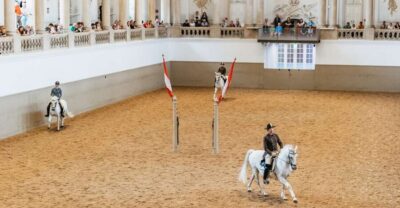
Skip-the-cashier-desk-line Giant Ferris Wheel Ride
Read our review →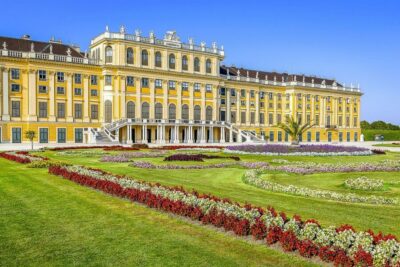
Schönbrunn Palace & Gardens Skip-the-Line Tour
Read our review →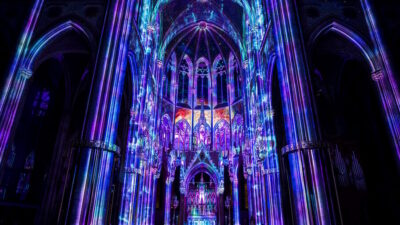
Light of Creation Votive Church Immersive Light Show
Read our review →
Classical Concert in the World-Famous Musikverein
Read our review →