
Reviewed · WALKING TOURS
Vienna: City Center Guided Walking Tour
Vienna’s center reads like a history book you can walk through, and this tour gives you a clear route through its imperial, musical, and café traditions. In two and a half hours, you pass the Hofburg Palace, Spanish Riding School, Vienna State Opera, Hotel Sacher, and St. Stephen’s Cathedral, with Beethoven’s Eroica tied to one of the stops.
I like the small groups of no more than 15 and the headsets, which make it easier to hear without crowding around a guide. I also like the mix of grand monuments, quiet garden spaces, and useful local advice. Guides such as Dace and Alex are described as warm, funny, and generous with restaurant and café suggestions.
The main drawback is the amount of ground covered. You get an excellent first look, but the tour can feel brisk when the guide moves through several centuries of Austrian history in 150 minutes. It also involves a moderate amount of walking and is not suitable for people with mobility impairments.
Key points to know before booking
- A strong first-day orientation: The route links Vienna’s biggest central sights in a logical walk.
- A useful small-group format: With no more than 15 people, you can generally stay close to the guide and ask questions.
- Headsets are included: This matters on busy streets and in open squares.
- History comes through people and places: You hear about the Habsburgs, Napoleon, Beethoven, Lipizzaner horses, and Vienna’s famous coffee culture.
- The tour ends in the heart of town: Finishing near St. Stephen’s Cathedral puts you within easy reach of central Vienna’s shops, cafés, and sights.
- Plan for the weather: The walk goes ahead in all conditions, and there is no shelter for the full route.
Starting between Vienna’s two great museums
You meet your guide beside the statue of Empress Maria Theresa on Maria-Theresien-Platz. The statue sits between the Kunsthistorisches Museum and the Naturhistorisches Museum, on the side the statue faces. Look for the green Vienna City Walking Tour sign.
This is a sensible starting point. The square gives you an immediate sense of Vienna’s scale and ambition, with two major museum buildings facing one another across a formal open space. It also helps you find the meeting point without entering either museum.
The nearest metro station is Volkstheater on line U3. Tram stops at Burgring serve lines D, 1, 2, and 71. Arrive ready to walk rather than carrying a large bag, since luggage and large bags are not allowed on the tour.
The group size is capped at 15 people. That is small enough to keep the guide’s explanations personal, though you still need to stay alert at crossings and keep pace with the group. The supplied headsets are especially useful here. Vienna’s central streets can carry traffic noise, bicycles, and general city sound, so you do not have to stand shoulder to shoulder with the guide to hear.
More Walking Tours in Vienna
- Vienna: Guided Walking Tour of City Center Highlights
★ 4.7 · 4,989 reviews - Vienna: Vienna Central Cemetery Guided Walking Tour
★ 4.8 · 3,307 reviews - Vienna: Guided Walking Tour of City Highlights & Hidden Gems
★ 4.9 · 2,180 reviews
The Ring Road and the imperial view
The route follows part of Vienna’s Ring Road, the grand boulevard that circles the old city center. This is where the tour begins to explain how Vienna presents itself: broad streets, formal buildings, monuments, and reminders of the former Habsburg court.
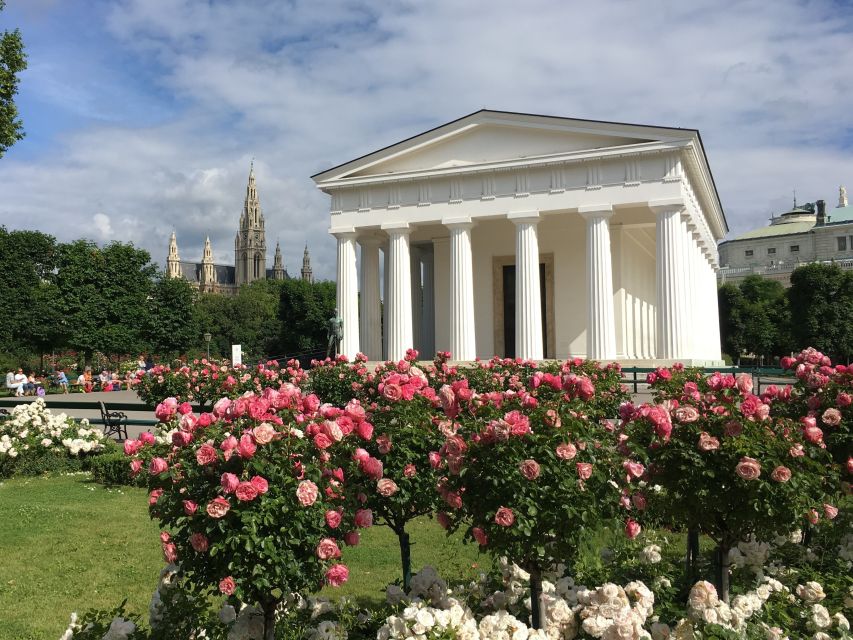
You then enter the Volksgarten, a pleasant change from the stone and traffic of the Ring. Its rose garden gives the walk a quieter pause, and the contrast helps you understand Vienna better. The city center is not just imperial façades and busy shopping streets. It also includes carefully planned gardens where you can slow down for a moment.
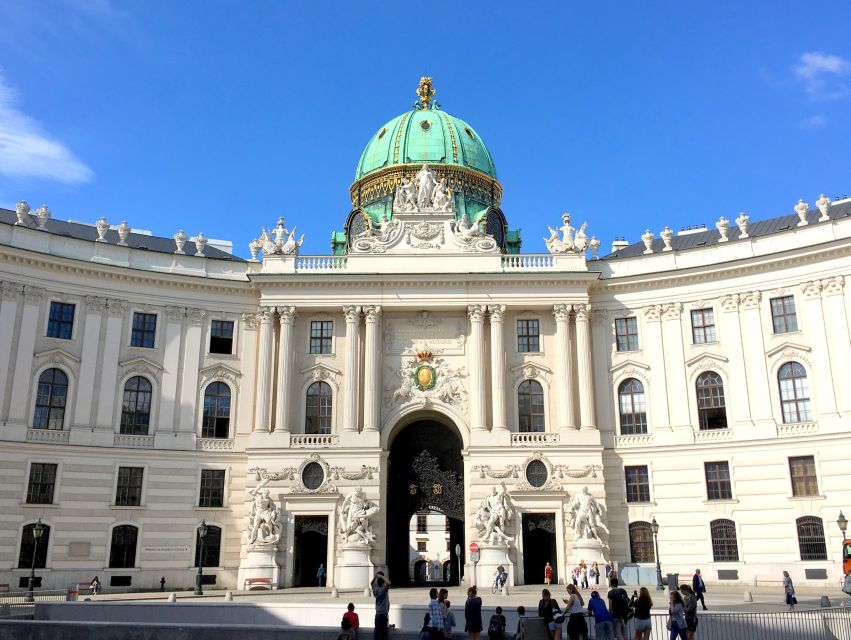
The tour continues to Heroes Square, or Heldenplatz. Here, the Hofburg Palace comes into view as the former center of Habsburg power. The guide explains the imperial family and the role the palace played in ruling a large European empire.
This part is useful for first-time visitors because the Habsburg story can otherwise become a blur of names, marriages, titles, and palaces. A live guide can tie the people to the buildings in front of you, making the history easier to follow. Still, expect an overview rather than a full lesson in Austrian politics. The route moves on before any one monument receives a detailed interior tour.
Hofburg Palace and the Habsburg world
The Hofburg was not a single palace built at one time. It grew over centuries as the Habsburg family expanded its power and added new wings, courtyards, and functions. On this walk, you view the imperial residence from outside and hear about the rulers who shaped Vienna.
You also see the emperor’s private garden and the former butterfly house at the Burggarten. These details add a more personal side to the imperial story. The private garden suggests how the court used its own spaces, while the former butterfly house points to the leisure and curiosity associated with the palace world.
The route does not include entrance fees, so this is a sightseeing walk rather than an indoor palace visit. That is important when you plan your day. If you want to see the imperial apartments, museums, or royal collections inside, you will need to arrange those separately. The advantage is that you can cover more of central Vienna without spending the tour time waiting for entry.
Augustinerkirche and royal marriages
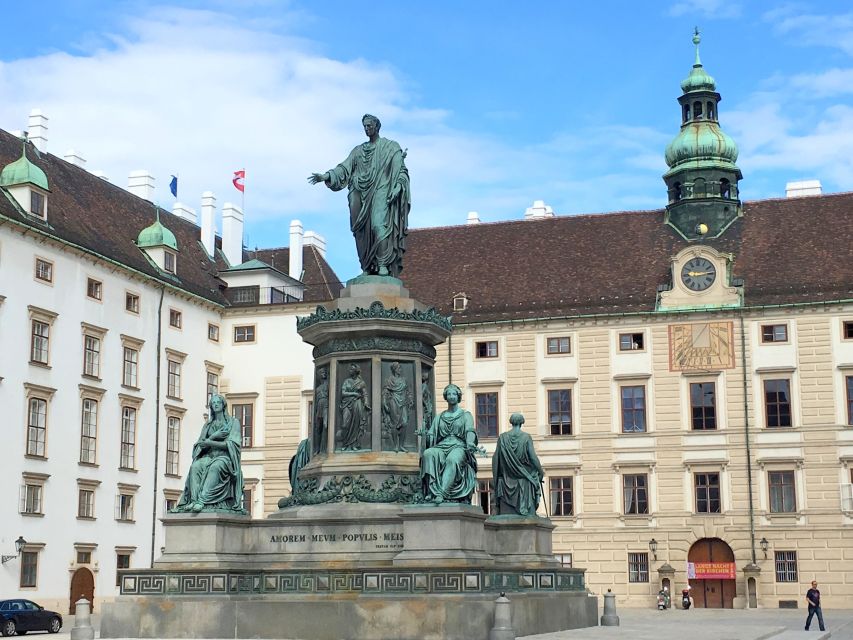
The Augustinerkirche brings the story down to a smaller and more intimate scale. This church hosted many imperial weddings, including the marriage of Napoleon to Princess Marie Louise.
That detail gives the guide a chance to show how Vienna’s religious buildings were tied to European power. The church was not simply a place of worship. It also formed part of the ceremonial world of the imperial court, where marriages could affect alliances and politics across the continent.
You should treat this stop as an exterior visit unless the guide says otherwise. The experience is about placing the church within Vienna’s story, not spending time on a long interior examination.
More walking routes in Vienna:
- Vienna: Viennese Underworld Guided Walking Tour
★ 4.7 · 1,865 reviews - Vienna: World War II Historical Walking Tour
★ 4.8 · 1,772 reviews - Vienna Historic Center Small Group Walking Tour
★ 5.0 · 1,746 reviews - Vienna: Private Walking Tour with a Local Guide
★ 4.6 · 1,420 reviews
Lipizzaner horses at the Spanish Riding School
The Spanish Riding School is one of Vienna’s most recognizable institutions and another highlight of the walk. It is the home of the famous Lipizzaner horses, whose training and performances are closely linked with the city’s imperial traditions.
You will see the school from the outside and learn about its place in Vienna. Entrance to a performance or training session is not included, so do not book this tour expecting a horse show. Instead, use the walk to decide if you want to return for a separate visit.
This is one of the better examples of how the tour works. It introduces you to a major attraction without using up your entire morning or afternoon inside one venue. If the horses interest you, you can make a separate plan later, armed with a better sense of where the school fits in the center.
Beethoven, the opera, and Vienna’s musical identity
The route continues to the Vienna State Opera and Lobkowitz Palace. The opera house represents Vienna’s continuing musical reputation, while Lobkowitz Palace connects the city with Beethoven.
At Lobkowitz Palace, you learn that Beethoven first conducted his Eroica symphony there. This is a memorable detail because it places a famous musical event in a real building rather than leaving it as an abstract fact from a biography.
The walk does not turn into a dedicated Beethoven tour, but this stop gives you a useful thread to follow after the group ends. Vienna’s musical story includes grand institutions, aristocratic patrons, composers, and private performance spaces. The guide helps you see how those pieces relate.
If classical music is a major reason for your visit, treat this as an introduction. It will not replace a concert, museum visit, or music-focused tour. For a first orientation, though, it gives you several names and places to investigate.
Coffee houses, Hotel Sacher, and the sweet side of Vienna
Vienna’s coffee houses are part of the city’s daily identity, and the route passes several elegant examples. You also see Hotel Sacher, home of the famous Sacher Torte.
This is a good moment to shift from rulers and composers to ordinary travel pleasures. The coffee house tradition is not only about cake and coffee. It is also about sitting, reading, talking, and taking time in a city that can otherwise feel formal and grand.
The tour does not include a slice of cake or a café stop, so plan your own break after the walk. The guide may offer suggestions, and the advice can be valuable because you will already have a sense of the central streets and their locations. Keep in mind that Hotel Sacher is a famous stop, not necessarily the only place you will want to try.
The food references also make the tour appealing to people who are less interested in palace architecture. You still get the imperial landmarks, but the route includes the tastes and habits that make Vienna feel like a living city rather than an outdoor museum.
Graben and the final view of St. Stephen’s Cathedral
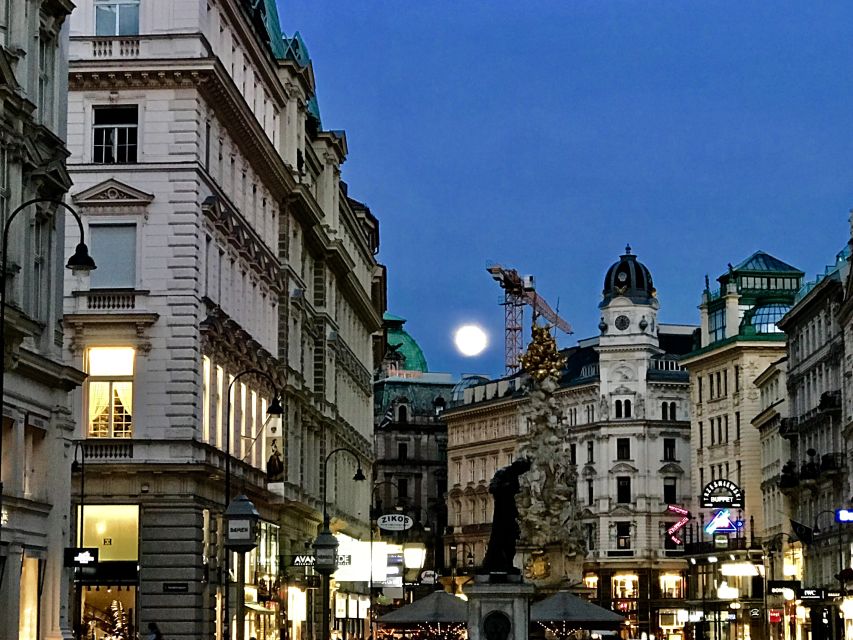
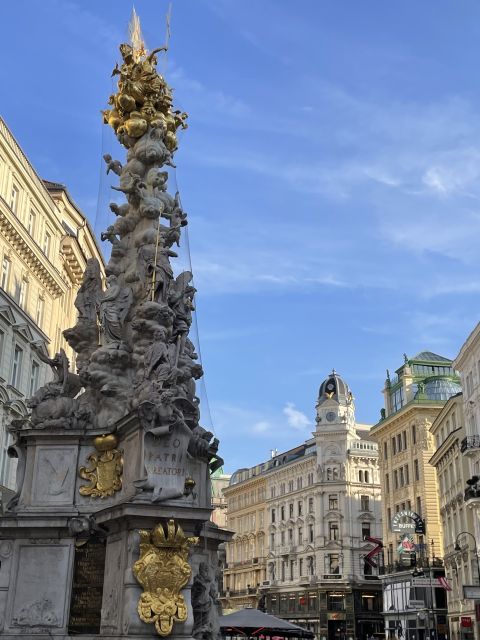
The final stretch leads to Graben, Vienna’s elegant shopping street. It is a polished central boulevard with grand buildings, shops, and a steady flow of people. By this point, you have moved from the formal Ring and palace district into the commercial center.
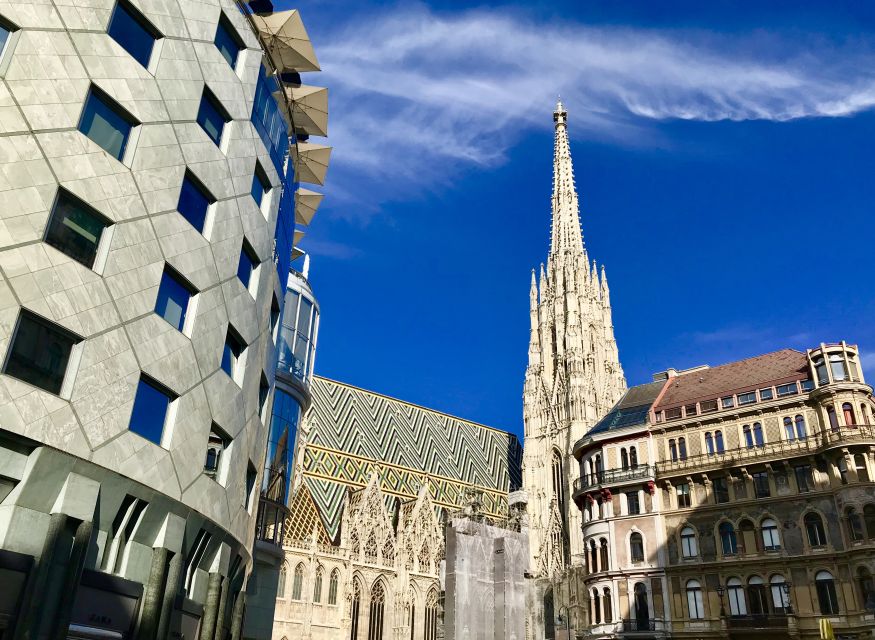
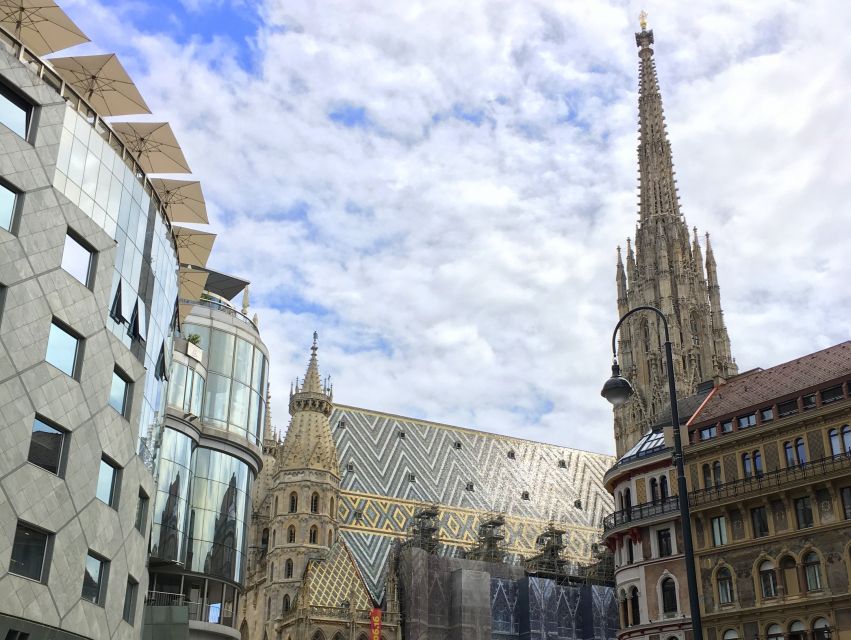
The walk ends next to St. Stephen’s Cathedral. That is a practical finish because the cathedral is one of Vienna’s essential landmarks and a useful point for continuing your day. You can explore the cathedral separately, walk into the surrounding streets, or stop for food and coffee nearby.
Ending here also makes the tour easy to pair with other plans. You might visit the cathedral after the guide leaves, return to one of the palace museums, or simply use the walk as a map for the rest of the inner city.
How much history fits into 150 minutes
The tour lasts 150 minutes, or two and a half hours. That is enough time to cover a lot of ground without turning the entire day into a walking marathon.
The pace is generally described as relaxed, but the content is still dense. You move through several eras and meet a long list of people and institutions: the Habsburgs, Napoleon, Beethoven, the Lipizzaner horses, the opera, and Vienna’s café culture. At times, the amount of information may feel rushed, especially if you want dates and political detail.
I see that as a fair trade for a first visit. A shorter tour might feel too thin, while a much longer walk could become tiring. This one gives you a working map of the center and points out places worth a closer look later.
You should wear comfortable shoes and bring water. The walk takes place in every weather condition. In summer, shade and water breaks matter, and in winter, the tall buildings can make the streets feel colder than expected. Dress for the forecast, but also prepare for wind, rain, or temperature changes between open squares and narrow streets.
Guide style and the value of the headsets
The guide is a licensed local guide, and the tour is offered in English. Guides including Dace and Alex have been praised for explaining complicated history in a light, approachable way. Dace is also noted for mixing buildings, green spaces, local anecdotes, and practical café and restaurant suggestions.
Alex has been especially attentive to hot-weather conditions, using shade where possible and stopping so people could refill water bottles. Those details matter on a walking tour because comfort affects how much you remember. A guide who watches the group can make a busy itinerary feel easier.
The headsets are another practical strength. They let you listen while standing at the edge of a square or walking behind the guide. This is more comfortable than trying to gather around one person every few minutes.
The experience is not designed for completely independent wandering. You need to stay with the group, follow the guide’s route, and keep moving when the schedule calls for it. If you prefer to stop for photographs at every building, the pace may feel fast.
Is $74 a fair price?
At $74 per person, this is not the cheapest way to see Vienna’s center. You are paying for a licensed guide, a small group, headsets, and a focused route through many major sights. Entrance fees are not included, so you should compare the price with the cost of a self-guided walk plus any separate audio or guide service you might otherwise use.
The value is strongest if you are visiting Vienna for the first time, have limited time, or want context before exploring on your own. A guide can explain why the Hofburg matters, connect Beethoven with Lobkowitz Palace, and point out how the coffee houses fit into the city’s culture. That saves you from seeing a series of beautiful façades without knowing their place in the story.
The value is weaker if you already know central Vienna well or want extended time inside museums and palaces. You will see many entrances and exteriors, but the tour does not include admission. In that case, a ticket to a specific attraction may give you more time with the subject you care about most.
Free cancellation up to 24 hours before the start and the option to reserve now and pay later add useful flexibility. Children must be accompanied by an adult, and unaccompanied minors are not accepted.
Who should book this walk
I would choose this for a first full day in Vienna, especially if you want to get your bearings quickly. Solo visitors can use it as an easy way to understand the center and decide which neighborhoods, museums, cafés, and attractions deserve more time.
It also suits couples, families with older children, and anyone who likes history delivered through stories rather than long museum labels. The group limit keeps it more personal than a large coach tour.
I would think twice if you have mobility limitations, dislike walking in poor weather, or want a slow photographic tour. The route includes a moderate amount of walking, continues in every weather condition, and covers enough ground that lingering at every stop is not realistic.
Should you book the Vienna City Center Guided Walking Tour?
Book it if you want a well-planned introduction to Vienna’s center, with the Hofburg, Spanish Riding School, opera, Beethoven, coffee houses, Graben, and St. Stephen’s Cathedral all connected in one route. The small group, headsets, and local guides such as Dace and Alex add real practical value.
Do not book it as a substitute for palace or museum admission. Think of it as your city orientation and history framework. Afterward, you will know where to return, what deserves more time, and why the center looks the way it does.
FAQ
How long does the Vienna City Center Guided Walking Tour last?
The tour lasts 150 minutes, or two and a half hours.
What language is the tour offered in?
The tour is conducted in English by a live local guide.
Where does the tour meet?
Meet beside the statue of Empress Maria Theresa on Maria-Theresien-Platz, between the Kunsthistorisches Museum and the Naturhistorisches Museum. Look for the guide holding a green Vienna City Walking Tour sign.
Where does the tour end?
The walk ends next to St. Stephen’s Cathedral.
Are entrance fees included?
No. Entrance fees are not included, so visits inside palaces, museums, churches, or other attractions must be arranged separately.
How many people are in the group?
The tour is limited to no more than 15 people.
Is the tour suitable for people with mobility impairments?
No. The tour involves a moderate amount of walking and is not suitable for people with mobility impairments. It also operates in every weather condition, so dress appropriately.
Just added in Vienna
- World War II History Vienna Old Town Private Walking Tour★ 4.8 · 9 reviews
- Vienna: Wiener Schnitzel and Strudel Cooking Class★ 4.9 · 126 reviews
- Vienna: Wine Tasting Tour★ 4.8 · 61 reviews
- Vienna: Winery and Wine Tasting Tour with a Wine Expert★ 5.0 · 5 reviews
- Vienna: Wine Tasting E-Bike Tour★ 4.9 · 46 reviews
- Vienna: Wine Tasting at Schönbrunn Palace★ 4.3 · 71 reviews
- Vienna: Unforgettable Private City Tour★ 5.0 · 7 reviews
- Vienna Urban Art Tour: Explore a different side of Vienna!★ 3.8 · 14 reviews
Walking Tours, compared.
Guided Walking Tour of City Center Highlights
Read our review →
Guided Walking Tour of City Highlights & Hidden Gems
Read our review →
Vienna Historic Center Small Group Walking Tour
Read our review →
Browse the lists this tour appears in