
Reviewed · TOURS IN VIENNA
Vienna: Time Traveling Virtual Reality Sightseeing Tour
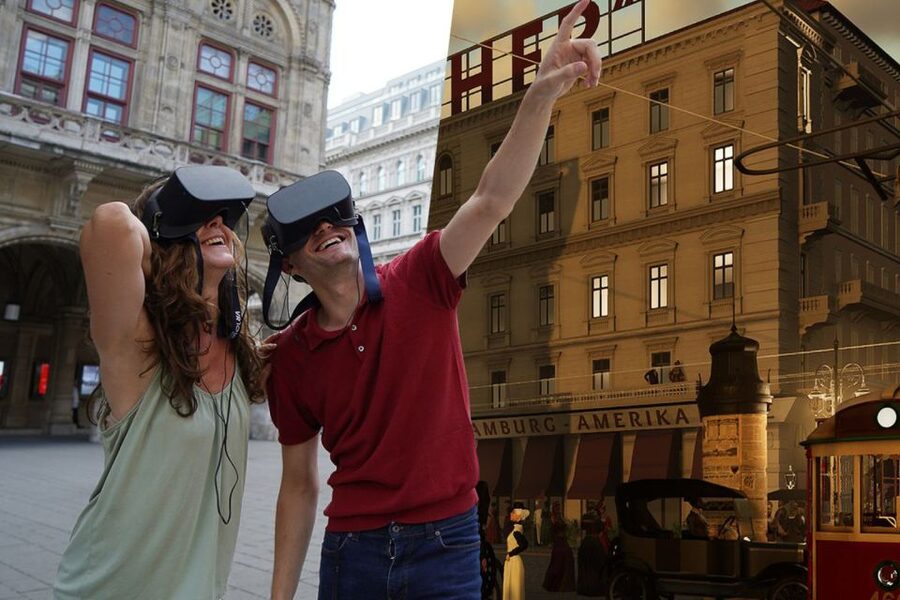
Vienna’s past arrives through a headset on this unusual walking tour. You move through the old town, stop at real historic places, then look through virtual reality glasses to see those same spots in earlier centuries. I like the six sharply different time periods, from a medieval religious procession to Soviet troops entering St. Stephen’s Square. I also like that the route is a useful 3.2 kilometers, so you get your bearings while learning the city’s story.
The main tradeoff is that this is still a walking and audio tour first, with VR scenes added at selected stops. Some scenes can look slightly blurry or dated, and the tour may run with English and German together, which can slow the spoken explanations. Still, at $45 per person, it offers something you will not get from a standard city walk.
Key points to know before you book
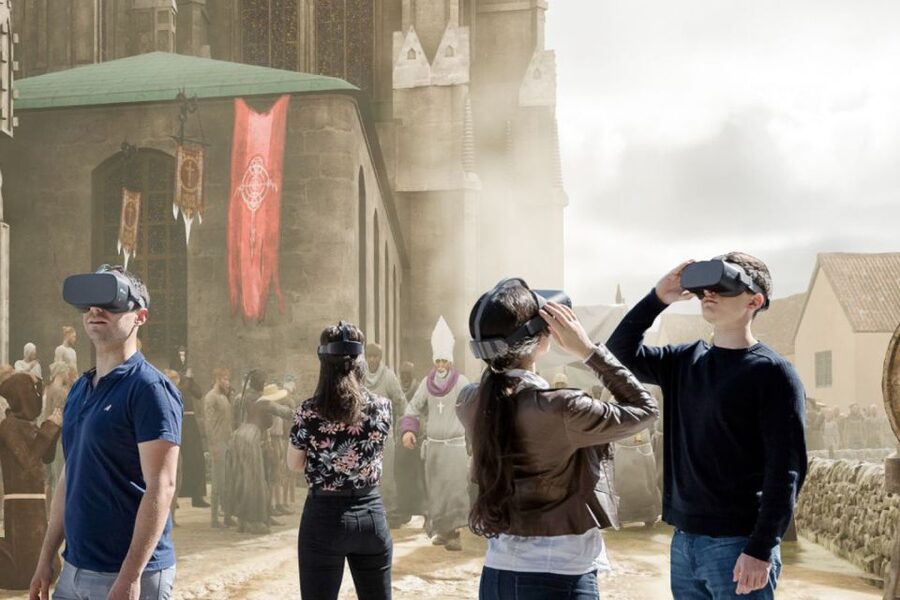
- Six VR scenes connect directly to real Vienna locations, including the Hofburg, the Opera, and St. Stephen’s Square.
- The route covers 3.2 kilometers on flat ground, making it manageable for most visitors who can walk that distance.
- The historic scenes range from 1483 to World War II, giving you a broad outline of Vienna’s past.
- Live guides speak English and German, while the audio guide adds Spanish, Dutch, French, Italian, Russian, and English.
- Guides such as Julian and Dr. Reiner have been praised for clear explanations and helpful equipment instruction.
- The VR is most useful as a sense of place, but some images may seem rough, indistinct, or less engaging than modern video games.
Starting at Neuer Markt with a headset and a walking route
You meet at Neuer Markt 6, in central Vienna. Arrive 15 minutes early and look for the turquoise entrance. The indoor meeting point matters, especially in cold weather, since you can avoid waiting outside while the group gets organized.
The tour lasts about 100 minutes, although the itinerary also lists 105 minutes. Plan on roughly an hour and forty minutes, with a little flexibility. The route finishes at the Albertina, so you end in another central location rather than returning to the starting point.
The guide begins by explaining the virtual reality glasses and earphones. That introduction is worth paying attention to. You will need to switch between walking, listening, and putting on the headset at specific locations. Guides who have led this experience, including Julian and Dr. Reiner, have been praised for clear instructions and fluent English and German.
The walking itself is important. You are not sitting in a theater watching a historical film. You move through Vienna’s old town, listen to stories and anecdotes, and then use the headset to picture the past at the very place where the events unfolded. The VR scenes are short windows into history, while the streets around you provide the physical setting.
More days out of Vienna:
- Vienna: Vivaldi’s Four Seasons Concert in Karlskirche
★ 4.7 · 14,951 reviews - Vienna: Spanish Riding School Training
★ 3.9 · 9,281 reviews - Vienna: Skip-the-cashier-desk-line Giant Ferris Wheel Ride
★ 4.5 · 7,859 reviews
White Sunday in 1483: Vienna before the imperial city
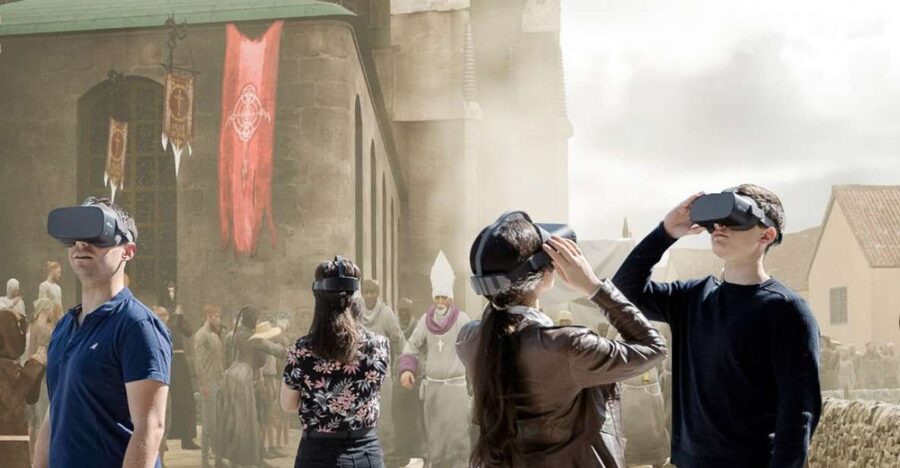
The first historical scene takes you to White Sunday in 1483. A religious procession moves through the medieval city, and ornaments are brought out for public viewing. This was one of the rare occasions when such objects could be seen, which gives the scene a useful social detail instead of presenting the Middle Ages as a vague period of castles and cloaks.
For you, the value is the contrast between modern Vienna and the older city beneath it. The streets may look familiar, but the VR scene suggests how public worship, ceremony, and religious display shaped daily life. You get a sense of a smaller, more formal city before Vienna became the imperial capital known today.
Do not expect a museum-quality reconstruction in every detail. The headset gives you a 360-degree view, but faces and movement may not look perfectly sharp. I would treat this scene as a visual aid that helps you picture the scale and mood of the event, not as a fully realistic film.
The Ottoman siege of 1683
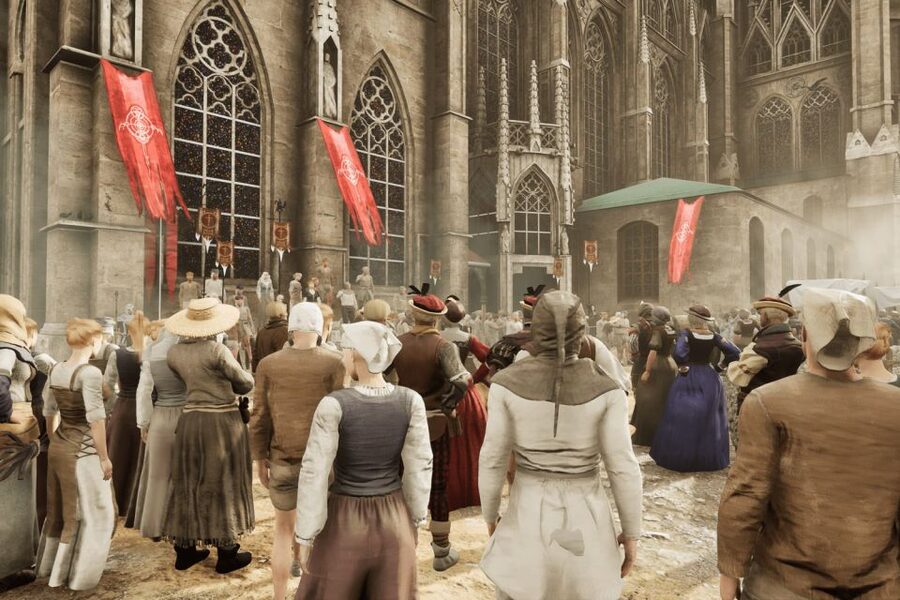
The next stop places you in Vienna during the second Ottoman siege in 1683. You take cover while the city faces bombardment. This is one of the tour’s strongest ideas because the event is not presented only as a date in a textbook. The VR scene puts you close to the fear and confusion of a city under attack.
The guide and audio narration provide the wider story, while the headset gives you a view of the people and buildings caught in the crisis. You can look around rather than watch a fixed screen, which makes the scene feel more immediate.
This stop also helps explain why Vienna’s location and defenses mattered so much. The city sat at a meeting point between western Europe and the Ottoman world. The siege became a major turning point in Vienna’s political and military story, and the tour uses the event to show that the city was not always the calm cultural center you see today.
The plague and Augustin’s music
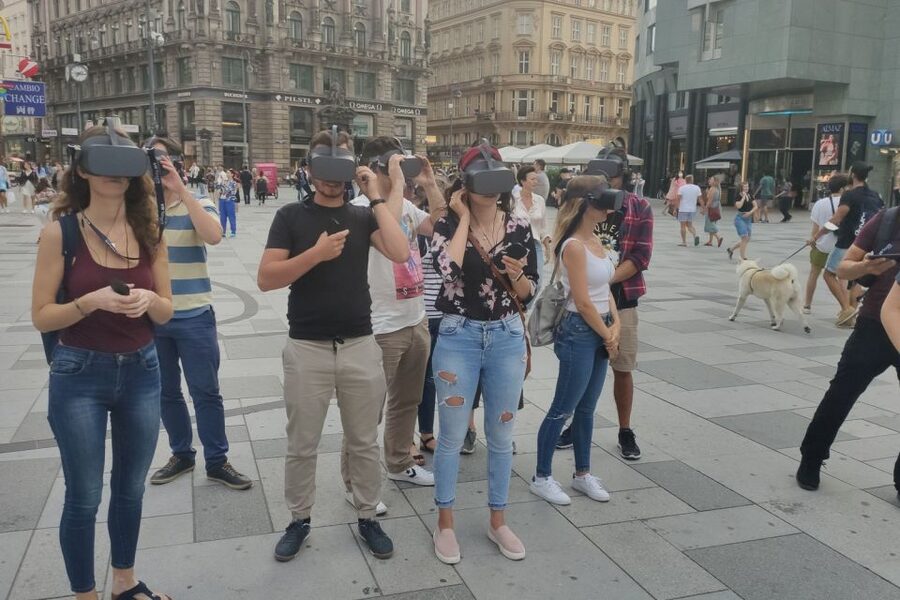
One of the darker scenes covers the plague that killed half of Europe. The tour brings you into a period of fear, sickness, and death, then introduces Augustin, a singer who used humor and music to help Vienna survive a terrible time.
The shift in tone is welcome. Vienna’s past is not only palaces, composers, and grand architecture. Disease shaped European cities just as much as rulers did, and this scene reminds you how fragile urban life could be.
Augustin’s story gives the stop a human center. Instead of ending with statistics, the tour shows how music and humor could offer relief. The visual presentation is meant to create a mood of darkness and uncertainty. If you are sensitive to scenes about plague and death, keep that in mind before booking.
A different kind of evening in Vienna:
- Vienna: Schönbrunn Palace & Gardens Skip-the-Line Tour
★ 4.7 · 7,739 reviews - Vienna: Light of Creation Votive Church Immersive Light Show
★ 4.8 · 6,779 reviews - Vienna Spanish Riding School Guided Tour
★ 4.7 · 6,765 reviews - Vienna: Classical Concert in the World-Famous Musikverein
★ 4.6 · 6,673 reviews
The Hofburg and a glimpse of Sisi
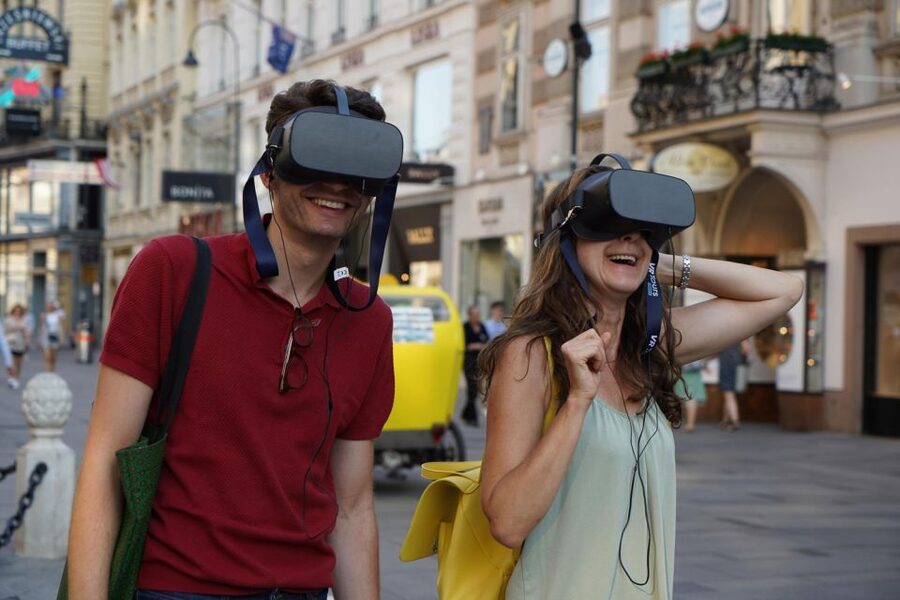
At the Hofburg, the tour moves to a sunny day in the late nineteenth century. You see Empress Sisi and Emperor Franz Joseph on a hunting trip. The setup gives you a playful moment: you are standing close to the road, so you can wink as they pass.
This is a lighter scene after the plague and siege. It also introduces the imperial family in a setting that feels more personal than a formal palace portrait. Sisi remains one of Vienna’s best-known figures, and seeing her outside the strict setting of court life helps explain the public fascination with her.
The scene is brief, so do not expect a full biography of the empress. Instead, it gives you a visual pause and links the Hofburg to the people who shaped Vienna’s imperial image. Your guide’s live comments matter here, since the headset alone cannot explain every detail of the Habsburg period.
Vienna’s golden 1920s near the Opera
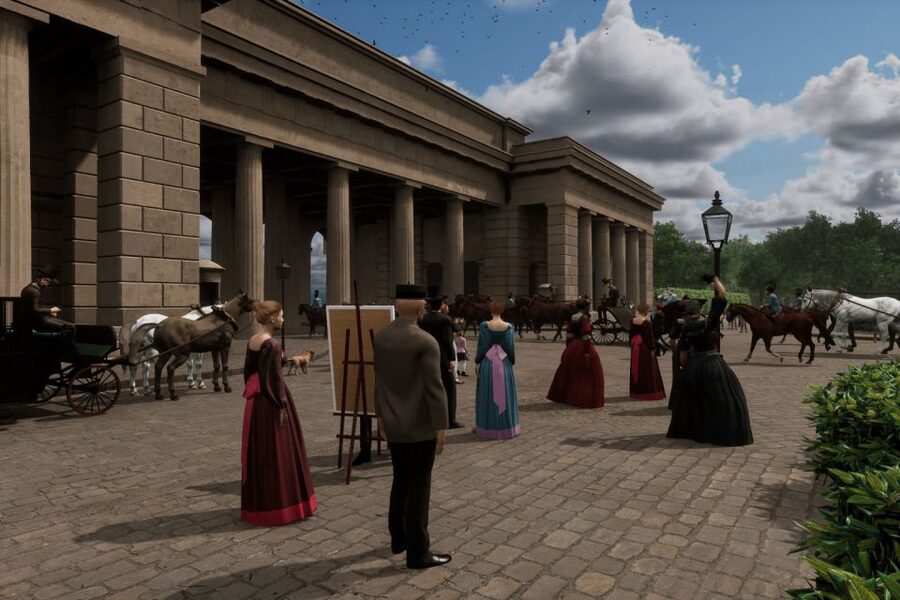
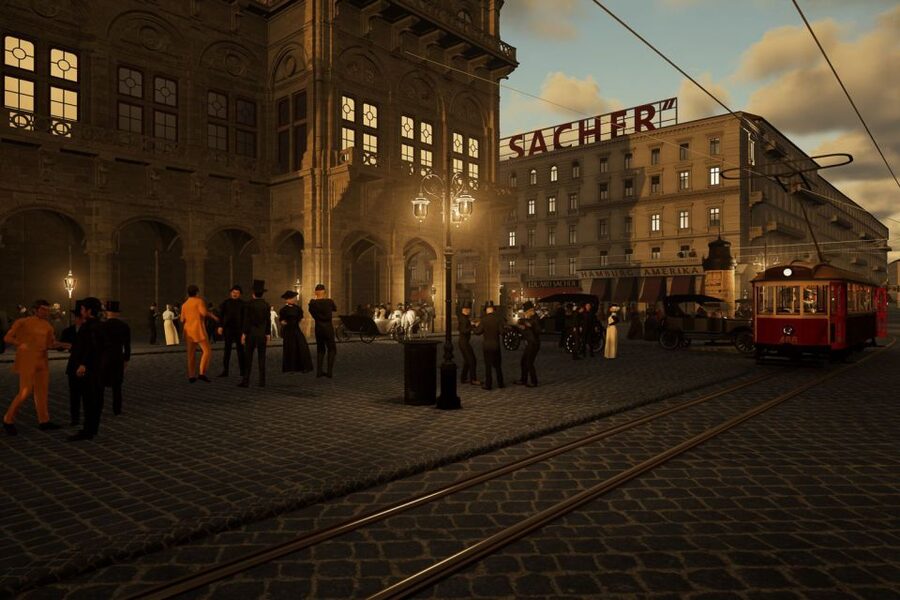
The Opera scene moves into the 1920s. You see people preparing for an opera performance and get a look at Vienna during a period of cultural energy and social change.
This stop is likely to appeal to anyone interested in music, theater, or old-fashioned city life. The Opera is one of Vienna’s defining buildings, so the VR scene gives you a chance to picture how people approached an evening performance in an earlier age.
There is also a clear limitation. The scene may not satisfy you if you want a lively reconstruction filled with dancing, detailed clothing, and constant action. Some visitors have found this portion less engaging because the virtual crowd and period detail do not always feel fully developed. I would see it as a short historical snapshot rather than a complete recreation of 1920s nightlife.
St. Stephen’s Square during the final month of World War II
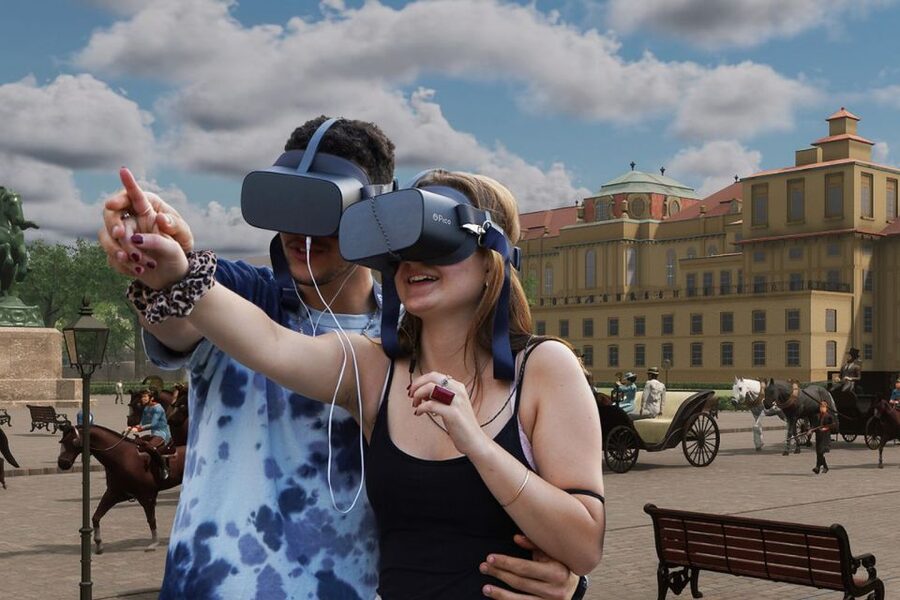
The final scene takes place at St. Stephen’s Square during the last month of World War II. You see the cathedral burn and witness Soviet troops driving the last German soldiers from the city.
This is the most powerful stop for understanding the damage Vienna endured in the twentieth century. St. Stephen’s Cathedral is now one of the city’s central landmarks, but the VR scene shows it in crisis. Seeing the building burn at the location where you are standing gives the war story a direct physical connection.
The scene also makes clear that Vienna’s history did not end with imperial glory. The city went through destruction, occupation, and political change before becoming the peaceful cultural center you visit today. Ending here gives the tour a serious final note.
How much of the tour is really virtual reality?
The headset is not used continuously. Most of the experience involves walking through city streets while listening to the guide or audio presentation. At several points, you stop, put on the glasses, and view a 360-degree historical scene.
That format has both strengths and weaknesses. You are not trapped behind a screen for 100 minutes, and the walking helps you connect the stories to actual places. You also get time to look around modern Vienna, rather than seeing only computer-generated versions of it.
On the other hand, you should not book this expecting a nonstop VR attraction. The historic scenes are the special feature, but the rest is a conventional guided walk with audio. Some of the virtual images look somewhat rough, with blurry details and indistinct faces. The technology creates a sense of presence, but it is not cutting-edge by current gaming standards.
I think the best way to judge the VR is by its purpose. It does not recreate every detail perfectly. It helps you imagine a procession, a siege, a plague street, an imperial carriage, an opera crowd, and a wartime square. For that job, it works well enough to make the walking route more memorable.
Audio languages, live guides, and group flow
The live tour is offered in English and German. The audio guide adds English, Spanish, Dutch, French, Italian, and Russian. This is a major advantage if you want the historical material in your strongest language.
The group may include more than one live-tour language. If the guide switches between German and English, some explanations can take longer and the flow may feel less direct. I would ask about the language arrangement when booking if clear, uninterrupted commentary matters to you.
The guides are an important part of the experience. Julian has been praised for speaking both German and English fluently and for helping people understand the equipment. Dr. Reiner has also been praised for being helpful and well informed. Since the VR scenes are not self-explanatory, a good guide adds context that the images cannot provide on their own.
Is $45 a fair price?
At $45, this costs more than a basic walking tour, but it includes the VR glasses, earphones, a live guide, and a route through several major parts of central Vienna. You are paying for the technology and for the work involved in matching historical scenes to real locations.
The value is strongest if this is your first or second day in Vienna. You get a broad introduction to the city, learn how several major events shaped it, and finish near the Albertina. Afterward, you will recognize the Hofburg, Opera, and St. Stephen’s Square with more context.
The value is weaker if you want a slow architectural tour or a deep examination of one historical period. The 100-minute format moves through six eras, so each subject receives only a short treatment. You also pay for a VR effect that some people may find dated.
Free cancellation up to 24 hours before the start and the option to reserve now and pay later reduce the risk. Weather can still cause trouble. Heavy rain or storms may lead to a last-minute cancellation, since much of the tour takes place outdoors.
Who should book this Vienna tour?
I would recommend it to first-time visitors, families with older children, history fans, and anyone who wants a different way to get oriented. It is especially useful if you enjoy learning through images rather than listening to a long lecture.
Children under eight cannot take part, and the experience is not suitable for people with epilepsy because of the VR equipment. The route is wheelchair accessible and flat, though you should still allow for a full 3.2 kilometers of walking.
You should also book it if you like trying new sightseeing formats and can accept imperfect graphics. If you expect a polished modern VR film, you may find the image quality disappointing. If you want a lively introduction to Vienna that mixes real streets with historical scenes, the limitations are easier to accept.
Practical details that make the day easier
Arrive at least 15 minutes early at Neuer Markt 6 and look for the turquoise entrance. Food and drinks are not included, so eat beforehand or plan a stop after the tour.
Wear comfortable shoes. The route is flat, but 3.2 kilometers is still enough walking to make poor footwear annoying. Bring weather protection because the tour may be canceled in heavy rain or a storm, and conditions can change quickly.
The tour ends at the Albertina. That is useful for planning the rest of your day, since you can continue toward the museum, the Opera, or other central sights without making your way back to Neuer Markt.
Should you book the Time Traveling VR Tour?
Book it if you want a broad, entertaining introduction to Vienna and like the idea of seeing history at the exact streets where it happened. The siege of 1683, the burning of St. Stephen’s Cathedral, and the Hofburg carriage scene give the city a clear human scale.
Skip it if you want a quiet, traditional walking tour, advanced VR graphics, or detailed academic history. The virtual scenes can look dated, and much of the route is spent walking and listening rather than using the headset.
For most first-time visitors, I see it as a good opening activity. It helps you understand Vienna’s major landmarks before you explore them on your own, and the price is reasonable if you value the technology and the live guide. Just arrive ready for a hybrid experience: part walking tour, part historical theater, and part virtual time machine.
FAQ
Where does the Vienna VR tour start?
The tour starts at Neuer Markt 6 in Vienna. Arrive 15 minutes before the start and look for the turquoise entrance.
Where does the tour finish?
The tour finishes at the Albertina.
How long is the experience?
The stated duration is about 100 minutes. The itinerary also gives a walking-tour time of 105 minutes, so allow roughly one hour and forty minutes or a little more.
How far do you walk?
The route covers 3.2 kilometers over flat terrain.
Which languages are available?
Live guides provide the tour in English or German. The included audio guide is available in English, Spanish, Dutch, French, Italian, and Russian.
Is the tour suitable for children and wheelchair users?
Children under eight are not permitted, and the tour is not suitable for people with epilepsy. The route is wheelchair accessible.
Just added in Vienna
- 3 hour private tour in Vienna by private car★ 4.4 · 6 reviews
- Private Christmas Markets Walking Tour Vienna★ 5.0 · 31 reviews
- Christmas Markets & Shopping in Vienna★ 5.0 · 17 reviews
- Christmas Market Vienna Tour★ 4.0 · 53 reviews
- Vienna: Christmas Markets Tour★ 4.3 · 99 reviews
- Vienna Residence Orchestra: Mozart and Strauss Concert★ 4.0 · 137 reviews
- Vienna: Bus Tour with Virtual Reality Experience★ 4.7 · 148 reviews
- Vienna: A Little Night Music – Concert at Capuchin Church★ 4.8 · 145 reviews
Tours in Vienna, compared.
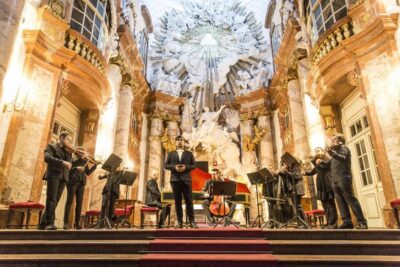
Vivaldi’s Four Seasons Concert in Karlskirche
Read our review →
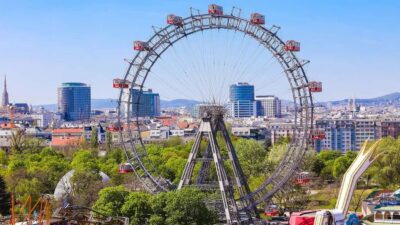
Skip-the-cashier-desk-line Giant Ferris Wheel Ride
Read our review →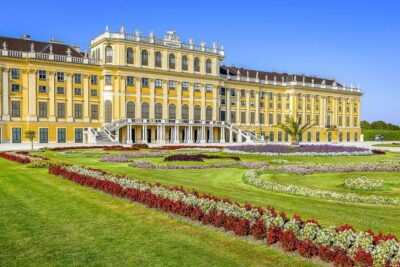
Schönbrunn Palace & Gardens Skip-the-Line Tour
Read our review →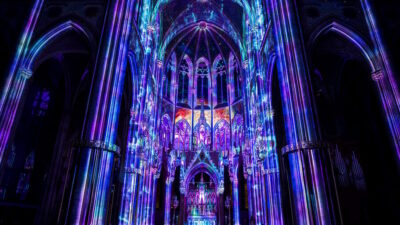
Light of Creation Votive Church Immersive Light Show
Read our review →
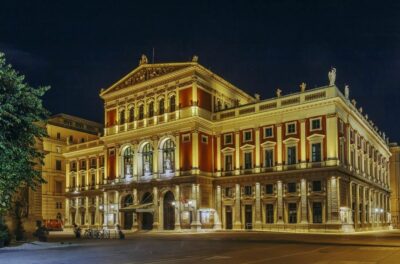
Classical Concert in the World-Famous Musikverein
Read our review →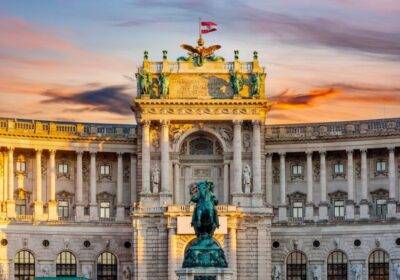
Skip-the-Line Sisi Museum, Hofburg and Gardens Tour
Read our review →Browse the lists this tour appears in