
Reviewed · TOURS IN VIENNA
Vienna – the making of a Weltstadt – guided Citytour
Vienna makes more sense when you connect its grand buildings to the people and events that shaped them. This two-hour walk with Viennese guide Christian Grausam moves from Roman fort to imperial capital, linking the Hofburg, Mozart and Beethoven, the Habsburg rulers, and St. Stephen’s Cathedral into one clear story. I like the focus on history you can see under your feet, and I like that the route includes both famous squares and quieter corners. The main catch is that the tour is offered in German only.
You should also expect a fair amount of walking on city streets, with no large bags allowed and no suitability for people with mobility impairments. Still, at $35 per person, it is a sensible way to get your bearings before spending more time inside Vienna’s museums, palaces, and churches.
Key points to know before you book
- Christian Grausam connects buildings to historical periods, so Vienna’s architecture becomes easier to read.
- The route covers central Vienna’s major sights, including the Hofburg, Heldenplatz, Albertina, Capuchin Crypt, and St. Stephen’s Cathedral.
- You walk through roughly two millennia of city history, from a small Roman fort to a major Central European capital.
- Music and rulers share the story, with Mozart, Beethoven, Haydn, Charles V, Franz Joseph, and Elisabeth all part of the tour’s context.
- The experience is conducted in German, so you need strong enough German to follow a spoken history tour.
- Rain does not cancel the walk, and the meeting point can change according to the option you book.
Why this Vienna walk is more than a list of sights
Many city tours point at a palace, name a date, and hurry on. This one is built around a larger question: how did Vienna become a Weltstadt, or world city?
That question gives the walk a useful shape. You begin with Vienna’s early beginnings and move through the Middle Ages, the Habsburg era, the imperial 19th century, and the city today. The route is not just a parade of handsome façades. It asks you to notice which architectural styles belong to which period, how a royal residence affected the city, and why certain squares became important.
I like this approach because central Vienna can feel almost too polished. Its streets are lined with grand buildings, but it is easy to miss the changes hidden beneath them. A guided explanation helps you see that the city was not built all at once. It grew by adding new layers around older ones.
Christian Grausam is a certified local guide from Vienna. The strongest praise for his style centers on the way he links historical periods with the buildings in front of you. That matters on a short tour. You are not simply collecting names. You are learning how to place each sight in a larger sequence.
More to book in Vienna
- Vienna Spanish Riding School Guided Tour
★ 4.7 · 6,765 reviews - Vienna: Guided Walking Tour of City Center Highlights
★ 4.7 · 4,989 reviews - Vienna: Vienna Central Cemetery Guided Walking Tour
★ 4.8 · 3,307 reviews
From Roman fort to Central European capital
The opening idea is one of the tour’s best features: Vienna did not begin as an imperial capital. Its story starts with a small Roman fort and develops over about two thousand years.
That long time span can easily become a blur, so the guide’s job is to keep the main changes clear. You will consider the city’s Roman beginnings, memories of the Middle Ages, the rise of the Habsburg court, and Vienna’s role as one of Central Europe’s most important cities in the 19th century.
I find this useful because Vienna’s old center contains evidence of several eras at once. A medieval church, a Baroque palace, a grand imperial square, and a later cultural institution may sit within a short walk of one another. Without context, they can look like a single decorative style. With context, the center becomes a record of changing power.
The tour also addresses Vienna today. That gives the walk a modern finish instead of treating the city as a museum piece frozen under Franz Joseph.
Schottenkirche, Freyung, and Am Hof
Depending on the meeting point, the route may begin around Schottenkirche, Freyung, and Am Hof. These places help introduce Vienna beyond the most familiar postcard sights.
Freyung is one of those central spaces that rewards an explanation of how the city developed around churches, residences, markets, and public life. Am Hof adds another layer to the story of central Vienna. The value here is not only the view. It is the chance to understand how open squares helped organize the old city.
Schottenkirche gives the route an early church setting and helps raise the question of medieval Vienna. You will be looking for traces of an older city beneath later renovations and grander additions.
The exact starting point matters. Your meeting point may vary depending on the option booked, so check the booking details rather than assuming every departure begins in the same square. Arrive 10 minutes early. In a dense historic center, that small margin is worthwhile.
Kohlmarkt and Michaelerplatz: the approach to power
From the older central squares, the walk continues toward Kohlmarkt and Michaelerplatz. This part of the route brings you closer to the Hofburg and shows how Vienna’s commercial and ceremonial center fit together.
Kohlmarkt is one of the city’s best-known streets, but a guide can help you read it as an approach to imperial power rather than only as a shopping street. Michaelerplatz then opens the view toward the Hofburg and makes the scale of the former residence easier to grasp.
This is where the tour’s theme becomes especially practical. You learn why Vienna was a residential city, meaning a place where rulers lived, worked, received visitors, and displayed authority. The Hofburg was not a remote castle outside town. It was part of the city’s daily structure.
You should not expect a full palace interior visit on this walk. The emphasis is on the city outside, the buildings, and the historical role of the Hofburg. If you want museum rooms, imperial apartments, or detailed palace collections, you will need a separate visit.
A different kind of evening in Vienna:
- Vienna: Vivaldi’s Four Seasons Concert in Karlskirche
★ 4.7 · 14,951 reviews - Vienna: Spanish Riding School Training
★ 3.9 · 9,281 reviews - Vienna: Skip-the-cashier-desk-line Giant Ferris Wheel Ride
★ 4.5 · 7,859 reviews - Vienna: Schönbrunn Palace & Gardens Skip-the-Line Tour
★ 4.7 · 7,739 reviews
The Hofburg, Heldenplatz, and Vienna’s imperial identity
The Hofburg is the central stop for understanding Vienna as a seat of power. Here, the story moves beyond individual buildings and into the workings of a royal court.
The route brings you through the Hofburg area toward Heldenplatz. This is a place where architecture and politics are closely tied. The surrounding buildings help explain the Habsburg presence in Vienna and the way rulers shaped the capital around their residence.
The tour follows rulers from Charles V to Franz Joseph and Elisabeth. That range gives you a sense of how long the Habsburg story lasted and how much Vienna changed during it. Franz Joseph and Elisabeth are especially important to the city’s popular image, but this walk places them within a much longer sequence rather than presenting them as isolated celebrity figures.
Heldenplatz also gives you a chance to think about public ceremony. The space was designed to communicate power on a large scale. I appreciate that the tour does not treat such a square as mere scenery. It explains why it looks the way it does and what it was meant to say.
Burggarten, Josefsplatz, and the city of art
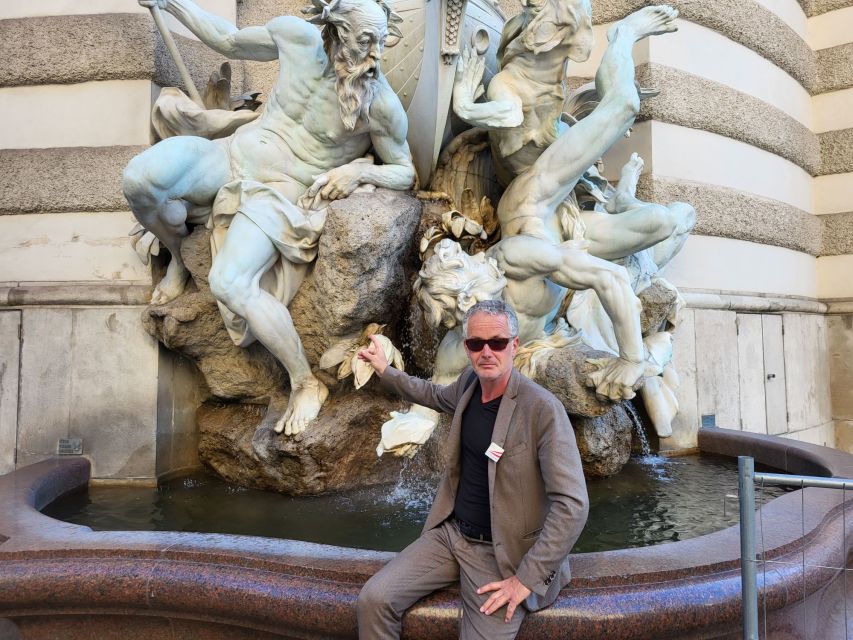
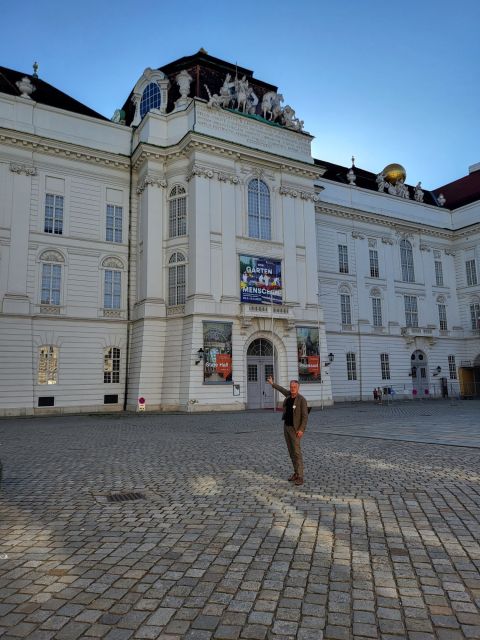
After the Hofburg and Heldenplatz, the route reaches Burggarten, Josefsplatz, and the Albertina. These stops shift attention from government to culture, though in Vienna the two subjects are never far apart.
Burggarten offers a softer contrast to the formal imperial spaces. It helps show how the palace district connects with public gardens and urban leisure. Josefsplatz brings you back to an elegant ceremonial setting, while the Albertina points toward Vienna’s continuing role as an art center.
The walk also presents Vienna as a city of music. Mozart and Beethoven lived and worked here, and Josef Haydn composed a melody that later became important in Germany. These details give the city a human scale. Behind the official façades were composers, performers, patrons, and audiences who made Vienna a major place for music.
You should keep your expectations realistic. This is not a concert tour, and the experience does not include performances or museum admission. The music story works as part of the broader city history, showing how court life, artistic work, and urban identity met in Vienna.
The Capuchin Crypt and the memory of the Habsburgs
The Capuchin Crypt is included in the route, along with the Albertina and Josefsplatz. Its place in the tour reinforces the connection between Vienna’s public buildings and its ruling family.
The crypt is associated with the Habsburgs and gives the imperial story a more personal and solemn side. After seeing rulers represented through palace façades and public squares, you reach a place linked to their deaths and remembrance.
The available information does not indicate that the tour includes entry into the crypt, so you should treat it as a stop in the city walk rather than assume an interior visit. If entering the crypt is important to you, confirm that detail before booking.
That limitation is not a major problem for a two-hour overview. The walk has a lot to cover, and its main purpose is to help you understand the city’s structure. You can always return later to visit selected interiors at your own pace.
Franziskanerplatz, Domgasse, and Mozart’s Vienna
The route then heads toward Franziskanerplatz and Domgasse. This section brings the story down from imperial scale to the streets where people lived and worked.
Domgasse is especially useful in the music section of the tour because it connects directly with Mozart’s time in Vienna. The stop helps you picture the composer not only as a famous name but as part of the city’s everyday fabric.
Franziskanerplatz offers another change of mood. Instead of moving only through the grandest ceremonial spaces, you get a sense of the smaller streets and squares within the old center. This balance is important. Vienna’s character is not limited to palaces and monumental avenues.
I like that the route includes these less obvious stops alongside the Hofburg and cathedral. They give the walk more texture and keep it from becoming a simple greatest-hits circuit.
St. Stephen’s Cathedral, the natural finish
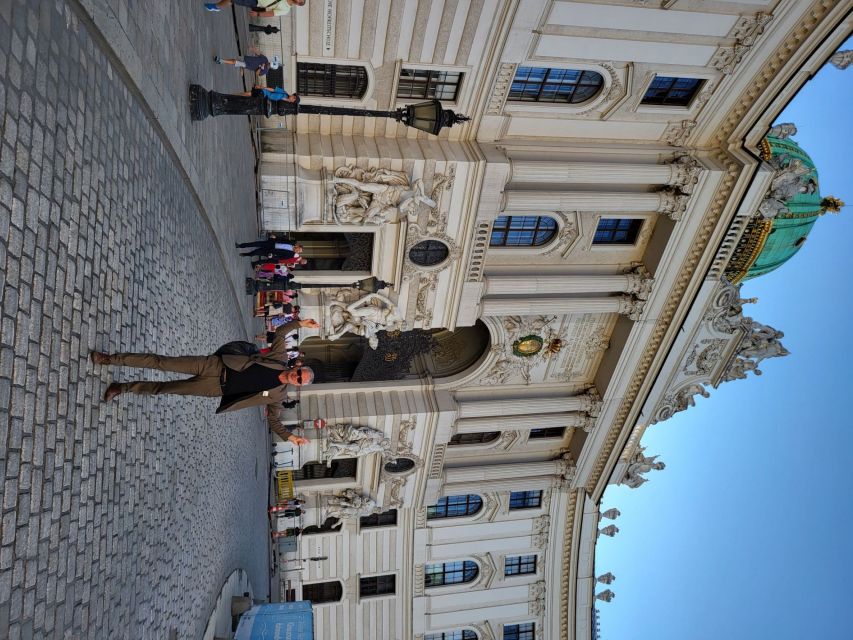
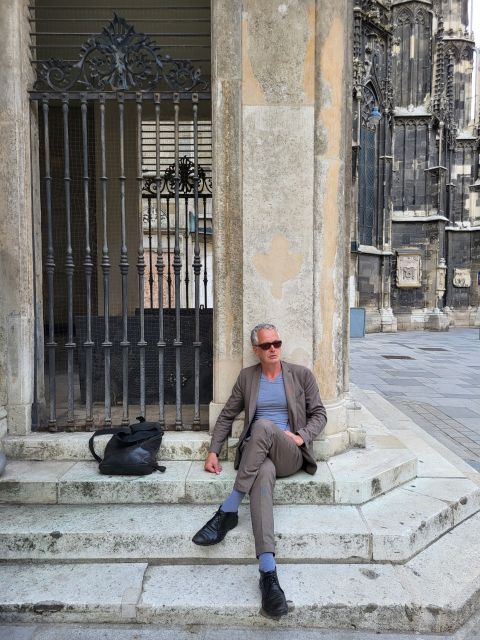
The walk ends at St. Stephen’s Cathedral, the geographical and emotional center of Vienna. It is a fitting finish because the cathedral helps bring together the main themes of the tour: age, religion, architecture, public life, and the city’s changing identity.
The cathedral is also a useful place to review the route. You have moved from Roman origins through medieval memories, Habsburg rule, imperial ambition, music, and modern Vienna. St. Stephen’s gives that story a strong visual anchor.
The itinerary information does not promise entry inside the cathedral, so plan on an exterior explanation unless your guide tells you otherwise. If you want to explore the interior, towers, or catacombs, set aside additional time.
Ending here is practical, too. You finish near one of Vienna’s key central points, with a better sense of how the surrounding streets fit together. The tour’s aim is not to show you every important room. It is to help you understand what you are seeing when you continue on your own.
How the $35 price measures up
At $35 per person, the value depends mainly on how much you want historical context and whether you can follow German comfortably.
For two hours with a certified local guide, the price is reasonable. You cover a long stretch of central Vienna, visit the city’s most important public spaces, and receive an explanation that ties together architecture, rulers, music, and urban growth. A self-guided walk costs less, of course, but it also leaves you to sort out the chronology and meaning yourself.
This tour is most useful at the start of a Vienna stay. Take it early, then use the route as a map for later visits. You may decide to return to the Hofburg, Capuchin Crypt, Albertina, or St. Stephen’s Cathedral with more focused interest.
The value drops if you want extensive interior access, a small specialist group, or a tour in English. None of those features is promised here. The strength is the guided overview, not admission tickets or a deep look at one monument.
Language, pace, and practical limits
The tour is conducted in German. That is not a small detail. The experience depends on spoken explanations about dates, rulers, architecture, and music, so basic conversational German will not be enough if you struggle with longer historical commentary.
The walk takes place in all weather. Wear shoes suitable for city streets and bring weather protection. There is no indoor alternative promised, so rain can affect your comfort even though it does not stop the tour.
Large bags and luggage are not allowed. Do not arrive with airport luggage or a large travel pack. The meeting point can vary by booking option, and you should arrive 10 minutes before the scheduled start.
The tour is not suitable for people with mobility impairments. The route covers several central streets, squares, and public areas over two hours. If walking for that length is difficult, choose a format designed around your needs.
Free cancellation is available up to 24 hours before the start, and you can reserve now and pay later. Those terms are useful if your Vienna schedule is still changing, but they do not remove the need to check the exact meeting point and departure time.
Who will get the most from this experience?
I would choose this tour if you want a clear first look at Vienna rather than a narrow visit to one palace or museum. It suits you especially well if you enjoy connecting political history with buildings and want a local guide to explain why the city developed as it did.
It is also a strong choice for German-speaking visitors who want a city walk with more substance than a quick photo stop. Christian Grausam’s approach appears particularly well suited to people who like historical periods explained through the places still visible today.
You may want another option if you need English, cannot walk comfortably for two hours, are carrying large luggage, or want extensive interior visits. Families with young children should also consider the German language and the amount of spoken history before booking.
Should you book this Vienna city tour?
Book it if your goal is to understand central Vienna before exploring it in detail. The route gives you the right framework: Roman beginnings, medieval traces, Habsburg power, imperial ceremony, music, art, and the role of St. Stephen’s Cathedral at the city’s center.
At $35, it is a good-value introduction, especially when you treat the walk as a guide to what you want to see next. Choose it early in your stay, arrive ready for rain or shine, and make sure German is suitable for you.
Skip it if you want English commentary, wheelchair-friendly arrangements, or guaranteed access inside the major buildings. For everyone else, this is a focused way to turn Vienna’s grand center from a series of impressive façades into a city with a readable story.
FAQ
How long does the Vienna city tour last?
The guided walk lasts two hours.
What language is the tour conducted in?
The tour is conducted in German with a live guide.
Who guides the tour?
The experience is provided by Christian Grausam, a certified local tourist guide from Vienna.
What sights are included on the route?
The route can include Schottenkirche, Freyung, Am Hof, Kohlmarkt, Michaelerplatz, the Hofburg, Heldenplatz, Burggarten, Josefsplatz, the Albertina, the Capuchin Crypt, Franziskanerplatz, Domgasse, and St. Stephen’s Cathedral. The exact meeting point may vary by booking option.
Is the tour suitable for people with mobility impairments?
No. The tour is not suitable for people with mobility impairments.
What happens if it rains, and can I bring luggage?
The tour takes place rain or shine. Luggage and large bags are not allowed, so arrive without them.
Just added in Vienna
- 3 hour private tour in Vienna by private car★ 4.4 · 6 reviews
- Private Christmas Markets Walking Tour Vienna★ 5.0 · 31 reviews
- Christmas Markets & Shopping in Vienna★ 5.0 · 17 reviews
- Christmas Market Vienna Tour★ 4.0 · 53 reviews
- Vienna: Christmas Markets Tour★ 4.3 · 99 reviews
- From Vienna: Prague Small-Group Guided Day Tour★ 4.7 · 141 reviews
- The unknown Vienna City- a guided walking tour in 3 hours★ 4.7 · 137 reviews
- Vienna Classical Concert – Strauss in Historic 1837 Hall★ 5.0 · 136 reviews
Tours in Vienna, compared.
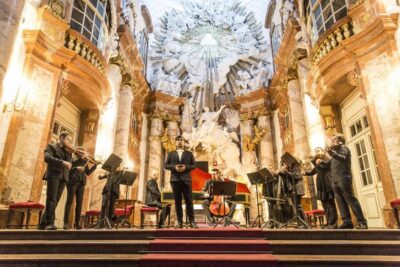
Vivaldi’s Four Seasons Concert in Karlskirche
Read our review →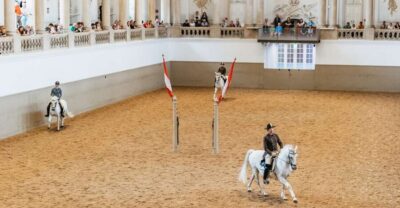
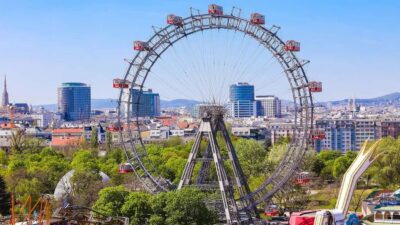
Skip-the-cashier-desk-line Giant Ferris Wheel Ride
Read our review →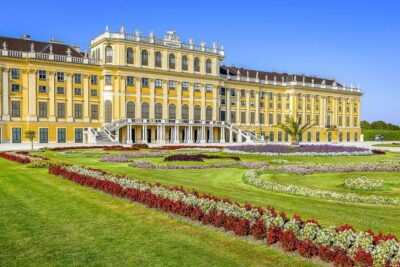
Schönbrunn Palace & Gardens Skip-the-Line Tour
Read our review →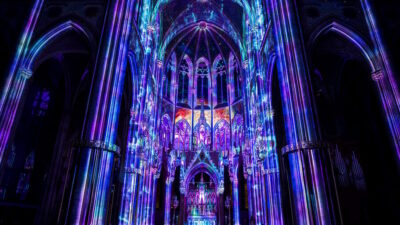
Light of Creation Votive Church Immersive Light Show
Read our review →
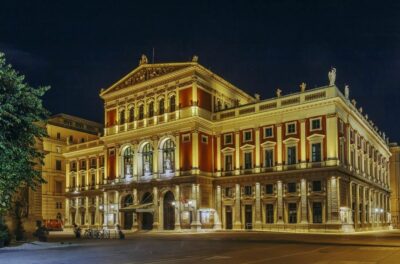
Classical Concert in the World-Famous Musikverein
Read our review →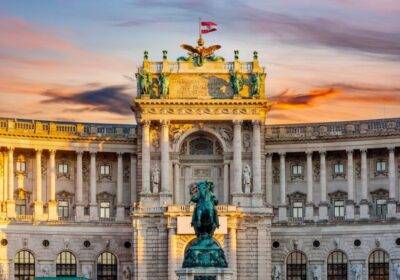
Skip-the-Line Sisi Museum, Hofburg and Gardens Tour
Read our review →Browse the lists this tour appears in