Reviewed · TOURS IN VIENNA
Vienna: Private Music Tour
Vienna’s music story comes alive in the places where it actually happened: the State Opera, Beethoven’s former home, Mozart’s old neighborhood, and the chapel where the Vienna Boys Choir sings. This private tour links those sites in a compact 150-minute walk, so you get both grand buildings and useful context.
I like the private format, which lets your guide adjust the pace and answer questions instead of delivering a fixed speech. I also like the mix of famous names: Lisa has adapted tours for families and mobility needs, while Giselle was praised for making the opera visit lively and informative. The main consideration is that the opera entrance fee is not included, and the start time depends on the building’s opening hours and tour schedule.
Key points to know
- Start inside Vienna’s State Opera: The tour begins at the fountain on the left side of the opera house.
- A music walk with major names: See sites linked to Mozart, Beethoven, Johann Strauss, Gustav Mahler, and the Vienna Boys Choir.
- Private groups of up to 15: You get a more flexible experience than on a large group walk.
- The opera visit needs planning: Entrance is separate, and the local partner sets the start time around opera availability.
- Useful for families: One guide adjusted the route for a mother’s needs and included a playground stop for children.
- Good cancellation flexibility: You can cancel up to 24 hours before the tour for a full refund.
Starting beneath the Vienna State Opera
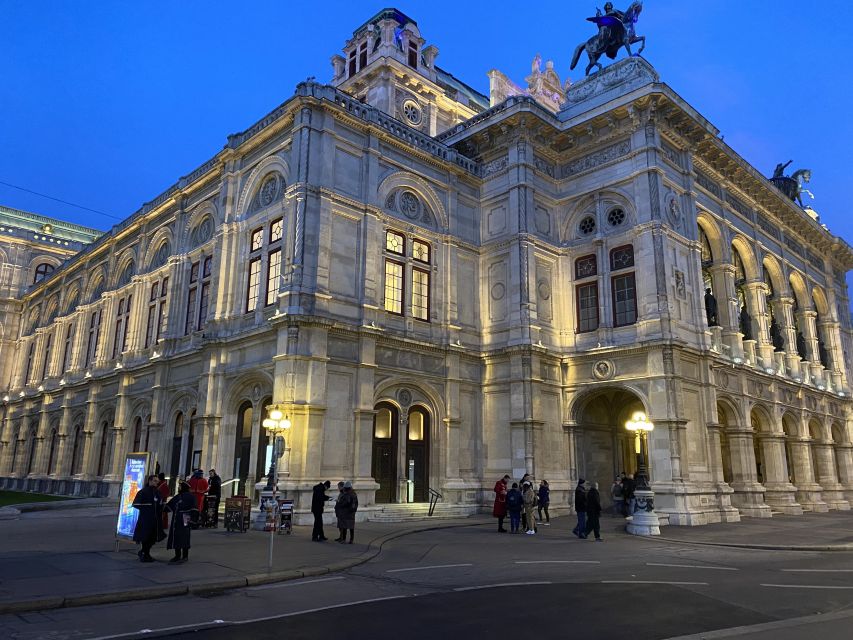
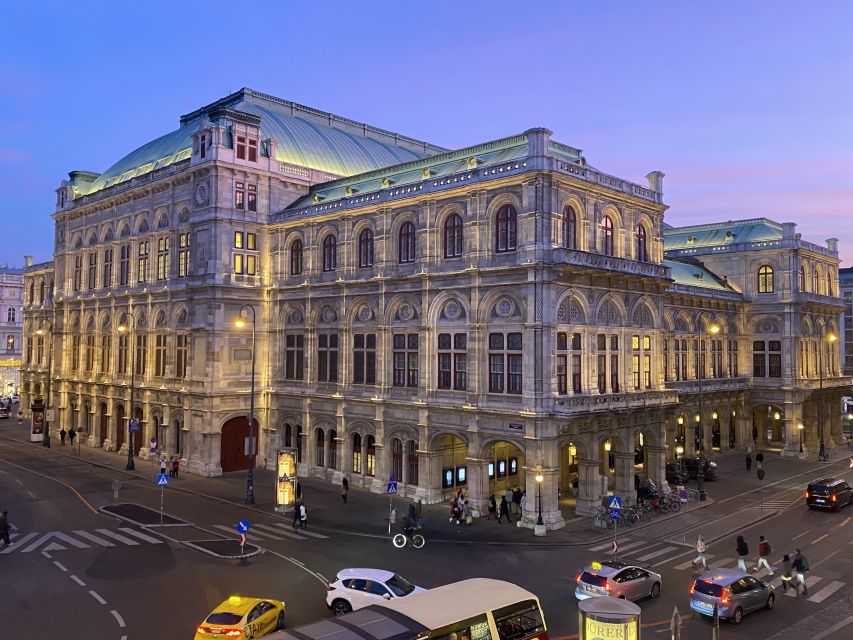
The tour begins at the Vienna State Opera, one of the city’s grandest music buildings. Your guide waits by the fountain on the left-hand side of the opera house, so arrive with enough time to find that meeting point before the scheduled start.
The first portion is an interior tour of the opera house. You are not simply looking at the facade and moving on. You get behind-the-scenes access and an explanation of how this major performance house developed, including the role of conductors such as Gustav Mahler.
The opera house is a strong opening because it gives you a sense of Vienna’s musical scale. This is not only a place for evening performances. It is a working institution with a long connection to conductors, singers, musicians, and court culture. A guide can help you notice the building as a place of performance rather than treating it as another ornate Viennese interior.
One practical point matters here: the guided opera visit is included, but the entrance fee is not. Confirm the current cost when you book, and pay close attention to the assigned start time. The opera’s opening hours and available tours determine when your private walk begins, so the time may not be as freely chosen as the private format suggests.
The tour also offers skip-the-ticket-line access, which can save time at a busy city sight. Still, skip-the-line access does not remove the need to coordinate with the opera’s schedule.
More to book in Vienna
- Vienna: Private Walking Tour with a Local Guide
★ 4.6 · 1,420 reviews - Vienna: Private Walking Tour with a Guide
★ 4.7 · 962 reviews - Vienna: Wine Tasting Experience in a Private Wine Cellar
★ 4.8 · 413 reviews
From the opera to Vienna’s musical center
After the opera house, you continue on foot through Vienna’s historic center. The walk takes about two and a half hours in total, including the opera visit and city stops, so you are getting a focused introduction rather than a slow, full-day city tour.
The private format helps here. The route can be adjusted around your interests, and one family was able to finish near a metro stop while also giving the children time at a playground. That is a useful sign for parents who need a little flexibility. It also shows why a private tour can work better than a rigid group itinerary when someone in your party needs a slower pace or a practical change at the end.
Your guide is state-certified and can lead in English or German. Guides named in the feedback include Lisa and Giselle. Lisa was especially responsive before the tour and discussed timing, points of interest, and accommodations for a mother. Giselle received praise for the opera portion and for explaining the building in an engaging way.
Do not expect every stop to be a long interior visit. Some places are viewed from outside or explained as part of the walk. The value comes from connecting the addresses and showing how close many of Vienna’s musical landmarks are to one another.
Palais Lobkowitz and Beethoven’s Eroica
One of the most important stops is Palais Lobkowitz. This is where Beethoven premiered his Symphony No. 3, known as the Eroica, and where he had the support of one of his main patrons.
That detail gives the tour more substance than a basic list of composer homes. Beethoven’s career depended not only on talent but also on patrons, performance spaces, and wealthy supporters willing to back difficult new music. At Palais Lobkowitz, you get a direct link between the composer, the people who supported him, and the music that changed his reputation.
I find stops like this particularly useful if you know Beethoven mainly from concert halls or recordings. The guide can place the work in a real setting and explain why the building mattered. You may not spend a long time inside the palace, so keep your expectations clear: this is a historical stop within a walking tour, not a full palace tour.
Hofburg Imperial Chapel and the Vienna Boys Choir
The route also reaches the Hofburg Imperial Chapel, where the Vienna Boys Choir performs every Sunday. This connects the tour to one of Vienna’s best-known musical traditions and to the city’s former imperial court.
The interesting part is the origin story. You learn how the Vienna Boys Choir began, rather than only hearing where it performs today. The chapel gives that story a fitting setting, since the choir’s connection to religious and court music is central to its identity.
The Sunday performance itself is not presented as part of the tour, so do not book this walk expecting a concert. Instead, you see the chapel and hear about the choir’s beginnings. If attending the choir is important to you, treat that as a separate plan and check the performance arrangements independently.
The stop can be meaningful for families and music lovers alike. Children may recognize the idea of a boys choir, while adults can connect it to Vienna’s long musical institutions. The guide’s explanation is what turns a quick look at the chapel into a useful part of the route.
A different kind of evening in Vienna:
- Vienna: Vivaldi’s Four Seasons Concert in Karlskirche
★ 4.7 · 14,951 reviews - Vienna: Spanish Riding School Training
★ 3.9 · 9,281 reviews - Vienna: Skip-the-cashier-desk-line Giant Ferris Wheel Ride
★ 4.5 · 7,859 reviews - Vienna: Schönbrunn Palace & Gardens Skip-the-Line Tour
★ 4.7 · 7,739 reviews
Mozart, his memorial, and St. Stephen’s Cathedral
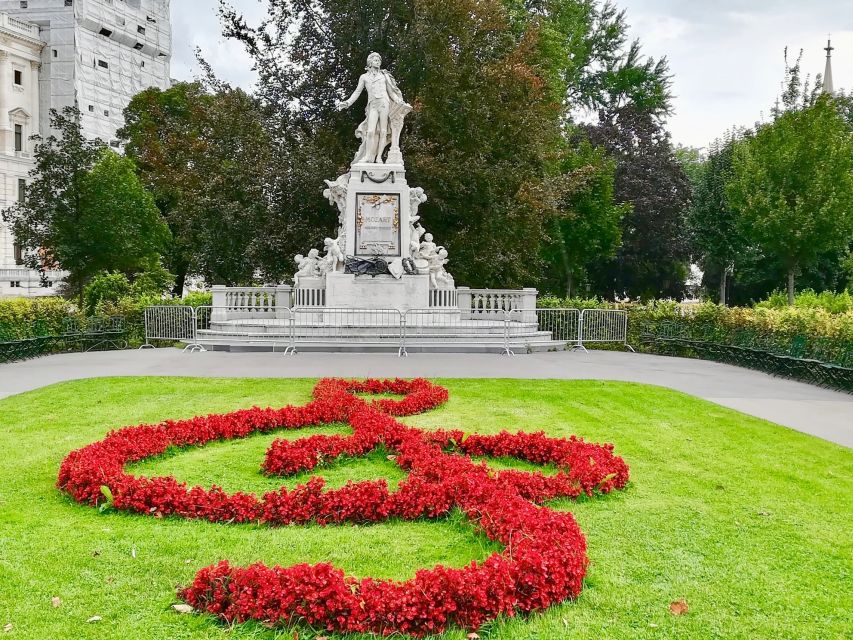
Mozart appears at several points along the walk, including a Mozart memorial, his former home, and St. Stephen’s Cathedral. The cathedral is also associated with Mozart’s marriage, making it one of the route’s most memorable stops.
St. Stephen’s is easy to admire on its own, but the Mozart connection gives you a reason to look beyond the roof and facade. You can consider the cathedral as part of the composer’s life in Vienna, not merely as a famous Gothic church.
Seeing Mozart’s former home adds another layer. The tour does not promise a lengthy museum visit, so you should think of the stop as a way to locate Mozart within the city. His story becomes easier to follow when the guide points out the buildings, streets, and institutions connected with him.
The Mozart memorial is another brief but worthwhile pause. It helps tie together the composer’s public memory and his actual time in Vienna. With several Mozart-related stops, the guide can help prevent the city’s many composer stories from blending into one long list of names.
Johann Strauss and the city’s waltz culture
The tour also visits the former dance salon where Johann Strauss, the Waltz King, made the ladies swoon. This is one of the more colorful stops, since it shifts the focus from church music, opera, and symphonies to the social life of the Viennese waltz.
A dance salon tells you something different from a concert hall. Music here was tied to movement, fashion, courtship, and public excitement. Strauss’s music was not only heard. It was danced, shared, and woven into city life.
The wording of the stop is playful, but the historical point is useful. Vienna’s musical identity includes grand opera and serious symphonies, yet it also includes popular dance music that filled ballrooms. This stop helps balance the tour and keeps it from becoming too focused on composers’ memorials and former residences.
Again, expect a stop and explanation rather than a dance lesson or evening ball. The site works best as part of the broader story of how music shaped daily life in Vienna.
Pasqualati House and Beethoven’s working life
Pasqualati House, the former residence of Ludwig van Beethoven, gives the route another direct connection to the composer. Along with Palais Lobkowitz, it helps show two sides of Beethoven’s Vienna: the patron who supported his work and the home where he lived.
That combination is valuable. A single Beethoven sight can feel abstract, but two different locations let you compare his personal residence with the social and financial networks around his music.
The tour does not promise an extended museum visit at Pasqualati House. You will get the strongest value from the guide’s explanation of why the address matters and how it fits into Beethoven’s time in Vienna. If your main goal is a detailed Beethoven museum experience, you may want extra time elsewhere after the tour.
For a first visit, though, this is a sensible way to get your bearings. You see a real residence, hear about Beethoven’s patrons, and connect both to the city center without spending a full day on one composer.
What the private format changes
The price is $541 per group of up to 15 people. That is a serious cost for a short tour if you are traveling alone or as a couple. It becomes more reasonable as your group grows, since the price is per group rather than per person.
For a full group of 15, the cost works out to about $36 per person before the opera entrance fee. For four people, it is about $135 per person, and for two people it is a much larger outlay. The value depends on how much you want personal attention and route flexibility.
I see the private format as most useful in three cases:
- You have a family or mixed-age group that needs pace changes.
- You want to ask detailed questions about music and history.
- You prefer a guide who can adapt the finish point or focus to your interests.
The private arrangement also avoids the anonymity of a large walking group. You can ask about Beethoven, Mozart, the Vienna Boys Choir, or the opera house without worrying that the guide must rush on to keep a crowd moving.
The tradeoff is simple: you pay for flexibility, not a long list of included admissions. Since the opera entrance fee is separate and the activity lasts 150 minutes, compare the total cost with your own sightseeing plans before booking.
Timing, language, and accessibility
The tour lasts 150 minutes, or two and a half hours. That is enough time for a strong musical introduction, but not enough for extended museum visits at every stop. I would schedule it early in your Vienna stay, when you still want a useful map of the historic center and its major music connections.
The start time is arranged around the State Opera’s opening hours and available guided tours. This is the main scheduling issue. You are not guaranteed a completely open choice of start time, so avoid booking another fixed activity too close to it.
English and German are available. The tour is wheelchair accessible, though the exact ease of each stop may depend on the route and current access arrangements. If someone in your group needs accommodations, contact the local partner before the tour. Lisa’s handling of a mother’s needs suggests that this kind of advance discussion can be useful.
Hotel pickup and drop-off are available only if you select that option. Otherwise, plan to reach the opera house yourself and meet by the fountain on the left side.
Who will get the most from this tour
I would choose this experience for a first-time Vienna visitor who wants the city’s musical story without spending several days in separate museums. It suits adults who already enjoy classical music, but the range of places also gives less committed listeners plenty to follow.
Families can benefit from the private pace. The route can be adapted, and the example of ending near a metro stop and allowing children some playground time is encouraging. Still, 150 minutes of history and walking may be a lot for very young children, so use the private format to request sensible pauses.
This is also a good match for a small group celebrating a music-themed trip. The opera house, Mozart’s home, Beethoven’s residences, Strauss’s dance salon, and the cathedral create a coherent route rather than a collection of unrelated sights.
I would think twice if you want a full opera performance, a concert, or long indoor visits at each site. Those are different experiences. This tour is best understood as a guided introduction to Vienna’s musical addresses, with an opera-house visit at the center.
Should you book the Vienna Private Music Tour?
Book it if you want one guide, one route, and several major composers tied together in a short visit. The strongest advantages are the private group, the flexible approach, and the State Opera access. Guides such as Lisa and Giselle have also shown the kind of personal attention that can make the walk work for families and mixed-age groups.
Skip it if your schedule cannot handle a start time that depends on opera-house availability, or if you expect the $541 price to include every admission. For a group of four or more, the cost is easier to justify. For a couple, it is a premium choice.
I would place this tour early in a Vienna trip, confirm the opera entrance cost and start time, and tell the guide in advance about mobility needs, children, or a preferred finish point. Done that way, it offers a clear, human-scale introduction to the city’s musical past without turning your day into a race between museums.
FAQ
How long does the Vienna Private Music Tour last?
The tour lasts 150 minutes, or two and a half hours.
Where does the tour begin?
It begins at the Vienna State Opera. Your guide waits by the fountain on the left-hand side of the opera house.
Where does the tour finish?
The listed finish point is in Vienna’s historic center at 1010 Vienna, Austria. The route may be adjusted for a preferred ending, subject to discussion with the guide.
Is the State Opera entrance fee included?
No. The guided tour of the State Opera is included, but the entrance fee is not included.
What languages are available?
The tour is available in English and German.
Is the tour private?
Yes. It is a private group experience for up to 15 people.
Is the tour wheelchair accessible?
Yes, the activity is listed as wheelchair accessible. Contact the local partner in advance to discuss specific accommodation needs.
Can I cancel for a full refund?
Yes. You can cancel up to 24 hours in advance for a full refund.
Just added in Vienna
- World War II History Vienna Old Town Private Walking Tour★ 4.8 · 9 reviews
- Vienna: Wiener Schnitzel and Strudel Cooking Class★ 4.9 · 126 reviews
- Vienna: Wine Tasting Tour★ 4.8 · 61 reviews
- Vienna: Winery and Wine Tasting Tour with a Wine Expert★ 5.0 · 5 reviews
- Vienna: Wine Tasting E-Bike Tour★ 4.9 · 46 reviews
- Vienna: Wine Tasting at Schönbrunn Palace★ 4.3 · 71 reviews
- Vienna: Unforgettable Private City Tour★ 5.0 · 7 reviews
- Vienna Urban Art Tour: Explore a different side of Vienna!★ 3.8 · 14 reviews
Tours in Vienna, compared.
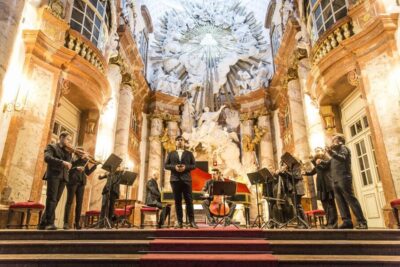
Vivaldi’s Four Seasons Concert in Karlskirche
Read our review →
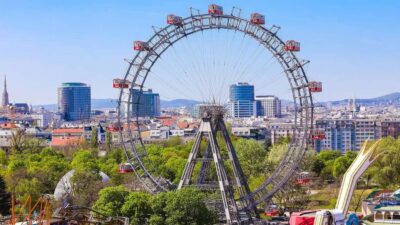
Skip-the-cashier-desk-line Giant Ferris Wheel Ride
Read our review →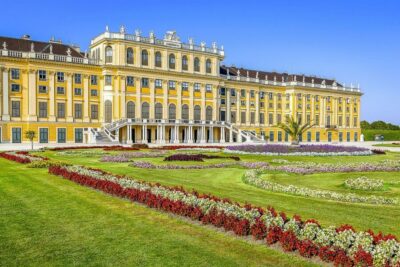
Schönbrunn Palace & Gardens Skip-the-Line Tour
Read our review →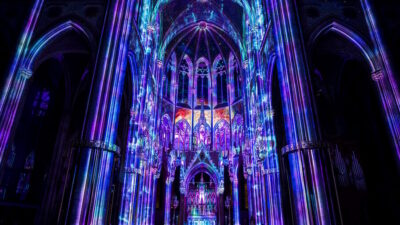
Light of Creation Votive Church Immersive Light Show
Read our review →
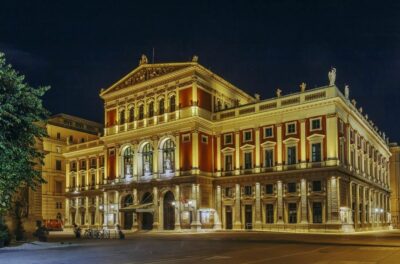
Classical Concert in the World-Famous Musikverein
Read our review →