
Reviewed · TOURS IN VIENNA
Vienna: Old Town Sightseeing Tour in a Vintage-Style E-Car
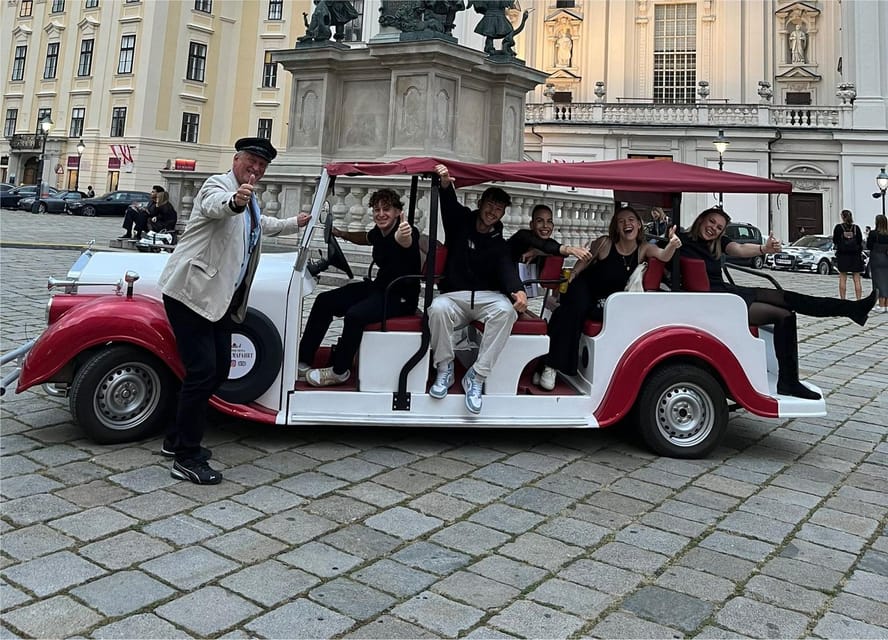
Vienna’s Old Town is made for a slow, curious ride, and this 1920s-style electric car gives you a quick tour with plenty of character. In one hour, you pass more than 40 sights, from Stephansdom and the Hofburg to the Belvedere, Parliament, and the Votivkirche.
I like two things right away: the small vehicle can move through central streets that are awkward for a big coach, and the guide adds useful context instead of leaving you to guess what you are seeing. The open sides also make photos easy. The main tradeoff is time: you see a great deal, but you usually do not stop to visit interiors or take long photographs.
- A smart first look at Vienna: Cover the city center in one hour before choosing where to return on foot.
- A small-group ride: The car carries no more than 10 people, and some departures may feel almost private.
- More than 40 sights: See churches, palaces, museums, monuments, fountains, and major squares in a single circuit.
- Quiet electric transport: The vehicle is calm and produces little street noise, so you can listen to the commentary.
- Good cold-weather touches: Blankets and fur-style seats have helped make cooler rides comfortable.
- Guides who add local color: Angelo, Karl, Kurt, Anthony, and others have been praised for history, humor, restaurant tips, and help with photos.
Why this vintage electric car works in central Vienna
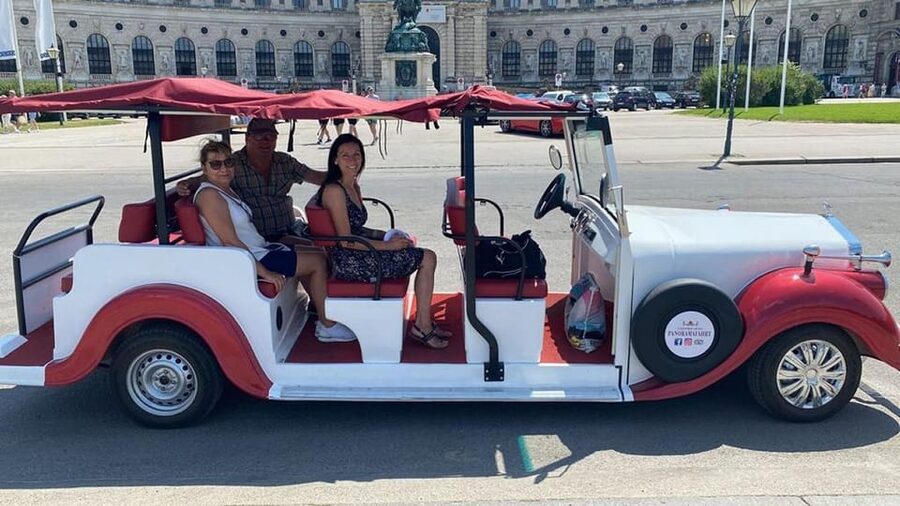
I see this tour as a get your bearings fast outing rather than a substitute for visiting Vienna’s major museums and palaces. The route links the historic center with several sights just beyond it, giving you a useful mental map before you start walking.
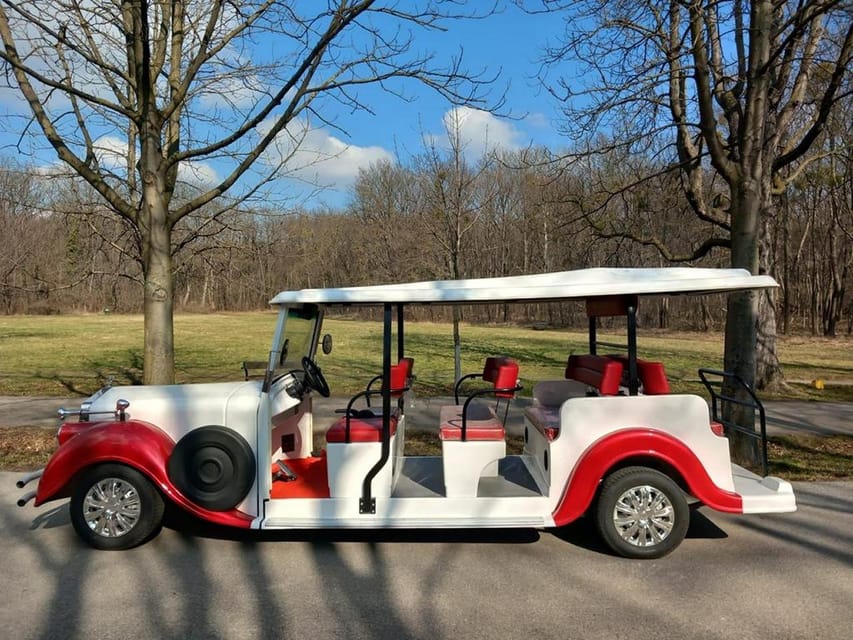
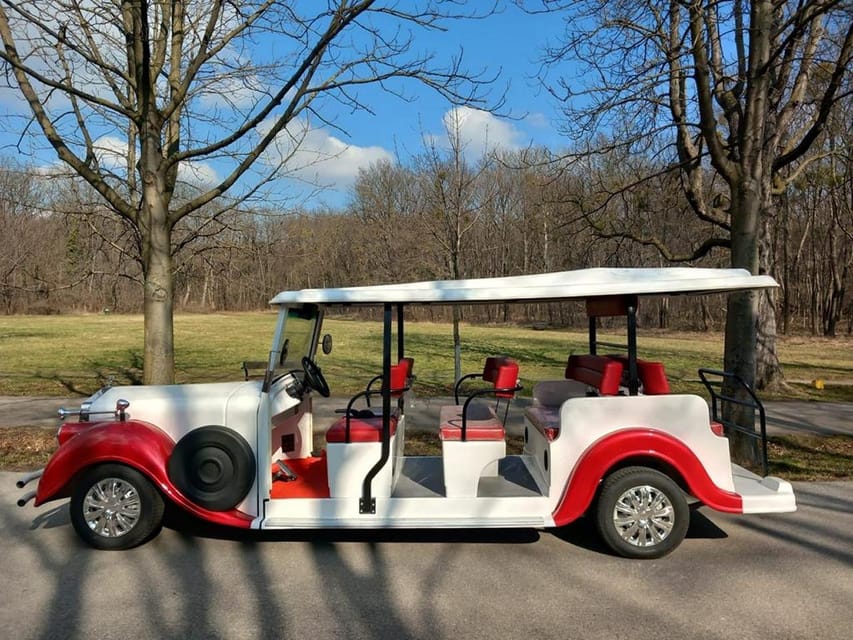
The car has an old-time appearance, but it runs on electricity. That combination matters here. You get the visual charm of a vintage ride without the engine noise and fumes of a traditional vehicle. Since the sides are open, you can look out at street level instead of peering through a coach window.
The small group size is another real advantage. With a maximum of 10 people, the guide can respond to questions and point out details without speaking to a large crowd. Some rides have had only two people, while others have included a mix of English- and German-speaking passengers. Guides have translated between the two languages when needed.
You should still keep the scale in mind. This is a moving sightseeing tour. You will pass many places slowly enough to recognize them, but you will not have time to explore each one. For first-time visitors, that is often the point.
Freyung, Am Hof, and Vienna’s medieval core
The ride begins outside the Radisson Blu Style Hotel at Herrengasse 12. From there, it heads toward Freyung, a triangular public square surrounded by grand buildings and traditional Viennese streets.
Freyung is a good early reminder that Vienna is not just a city of palaces. Its center is a patchwork of market squares, churches, aristocratic residences, and later civic buildings. The guide helps connect those pieces as you move along.
Next comes Am Hof, a broad square with an imposing architectural frame. You also pass Maria am Gestade, one of the city’s Gothic churches. Its tall, narrow form looks quite different from Vienna’s later Baroque buildings, making this part of the route useful for comparing styles.
At Hoher Markt, you reach one of Vienna’s oldest squares. The Anchor Clock is the visual prize here. Its moving figures and copper details give the clock a theatrical quality, and the guide explains what to watch for as you pass.
This section moves quickly, so I would not count on studying every façade. Still, it gives you a feel for how tightly packed the old center is. A large bus would lose much of this street-level intimacy.
More days out of Vienna:
- Vienna: Vivaldi’s Four Seasons Concert in Karlskirche
★ 4.7 · 14,951 reviews - Vienna: Spanish Riding School Training
★ 3.9 · 9,281 reviews - Vienna: Skip-the-cashier-desk-line Giant Ferris Wheel Ride
★ 4.5 · 7,859 reviews
Stephansplatz and the heart of the city
Stephansplatz is one of the strongest moments of the ride. Stephansdom, with its soaring Gothic form and patterned roof, is hard to miss. You get a useful exterior view, though the car does not replace an interior visit.
From here, the car travels along Wollzeile Street and continues toward Stadtpark. This change of setting is helpful. You move from the dense medieval center to wider streets, greenery, fountains, and grand public buildings.
The route includes the Hochstrahlbrunnen fountain and the monument honoring Soviet Army soldiers. These sights show a less postcard-ready side of Vienna, one that helps explain the city’s 20th-century story. I appreciate that the route does not limit itself to palaces and pretty squares.
Because the car keeps moving, pay attention to the guide’s timing. If you are trying to photograph Stephansdom, the best approach is to have your phone or camera ready before reaching the square. You may get a clear view, but you will not have a long pause to frame it.
Belvedere, Musikverein, and Karlsplatz
The tour then swings past the Baroque Belvedere Palace. The palace is one of Vienna’s best-known sights, and even a drive-by can help you understand its scale and formal design. The tour does not include entry, so plan a separate visit if you want the gardens, palace rooms, or art collections.
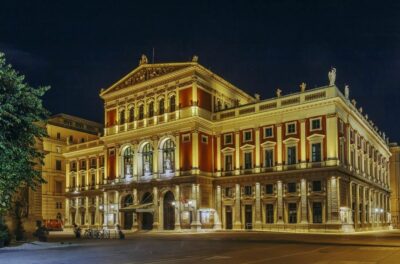
You also pass the Musikverein, home of the Vienna Philharmonic orchestra. This is a useful stop for music lovers, but the real value for everyone else is architectural. The building helps explain Vienna’s connection with concert music and grand 19th-century cultural institutions.
At Karlsplatz, you see St. Charles’s Church, the Arthouse museum, and the Jugendstil Karlsplatz Metro Station. This is where the city’s changing design language becomes especially clear. Gothic churches, Baroque domes, and the decorative curves of Jugendstil appear within a short stretch.
The Metro Station is a particularly good detail to watch for. It is smaller and more ornamental than many modern transit buildings, and it gives the route a nice contrast with the heavy palace architecture seen earlier.
You also pass the Secession art house, another important example of Vienna’s modernist turn. If you enjoy architecture, this section may be the most rewarding part of the tour because you see several periods close together without spending the day crossing town.
Kärtnerstrasse, the Sacher, and Michaelerplatz
The car continues along Kärtnerstrasse, one of the central shopping streets, and passes the Sacher hotel. You then move through the Neuer Markt, where charming shops and historic façades line the route.
Michaelerplatz has a distinctive star-like shape and serves as a fine approach to the Hofburg complex. Nearby, you see the Spanish Riding School and the Donnerbrunnen Goethedenkmal fountain. The guide helps sort out the names, which can otherwise blur together during such a fast circuit.
This part of the tour is useful if you want to return later on foot. You can note the streets that connect the Opera area, Neuer Markt, Michaelerplatz, and the Hofburg. Several guides also offer suggestions for cafés, food, and places to visit after the ride.
The downside is that shopping streets and squares can be visually busy. Cars, pedestrians, signs, and passing crowds compete for your attention. I would treat this stretch as orientation rather than a quiet viewing experience.
A different kind of evening in Vienna:
- Vienna: Schönbrunn Palace & Gardens Skip-the-Line Tour
★ 4.7 · 7,739 reviews - Vienna: Light of Creation Votive Church Immersive Light Show
★ 4.8 · 6,779 reviews - Vienna Spanish Riding School Guided Tour
★ 4.7 · 6,765 reviews - Vienna: Classical Concert in the World-Famous Musikverein
★ 4.6 · 6,673 reviews
The Hofburg and Vienna’s imperial center
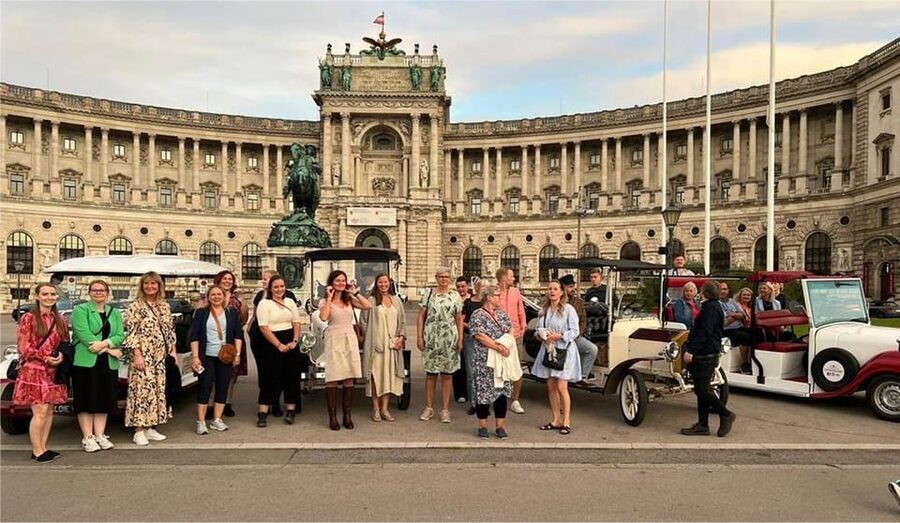
The route continues past the Friedrich Schiller monument, the Art History Museum, the Albertina, and the Outer Castle Gate. You then reach Heldenplatz, where the Hofburg makes its biggest impression.
The Hofburg is not one single palace in the simple sense. It is a large complex built and expanded over many periods, and the surrounding buildings reflect Vienna’s imperial past and later civic life. From the car, you get the broad view and a sense of how the complex shapes the center of the city.
The Albertina is another useful landmark to mark for a later visit. Its location above the city streets and its collection make it one of Vienna’s major art stops, but this ride only provides an exterior glimpse. The same applies to the Art History Museum. You see the grand building, then continue.
You also pass the Prinz Eugen Hotel, the National Library, the French Gothic Minoritenkirche, and a monument to Kaiser Karl. This is a lot of information in a short stretch, so do not worry if you cannot remember every name. I suggest choosing two or three places to revisit after the tour.
Parliament, the Burgtheater, and the final circuit
The last part of the ride includes the People’s Garden, Eppstein Palace, Parliament, the Burgtheater, Vienna University, City Hall, and the neo-Gothic Votivkirche.
This stretch shows another side of Vienna. The buildings are not simply royal residences. They also represent government, theater, education, religion, and public life. The range of styles makes the hour feel like a quick lesson in how the city grew.
The Burgtheater and City Hall are especially easy to recognize, while the Votivkirche provides a striking Gothic finish. By the time the car returns to the starting point, you have passed through enough districts and architectural periods to plan the rest of your stay with more confidence.
The route is packed, and that is both its strength and its limit. You see much more than you could comfortably cover on foot in one hour, but you must accept that many views last only a minute or two.
What the guide adds to the ride
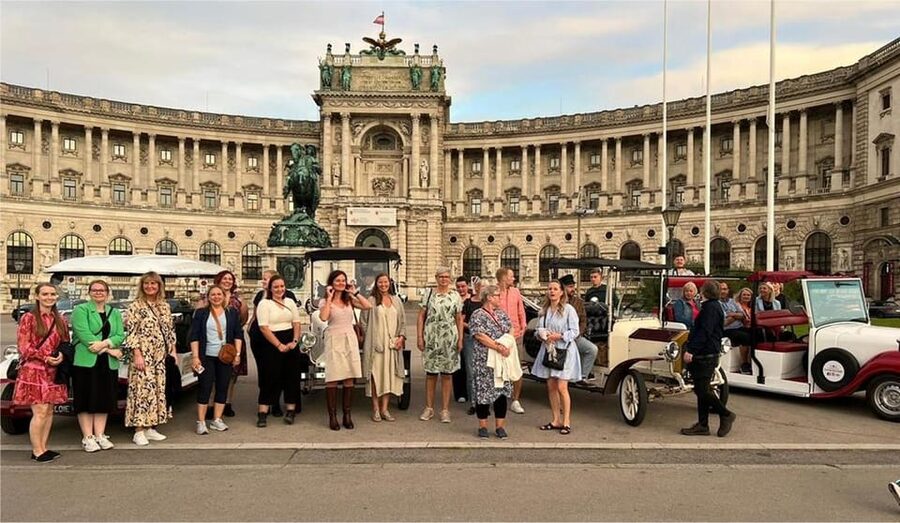
The guide can make or break a short tour, and the strongest part of this experience is the live commentary. Guides including Angelo, Karl, Kurt, Anthony, Hans, and others have been singled out for clear explanations, good humor, and practical suggestions.
Angelo has been praised for mixing historical information with a friendly manner, answering questions, and helping people feel welcome. Karl has been noted for entertaining commentary and taking photographs for passengers. Kurt has been appreciated for his wit and advice on places to eat.
You may hear English, German, or both, depending on the group. An audio guide is also included in those two languages. If the group is mixed, the live commentary may take longer as the guide switches languages, but that also makes the experience more inclusive.
I would ask questions during the ride, especially if you want recommendations for cafés, local food, or sights to visit afterward. Several guides have offered useful ideas, and that kind of practical help can be more valuable than another list of dates.
Comfort, views, and the weather
The car has open sides, which is excellent for photos and for seeing the street at eye level. You do not feel sealed away from the city, and the quiet electric motor makes it easier to hear the guide.
Cool weather needs some thought. Several rides have included blankets, and the seating has been described as comfortable, with fur-style covers on colder days. That helps, but you should still dress for the conditions because this is not the same as sitting in a fully enclosed coach.
There is a roof, and one useful caution is that it can block views of taller buildings when you are looking up. A passenger seated toward the rear, facing backward, may have a better angle at times. Seating may affect what you see, so keep your camera ready and do not assume every landmark will appear directly in front of you.
The tour does not focus on frequent photo stops. One hour is designed for continuous sightseeing, so you may need to return later if you want carefully composed pictures.
Is $28 a fair price?
At $28 per person, I consider this a solid value if your goal is an overview. You get a guide, a small group, a distinctive electric vehicle, and a route covering more than 40 sights. The price is especially reasonable for a first afternoon in Vienna, when you want help deciding how to use the rest of your time.
The value is lower if you want detailed visits inside museums, churches, or palaces. Admission is not included, and the ride does not provide long stops. You are paying for coverage, local explanation, and convenience rather than deep exploration of a single landmark.
Compared with a large sightseeing bus, the car offers a more personal setting and can move through central streets with less fuss. Compared with walking, it covers far more ground with less effort. Compared with a private tour, it costs much less, though you may share the guide and follow a fixed route.
The flexible booking terms also help. You can reserve and pay later, and cancellation is free up to 24 hours before the tour. Check the available departure times when booking, since the ride lasts one hour.
Who should book this Vienna ride?
I would choose this tour for a first visit, a short stay, older visitors, families wanting a low-effort introduction, or anyone who wants to cover many central sights quickly. It also works well at the beginning of a longer trip, since you can mark places to explore later.
It is a good match for architecture fans who enjoy comparing Gothic, Baroque, and Jugendstil buildings. It is also useful if you like hearing stories while moving instead of stopping at every monument to read a sign.
I would not choose it as my only Vienna sightseeing activity. You will want time at Stephansdom, the Hofburg, the Albertina, the Belvedere, and the museums that interest you. Think of this as the overview that helps you choose those deeper visits.
Should you book it?
Book this tour if you want a friendly, compact introduction to Vienna with a small group and a memorable vehicle. The best reasons are the broad route, the personal guide commentary, the easy photography, and the chance to see more than 40 sights without tiring yourself out.
Skip it if you strongly prefer walking, long photo stops, or detailed time inside each attraction. For most first-time visitors, though, $28 buys a useful hour of orientation, especially when guides such as Angelo or Karl turn the ride into more than a simple drive around town.
FAQ
Where does the Vienna vintage car tour start?
The meeting point is outside the Radisson Blu Style Hotel at Herrengasse 12 in 1010 Vienna. Look for the vintage-style electric car.
How long does the tour last?
The tour lasts one hour.
How much does the tour cost?
The listed price is $28 per person.
How many people can join the tour?
The tour is a small-group experience limited to 10 participants.
What languages are available?
Live guiding and the included audio guide are available in English and German.
Is transportation to the meeting point included?
No. You must arrange your own transportation to the meeting point.
What sights can I see during the ride?
The route passes more than 40 attractions, including the Hofburg, Stephansdom, Stephansplatz, Albertina, Belvedere Palace, Musikverein, Parliament, City Hall, the Burgtheater, and Votivkirche.
Can I take photographs during the tour?
Yes. The car has open sides that make it easier to take photographs while riding. The tour does not focus on frequent photo stops.
Is the car comfortable in cold weather?
Blankets and fur-style seat covers have been provided on some colder rides. Since the vehicle has open sides, dress appropriately for the weather.
Can I cancel the booking?
You can cancel up to 24 hours in advance for a full refund. You can also reserve now and pay later.
Just added in Vienna
- 3 hour private tour in Vienna by private car★ 4.4 · 6 reviews
- Private Christmas Markets Walking Tour Vienna★ 5.0 · 31 reviews
- Christmas Markets & Shopping in Vienna★ 5.0 · 17 reviews
- Christmas Market Vienna Tour★ 4.0 · 53 reviews
- Vienna: Christmas Markets Tour★ 4.3 · 99 reviews
- Guided Walking Tour of Vienna City Center Highlights★ 5.0 · 150 reviews
- Private Hidden Vienna Walk — Stories Behind Quiet Corners★ 5.0 · 137 reviews
- Konzerte der Wiener Royal Orchester★ 4.5 · 143 reviews
Tours in Vienna, compared.
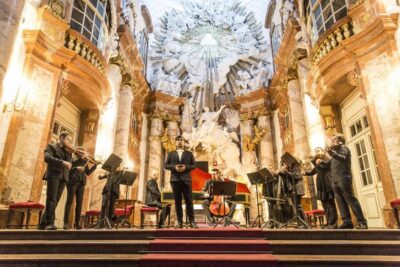
Vivaldi’s Four Seasons Concert in Karlskirche
Read our review →
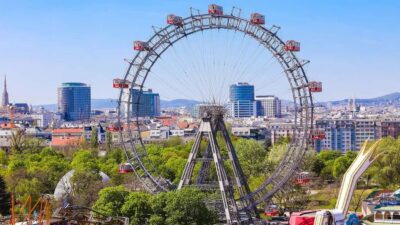
Skip-the-cashier-desk-line Giant Ferris Wheel Ride
Read our review →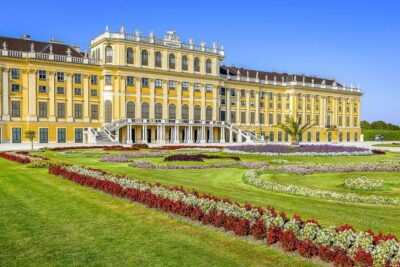
Schönbrunn Palace & Gardens Skip-the-Line Tour
Read our review →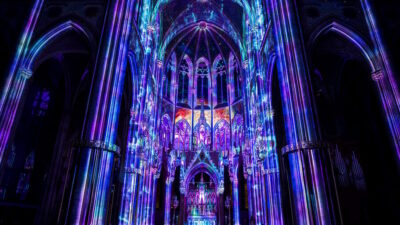
Light of Creation Votive Church Immersive Light Show
Read our review →
Classical Concert in the World-Famous Musikverein
Read our review →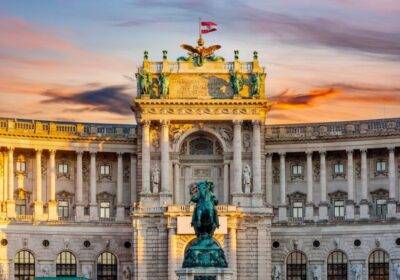
Skip-the-Line Sisi Museum, Hofburg and Gardens Tour
Read our review →Browse the lists this tour appears in