
Reviewed · WALKING TOURS
Vienna: History Highlight Walking Tour
Vienna’s grand center can feel like a parade of handsome facades until someone explains the people, power, scandals, and tragedies behind them. This two-hour walk connects Roman remains, Habsburg palaces, imperial churches, museums, wartime memorials, and St. Stephen’s Cathedral in one brisk route.
I like the small-group format, which makes it easier to hear and ask questions. I also like the guide’s use of old images, including photographs showing how parts of Vienna looked after the Second World War. The main drawback is that you stay outside the major buildings, since entrance fees are not included.
The route is packed. You will cover a lot of ground and hear plenty of dates, rulers, architectural details, and side stories in two hours. That makes this a smart first-day orientation, but less suitable if you prefer a slow walk with long stops inside museums.
Key points to know before booking
- Roman Vienna begins at Michaelerplatz, where excavations help explain why this part of the city mattered long before the Habsburgs.
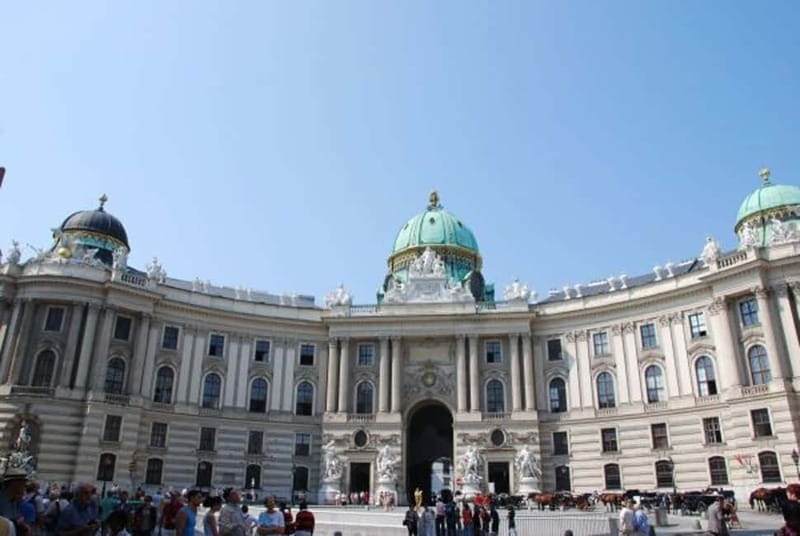
- The Hofburg and Heldenplatz provide the political heart of the walk, with stories about rulers, ceremonies, and the immense imperial grounds.
- The Austrian National Library, Imperial Treasury, and Imperial Crypt introduce Vienna’s court culture, symbols, and burial customs.
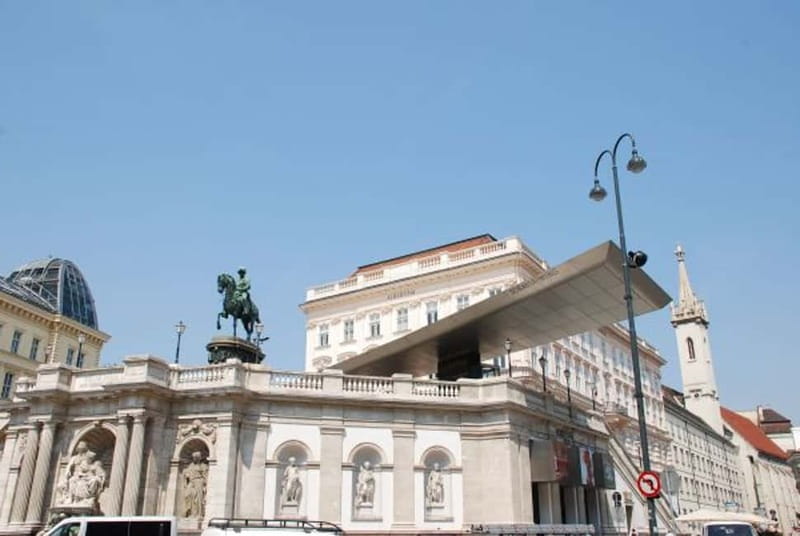
- The Albertina, State Opera, and Monument Against War and Fascism add art, music, and the darker chapters of the 20th century.
- Herbert Stojaspal and Wolfgang are among the guides praised for humor, clear explanations, and practical advice about what to see after the walk.
- At $33 per person, the tour is good value if you want context quickly, though you will need separate tickets for attractions you want to enter.
Why this two-hour walk works so well in Vienna
Vienna rewards looking up, but it does not always tell you what you are seeing. A palace wing may be a former residence, a church may conceal centuries of dynastic ritual, and a square may have a name linked to a ruler most visitors have never heard of.
This walk gives you a framework. You move through the imperial center in a logical sequence, from Roman Vienna and the Hofburg to the cathedral at the end. Along the way, the guide links buildings to the Habsburg rulers, court customs, architecture, war, music, and daily life.
The strongest part is the storytelling. Guides such as Herbert Stojaspal have been praised for mixing solid historical detail with humor, rather than turning the walk into a list of dates. Wolfgang has also led the tour, and the guide may use an iPad to show historical images that make damaged or altered buildings easier to understand.
The group size matters. A small group gives you a better chance to hear clearly in busy squares and ask about the things that catch your eye. It also allows the guide to adjust the level of detail. Several visitors found the tour informal and friendly, with enough information to remain interesting without becoming heavy.
More Walking Tours in Vienna
- Vienna: Guided Walking Tour of City Center Highlights
★ 4.7 · 4,989 reviews - Vienna: Vienna Central Cemetery Guided Walking Tour
★ 4.8 · 3,307 reviews - Vienna: Guided Walking Tour of City Highlights & Hidden Gems
★ 4.9 · 2,180 reviews
Starting at Michaelerplatz and the Roman remains
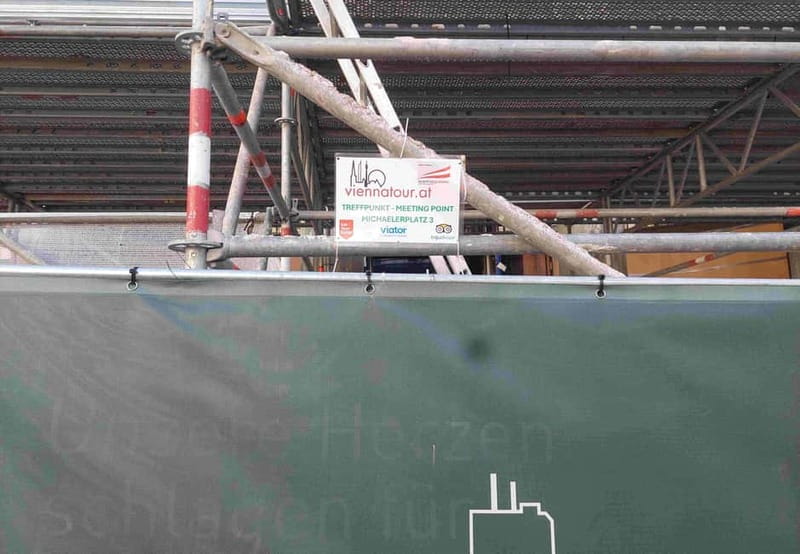
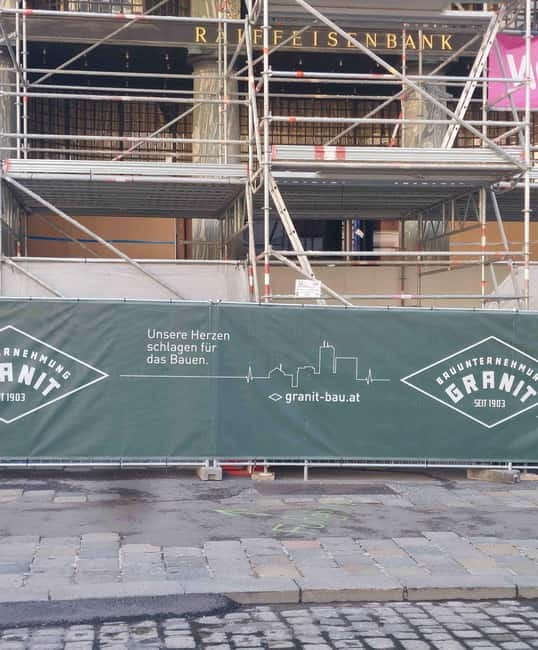
The meeting point is in front of the Loos Haus at Michaelerplatz 3, between Kohlmarkt and Herrengasse. Look for the building with Raiffeisenbank on its facade. The spot is about a three-minute walk from Herrengasse station on the U3 metro line.
This is a useful starting point because Michaelerplatz brings several layers of Vienna together. The square includes excavated Roman remains, giving the tour an early starting point before it moves into the imperial era. You begin with the question of why a fortified or royal seat was built here, then see how the location developed over time.
The excavation stop is guided rather than a long museum visit. You will hear how Roman Vienna fits into the city’s later growth and why the central location became so important. This is the kind of detail that helps you read the city streets later, instead of seeing only elegant buildings.
The square can be busy, and you will be standing outdoors. Keep your group close and wear shoes suited to pavement. Large bags and luggage are not allowed, so this is not a tour to take immediately after arriving at a train station with all your belongings.
St. Michael’s Church and the Hofburg Palace
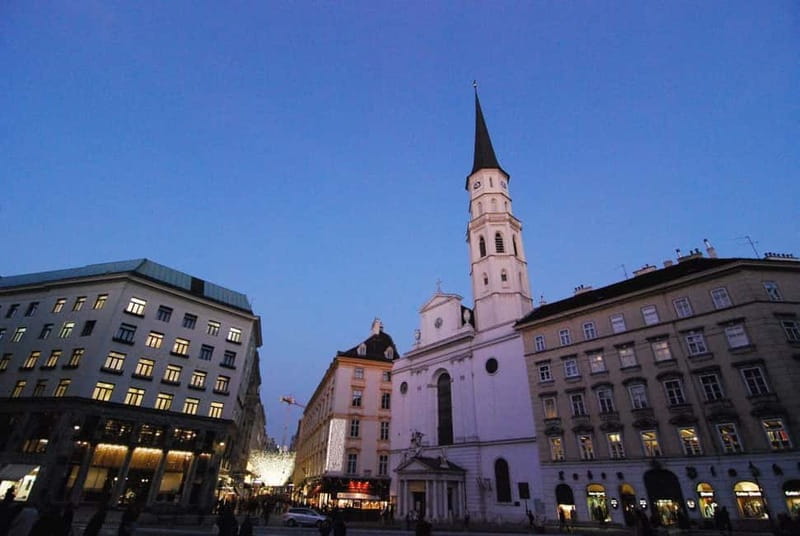
St. Michael’s Church is Vienna’s third-oldest church, and its facade reflects three different architectural styles. That makes it a useful lesson in how buildings change over centuries. Rather than seeing one perfect period piece, you see a structure shaped by different eras and tastes.
The church is also tied to the Hofburg district, so the walk quickly moves from religious architecture to imperial power. The Hofburg is not one tidy palace built at one time. It is a large collection of wings, courtyards, chambers, and institutions developed over many centuries.
Your guide explains the scale of the complex, including the vast grounds covering 555,000 square meters. That number is hard to grasp from one courtyard, but the route helps you understand how the Habsburg rulers turned the center of Vienna into a working seat of government and court life.
You will hear about the most important rulers connected with the city and the roles played by the palace. The value here is not just seeing the facade. You begin to understand why the Hofburg appears again and again in Vienna’s museums, churches, ceremonies, and political history.
Heldenplatz and the power behind the facades
Heldenplatz, or Heroes’ Square, gives the tour room to breathe. Its broad scale makes the imperial ambition of Vienna easier to see than the tighter streets around Michaelerplatz.
The guide points out what lies behind the facades and explains how the square functioned within the Hofburg complex. This is one of the places where a good explanation changes your view. Without context, it is an impressive open space surrounded by grand buildings. With context, it becomes a stage for power, public ceremony, and dynastic image-making.
The walk also covers the Imperial Treasury from the outside. You learn why it deserves a place on your personal Vienna list and what you can expect to find inside. The entrance ticket is not part of the walking tour, so treat this stop as an introduction and decide later if you want to return.
That approach is practical. A short city walk cannot take you through every palace collection, but it can help you choose where to spend your paid museum time. Several people used the advice from the tour to visit museums and other sights later in the day.
More walking routes in Vienna:
- Vienna: Viennese Underworld Guided Walking Tour
★ 4.7 · 1,865 reviews - Vienna: World War II Historical Walking Tour
★ 4.8 · 1,772 reviews - Vienna Historic Center Small Group Walking Tour
★ 5.0 · 1,746 reviews - Vienna: Private Walking Tour with a Local Guide
★ 4.6 · 1,420 reviews
The Austrian National Library and Joseph’s Square
The Austrian National Library brings architecture, symbolism, and imperial education into the route. You pass the library’s famous state room, but the walking tour does not include admission. If you want to see the interior, plan a separate visit and budget for its entrance fee.
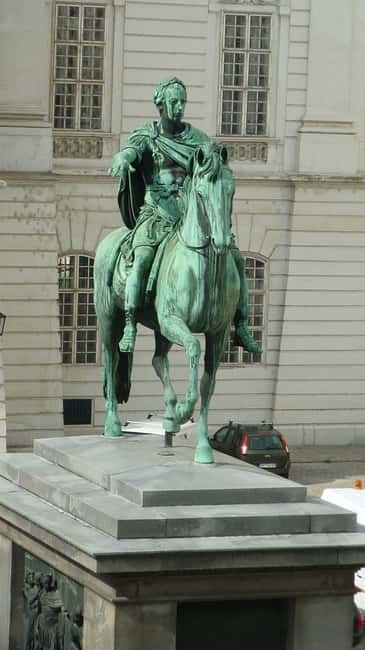
The guide draws attention to the symbol on the roof and explains why the square is named after Emperor Joseph II. Details like these are easy to miss when you are moving through central Vienna on your own. You may notice a sculpture, emblem, or inscription, but without an explanation its meaning can remain hidden.
This is also a good point to ask questions about the Habsburg court. The tour is not limited to architecture. It connects buildings with rulers, ceremony, religion, and the practical business of governing a large empire.
Because the route moves quickly, you will not have time to study every facade. If you enjoy architectural detail, take mental notes and return later with your camera. Video and audio recording are not allowed on the tour, but you can still pay close attention and use the walk to decide what deserves a second look.
Albertina and Vienna’s wartime scars
The Albertina is one of the major art institutions along the route and is described as home to the world’s largest graphical collection. Again, the tour takes you past the building rather than inside it, but the guide explains why it matters and what you may find there.
The mood shifts at the Monument Against War and Fascism. Here, the walk confronts the darker chapters of Vienna’s 20th-century story, including the horrors of the Second World War. This prevents the tour from becoming a polished parade of emperors and palaces.
Historical images shown by the guide can be especially useful in this section. Seeing how buildings looked after wartime destruction gives you a clearer sense of what was lost, repaired, or altered. The city center may look calm and complete now, but the photographs help show that its appearance has not remained untouched.
I appreciate this balance. You get imperial grandeur, but you also hear about destruction, political violence, and the uncomfortable parts of Vienna’s past. The tour does not treat history as decoration. It asks you to look at the city with a little more care.
The State Opera, Hotel Sacher, and vanished city gates
The walk continues to the State Opera, another building that rewards a guide’s explanation. You learn about the former Carinthian Gate Theatre and why the Hotel Sacher now occupies that location.
This is a good example of the tour’s method. Instead of simply pointing out a famous hotel or opera house, the guide explains what was there before and how the city changed. Vienna’s central district has been rebuilt, renamed, expanded, and redesigned many times.
The stop also gives you a chance to connect architecture with Vienna’s musical identity. You will not attend a performance as part of this activity, and there is no entrance included, but you gain useful context if you plan to visit the opera later.
The route is still outdoors, so the opera stop is best seen as a historical explanation rather than a building tour. If you want lavish interiors, book a separate visit. If you want to understand how the city’s famous institutions fit into the old center, this stop does the job.
Neuer Markt and the Imperial Crypt
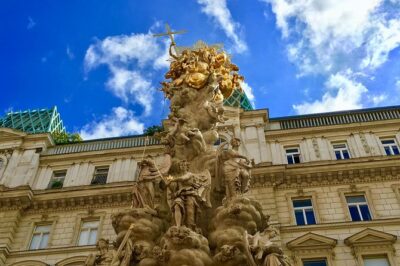
At Neuer Markt, the guide shares stories about the Providentia Fountain. This is the sort of small feature that many people would pass without a second thought. A local explanation turns it into part of the city’s visual and political story.
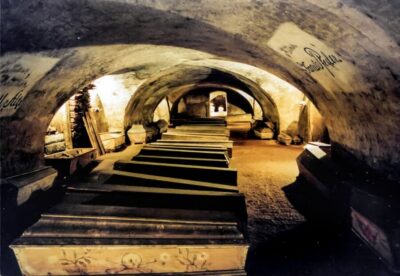
The Imperial Crypt adds one of the tour’s most memorable subjects: the Habsburg burial ritual. You hear how members of the dynasty were buried and why the ritual developed in its unusual form. The crypt itself is not included, so you will need a separate ticket if you want to go inside.
This section gives the tour a more personal side. The Habsburgs can seem distant when you encounter only portraits and palace rooms. Burial customs reveal how the dynasty understood the body, the church, family identity, and imperial tradition.
The guide’s anecdotes are important here. Several people especially valued the unexpected stories and customs that do not usually appear in a basic city overview. That is where the tour earns its fee: not by getting you through a ticket barrier, but by giving meaning to places you can later explore on your own.
Finishing at St. Stephen’s Cathedral
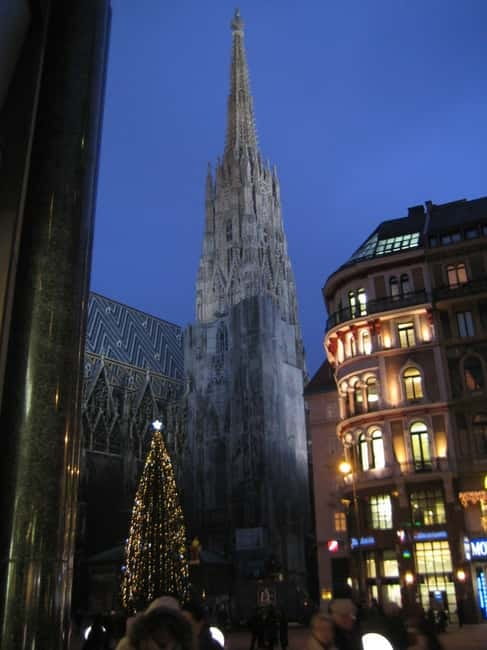
The walk ends around Stephansplatz and St. Stephen’s Cathedral, Vienna’s landmark. The cathedral provides a strong final stop because it brings together religion, architecture, civic identity, and wartime damage.
You hear about the cathedral’s partial destruction during the Second World War and the effort to restore it. The guide also addresses a popular historical claim that is not quite correct, reminding you that schoolbook versions of the past often need checking.
This final stop works well as a practical handoff to the rest of your day. From Stephansplatz, you can continue exploring the central district, visit attractions you noted along the way, or return to one of the museums introduced earlier.
The booking details describe the activity as ending back at the meeting point, while the route information lists Stephansplatz 8A as the drop-off location. Since the walking route itself finishes at St. Stephen’s Cathedral, confirm the exact end point when you book.
Price, pace, and practical value
At $33 per person, this is a fair price for a two-hour orientation if you want a guide to connect Vienna’s major sights. You are paying for local explanation, not admission to the National Library, Imperial Treasury, Albertina, Imperial Crypt, or other interiors.
The value is strongest on your first day. The walk can help you decide which museums deserve your money and time, and it can save you from wandering past important buildings without knowing their role. One useful detail from the tour may even change your plans, such as learning that the Lipizzaner stallions do not perform their full show during the summer.
The tour runs in all weather, so bring protection from rain or sun. There are no indoor rest stops built into the route, and the two-hour duration means you should be comfortable standing and walking.
Children under 12 are not suitable for this activity, and it is not suitable for people with mobility impairments. Large bags and luggage are not allowed. The tour is offered in English and German, and free cancellation is available up to 24 hours ahead. You can also reserve now and pay later.
Who should book this Vienna history walk
You should book it if you are visiting Vienna for the first time and want a clear overview before choosing museums, palaces, and churches. It also suits you if you enjoy history presented through anecdotes, architecture, and local detail rather than a formal lecture.
The tour is particularly useful for people who want practical ideas for the rest of their stay. Guides have offered advice about museums, attractions, and seasonal details, and several people found those suggestions useful later the same day.
You may want a different experience if you prefer entering every major building, moving slowly, or concentrating on art alone. Since admission is not included, this is a street-level introduction. You will see a great deal, but you will need separate visits for the interiors.
Should you book it?
Book this walking tour if you want to understand Vienna’s imperial center quickly and enjoy a guide who mixes history with humor. The strongest guides, especially Herbert Stojaspal and Wolfgang, appear to bring personality, images, and plenty of side stories to the route.
I would take it near the beginning of a Vienna stay, not at the end. At $33, it offers useful orientation, a small group, and a concentrated look at the city’s major historical layers. Just wear comfortable shoes, leave your luggage behind, and remember that the grand interiors require separate tickets.
FAQ
How long does the Vienna History Highlight Walking Tour last?
The walking tour lasts two hours.
Where does the tour start?
It starts in front of Loos Haus at Michaelerplatz 3, 1010 Vienna. The building is between Kohlmarkt and Herrengasse and has Raiffeisenbank on its facade.
How close is the meeting point to public transportation?
The meeting point is about a three-minute walk from Herrengasse metro station on line U3.
Which languages are available?
The tour is offered in English and German.
Is the tour conducted in a small group?
Yes. The activity is conducted in a small group.
Are entrance fees included?
No. Entrance fees are not included, so admission to places such as the Austrian National Library, Imperial Treasury, Albertina, and Imperial Crypt requires separate payment.
Is luggage allowed?
Large bags and luggage are not allowed on the tour.
Can I take photos or record the guide?
Video recording and audio recording are not allowed. The supplied information does not state a general photography restriction.
Does the tour operate in bad weather?
Yes. The tour takes place in all weather conditions, so you should dress accordingly.
Is the tour suitable for children and people with mobility impairments?
It is not suitable for children under 12 or for people with mobility impairments.
Where does the tour end?
The route information lists Stephansplatz 8A near St. Stephen’s Cathedral as the drop-off location. The meeting-point information also says the activity ends back at the meeting point, so confirm the exact end point when booking.
More Historical Tours in Vienna
- Vienna: Time Travel and Magic Vienna History Tour
★ 4.6 · 3,879 reviews - Time Travel-Magic Vienna History Tour Ticket
★ 4.5 · 1,099 reviews - Skip-the-Line Schonbrunn Palace Guided Tour and Vienna Historical City Tour
★ 3.5 · 940 reviews - Vienna Mozart Concert in Historical Costumes at the Musikverein
★ 4.5 · 888 reviews
Just added in Vienna
- 3 hour private tour in Vienna by private car★ 4.4 · 6 reviews
- Private Christmas Markets Walking Tour Vienna★ 5.0 · 31 reviews
- Christmas Markets & Shopping in Vienna★ 5.0 · 17 reviews
- Christmas Market Vienna Tour★ 4.0 · 53 reviews
- Vienna: Christmas Markets Tour★ 4.3 · 99 reviews
- Private Hidden Vienna Walk — Stories Behind Quiet Corners★ 5.0 · 137 reviews
- Konzerte der Wiener Royal Orchester★ 4.5 · 143 reviews
- Mozarthaus Vienna Admission Ticket★ 3.0 · 139 reviews
Walking Tours, compared.
Guided Walking Tour of City Center Highlights
Read our review →
Guided Walking Tour of City Highlights & Hidden Gems
Read our review →
Vienna Historic Center Small Group Walking Tour
Read our review →
Browse the lists this tour appears in