
Reviewed · WALKING TOURS
Vienna Art Nouveau Walking Tour
Vienna’s old metro stations were built as city symbols, not just places to catch a train. Otto Wagner used marble, metal, glass, and bold ornament to give modern transport a distinctly Viennese face. I especially like the visit to the Karlsplatz pavilion and the chance to see the imperial station at Hietzing, where Art Nouveau takes on royal scale.
The tour also works well because it links architecture to city planning. You see how population growth pushed Vienna toward a modern transport system, then connect that story to the Secession Building, Wagner’s apartment houses, and the symbolism of the famous Beethoven Frieze. The main drawback is the price: at $176 per person, this is a serious investment for three hours, and admission fees are extra.
Key points to know before you book
- Otto Wagner’s metro design: Learn why Vienna’s first underground railway needed to be practical, recognizable, and politically persuasive.
- Karlsplatz and Hietzing stations: Compare the elegant public pavilion with the emperor’s grand private station outside Schönbrunn.
- Secession House and Klimt: Tuesday through Sunday tours include the option to see the Beethoven Frieze, with admission costing €9.50 for adults and €6 for students and seniors.
- A walking-heavy route: Comfortable shoes matter. One small-group booking covered several miles on foot.
- Strong guide element: English-speaking historians such as Wolfgang, Peter, and Guissepina have led the tour, with a style that welcomes questions.
- Private or small-group format: The guide can spend more time on the architectural details that interest you most.
Why Vienna’s metro is the real starting point
Most visitors meet Vienna through palaces, coffeehouses, and the Ringstrasse. This tour begins with a less obvious question: how did the city become large enough to need a modern transport system?
In the late 19th century, Vienna’s population grew quickly. Suburban districts needed a link to the center, and planners designed metro lines that connected those outer areas with the Ringstrasse. Otto Wagner was chosen to shape the stations and related structures.
Wagner understood that a railway system would change how people experienced the city. His stations had to be easy to recognize, durable, and modern. They also needed to announce Vienna as a confident European capital.
That is why Art Nouveau, known in Austria as Jugendstil, made such good sense. The style favored fresh lines, plant forms, carefully chosen materials, and a break from old architectural rules. Wagner gave those ideas a practical job. They marked entrances, guided passengers, and made public transport part of the city’s visual identity.
Your guide explains this connection as you walk. The best part is not simply spotting decorative details. You learn why a station looks the way it does and what its materials and symbols were meant to say.
More Walking Tours in Vienna
- Vienna: Guided Walking Tour of City Center Highlights
★ 4.7 · 4,989 reviews - Vienna: Vienna Central Cemetery Guided Walking Tour
★ 4.8 · 3,307 reviews - Vienna: Guided Walking Tour of City Highlights & Hidden Gems
★ 4.9 · 2,180 reviews
Café Museum is a useful place to begin
The stated meeting point is Café Museum at Operngasse 7, in Vienna’s 1st district. Depending on the selected option, the exact starting point can vary, so check your booking details before setting out.
Café Museum is a fitting place to start an Art Nouveau walk. It puts you near the Opera, Karlsplatz, the Ringstrasse, and several important buildings from Vienna’s modern era. The opening discussion gives you the background needed to read the city rather than simply photograph it.
Expect the guide to set out the basic ideas behind Viennese Jugendstil: the desire for a new artistic language, the role of function, and the way architects used materials to make public buildings feel modern. Peter, one of the named guides, has been especially good at handling broad questions about Austrian history and pointing out details that are easy to miss, including places connected with Vienna’s Jewish communities.
That wider context matters. Art Nouveau did not appear in isolation. It formed part of a city changing at speed, with new transport, new buildings, and new arguments about what modern Vienna should look like.
The Karlsplatz pavilion makes transport look elegant
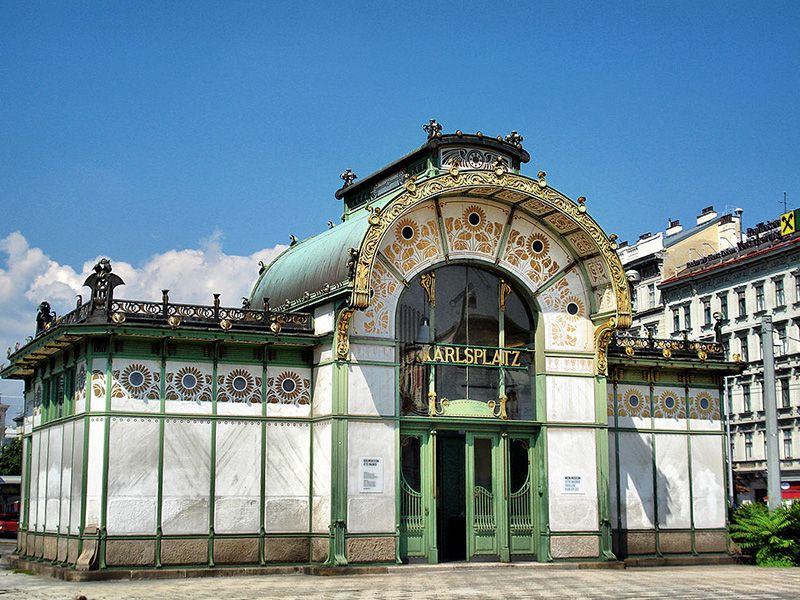
From the café, the route heads toward the Otto Wagner Pavilion at Karlsplatz. Its pale exterior, curved roof, and formal placement make it one of the most recognizable pieces of Vienna’s former Stadtbahn system.
The small Wagner Museum inside the pavilion adds useful scale to the story. Instead of seeing Wagner only as the designer of grand buildings, you get a closer look at the thinking behind his work and the relationship between architecture and public service.
Admission to the pavilion is not included. That is worth noting when you compare the tour price with a standard walking tour. Your guide can explain the building from outside, but entering gives you a better sense of its decorative treatment and original purpose.
Karlsplatz is also a good lesson in Wagner’s method. The pavilion is refined without being old-fashioned. It uses decoration, but the decoration is controlled. The building tells passengers that this is a modern system designed for a major capital.
Secession House connects architecture with artistic revolt
The route then continues to the Secession Building, one of Vienna’s essential Jugendstil sights. Its white walls, geometric form, and famous dome of gilded laurel leaves make it hard to confuse with anything else in the city.
The building was created by artists who wanted greater freedom from established academic institutions. Your guide places it within that broader artistic argument, then helps you read its symbols and unusual design choices.
From Tuesday through Sunday, the tour includes a visit to see Gustav Klimt’s Beethoven Frieze. The entrance charge is separate, €9.50 for adults and €6 for students and seniors. Your guide helps with the payment, which is useful when the group is moving on a timed route.
The frieze is a major reason to choose a day when the building is open for this visit. It adds an interior experience to the outdoor architecture and shows how Viennese artists used myth, music, ornament, and human emotion in one work.
If you are most interested in exteriors, you can still appreciate the Secession Building without entering. But if Klimt matters to you, plan around the Tuesday to Sunday schedule and budget for the extra fee.
More walking routes in Vienna:
- Vienna: Viennese Underworld Guided Walking Tour
★ 4.7 · 1,865 reviews - Vienna: World War II Historical Walking Tour
★ 4.8 · 1,772 reviews - Vienna Historic Center Small Group Walking Tour
★ 5.0 · 1,746 reviews - Vienna: Private Walking Tour with a Local Guide
★ 4.6 · 1,420 reviews
Wagner’s apartment houses show the style at home
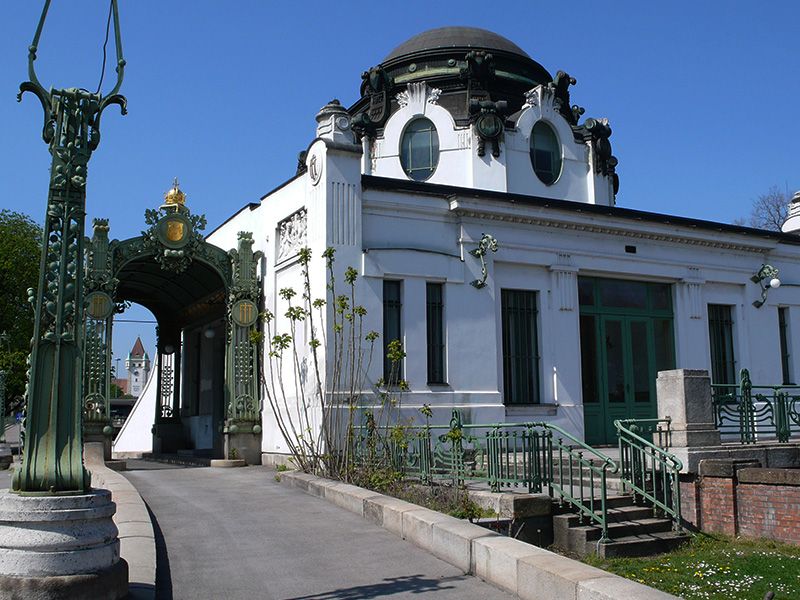
The walk includes two apartment houses designed by Otto Wagner. These are important because they show how Art Nouveau worked in ordinary urban life, not only in museums and public monuments.
Wagner’s residential buildings use decorative façades, patterned surfaces, and carefully placed details to give everyday housing a strong identity. Your guide points out the materials and symbols favored by Art Nouveau designers, then explains how those choices fit the buildings’ practical purpose.
This is where the tour becomes especially useful for architecture lovers. You learn to look above street level, around windows, across façades, and at the way ornament is arranged. Vienna has plenty of decorated buildings, but not all decoration carries the same ideas. The guide helps separate Wagner’s work from the general visual mix of the city.
A private group has an advantage here. You can stop to ask about one façade or compare Wagner’s design with nearby buildings. In a larger group, the discussion may need to keep moving.
Stadtpark and Kettenbrücke reveal the working railway
The route described for the metro section includes Stadtpark and Kettenbrücke stations. Stadtpark is considered the best-preserved of the original stations still in use, making it a strong place to see how Wagner’s design survived within a functioning transport system.
Kettenbrücke adds another view of the line and helps show how the stations related to the wider urban plan. The point is not simply to collect station photographs. You are tracing the railway as an architectural system, with repeated design ideas adapted to different locations.
You may also ride the metro during the final part of the tour. That short journey helps connect the historic design to present-day Vienna. The stations are not frozen museum pieces. They remain part of the city’s transport network, which gives the experience more life than a visit to a building used only for display.
The walking between stops is part of the experience, but it is also the main physical demand. One booking covered several miles on foot. Wear shoes you can walk in for three hours, and expect a steady pace through central Vienna.
The Hietzing imperial station changes the tone
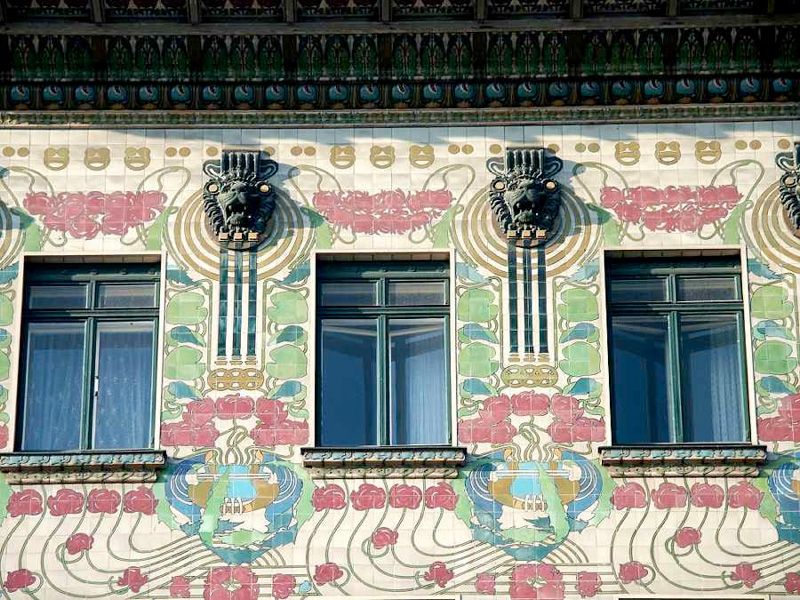
The Otto Wagner Hofpavillon Hietzing, near Schönbrunn, was built for the emperor’s use. It was not simply another public station. Its purpose was symbolic as well as practical.
Critics of the metro system could see that the emperor supported the project. The building therefore had to express imperial authority while still belonging to Wagner’s modern design world.
This is one of the tour’s most interesting comparisons. Art Nouveau is often associated with private homes, artists, cafés, and the rising middle class. At Hietzing, Wagner translated those ideas into something more formal and grand.
Look for the change in mood between the public stations and this imperial pavilion. The materials and decorative language remain connected, but the scale and message are different. The station presents modern transport as suitable for the highest level of government.
The visit also gives you a reason to think about how architecture communicates power. A station can move people, but it can also make a political statement about progress, authority, and the future of the city.
The Postsparkasse adds another Wagner chapter
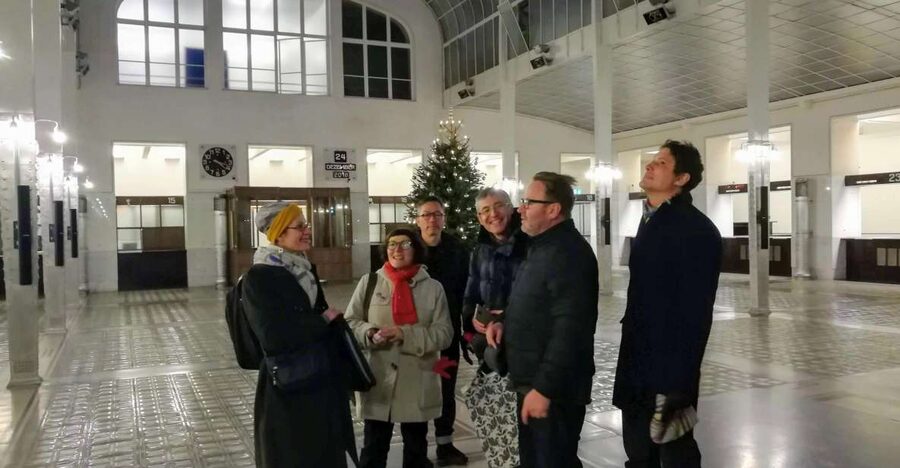
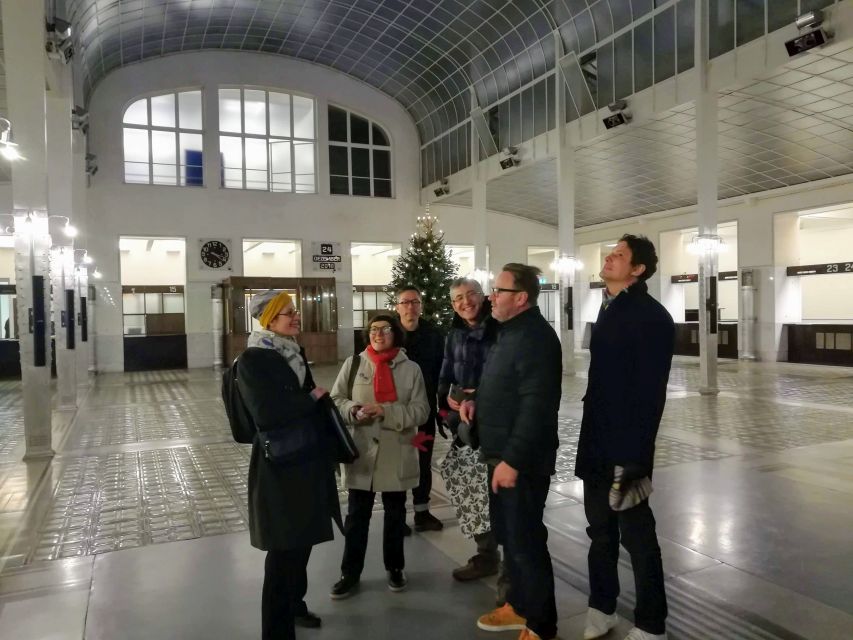
The itinerary also includes the Austrian Postal Savings Bank, or Österreichische Postsparkasse. This building is one of Wagner’s major works and helps complete the picture of his approach to modern architecture.
Here, the discussion moves beyond metro stations and residential façades. You can consider how Wagner adapted his ideas for a financial institution, where order, efficiency, and public trust mattered.
The building is useful in a tour like this because it broadens your understanding of Wagner. He was not designing one repeating look for every project. He adjusted his approach to the purpose of the building while keeping a clear interest in modern materials and functional design.
The route may vary by starting option and guide, so confirm how the Postsparkasse fits into your selected tour. The supplied itinerary also includes the Hietzing pavilion, Café Museum, the Karlsplatz pavilion, and Secession House. The detailed route description names Stadtpark and Kettenbrücke as the two remaining stations visited. Treat the exact sequence as flexible rather than expecting every stop to receive equal time.
What $176 buys you
At $176 per person, this is not a budget sightseeing walk. The price makes the most sense if you want an informed architectural tour with a private or small-group feel, rather than a broad introduction to Vienna.
You are paying for about three hours with an English-speaking historian and for a route built around a connected subject. The guide does more than point out attractive buildings. You get the political, artistic, and urban planning background behind them.
The value rises if Art Nouveau is a main reason for your Vienna visit. It also rises if you want to ask detailed questions, adjust the discussion to your interests, or avoid spending your limited time figuring out what you are looking at.
The cost is harder to justify if you only want a quick overview of the city center. Admission to the Otto Wagner Pavilion and Secession House is extra, and transport costs are not listed as included. Add those charges to your budget before booking.
A private tour can also be expensive for a solo visitor. A small group may offer a better balance, especially if you want the guide’s attention without paying the full cost of a private experience.
Who will get the most from this walk
I would choose this tour if you already like architecture, design, urban planning, or Gustav Klimt. It gives you a focused way to see Vienna beyond the major palaces.
It also suits curious first-time visitors who want a framework for understanding the city. Peter’s ability to answer questions about Austrian history, religious buildings, and Jewish sites suggests that the conversation can extend beyond Art Nouveau when the group is interested.
The tour is less suitable if you dislike walking, want a relaxed café-to-café outing, or prefer to see only the most famous central sights. The pace covers several locations, and one booking involved miles of walking.
Guide style may shape the experience. Wolfgang has led a small group in a flexible way, adapting the tour to the pair’s interests. Guissepina has been described as warm and attentive, with strong command of the subject. Those details matter because this tour depends heavily on explanation, not just on the buildings themselves.
Book at least one day when Secession House is open for the Beethoven Frieze if Klimt is important to you. Tuesday through Sunday is the useful window, with the additional admission fee in mind.
Should you book the Vienna Art Nouveau Walking Tour?
Book it if you want to understand how Vienna’s metro, apartment blocks, museums, banks, and imperial buildings fit into one modern architectural story. The Karlsplatz pavilion, Secession House, surviving stations, and Hietzing imperial stop give the tour a strong range.
I would hesitate only if the $176 price feels high for a three-hour walk or if you want a tour with little physical effort. For architecture-minded visitors, the historian guide and small-group option give the price a reasonable purpose. For casual sightseers, a less specialized city walk may offer better value.
FAQ
How long does the Vienna Art Nouveau Walking Tour last?
The activity is advertised as lasting three hours. The detailed route description refers to a 2.5-hour guided tour, so check the selected option and starting time when booking.
Where does the tour meet?
The stated meeting point is Café Museum at Operngasse 7, A-1010 Vienna. The exact starting location can depend on the option selected.
What language is the tour conducted in?
The live guide speaks English.
Is the tour private or shared?
Private and small-group options are available.
Is admission to the Otto Wagner Pavilion included?
No. Admission to the Otto Wagner Pavilion is not included in the tour price.
Is admission to Secession House included?
No. Secession House admission costs €9.50 for adults and €6 for students and seniors.
Can I see Klimt’s Beethoven Frieze?
On tours running Tuesday through Sunday, you will visit Secession House to see the Beethoven Frieze. The entrance fee is extra, and the guide helps you pay.
Can I cancel the booking?
You can cancel up to 24 hours in advance for a full refund. A reserve-now-and-pay-later option is also available.
Just added in Vienna
- World War II History Vienna Old Town Private Walking Tour★ 4.8 · 9 reviews
- Vienna: Wiener Schnitzel and Strudel Cooking Class★ 4.9 · 126 reviews
- Vienna: Wine Tasting Tour★ 4.8 · 61 reviews
- Vienna: Winery and Wine Tasting Tour with a Wine Expert★ 5.0 · 5 reviews
- Vienna: Wine Tasting E-Bike Tour★ 4.9 · 46 reviews
- Vienna: Wine Tasting at Schönbrunn Palace★ 4.3 · 71 reviews
- Vienna: Unforgettable Private City Tour★ 5.0 · 7 reviews
- Vienna Urban Art Tour: Explore a different side of Vienna!★ 3.8 · 14 reviews
Walking Tours, compared.
Guided Walking Tour of City Center Highlights
Read our review →
Guided Walking Tour of City Highlights & Hidden Gems
Read our review →
Vienna Historic Center Small Group Walking Tour
Read our review →
Browse the lists this tour appears in