
Reviewed · WALKING TOURS
Vienna: Walking Tour of the Historic Ringstrasse
Vienna’s Ringstrasse is a lesson in power, money, and urban theater. This private two-hour walk follows the boulevard created after Emperor Francis Joseph ordered the city walls demolished, taking you past palaces, museums, churches, gardens, and public buildings designed to make Vienna look like a world capital. I especially like the grand architectural mix and the way the tour connects buildings to the people behind them.
I also like the short garden breaks, which give your eyes a rest from all that stone and ornament. Volksgarten, statues, and flower displays add welcome breathing room. The main consideration is pace: two hours is enough for an excellent overview, but not enough to tour the interiors of every major building, and one piece of feedback found the content too thin.
Key points to know before you book
- The route covers Vienna’s ceremonial center, from the Liebenberg Monument to the Opera House.
- Palais Ephrusi adds a personal story about a Jewish banking family whose fate is told in The Hare with the Amber Eyes.
- You see the city’s major public buildings, including Parliament, City Hall, Burgtheater, the University, museums, and the Votive Church.
- The private group costs $353 for up to eight people, so the value improves sharply when shared by a full group.
- The tour is offered in English, German, or Polish, with a live guide and wheelchair-accessible route.
- You need a public transport ticket, and the tour does not include hotel pickup, drop-off, or tram fare.
Why the Ringstrasse matters
The Ringstrasse is not simply a pretty boulevard. It was Vienna’s great nineteenth-century building project, created after the old fortifications were pulled down about 150 years ago.
Emperor Francis Joseph wanted a new urban center filled with institutions that represented imperial ambition and modern civic life. Opera, theater, museums, a university, the Academy of Fine Arts, Parliament, and City Hall all found a place along or near the new ring road.
The project also opened the door for private wealth. Industrialists and bankers built oversized palaces along the route, hoping to display their success and gain social status or a noble title. As you walk, you’ll see how public architecture and private ambition sit side by side.
This is the central idea that makes the tour worthwhile. You are not just looking at decorated facades. You are seeing how Vienna used architecture to announce who had power, who wanted power, and who paid the human cost of creating it.
More Walking Tours in Vienna
- Vienna: Guided Walking Tour of City Center Highlights
★ 4.7 · 4,989 reviews - Vienna: Vienna Central Cemetery Guided Walking Tour
★ 4.8 · 3,307 reviews - Vienna: Guided Walking Tour of City Highlights & Hidden Gems
★ 4.9 · 2,180 reviews
Starting at the Liebenberg Monument
The meeting point is the Liebenberg Monument at Mölker Bastei 8, in Vienna’s first district. Arrive about 10 minutes early so you can find the guide without rushing.
The monument honors Johann Andreas von Liebenberg, a former mayor of Vienna. It gives the walk a useful starting point because the route begins with a figure connected to the city’s civic identity, then moves into the grand imperial and aristocratic world around the Ringstrasse.
You should think of the opening stop as a place to get your bearings, not as a long sightseeing visit. The tour is a walking overview, and the guide’s explanations are meant to help you read the buildings that follow.
The location is central, but you still need to plan your way there. Hotel pickup and drop-off are not included. A public transport ticket is also required, so have one ready before you arrive.
Palais Ephrusi and the human side of grandeur
Palais Ephrusi is one of the most memorable stops because its story gives the Ringstrasse a human face. The palace was commissioned by a wealthy Jewish banking family, the Ephrussis, whose fate is described in The Hare with the Amber Eyes.
That connection matters. The Ringstrasse can easily become a parade of enormous buildings and hard-to-remember names. Palais Ephrusi brings the social world behind the facade into focus: banking wealth, status, family ambition, and the precarious position of Jewish elites in European society.
The guide uses stories like this to point out details you might otherwise walk past. A recent positive account singled out the small stories about palace owners as one of the best parts of the walk. That is exactly the kind of detail that can turn a grand facade into a place with tension and personality.
You should not expect a visit inside the palace. The value here is in seeing the building from the street and understanding why it was built, who commissioned it, and what happened to the family connected with it.
The Votive Church and the University of Vienna
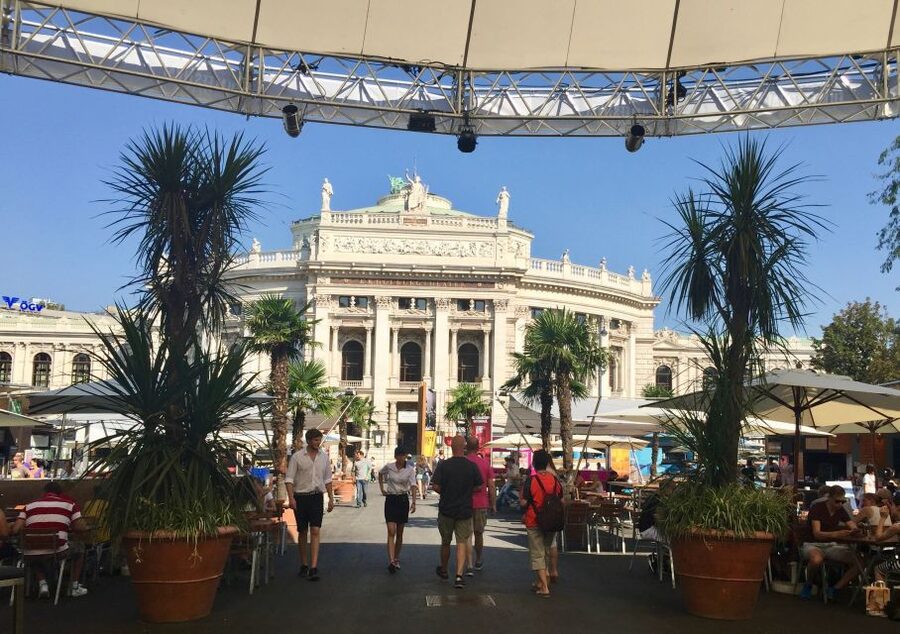
The Votive Church gives the route an early Gothic revival note. Its vertical form differs from the more secular and theatrical buildings along the boulevard, making it a useful example of how nineteenth-century Vienna looked backward to older European styles while creating a modern capital.
The nearby main building of the University of Vienna shifts the story toward education and public institutions. These buildings were not just functional workplaces. Their size and decoration presented learning as a serious part of civic life.
One of the pleasures of this walk is watching the architectural styles change from stop to stop. You may see Gothic references, classical columns, theatrical ornament, formal statues, and palatial decoration within a short distance. The guide helps explain why the styles were combined and how each building served a different public purpose.
That context is useful for anyone who likes architecture but does not want a technical lecture. You receive enough background to understand the choices without needing to identify every column or sculptural figure yourself.
More walking routes in Vienna:
- Vienna: Viennese Underworld Guided Walking Tour
★ 4.7 · 1,865 reviews - Vienna: World War II Historical Walking Tour
★ 4.8 · 1,772 reviews - Vienna Historic Center Small Group Walking Tour
★ 5.0 · 1,746 reviews - Vienna: Private Walking Tour with a Local Guide
★ 4.6 · 1,420 reviews
City Hall, Burgtheater, and the public face of Vienna
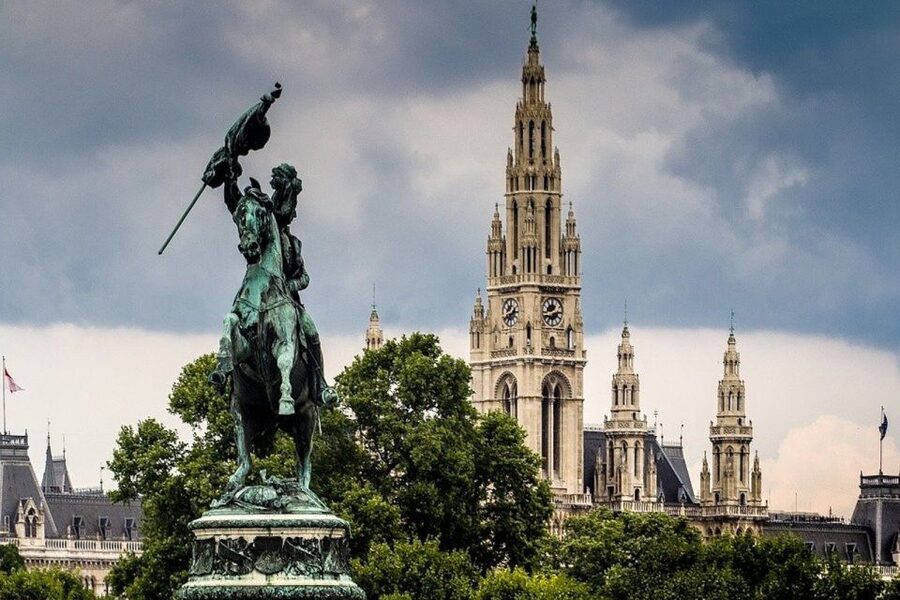
Vienna’s City Hall is one of the most imposing buildings on the route. Its scale reflects the city’s growing importance and the confidence of the period that created the Ringstrasse.
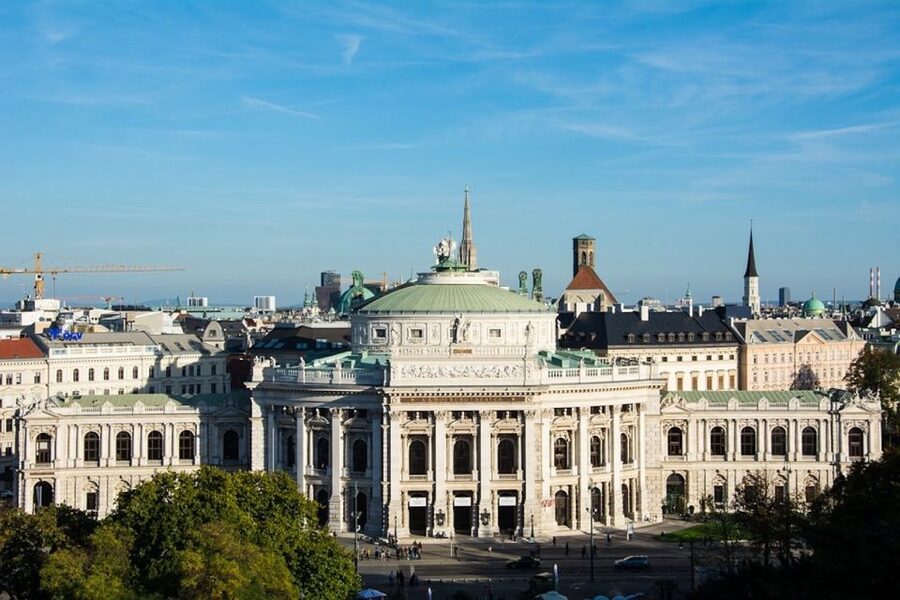
The Burgtheater brings a different kind of civic prestige. Theater was central to Vienna’s public life, and the building represents the city’s claim to cultural leadership. It is not just another ornate facade. It belongs to the same larger plan that placed the opera, museums, university, and government institutions in a powerful visual group.
The walk gives you time to compare these buildings rather than treating each one as an isolated sight. Look for the ways they use height, decoration, entrances, and statues to communicate importance.
This is also where the guide’s storytelling can make a real difference. The tour is not designed as a silent route from one photo stop to the next. You are encouraged to ask about events, people, and architectural choices. One enthusiastic account described a guide who kept the walk interesting even in rainy weather and answered questions reliably. The quality of the tour depends heavily on that live conversation.
Parliament, Pallas Athene, and imperial symbolism
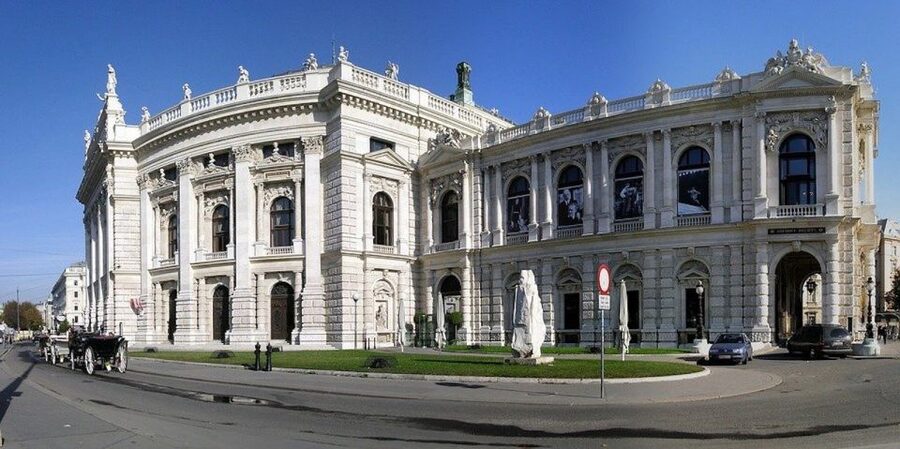
The Parliament building and the statue of Pallas Athene add political symbolism to the route. Pallas Athene, the Greek goddess associated with wisdom and strategic warfare, is an especially clear example of how public art was used to give government buildings an air of authority and classical legitimacy.
The guide can help you read these symbols instead of viewing them as decoration alone. Vienna’s nineteenth-century builders used classical references to suggest reason, order, democracy, and continuity with the ancient world. At the same time, the sheer size of the buildings reminded people who controlled the state.
That contrast is worth keeping in mind. The Ringstrasse presents a polished public image, but the construction project also drew poor workers to Vienna from across Europe. They labored under extremely difficult conditions while bankers, industrialists, and aristocratic families competed to display their wealth.
The walk does not hide that tension. Stories about the rich and poor give the boulevard more depth than a simple architecture tour. You see a city being remade, but you also learn who benefited most from the transformation.
Heldenplatz, museums, and the open spaces
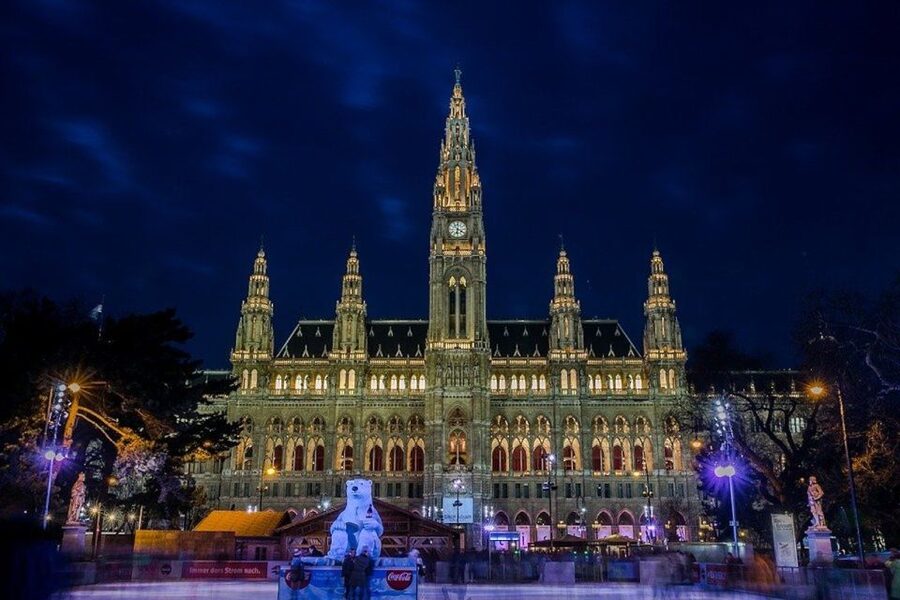
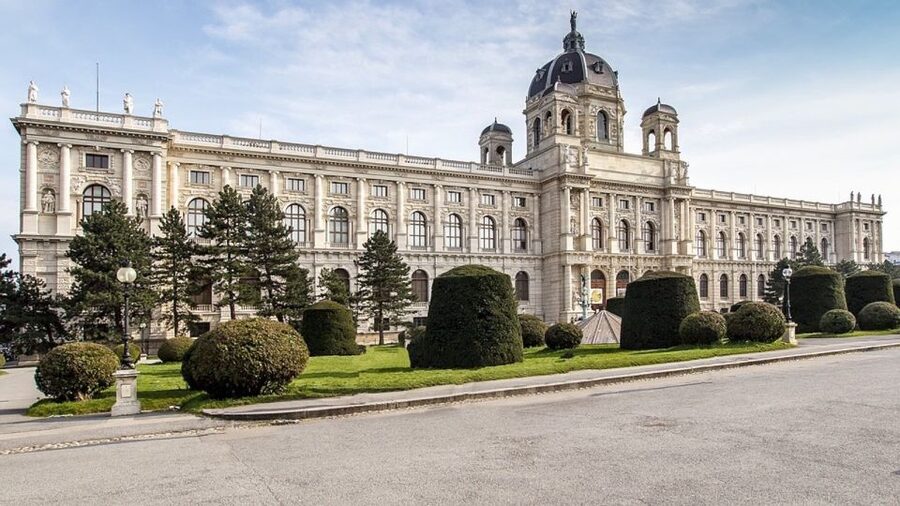
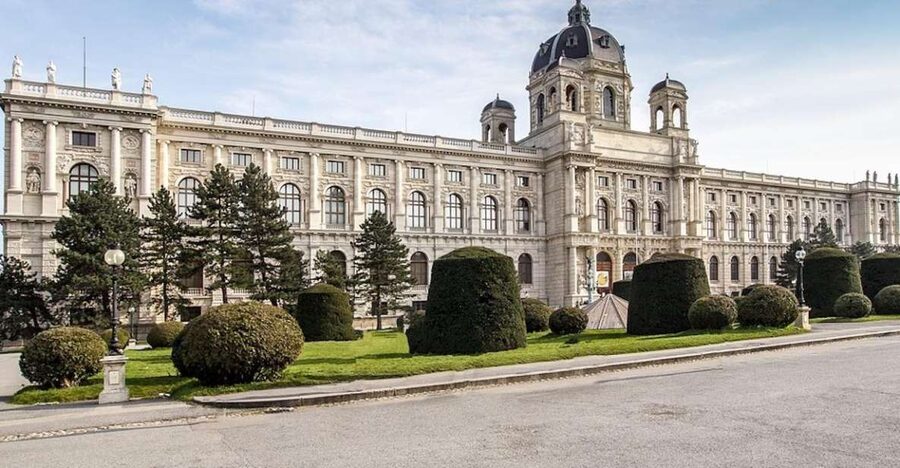
Heldenplatz and the nearby museum area broaden the route beyond the Ringstrasse’s main buildings. These open spaces let you appreciate the scale of the imperial center and the way streets, gardens, monuments, and institutions were planned together.
The museums are part of the same nineteenth-century vision of Vienna as a center of art and learning. You will admire the exteriors rather than tour the collections during this two-hour walk, so plan a separate museum visit if you want to see the interiors.
That limitation is not a flaw, but it is important when planning your day. The tour gives you a map of the cultural center and explains why the buildings matter. It does not replace a full museum visit.
Heldenplatz also helps you understand the ceremonial side of Vienna. Wide spaces and monumental buildings create room for public display, official events, and grand entrances. The city was designed to be seen, and the route makes that intention clear.
Volksgarten and the relief of greenery
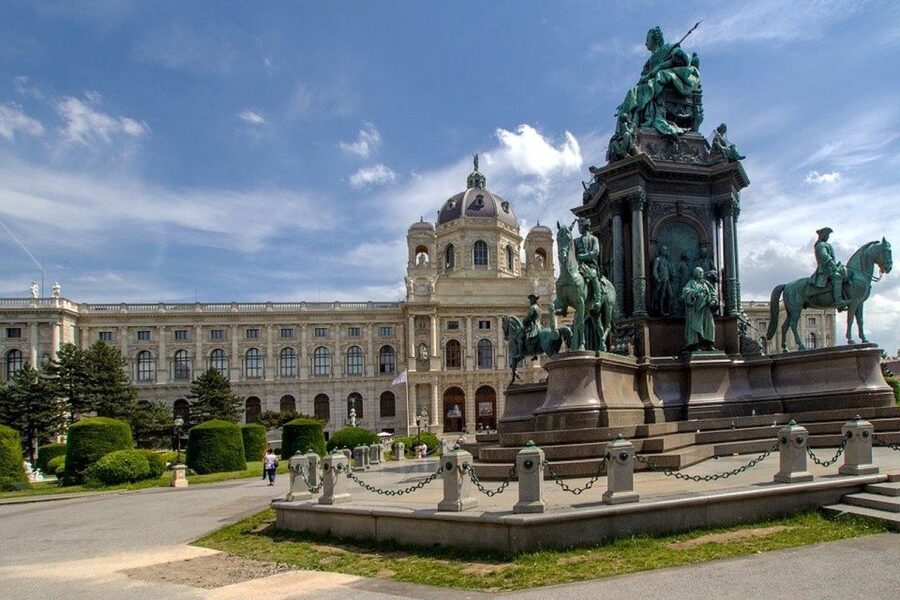
Volksgarten is one of the best places for a short pause. The garden’s flower arrangements and statues break up the long sequence of stone facades and formal public buildings.
These pauses matter more than they might seem. Two hours of looking upward at elaborate architecture can become tiring, especially on a warm day or in poor weather. A garden gives you somewhere to rest your feet, reset your attention, and take in the route at a slower pace.
The gardens also show that the Ringstrasse was planned for more than carriages and official buildings. Special paths were created for carriages, riders, and pedestrians, while trees and planted areas softened the boulevard.
You should expect a guided walk rather than a long stop in each garden. The breaks are brief, but they help keep the route comfortable and scenic.
Finishing beside the Opera House
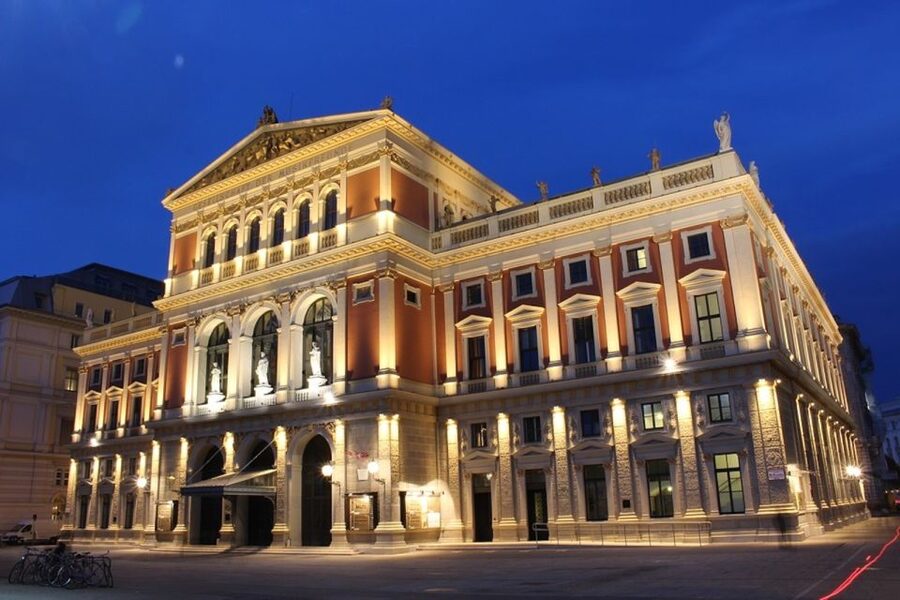
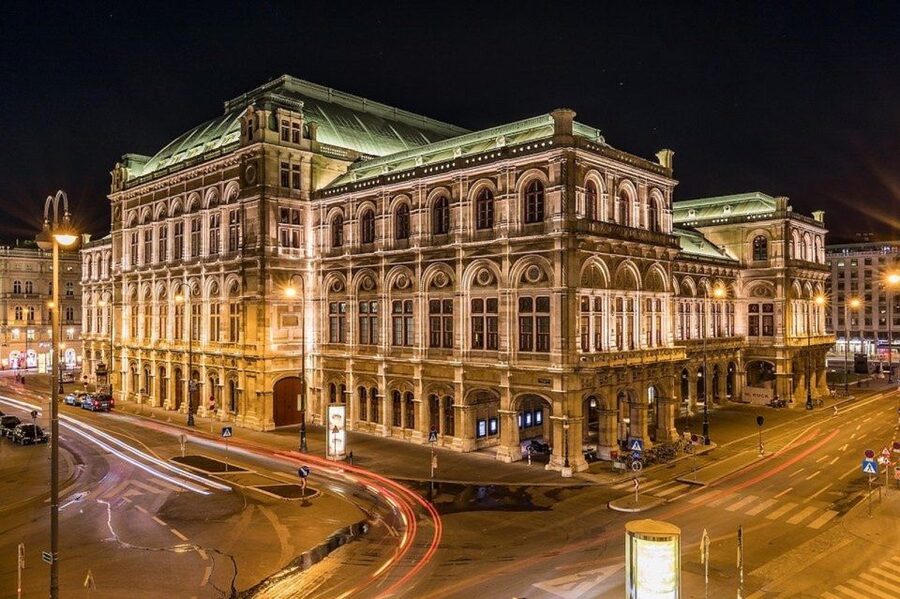
The walk ends near the Opera House, a fitting finish to Vienna’s cultural showcase. By this point, you will have seen the main pattern of the Ringstrasse: public culture, government, education, private wealth, gardens, monuments, and imperial display gathered into one grand urban project.
Ending at the Opera House is also practical. You can continue sightseeing in central Vienna, stop for a meal, visit another attraction, or use public transportation from the city center. Since the tour ends there rather than returning you to your hotel, plan your next stop before the walk begins.
The Opera House is best appreciated as part of the full route. Seen alone, it is an ornate cultural building. Seen after City Hall, Parliament, the museums, and the gardens, it becomes the final piece in Vienna’s nineteenth-century claim to artistic importance.
How the private format changes the walk
The tour costs $353 per group of up to eight people. That is a high total price for a two-hour walk, but the calculation changes if you fill the group.
For eight people, the cost works out to about $44 per person. For four people, it is about $88 each. For only two people, the price is much harder to justify unless you place a high value on a private guide and the ability to ask questions freely.
The private format is useful for families, friends, or small groups with shared interests. You can ask for more detail about architecture, Jewish history, public art, urban planning, or the social lives of palace owners. You are not tied to a large group’s questions or pace.
It also gives you a more personal setting for a route that depends on storytelling. The best parts are not simply seeing the buildings. They are learning why a building was commissioned, what its style was meant to say, and what happened to the people who built or owned it.
The drawback is that the tour has no interior admissions and no transport included. If you want a low-cost introduction to Vienna or prefer to explore at your own pace, this may feel expensive. If you are sharing the cost with a full group and want a private architectural orientation, the value is stronger.
Languages, accessibility, and practical comfort
A live guide is available in English, German, or Polish. No guide name is provided in the booking information, so you cannot select a particular person in advance.
The route is listed as wheelchair accessible, which makes it a useful option for visitors who need an accessible walking activity. Still, the route lasts two hours, so consider your own comfort with sustained walking and standing.
Wear practical shoes and check the weather before leaving. The walk includes gardens and outdoor monuments, and the guide may continue the program in rain. One especially positive account described the tour remaining interesting and entertaining despite wet weather, but you should still bring suitable clothing.
Bring your public transport ticket. Tram fare is not included, and hotel pickup and drop-off are not part of the activity.
The tour allows free cancellation up to 24 hours before the start for a full refund. You can also reserve now and pay later, which helps if your Vienna schedule is still taking shape.
Who will enjoy this Ringstrasse walk
I would choose this tour for a first visit to Vienna when I wanted the city’s major Ringstrasse buildings explained in one coherent route. It suits anyone who likes architecture but also wants stories about bankers, artists, workers, politicians, and palace owners.
It is particularly good for:
- Small groups that can share the $353 price.
- Visitors who want a private guide rather than a large walking group.
- People interested in the mix of public institutions and private palaces.
- Families or friends who enjoy asking questions during a tour.
- Visitors who want a central orientation before choosing which museums or buildings to visit later.
I would be more cautious if you want detailed interior visits, a low-cost activity, or a slow photographic walk. The tour covers a lot in two hours, and the content may depend on the guide. One lower rating described the presentation as thin, so asking questions and stating your interests early could help you get more from the time.
Should you book it?
Book this Ringstrasse walk if you want Vienna’s grand center explained as a connected story rather than a list of famous facades. The strongest elements are the architectural comparisons, the short breaks in Volksgarten and other open spaces, and the personal stories connected with Palais Ephrusi and the city’s wealthy families.
The price makes the most sense for a private group of six to eight people. Solo visitors and couples should compare it with less expensive group walks unless a private guide is especially important to them.
For a focused introduction to Vienna’s imperial boulevard, this is a useful choice. Just arrive ready to walk, bring your transport ticket, and remember that the reward is interpretation and context, not entry into every building along the route.
FAQ
How long is the Vienna Ringstrasse walking tour?
The tour lasts two hours.
Where does the tour begin?
It begins at the Liebenberg Monument, Mölker Bastei 8, 1010 Vienna. You should arrive 10 minutes before the scheduled start.
Where does the tour end?
The walk ends beside the Vienna Opera House.
Which languages are available?
The live guide can conduct the tour in English, German, or Polish.
Is the tour private and wheelchair accessible?
Yes. It is a private group tour and is listed as wheelchair accessible.
Is public transportation included?
No. You need to bring a public transport ticket. Tram fare, hotel pickup, and hotel drop-off are not included.
More Historical Tours in Vienna
- Vienna: Time Travel and Magic Vienna History Tour
★ 4.6 · 3,879 reviews - Time Travel-Magic Vienna History Tour Ticket
★ 4.5 · 1,099 reviews - Skip-the-Line Schonbrunn Palace Guided Tour and Vienna Historical City Tour
★ 3.5 · 940 reviews - Vienna Mozart Concert in Historical Costumes at the Musikverein
★ 4.5 · 888 reviews
Just added in Vienna
- World War II History Vienna Old Town Private Walking Tour★ 4.8 · 9 reviews
- Vienna: Wiener Schnitzel and Strudel Cooking Class★ 4.9 · 126 reviews
- Vienna: Wine Tasting Tour★ 4.8 · 61 reviews
- Vienna: Winery and Wine Tasting Tour with a Wine Expert★ 5.0 · 5 reviews
- Vienna: Wine Tasting E-Bike Tour★ 4.9 · 46 reviews
- Vienna: Wine Tasting at Schönbrunn Palace★ 4.3 · 71 reviews
- Vienna: Unforgettable Private City Tour★ 5.0 · 7 reviews
- Vienna Urban Art Tour: Explore a different side of Vienna!★ 3.8 · 14 reviews
Walking Tours, compared.
Guided Walking Tour of City Center Highlights
Read our review →
Guided Walking Tour of City Highlights & Hidden Gems
Read our review →
Vienna Historic Center Small Group Walking Tour
Read our review →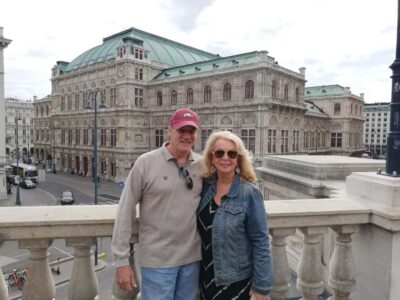
Browse the lists this tour appears in