Reviewed · TOURS IN VIENNA
Vienna Highlight Tour – yue walk
Vienna’s historic center is compact, but its story is not. In two hours, this walk takes you from the Vienna State Opera through Habsburg courtyards, royal squares, grand museums, plague monuments, and the foot of St. Stephen’s Cathedral. The route gives you a fast, useful map of central Vienna rather than burying you in one museum.
I like the six-person maximum, which makes it easier to hear Yue Mayr, ask questions, and pause for photos. I also like the way the walk links buildings to people, from Johann Strauss and Sacher Torte to Maria Theresa, Sisi, the Lipizzaner horses, and the Habsburg court. The main drawback is pace: fourteen stops in about two hours means many places receive a short explanation rather than a full visit.
Key points to know before booking
- A compact imperial route: Walk from the State Opera to St. Stephen’s Cathedral through Vienna’s main historic core.
- Yue Mayr leads in English: Her style combines historical facts, humor, personal recommendations, and time for questions.
- Small group by design: The maximum is six people, though some bookings may feel like a private tour.
- Mostly an orientation walk: Several stops are exterior viewpoints, not full museum or palace visits.
- Admission costs are separate: Entry is not included for places such as the Opera, Stallburg, the Imperial Treasury area, and the Sisi Museum.
- Useful on your first Vienna day: You finish near Stephansplatz, well placed for further sightseeing, shopping, food, and public transport.
Starting beneath the Vienna State Opera
The meeting point is Herbert-von-Karajan-Platz beside the Vienna State Opera, with a 10 a.m. start. This is a practical place to begin. The Opera sits at the edge of Vienna’s old center, and the walk quickly moves into the dense cluster of imperial buildings that defines the city.
The Opera itself is a grand Neo-Renaissance building dating from 1869. Yue also points out Palais Todesco, linked to the story of Johann Strauss and his first wife, and the Sacher Hotel, famous for Sacher Torte. These details give the opening stop some human flavor. You are not just looking at a grand facade. You are hearing about music, marriage, hotels, and the rituals of old Vienna.
The stop is listed at about five minutes, and admission is not included. That means you should think of the Opera as an exterior introduction unless you arrange a separate visit or performance.
More days out of Vienna:
- Vienna: Vivaldi’s Four Seasons Concert in Karlskirche
★ 4.7 · 14,951 reviews - Vienna: Spanish Riding School Training
★ 3.9 · 9,281 reviews - Vienna: Skip-the-cashier-desk-line Giant Ferris Wheel Ride
★ 4.5 · 7,859 reviews
Memorials that complicate Vienna’s beauty
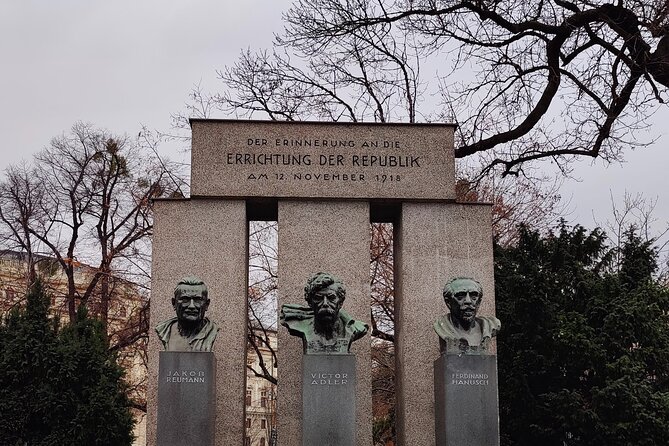
The next stop, the Memorial Against War and Fascism, adds a needed change of tone. Vienna’s center can feel polished and ceremonial, with palaces at every turn. This monument makes clear that the city’s past also includes persecution, dictatorship, war, and loss.
The short stop includes references to the Jewish statue, the Gate of Hell, and the Independence Declaration Stone. It is free to view, but the value comes from Yue’s explanation. With only five minutes scheduled, you should expect a concise reading of the site rather than a long lecture.
I appreciate this part of the route because it keeps the tour from presenting imperial Vienna as a fairy tale. The city’s grand architecture and its darker twentieth-century story belong in the same walk.
Lobkowitzplatz and Josefsplatz: art, court life, and ceremony
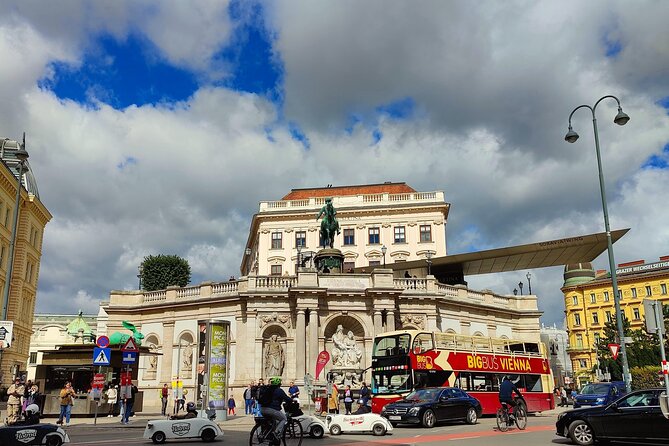
At Lobkowitzplatz, the route brings together several layers of Vienna. You see the Albertina Palace and Museum, the tower of the Augustinian Church, Lobkowitz Palace, and an Art Deco building associated with Otto Wagner. The point is comparison. Baroque palace design, church architecture, museum culture, and modern decorative style all sit within a short walk.
This is one of the places where a guide helps more than a map. Buildings that look like unrelated facades begin to form a sequence. You learn to notice changes in style and to connect them with Vienna’s changing rulers, patrons, and public life.
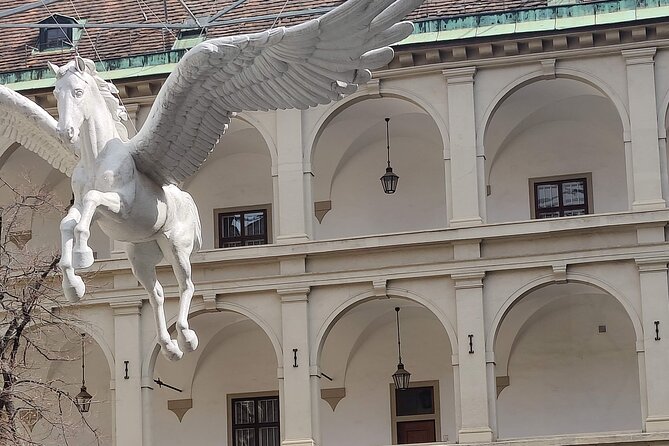
Josefsplatz receives about fifteen minutes, making it one of the fuller stops. The route includes the Augustinian Church, the statue of Joseph, the Court Library, Pallavicini Palace, and the Spanish Riding School. The church is visited inside, and the other buildings are viewed as part of the square and surrounding court complex.
This is a strong section for anyone interested in the Habsburg court. The Spanish Riding School is especially familiar to many visitors, but a quick exterior explanation is not the same as attending a performance or seeing a full training session. If Lipizzaner horses are a main reason for your visit, plan a separate ticketed experience.
Stallburg and the Hofburg’s inner court
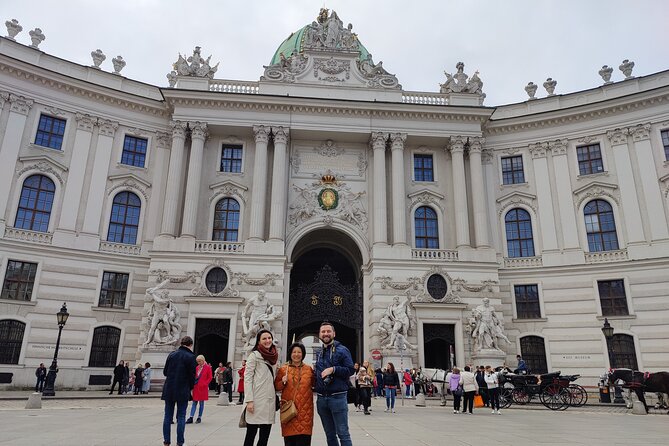
The Stallburg stop focuses on the Lipizzaner horses. Admission is not included, so the walk gives you the setting and context rather than a guaranteed horse visit. That distinction matters. The route helps you understand where the horses fit into imperial court life, but it does not replace a dedicated Spanish Riding School program.
From there, the walk reaches the Wiener Hofmusikkapelle area, with references to the Imperial Treasury Museum, Court Music Chapel, and Renaissance Gate. Again, admission is not included. These are important parts of Vienna’s court story, but you should budget extra time and money if you want to go inside.
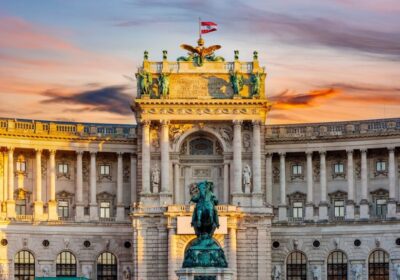
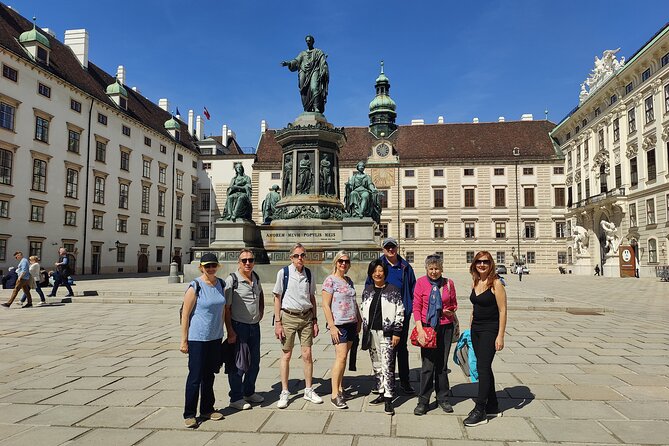
The Hofburg itself receives about ten minutes. The route covers the Inner Court, the statue of Franz II and I, the Amalien Wing, the Leopoldinischer Wing, and the Reichskanzlei Wing. This is a lot of ground in a short time, but that is the nature of this tour. Yue’s role is to explain how the palace complex fits together and why the buildings look different, not to guide you through every room.
That approach works well for a first visit. You can later return to the Hofburg with a clearer sense of what you are seeing. It also helps prevent a common Vienna problem: spending hours wandering among imperial buildings without knowing which wing or institution you have entered.
A different kind of evening in Vienna:
- Vienna: Schönbrunn Palace & Gardens Skip-the-Line Tour
★ 4.7 · 7,739 reviews - Vienna: Light of Creation Votive Church Immersive Light Show
★ 4.8 · 6,779 reviews - Vienna Spanish Riding School Guided Tour
★ 4.7 · 6,765 reviews - Vienna: Classical Concert in the World-Famous Musikverein
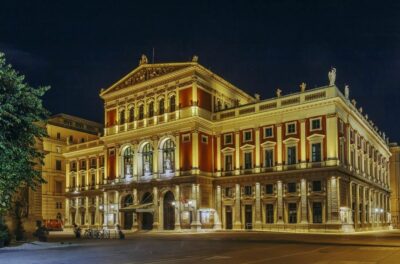
★ 4.6 · 6,673 reviews
Heldenplatz and Maria Theresa Square
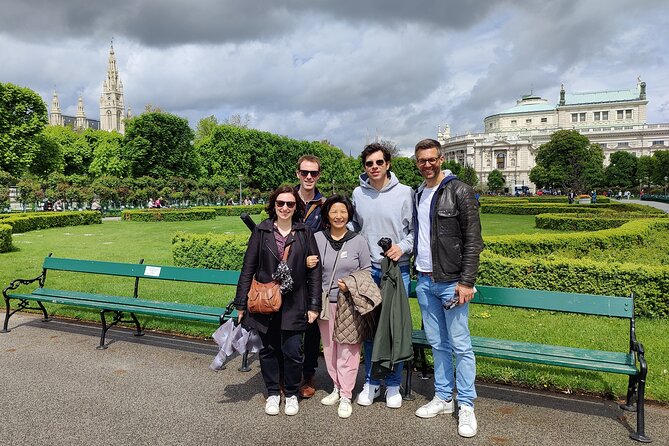
Heldenplatz is one of the most important open spaces on the route. You see statues of Karl and Prince Eugen, the National Library, OSCE offices, the Burgtor, City Hall, and Parliament from the surrounding area. The square carries a strong ceremonial feel, and its broad scale contrasts with the narrow streets farther east.
Yue’s historical framing is particularly useful here. Vienna’s public monuments are not just decoration. They show which rulers and military figures received honor, how the Habsburg state presented itself, and how later institutions occupied the old imperial center.
Maria Theresa Square follows with another ten-minute stop. Its centerpiece is the monumental statue of Maria Theresa, one of the most powerful women in Habsburg history. The square is framed by the museums of art and natural history, creating one of Vienna’s clearest examples of imperial planning.
This is a good stop for understanding Maria Theresa as a political figure rather than only a statue in a grand square. The description focuses on how she changed the course of history and shaped the monarchy. You also get a chance to compare the two museum buildings from outside. Entry is not part of the walking tour, so save them for another visit if you want galleries and collections.
Sisi, Michaelerplatz, and the old city edge
The Sisi Museum is included as a ten-minute stop, but admission is not included. Sisi, or Empress Elisabeth, became an Austrian icon after her death, and her public image often blends beauty, sadness, independence, and myth.
The value here is the personal angle. Yue explains how Sisi’s personality influenced her life and destiny, giving you a human thread through the formal Habsburg story. If you want museum displays and the full interior experience, you will need a separate ticket. The tour provides context, not a complete museum visit.
Michaelerplatz is one of the most visually rewarding parts of the walk. The route includes Michaelerkirche, the Michaeler Gate, the Looshaus, and archaeological excavations. You see church architecture, palace access, early modern remains, and a famous modern building in one compact space.
The Looshaus is particularly useful for showing that Vienna was not frozen in Baroque form. Modern design challenged the taste of the imperial center, and the contrast is easy to see here. With only five minutes scheduled, expect a pointed explanation and a chance to look around, not a long architectural tour.
Kohlmarkt, Demel, and the Graben
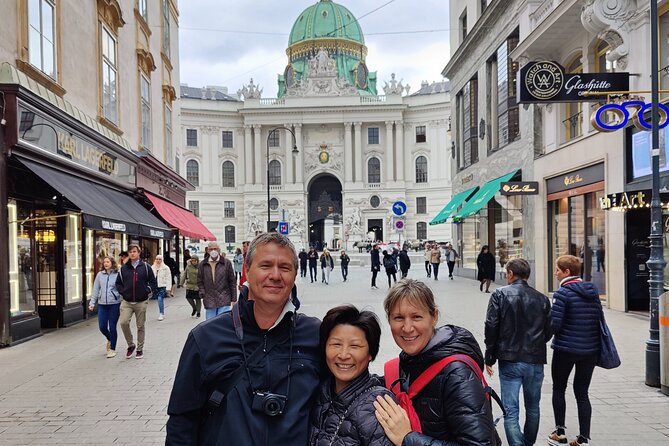
Kohlmarkt introduces Vienna’s luxury shopping streets. The route passes Cafe Demel, one of the city’s famous historic pastry shops, and continues through streets lined with polished facades and high-end storefronts.
This section helps you understand present-day central Vienna. The center is not only a museum district. It remains a place for shopping, coffee, formal windows, and old institutions adapted to modern city life. The tour does not include a meal or pastry tasting, so treat Demel as a possible later stop rather than part of the ticket.
The walk then reaches the Colonna della Peste, or Plague Column, on the Graben. The monument commemorates the end of a plague epidemic and is surrounded by notable buildings such as Grabenhof and Ankerhaus. It is an ornate, crowded monument, and a guide can help you read its religious imagery and public message.
This is also a good point to note the practical value of the route. After the tour, you can return to Kohlmarkt or Graben for food and shopping, or continue toward the cathedral without needing to retrace your steps.
Finishing at St. Stephen’s Cathedral
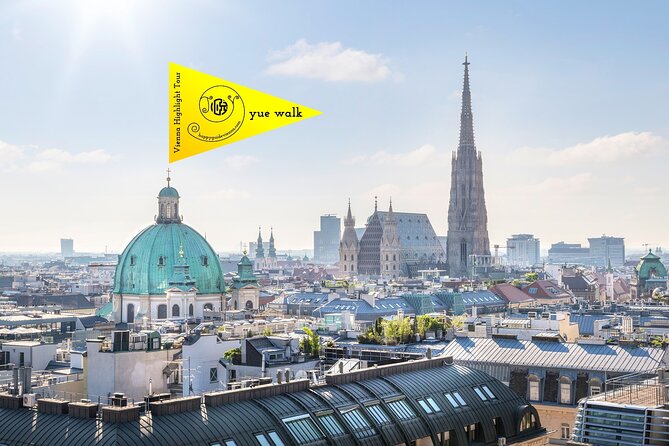
The final stop is St. Stephen’s Cathedral, whose construction stretches from the twelfth through the sixteenth centuries. Its tall tower is the highest in Vienna’s city center, making it an easy landmark as you move around town.
The stop is listed at about five minutes, with free viewing from the route. That does not mean a full cathedral tour, tower climb, or detailed interior visit. It is a strong finish because you arrive at Stephansplatz with Vienna’s central landmarks arranged in your mind.
The listed end point is near the Wien Museum Virgilkapelle and the Stephansplatz U-Bahn station, looking toward the cathedral’s highest southern tower. This is convenient for continuing your day. You can explore the cathedral, take public transport, visit nearby streets, or stop for lunch without needing another transfer.
What the $106.20 price gives you
At $106.20 per person, this is not a bargain-priced general walking tour. The value depends on group size and how much you want from a guide. A group capped at six can feel close to a private walk, and several people who booked with Yue received a very personal experience, including help with photographs and suggestions for food, shopping, and further sights.
The price includes a licensed guide, not museum tickets, meals, horse shows, or interior access to every building. That is important when comparing it with a longer tour that includes admissions. You are paying mainly for structure, explanation, and a small group.
I would consider the price easier to justify if you are short on time, visiting Vienna for the first time, or prefer asking questions as you go. It is harder to justify if you already know the center well or want deep visits inside the Hofburg, Sisi Museum, Opera, and museums.
The tour is offered in English. One unhappy booking involved a last-minute request for German while Yue was already guiding an English group. If language is important, book the advertised English format rather than assuming another language can be arranged at short notice.
Pace, group size, and practical fit
The official duration is about two hours, though one account describes a walk lasting two and a half hours. Plan your morning around roughly two hours, with a little flexibility. Fourteen stops require steady movement and short explanations.
The maximum group size is six. That is one of the clearest advantages. You can hear more easily, ask about a building that catches your eye, and avoid the detached feeling that often comes with a large city group.
Most people can participate, and the meeting point is near public transportation. Service animals are allowed. The tour requires good weather, so a poor forecast can lead to a different date or a full refund. You can cancel for a full refund up to 24 hours before the start time. Changes or cancellations inside that window are not accepted for a refund.
Yue’s guiding style
Yue’s strongest qualities are warmth, humor, clear enthusiasm, and an ability to connect small details to wider European history. The written feedback repeatedly highlights her energy, her willingness to answer questions, her eye for taking photos, and her practical suggestions for the rest of a Vienna visit.
She also appears comfortable with families. One account specifically praises her work with children, while another describes how she explained relationships among palace residents and the purpose of different rooms on a later Schönbrunn tour. That suggests a guide who can adjust detail to the group rather than simply reciting a fixed script.
You should also keep expectations fair. One person found the facts unreliable and the language difficult to follow, while most of the available feedback is strongly positive. A 4.9 rating from 58 reviews and a 98 percent recommendation rate point to a very good overall record, but no guide suits every language level or preferred style.
Who should book this walk?
I would choose this tour for a first morning in Vienna. It gives you a usable orientation, introduces the main imperial buildings, and leaves you near Stephansplatz for the rest of the day. It also suits anyone who wants history with a little humor instead of a dry architectural lecture.
It is a good fit for couples, families, and small parties that value conversation. It works especially well if you want personal food and sightseeing suggestions after the walk.
I would look elsewhere if you want extensive interior visits, a slow museum tour, or a specialist focus on music, architecture, Jewish Vienna, or the Spanish Riding School. This is a broad overview, not a deep examination of one subject.
Should you book the Vienna Highlight Tour?
Book it if you want to get your bearings fast and understand why Vienna’s central buildings belong together. Yue Mayr’s friendly, energetic approach, the six-person limit, and the route’s mix of imperial power, modern design, music, tragedy, shopping, and pastry culture give the walk real range.
Skip it if the $106.20 price feels high for a mostly exterior tour or if you already know the historic center. For a first visit with limited time, though, this is a practical way to turn Vienna’s grand facades into a connected story. Schedule it early in your stay, then use the ending at Stephansplatz as a launch point for the places you want to explore at greater length.
FAQ
How long does the Vienna Highlight Tour last?
The advertised duration is approximately two hours. One description of the experience lasted two and a half hours, so allowing a little extra time is sensible.
What time does the tour start?
The start time is 10:00 a.m.
Where does the tour meet?
The meeting point is Herbert-von-Karajan-Platz beside the Vienna State Opera at 1010 Vienna.
Where does the tour end?
The tour ends near the Wien Museum Virgilkapelle and Stephansplatz U-Bahn station, looking toward the cathedral’s highest southern tower.
What language is the tour offered in?
The tour is offered in English.
How large is the group?
The activity has a maximum of six participants.
Are admission tickets included?
The licensed guide is included, but admission is not included for several listed stops, including the Vienna State Opera, Stallburg, the Imperial Treasury area, and the Sisi Museum. The listed free stops can be viewed without an admission charge.
Is the tour suitable for most people?
The information provided says most people can participate. The tour is near public transportation, and service animals are allowed.
What happens if the weather is poor?
The experience requires good weather. If it is canceled because of poor weather, you can receive a different date or a full refund. Free cancellation is available up to 24 hours before the start time.
Just added in Vienna
- World War II History Vienna Old Town Private Walking Tour★ 4.8 · 9 reviews
- Vienna: Wiener Schnitzel and Strudel Cooking Class★ 4.9 · 126 reviews
- Vienna: Wine Tasting Tour★ 4.8 · 61 reviews
- Vienna: Winery and Wine Tasting Tour with a Wine Expert★ 5.0 · 5 reviews
- Vienna: Wine Tasting E-Bike Tour★ 4.9 · 46 reviews
- Vienna: Wine Tasting at Schönbrunn Palace★ 4.3 · 71 reviews
- Vienna: Unforgettable Private City Tour★ 5.0 · 7 reviews
- Vienna Urban Art Tour: Explore a different side of Vienna!★ 3.8 · 14 reviews
Tours in Vienna, compared.
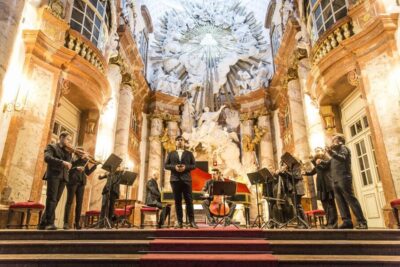
Vivaldi’s Four Seasons Concert in Karlskirche
Read our review →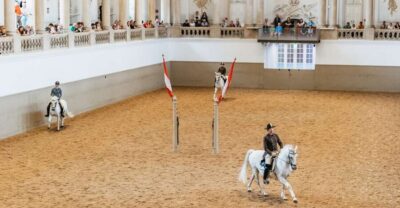
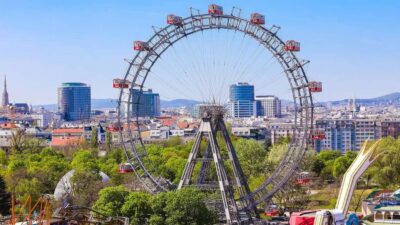
Skip-the-cashier-desk-line Giant Ferris Wheel Ride
Read our review →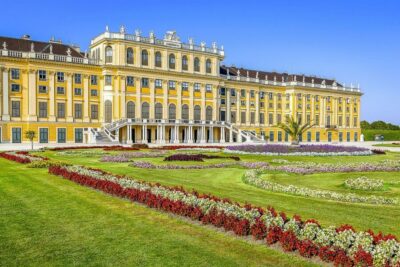
Schönbrunn Palace & Gardens Skip-the-Line Tour
Read our review →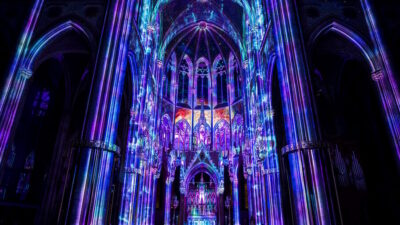
Light of Creation Votive Church Immersive Light Show
Read our review →
Classical Concert in the World-Famous Musikverein
Read our review →