
Reviewed · CYCLING TOURS
Vienna Highlights Small-Group Bike Tour
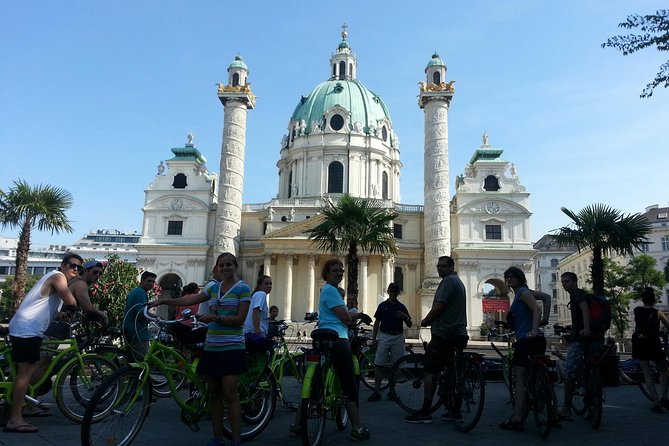
Vienna reveals itself quickly from a bicycle. In about three hours, you can move from the Opera House and Hofburg to Heroes’ Square, Prater, Hundertwasserhaus, and the Danube Canal without spending the day on foot. The route uses bike paths and quieter streets where possible, giving you a broad first look at the imperial center and its outer districts.
I like the range of sights and the easy, mostly flat pace. I also like that guides such as Robert, Marco, Karl, Ava, Jan, Horst, and Clemens have been praised for bringing local stories, humor, and Austrian history into the ride. The main consideration is group size: with up to 15 people, stoplights and busy crossings can split the group, and a three-hour ride may feel long if you are not used to cycling.
Key points to know before booking
- About 6 miles of riding: The route covers far more ground than a walking tour, without requiring a full day on a bicycle.
- A mostly flat Vienna route: The city is comfortable for casual cycling, though cobblestones and road crossings still require care.
- The imperial Ringstrasse plus Prater and the Danube: You see major architecture and several districts that are easy to miss on foot.
- Up to 15 people: This is smaller than a large bus outing, but it may not feel intimate at every crossing or stop.
- A strong orientation tour: Use it early in your stay, then return to the places that deserve more time.
- All-weather operation: Dress for the forecast, since rain or poor weather does not automatically cancel the ride.
Why a bicycle works so well in Vienna
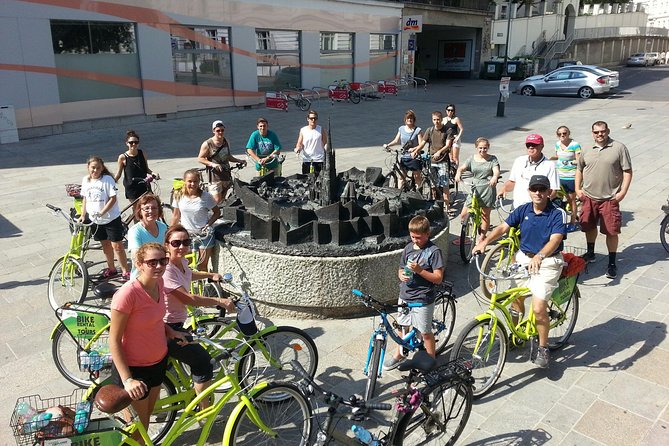
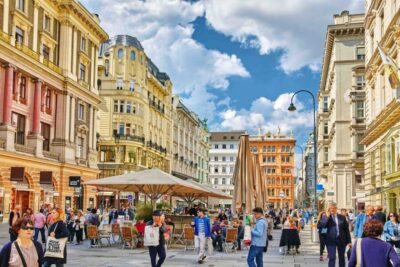
Vienna’s grand center can feel compact on a map, but its main sights spread along the Ringstrasse and beyond. Walking between the Opera House, Rathaus, Hofburg, Prater, and Hundertwasserhaus takes time, especially when you want to stop for photographs or listen to explanations along the way.
A bicycle gives you a useful middle ground. You get fresh air and a closer view than you would from a bus, yet you can cover about 10 kilometers in a single outing. The pace is not designed for athletic riding. It is a sightseeing ride, with stops and pauses built into the route.
You begin at Vienna Explorer on Franz-Josefs-Kai 45 in the first district. After meeting the English-speaking guide, you receive a short safety overview and get set up with a bicycle. Bikes are included, and helmets have been provided on the tours described by participants.
The route returns to the same meeting point. Hotel pickup, food, and drinks are not included, so plan to arrive ready to ride and carry anything you need during the three hours.
More to book in Vienna
- Classic Vienna: 3-Hour Guided Bike Tour
★ 4.7 · 1,846 reviews - Wachau Valley Wine Tasting Bike Tour from Vienna
★ 5.0 · 829 reviews - Vienna City Bike Tour
★ 4.5 · 599 reviews
The Ringstrasse and Vienna’s imperial face
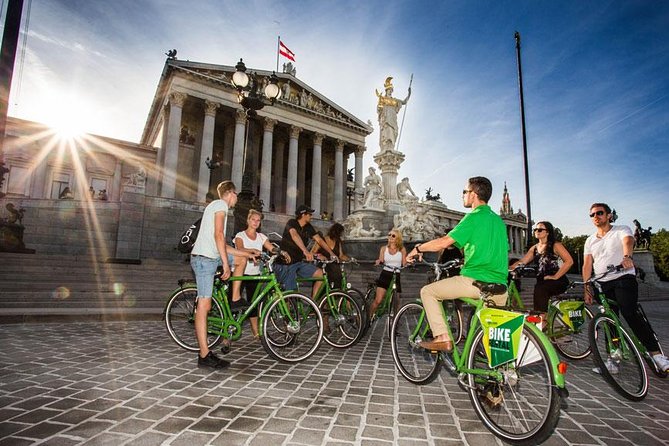
The first major section follows the Ringstrasse, Vienna’s grand boulevard around the old center. This is the best part of the ride for understanding how the Habsburg capital presented itself through monumental public buildings.
You pass Vienna City Hall, the University of Vienna, the Houses of Parliament, the Hofburg Palace, and other grand façades. The guide’s commentary helps turn a parade of impressive buildings into a readable story about power, government, education, and court life.
The Hofburg was once home to Marie Antoinette, and the area around it carries the formal mood of the former imperial court. You also pass the Opera House, a major piece of Vienna’s musical identity, with time to stop and admire its architecture.
The Opera House stop is listed at about 20 minutes, which gives you more than a quick glance while still keeping the ride moving. Do not expect an interior visit. The value here is the exterior view, the location, and the guide’s explanation of how the building fits into Vienna’s cultural life.
One important point: this is not a tour through every narrow lane of the pedestrian center. One participant felt the central area was missing, and the operator explains that some parts are not suitable for a group bicycle ride. You will see the main ring and nearby sights, but you should set aside separate time for the most crowded lanes and smaller streets of the old center.
Heroes’ Square and Vienna’s difficult past
Heroes’ Square, or Heldenplatz, provides one of the tour’s most serious stops. Its broad ceremonial setting is tied to the imperial past, but it also carries the memory of Adolf Hitler’s 1938 annexation speech.
That contrast makes the stop worthwhile. Vienna is not presented only as palaces, music, and elegant façades. You also get a reminder that these spaces have been used for political power and propaganda. The guide’s historical context matters here, since the location can look purely grand if you do not know what happened there.
The stop is primarily for looking, listening, and taking photographs. If you prefer tours that focus only on pleasant sights, this moment may feel heavier. I think it adds needed balance to the imperial material along the Ringstrasse.
Hundertwasserhaus and a different side of Vienna
The ride then shifts toward the Landstrasse district and Hundertwasserhaus. This colorful apartment building is associated with Friedensreich Hundertwasser, whose design rejects the straight lines and strict order seen in much of Vienna’s imperial architecture.
It is a sharp change of mood after the formal Ringstrasse. Instead of pale stone and grand symmetry, you see unusual shapes, bright colors, and a playful surface. The stop lasts about 20 minutes, enough for photographs and a short explanation without turning the outing into a long architecture lecture.
You should expect to view the building from outside rather than enter private apartments. That is still enough to understand why it has become one of Vienna’s most recognizable modern sights.
This section also shows why the bicycle route is useful. You move between districts that do not feel like part of the same postcard version of Vienna. The ride connects the courtly center with a more individual, modern style of city design.
A different kind of evening in Vienna:
- Vienna: Vivaldi’s Four Seasons Concert in Karlskirche
★ 4.7 · 14,951 reviews - Vienna: Spanish Riding School Training
★ 3.9 · 9,281 reviews - Vienna: Skip-the-cashier-desk-line Giant Ferris Wheel Ride
★ 4.5 · 7,859 reviews - Vienna: Schönbrunn Palace & Gardens Skip-the-Line Tour
★ 4.7 · 7,739 reviews
Prater and the giant Ferris wheel
Prater is one of the tour’s most enjoyable changes of pace. This large amusement park is home to the Riesenrad, Vienna’s famous giant Ferris wheel, which has become a familiar part of the city skyline.
You stop near the wheel for photographs. The tour does not include a ride on it, so anyone wanting the full Ferris wheel experience will need to return independently. That is not a flaw in a three-hour city orientation, but it helps to know what the stop includes.
Prater gives the route some breathing room after the formal buildings of the Ringstrasse. It also helps you see a part of Vienna that many people skip when they stay close to the Hofburg and museums. Several guides have been praised for taking people to Prater and the Danube, places they might not reach on a first walking circuit.
The route through this area is also a good test of your comfort on a bicycle. You are still sightseeing, not racing, but you should be able to start, stop, and follow the group without hesitation.
Along the Danube Canal and the city’s street art
After Prater, the ride follows sections of the Danube and the Danube Canal. The water gives you an open view and a welcome change from dense streets and heavy architecture.
The canal section also brings street art into the tour. This is a less ceremonial side of Vienna, and it adds texture to an outing otherwise shaped by palaces, public buildings, and formal squares.
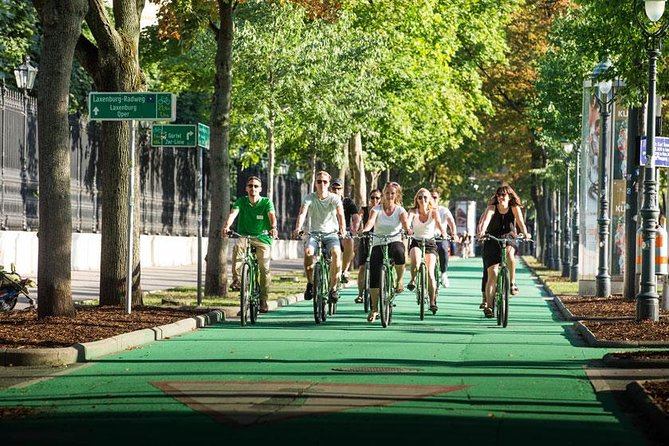
The route is described as using bike paths and streets with little traffic where possible. That makes cycling easier than renting a bicycle and trying to work out the city on your own, especially if you are unfamiliar with local crossings and connections.
Still, do not confuse a quieter route with a traffic-free route. One group found that green lights separated riders, while another had trouble keeping everyone together at crossings. A good guide waits for the group, but you should stay alert, watch the rider ahead, and avoid dropping back for photographs unless the guide has stopped.
How hard is the three-hour ride?
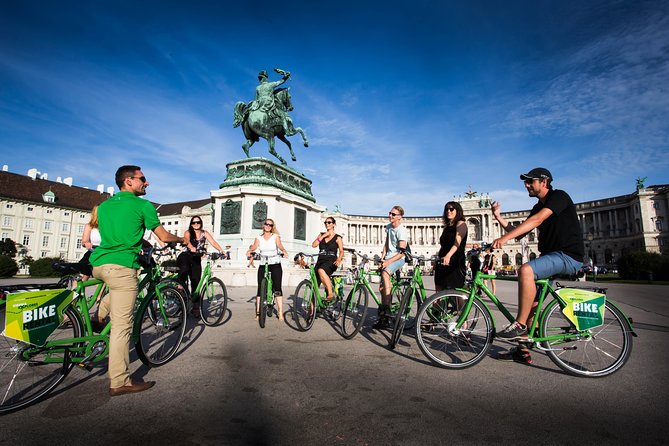
The tour covers about 6 miles, and Vienna is mostly flat. People who cycle occasionally should find the physical effort manageable, especially because the route includes stops and explanations.
You do need a moderate level of fitness. The ride may feel tiring toward the end if you rarely cycle, and one person found the full three hours longer than expected. That is a useful warning for anyone who sees the low mileage and assumes the outing requires no effort.
Cobbled streets are another factor. They can be uncomfortable, even at a slow pace, and they make the ride less smooth than a path beside the canal. Wear practical clothing and shoes, and bring layers if the weather is changeable.
The pace depends partly on the group. Guides such as Karl and Horst have been praised for keeping an easy speed and waiting for slower riders. You should still tell the guide at the start if you are nervous, inexperienced, or concerned about the distance.
The guide can make or break the experience
The best part of this tour is not simply the route. It is the guide’s ability to explain what you are seeing while keeping a bicycle group together.
Robert is repeatedly singled out for clear explanations, humor, and a strong interest in Austrian history. Marco is described as funny and able to bring the past to life. Ava is noted for her excellent English and enthusiasm for her home city, while Jan, Clemens, Karl, and Horst are also praised for combining information with a relaxed ride.
That said, the quality of a live tour can vary by guide and by group. One person found the commentary less engaging, and another wanted more stories and historically important locations. The route gives you plenty to look at, but if you want a tightly scripted history lesson at every stop, this may feel light in places.
I would book this near the start of your Vienna stay. It gives you a working map of the city, helps you decide which sights deserve a longer visit, and shows you where Prater and the canal fit in relation to the central district.
Is $56.86 a fair price?
At $56.86 per person, the tour is not the cheapest way to see Vienna, but the price is reasonable if you value a guide, a maintained bicycle, and a route that links central sights with farther stops.
You are paying for three things: equipment, local direction, and time saved. Renting a bike yourself might cost less, but you would need to plan the route, navigate crossings, decide where to stop, and supply your own context. A walking tour may offer more detail at individual buildings, but it will not cover this much ground as easily.
The value is strongest for a first visit, a short stay, or anyone who wants a broad view before choosing which museums and palaces to explore in depth. It is weaker for experienced cyclists who already know Vienna or for people who prefer a private, quiet tour with long stops.
With a maximum of 15 people, the advertised small-group format needs a realistic reading. It is limited compared with a coach outing, but it can still feel fairly large on a bicycle, especially at traffic lights. If having a very intimate group matters most, ask about private options before booking.
Weather, cancellation, and practical planning
The tour operates in all weather conditions, so check the forecast and dress accordingly. Rain, wind, or cold can change a pleasant ride into a tiring one, and poor weather does not automatically mean the outing will be canceled.
You can cancel for a full refund up to 24 hours before the local start time. Changes or cancellations inside that 24-hour window are not accepted for a refund. If the minimum number of people is not reached and the provider cancels, you are offered another date or experience, or a full refund.
The experience is near public transportation, which makes reaching the central meeting point fairly simple. The ride ends where it starts, so you can plan a museum visit, meal, or walk afterward without arranging a separate return transfer.
Who should book this Vienna bike tour?
I would choose this tour if you want to see the city’s main architectural sights quickly, are comfortable riding in an urban setting, and like hearing history from a person who can answer questions along the way.
It suits couples, solo visitors, and families with older children who enjoy cycling. Younger children may become bored if they are not interested in history or riding, and the three-hour length can test patience.
I would think twice if you dislike cobblestones, feel uneasy in a group near traffic, or want a slow look inside major monuments. This is an outdoor orientation ride, not a palace tour or a detailed visit to the historic center.
Should you book it?
Yes, if your goal is to get your bearings fast and cover Vienna’s major sights without spending the day walking. The combination of the Ringstrasse, Heroes’ Square, Hundertwasserhaus, Prater, and the Danube gives you a useful cross-section of the city, from imperial grandeur to modern design and open canal paths.
Book it early in your stay, wear comfortable clothes, and accept that the group may feel larger than the phrase small-group suggests. If the weather looks poor or you want a private pace, consider another date or a private bicycle tour instead.
FAQ
How long is the Vienna Highlights Small-Group Bike Tour?
The tour lasts approximately three hours. The stated cycling distance is about 6 miles, or 10 kilometers.
What sights does the bike tour visit?
The route includes the Ringstrasse, Vienna Opera House, City Hall, the Houses of Parliament, Vienna University, Hofburg Palace, Heroes’ Square, Hundertwasserhaus, Prater, the Riesenrad Ferris wheel, and sections of the Danube Canal.
Where does the tour start and end?
It starts at Vienna Explorer, Franz-Josefs-Kai 45, 1010 Vienna. The activity ends back at the same meeting point.
Is the tour difficult?
The route is mostly flat, but you need a moderate level of physical fitness and should be comfortable riding a bicycle for about three hours. Cobblestones, road crossings, and weather can add to the effort.
What is included in the price?
The price includes use of a bicycle and a professional guide. Food, drinks, hotel pickup, and hotel drop-off are not included.
What happens if I need to cancel?
You can cancel up to 24 hours before the local start time for a full refund. Cancellations or changes made less than 24 hours before the start are not refunded.
Just added in Vienna
- 3 hour private tour in Vienna by private car★ 4.4 · 6 reviews
- Private Christmas Markets Walking Tour Vienna★ 5.0 · 31 reviews
- Christmas Markets & Shopping in Vienna★ 5.0 · 17 reviews
- Christmas Market Vienna Tour★ 4.0 · 53 reviews
- Vienna: Christmas Markets Tour★ 4.3 · 99 reviews
- Private Hidden Vienna Walk — Stories Behind Quiet Corners★ 5.0 · 137 reviews
- Konzerte der Wiener Royal Orchester★ 4.5 · 143 reviews
- Mozarthaus Vienna Admission Ticket★ 3.0 · 139 reviews
Cycling Tours, compared.
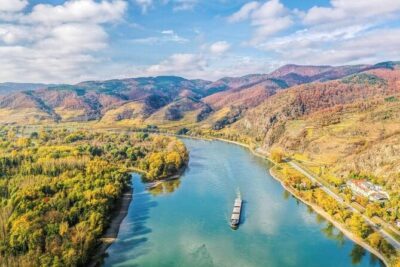
Wachau Valley Wine Tasting Bike Tour from Vienna
Read our review →
Grape Grazing: Wachau Valley Winery Biking Tour
Read our review →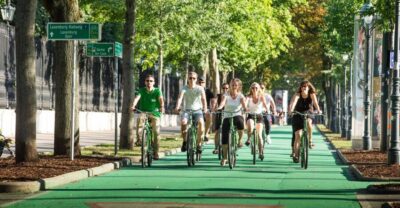
Vienna by Bike 3-Hour All-In-One City Bike Tour in English
Read our review →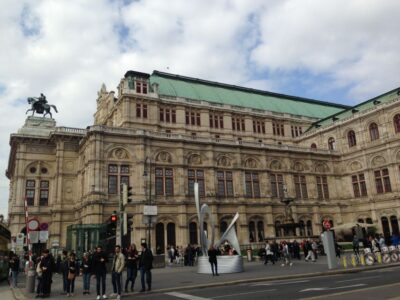
Guided e-bike tour of the alpine pastures in the Salzkammergut
Read our review →Browse the lists this tour appears in