
Reviewed · WALKING TOURS
Historical Hitler Walking Tour of Vienna
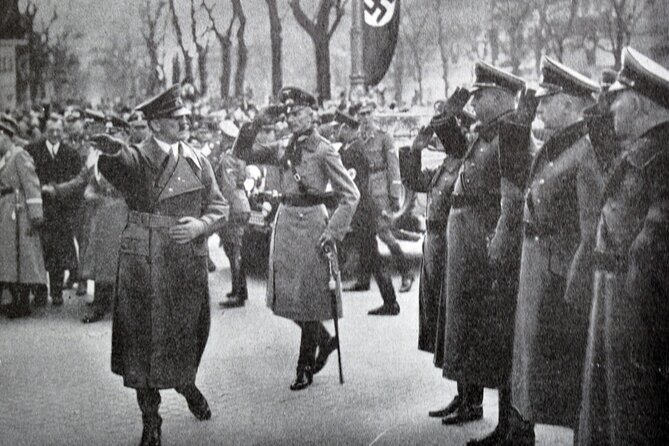
Vienna’s grand center carries some very dark memories, and this tour brings them into view. You’ll connect Hitler’s early years in Vienna with the city’s arts world, the 1938 Anschluss, wartime destruction, the Holocaust, and Austria’s uneasy memory of its Nazi past. The route includes famous squares and quieter memorials that you could easily pass without understanding.
I like the strong local focus and the way the tour links major events to real streets and buildings. I also like the guides’ use of maps and photographs, especially when Stephan brings an iPad to show how places looked before and during the war. The main drawback is simple: 2.5 hours outdoors can feel long in cold, wind, or rain, and the title may suggest a tour focused more narrowly on Hitler himself than the experience actually is.
Key points to know before you book
- Hitler’s Vienna years: Learn about his early life, failed application to the Academy of Fine Arts, and the social setting that shaped his views.
- A history walk, not a war museum visit: The route covers art, politics, antisemitism, the Anschluss, the Holocaust, and wartime damage.
- Seven main stops: See the State Opera, Heldenplatz, Judenplatz, Morzinplatz, and the concealed Stadttempel Synagogue, along with other sites.
- A serious but engaging guide: Dieter, Wolfgang, Stephan, Charles, Siggy, and other English-speaking guides have been praised for clear storytelling and careful handling of painful subjects.
- Easy central finish: The tour ends near Schwedenplatz, close to U-Bahn lines 1 and 4 and many places to eat.
- Plan for the weather: Wear comfortable shoes and bring water, sun protection, and rain gear.
Why Hitler’s Vienna story needs more than one famous square
This is not a tour built around a single dramatic speech or a collection of Nazi relics. It uses Vienna as the setting for a longer story: Hitler’s formative years, the city’s cultural life, the growth of antisemitism, the Nazi takeover of Austria, and the murder of Austrian Jews.
That broader approach is important. Hitler lived in Vienna before the First World War, long before he became Germany’s dictator. The tour examines the city he encountered as a young man and considers how its politics, social tensions, and ethnic prejudice formed part of the world around him.
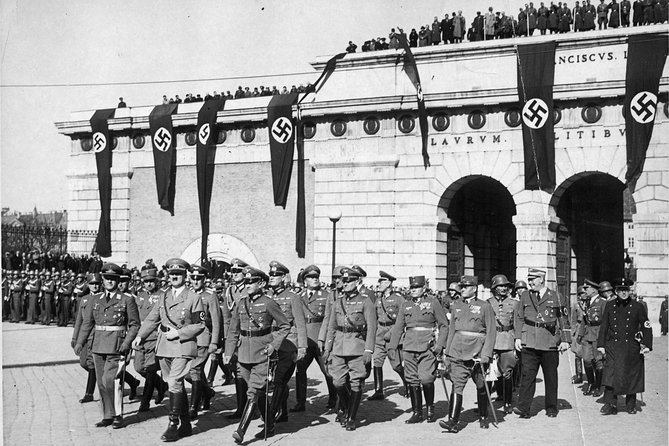
You’ll also spend time on Austria’s own role. The story is not presented as if Germany alone carried responsibility for what happened after 1938. At Heldenplatz, the focus turns to the public response to Hitler’s arrival and the trauma that event left in Austria’s memory.
The subject is grim, but the best guides keep it clear and human. Dieter is praised for a calm, thoughtful approach, while Wolfgang is known for a strong command of the subject and a philosophical angle. Stephan adds maps and old photographs on an iPad, which can help you picture changes that are difficult to see from the present-day streets.
More Walking Tours in Vienna
- Vienna: Guided Walking Tour of City Center Highlights
★ 4.7 · 4,989 reviews - Vienna: Vienna Central Cemetery Guided Walking Tour
★ 4.8 · 3,307 reviews - Vienna: Guided Walking Tour of City Highlights & Hidden Gems
★ 4.9 · 2,180 reviews
Starting at the State Opera and Albertinaplatz
Meet outside the Albertina Museum at Albertinaplatz for the 2:30 pm start. The first major stop is the Vienna State Opera, a useful place to begin because it shows how Nazi rule affected not only government and military life, but also music, theater, and the arts.
The opera house opened in 1869 with Mozart’s Don Giovanni, in the presence of Emperor Franz Joseph and Empress Elisabeth. Under National Socialism, its world changed sharply. Artists and staff were forced out, persecuted, or murdered, and some works were banned from performance.
The guide explains Hitler’s visits to the opera in 1938 and places those visits within the larger takeover of Austria. You’ll likely spend about 10 minutes here, though the guide’s storytelling continues as the group moves on.
I like this opening because it avoids treating the past as a separate museum subject. The building still functions as a major cultural landmark, yet its history includes exclusion, fear, and loss. You get a quick look at Vienna’s beauty and its vulnerability at the same time.
The war memorial at Albertinaplatz
The Memorial Against War and Fascism sits near the starting point and offers a sharp change in tone. Created by Austrian sculptor Alfred Hrdlicka, the memorial has been here since 1988 and is dedicated to victims of war and fascism.
The memorial is not polished or comfortable. That is part of its purpose. It asks Austria to confront the darkest years of its past rather than hide behind imperial grandeur or the idea that the country was only a victim of Nazi Germany.
The tour also discusses the physical destruction caused by the war. More than 100,000 bombs hit Vienna, and the damage affected homes, public buildings, and the shape of the city. You won’t be walking through a preserved battlefield, but the guide helps you read the modern center with a sharper eye.
Give yourself room to listen here. This is not just a photo stop, and the subject can be heavy. The tour handles several painful themes in quick succession, so you may appreciate a few quiet minutes before moving on.
The art academy and Hitler’s early life
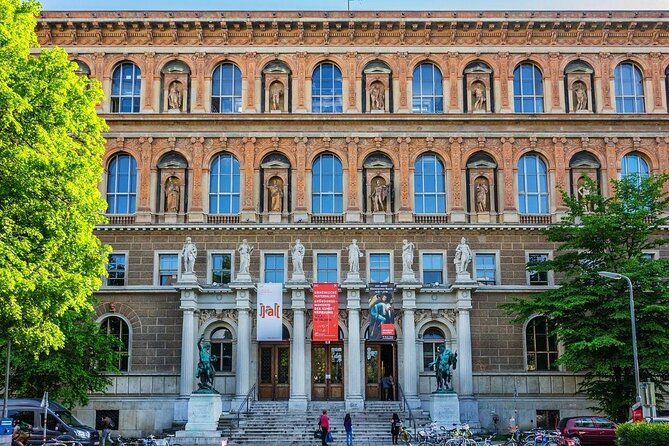
At the Academy of Fine Arts, you’ll hear about Hitler’s unsuccessful attempt to gain admission. This is one of the tour’s most familiar details, but the useful part is the context around it.
The guide looks at Hitler’s early life in Vienna rather than presenting the academy rejection as a single cause of his later crimes. That distinction matters. The tour considers the wider political and social climate, including the antisemitism that shaped public debate in the city at the time.
This stop is brief, about 10 minutes, but it helps explain why the tour is not simply a Second World War walk. It reaches back into the early 20th century and asks how ideas develop inside a society before they become state policy.
If you arrive expecting a long visit inside the art academy, adjust your plans. The experience is a street-level history walk, and the building is mainly a setting for the guide’s explanation. The value comes from the story, not an interior tour.
More walking routes in Vienna:
- Vienna: Viennese Underworld Guided Walking Tour
★ 4.7 · 1,865 reviews - Vienna: World War II Historical Walking Tour
★ 4.8 · 1,772 reviews - Vienna Historic Center Small Group Walking Tour
★ 5.0 · 1,746 reviews - Vienna: Private Walking Tour with a Local Guide
★ 4.6 · 1,420 reviews
Heldenplatz and the March 15, 1938 speech
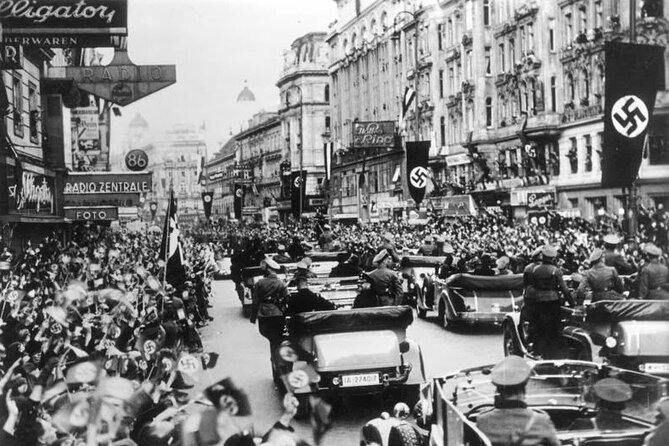
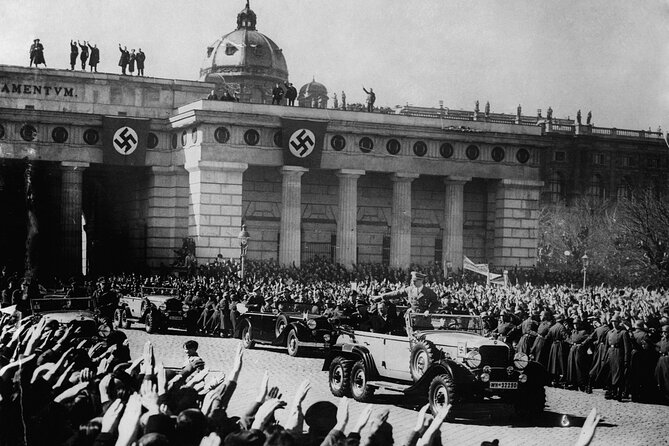
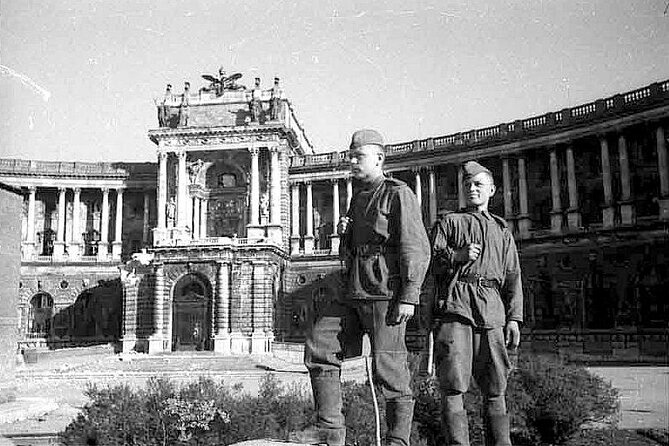
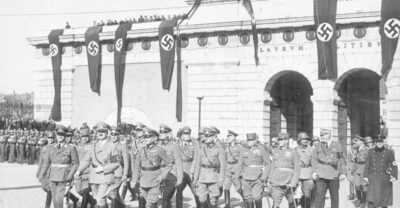
Heldenplatz is the emotional center of the route. From the balcony of the Neue Hofburg, Hitler addressed a huge crowd on March 15, 1938, after the Anschluss, when Nazi Germany annexed Austria.
The speech and the public response became symbols of Austria’s complicated memory of that day. For the Second Republic, Heldenplatz came to represent both the Nazi seizure of power and the broad support that accompanied it.
You’ll hear how the square’s imperial setting was used for political theater. The surrounding architecture gives the stop real force: this was not an obscure back street, but one of Vienna’s most prominent public spaces.
A good guide will not reduce the scene to a simple story of passive Austrians or unanimous enthusiasm. The tour’s value is in showing how power, propaganda, public emotion, and political pressure worked together. It also explains why Heldenplatz remains such a loaded place in modern Austria.
Judenplatz and the Austrian Jewish victims of the Holocaust
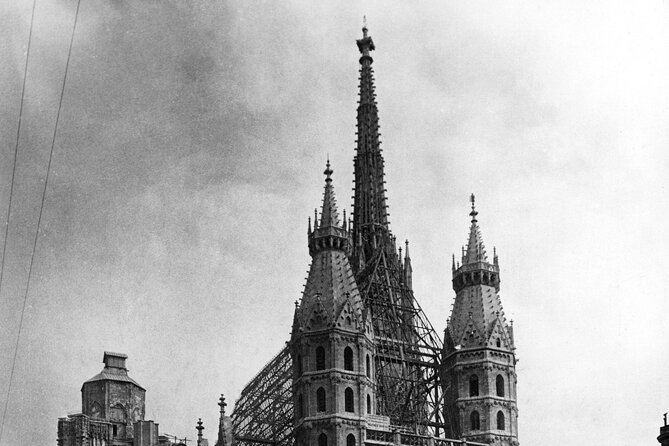
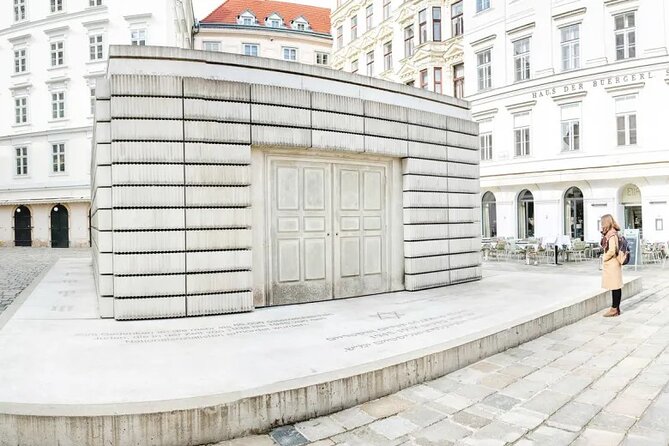
At Judenplatz, the tour turns directly to Vienna’s Jewish population and the murder of more than 65,000 Austrian Jews by the Nazis between 1938 and 1945. The Holocaust Memorial for the Austrian Jewish victims of the Shoah is the key feature here.
The memorial, sometimes called the Nameless Library, has the form of a sealed library. Its rows of books face outward, but their titles cannot be read. The design suggests lives and stories that were cut off, leaving you with a powerful sense of absence rather than a simple list of names.
This stop is one of the reasons to choose the tour even if you already know the broad outline of Nazi history. The guide connects the memorial to Vienna itself, not just to distant camps or military events. You learn about people who lived, worked, worshiped, and raised families in the city you are walking through.
The subject can be difficult, and the tour does not soften it with easy conclusions. You’ll want to listen carefully and give the memorial the respect it deserves. This is a place for reflection, not a rushed photograph.
Morzinplatz and the former Gestapo headquarters
At Morzinplatz, the guide explains the site of the former Hotel Metropole. Once a luxury hotel, it became one of the Gestapo’s most brutal headquarters during the Third Reich.
The building itself is gone, but the location remains a useful reminder of how terror operated in the heart of an ordinary city. Political repression was not happening somewhere far away. It was carried out in recognizable streets, offices, and public spaces.
The memorial here helps shift the tour from ideology and public speeches to the machinery of arrest, interrogation, and fear. It also reinforces the guide’s larger point: Vienna’s wartime story includes active participation, persecution, resistance, suffering, and postwar efforts to remember.
As with several stops, the time at the memorial is short. The guide does most of the work through explanation, so a strong English presentation matters. The guides who receive the best feedback, including Dieter, Wolfgang, and Stephan, are especially valued for keeping the facts organized and making the material understandable.
The concealed Stadttempel Synagogue
Near the end of the walk, you’ll visit the area around the Stadttempel, Vienna’s main synagogue. Its location behind a five-story apartment building is one of the route’s most striking details.
The synagogue was built this way because regulations required non-Catholic places of worship to remain hidden from the street. The tenement facade concealed the synagogue from public view, a physical reminder of the restrictions placed on Jewish life long before the Nazi period.
The street entrance includes a Hebrew inscription meaning Come to his gates with thanksgiving, to his courts with praise. The building’s survival is also significant. Vienna’s Jewish community was devastated during the Holocaust, yet this synagogue remains part of the city’s living religious life.
You do not receive a full interior synagogue visit on this walk. The stop is an exterior explanation at the Infopoint Jewish Vienna, along with nearby places connected to Jewish Vienna. Still, it is a fitting end because it moves the story beyond destruction and toward memory, continuity, and the city today.
What the 2.5-hour format feels like
The walk lasts about two and a half hours and covers a series of central Vienna sites. The pace is generally manageable, but you should expect to be on your feet for most of the experience.
This is not a fast sightseeing circuit. The guide pauses for talks at each stop, and the route includes other places beyond the seven main attractions listed here. The walking itself is easy enough for someone with moderate fitness, but a long afternoon on stone streets can still wear you down.
Weather is the main practical concern. Several people have enjoyed the tour in freezing conditions, partly because guides such as Dieter and Siggy included indoor pauses to help the group warm up. That cannot be guaranteed at every departure, so bring a warm layer in winter and a raincoat or umbrella when conditions look uncertain.
The experience begins at 2:30 pm and finishes near Schwedenplatz. That timing works well if you want a late afternoon activity, though winter darkness and cold may affect your comfort. At the finish, you’ll be close to U-Bahn lines 1 and 4 and a range of restaurants, making dinner easy to arrange.
The group can include up to 25 people. That is small enough for a personal walking tour, but not so small that every question can receive a long answer. Arrive early and make sure you can identify the guide at the busy Albertinaplatz meeting area.
The guides make or break this experience
The subject matter is demanding, and the guide’s delivery matters as much as the route. The strongest guides keep a careful balance: they explain facts plainly, avoid theatrical treatment of Nazi crimes, and allow time for questions.
Dieter is noted for his clear English, warm manner, safety awareness, and ability to look after the group. Wolfgang brings broad historical knowledge and a philosophical approach. Stephan uses maps and photographs on an iPad, which is especially useful when discussing buildings and events that have changed.
Charles has been praised for making the material accessible even to people who already know a fair amount about Hitler’s rise. Siggy is described as engaging and attentive in poor weather, and other guides have also been praised for strong subject knowledge.
One practical issue has been raised: a group member was left behind at the busy meeting point when the guide moved off too quickly. The operator says guides are instructed to keep the group together, but you should still confirm the guide’s identity before the walk begins and stay close when the group starts moving.
Is $32.65 a fair price?
At $32.65 per person, the tour is reasonably priced for a 2.5-hour guided walk in central Vienna. You are paying for a licensed English-speaking guide, not entry to museums, food, transport, or hotel pickup.
The value depends on how much help you want connecting the sites. You could walk past the State Opera, Heldenplatz, Judenplatz, and Morzinplatz on your own, but the story linking them is not obvious from the streets. The guide turns separate monuments into a coherent account of Vienna between Hitler’s youth and the Holocaust.
The tour is especially good value for history-focused visitors who want more than a general city walk. It is less useful if you want interiors, military artifacts, or a broad survey of Vienna’s imperial sights.
There is free cancellation up to 24 hours before the start time. The tour can be canceled for poor weather or if too few people book, with a new date or full refund offered. Gratuities, food, drinks, and hotel transfers are not included.
Who should book the Hitler Walking Tour of Vienna?
I would choose this tour if you want a serious look at Vienna’s Nazi-era past and prefer learning through places rather than exhibits. It suits history buffs, readers interested in Hitler’s early years, and anyone who wants to understand Austria’s role in the Anschluss and Holocaust.
You should also book it if you value a good storyteller. Guides such as Dieter, Wolfgang, Stephan, Charles, and Siggy have been praised for clear explanations, thoughtful answers, and careful pacing.
I would skip it if you want a light sightseeing outing, a dedicated Second World War battlefield tour, or a visit focused only on Hitler. The title promises a Hitler connection, but the actual route covers Vienna’s arts life, Jewish history, wartime destruction, political memory, and the city’s difficult reckoning with the past.
For the right audience, the $32.65 price buys something useful: not just a list of dates, but a way to read Vienna’s center with greater care. Wear good shoes, dress for the weather, and come ready for a serious afternoon.
FAQ
Where does the Historical Hitler Walking Tour of Vienna begin?
The tour begins at Albertinaplatz, outside the Albertina Museum in central Vienna.
Where does the tour finish?
The walk ends near Schwedenplatz, a short walk from U-Bahn lines 1 and 4 and several restaurants.
What time does the tour start?
The scheduled start time is 2:30 pm.
How long does the walking tour last?
The tour lasts approximately 2 hours and 30 minutes.
Is the tour offered in English?
Yes. The experience is offered in English.
What should I bring?
Wear comfortable shoes and clothes. Bring water, sunblock, and a raincoat or umbrella because Vienna’s weather can change quickly.
Can I cancel for a full refund?
Yes. You can cancel at least 24 hours before the start time for a full refund. Cancellations or changes made less than 24 hours before the start time are not accepted for a refund.
More Historical Tours in Vienna
- Vienna: Time Travel and Magic Vienna History Tour
★ 4.6 · 3,879 reviews - Time Travel-Magic Vienna History Tour Ticket
★ 4.5 · 1,099 reviews - Skip-the-Line Schonbrunn Palace Guided Tour and Vienna Historical City Tour
★ 3.5 · 940 reviews - Vienna Mozart Concert in Historical Costumes at the Musikverein
★ 4.5 · 888 reviews
Just added in Vienna
- 3 hour private tour in Vienna by private car★ 4.4 · 6 reviews
- Private Christmas Markets Walking Tour Vienna★ 5.0 · 31 reviews
- Christmas Markets & Shopping in Vienna★ 5.0 · 17 reviews
- Christmas Market Vienna Tour★ 4.0 · 53 reviews
- Vienna: Christmas Markets Tour★ 4.3 · 99 reviews
- Vienna: Naschmarkt Guided Food Tour★ 4.4 · 140 reviews
- From Vienna: Prague Small-Group Guided Day Tour★ 4.7 · 141 reviews
- The unknown Vienna City- a guided walking tour in 3 hours★ 4.7 · 137 reviews
Walking Tours, compared.
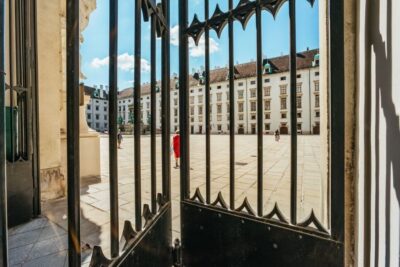
Guided Walking Tour of City Center Highlights
Read our review →
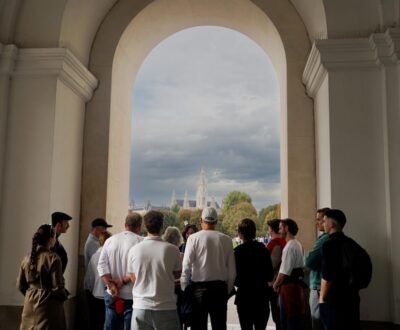
Guided Walking Tour of City Highlights & Hidden Gems
Read our review →
Vienna Historic Center Small Group Walking Tour
Read our review →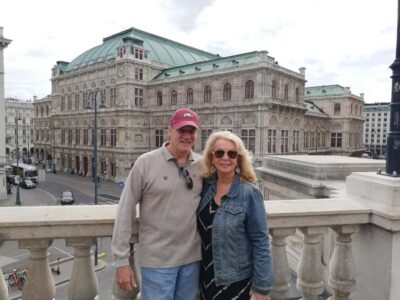
Browse the lists this tour appears in