
Reviewed · WALKING TOURS
Vienna Walking Tour with Audioguide on Your Smartphone
Vienna’s grand center is best understood on foot, and this self-guided tour gives you a useful first look at it for $8.40. You move from St. Stephen’s Cathedral through Habsburg squares, Baroque churches, coffeehouses, museums, and music landmarks, listening to 29 recordings on your own phone.
I like the freedom to stop for a pastry at Café Demel or coffee at Café Central, and I like the built-in map with landmark pictures. You can pause the tour, take photos, or return the next day. The catch is the route: it can stretch close to 7 kilometers, and the app’s directions between stops may not always be clear.
Quick points to know
- A low-cost introduction to central Vienna: For $8.40, you get 29 narrated stops and one year of access.
- A walk through imperial Vienna: The route covers Stephansplatz, the Hofburg area, Josefsplatz, Maria Theresa Square, Volksgarten, and Rathaus.
- Coffee breaks are built in: Café Demel and Café Central give you natural places to pause, though food and drinks cost extra.
- You need your own phone and headphones: The tour has no human guide, transport, or entrance tickets.
- Plan for more than 2 hours: The advertised time is about 2 hours 30 minutes, but the full walk may take longer.
- Best used in two parts: You can stop and restart the route, which helps if your legs, weather, or museum plans get in the way.
What this Vienna audio walk really offers
This is not a guided group tour. You meet at Stephansplatz, download the audio guide app for iPhone or Android, activate your purchase, and follow the route shown on the map. The recordings are narrated by a professional historian, with illustrations to help you identify each landmark.
The advertised duration is about 2 hours 30 minutes, but that figure needs a little caution. The route includes many stops, and the complete circuit is close to 7 kilometers. If you pause at churches, take photographs, enter a museum, wait for a clock display, or stop for coffee, you can easily need most of a day.
That is not necessarily a problem. I would treat this as a flexible city orientation rather than a timed walking tour. The app gives you one year of access, so you can split the route over two days or return to a stop later.
The price is the main attraction. At $8.40, this costs far less than a private guide and gives you a broad introduction to central Vienna. It does not replace a detailed museum visit or a personal guide who can answer questions, but it can help you decide which places deserve more of your time.
More Walking Tours in Vienna
- Vienna: Guided Walking Tour of City Center Highlights
★ 4.7 · 4,989 reviews - Vienna: Vienna Central Cemetery Guided Walking Tour
★ 4.8 · 3,307 reviews - Vienna: Guided Walking Tour of City Highlights & Hidden Gems
★ 4.9 · 2,180 reviews
Starting at St. Stephen’s Cathedral
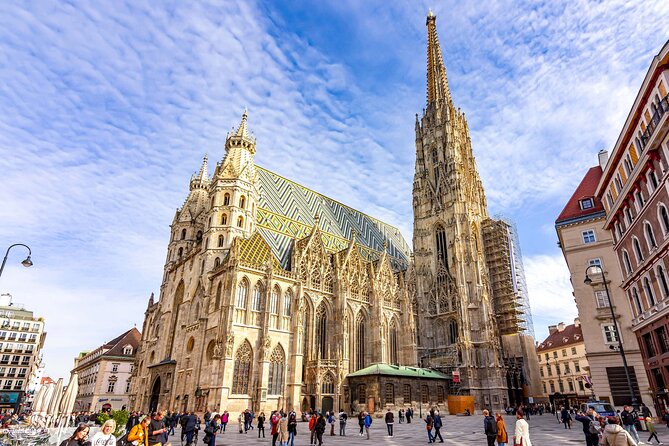
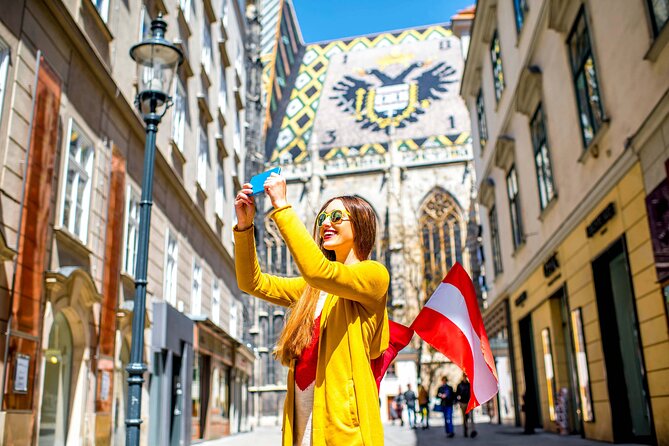
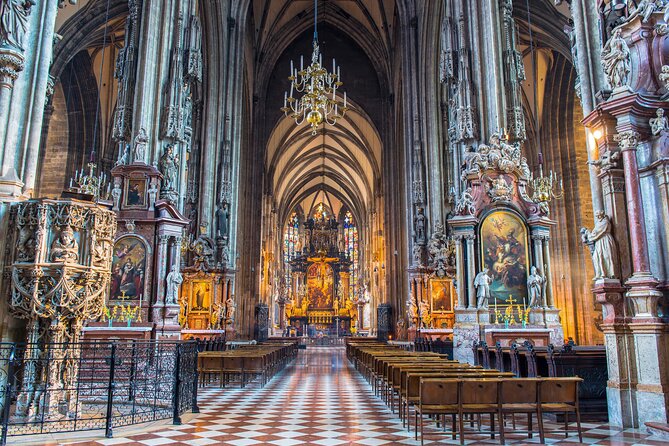
Begin at Stephansplatz, where St. Stephen’s Cathedral gives the walk a strong opening. Its Gothic spire, patterned roof, carved exterior, stained glass, High Altar, and catacombs provide plenty to discuss.
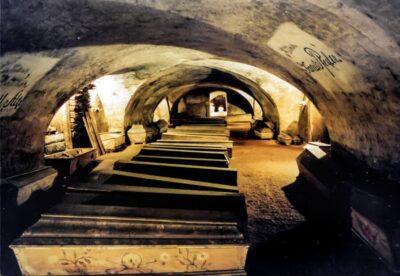
The planned stop is about 15 minutes, enough for an exterior look and a short explanation. You should not assume that the tour price includes entry to the interior, catacombs, or South Tower. Entrance fees are not included, and the audio guide itself is not a ticket.
If you want to climb the South Tower or visit the catacombs, allow extra time and check the cathedral’s current admission arrangements separately. The recording can give you context, but it cannot replace time inside this major sight.
From here, the route moves to the small Church of the Teutonic Order. Its Baroque interior and religious connections offer a quieter contrast to the cathedral. Ten minutes is enough for a quick look, though the church may appeal most to you if you enjoy smaller historic interiors as much as famous monuments.
Baroque churches and Vienna’s plague memorial
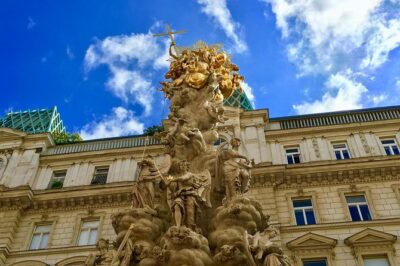
Next comes the Pestsäule, or Plague Column, on the Graben. This elaborate Baroque monument was erected in gratitude after the city survived the plague. The audio stop helps you read the sculpture as more than decoration, linking its religious imagery with Vienna’s experience of disease and recovery.
Peterskirche follows. Its dome, frescoes, and ornate Baroque decoration make it one of the more visually rewarding church stops on the route. You may also see information about classical concerts held there, but a concert is not part of this experience.
These early stops are close to the city’s most famous shopping streets and squares. Keep an eye on the app’s blue location marker and red route line, but do not rely on GPS alone. Some users found the next destination difficult to identify, and a few noted that the spoken commentary did not always explain how to walk to the next stop.
My practical advice is simple: download the tour before setting out, activate GPS, and use the landmark illustrations. If the route seems unclear, check another map app rather than wasting time circling a square.
Coffee, palaces, and the Hofburg quarter
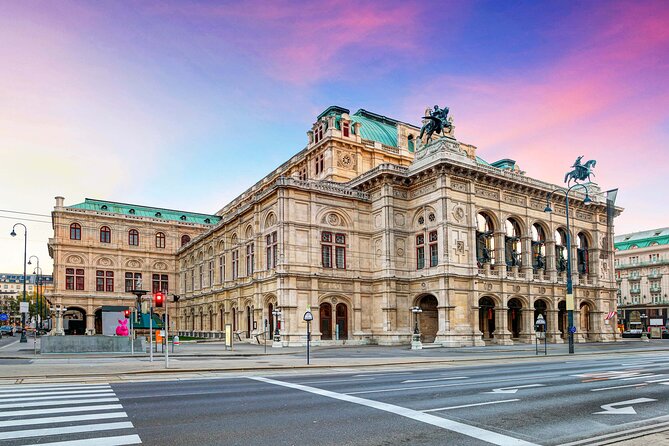
Café Demel is one of the route’s most enjoyable pauses. Founded in 1786, it is known for pastries, cakes, coffee, marble tables, and chandeliers. The tour points you toward classic Viennese café culture, including Sachertorte.
The stop itself is listed as about 10 minutes, but you are free to sit down and order something. That flexibility is one of the best reasons to choose an audio guide instead of a group walk. You can make the café part of the experience instead of merely passing its door.
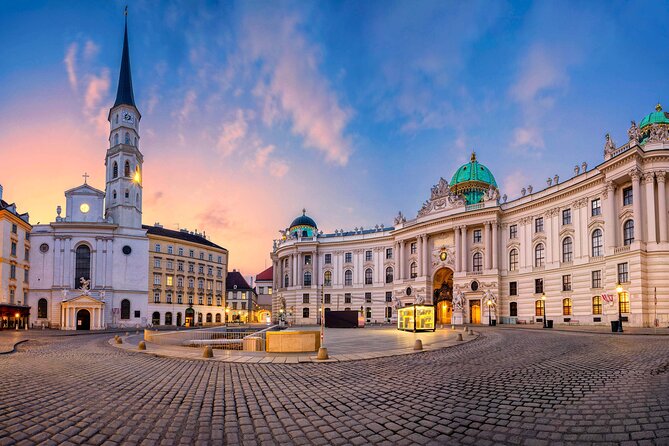
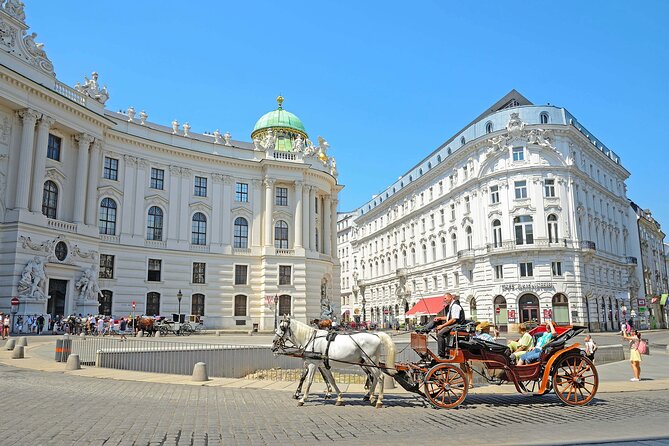
Michaelerplatz brings the imperial center into view. From here, you can look toward the Hofburg and Michaelerkirche, while archaeological remains beneath the square point to Vienna’s older layers. The Emperor Joseph II monument in nearby Josefsplatz continues the political story, focusing on the reforming ruler and his Enlightenment ideals.
The route also includes the Imperial Crypt, the final resting place of Habsburg emperors, empresses, and other members of the dynasty. This is one of the stops where you need to distinguish between an audio explanation and a paid visit. The entrance fee is not included, so allow extra money and time if you want to go inside.
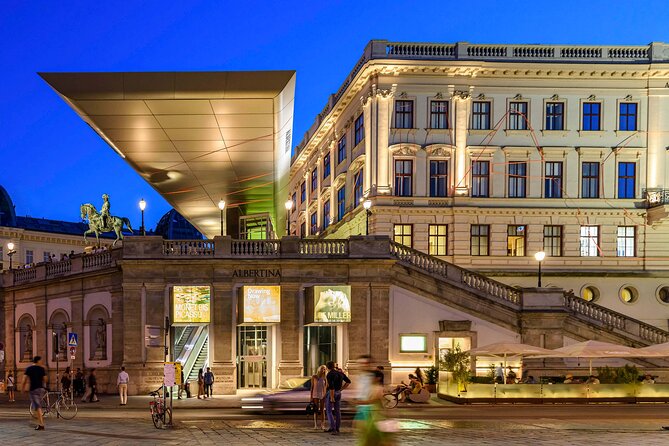
The Albertina, Vienna State Opera, and Hofburg are also included as points of interest. The descriptions introduce art, opera, imperial apartments, the Sisi Museum, the Spanish Riding School, and the National Library. You can use these stops to choose what to visit in greater detail later.
Do not expect to see every interior simply because it appears on the route. Entrance tickets are excluded, and the walking tour is designed mainly to explain the sights from the route and point you toward further exploration.
More walking routes in Vienna:
- Vienna: Viennese Underworld Guided Walking Tour
★ 4.7 · 1,865 reviews - Vienna: World War II Historical Walking Tour
★ 4.8 · 1,772 reviews - Vienna Historic Center Small Group Walking Tour
★ 5.0 · 1,746 reviews - Vienna: Private Walking Tour with a Local Guide
★ 4.6 · 1,420 reviews
Donnerbrunnen, Mozart, and Vienna’s musical side
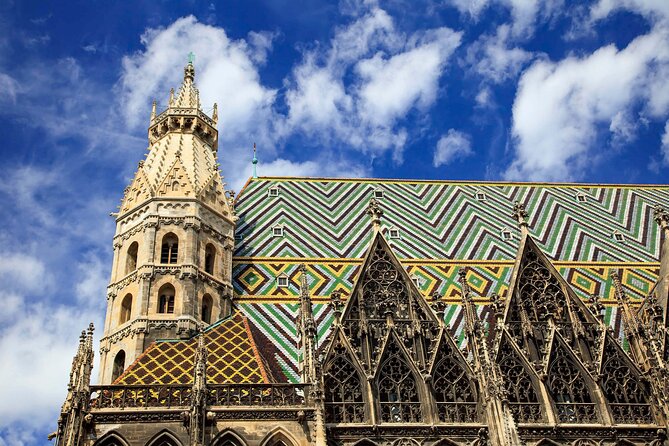
At Neuer Markt, the Donnerbrunnen gives you a close look at Baroque sculpture and mythological figures. It is a short stop, but its location makes it a useful link between the city’s imperial monuments and its everyday public squares.
The Mozart Monument in Burggarten shifts the story toward music. The statue and surrounding garden offer a pleasant place for photographs and a short rest. Vienna’s musical identity can feel abstract when you only see grand concert halls, so a monument in a public garden makes the connection more approachable.
The Vienna State Opera receives its own attention. You can admire the building from outside and use the narration to understand its place in Vienna’s musical life. The tour does not include an opera performance, so you will need a separate ticket if you want to attend one.
Beethoven’s House is another music-related stop, described as the place where Beethoven lived from 1804 to 1815. The museum contains original manuscripts and personal belongings, but again, entry is not part of the $8.40 price. If Beethoven interests you, mark this as a possible return visit rather than rushing through it during the walk.
Maria Theresa Square and the Sisi story
Maria Theresa Square is one of the route’s broadest and most impressive spaces. The monument to Empress Maria Theresa is framed by major cultural buildings and open gardens, making this a good place to pause and orient yourself.
The tour then turns toward Empress Elisabeth, better known as Sisi, with a monument in Volksgarten. This stop gives you a glimpse of the personality cult surrounding the popular empress. The garden setting also gives your feet a break after a string of churches, palaces, and paved squares.
The Hofburg area can easily occupy several hours if you enter the Imperial Apartments, Sisi Museum, or other attractions. The audio route gives you a useful introduction, but I would not schedule this walk immediately before a fixed museum reservation unless you have plenty of spare time.
Vienna City Hall and the University of Vienna broaden the route beyond royalty. City Hall brings in civic Vienna, with its Gothic Revival façade, tall spires, and Rathausmann statue. The university, founded in 1365, adds the city’s academic side and points you toward its historic main building and library.
Café Central, Collalto Palace, and the final sights
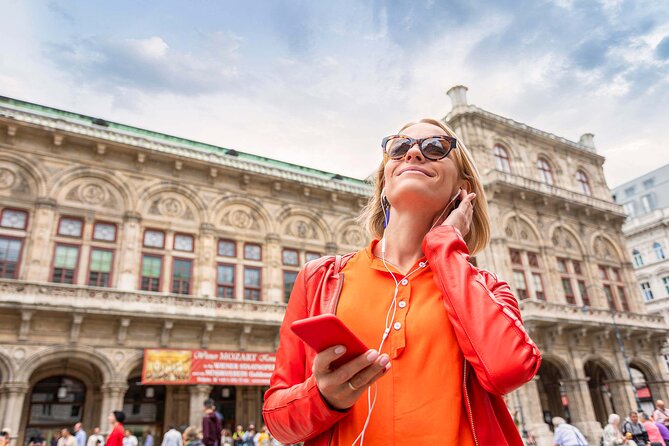
Café Central is another strong stop for a break. Opened in 1876, it became a meeting place for intellectuals and artists, and its pastries, coffee, and grand interior fit neatly into the story of Viennese café life.
The audio stop is only about five minutes, but you should not feel obliged to keep moving. If the café is busy or you are not hungry, listen outside and continue. If you want the full café experience, budget for a longer pause and your own order.
Collalto Palace provides a smaller architectural stop, with Baroque details and links to Vienna’s aristocratic past. It is less likely to be a major destination on its own, but it gives the route variety between better-known attractions.
The Marriage Fountain is included among the later stops. The description presents it as a Baroque fountain associated with harmony and love, located in a courtyard setting at Schönbrunn Palace. Since the wider route focuses on central Vienna, you should pay close attention to the app’s map and stop marker here, especially if the location does not seem to fit your expected walking direction.
Finally, the Anker Clock on Hoher Markt brings the route back toward one of Vienna’s memorable public artworks. Its Art Nouveau design and moving figures are best appreciated at the right time, since the figures appear every hour. If the clock display matters to you, plan your arrival rather than treating this as a quick glance.
Using the app without losing patience
The app is central to the experience, so preparation matters. Download the audio and map before you leave your accommodation. Bring headphones, but keep the phone speaker as a backup because one person found that a depleted headphone battery did not end the tour.
The map uses a red route line and a blue dot for your position. That visual system can make the walk easy to follow, especially when the landmark illustration matches what you see. GPS can still be slow or inaccurate near large buildings, and some stops have limited signage.
The biggest weakness is the gap between narration and navigation. The recordings explain the sights well, but they may not always tell you exactly how to reach the next one. I would use the supplied map alongside a standard map app, particularly after leaving a large square or museum district.
The tour is offered in English according to the booking information. It includes one year of access in your preferred language, but you should confirm available language options before purchase if English is not suitable for you.
Who should choose this walk?
I would choose this tour if you want a cheap, flexible orientation to Vienna and prefer not to join a group. It works especially well for first-time visitors who want to see major locations before deciding where to spend money on museum and church admission.
It also suits people who stop often for photographs, coffee, shopping, or unplanned discoveries. Families and couples can move at their own speed without holding up a group.
I would be more cautious if you want a smooth, tightly directed walk with clear spoken instructions at every turn. The route is long, some stops are easy to miss, and the app depends on your own phone, battery, headphones, and willingness to check the map.
Cancellation is free if you cancel at least 24 hours before the experience start time. Changes or cancellations inside that period are not refunded.
Should you book it?
Book it if you see the tour as a self-guided city overview, not a fully managed two-and-a-half-hour outing. For $8.40, 29 recordings, an offline route, landmark pictures, and a full year of access offer solid value.
Plan to split the route over two days if you want to visit interiors or enjoy Vienna properly. Bring headphones, download everything first, carry a backup map, and allow more than the stated duration.
Skip it if you want a human guide, included admission, or precise turn-by-turn instructions. For independent visitors who want the freedom to pause at a coffeehouse and build their own day, this is a practical way to get oriented.
FAQ
Is this a guided group tour?
No. This is a self-guided audio tour with no human guide. You use the app on your own iPhone or Android phone and follow the route yourself.
Where does the tour start?
It starts at Stephansplatz, 1010 Wien, Austria. The activity ends back at the meeting point.
How long does the tour take?
The stated duration is approximately 2 hours 30 minutes. The full route is close to 7 kilometers, and the actual time can be longer if you stop for coffee, photographs, museums, churches, or rest breaks.
What is included in the price?
You receive 29 audio recordings narrated by a professional historian, an audio guide app for iPhone and Android, landmark illustrations, an offline route map, and one year of access.
Are entrance tickets included?
No. Entrance fees and tickets are not included. This applies to places such as the cathedral tower or catacombs, the Imperial Crypt, museums, and other paid interiors.
Do I need my own headphones?
Yes. Smartphones and headphones are not provided. You should bring your own headphones, and you can also listen directly from your phone if needed.
Can I pause the tour or finish it another day?
Yes. The audio guide can be used at your own pace, and the one-year access period makes it possible to pause, skip stops, or continue on another day.
Just added in Vienna
- World War II History Vienna Old Town Private Walking Tour★ 4.8 · 9 reviews
- Vienna: Wiener Schnitzel and Strudel Cooking Class★ 4.9 · 126 reviews
- Vienna: Wine Tasting Tour★ 4.8 · 61 reviews
- Vienna: Winery and Wine Tasting Tour with a Wine Expert★ 5.0 · 5 reviews
- Vienna: Wine Tasting E-Bike Tour★ 4.9 · 46 reviews
- Vienna: Wine Tasting at Schönbrunn Palace★ 4.3 · 71 reviews
- Vienna: Unforgettable Private City Tour★ 5.0 · 7 reviews
- Vienna Urban Art Tour: Explore a different side of Vienna!★ 3.8 · 14 reviews
Walking Tours, compared.
Guided Walking Tour of City Center Highlights
Read our review →
Guided Walking Tour of City Highlights & Hidden Gems
Read our review →
Vienna Historic Center Small Group Walking Tour
Read our review →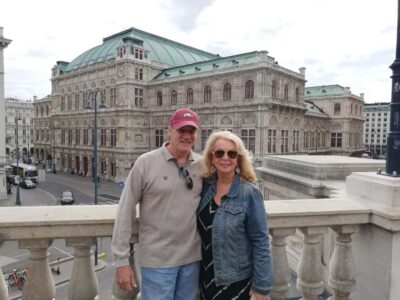
Browse the lists this tour appears in