
Reviewed · WALKING TOURS
Jewish Vienna Walking Tour
Vienna’s Jewish story is written in places that are easy to miss: a synagogue with a modest street presence, four white columns marking a destroyed temple, and a memorial hidden in plain sight on Judenplatz. This walk connects those sites and explains how Jewish life shaped Vienna, suffered repeated expulsions, and endured the Nazi genocide. I like the small maximum of eight people and the way the tour links past events with Jewish life today.
I also like that the guides are working historians, professors, doctoral students, journalists, art critics, and authors. Guides named in past bookings include Peter, Jan, Annelie, and Wiebke. The main drawback is that the City Temple interior is not part of this walk, and the $179.74 price is high for a 2.5-hour tour, even though the small group and expert guide make the cost easier to defend.
Key points to know before you book
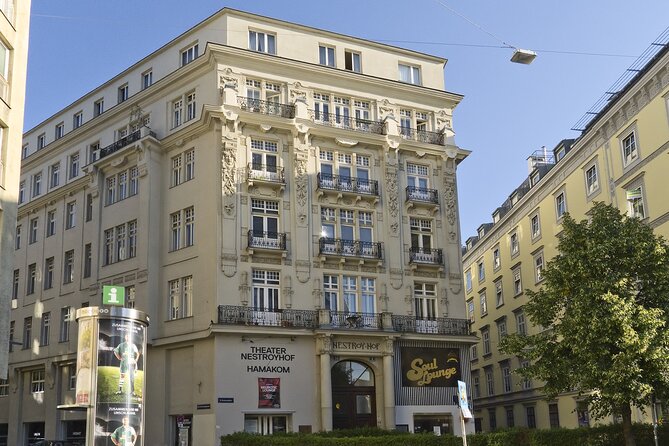
- Four important sites in 2.5 hours: The route covers the City Temple, Nestroyhof Theater, Leopoldstadt, and Judenplatz.
- A very small group: The tour caps attendance at eight people, allowing plenty of room for questions and discussion.
- A historian-led approach: Your guide may be a professor, doctoral student, journalist, art critic, or published author.
- The City Temple is viewed from outside: You do not enter during this tour, so arrange a separate synagogue visit if the interior matters to you.
- Metro fare is extra: Your guide can help you buy a ticket at the first station if you do not have a Vienna visitor pass.
- The route ends near where it begins: Judenplatz is only a few minutes on foot from the City Temple, making the finish convenient for further sightseeing.
Why Jewish Vienna deserves a dedicated walk
Vienna can seem, at first glance, like a city of imperial palaces, grand coffeehouses, and classical music. That picture is incomplete. Jewish residents helped shape the city’s business, arts, theater, scholarship, and daily life over many centuries, even as official policies repeatedly expelled and restricted them.
A general city tour may point out a memorial or synagogue, but it rarely gives you enough time to understand what happened before and after each site. This experience gives Jewish Vienna its own frame. You move from medieval settlement and forced departures to the growth of modern Jewish culture, then to destruction under Nazi rule and the continuing presence of Jewish life today.
I particularly value the historical range. The walk is not limited to the Holocaust, though that subject receives serious attention. You also learn about Jewish communities in Vienna before the 20th century, including Ashkenazi and Sephardic congregations, and about the cultural influence of Yiddish-speaking performers.
The tone is educational rather than devotional. That makes it suitable for anyone interested in Vienna’s past, not only for those with Jewish family connections. If you want a tour with light entertainment and quick photo stops, this may feel too serious. If you want context and careful explanation, the format fits well.
More Walking Tours in Vienna
- Vienna: Guided Walking Tour of City Center Highlights
★ 4.7 · 4,989 reviews - Vienna: Vienna Central Cemetery Guided Walking Tour
★ 4.8 · 3,307 reviews - Vienna: Guided Walking Tour of City Highlights & Hidden Gems
★ 4.9 · 2,180 reviews
Starting at the City Temple on Seitenstettengasse
The meeting point is outside the Stadttempel, or Jewish City Temple, at Seitenstettengasse 4 in Vienna’s first district. The building’s entrance and exterior provide the first lesson: one of Vienna’s most important synagogues was designed to remain largely out of view from the street.
That detail opens a larger discussion about power, fear, and public life. Jewish residents played an important role in the city’s development, yet synagogues had to maintain a limited street presence. From this spot, your guide traces Jewish settlement in Vienna from the Middle Ages through periods of expulsion and return.
The first stop lasts about 15 minutes. It is short, but it sets up the rest of the walk well. You are not simply looking at a building. You are considering why it appears as it does and what that says about Jewish life in Vienna.
The synagogue interior is not included. This is an important practical point, especially if you have come to Vienna hoping to see the prayer space. The City Temple offers its own guided visits from April through October, Monday through Thursday. The schedule can pair neatly with this walk: an 11:30 AM Monday synagogue visit can be followed by lunch and a 2:00 PM Jewish Vienna tour. On Tuesday and Thursday, a 2:00 PM synagogue visit can follow a 9:30 AM walk and lunch.
Those arrangements require separate planning and should be confirmed directly with the synagogue. Still, the option is useful. You can treat the walking tour and synagogue visit as two different experiences, rather than expecting one to include the other.
Nestroyhof Theater and Jewish cultural life
The next stop is Theater Nestroyhof Hamakom, viewed from outside. You spend about 20 minutes here, looking at its Art Nouveau exterior and learning about its earlier role as a home for Yiddish-speaking theater ensembles.
This stop broadens the story beyond religion and persecution. Jewish influence in Vienna also appeared in performance, language, publishing, music, business, and the arts. The theater gives your guide a concrete place from which to explain how modern Jewish culture became part of Vienna’s cultural life.
Because the visit is exterior only, you should not expect a theater tour or an indoor performance space. The value comes from the explanation, not from entering the building. A good guide can help you notice why the facade matters and place the theater within the wider development of Jewish Vienna.
Past guides have been praised for using stories and personal details rather than presenting a string of dates. Peter, in particular, is described as a warm storyteller who also offered restaurant suggestions. Annelie has been noted for bringing visual material and adapting explanations to individual interests, including film music. These details matter because the subject covers a lot of ground in a short time. Clear storytelling helps the information stay with you.
Leopoldstadt and the four white columns
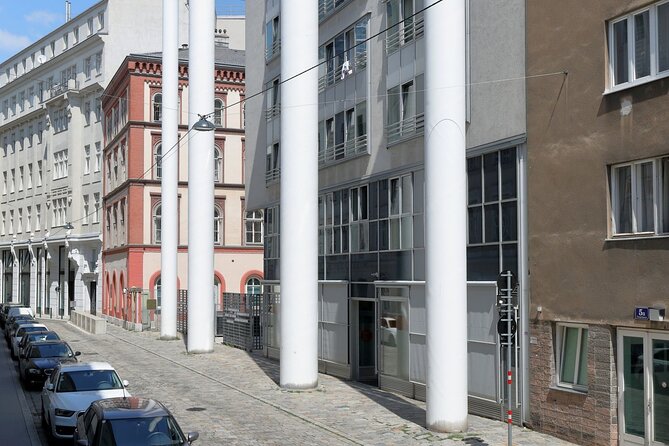
The walk then reaches Leopoldstadt, Vienna’s second district. This portion takes about 30 minutes and centers on the memorial site of the destroyed Leopoldstädter Temple.
The temple is gone. Four tall white columns now point upward, marking the place where it once stood. The simplicity of the memorial can make the absence more powerful than a restored facade would be. Your guide explains what stood here, what was destroyed, and how the site fits into the wider story of Jewish life in Leopoldstadt.
This is one of the walk’s strongest physical reminders that Jewish Vienna is not only found in surviving buildings. It is also found in empty spaces and memorial markers. You are asked to imagine a community through what is no longer there.
Leopoldstadt also helps connect the city center with the neighborhoods where Jewish residents lived and built community life. The route gives you a sense that this story is spread across Vienna, not confined to one museum or memorial square.
The walk is described as a stroll, and the group size is small. Even so, wear comfortable shoes and dress for the weather. The tour is outdoors for much of its duration, and the experience depends on listening at several street-level sites rather than spending long periods indoors.
More walking routes in Vienna:
- Vienna: Viennese Underworld Guided Walking Tour
★ 4.7 · 1,865 reviews - Vienna: World War II Historical Walking Tour
★ 4.8 · 1,772 reviews - Vienna Historic Center Small Group Walking Tour
★ 5.0 · 1,746 reviews - Vienna: Private Walking Tour with a Local Guide
★ 4.6 · 1,420 reviews
Judenplatz and the Holocaust Memorial
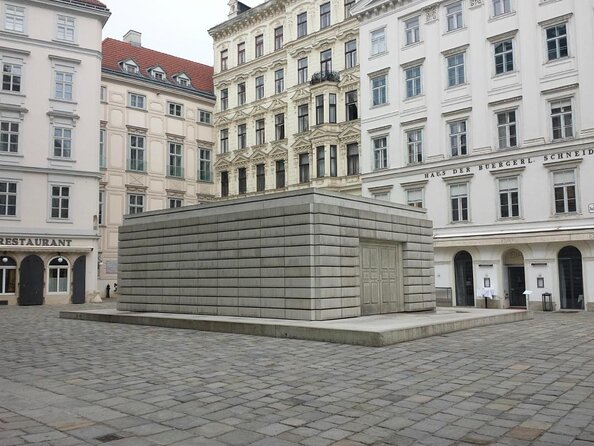
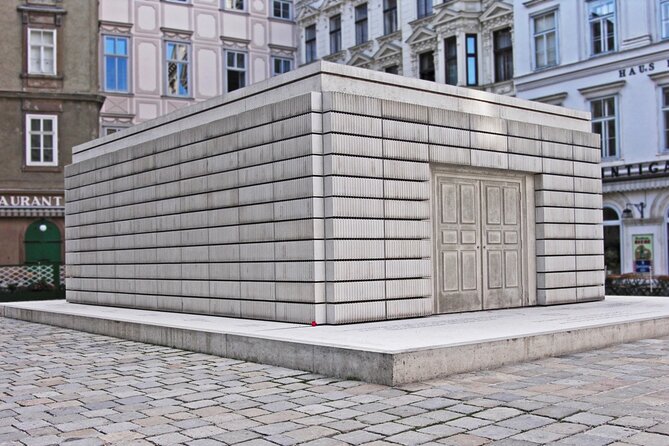
The final major stop is Judenplatz, where the tour examines the destroyed synagogues of Ashkenazi and Sephardic congregations and the Holocaust Memorial. This section lasts about 25 minutes and brings together medieval Jewish history, antisemitism, Nazi persecution, and remembrance.
The Holocaust Memorial is often called the Nameless Library. Here, the focus is on the victims and survivors of the Nazi genocide, as well as the long history of antisemitism in Europe. The guide places the memorial within the story of Vienna’s Jewish communities instead of treating it as an isolated monument.
That context is valuable. Without it, a memorial can become a solemn object that you photograph and leave behind. With explanation, you can better understand what the site remembers and why its design carries meaning.
The tour ends at Judenplatz, only a few minutes’ walk from the City Temple. This is a useful finish. You are back in central Vienna, close to other sights, restaurants, and coffeehouses, and you can continue exploring without a long transfer across the city.
One past booking extended beyond the planned time and ended at a coffeehouse, but you should not count on that as part of the standard tour. The listed duration is about two and a half hours. If you have a fixed lunch booking or another timed activity, leave some breathing room.
What the small group adds
The maximum of eight people is one of the clearest advantages. A group this size is easier to hear, easier to move through city streets, and more comfortable for questions at sensitive memorial sites.
It also allows the guide to adjust the pace. Guides such as Jan, Peter, and Annelie have been praised for explaining difficult subjects in a clear and engaging way. Annelie, in particular, has been described as attentive to a group’s interests and helpful with city navigation and restaurant ideas.
That does not guarantee a particular guide or a private tour. You may share the walk with other people, and the assigned guide can vary. Still, the small cap gives you a better chance to speak up when you want clarification or to ask about family history, architecture, current Jewish life, or the location of another Vienna sight.
The subject deserves that kind of setting. A large group can make a memorial visit feel rushed or impersonal. Here, the format is better suited to thoughtful questions and pauses.
The guide makes the difference
This tour depends heavily on the person leading it. The company describes its guides as professors, doctoral students, historians, journalists, art critics, and published authors. That is a useful sign for a subject that needs accuracy and care.
Several names appear in the guide team. Peter is noted for personal warmth, strong storytelling, and practical restaurant advice. Jan is praised for making complex history easy to remember. Annelie Pichler brings broad knowledge of Viennese life and has used visuals and tailored examples during the walk. Wiebke is described as clear and well paced.
Your guide may not be any one of these people, so book this experience for the subject and format rather than for a guaranteed personality. What you can reasonably expect is an academic approach presented for a general audience. The best guides will explain rather than lecture, and they will connect dates and policies to real places and lives.
This is also a good tour for people who want to understand present-day Vienna. The focus is not only on persecution in the past. The experience includes Jewish life today, helping you avoid the impression that Jewish Vienna disappeared completely in 1945.
Is $179.74 a fair price?
At $179.74 per person, this is not a budget walking tour. The cost is high when compared with a large public city walk or a self-guided visit to memorials.
The value rests in three things: the small group, the specialist guide, and the interpretation. You are paying for a person who can connect four sites across several centuries, explain the meaning of what you see, answer questions, and help you understand places that might otherwise pass unnoticed.
The price is easier to justify if you have a strong interest in Jewish history, Vienna’s cultural life, or historical memory. It is also more appealing if the group is small on your date. If you mainly want to see the City Temple from outside and take a few photographs, you can find less costly ways to walk through the area.
Metro fare is not included. If you do not have a visitor pass, the guide helps you buy a ticket at the first station. Include that extra cost in your planning, though it should be modest compared with the tour price.
The activity is booked, on average, 61 days ahead. That suggests you should reserve early if your Vienna dates are fixed, especially since the group is limited to eight people. Free cancellation is available up to 24 hours before the start time. A cancellation inside that window is not refunded, and the tour requires a minimum number of participants.
Who should take this walk?
I would choose this tour if you want a serious, place-based introduction to Jewish Vienna and prefer an expert guide to a museum audio guide. It suits first-time visitors who want historical depth, as well as returning visitors who have already seen Vienna’s main palaces and want a different side of the city.
It is especially useful for:
- People with an interest in Jewish family history or European Jewish life
- Visitors who want context for Vienna’s Holocaust memorials
- Anyone who prefers small groups and time for questions
- Visitors who want a guide with academic training
- People planning a separate City Temple visit from April through October
I would be more cautious if you need extensive indoor time, want to enter every building, or prefer a tour focused on architecture alone. The City Temple and Nestroyhof Theater are exterior stops, and the Holocaust memorial portion is emotionally serious.
Should you book Jewish Vienna?
Book it if you want to understand how Jewish life shaped Vienna, how that life was repeatedly threatened, and how the city remembers what was destroyed. The route is compact, the group is small, and the strongest part of the experience is the guide’s ability to connect ordinary streets with difficult history.
Before paying the premium price, decide if you will make use of that depth. If yes, this is a thoughtful and useful choice. Add a separate City Temple visit if the synagogue interior matters to you, allow time for the metro, and keep the rest of your day flexible enough to continue the conversation over lunch or coffee.
FAQ
How long is the Jewish Vienna Walking Tour?
The tour lasts approximately 2 hours and 30 minutes.
Where does the tour begin?
It begins outside the Jewish City Temple, or Stadttempel, at Seitenstettengasse 4, 1010 Vienna.
Where does the tour end?
The walk ends at the Judenplatz Holocaust Memorial in Judenplatz, 1010 Vienna. The memorial is only a few minutes on foot from the City Temple.
Is the City Temple interior included?
No. The tour visits the City Temple from outside. The synagogue offers separate guided visits from April through October, Monday through Thursday.
Is public transportation included?
No. Metro fare is not included. If you do not have a visitor pass, the guide helps you purchase a ticket at the first station.
What is the cancellation policy?
You can cancel for a full refund up to 24 hours before the experience begins. Cancellations or changes made less than 24 hours before the start time are not accepted or refunded.
Just added in Vienna
- World War II History Vienna Old Town Private Walking Tour★ 4.8 · 9 reviews
- Vienna: Wiener Schnitzel and Strudel Cooking Class★ 4.9 · 126 reviews
- Vienna: Wine Tasting Tour★ 4.8 · 61 reviews
- Vienna: Winery and Wine Tasting Tour with a Wine Expert★ 5.0 · 5 reviews
- Vienna: Wine Tasting E-Bike Tour★ 4.9 · 46 reviews
- Vienna: Wine Tasting at Schönbrunn Palace★ 4.3 · 71 reviews
- Vienna: Unforgettable Private City Tour★ 5.0 · 7 reviews
- Vienna Urban Art Tour: Explore a different side of Vienna!★ 3.8 · 14 reviews
Walking Tours, compared.
Guided Walking Tour of City Center Highlights
Read our review →
Guided Walking Tour of City Highlights & Hidden Gems
Read our review →
Vienna Historic Center Small Group Walking Tour
Read our review →
Browse the lists this tour appears in