
Reviewed · WALKING TOURS
Vienna Historic Center Small Group Walking Tour
Vienna’s grand center works best on foot, and this tour links its imperial palaces, Gothic churches, grand boulevards, and coffeehouse streets into one brisk lesson. You begin at Maria-Theresien-Platz and finish beside St. Stephen’s Cathedral, with the city’s main story unfolding between those two bookends.
I like the small group of no more than 15 people, plus the audio devices that help you follow the guide in noisy squares. I also like the guides’ mix of facts, humor, and practical advice. The main drawback is clear: this is mostly an outdoor tour, so you see the sights from the street rather than entering museums, and the 2.5-hour walk can reach roughly 14,000 steps.
Key points to know before booking
- Maria-Theresien-Platz begins the story: Twin museums and a grand imperial monument set up Vienna’s artistic and political past.
- The route covers a remarkable amount: You pass the Ringstrasse, Rathaus, Parliament, Burgtheater, Hofburg, Volksgarten, Graben, and St. Stephen’s Cathedral.
- The Hofburg gets proper attention: Allow about 20 minutes for stories about Habsburg rulers, court life, and the palace’s changing role.
- Guides make the difference: Dace, Giselle, Gabriela, Beatrice, and Annelie are praised for clear explanations, humor, and personal insight.
- No museum admissions are included: You may visit some churches or occasional indoor locations, but the tour is not an interior sightseeing program.
- It works best early in your stay: You finish near the cathedral, with restaurant, café, and sightseeing suggestions to shape the rest of your time.
A smart first walk through central Vienna
At $72.56 per person, this is not the cheapest way to see Vienna’s façades. You can walk past many of them for free. The price pays for a certified local guide, a planned route, audio equipment, historical context, and personal recommendations rather than admission tickets.
That distinction matters. If you want to enter the Kunsthistorisches Museum, tour the Imperial Apartments, or climb inside St. Stephen’s Cathedral, you will need separate plans. If you want the city to make sense before you tackle those places alone, the tour has better value.
The route is built for first-time visitors and people with limited time. Several starting times make it easier to fit around trains, museums, or a later concert. I would book it near the beginning of a Vienna stay, then use the guide’s suggestions for cafés, restaurants, and sights afterward.
The pace is brisk. Comfortable shoes are essential, and warm clothing is sensible in cool weather. A guide may pause to let the group warm up, but this remains a long urban walk with much of the time spent outside.
More Walking Tours in Vienna
- Vienna: Guided Walking Tour of City Center Highlights
★ 4.7 · 4,989 reviews - Vienna: Vienna Central Cemetery Guided Walking Tour
★ 4.8 · 3,307 reviews - Vienna: Guided Walking Tour of City Highlights & Hidden Gems
★ 4.9 · 2,180 reviews
Maria-Theresien-Platz and the Ringstrasse
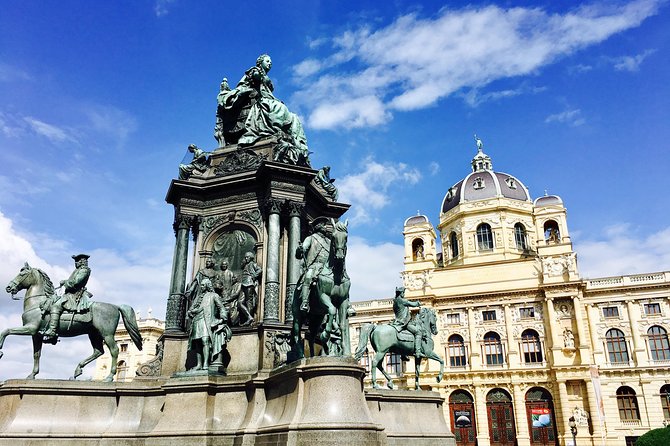
The meeting point is Maria-Theresien-Platz, a broad square between the Ringstrasse and MuseumsQuartier. The Natural History Museum and Kunsthistorisches Museum face each other across the open space, like matching imperial bookends. In the middle, Empress Maria Theresa surveys the square from her imposing monument.
This is a useful opening because it introduces two sides of Vienna at once: the Habsburg court’s appetite for art and science, and the public image of imperial power. The monument includes many figures from the empress’s world, including Wolfgang Amadeus Mozart.
You do not go inside either museum. That saves time, but it also means you should not treat this outing as a museum tour. The guide’s job here is to explain what you are seeing and help you decide which interior deserves your own time later.
The route then reaches the Ringstrasse, the broad boulevard that replaced Vienna’s medieval fortifications in the 19th century. Its buildings use Classical, Gothic, Renaissance, and Baroque forms, creating a grand architectural parade around the old city.
You pass the Austrian Parliament, the neo-Gothic Rathaus, the Burgtheater, the University of Vienna, and the State Opera. The Ringstrasse is not just a pretty road. It shows how Vienna changed from a walled medieval city into a modern imperial capital.
Burgtor, Heldenplatz, and the Hofburg
Burgtor is a short stop, but it helps you understand the approach to the Hofburg. The neoclassical gate was built after the Napoleonic Wars, when Vienna was reshaping its public face after a difficult period.
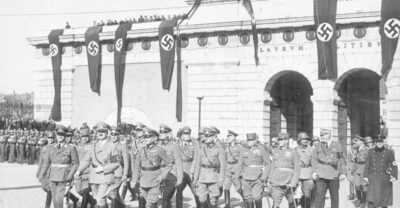
From there, the route opens into Heldenplatz, a broad green space beside the former palace defenses. The square is tied closely to Austria’s political story, including Adolf Hitler’s 1938 proclamation of the Anschluss from the New Castle balcony. A good guide treats this painful chapter plainly, without turning the stop into a theatrical moment.
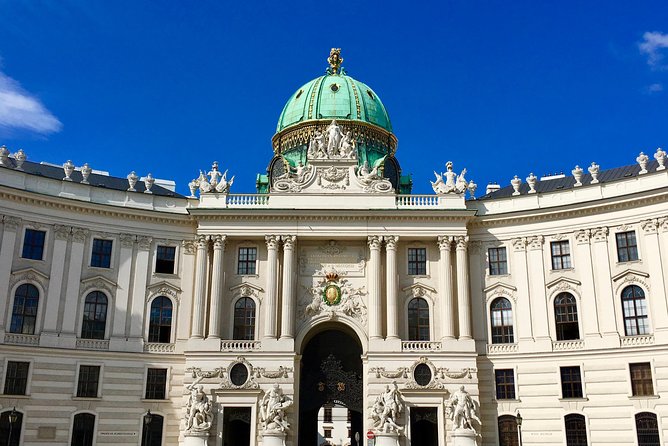
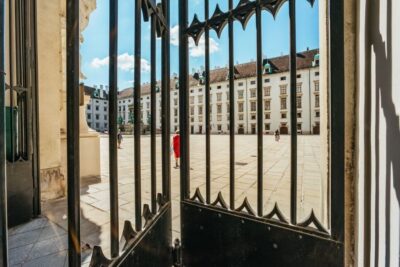
The Hofburg receives the longest scheduled look, about 20 minutes. This former Habsburg palace grew over centuries, so it is a collection of courtyards, wings, façades, museums, and official buildings rather than one tidy palace block.
You hear about emperors, empresses, court routines, and the palace’s continued role in modern Austria. The New Castle now houses several museums and collections, including the World Museum, Imperial Armoury, and National Library facilities. The Austrian Federal Chancellor’s office is also nearby.
The route also points out the Austrian National Library and the Baroque Winter Riding School, where Lipizzan horses perform and train. You may see the location, but the horse show itself is not part of this walking tour.
There is also a stop connected with the Habsburg empress Elisabeth, known as Sisi. It offers a chance to consider her difficult public life and personality, a useful counterpoint to the formal imperial image presented by the palace façades.
St. Michael’s Church and Vienna’s courtly edge
St. Michael’s Church dates to 1220 and has a distinct atmosphere from the open squares and official buildings nearby. The tour includes a short stop here, though the exact indoor access can depend on the day.
That flexibility is worth noting. The experience is mainly outdoors, but some churches and occasional indoor places, such as a palace, university, or café, may be visited depending on the weekday. Do not book this expecting guaranteed entry to every building named along the route.
The church also helps explain how Vienna’s spiritual life sat close to imperial power. From here, the route keeps moving through the old center, passing official buildings and palace entrances that can look decorative until someone explains who used them and why.
More walking routes in Vienna:
- Vienna: Viennese Underworld Guided Walking Tour
★ 4.7 · 1,865 reviews - Vienna: World War II Historical Walking Tour
★ 4.8 · 1,772 reviews - Vienna: Private Walking Tour with a Local Guide
★ 4.6 · 1,420 reviews - Vienna: 1.5-Hour Underground Walking Tour
★ 4.9 · 1,146 reviews
Rathaus, Burgtheater, and Volksgarten
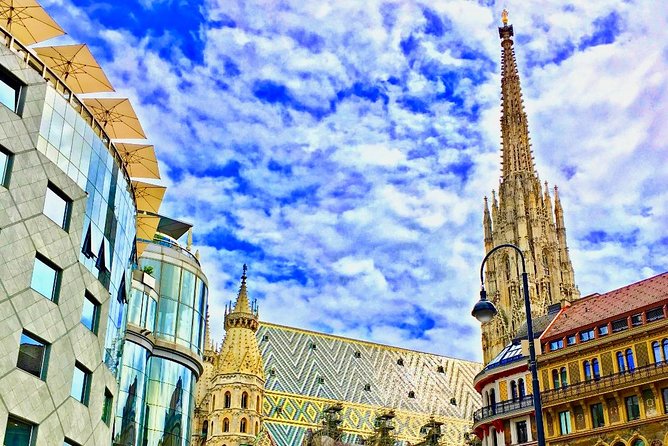
The neo-Gothic Rathaus is one of Vienna’s most recognizable civic buildings. It houses the city government and also serves as an event location, so your guide may connect the building’s ornate public face with the practical business of running Vienna today.
Nearby, the Burgtheater represents the city’s theatrical tradition. You see the exterior and hear why it matters, but a performance or interior visit requires a separate ticket and plan.
Volksgarten provides a welcome change from stone streets. The park contains the Theseus Temple, a small Classical replica originally designed to display Antonio Canova’s sculpture. The route also recalls the Cortisches coffeehouse, where Johann Strauss played waltzes.
These details help you see Vienna as more than a collection of imperial buildings. Music, coffee, sculpture, politics, and public parks all meet within a short walk. The tour is at its best when the guide connects those pieces rather than simply naming them.
Beethoven, Freud, and the city’s working minds
The Beethoven Pasqualatihaus marks a former residence of Ludwig van Beethoven, located on the ramp of the old town fortifications. It is a small but telling stop, since Vienna’s musical importance was built not only in concert halls but also in ordinary apartments and working spaces.
At the University of Vienna, the focus shifts from composers to science and ideas. The guide discusses figures such as Sigmund Freud and Lise Meitner, the Jewish physicist whose work changed modern science. This section broadens the tour beyond the Habsburg court and shows Vienna’s role in academic and intellectual life.
You also pass Palais Ferstel, once home to the Austro-Hungarian National Bank and Stock Exchange. Freyung, one of the oldest squares in the center, offers a more intimate setting, with a picturesque feel that differs from the ceremonial Ringstrasse.
Some guides use images on an iPad to bring past buildings and historical figures into clearer view. That can be especially helpful when the original interiors are closed or when a person’s story is hard to grasp from a façade alone.
Graben, Kohlmarkt, and the final approach
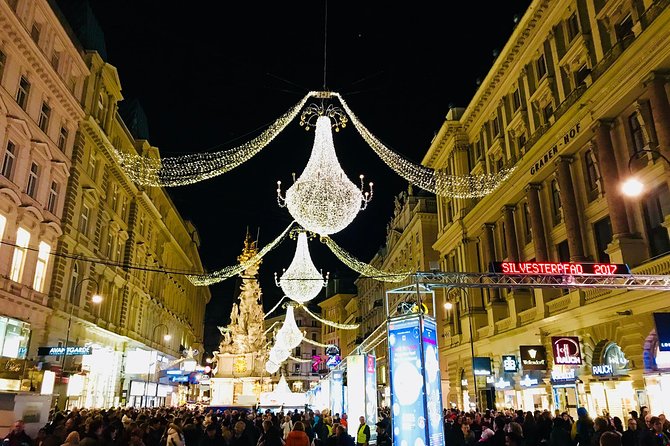
Graben and Kohlmarkt form Vienna’s elegant pedestrian core. Today, they are shopping streets, but they also lead directly into the city’s ceremonial and religious center.
You pass places linked with Vienna’s coffeehouse tradition, including the sort of café where writers, composers, architects, painters, psychoanalysts, and revolutionaries once met over coffee, cake, and cigars. The tour does not promise a full café break, though one guide-led outing included time at Café Demel. Treat that as a possible extra rather than a guaranteed stop.
This part of the walk can be crowded, especially around the main shopping streets. The group size helps, and guides such as Giselle are praised for keeping everyone together in busy places. Still, stay alert, keep your audio device close, and expect city noise.
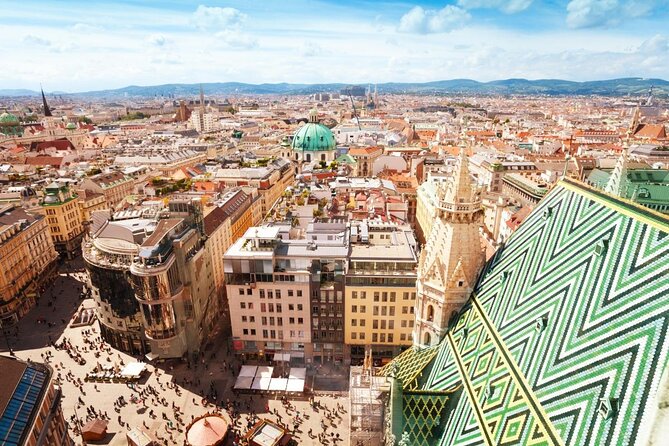
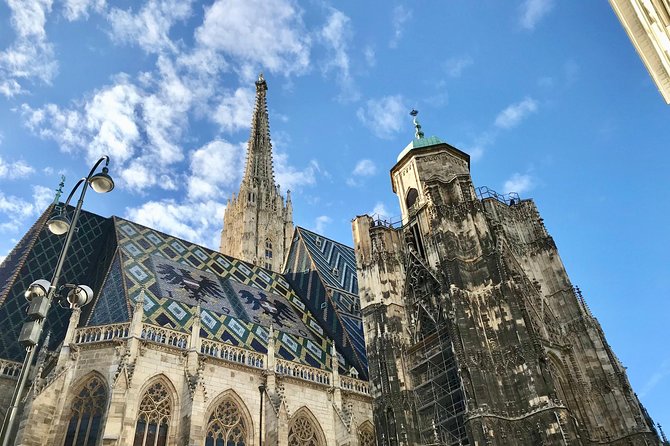
The final stop is Stephansplatz, the central square at the heart of Vienna. St. Stephen’s Cathedral is the tour’s endpoint and the city’s best-known landmark. You are free to continue on your own from here, which makes the finish practical for a first day.
What the guides add
The guide can make or break a walking tour, and this experience has several named guides who bring different strengths. Dace is known for dry humor, clear English, personal anecdotes, and practical help on cold days. Giselle is praised for strong historical explanations, warmth, and useful advice about what to see and eat next.
Gabriela is described as lively, funny, and attentive to the group’s comfort. Beatrice brings enthusiasm for Vienna, while Annelie combines facts and entertaining stories. The exact guide depends on the departure, so you cannot assume one particular person will lead your walk.
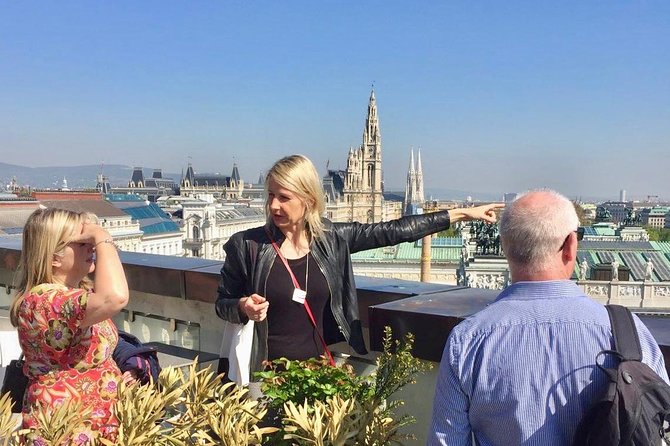
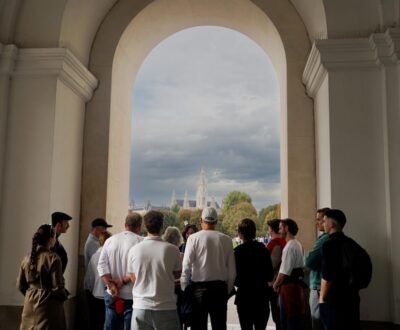
The audio devices are a real advantage. Vienna’s broad squares and busy streets can swallow a guide’s voice, especially with 15 people spread out. Hearing the explanation without pressing close to the guide makes it easier to look up at the buildings while still following the story.
Practical value, pace, and limitations
The tour lasts about 2 hours and 30 minutes and is capped at 15 people. That is small enough for questions and personal attention, but it is still a group walk, not a private tour. Several start times help, and confirmation arrives when you book.
You need moderate physical fitness. The route includes a lot of walking and is not recommended if you have walking difficulties. There are no transport segments to break up the distance.
The experience requires good weather. If poor conditions cancel it, you are offered another date or a full refund. You can also cancel for a full refund up to 24 hours before the start time. Service animals are allowed, and the meeting point is near public transportation.
The biggest limitation is the lack of included admissions. One disappointed participant felt the tour was expensive because the sights were viewed from outside. That criticism is fair if you want an attraction-by-attraction visit.
On the other hand, the tour does more than point at buildings. The best guides add context, humor, historical images, and local advice. At $72.56, I see it as a paid orientation walk, not an admission package. Its value depends on how much you want someone to organize Vienna’s story for you.
Should you book this Vienna walking tour?
Book it if you are visiting Vienna for the first time, have only a few days, or prefer to understand a city before choosing which museums and palaces deserve your time. It is also a good fit if you enjoy political, musical, architectural, and social history delivered while you walk.
Skip it if you mainly want interior access, a slow café crawl, or a short stroll with little exertion. You will spend much of the 2.5 hours outside, and the route is demanding enough to require solid shoes.
For most first-time visitors, I would schedule it early in the stay. Let the guide introduce the Hofburg, Ringstrasse, Rathaus, Beethoven, Freud, the coffeehouse tradition, and St. Stephen’s Cathedral. Then use the remaining days to go inside the places that caught your attention.
FAQ
Where does the tour start?
It starts at Maria-Theresien-Platz in central Vienna.
Where does the tour end?
The walk ends at Stephansplatz, beside St. Stephen’s Cathedral.
How long is the tour?
The experience lasts approximately 2 hours and 30 minutes.
How large is the group?
The tour has a maximum of 15 participants.
Is the tour offered in English?
Yes. It is offered in English.
Does the tour enter museums?
No. Museum entry is not included. The route focuses mainly on exterior views and explanations.
Can the tour visit indoor places?
Some churches and, depending on the weekday, places such as palaces, the university, or a café may be visited. Indoor access is not guaranteed for every stop.
How much walking is involved?
The tour requires a moderate level of physical fitness. It is not recommended for people with walking difficulties, and comfortable shoes are advised.
Can I cancel for a refund?
Yes. You can cancel at least 24 hours before the start time for a full refund. Changes or cancellations made less than 24 hours before the start time are not accepted for a refund.
More Historical Tours in Vienna
- Vienna: Time Travel and Magic Vienna History Tour
★ 4.6 · 3,879 reviews - Time Travel-Magic Vienna History Tour Ticket
★ 4.5 · 1,099 reviews - Skip-the-Line Schonbrunn Palace Guided Tour and Vienna Historical City Tour
★ 3.5 · 940 reviews - Vienna Mozart Concert in Historical Costumes at the Musikverein
★ 4.5 · 888 reviews
Just added in Vienna
- 3 hour private tour in Vienna by private car★ 4.4 · 6 reviews
- Christmas Market Vienna Tour★ 4.0 · 53 reviews
- Private Christmas Markets Walking Tour Vienna★ 5.0 · 31 reviews
- Christmas Markets & Shopping in Vienna★ 5.0 · 17 reviews
- Vienna: Christmas Markets Tour★ 4.3 · 99 reviews
- Vienna Danube Tower★ 4.0 · 136 reviews
- Guided Walking Tour of Vienna City Center Highlights★ 5.0 · 150 reviews
- Private Hidden Vienna Walk — Stories Behind Quiet Corners★ 5.0 · 137 reviews
Walking Tours, compared.
Guided Walking Tour of City Center Highlights
Read our review →
Guided Walking Tour of City Highlights & Hidden Gems
Read our review →
Ghosts and Legends Guided Nighttime Walking Tour
Read our review →Browse the lists this tour appears in